Black kitchens can look incredible, but they need more than dark cabinets to work. The best black kitchen color schemes still leave room for stone, wood, brass, tile, and a little everyday counter space so the room feels moody without turning flat or heavy.
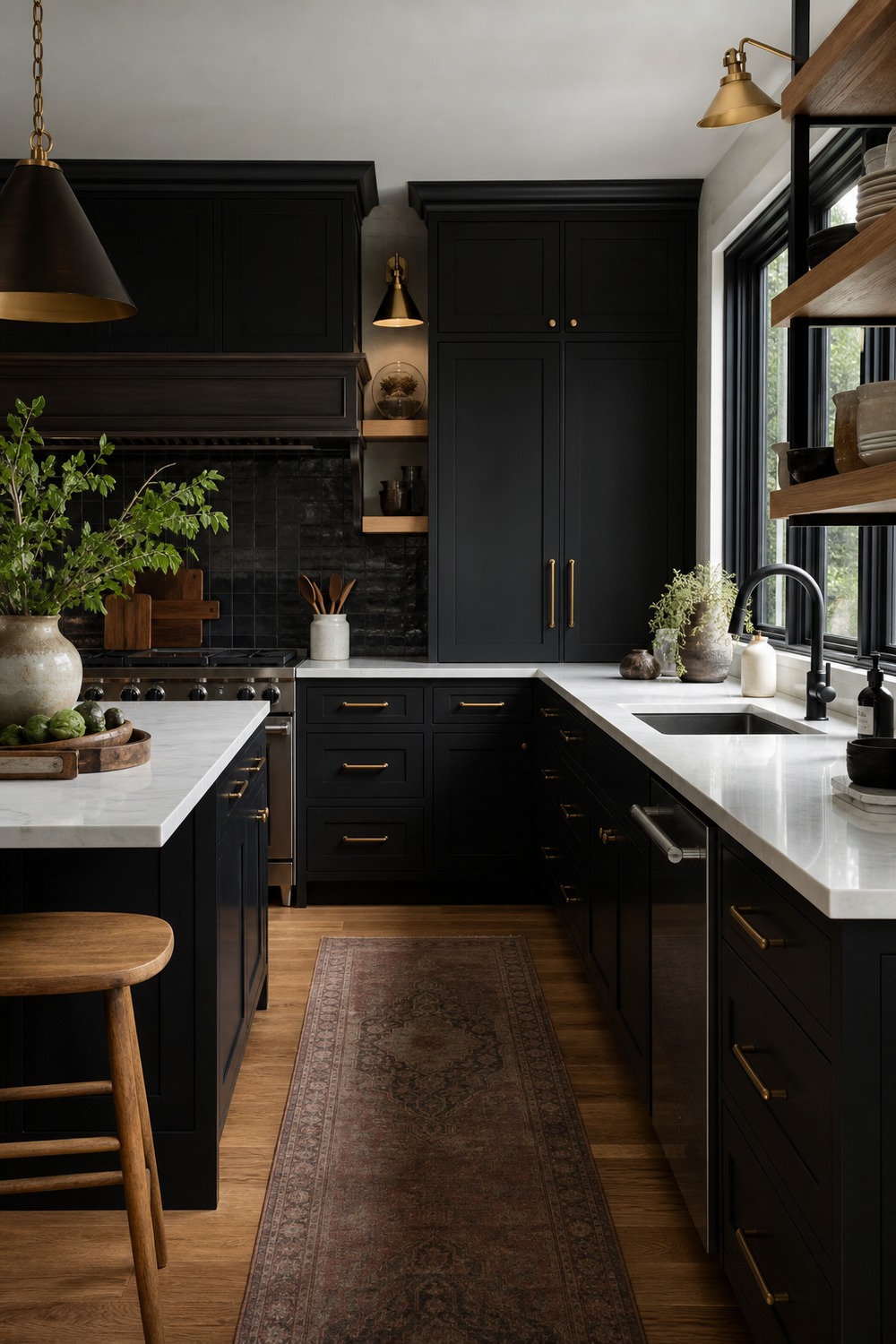
The matte black shaker cabinets feel strong, but the white stone keeps the whole room from going too dark. I like the mix of brass pulls, pale counter space, and wood shelves because it gives the black palette a little movement instead of one flat wall of color.
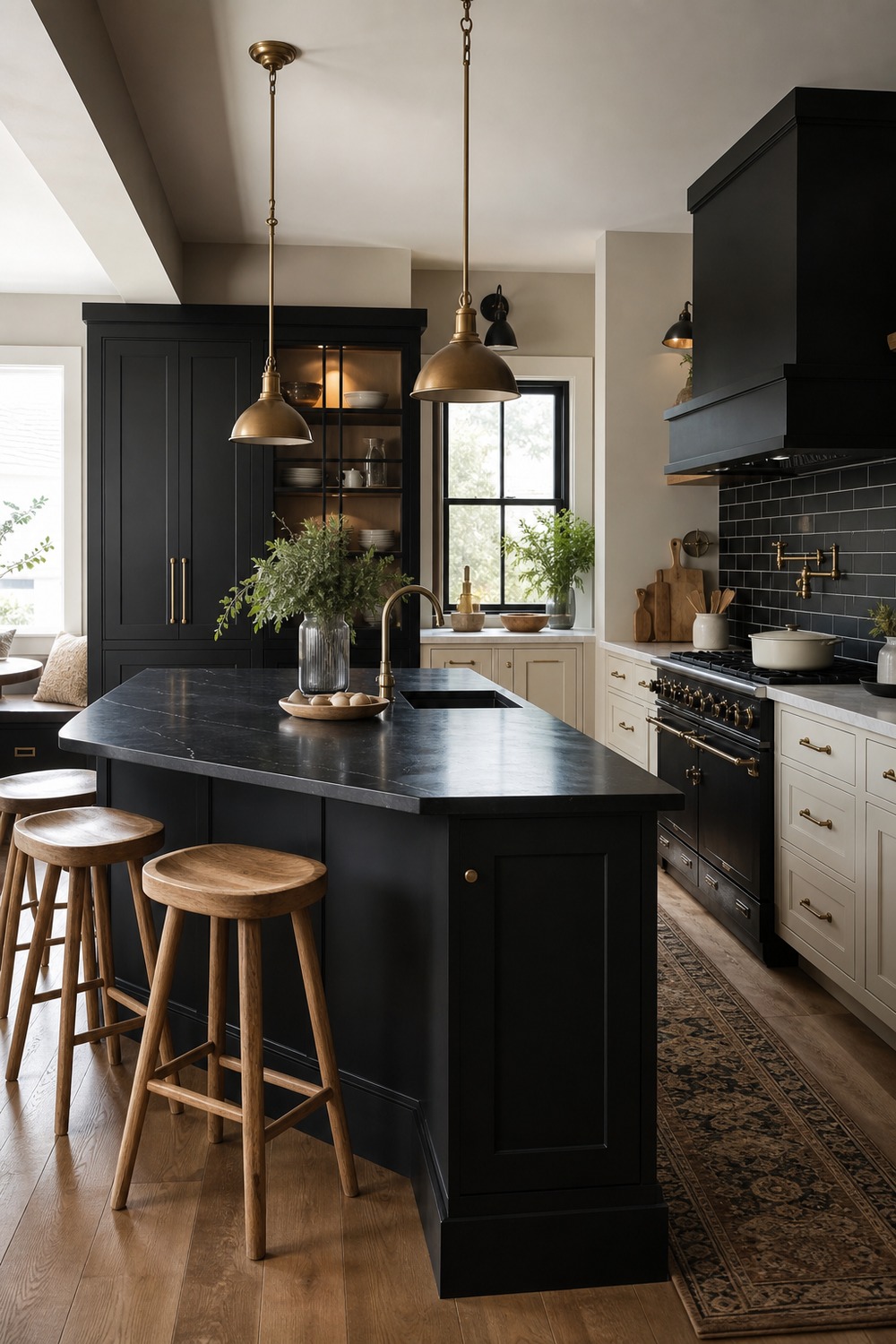
This black island is the kind of centerpiece that makes the kitchen feel finished right away. The warm wood stools matter here, because they soften the dark paint and give the room a place where someone could actually sit with coffee or help with dinner.
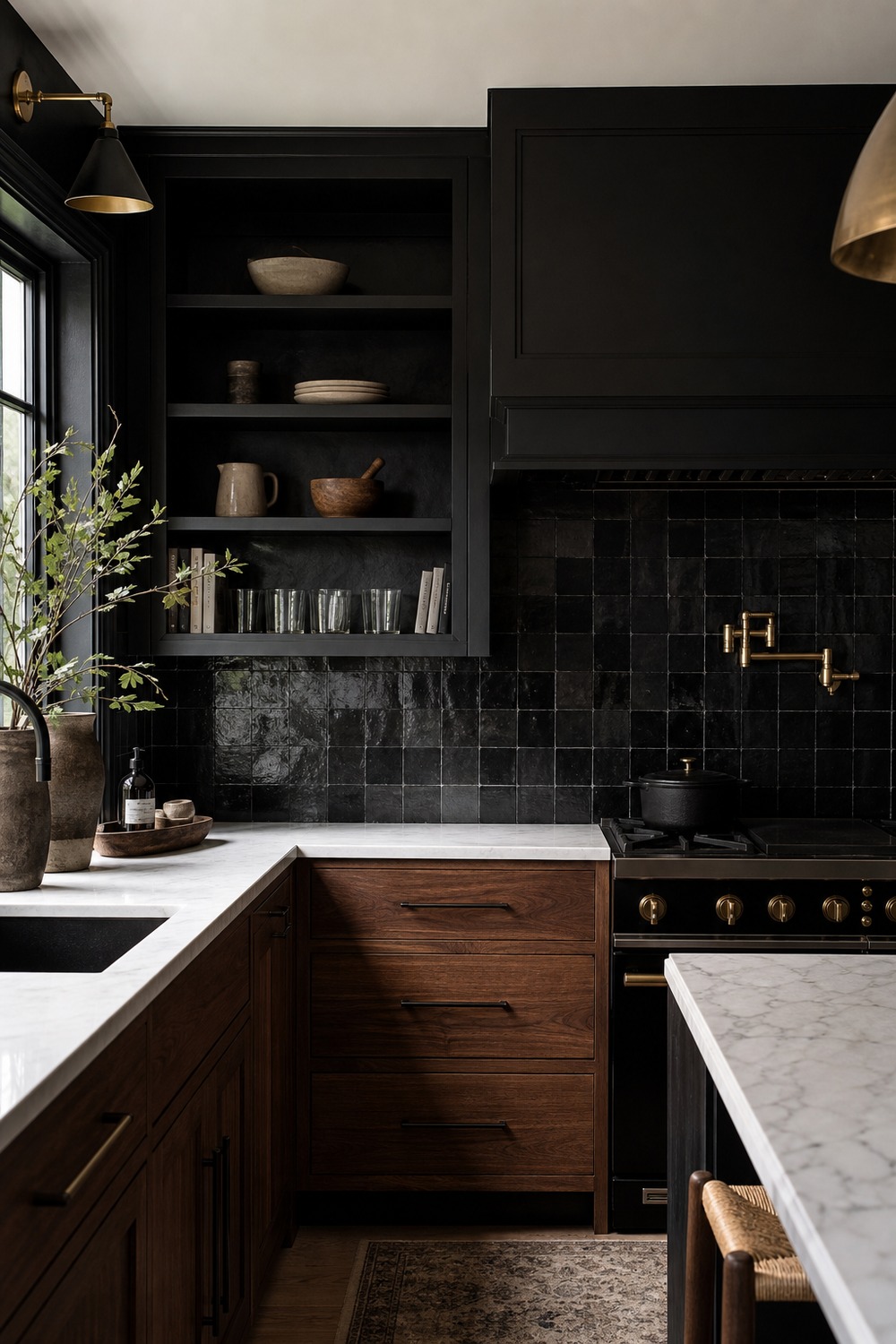
The black zellige backsplash is doing a lot of the work in this one. Those slightly uneven tiles catch light in a softer way than a plain glossy wall would, so the dark color feels textured instead of heavy.
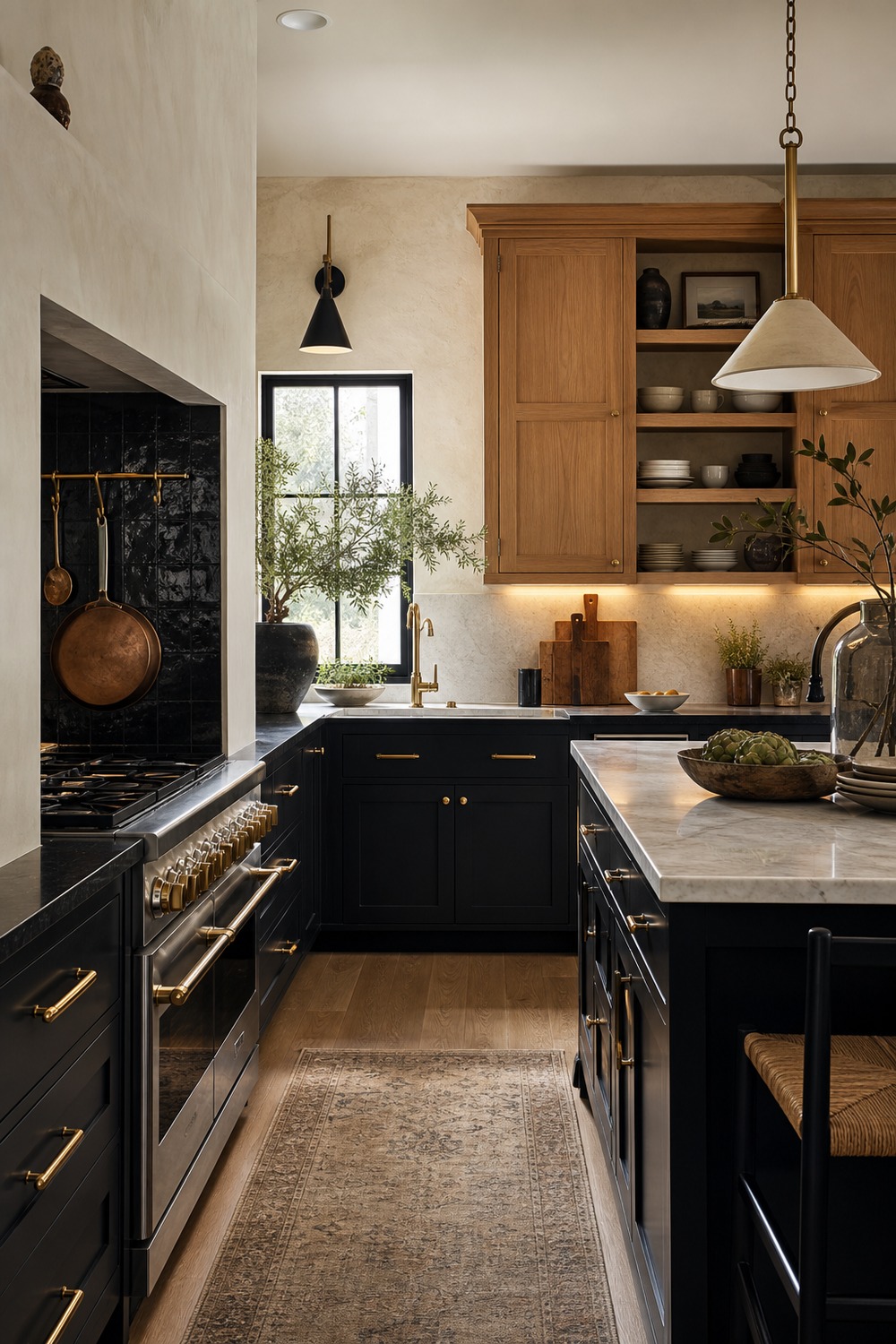
Black and oak is one of the easier ways to make a dark kitchen feel livable. The oak breaks up the cabinetry, the black lowers still feel dramatic, and the lighter wall space keeps the whole room from closing in.
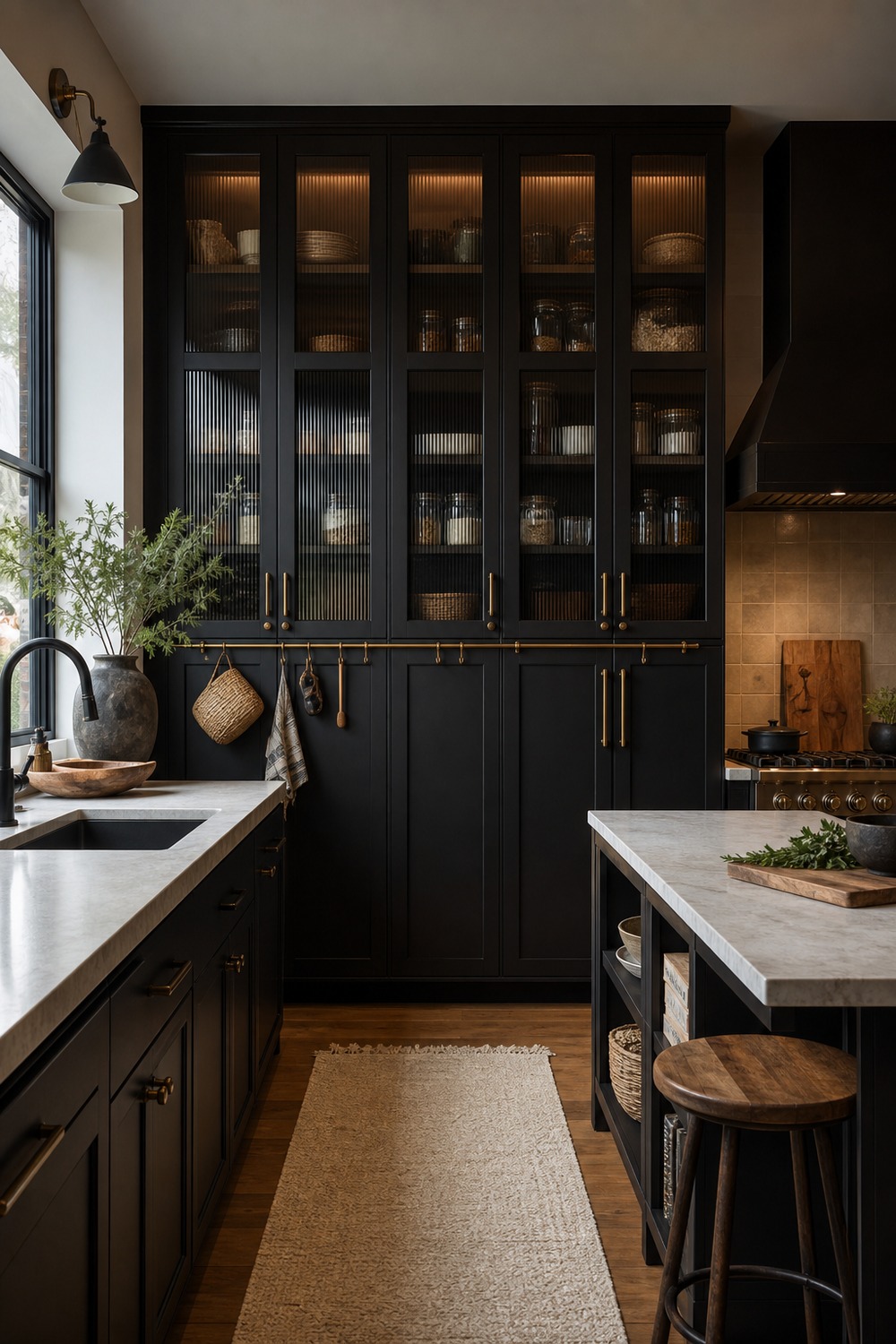
A full black pantry wall can get intense, but the ribbed glass makes this feel more layered. I like that the storage is still practical while the darker cabinets add that built-in, collected look.
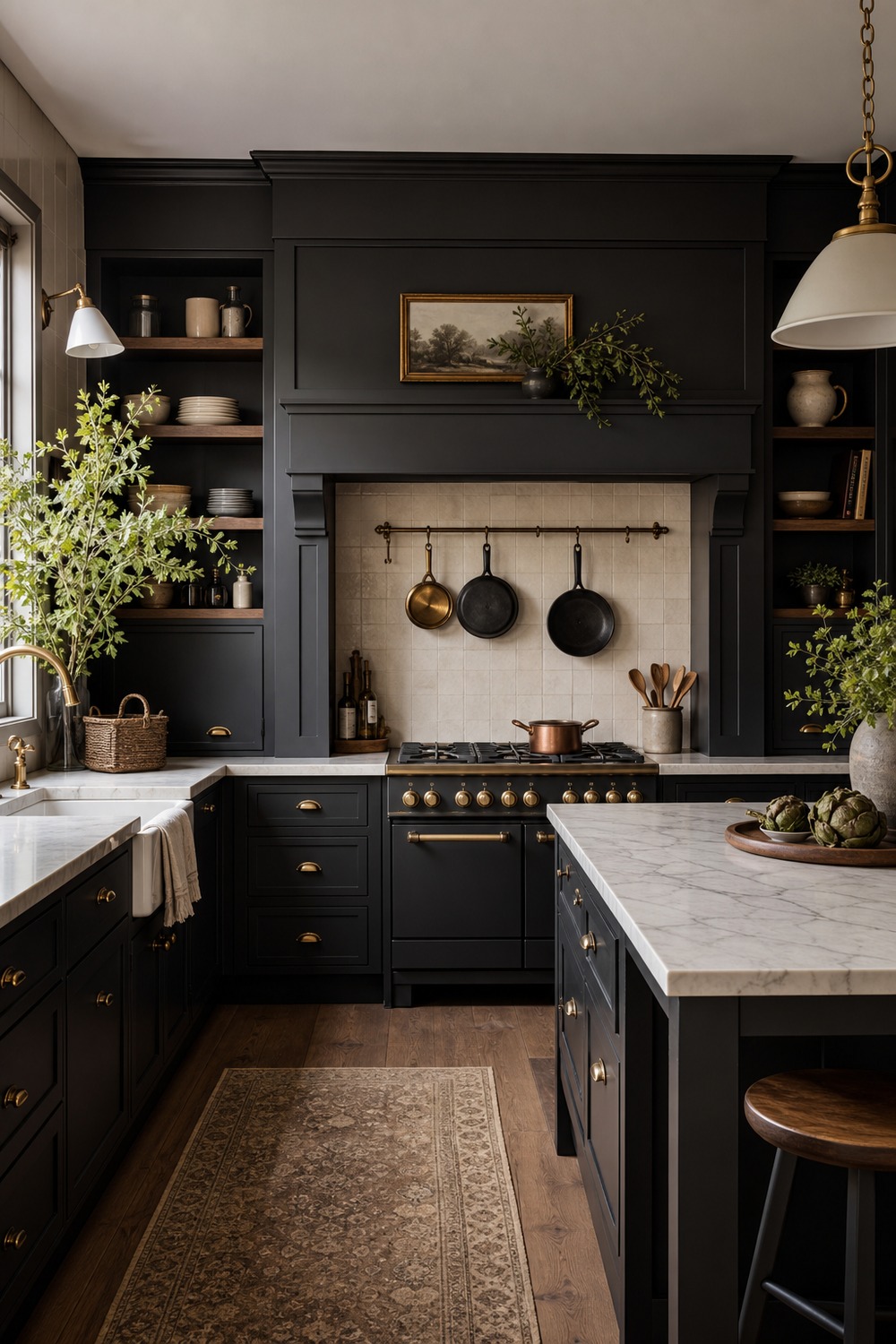
The black range alcove gives this kitchen a real focal point without needing a bunch of extra decor. Cream tile, a brass rail, and a lighter counter keep the cooking zone bright enough to use every day.
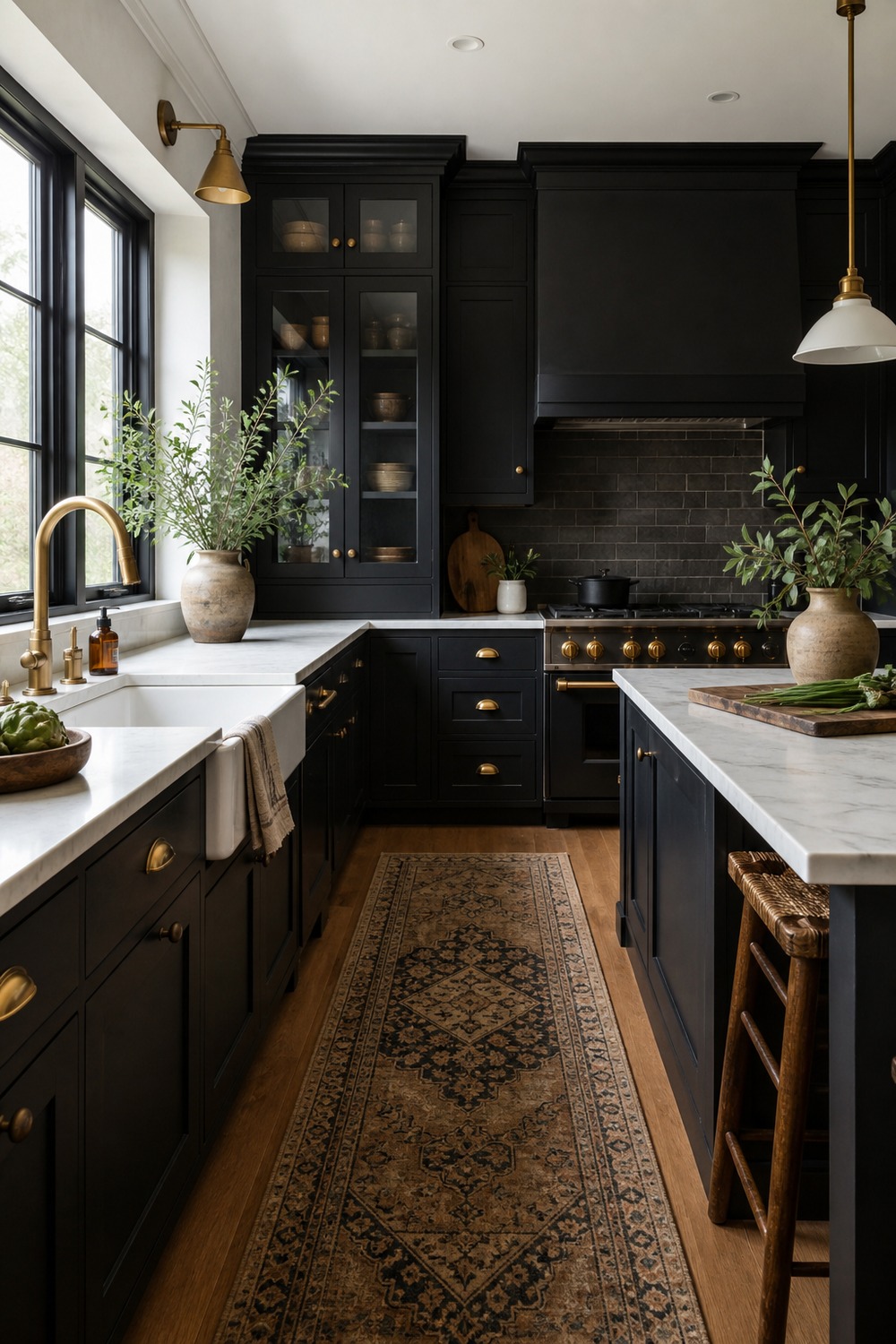
The vintage runner makes the black cabinets feel warmer immediately. It adds pattern underfoot, while the white stone and brass faucet keep the kitchen from looking too severe or showroom-perfect.
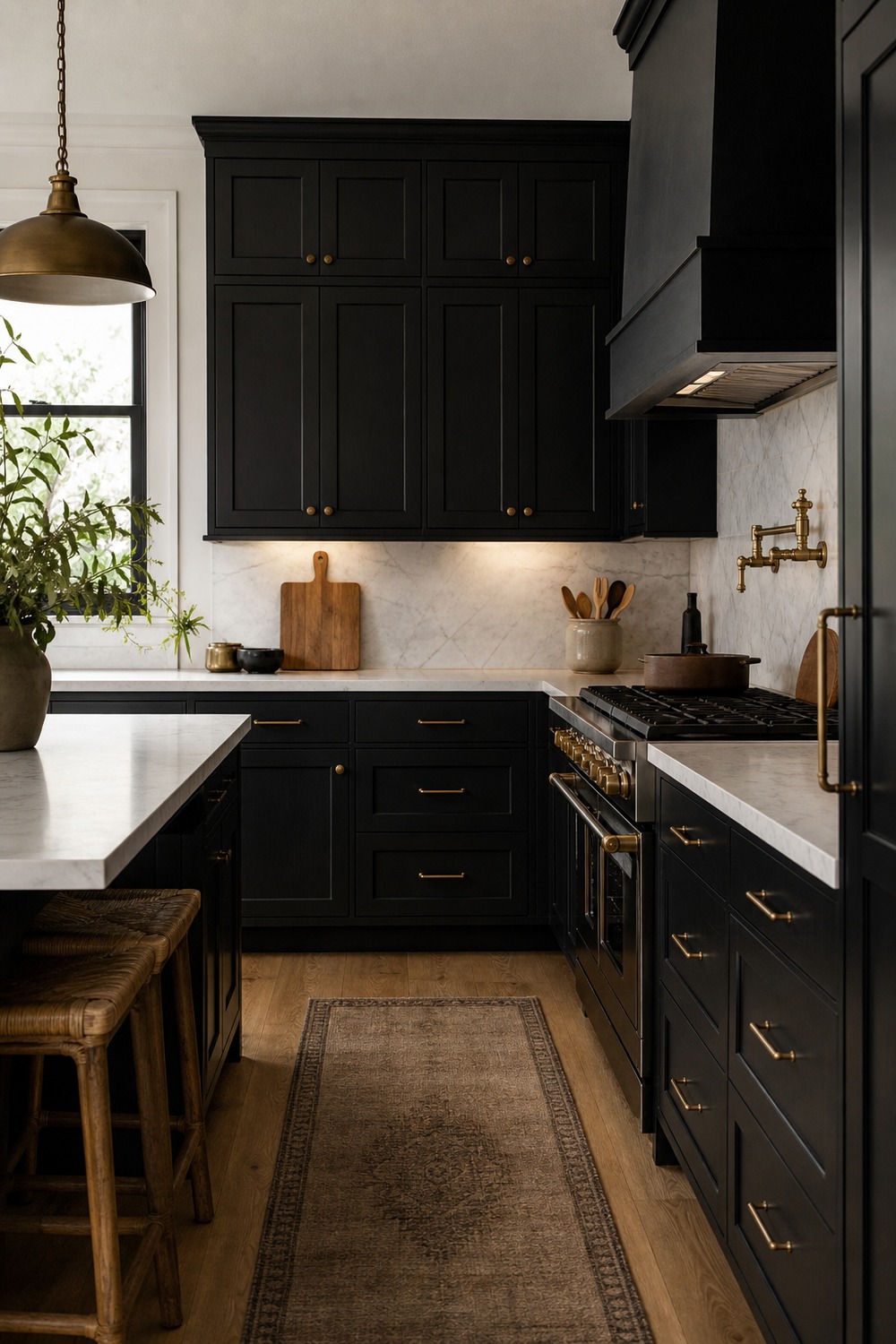
This charcoal shaker kitchen feels a little softer than a pure black room, which can be easier to live with. The pale backsplash, wood floor, and simple hardware keep the dark cabinets looking grounded instead of stark.
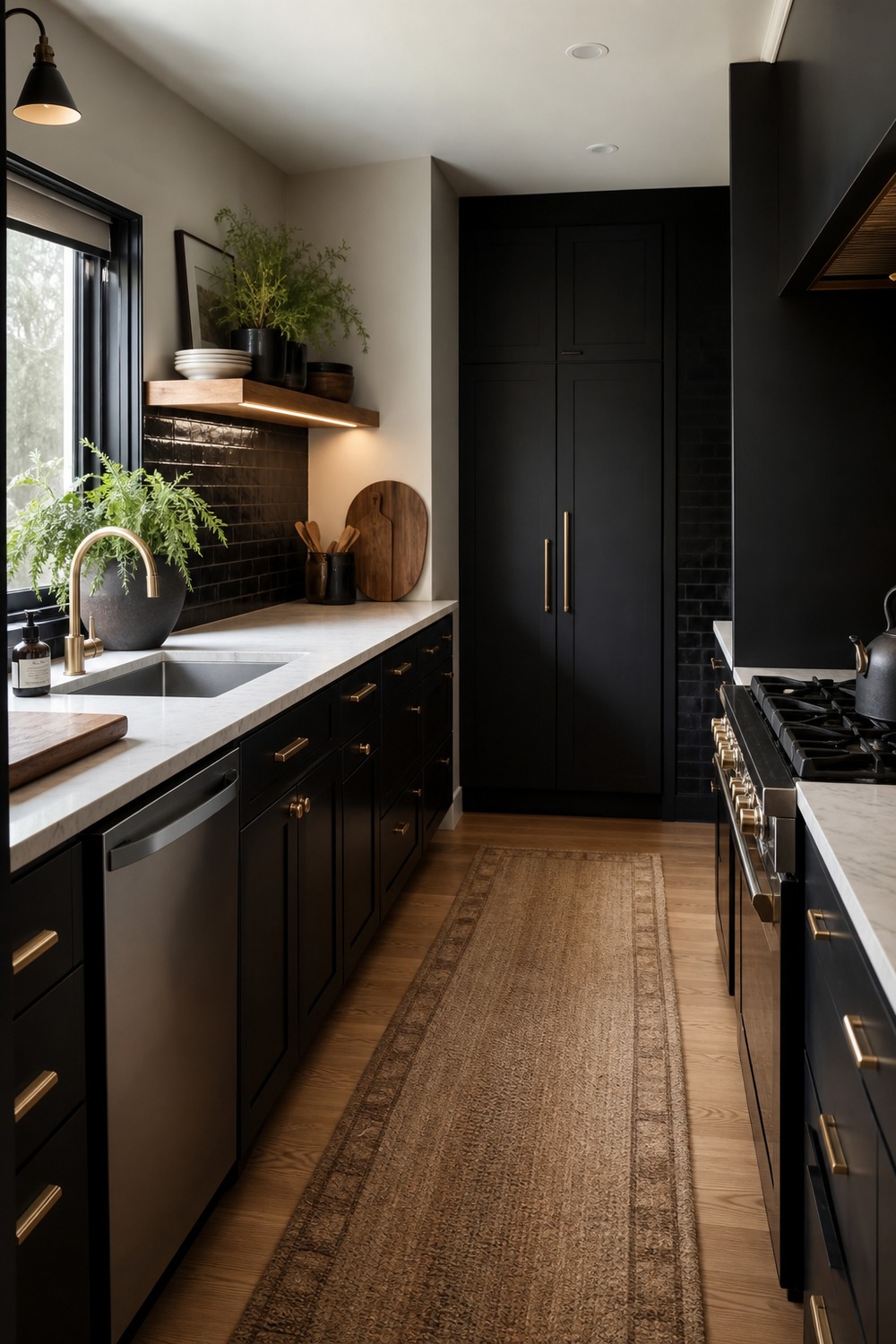
A black galley kitchen needs contrast more than anything, and this one has it. The cream counters and lighter wall area help the narrow layout breathe, while the black lower cabinets still make the space feel intentional.
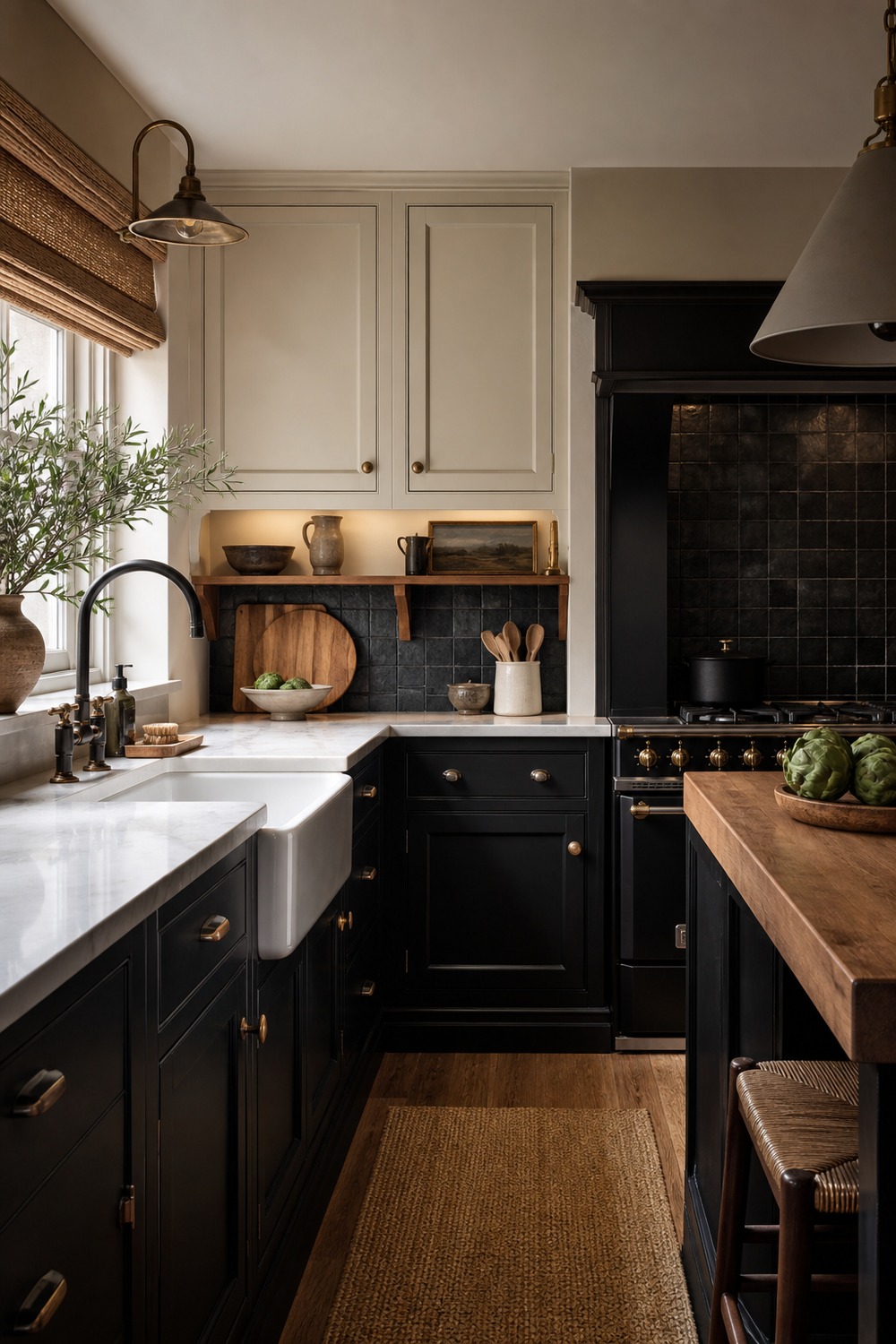
The black and cream cottage mix feels classic without being precious. I like how the darker base cabinets anchor the room, while the paneled cream pieces and open shelf keep it from feeling too formal.
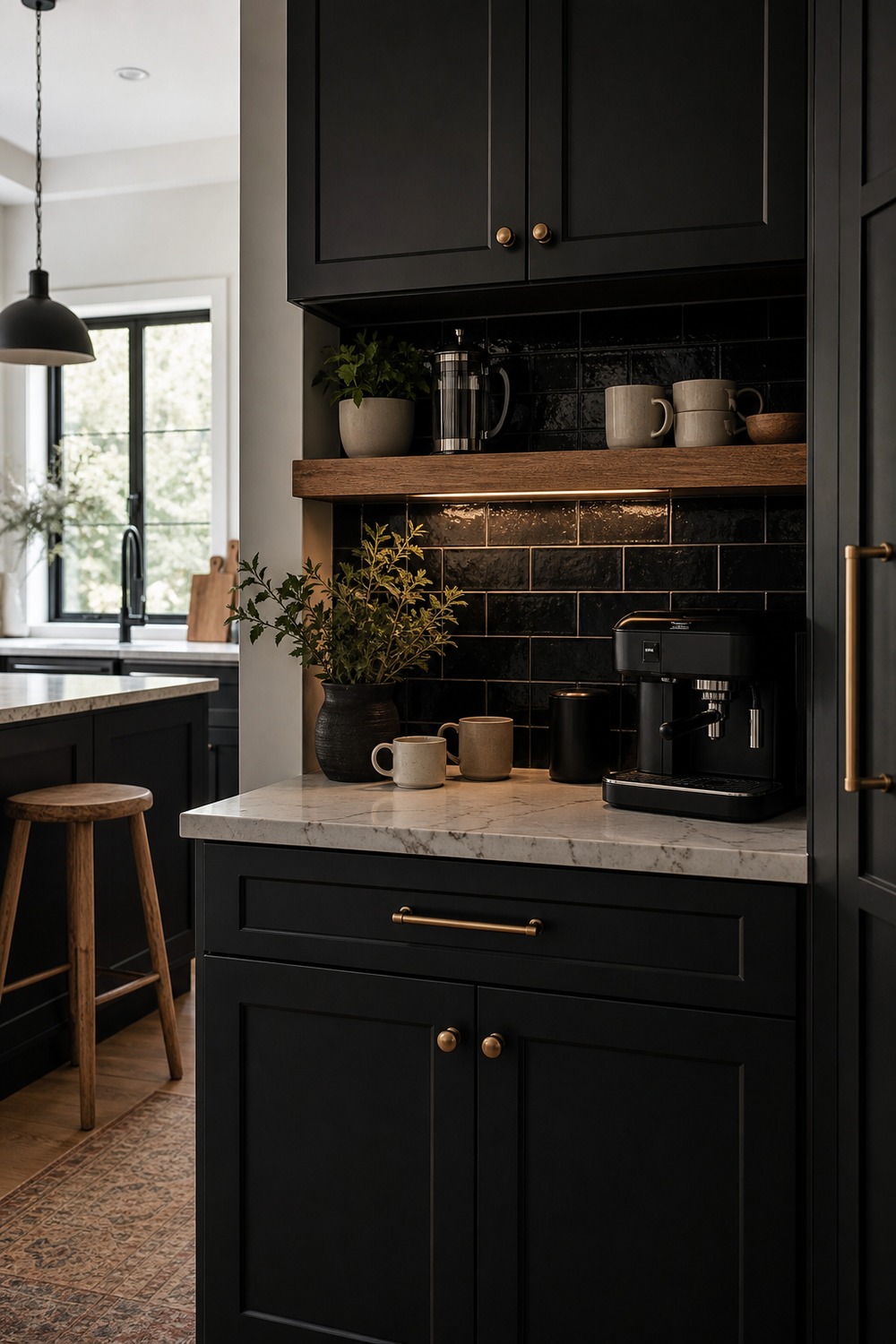
This black tile prep corner would be perfect for someone who wants a moody kitchen detail without repainting every cabinet. The mugs, shelf, and compact counter make the dark tile feel useful, not just decorative.
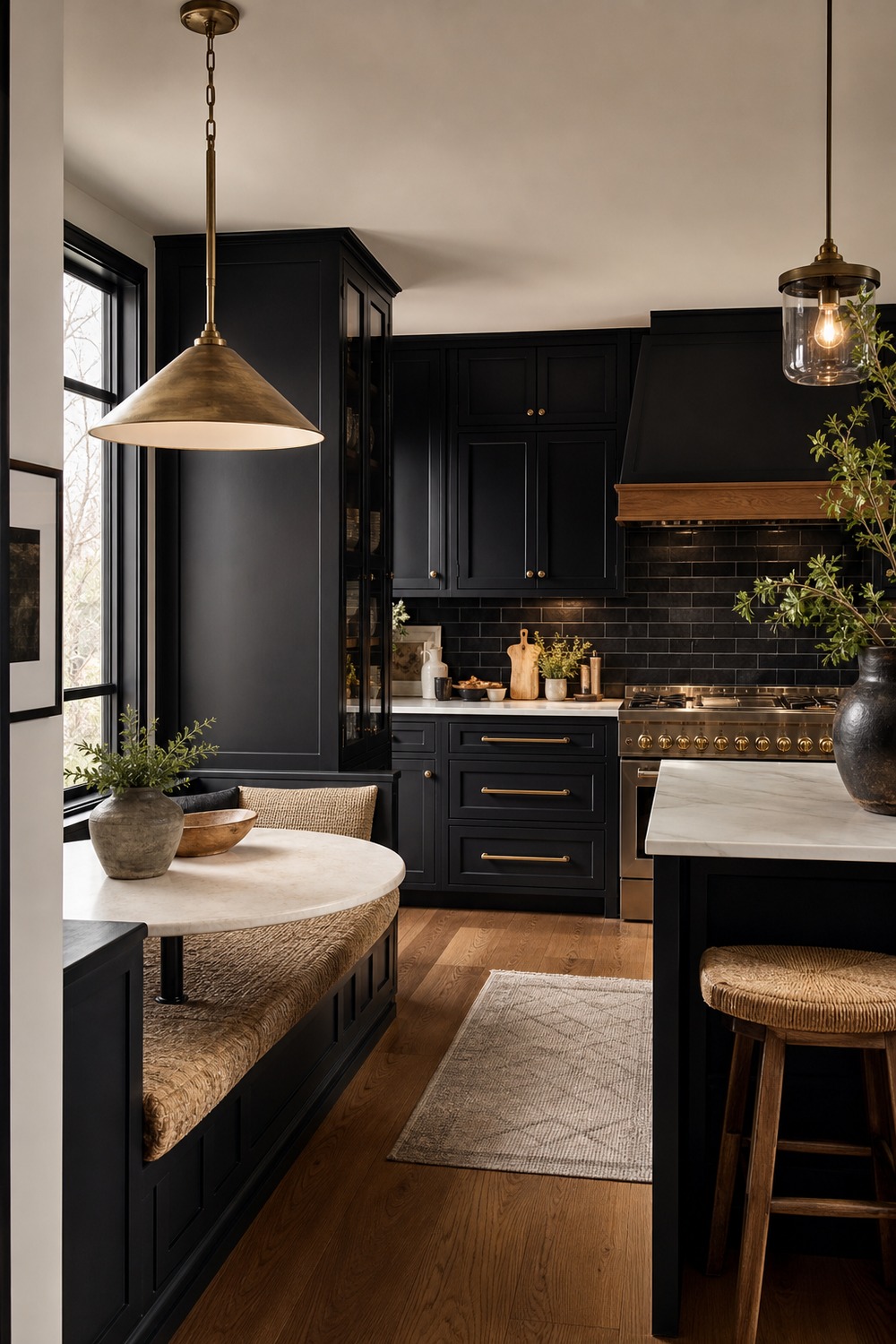
The breakfast nook keeps the black kitchen from feeling like all hard surfaces. A built-in bench, lighter table, and woven cushion give the dark cabinetry a softer landing spot for real mornings.
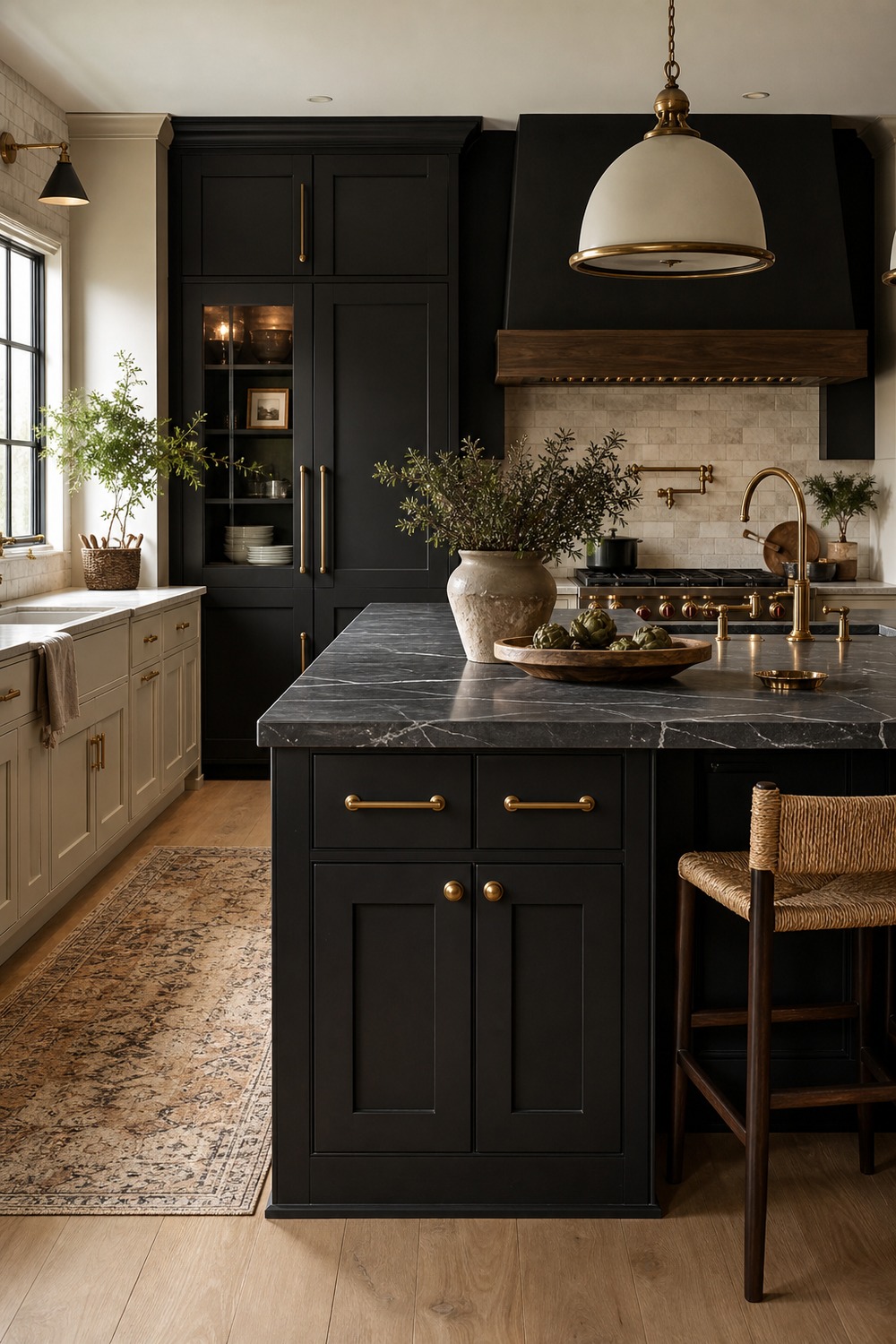
The black island with brass hardware feels polished, but not overly fancy. Brass is doing the small-detail work here, adding warmth around the drawers, sink area, and stone counter so the black finish does not feel cold.
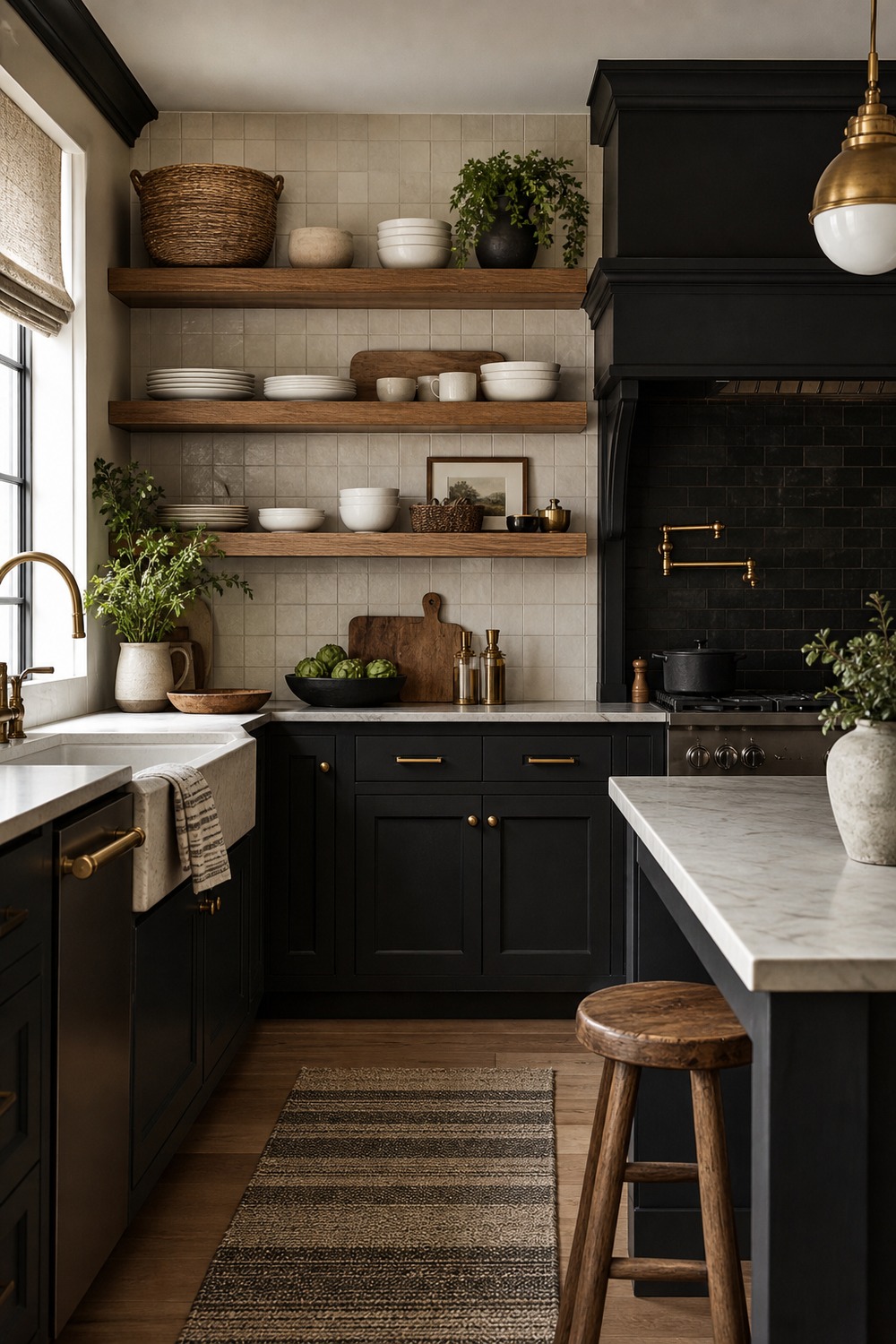
Open shelving can look messy fast, but this black kitchen wall keeps it controlled. White dishes, baskets, and cream tile create enough contrast that the shelves feel styled while still being believable storage.
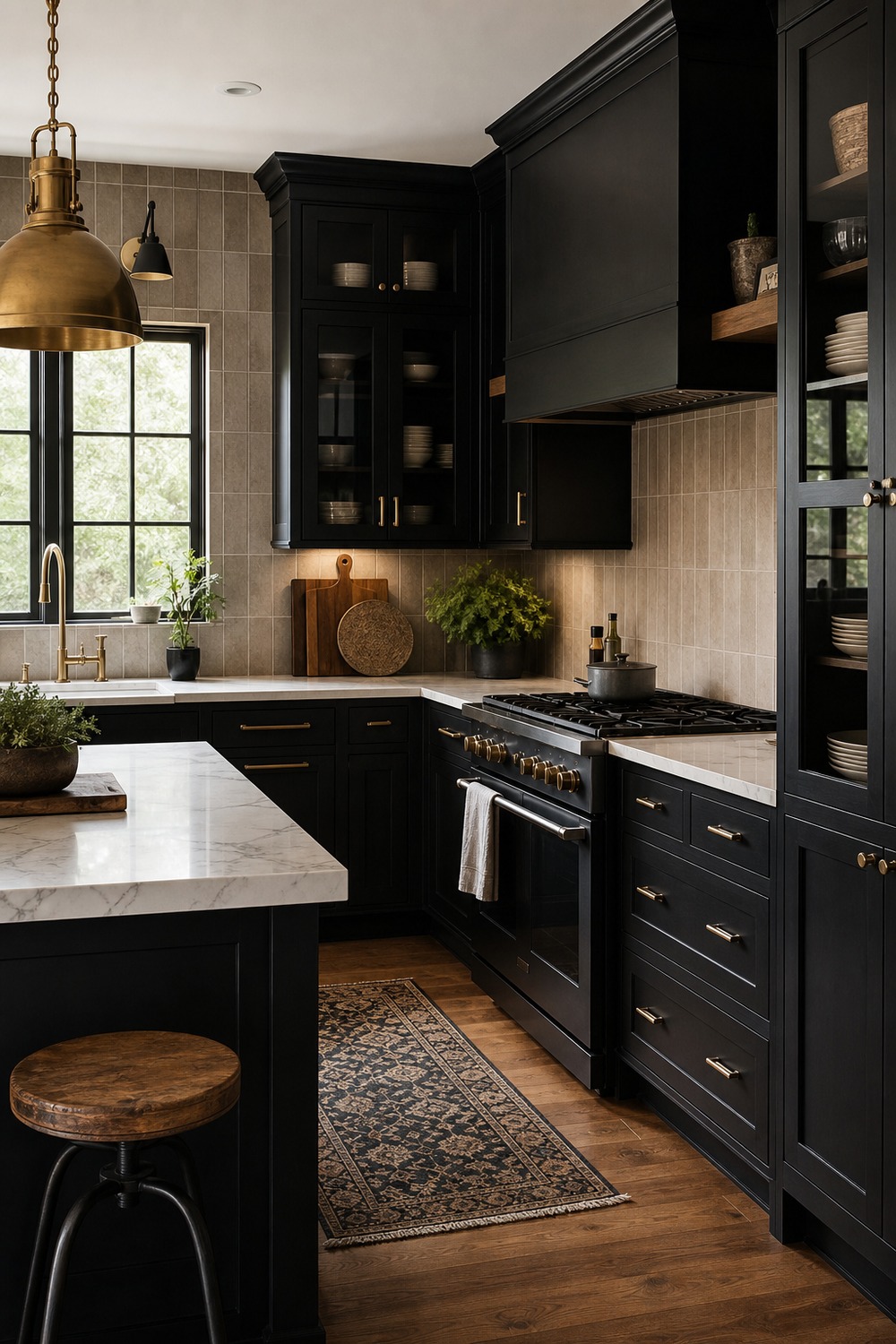
The taupe and black combination is quieter than a high-contrast black-and-white kitchen. That softer neutral wall color makes the cabinets feel moody in a more relaxed way, especially with the butcher-block detail and brass hardware.
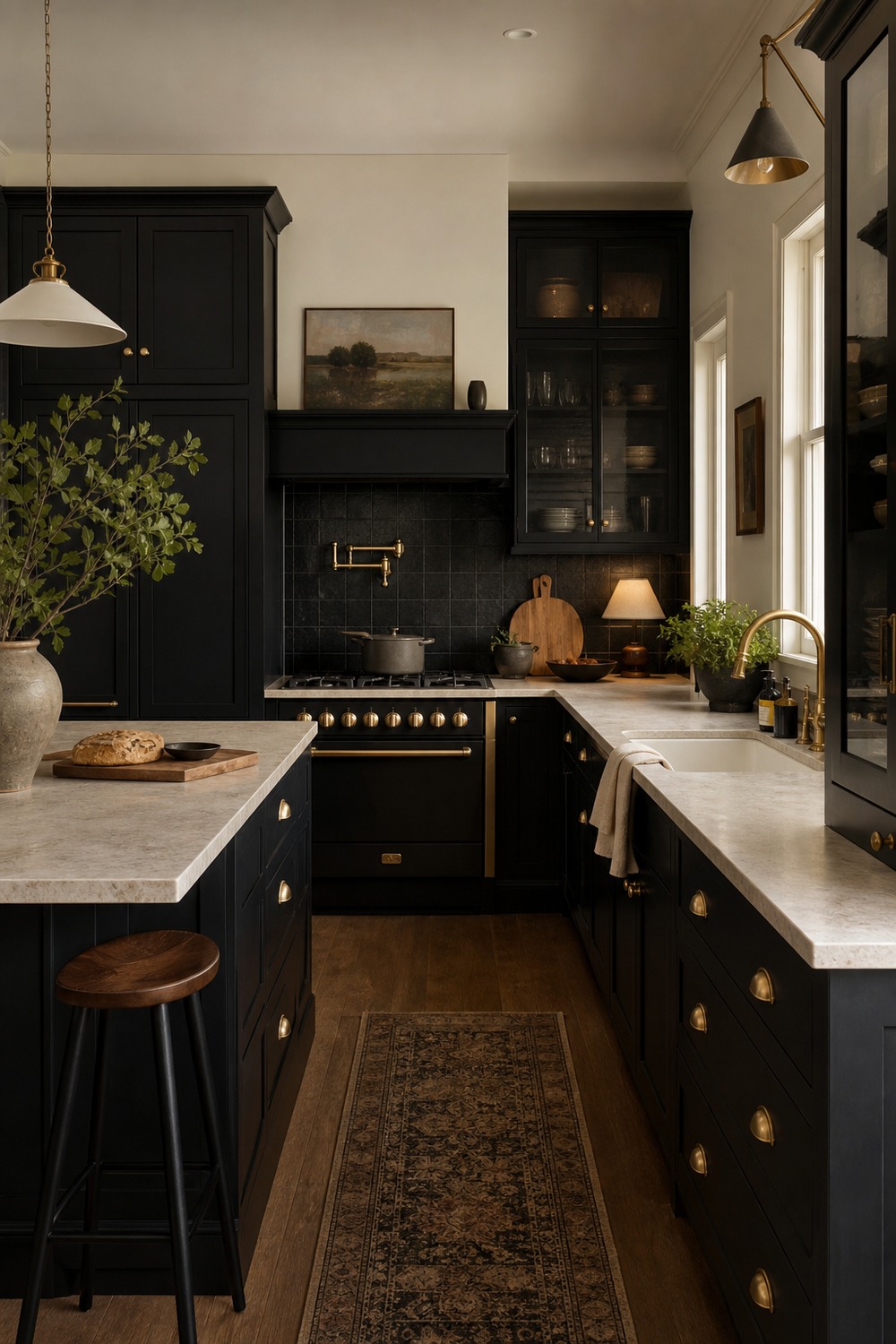
This classic black and cream kitchen has that old-house feeling without looking dated. The black cabinetry sets the weight of the room, while the cream walls and warm counter keep the color scheme from feeling too sharp.
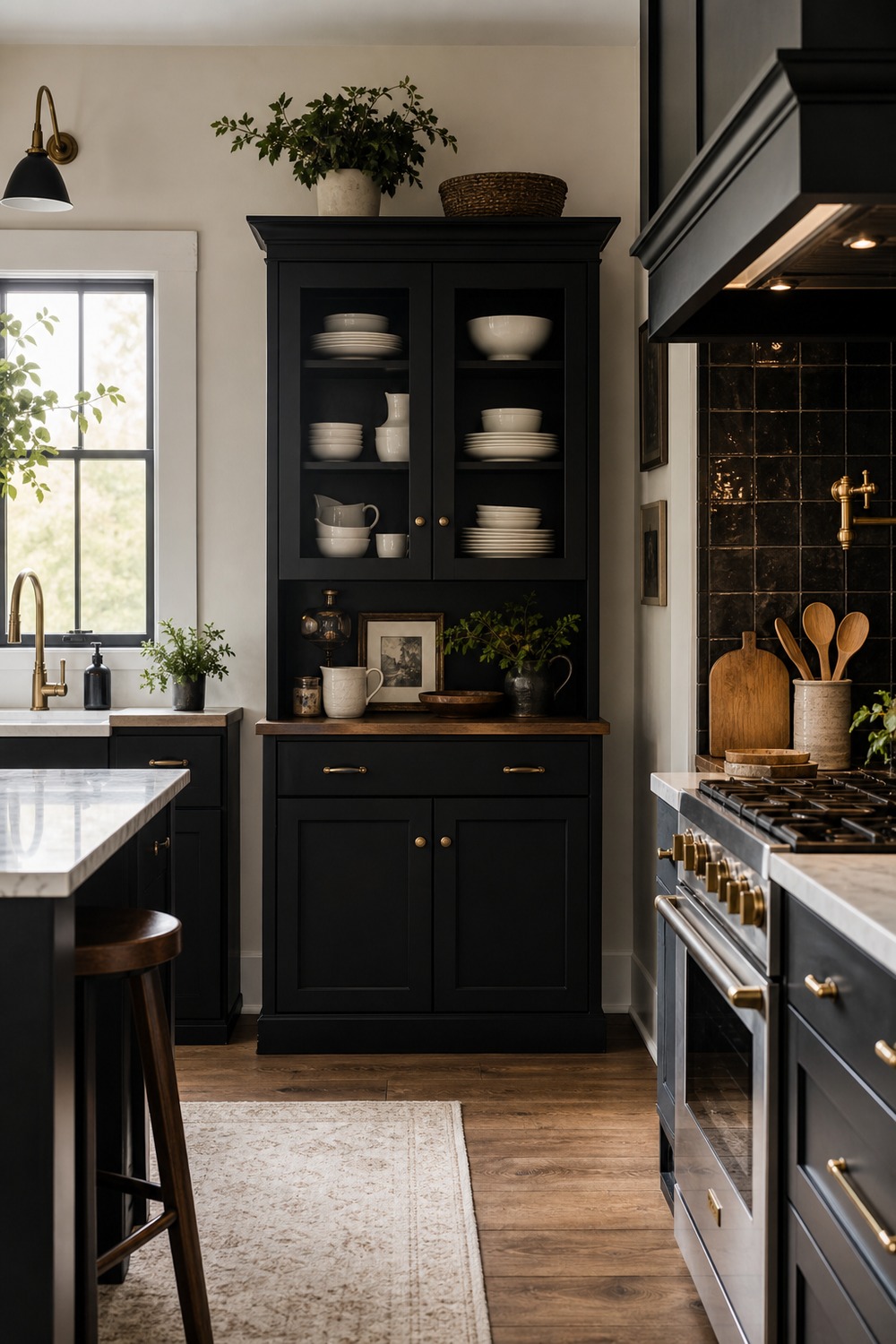
A freestanding black hutch is a nice option when the whole kitchen does not need to be dark. It gives the room one strong black feature, and the dishes, counter space, and light wall behind it keep everything practical.
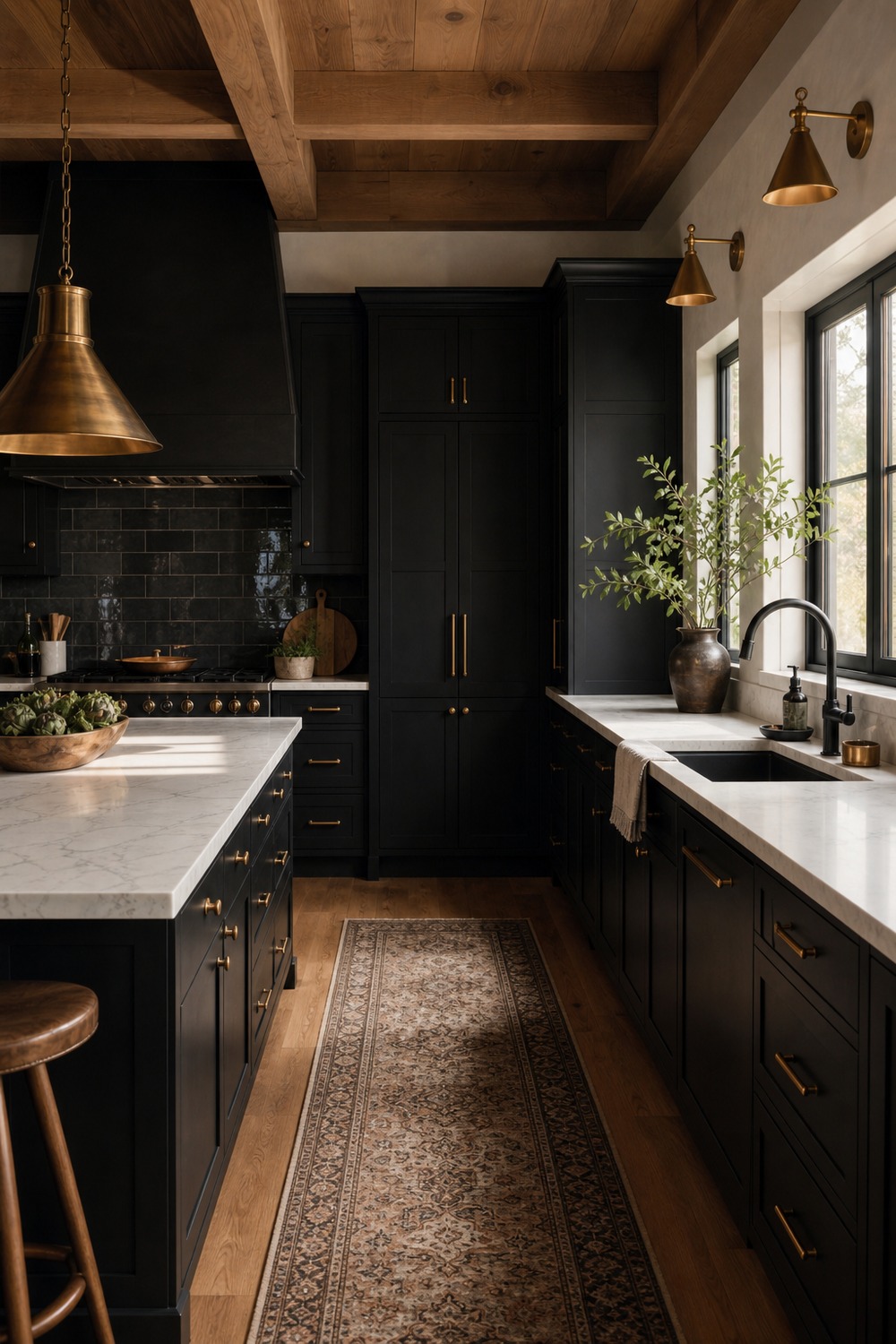
The warm wood ceiling changes the entire mood of this black kitchen. Instead of the dark cabinets feeling flat, the beams, brass lights, and white stone make the room feel layered from top to bottom.
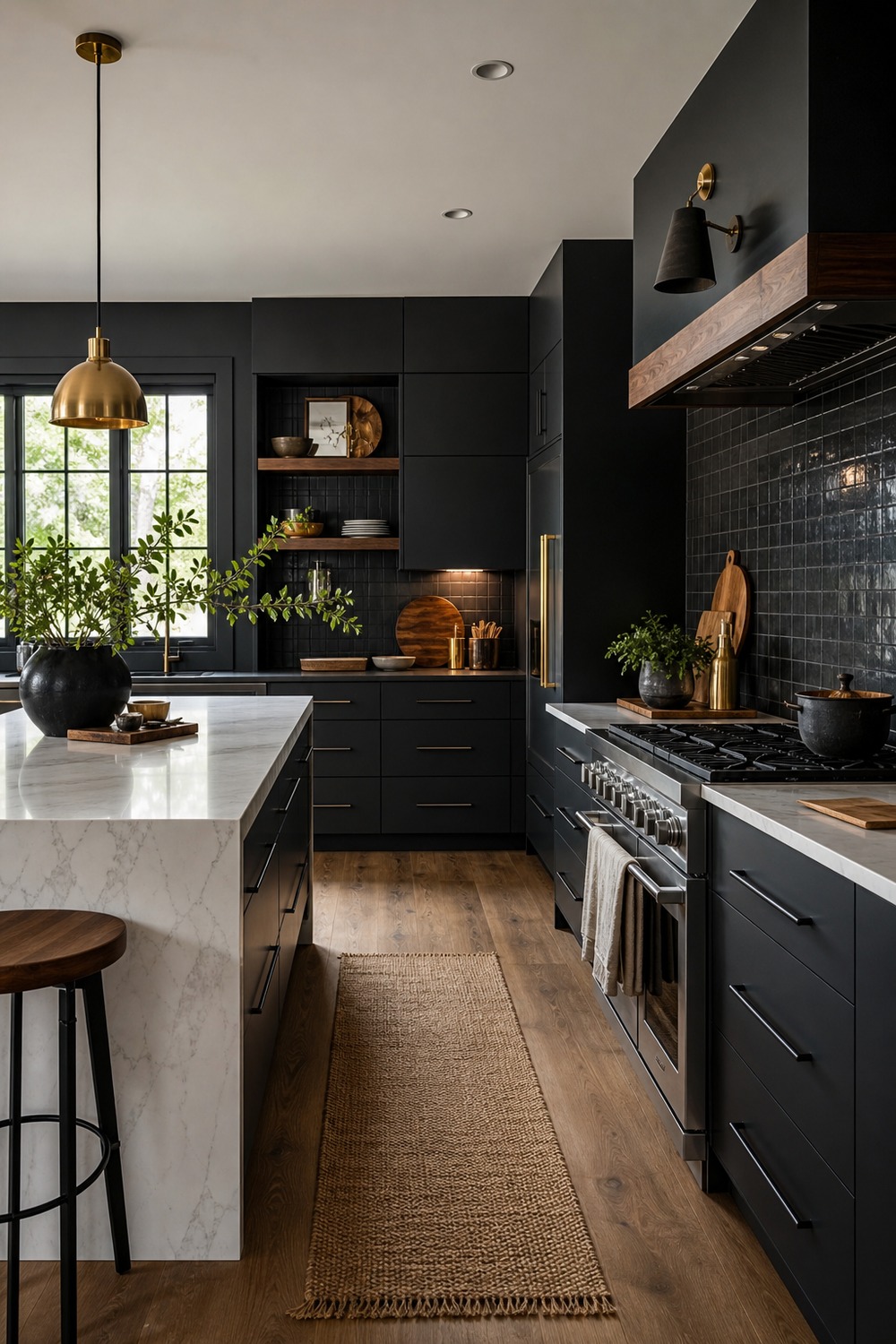
Flat-panel black cabinets can look very sleek, so the wood accents are important here. The waterfall counter, clean lines, and warmer shelving keep the modern kitchen from feeling too cold or empty.
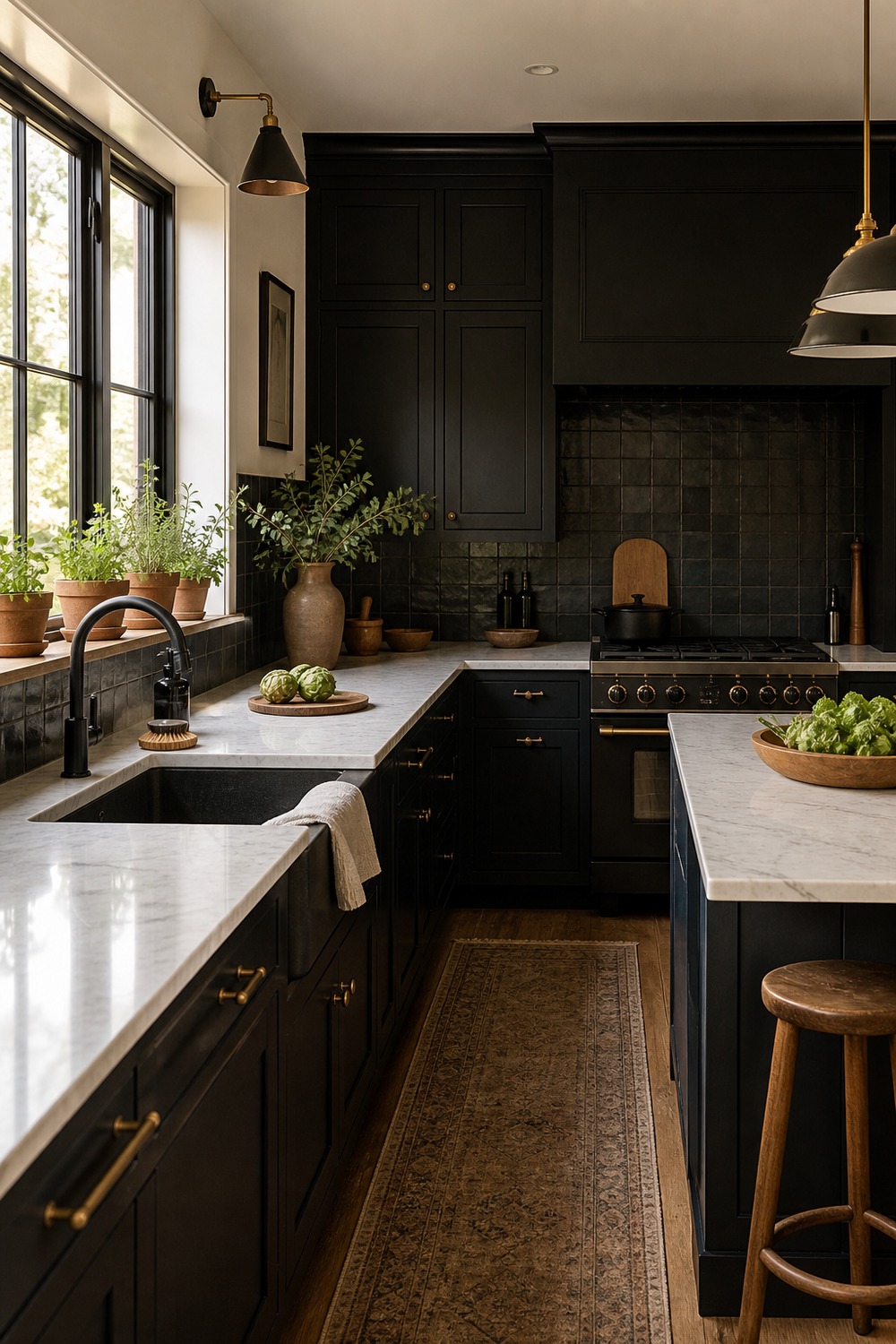
The window over the sink saves this black kitchen from feeling boxed in. Natural light, an oak sill, and simple counters make the dark lower cabinets feel grounded while the work area still feels bright.
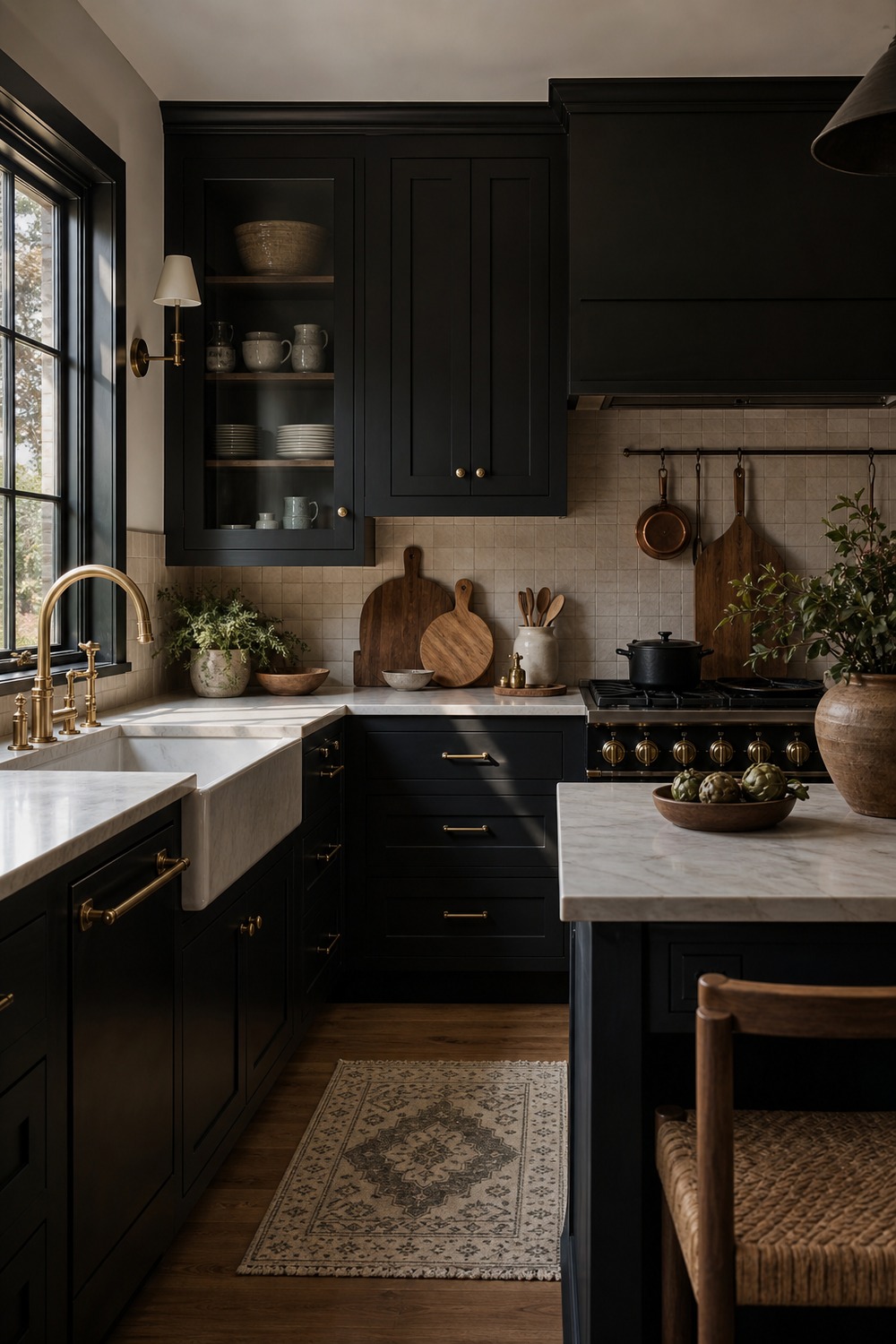
This moody corner works because the black cabinets are balanced with touchable details. Cutting boards, cream tile, and a brass faucet add enough warmth that the dark palette feels collected rather than harsh.
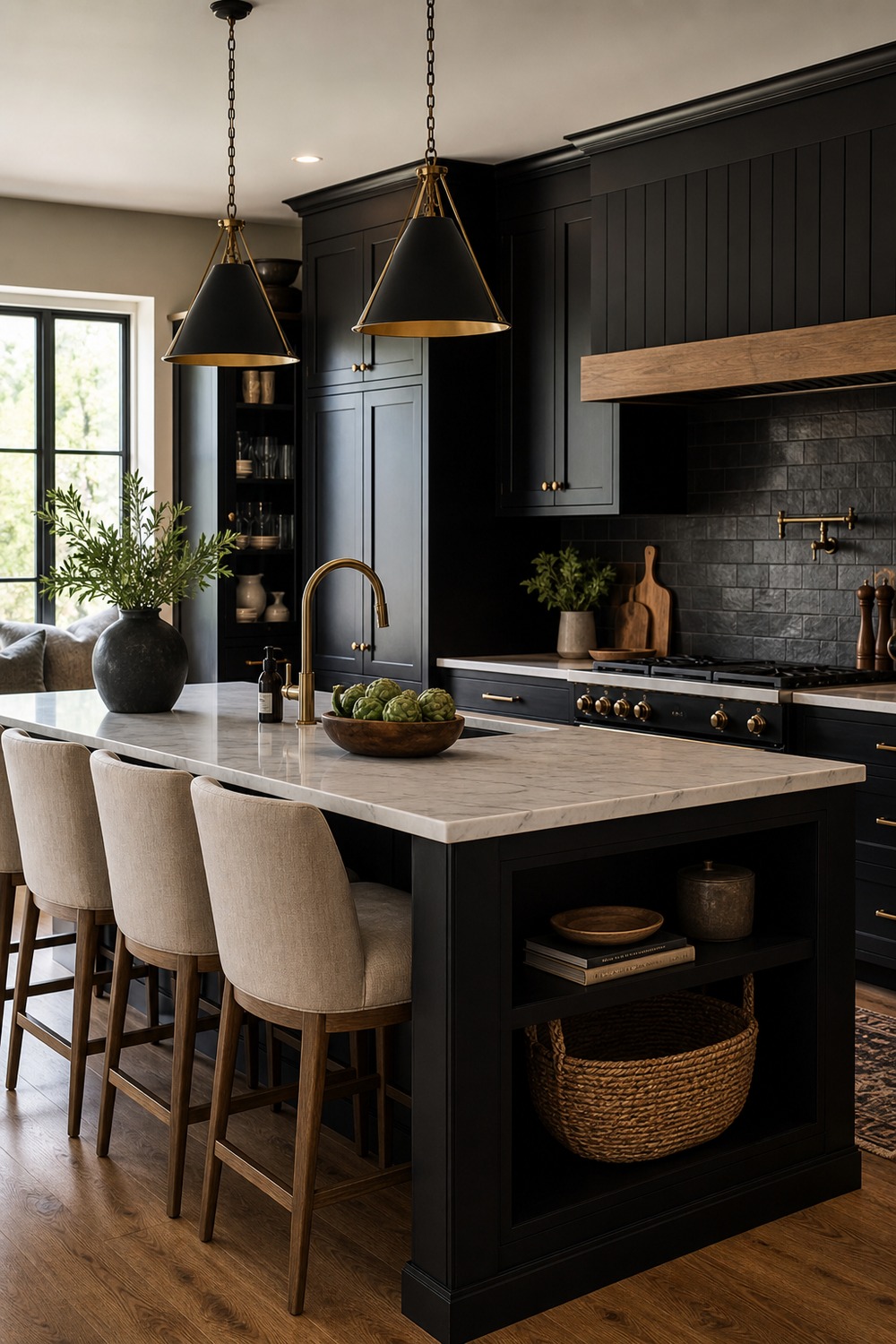
The island seating makes the black color scheme feel social instead of just dramatic. Cream stools and pendant lighting bring in contrast right where people gather, which helps the dark island feel inviting.
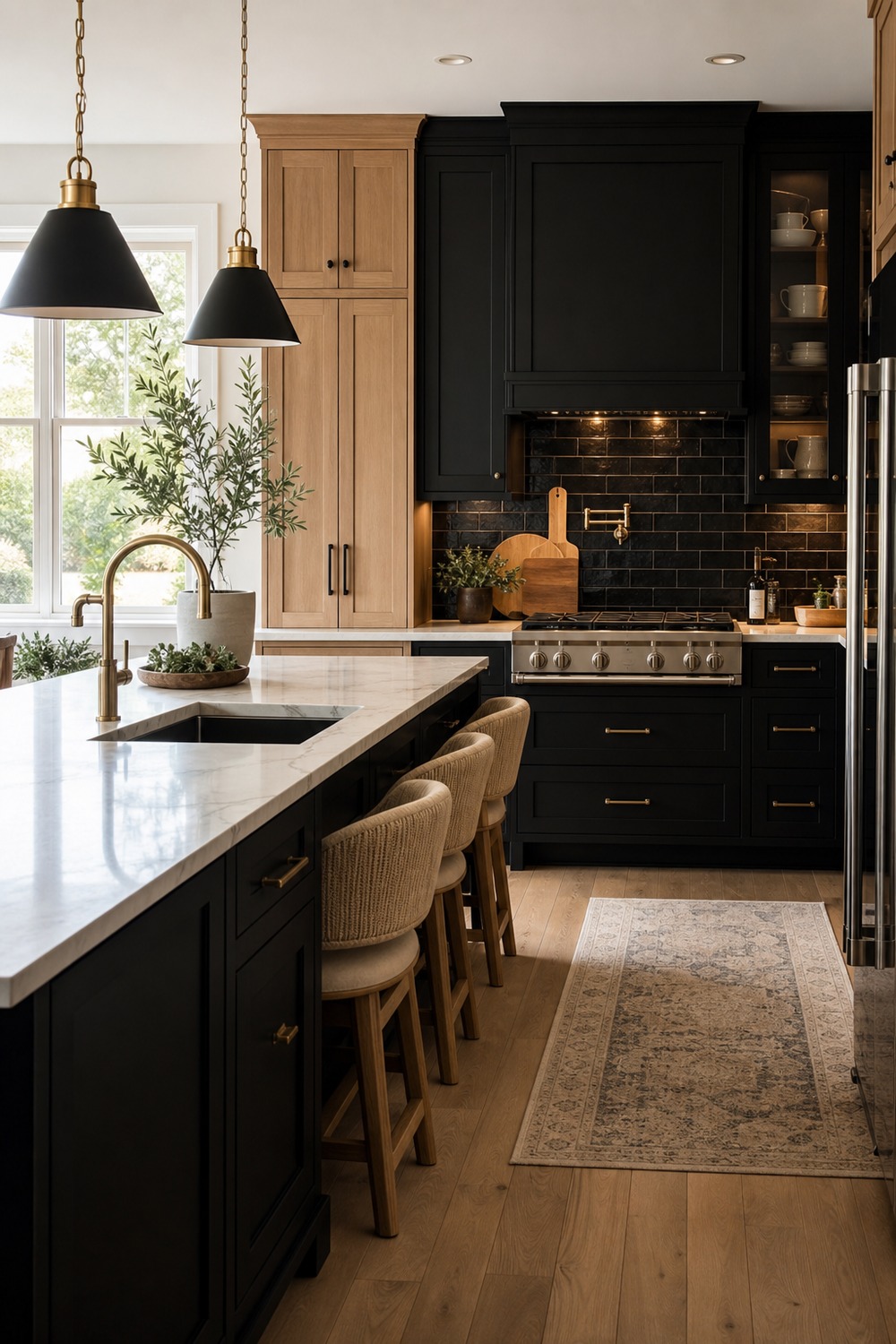
Light oak with black is a good compromise if an all-black kitchen feels too intense. The oak cabinets brighten the room, while the black island and darker accents still give the color scheme a strong edge.
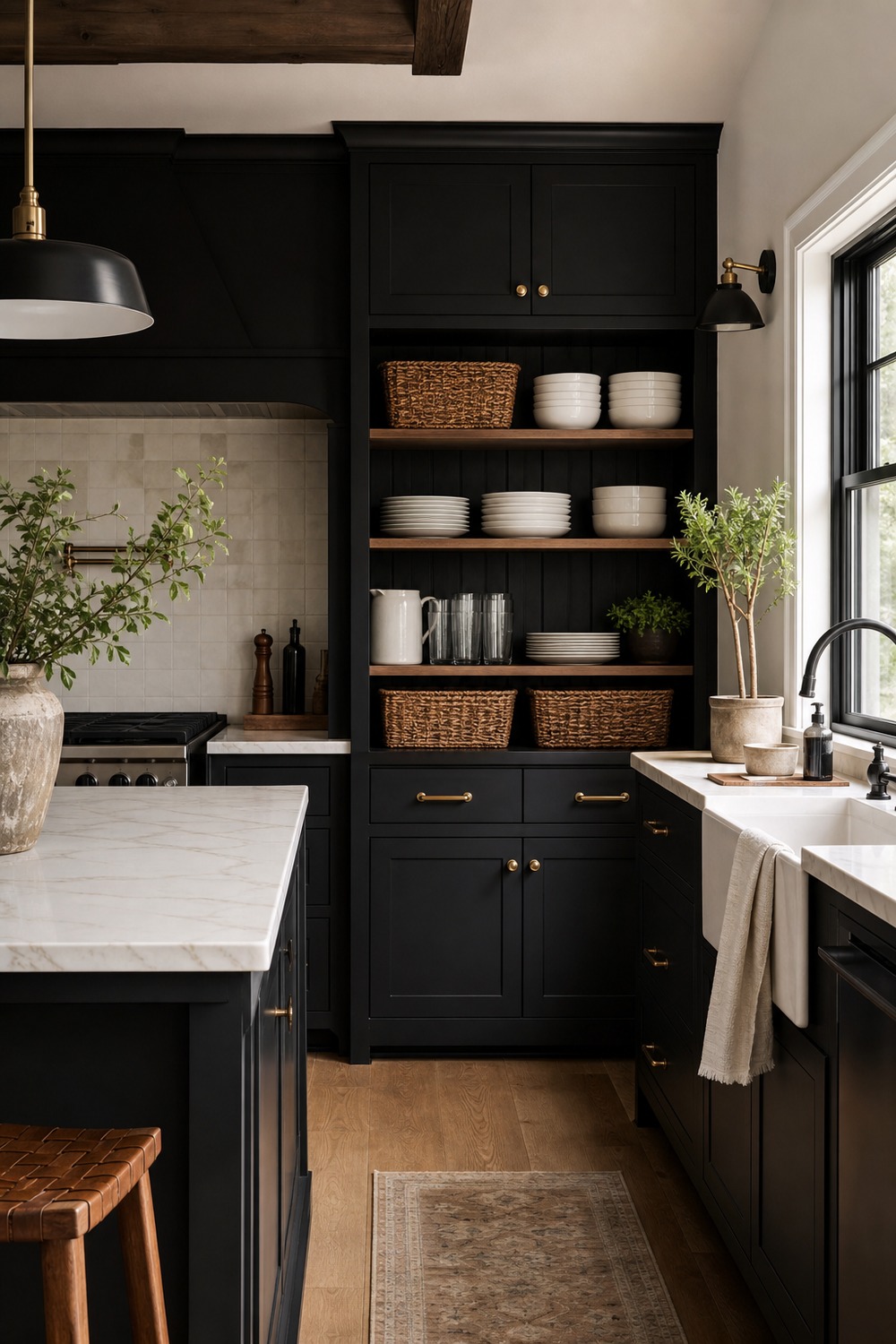
The dish storage wall is simple, but it adds a lot of function to the black kitchen idea. Open shelves, white dishes, and a cream backsplash break up the dark cabinetry so the storage feels useful and not too heavy.
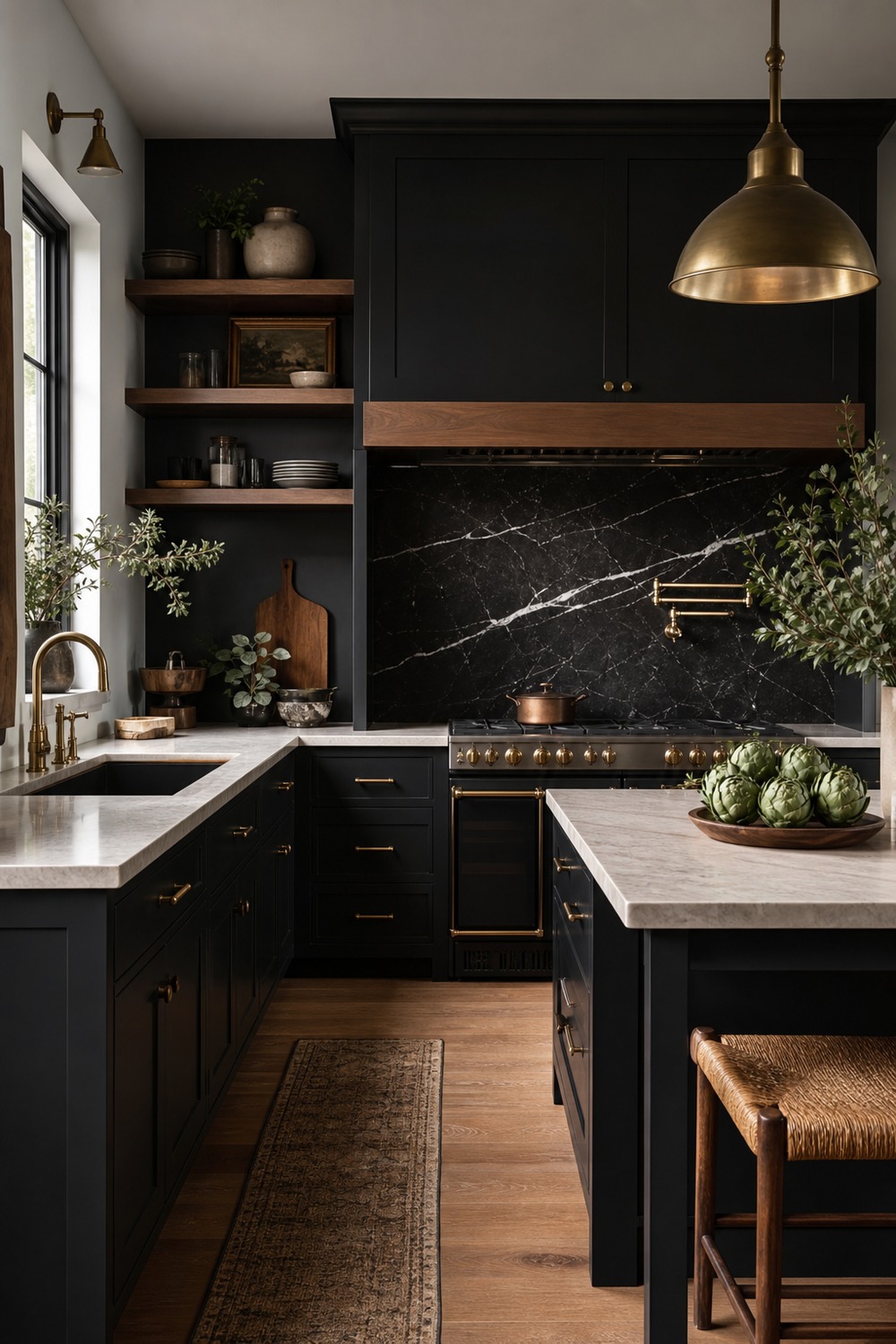
Black marble and wood is one of the moodier combinations here, but it still has warmth. The walnut shelves, brass details, and lighter counter space keep the dark stone from taking over the whole kitchen.

I work in tech, but my taste in design is straight out of a slow European village. Give me arches, aged brass, and a room that smells like books and coffee. That’s my kind of home.