A bedroom desk should feel connected to the room, not dropped into the last empty corner. A little breathing space around the chair, a warm task lamp, and storage close enough to reach make studying easier without turning the bedroom into an office.
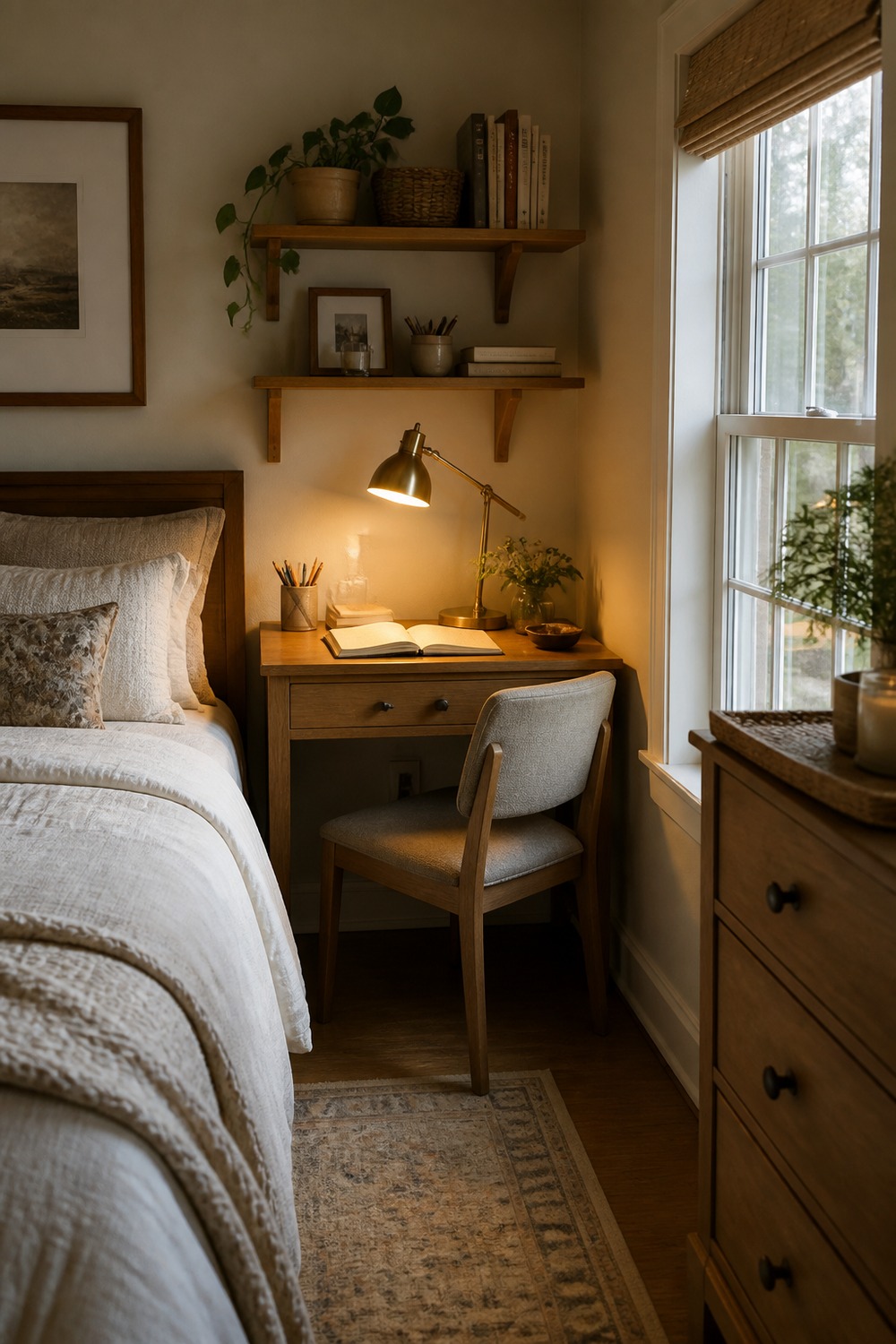
This narrow desk earns its place twice: it works as a study surface during the day and still holds a bedside lamp at night. One drawer and a tucked-in chair keep the setup useful without making that side of the bed feel packed.
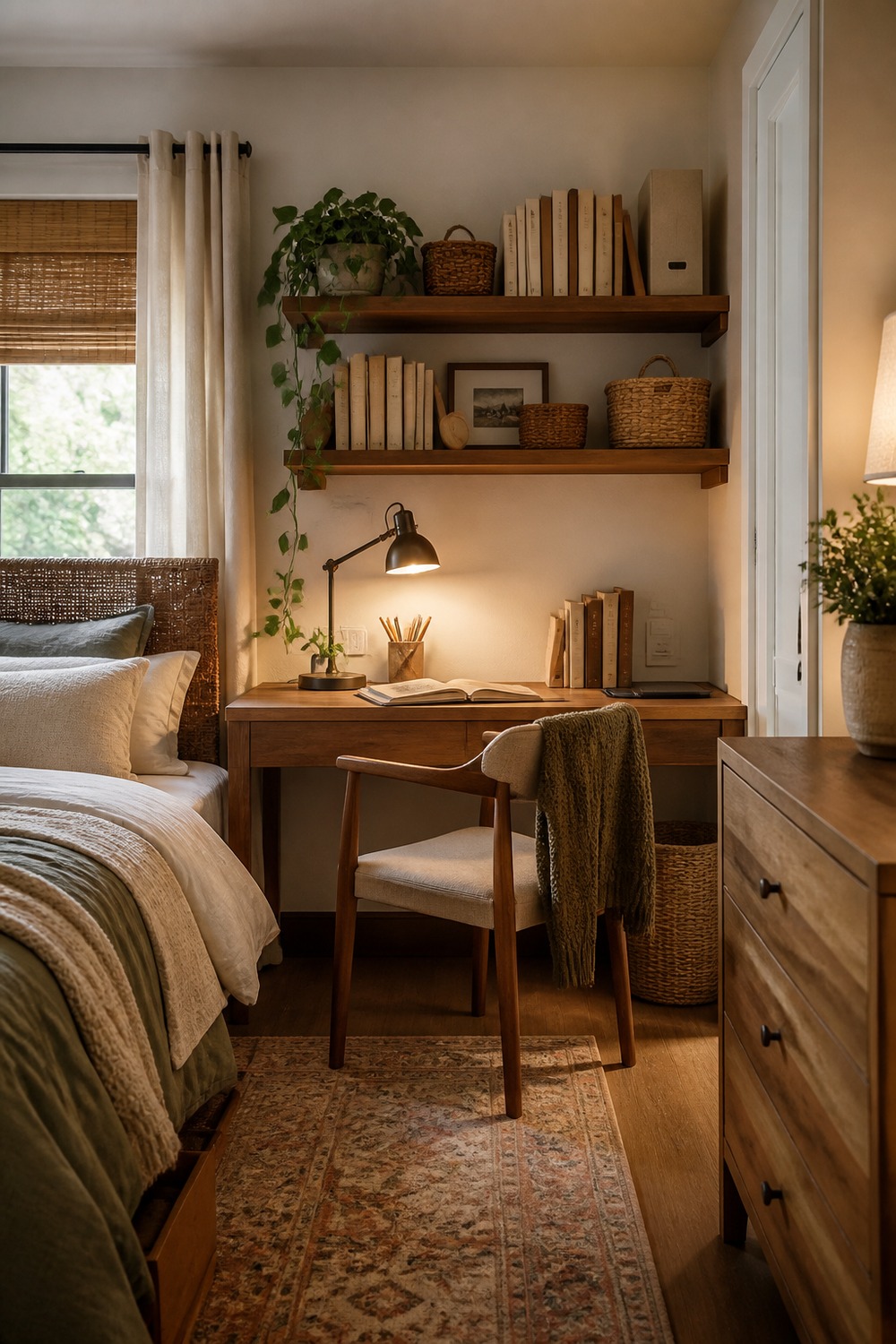
The shelves do the heavy lifting here. Books and baskets stay above the desktop, so there is room to spread out a notebook under the low-glare lamp instead of studying around piles of supplies.
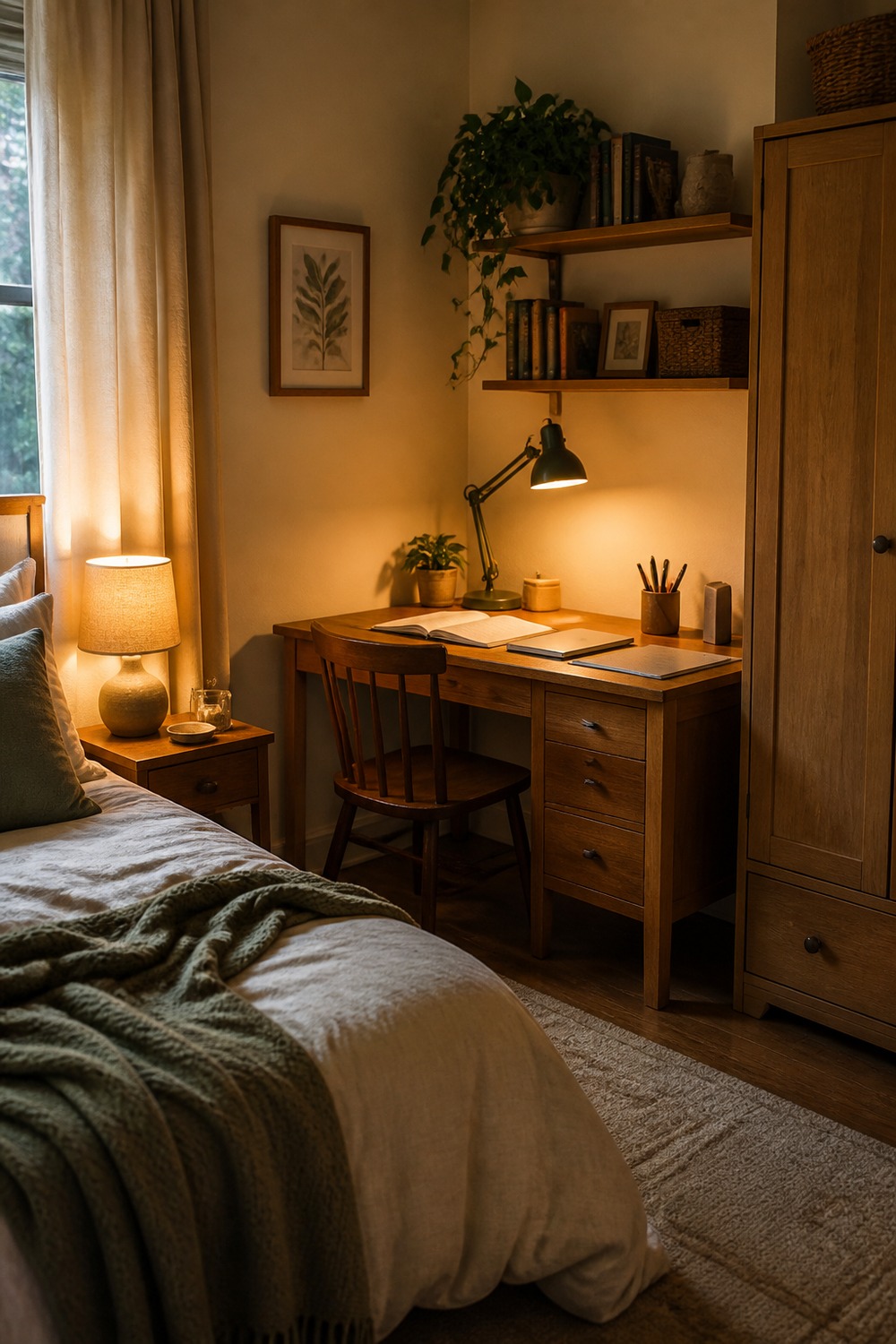
That amber task lamp makes the corner feel softer than a typical homework station. The desk fits neatly against the wall, and the rug edge visually ties it back to the sleeping area rather than creating a separate office zone.
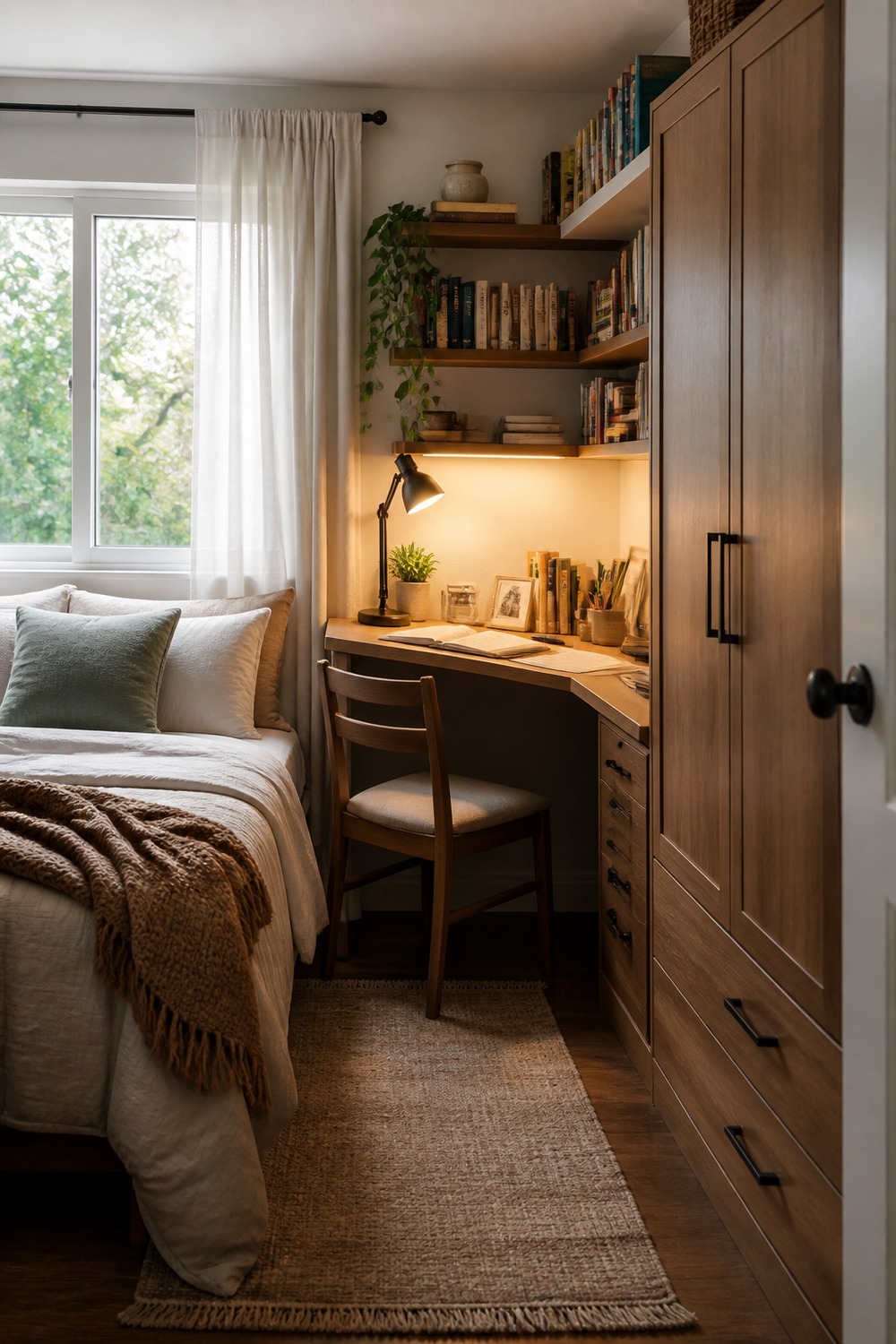
Lining up the bed, desk, and wardrobe along one wall is a smart move in a narrow bedroom. Closed storage hides the visual clutter, and the open chair space keeps the arrangement from feeling like a row of bulky furniture.
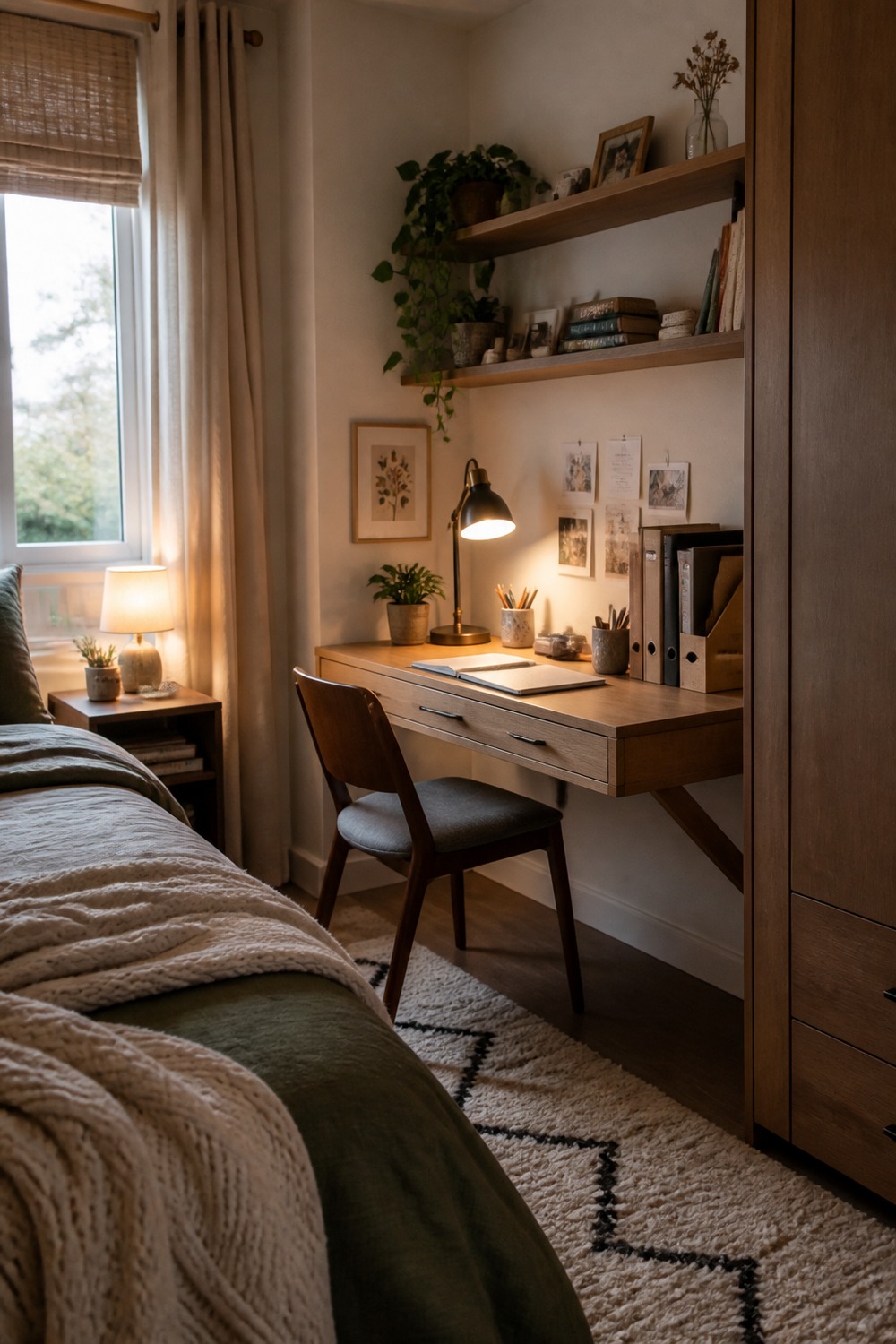
A floating desk leaves more floor showing, which can make a small bedroom feel noticeably lighter. The shallow drawer handles pens and chargers, while the sturdy wall supports make the surface look genuinely usable for daily work.
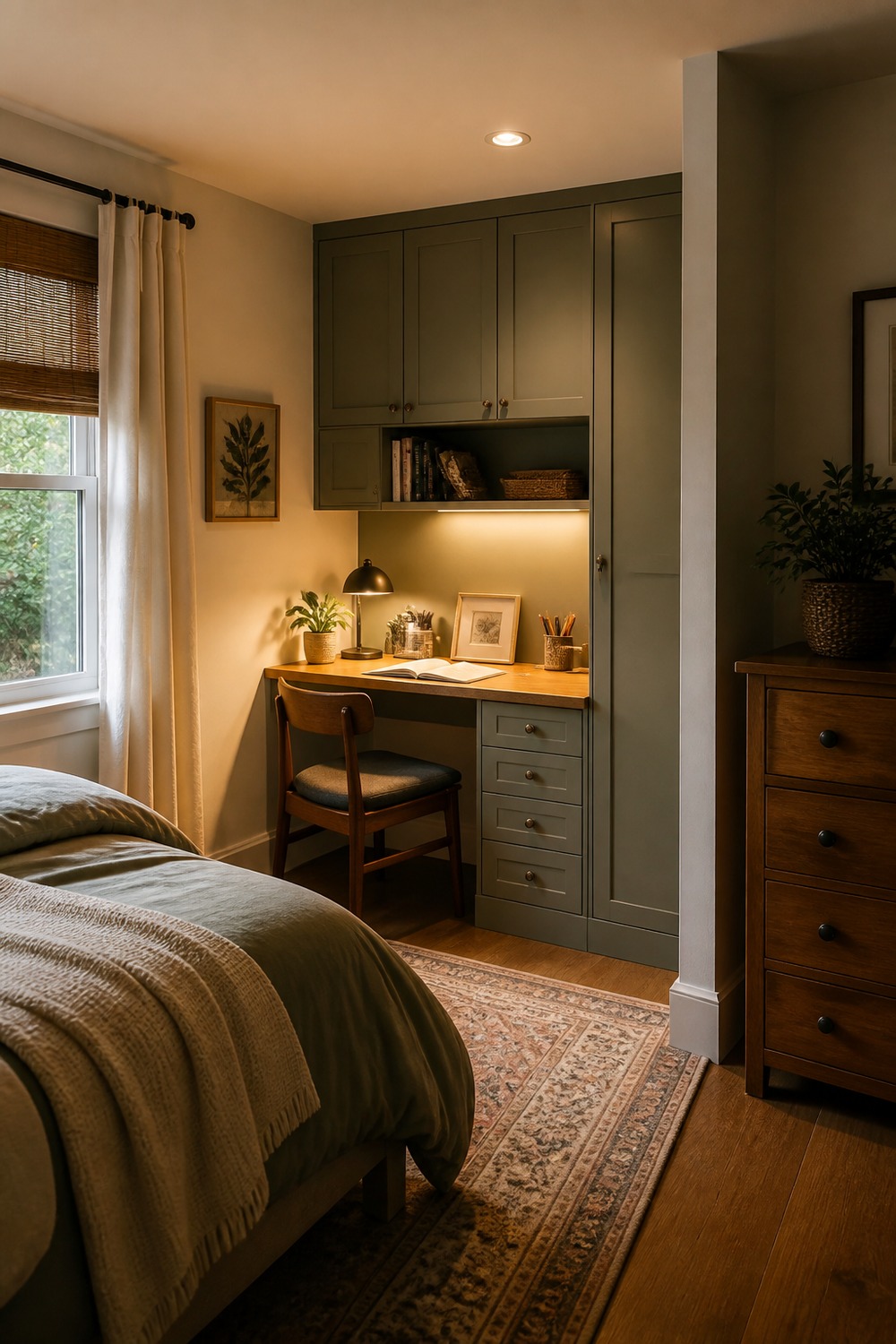
Closed cabinets are the best part of this alcove. School papers and extra supplies can disappear at the end of the day, and the under-shelf light means the recessed desk still feels bright enough for reading.
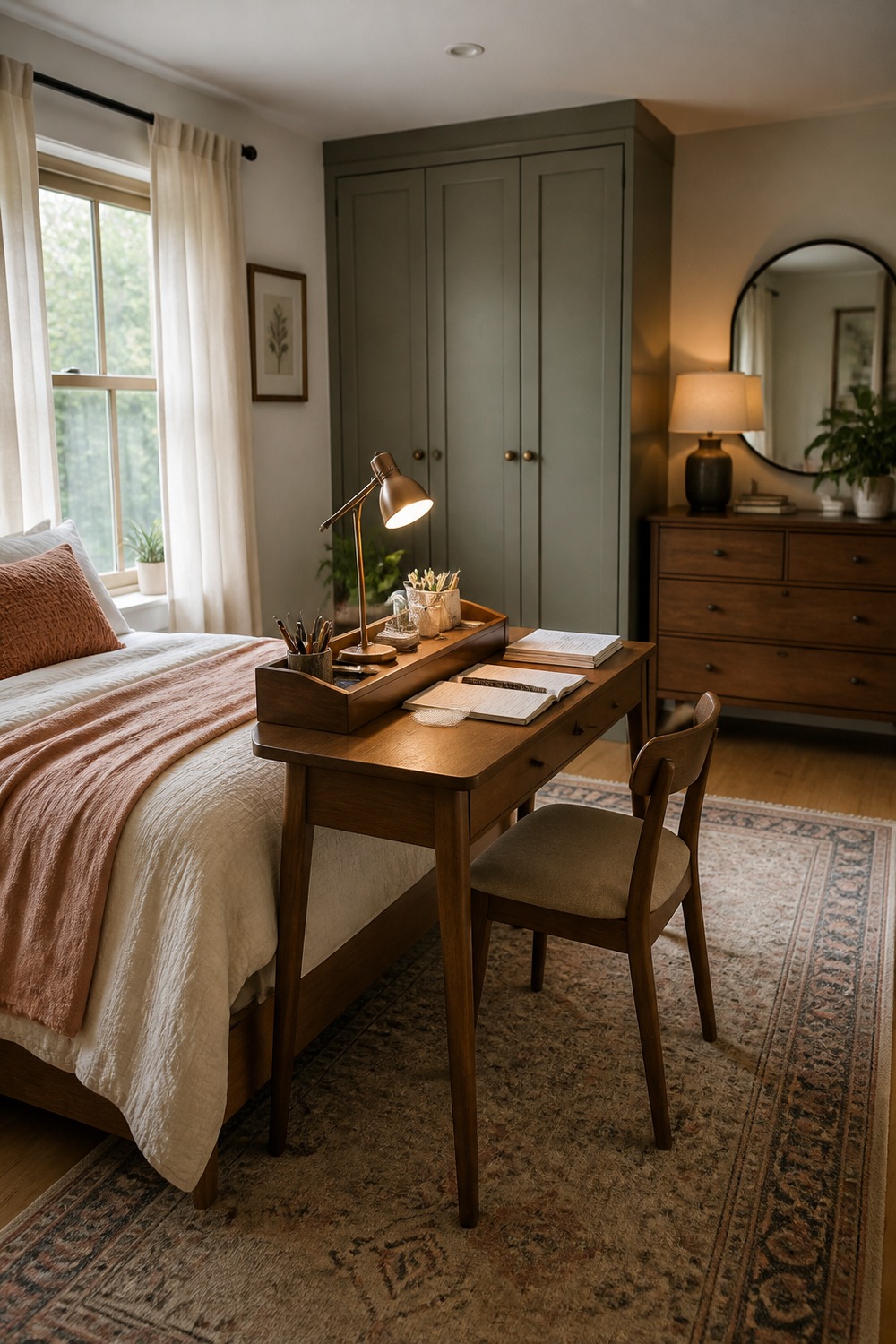
Placing a desk near the foot of the bed can work when there is a clear route around both pieces. Here, the open side of the chair and the defined rug make the study zone feel intentional instead of like furniture parked in the aisle.
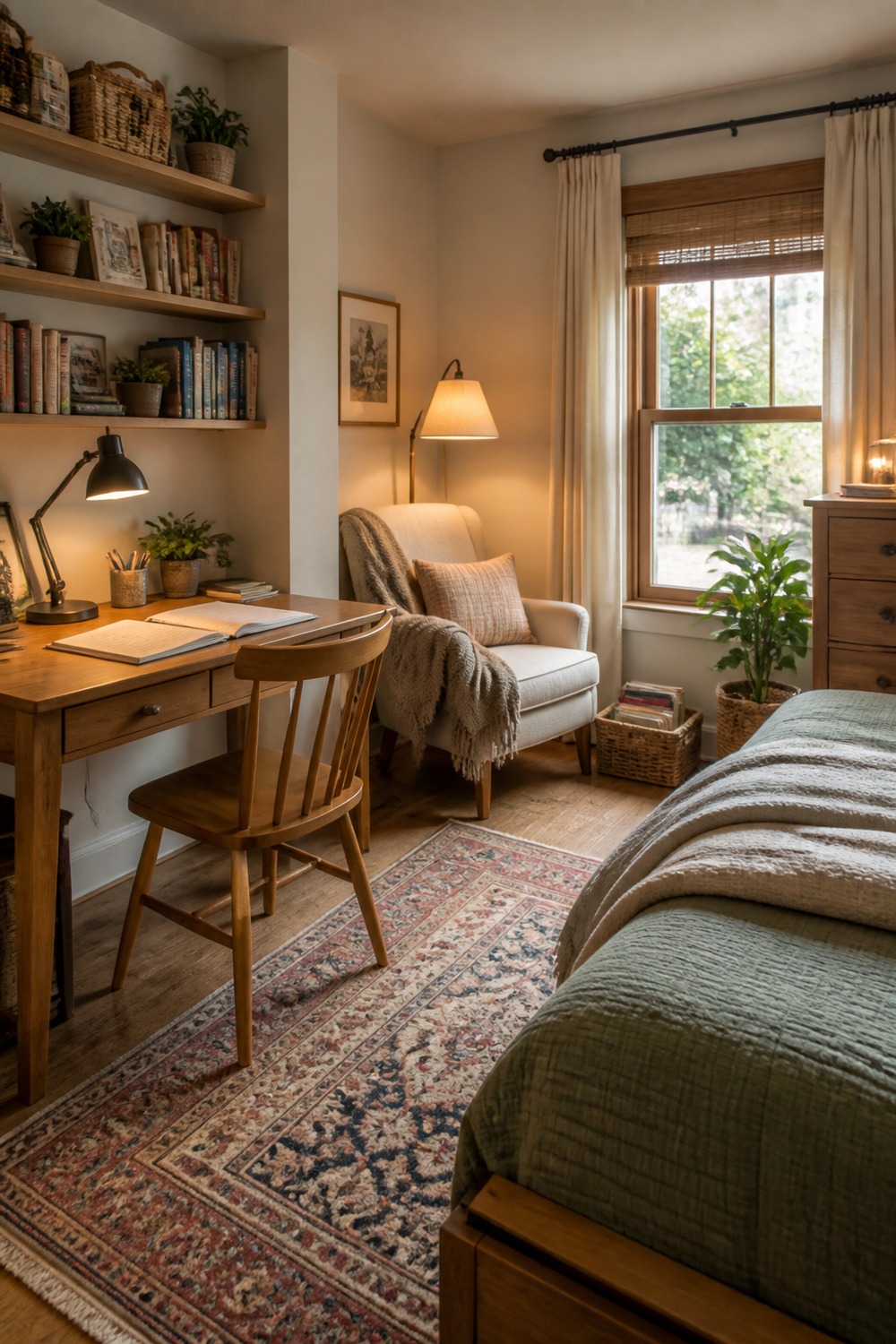
This room gives reading and homework separate places without needing much extra square footage. The chair, floor lamp, and basket of books make a relaxed corner, while the nearby desk stays clear for writing or computer work.
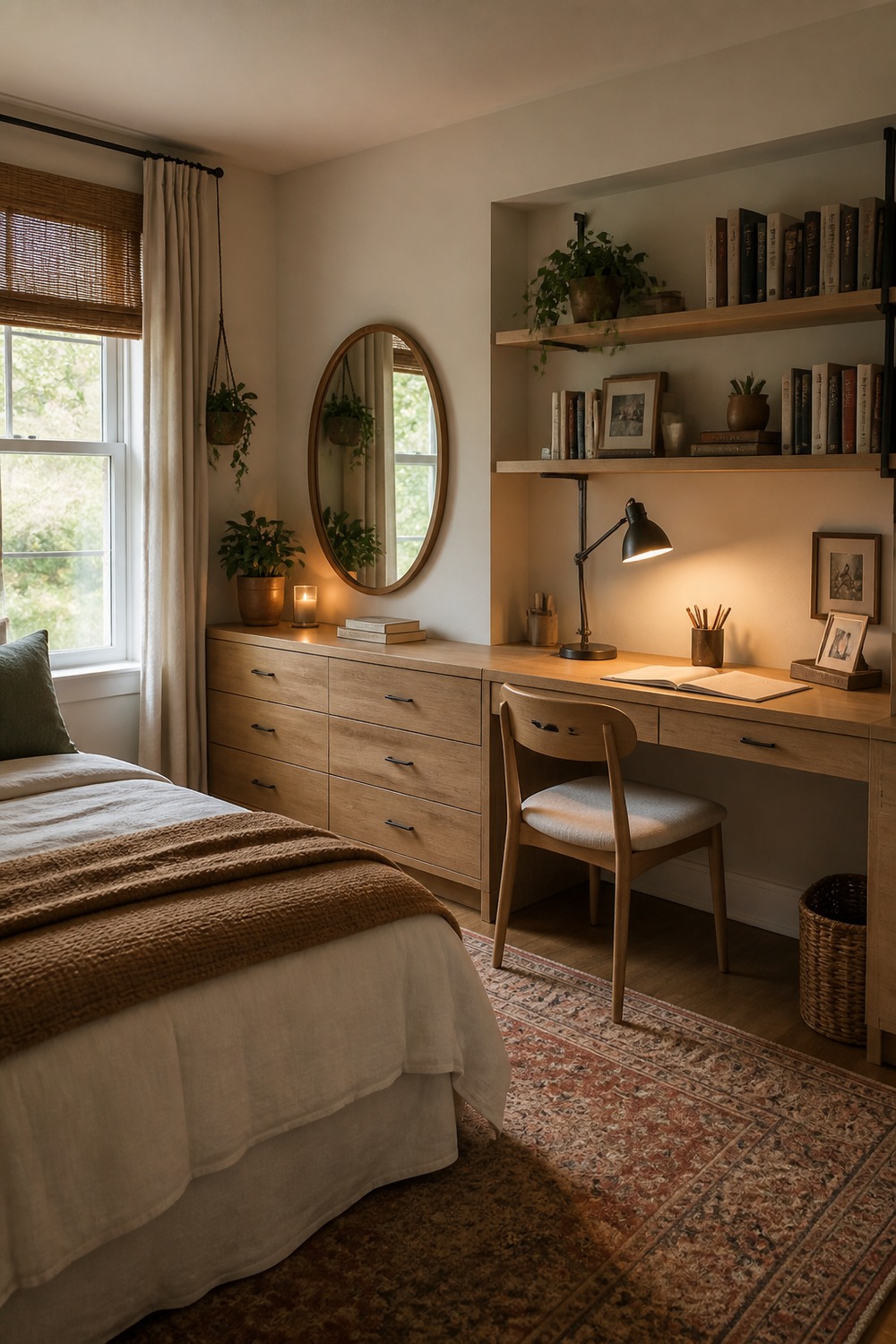
Combining dresser drawers with a proper seated work area is such an efficient use of one long wall. The mirror sits away from the main writing surface, and the task lamp keeps the desk portion from feeling like an afterthought.
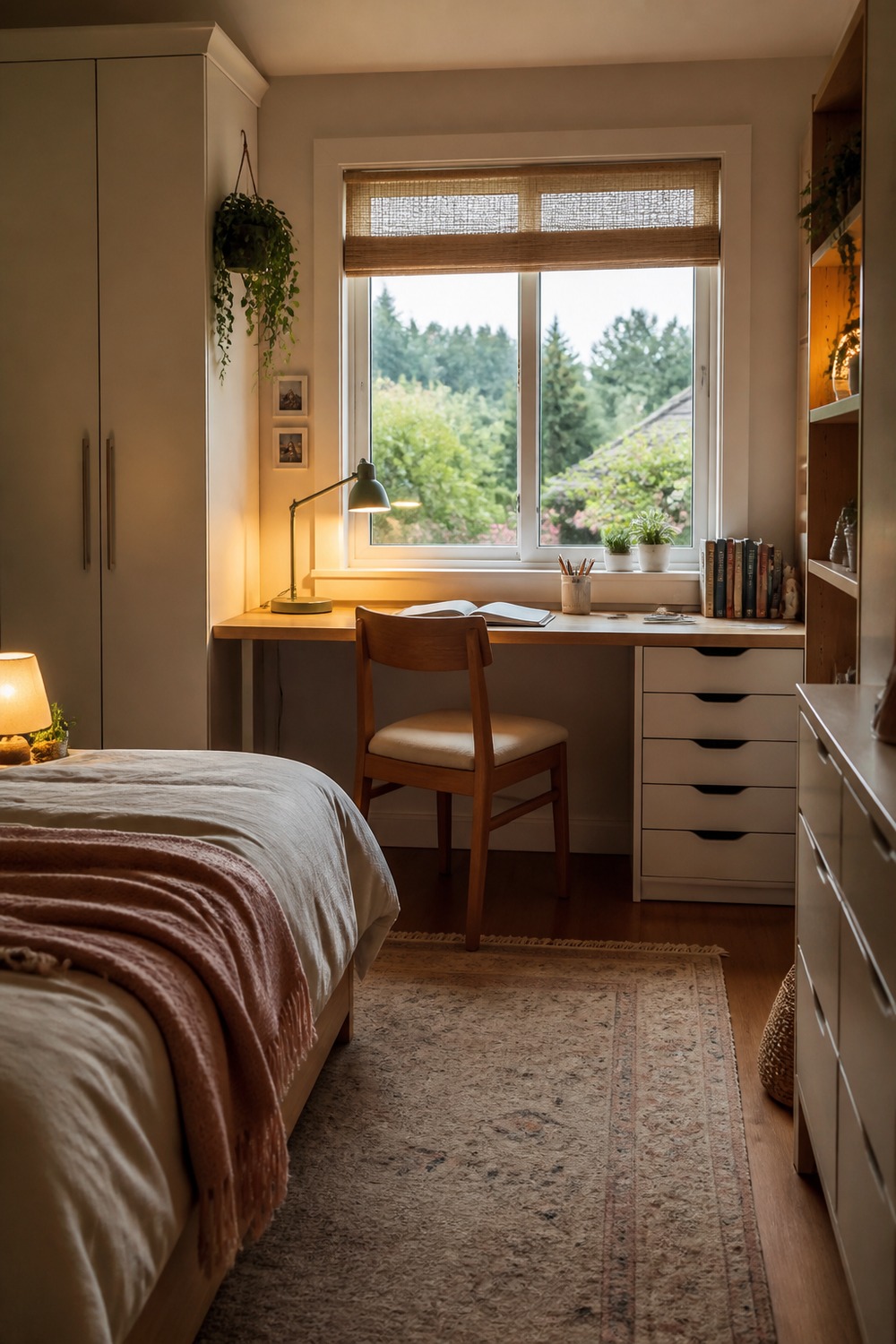
The counter under the window has enough width for an open book and a laptop at the same time. Side drawers hold the smaller supplies, leaving the center open and making the whole setup much easier to reset after homework.
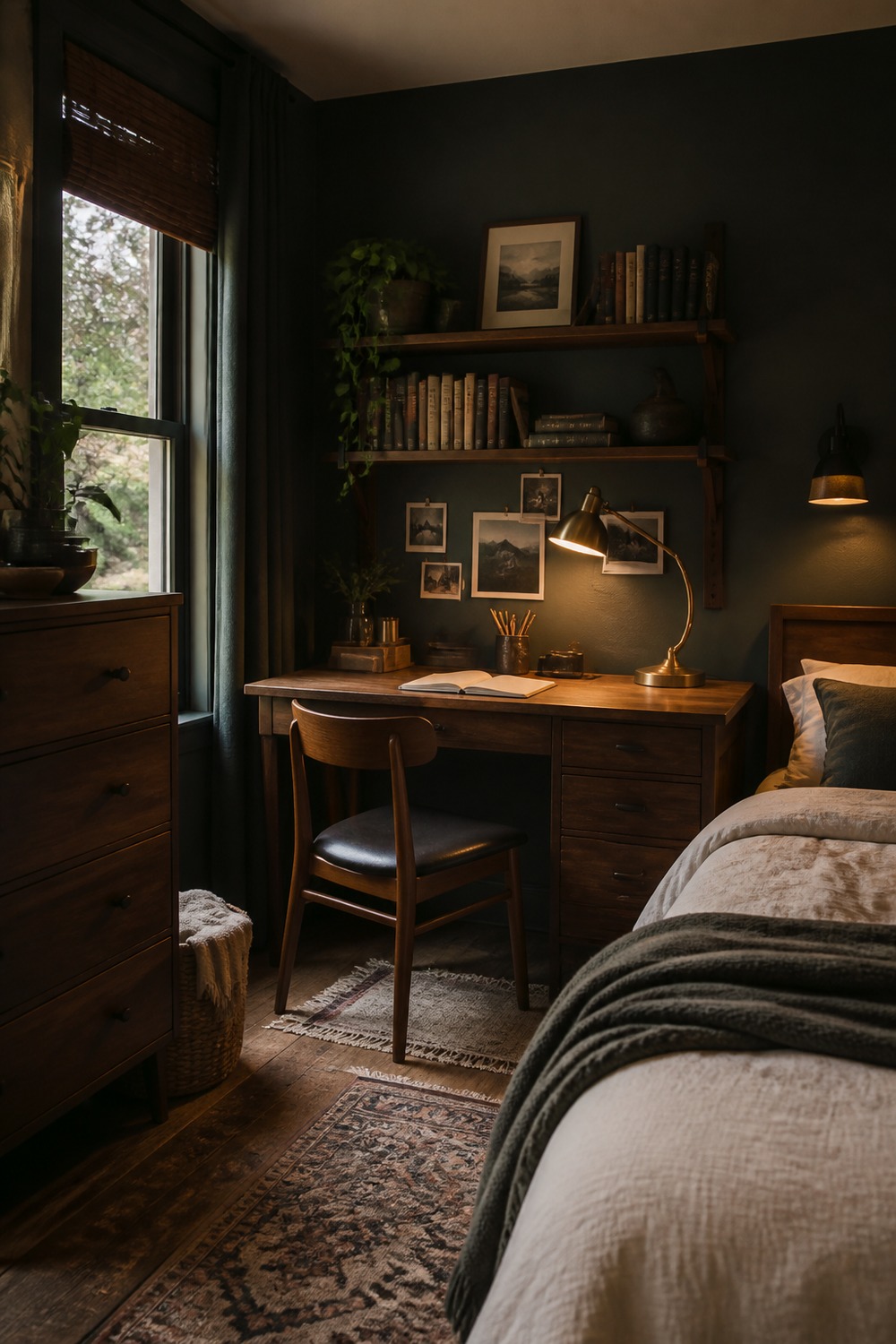
Dark green walls and walnut make this nook feel quiet in a way pale study corners sometimes do not. The aged-brass lamp adds a focused pool of light, while the cream bedding keeps the bedroom from becoming too heavy.
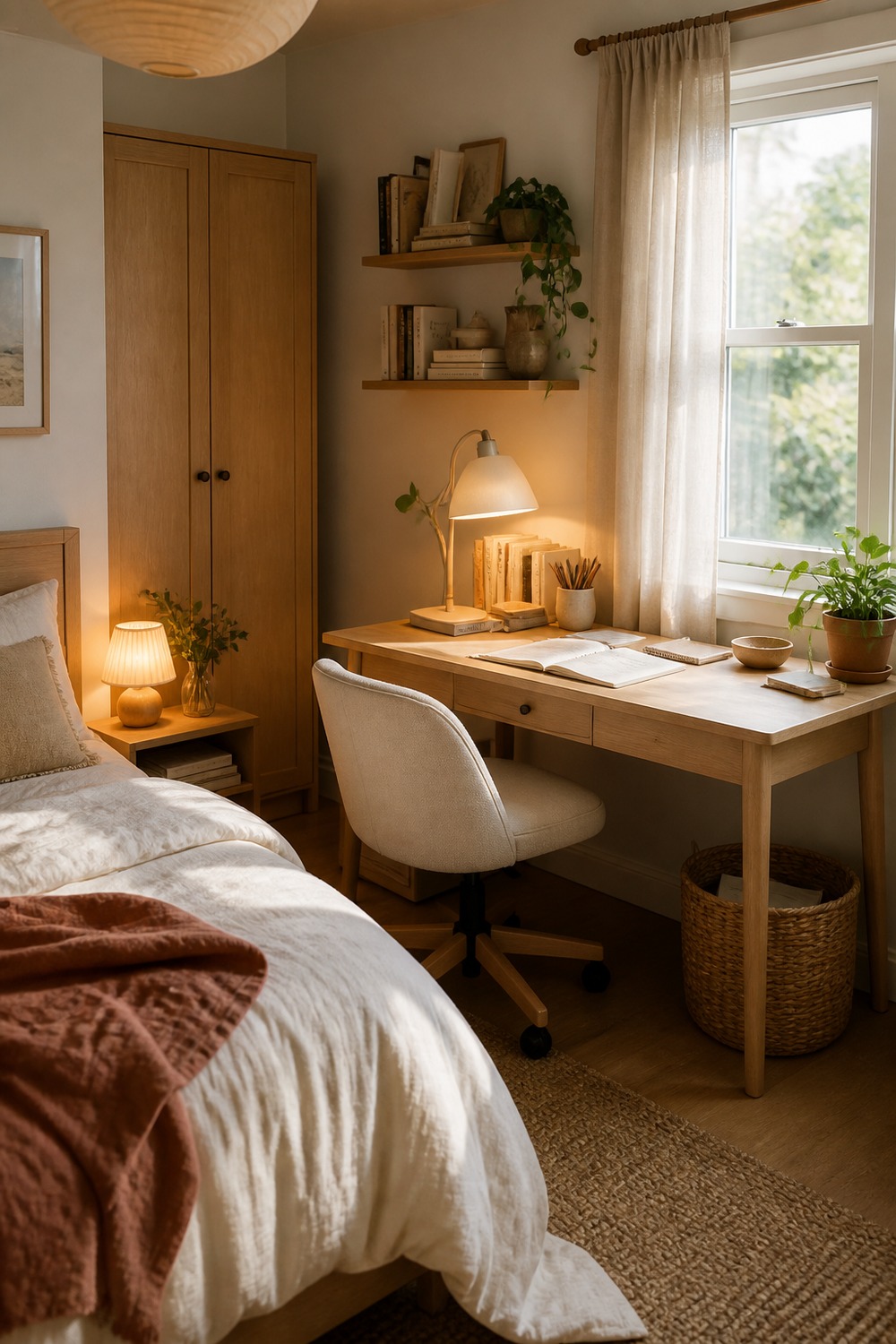
Pale oak, linen curtains, and the cream chair give this corner a calm daytime feel. A woven basket handles the less attractive supplies, and the soft window light is useful without causing a harsh glare across the desk.
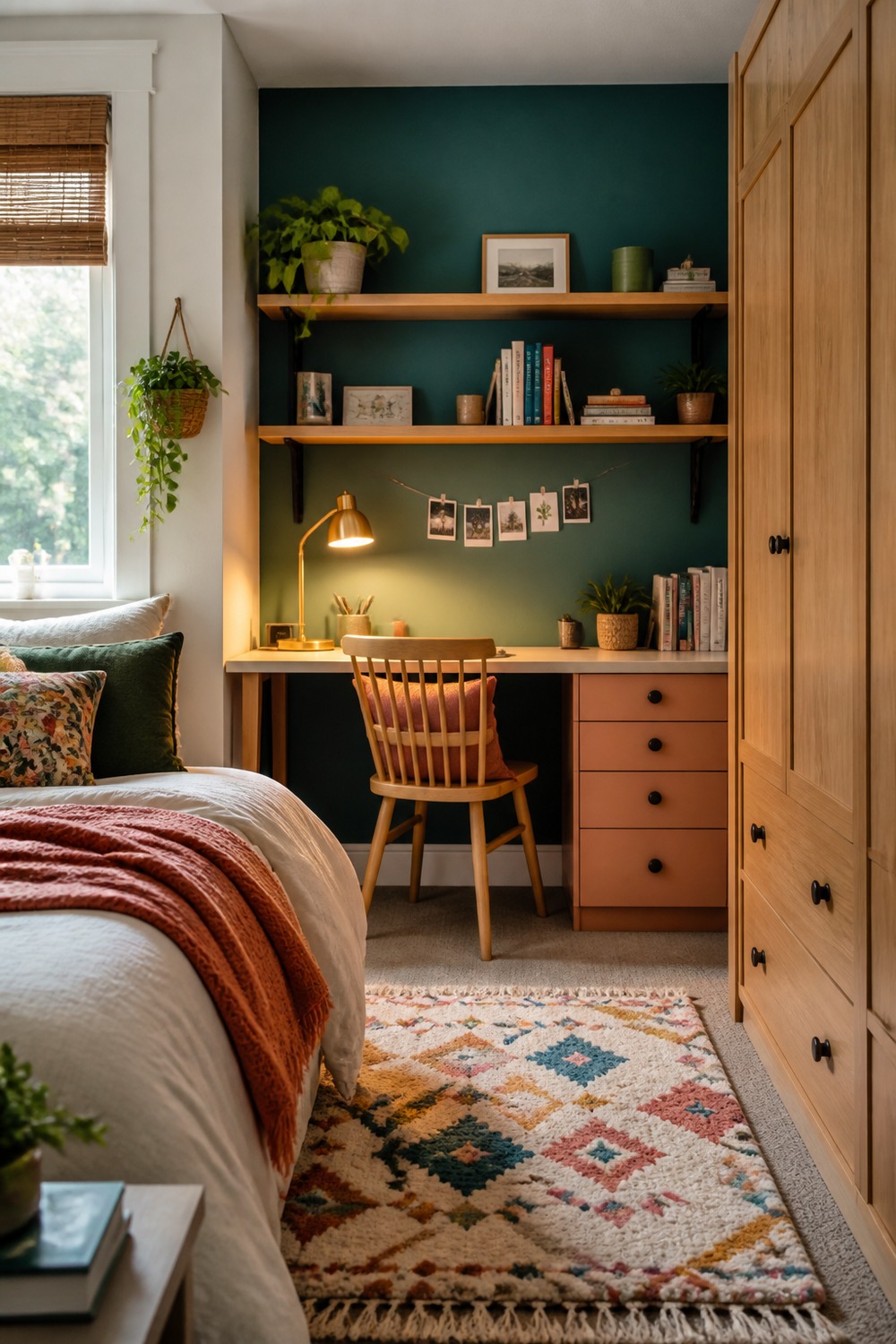
The teal wall and colorful rug give the study zone an identity without covering every surface in decor. Drawers below the desk contain the practical stuff, so the stronger color can be the focal point rather than the clutter.
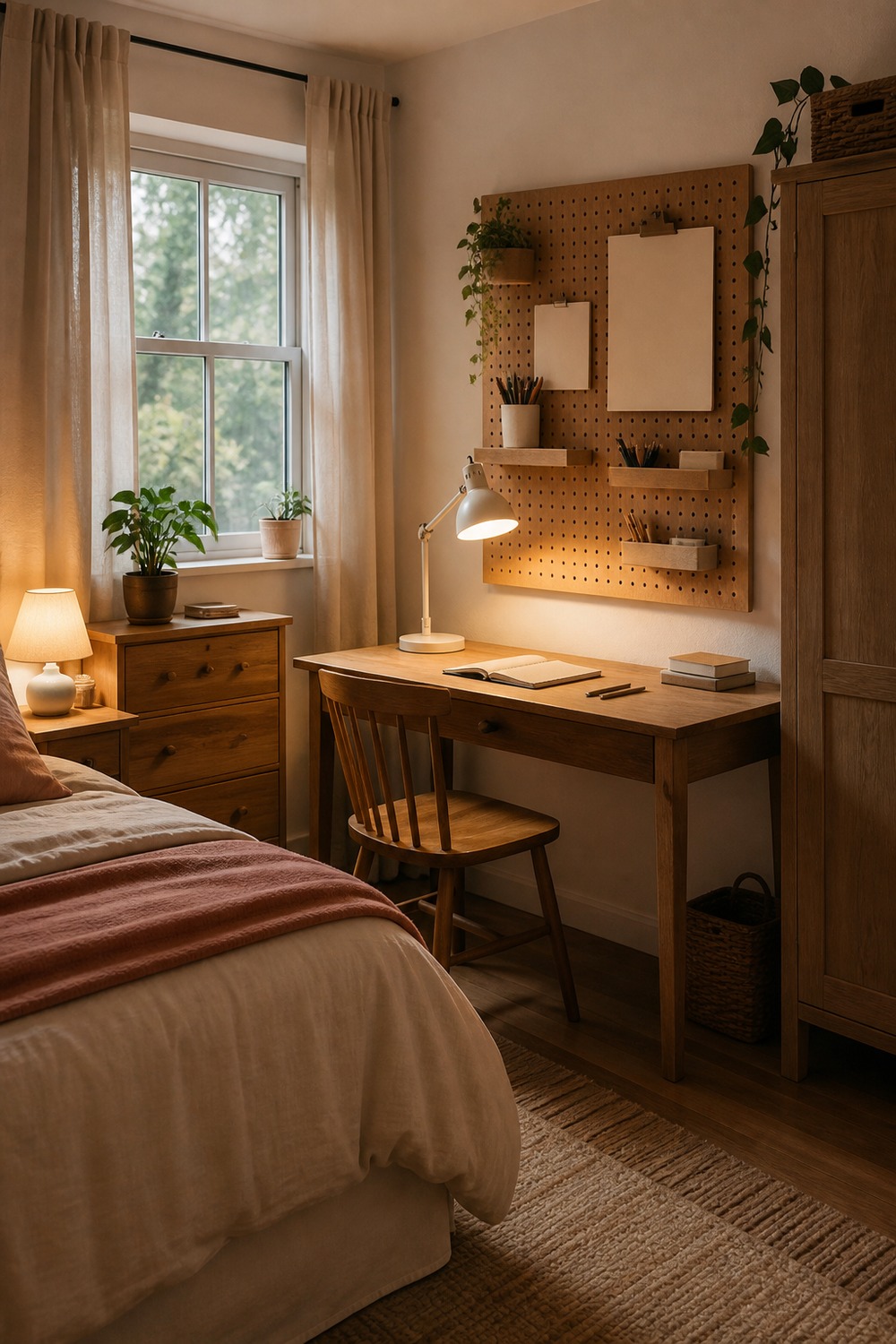
A pegboard makes sense when the desktop needs to stay open. Pencil cups, shallow trays, and headphones move onto the wall, and the arrangement can change later without adding another cabinet to the bedroom.
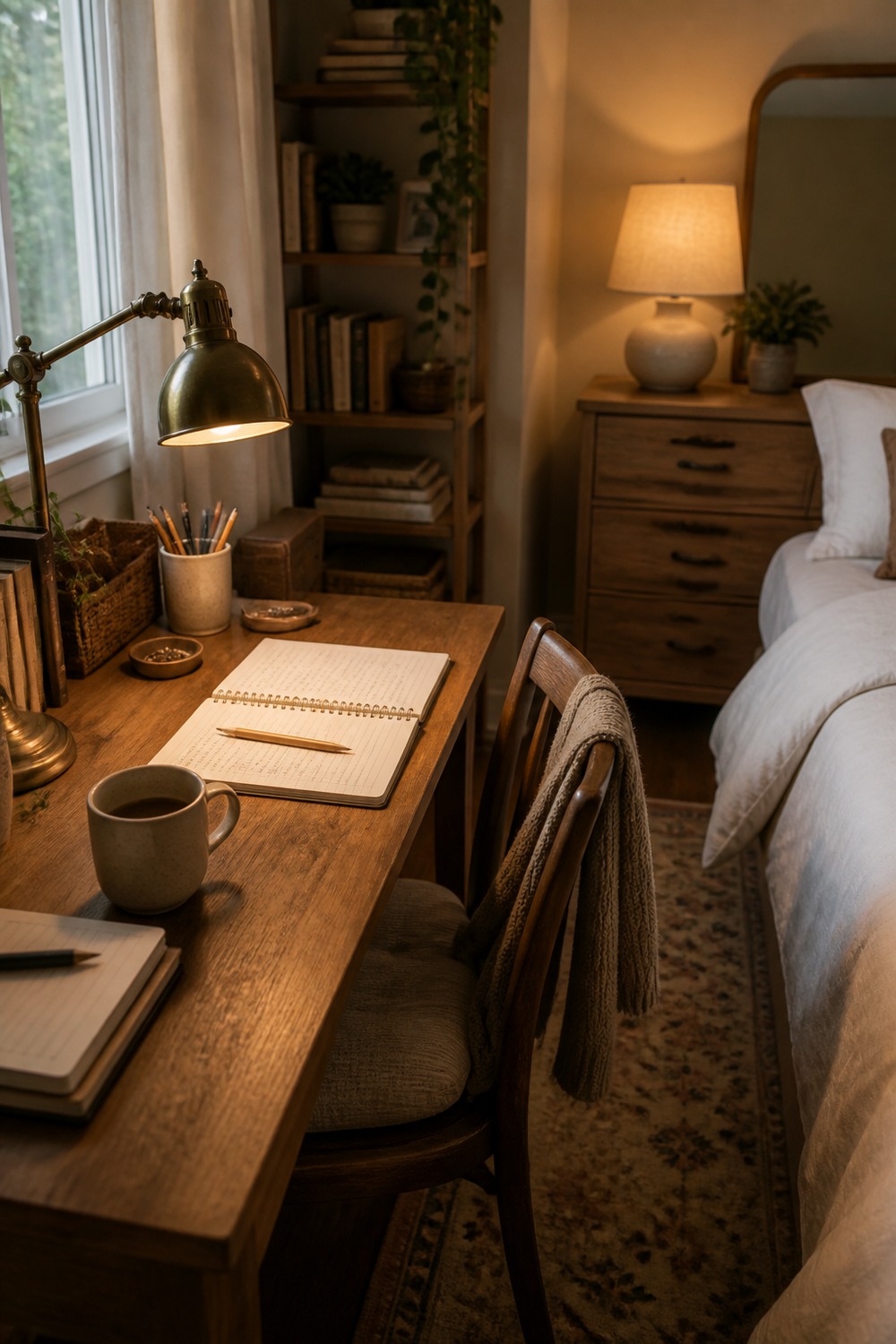
Good task lighting matters most in the evening, and this close view shows why. The lamp lands directly on the notebook, while the wood grain, ceramic mug, and softer bedding in the background keep the desk from feeling clinical.
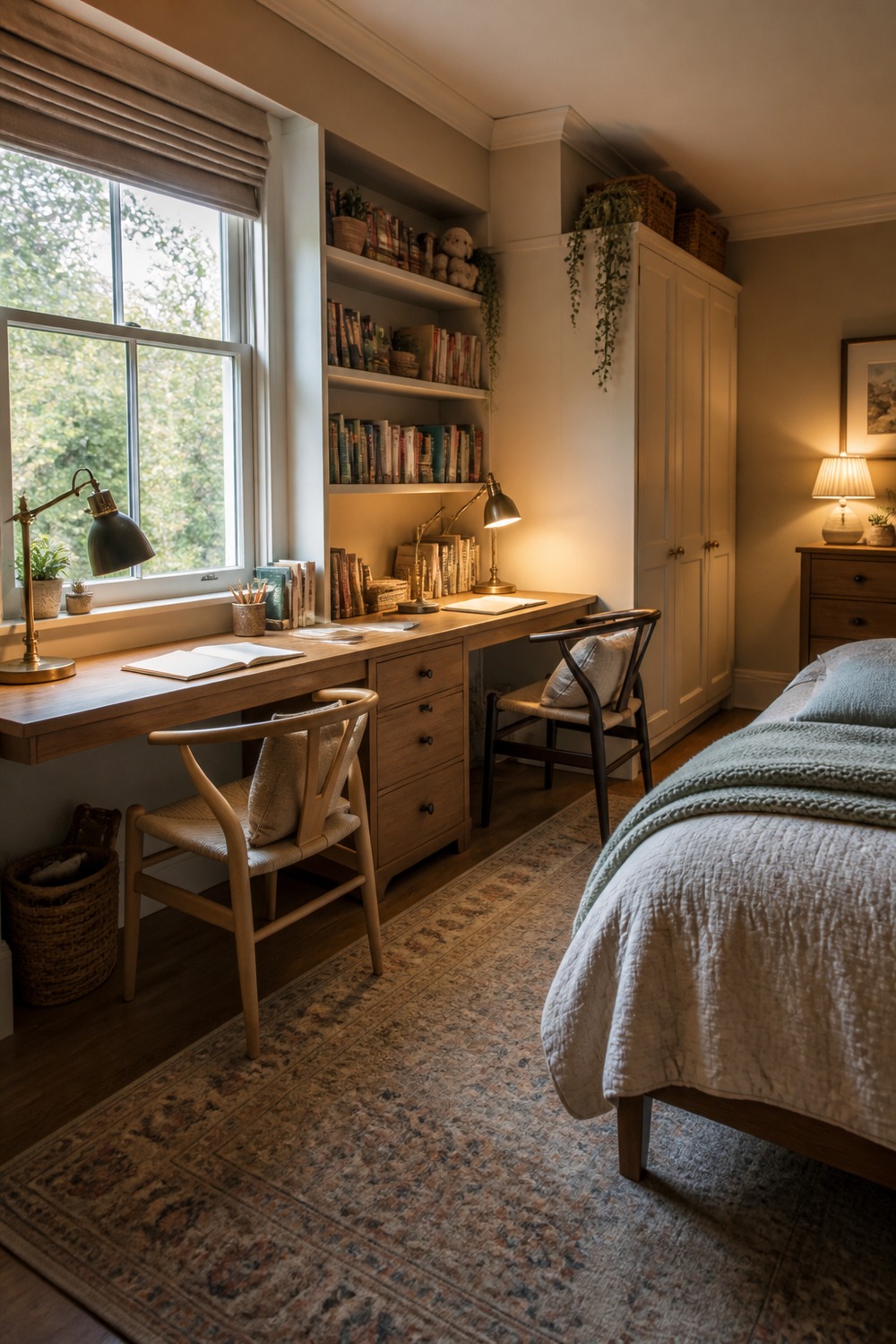
The long counter gives two people defined places to work without squeezing two separate desks into the room. Central drawers create a natural divider, and the matching chairs leave the shared surface looking orderly even when both spots are in use.
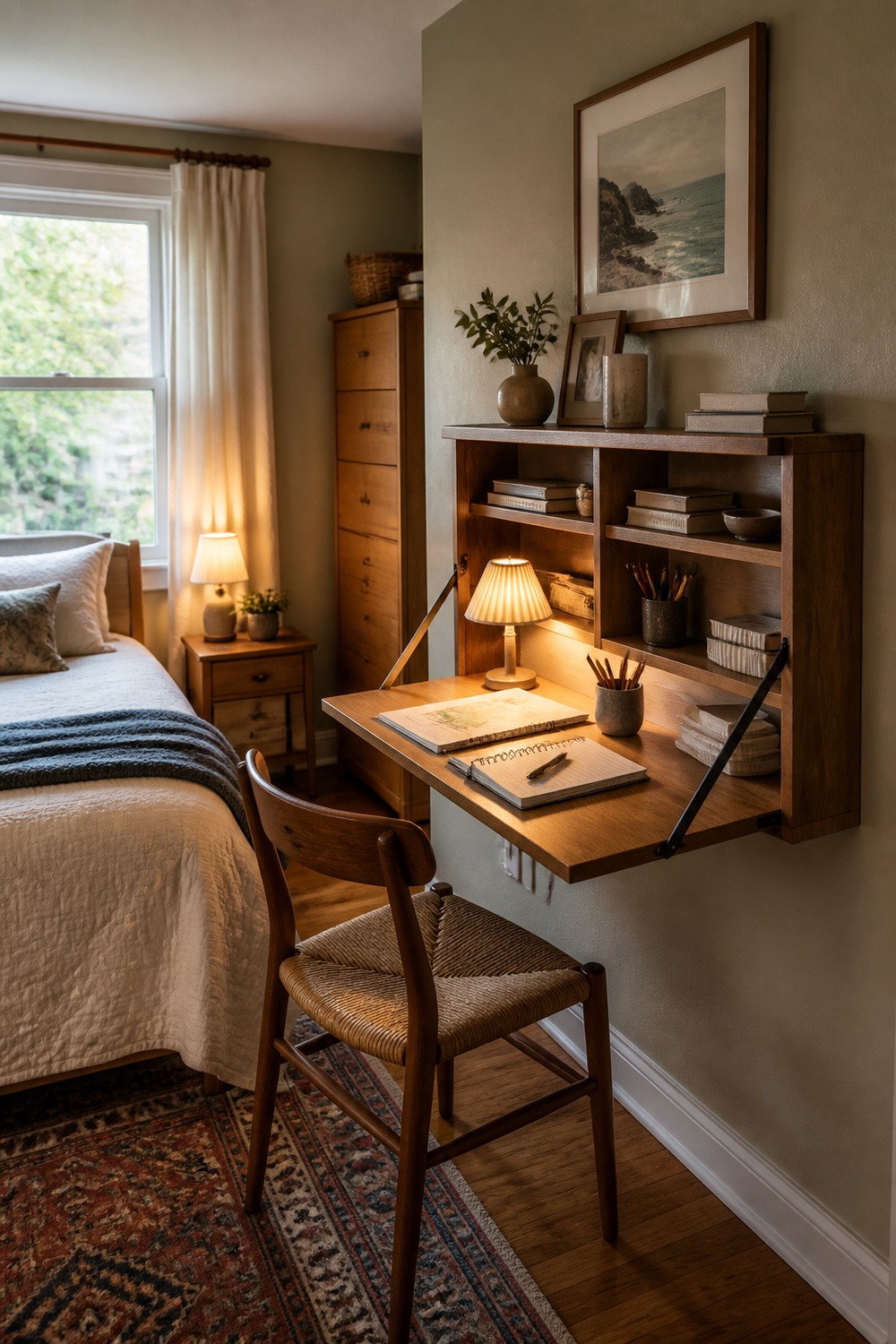
A fold-down desk is especially useful when the bedroom needs open floor space at other times. The cubbies hold everyday supplies, and the work surface can close once the notebook, mug, and charger have been put away.
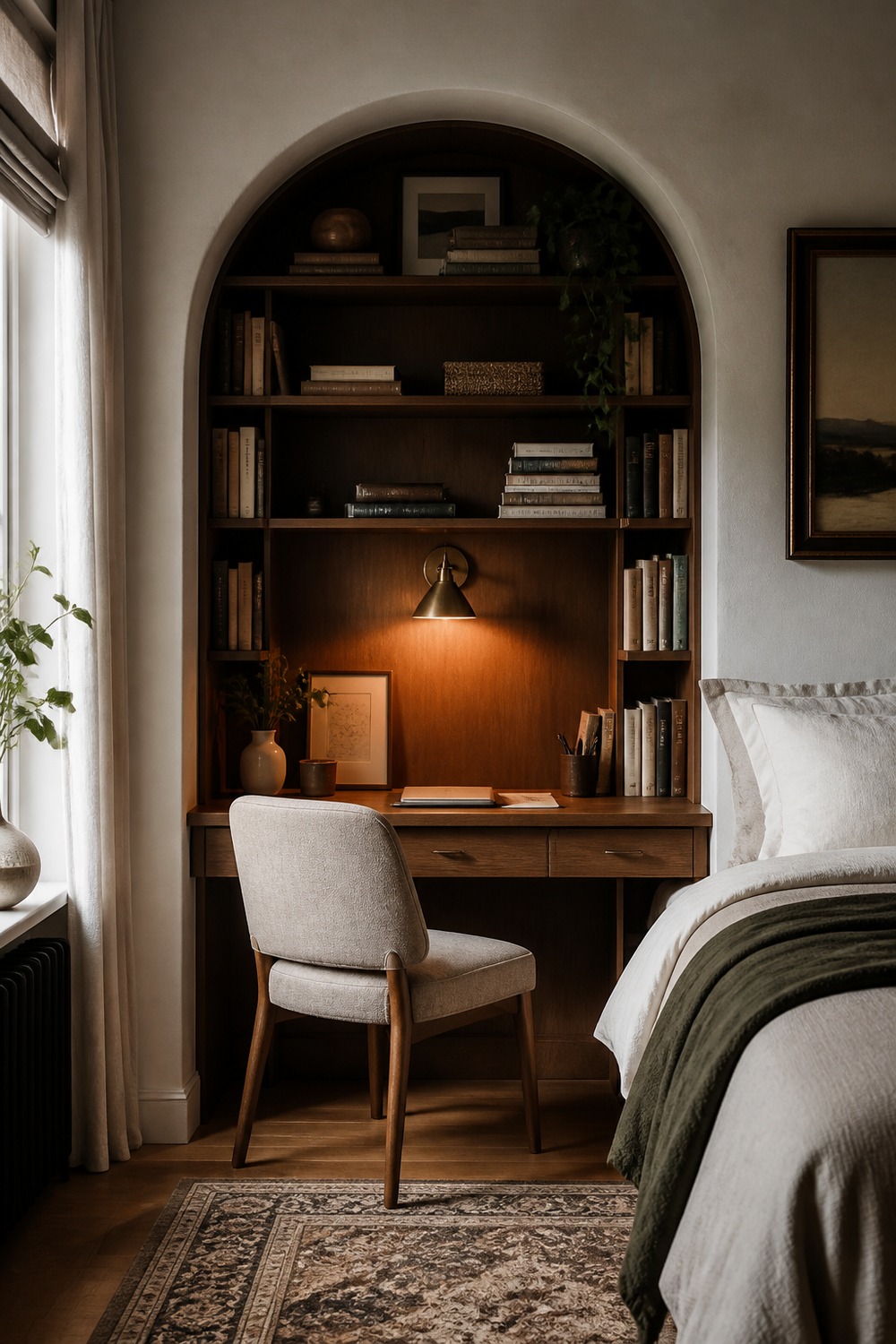
The plaster arch turns an ordinary desk wall into a tiny library, and the walnut shelves make the whole nook feel deeper than it is. I would keep everyday papers in the lower drawers so the lamp, a few books, and that warm wood remain the focus.
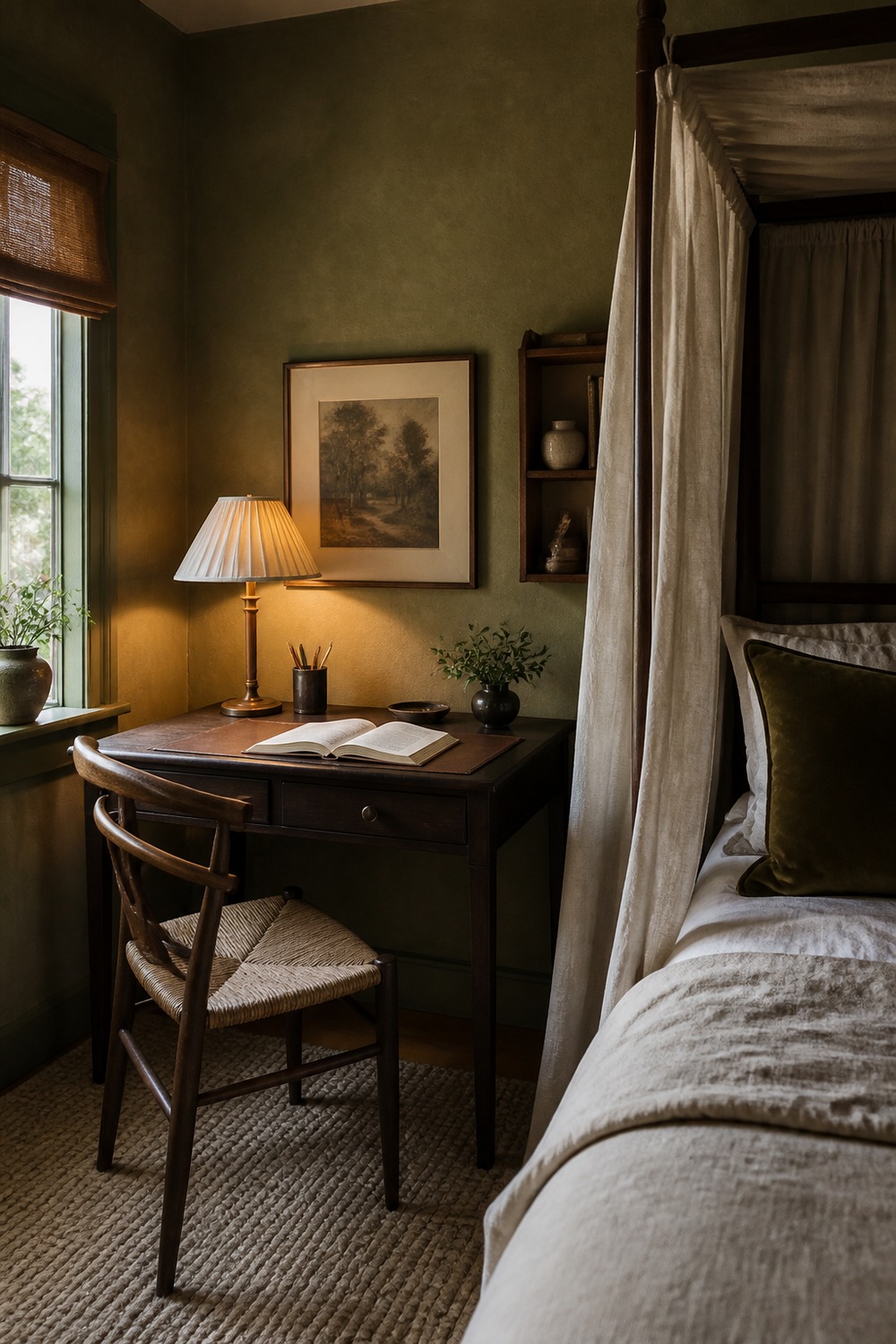
This dark little writing corner feels especially good beside the soft canopy bed. Olive walls, worn leather, and the pleated lamp create a quiet evening mood, but the clear desktop and proper chair still make it useful for real work.
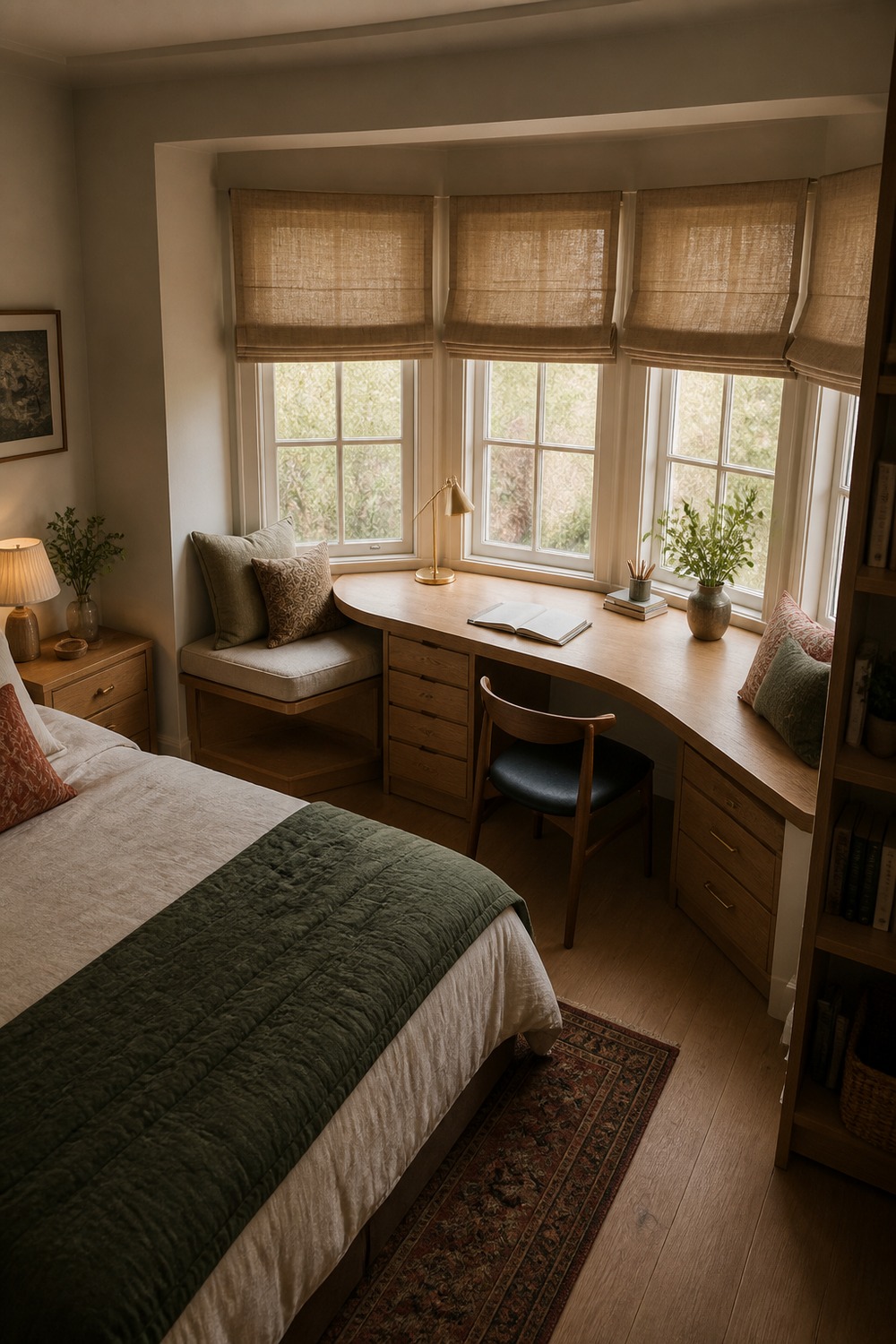
The bay window gives this curved counter an incredible amount of daylight without sacrificing the bedroom floor plan. Hidden drawers handle the practical clutter, and the upholstered ends offer a softer place to read when sitting at the desk feels too formal.
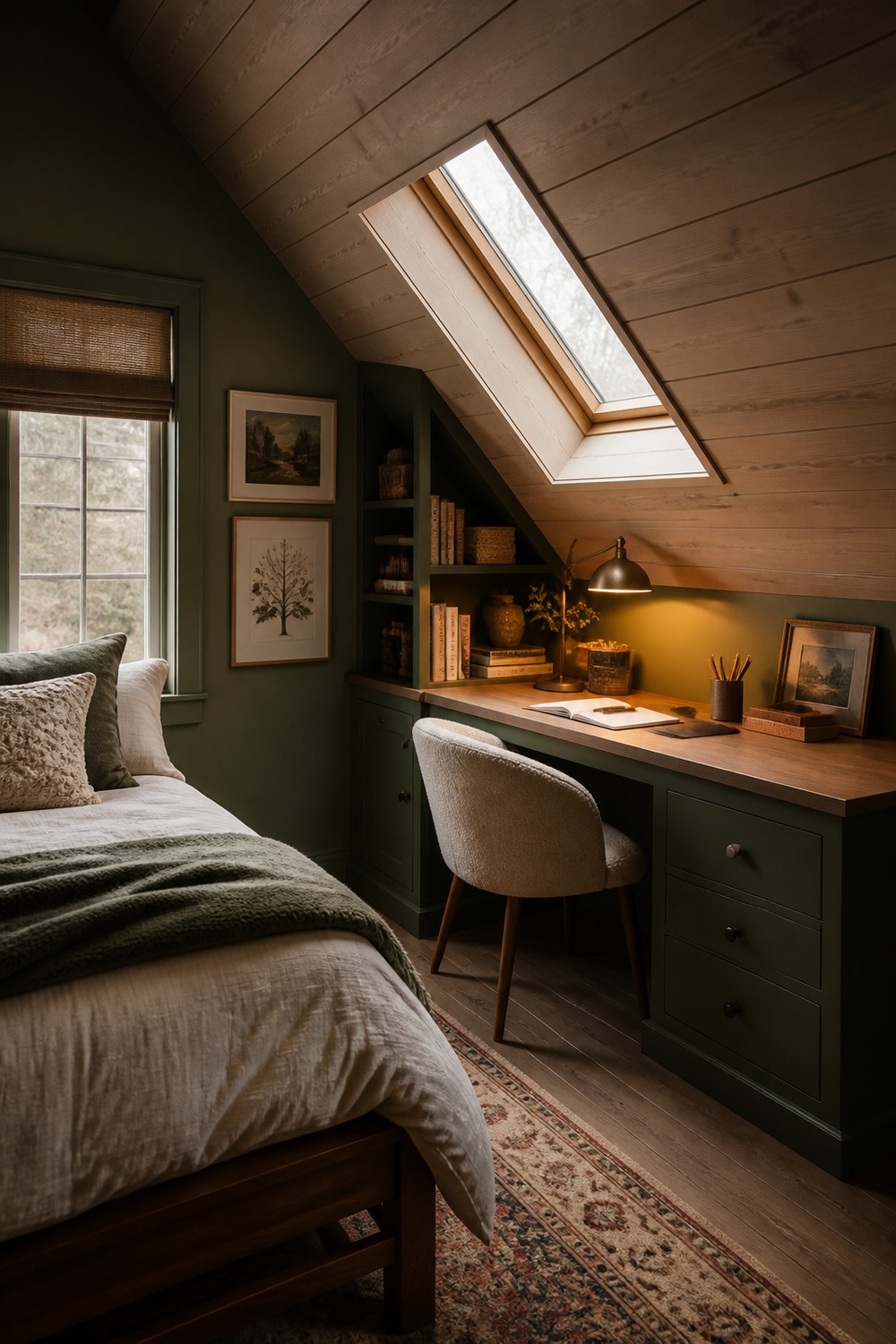
An attic slope could have become dead space, yet the low moss-green cabinets fit it beautifully. The skylight handles daytime studying, the amber lamp takes over at night, and the boucle chair keeps all that wood from feeling hard.
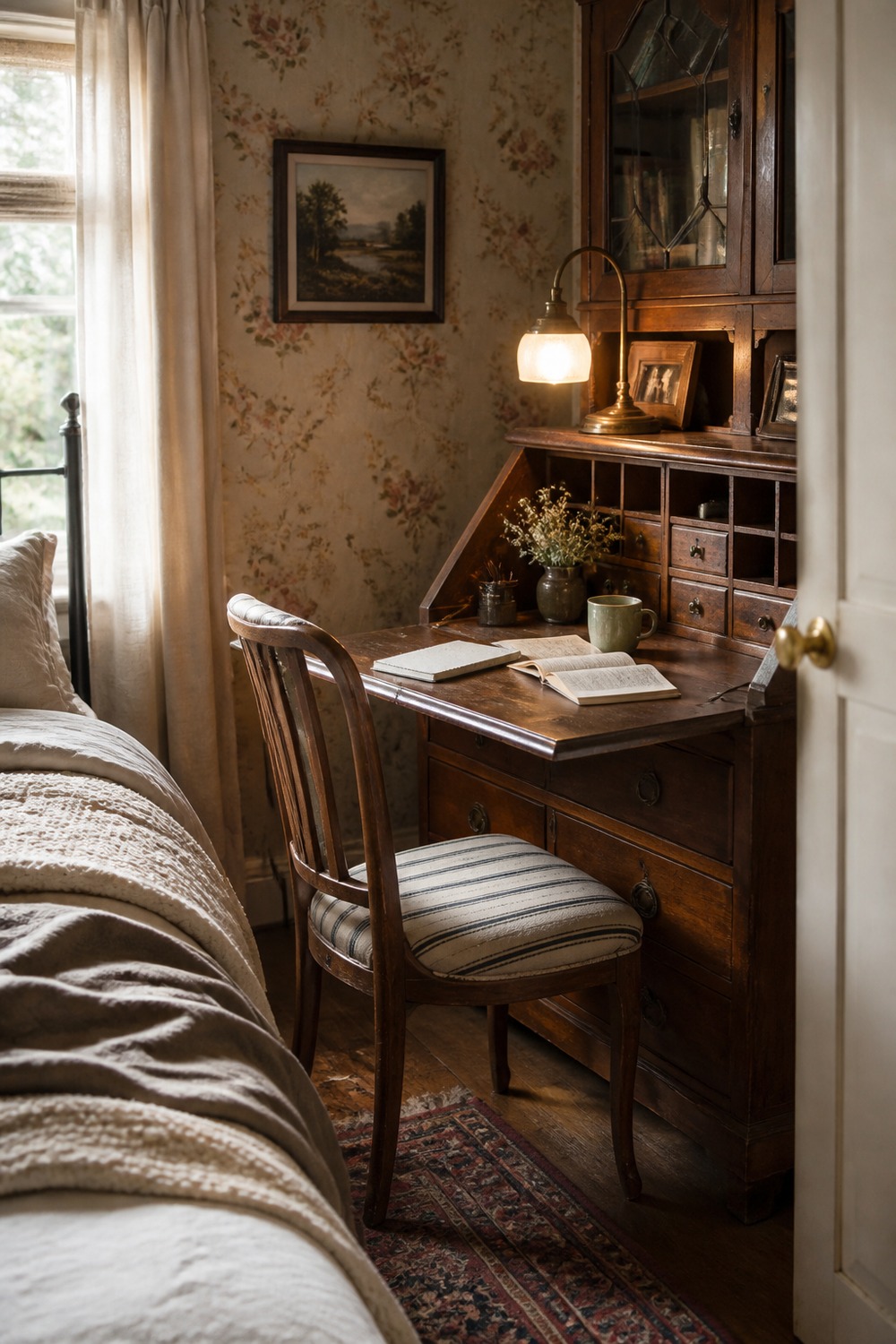
There is something lovely about opening an old secretary cabinet and finding a complete workspace inside. Tiny drawers sort pens and notes, the foldout surface has enough depth for a laptop, and closing the front restores the bedroom to a calmer mood.
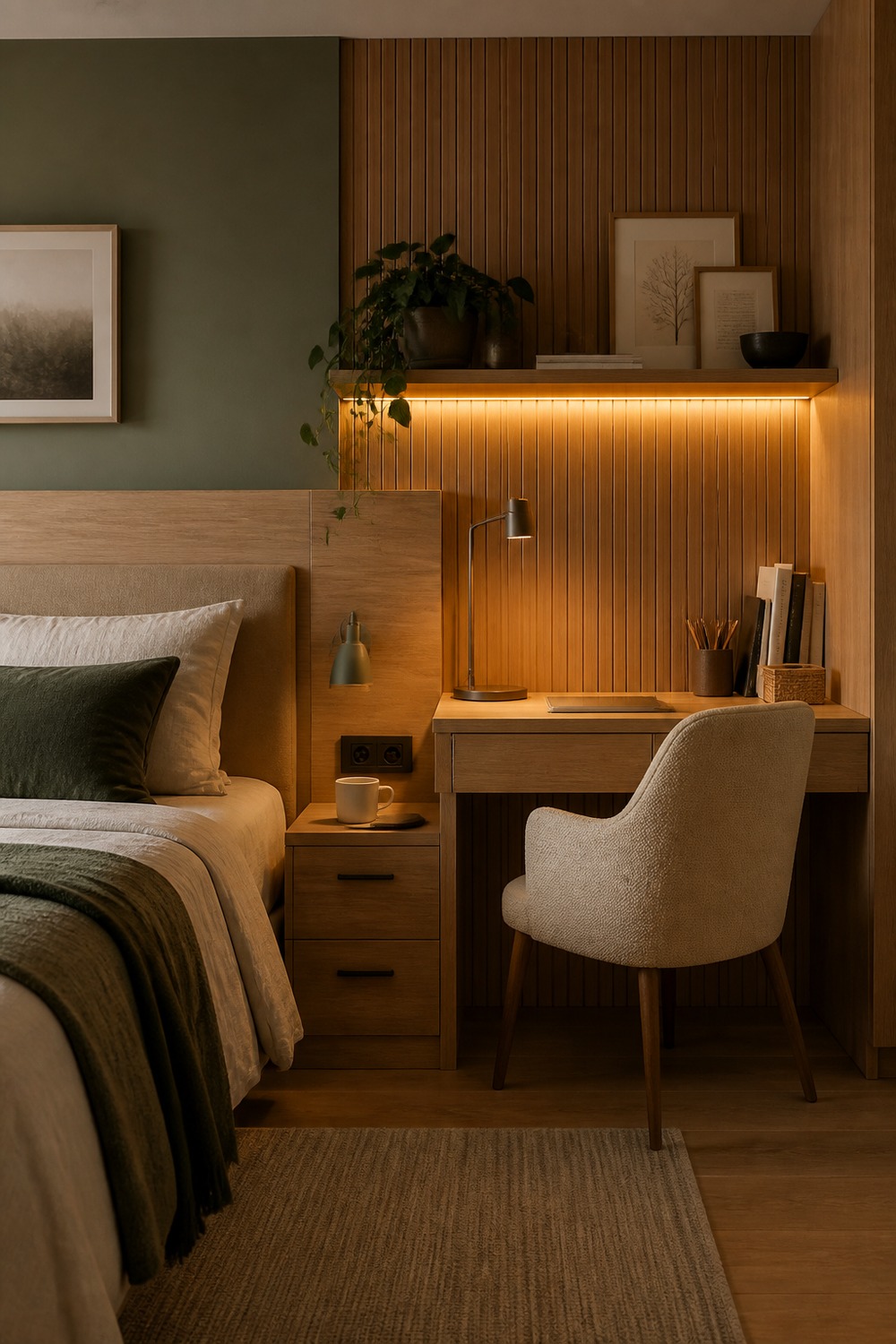
Extending the oak headboard into a floating desk makes these two zones feel designed together rather than squeezed side by side. The concealed shelf light is gentle near the bed, while separate drawers stop study supplies from taking over the nightstand.
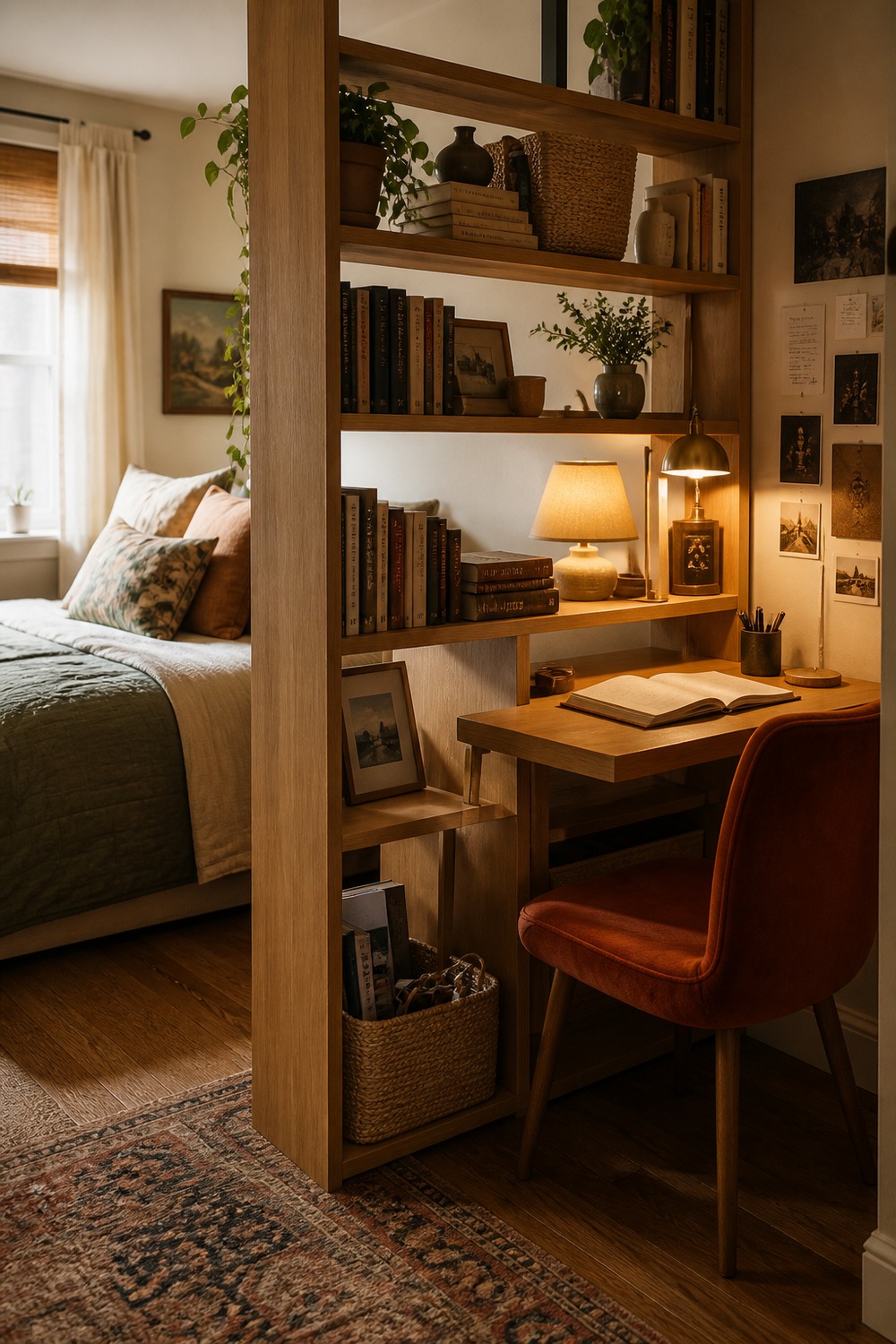
This open bookcase creates just enough separation to make the desk feel private without blocking the bedroom light. Baskets at the bottom hide cords and paper, and the rust velvet chair gives the study side a richer focal point.
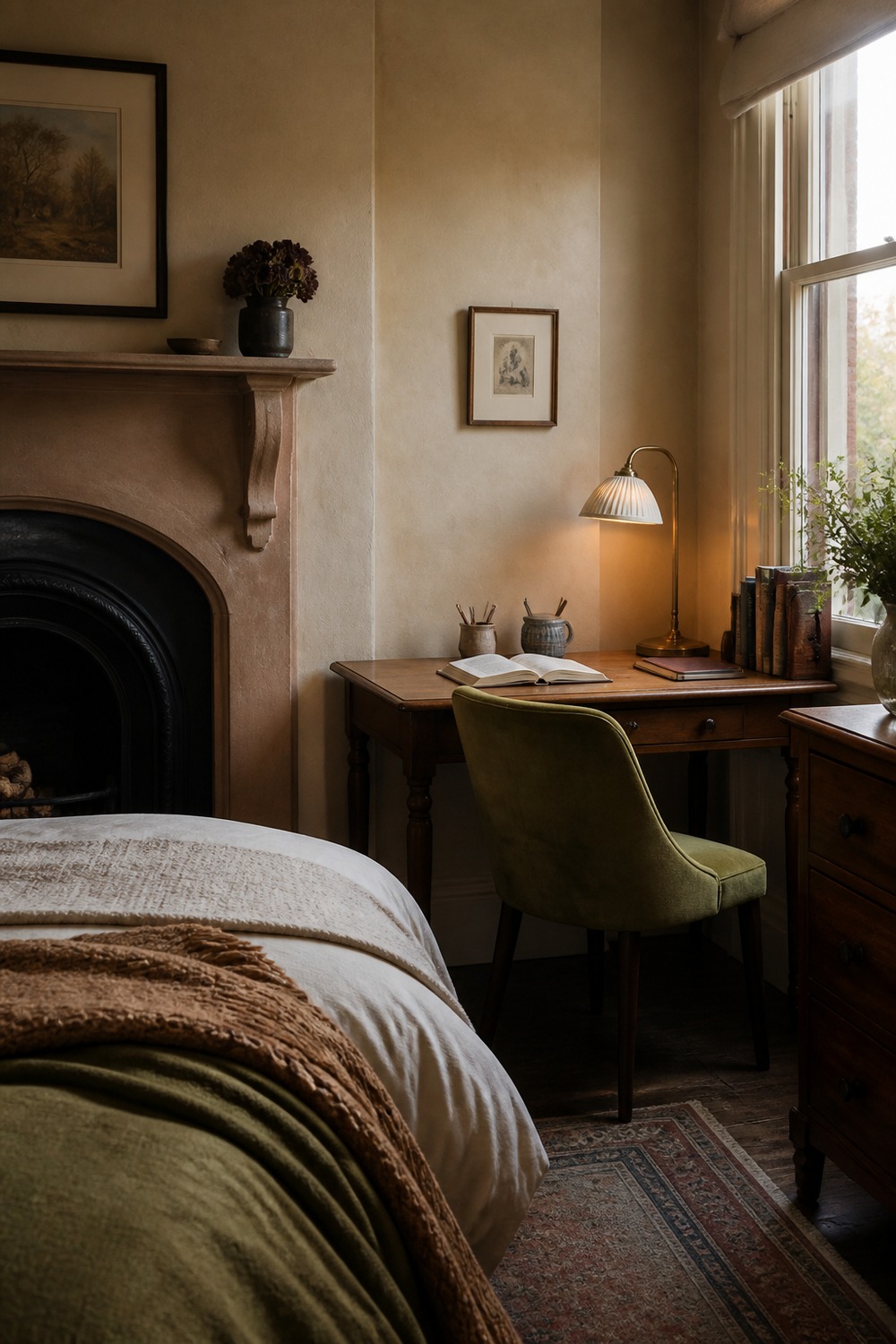
A small table beside an old fireplace gives this bedroom a slightly unexpected writing spot. Clay plaster, moss velvet, and the shaded brass lamp feel collected rather than themed, with enough bare tabletop left for an open book and a cup of tea.
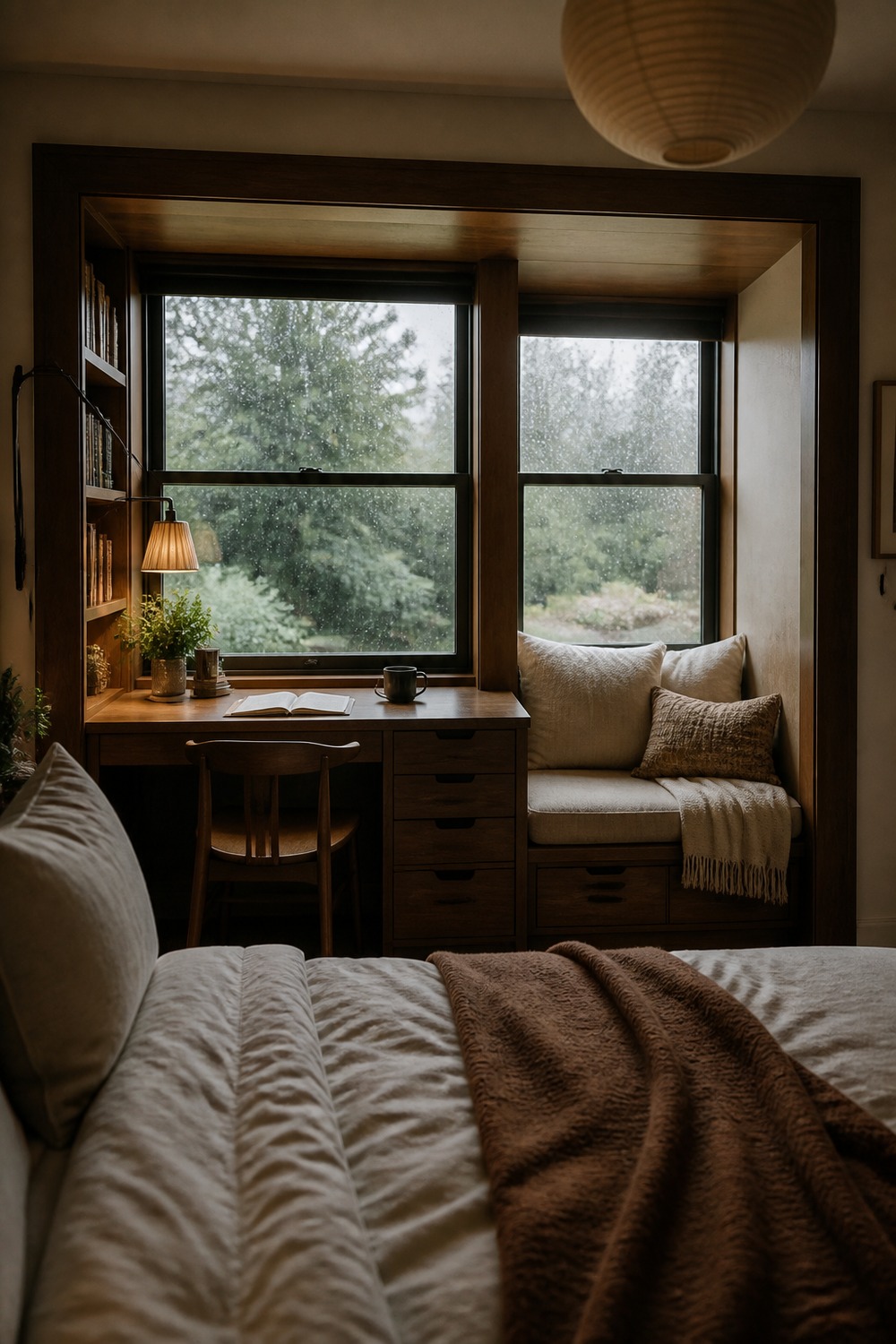
The deep window recess does two jobs without crowding the bed: a proper desk on one side and a cushioned reading ledge on the other. Rainy daylight and dark oak make it feel wonderfully tucked away, while closed drawers keep the cocoon from becoming cluttered.
The strongest study corners here feel like part of the bedroom even when the ideas get more architectural. A desk that closes, a shelf that divides the room, or a lamp that pools light in one small spot can make focused work feel much less intrusive.

I work in tech, but my taste in design is straight out of a slow European village. Give me arches, aged brass, and a room that smells like books and coffee. That’s my kind of home.