A small cubicle starts feeling rough when the desk has to hold papers, cords, lunch, a bag, and a little bit of personality all at once. The ideas I like most here use the walls, corners, lamps, and tiny storage pieces first, so the space feels better without making it harder to work.
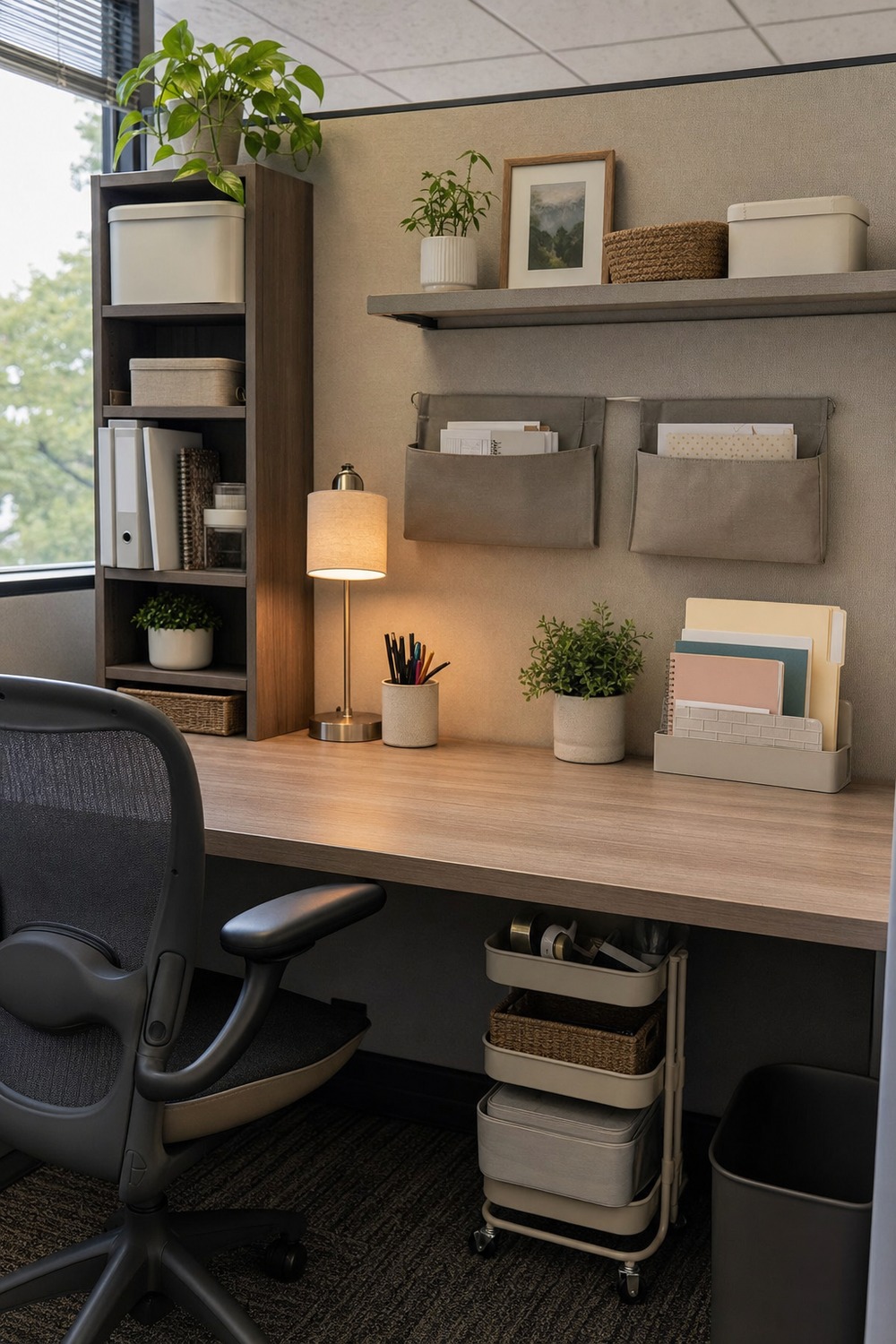
This little shelf setup is doing what small cubicles need most: using the wall before the desktop disappears. The slim bins, soft lamp, and plant keep it from feeling like a gray storage corner, but there is still enough open desk space for a keyboard, notebook, and actual work.
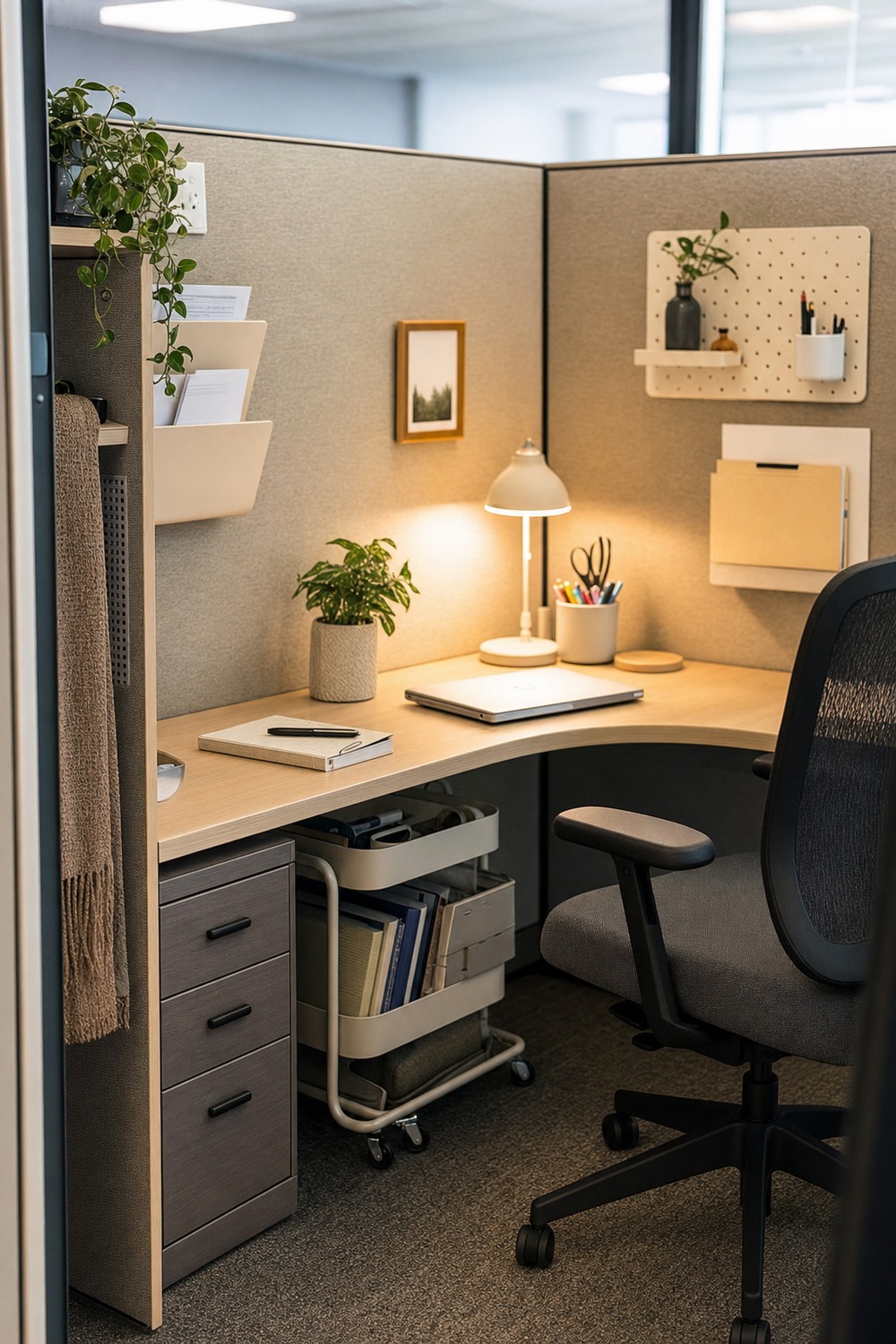
The under-desk cart is the quiet hero here. I like that it gives papers, chargers, and extra supplies a real landing spot instead of letting everything spread across the work surface. The warm lamp also makes the corner feel less like overhead-office-lighting survival mode.
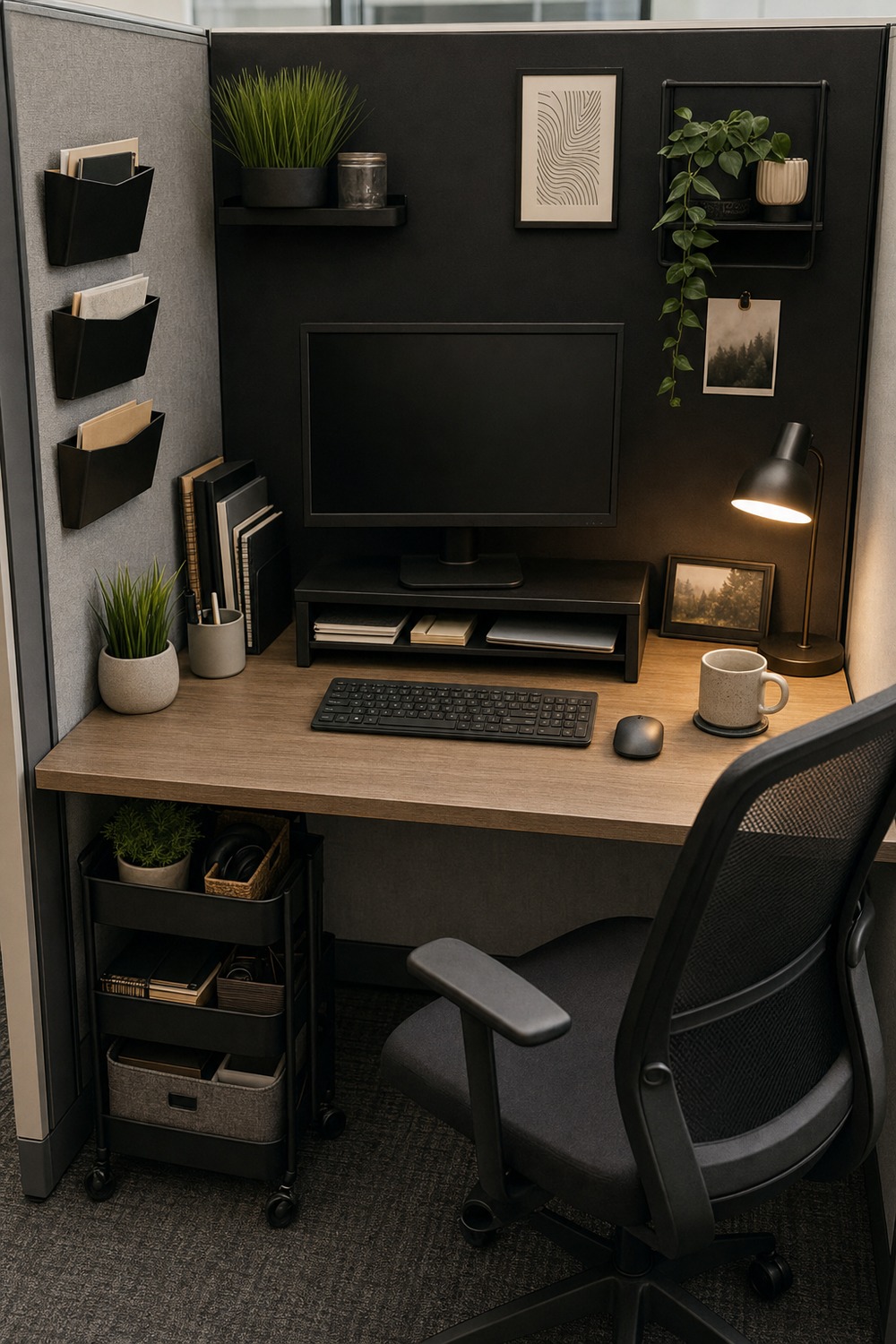
A monitor riser makes this cubicle feel cleaner without needing a huge makeover. The tray space underneath is useful for notebooks or sticky-note pads, and the darker shelf line gives the wall a little structure so the whole setup does not read as random desk clutter.
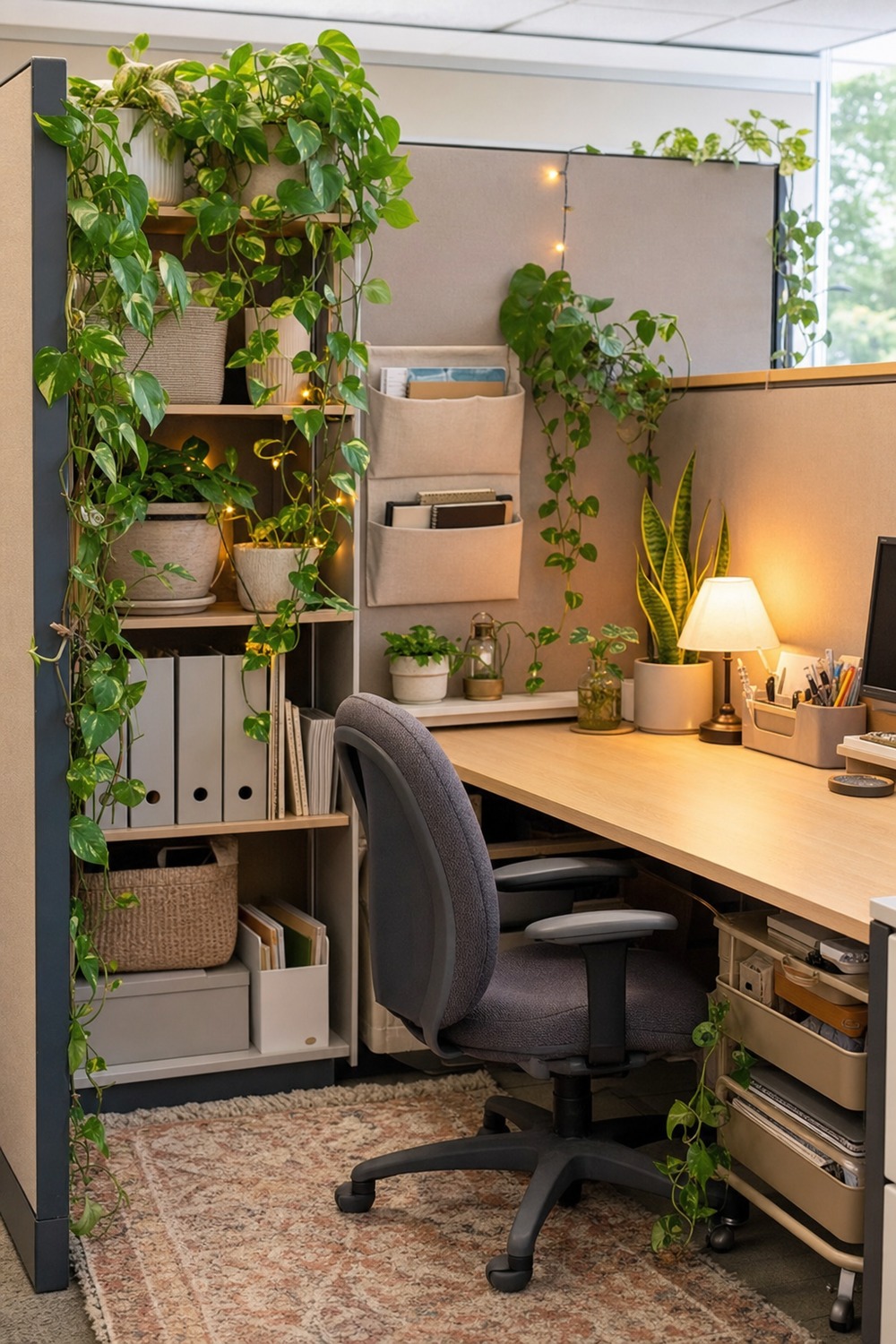
This plant-heavy corner works because the greenery goes vertical instead of taking over the chair area. The little shelves, trailing leaves, and warm lamp soften the cubicle panels, while the storage boxes still keep the practical office stuff close by.
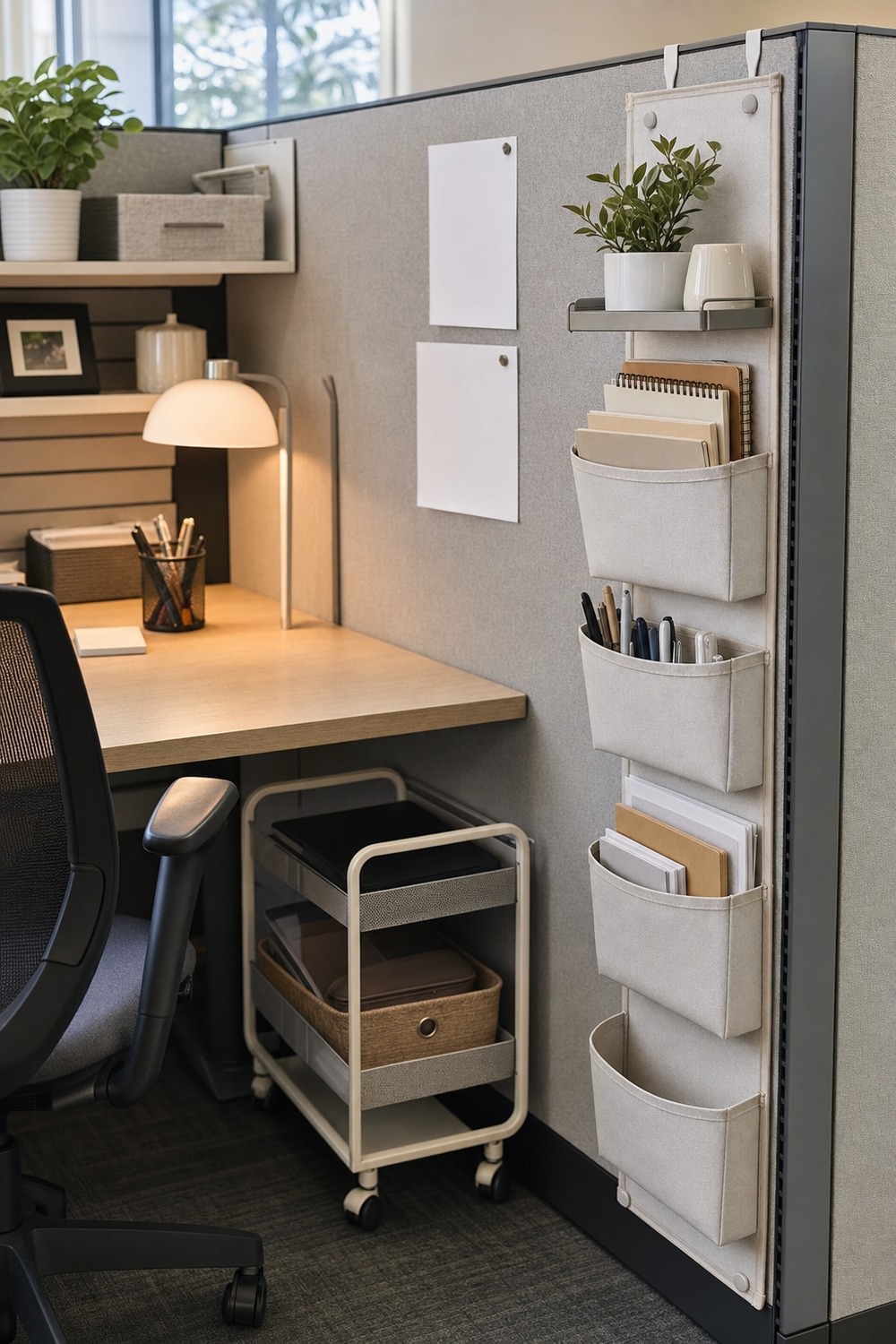
Wall pockets are one of those small cubicle details that actually make sense. They keep folders and loose papers visible without stacking them beside the keyboard, and the narrow shape leaves room for a lamp, a pen cup, and a few personal pieces without crowding the desk.
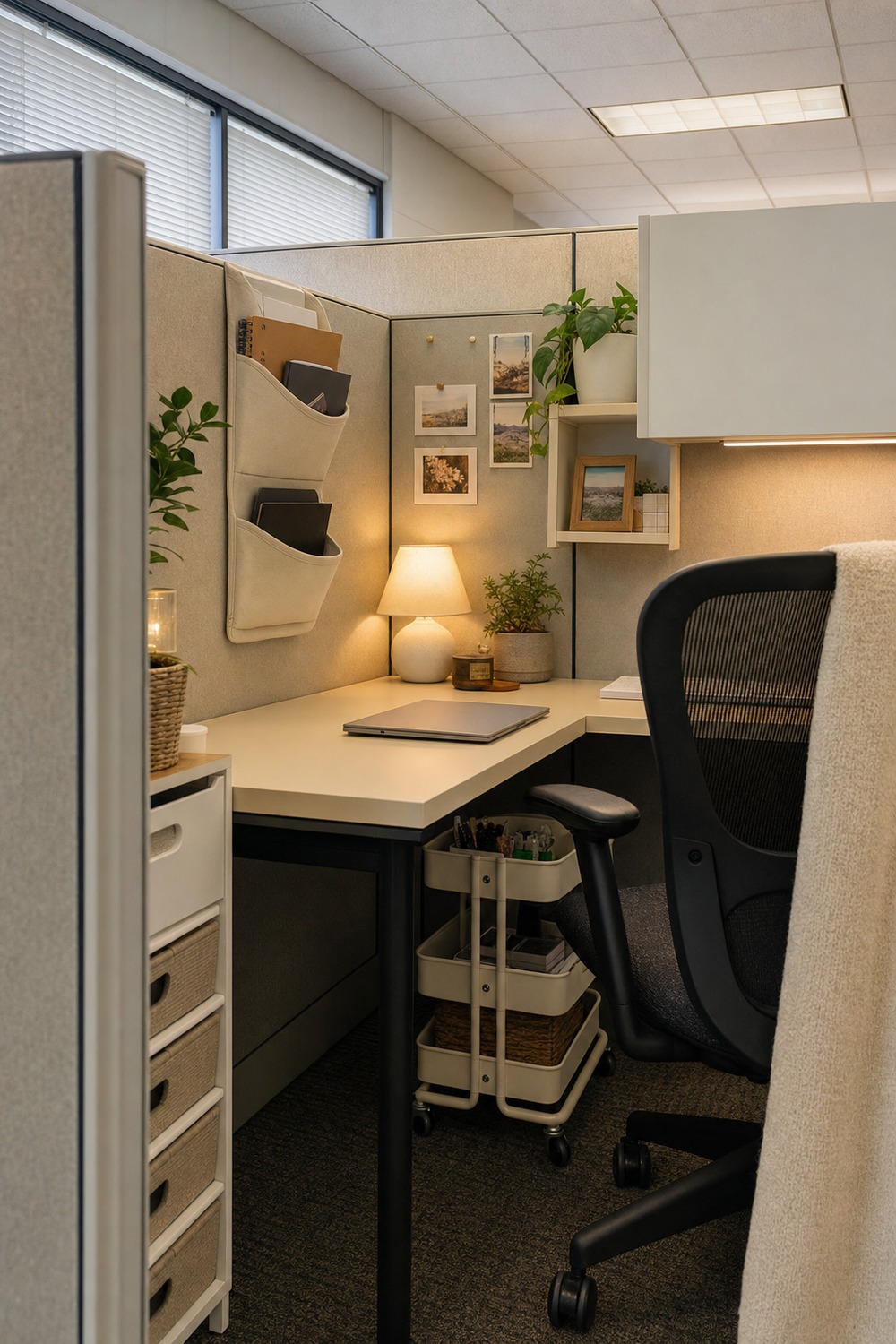
The lamp changes the whole mood of this setup. It creates a smaller pool of light inside the cubicle, which makes the desk feel calmer than relying only on ceiling lights. I also like the way the organizers stay close to the wall instead of pushing into the main work zone.
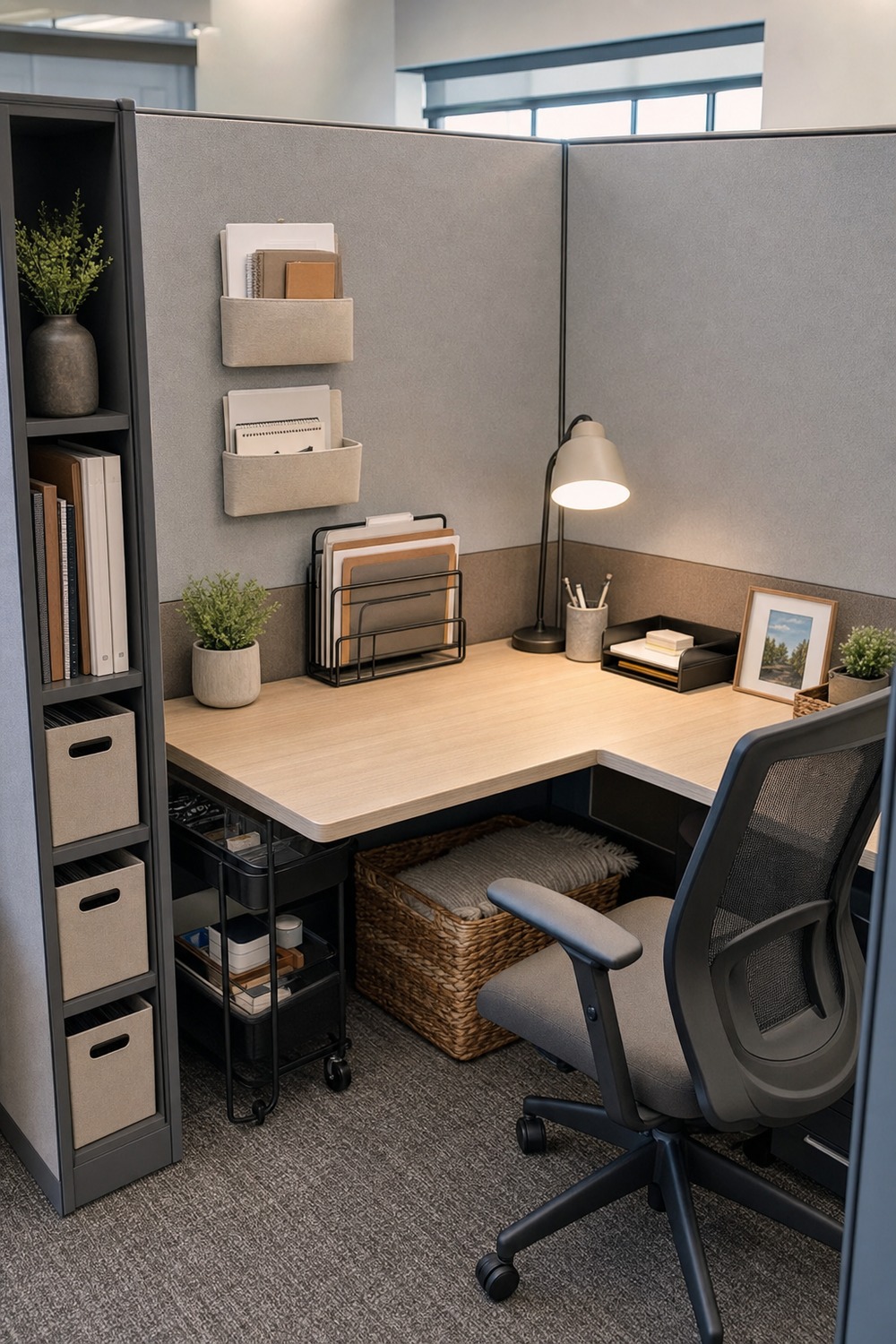
The woven basket is a nice break from plastic office storage. It still has a job, but it brings in texture, which helps a neutral cubicle feel less temporary. This is the kind of small upgrade that makes a work corner look more intentional without getting fussy.
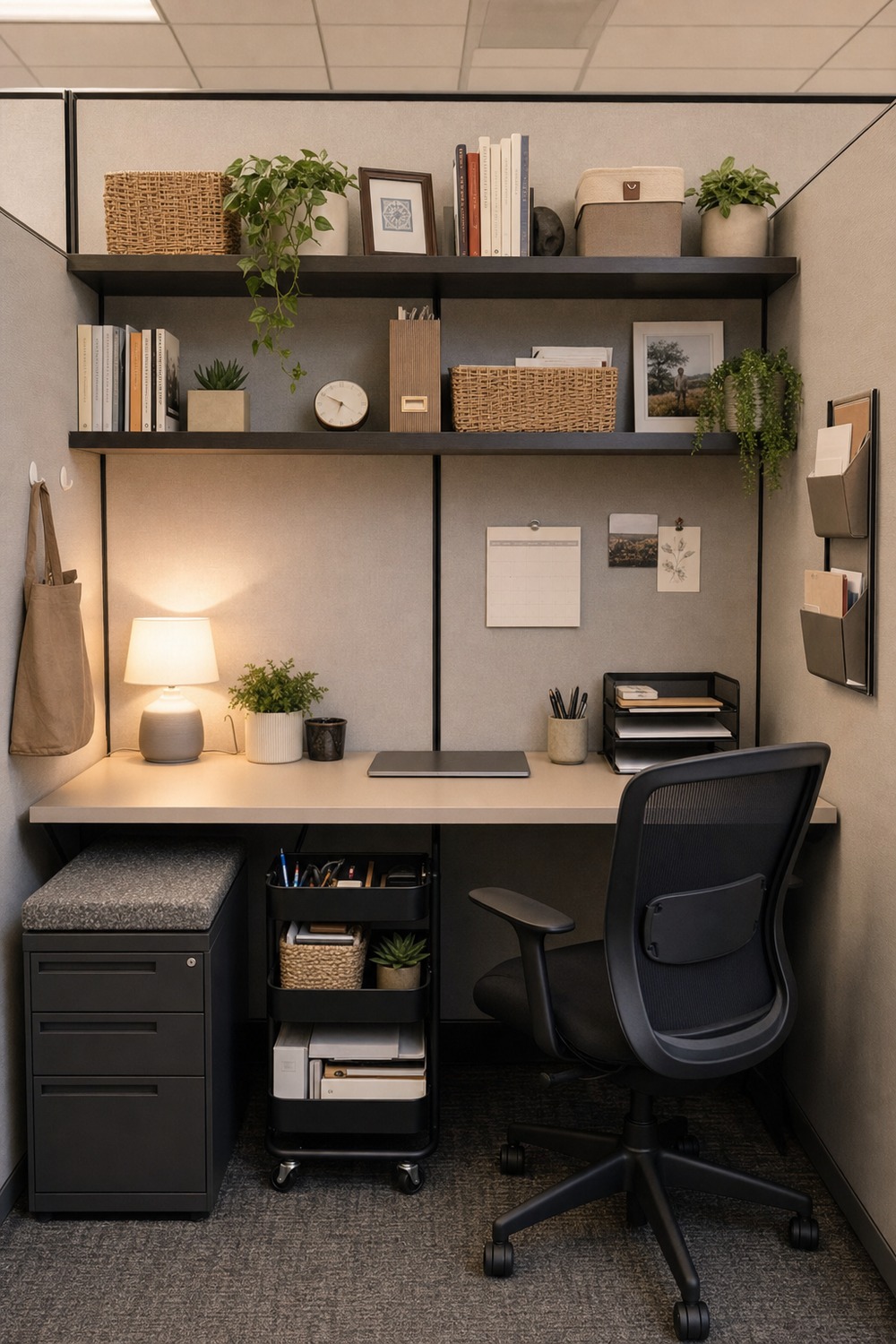
Floating shelves can go wrong if they become a display wall, but this version keeps them useful. A few plants, boxes, and everyday supplies give the cubicle height, while the desktop stays open enough for typing, writing, and the normal pile that shows up by midweek.
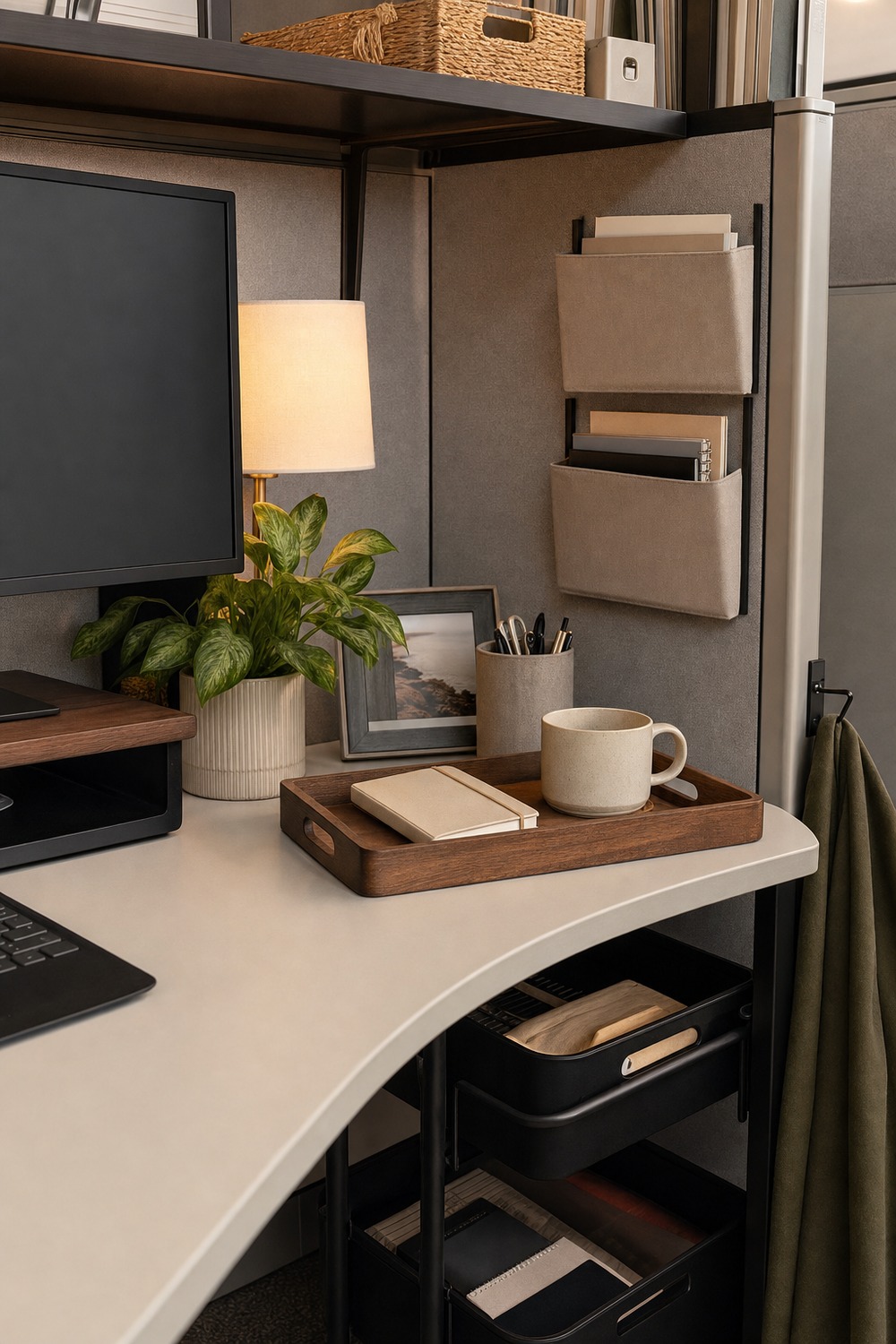
I like a close-up idea like this because small cubicle decor is often about tiny surfaces. A tray gives the mug, notebook, and little desk pieces a boundary, so they look styled instead of scattered. It is simple, but it makes the desk feel more controlled.
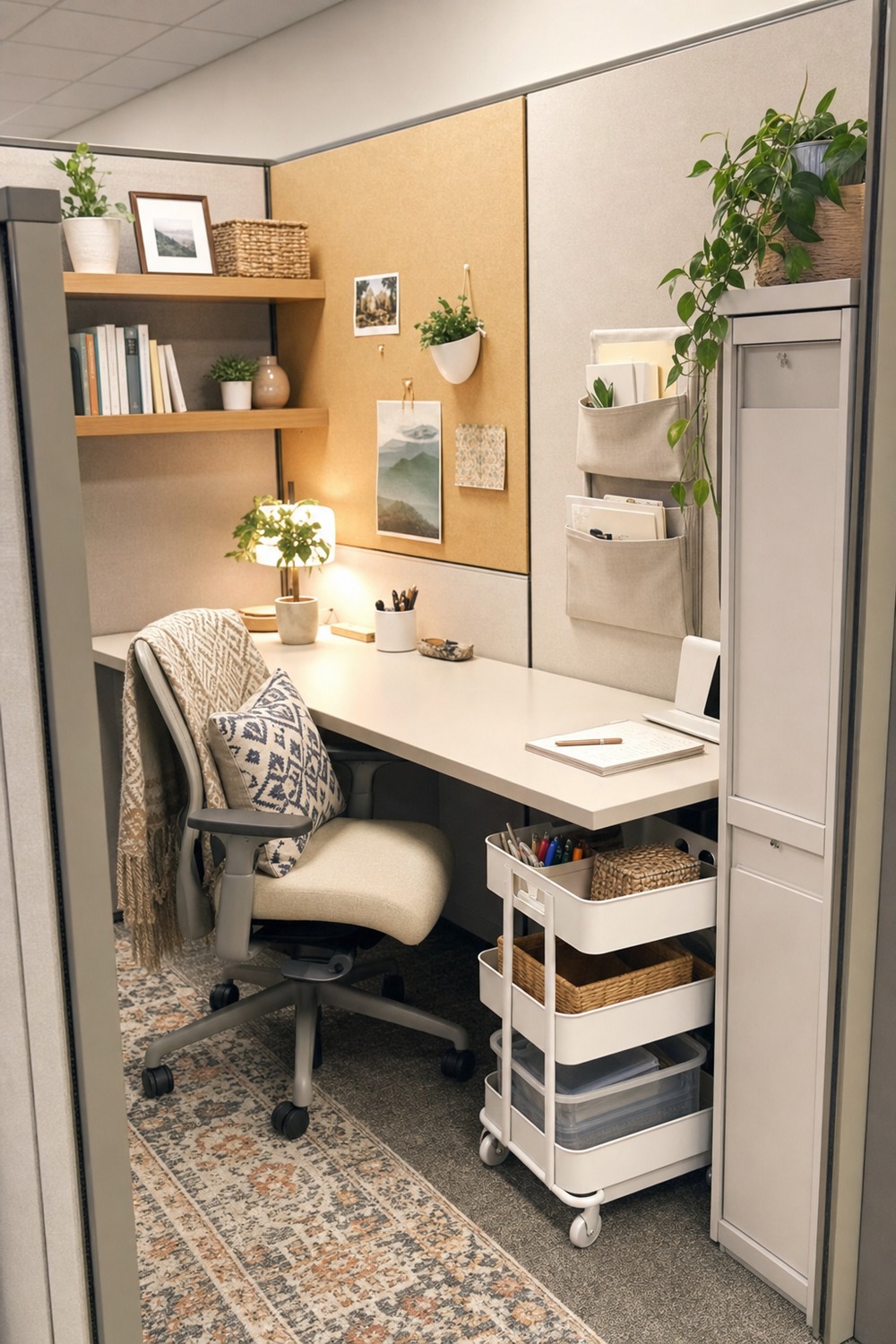
This angle shows why a cubicle can feel better when the entrance view is considered too. The chair, rolling drawers, lamp, and wall storage all feel connected, so the space looks like one small workstation instead of a desk surrounded by leftover organizers.
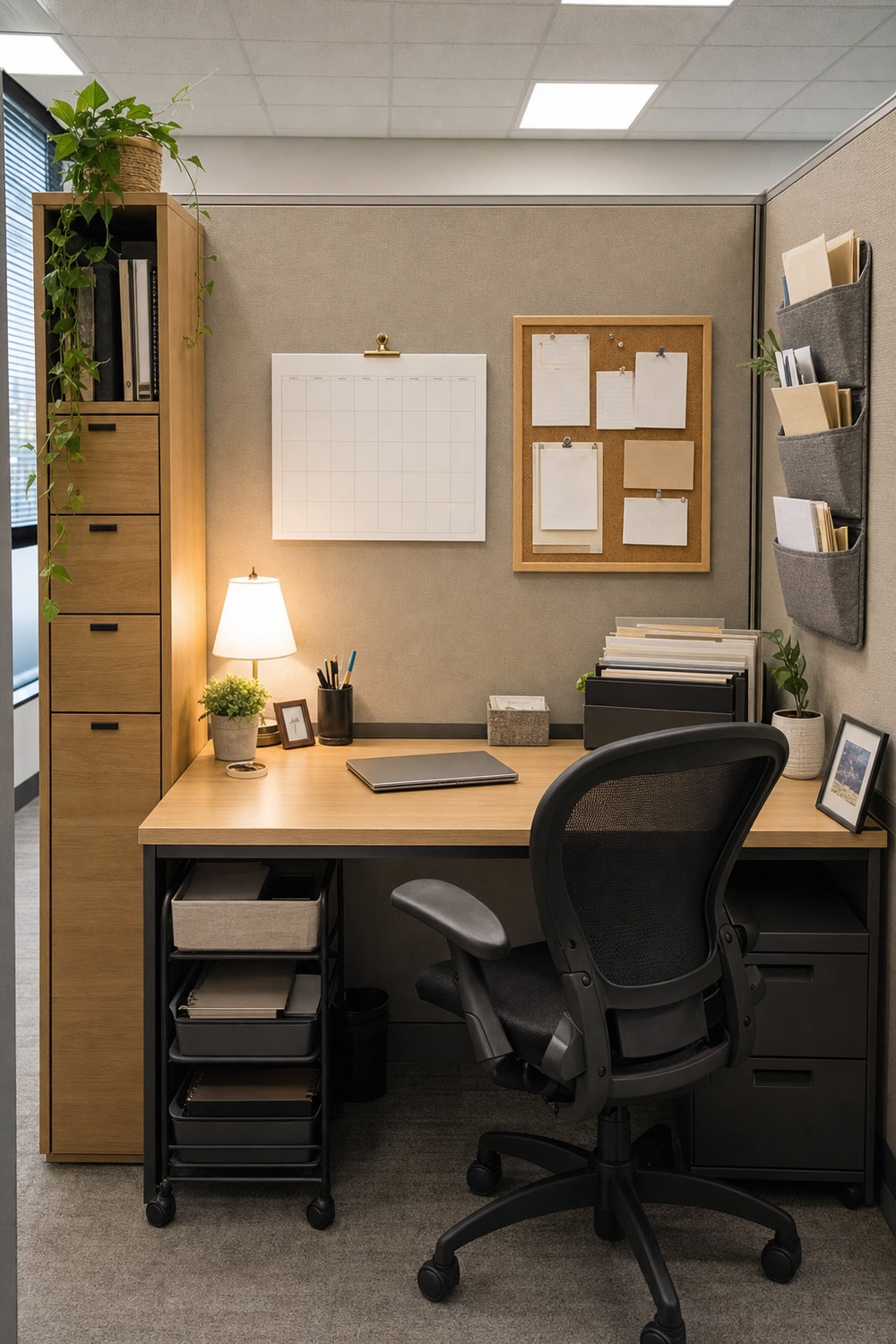
The command-center idea works when the wall does not turn into visual noise. Here, the blank calendar shapes, file sorter, and pinboard area make room for reminders without covering every inch. It feels useful for someone who needs papers in sight but still wants the cubicle to look tidy.
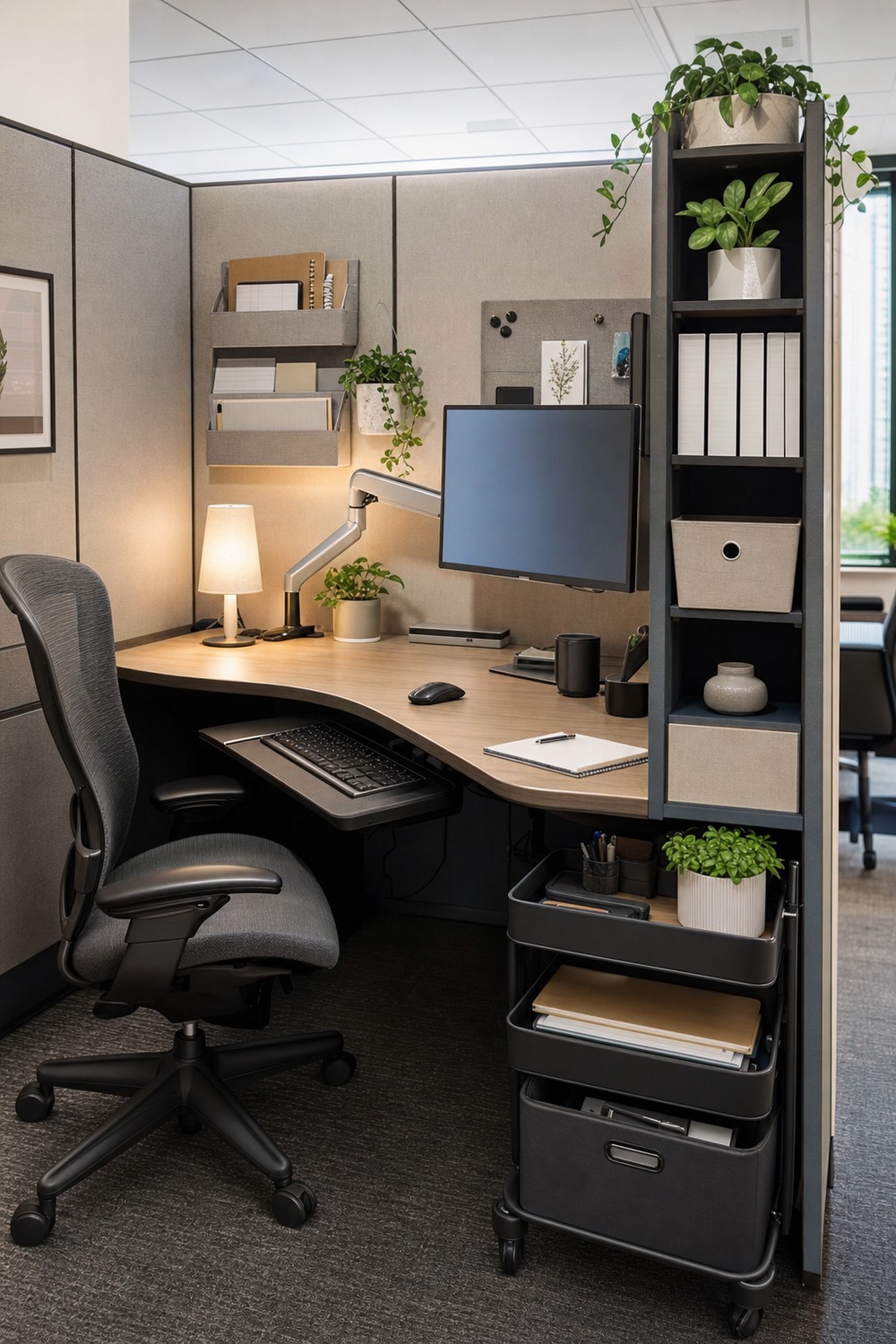
This one leans more practical, and I like that. The monitor arm, keyboard area, and side storage make the desk feel easier to work at, not just prettier. In a small cubicle, that balance matters because there is not much room for decor that only sits there.
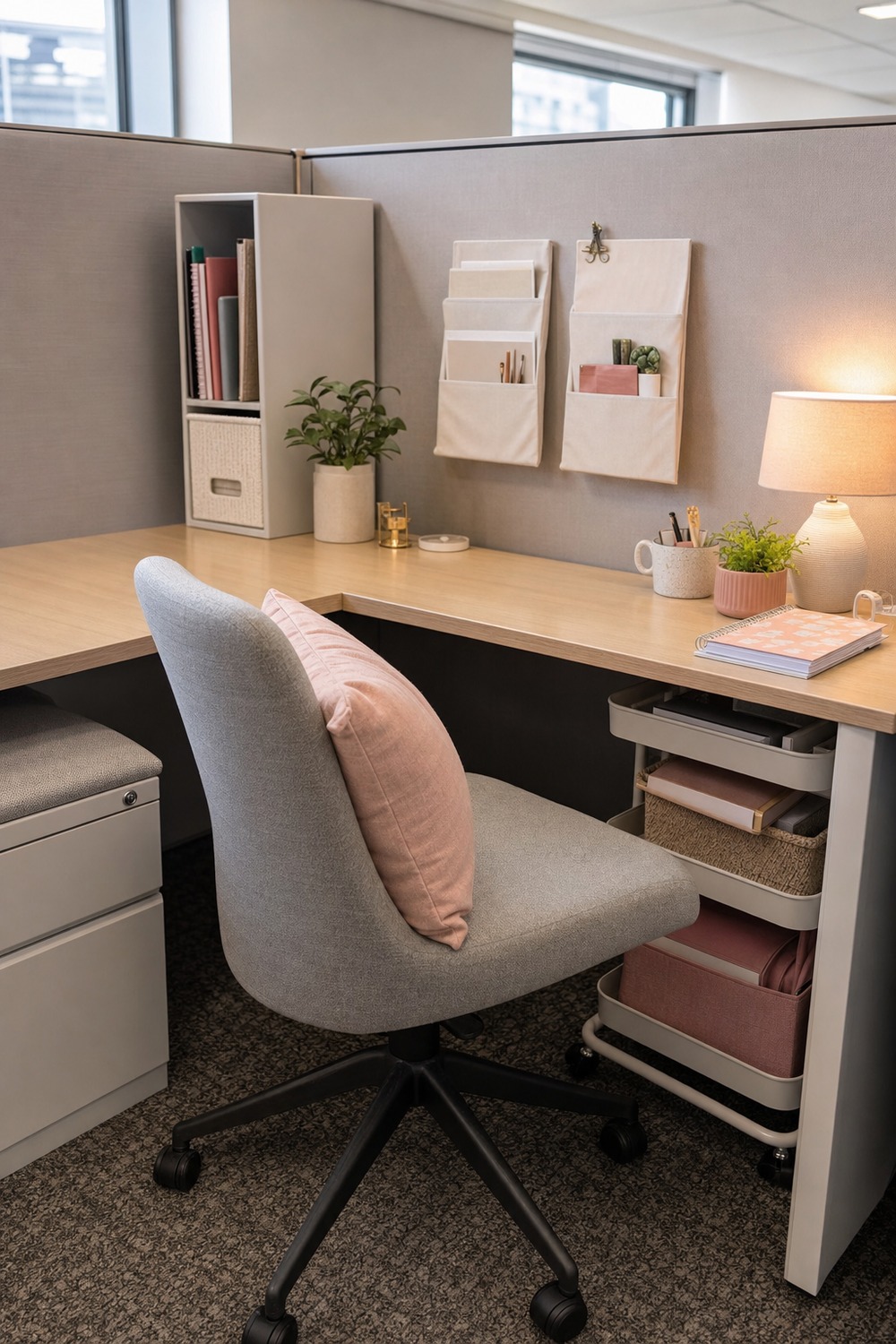
The softer chair detail makes the cubicle feel less harsh right away. A cushion, pale storage, and a small lamp bring in some comfort, but the setup still reads like an office space. It is a good reminder that one textile can change the feeling without making the desk look messy.
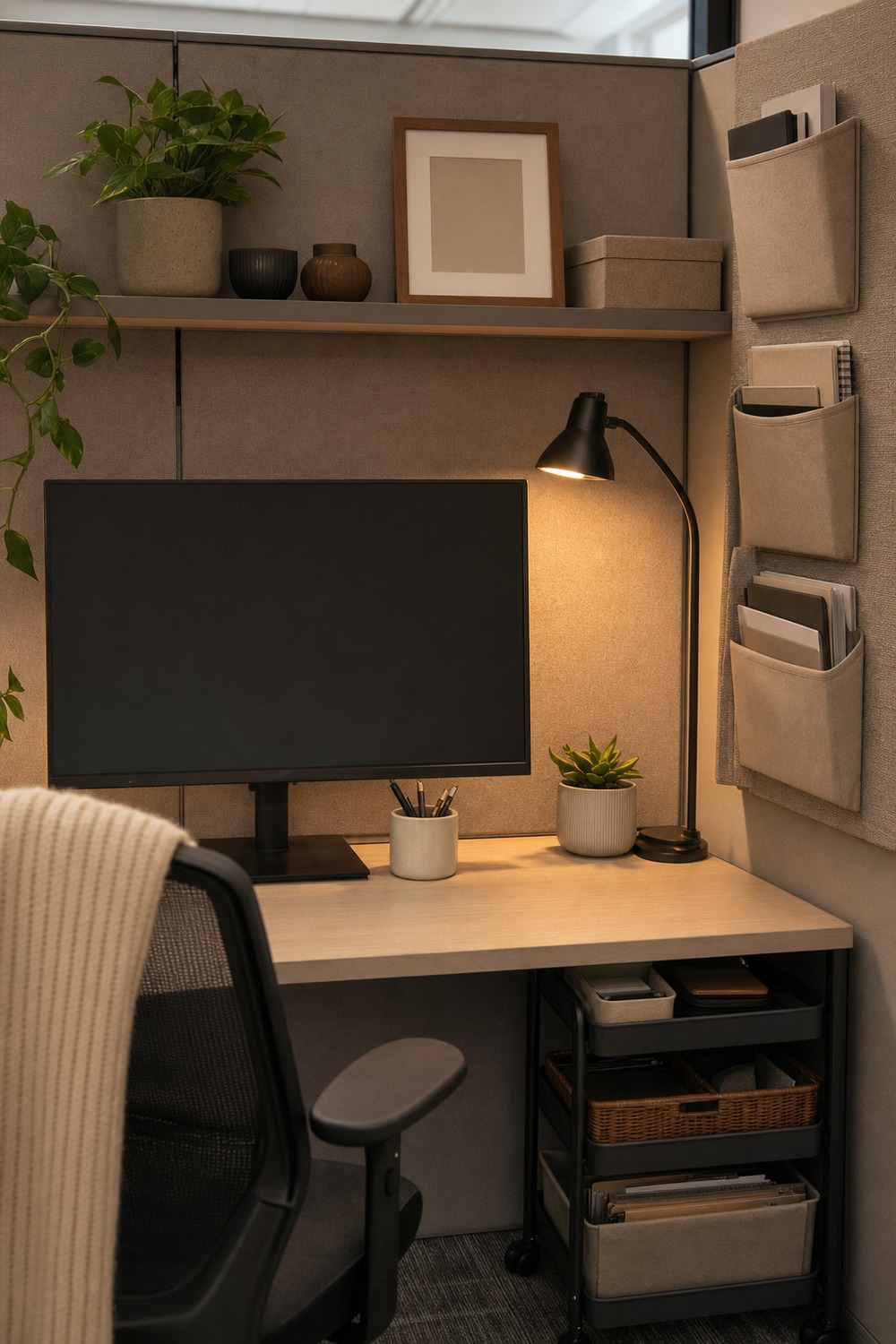
This shelf vignette is small, but it adds a finished edge to the cubicle wall. The plant, box, and warm light give the eye somewhere to land above the monitor, which keeps the workstation from feeling like only screens and paperwork.
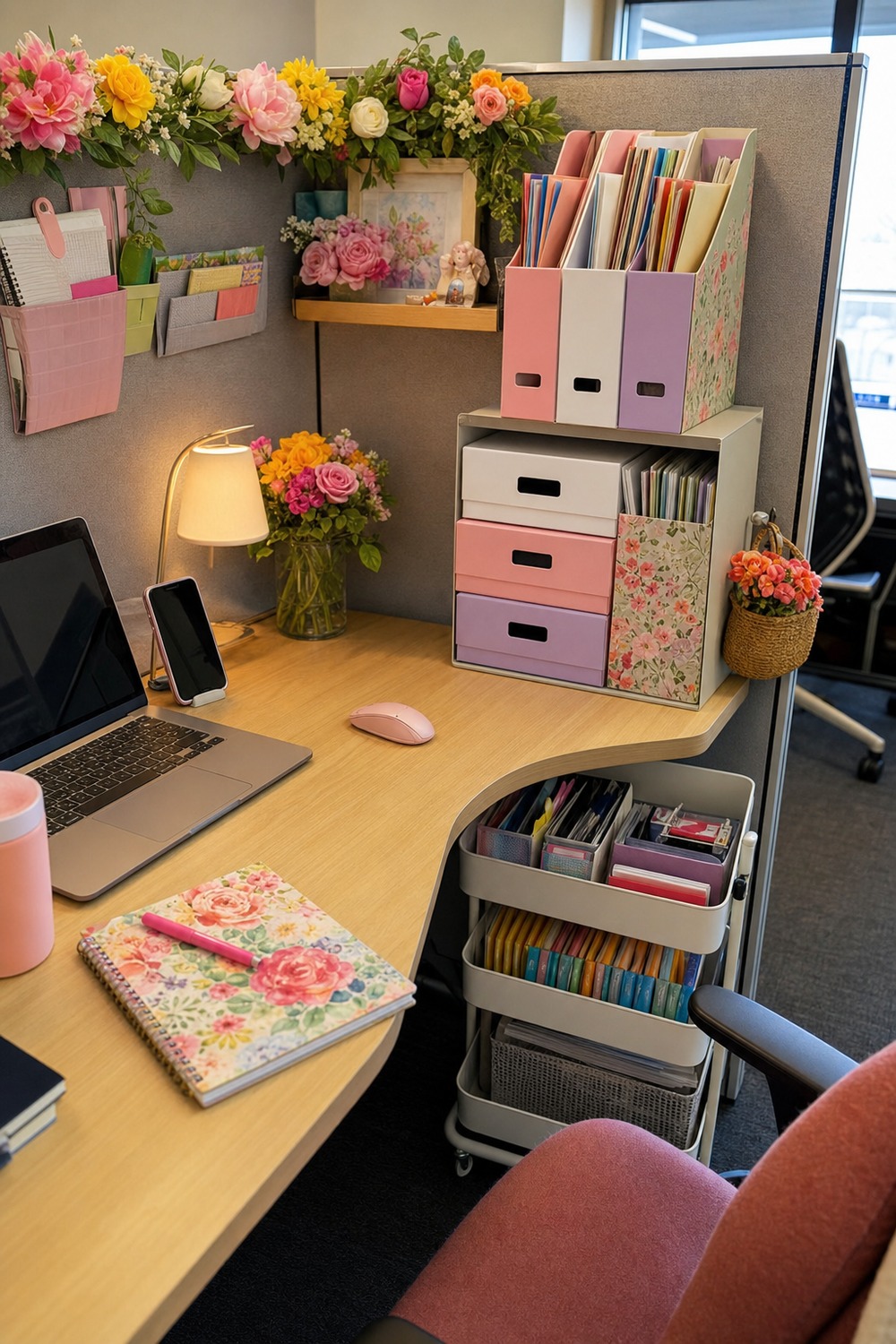
The file storage here is brighter and more playful, which can be nice if the rest of the office feels plain. I would keep the colors tight like this so it still looks organized. The stackable boxes and magazine holders make the paperwork feel handled instead of shoved into a pile.
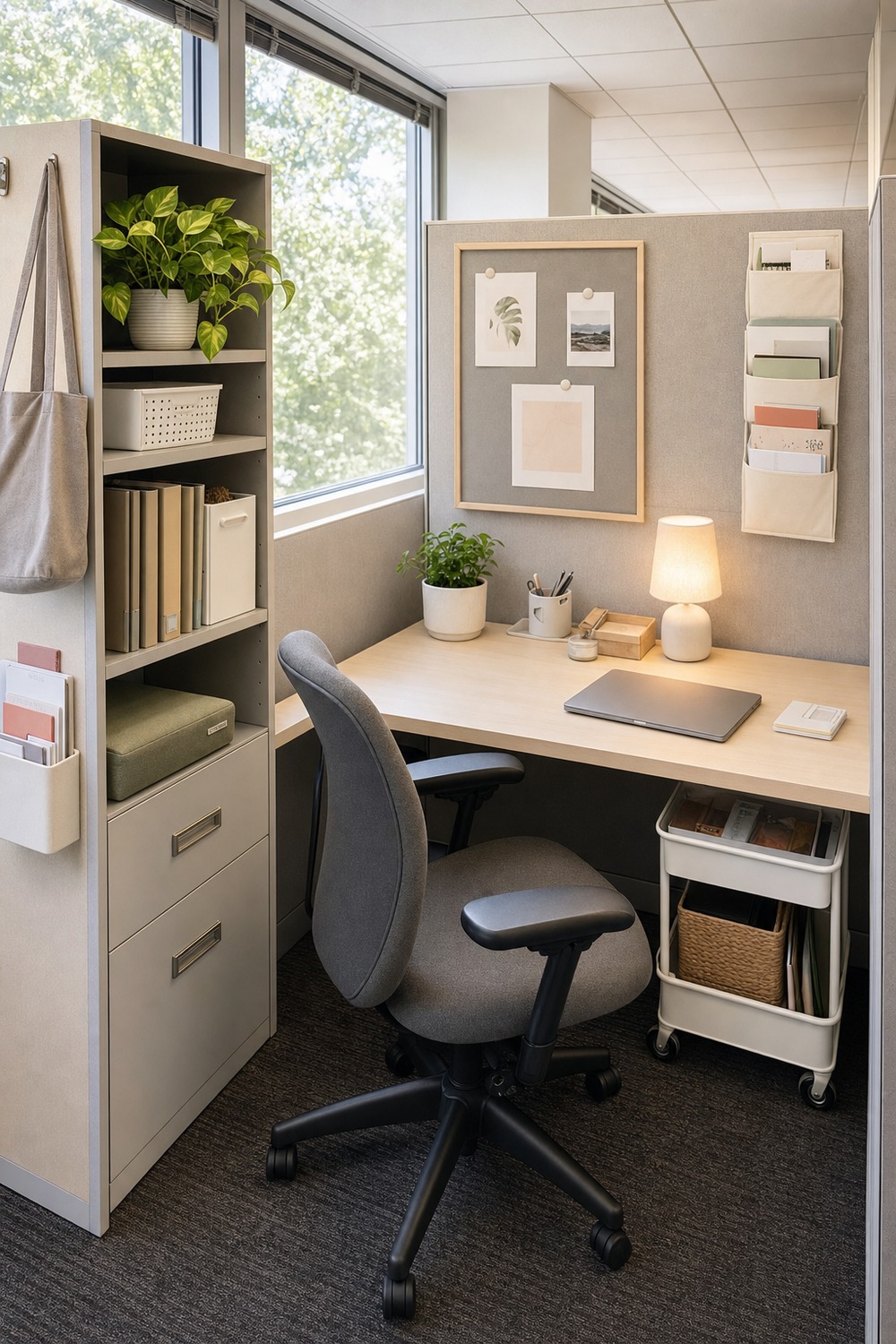
Natural light makes this cubicle feel instantly easier to sit in. The shelf and plant placement take advantage of the brighter corner, while the desk itself stays pretty clear. It feels like a good version of small cubicle decor for someone who wants clean but not sterile.
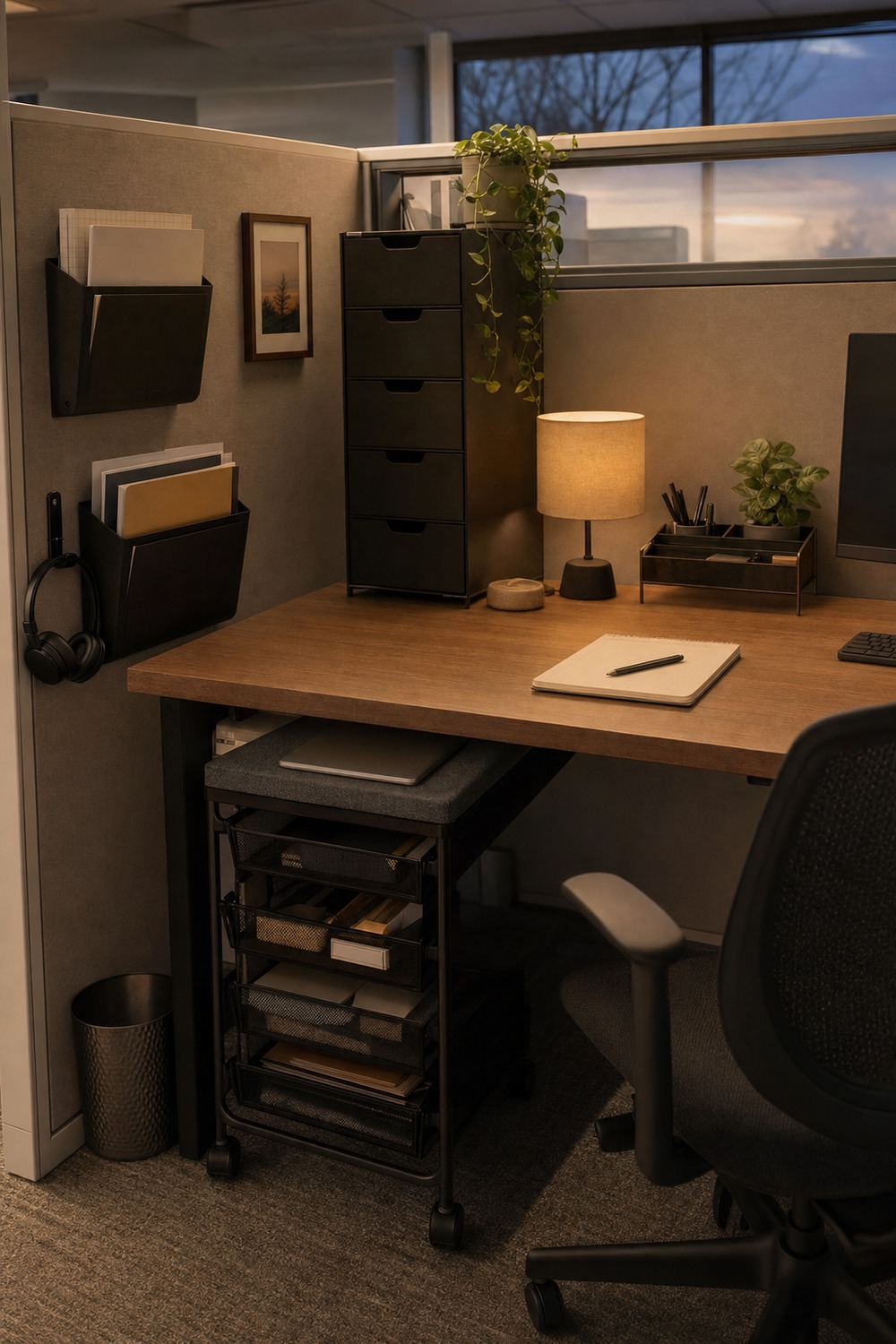
The darker setup feels more focused, especially with the lamp tucked close to the work area. I like it for a cubicle that needs to feel a little quieter and less exposed. The wall files and plants keep it from becoming too heavy.
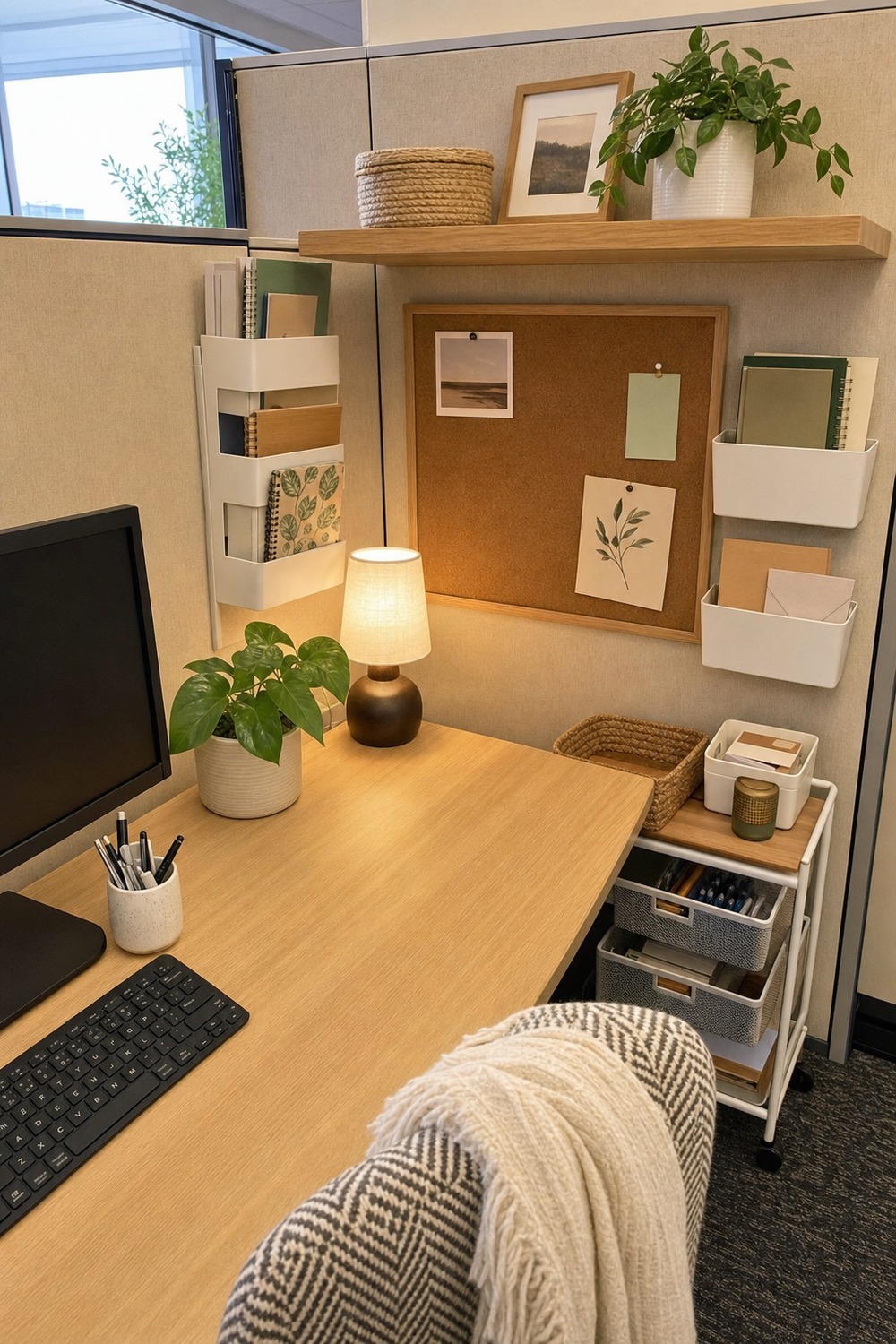
This is the kind of minimal setup that still has enough detail to feel lived in. The corkboard, small lamp, and rolling cart give everything a place, while the clear desktop keeps the cubicle from feeling cramped before the day even starts.
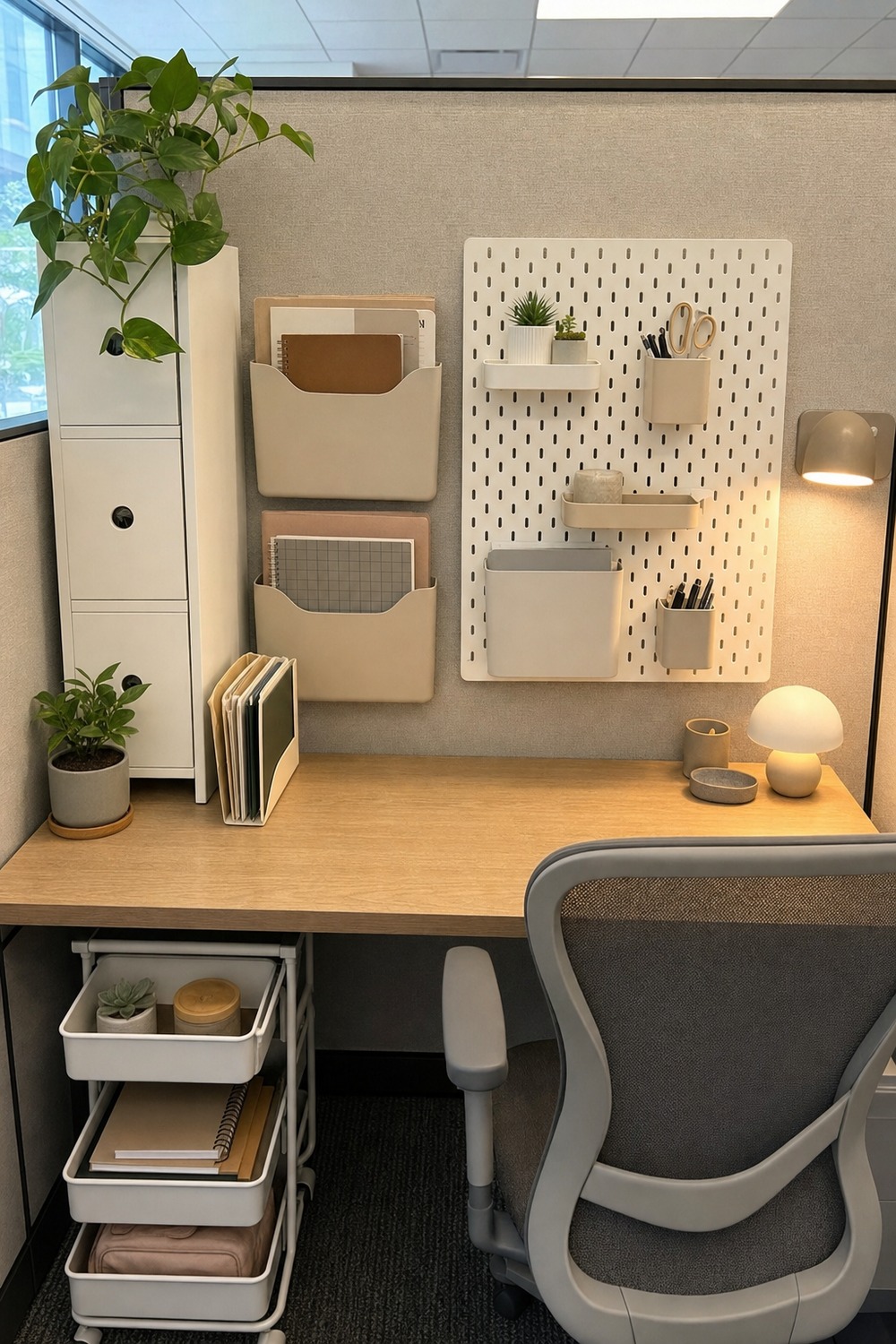
A pegboard-style wall is useful because it can change as the desk changes. Pens, notes, and small supplies can move around without adding another bulky organizer. The best part is that it uses the vertical panel space a cubicle already has.
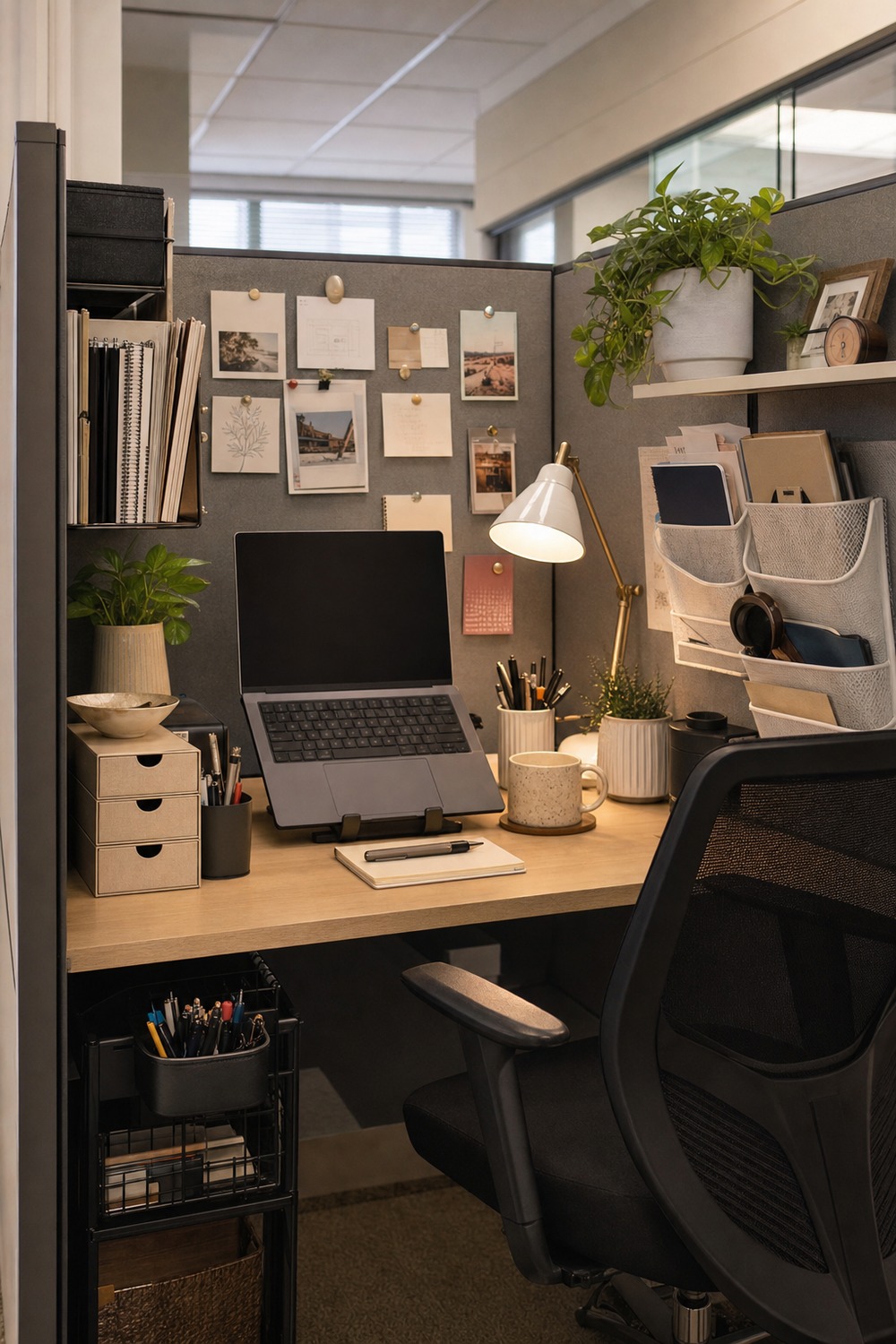
This one has more going on, but the drawers make the busy wall feel manageable. I like the mix of folders, baskets, and a lamp because it looks like a real desk that has to handle paperwork, cords, and small office extras every day.
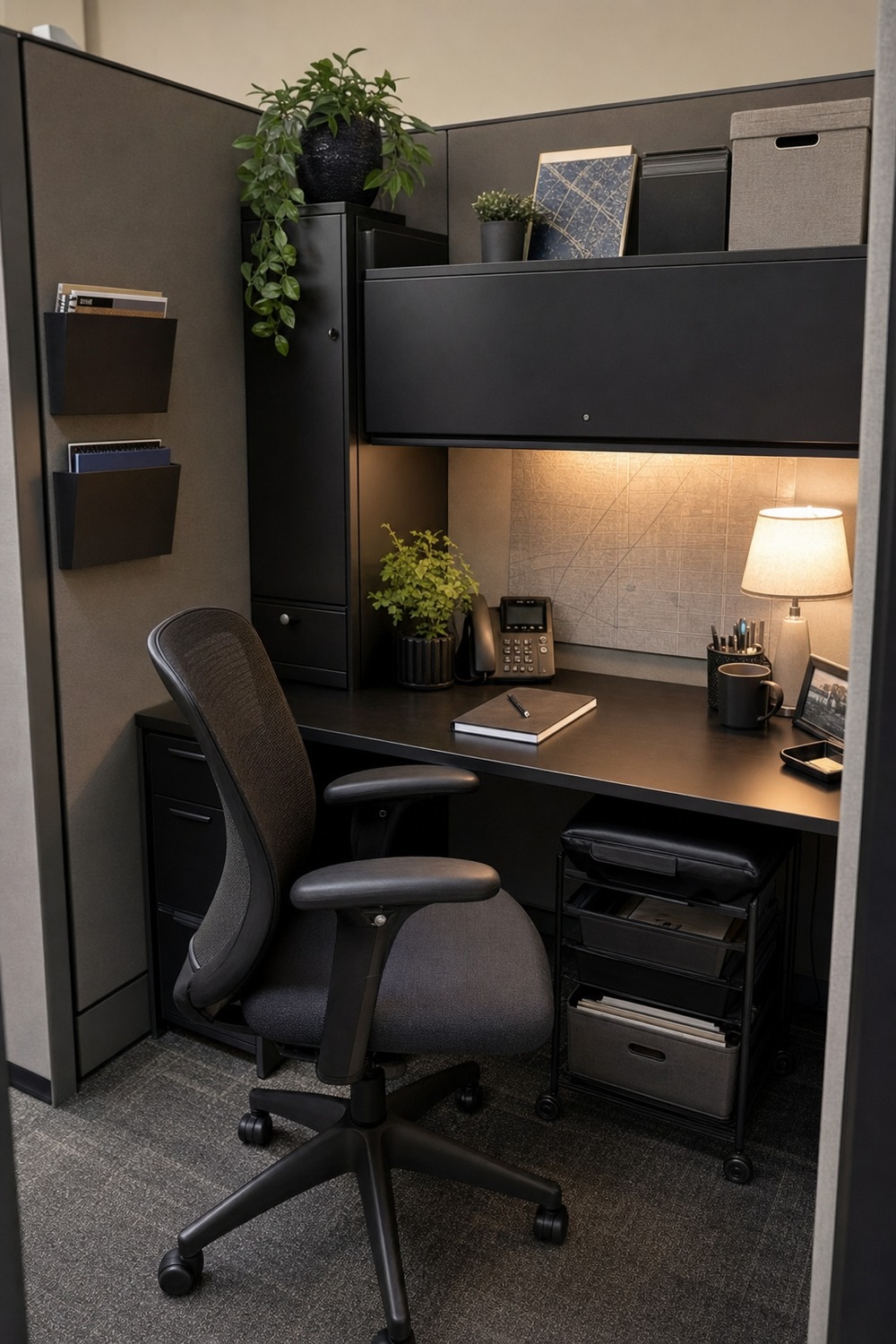
The darker shelving gives this tiny cubicle a more polished look without needing much color. It feels a little more grown-up than the usual office storage, and the under-shelf light makes the work surface feel intentional instead of tucked under a heavy wall.
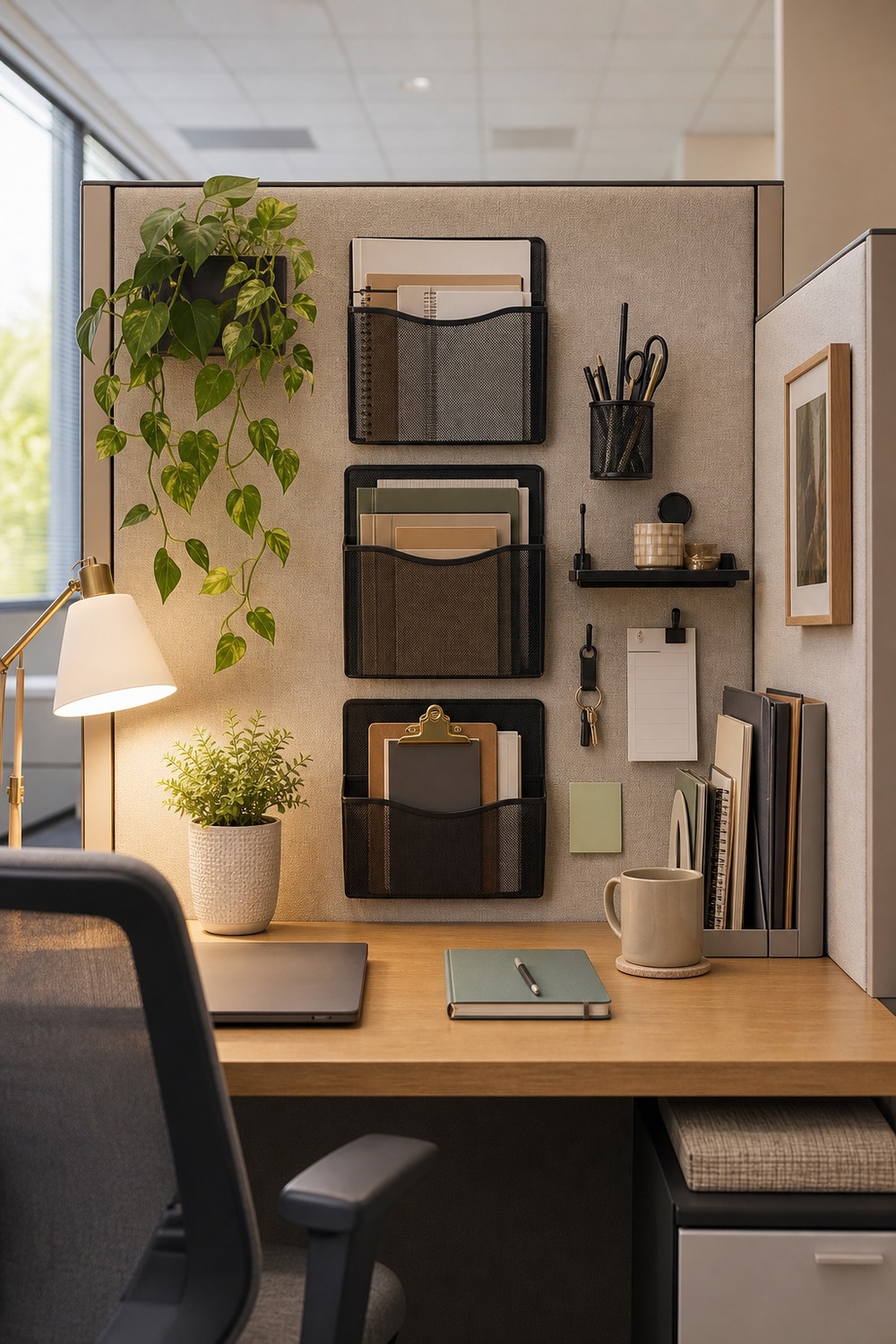
This vertical organizer wall is a strong small-space move. The files and shelves climb up the panel instead of spreading outward, and the lamp keeps the setup from feeling flat. It is practical, but it still gives the cubicle a bit of personality.
Small cubicle decor does not have to mean filling every surface. The best setups usually fix one daily annoyance first, then add just enough warmth, texture, or color to make the workstation feel less forgettable.

I work in tech, but my taste in design is straight out of a slow European village. Give me arches, aged brass, and a room that smells like books and coffee. That’s my kind of home.