A shared toddler room has to survive two rumpled beds, two favorite colors, and the toy pile that somehow crosses the whole floor. The easiest setups give each child a clear sleep zone, then protect one open path for bedtime and cleanup.
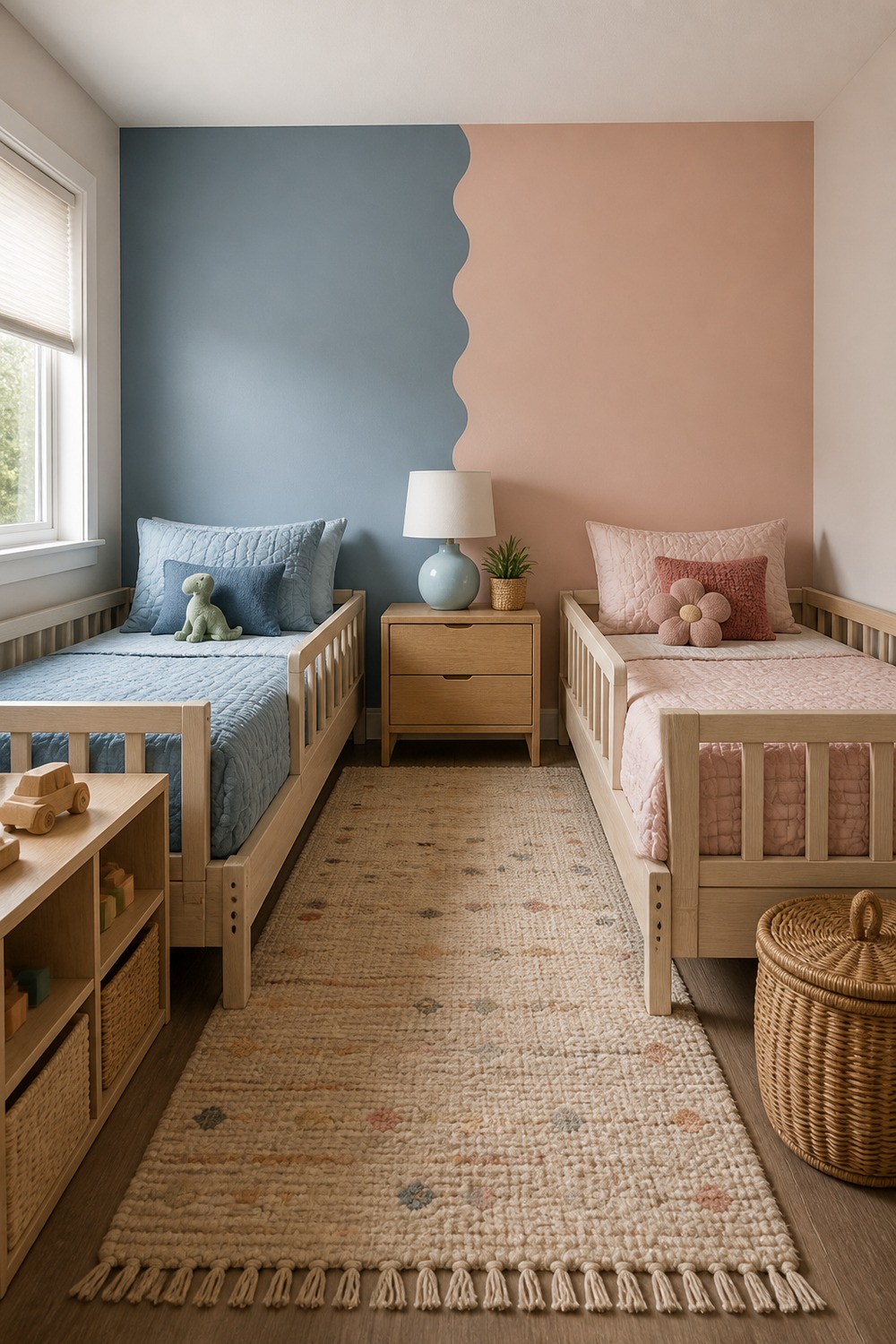
The dusty-blue and blush quilts make the two beds feel personal without splitting the room into competing themes. A shared oak nightstand keeps the middle calm and leaves a clean aisle for sleepy feet.
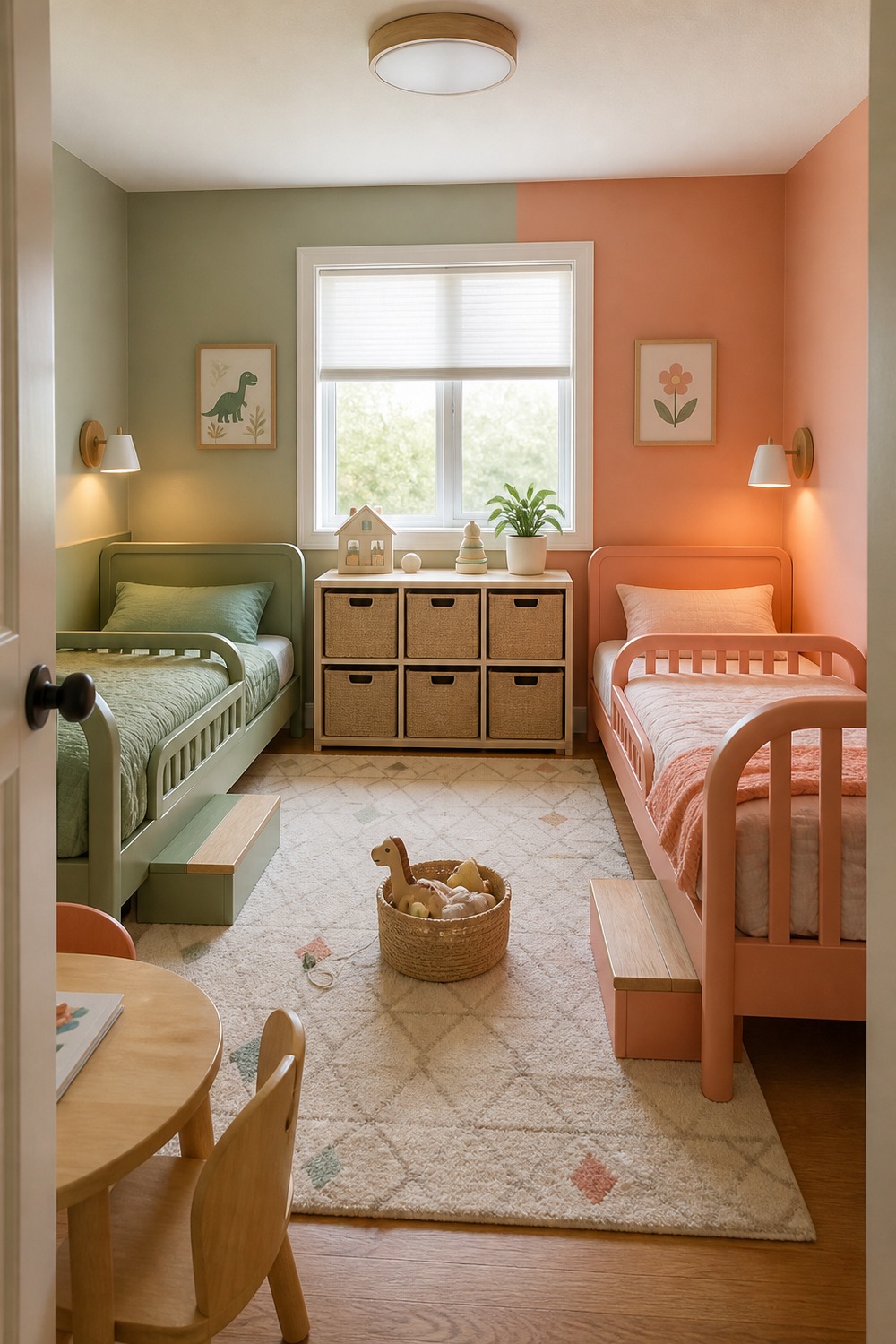
Sage and coral are softer than a hard blue-versus-pink divide. The low cabinet under the window gives both kids reachable storage while the open center still works for play.
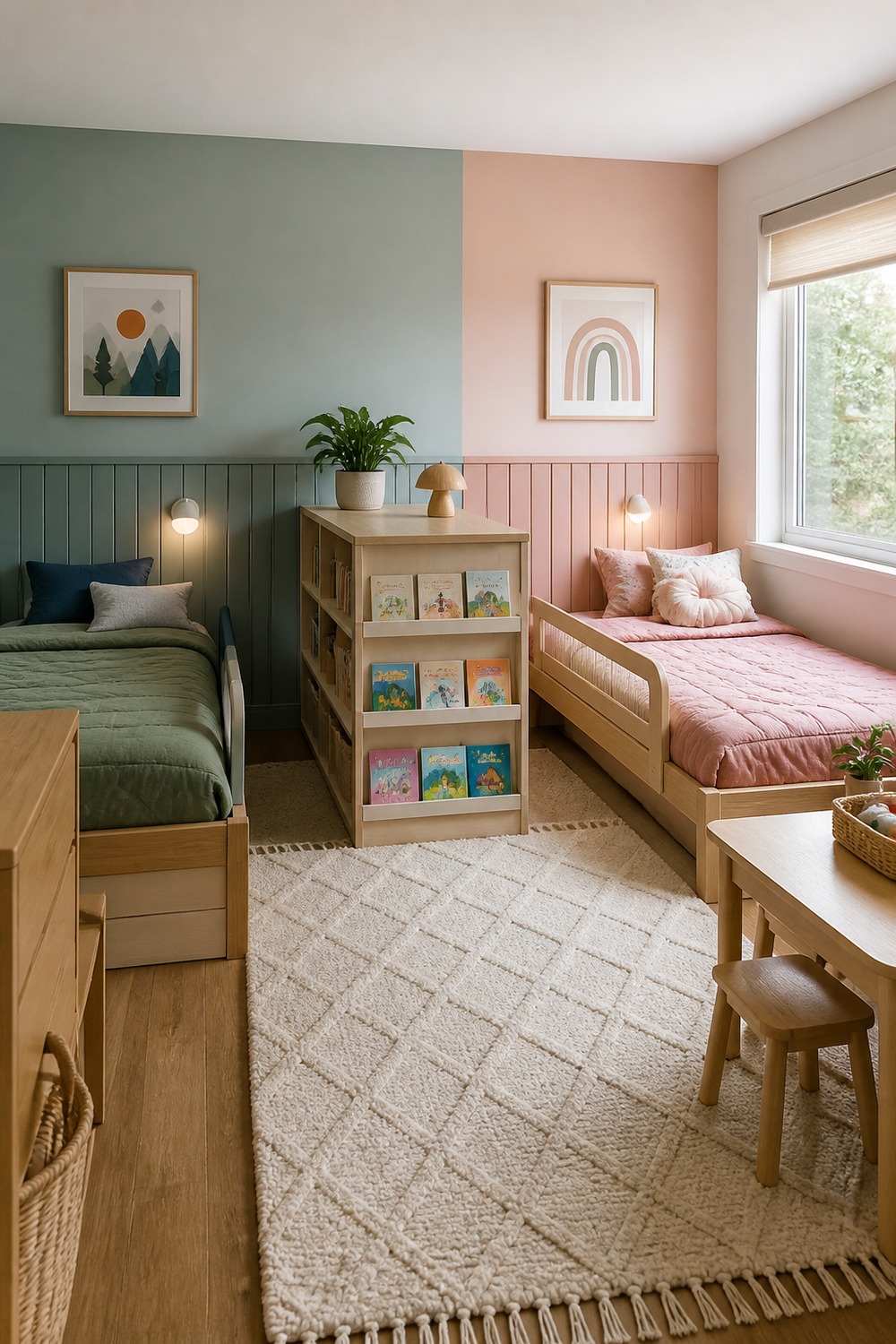
That center bookcase creates separation without building a wall between the beds. Front-facing books stay easy to grab, and the low height keeps the room feeling connected.
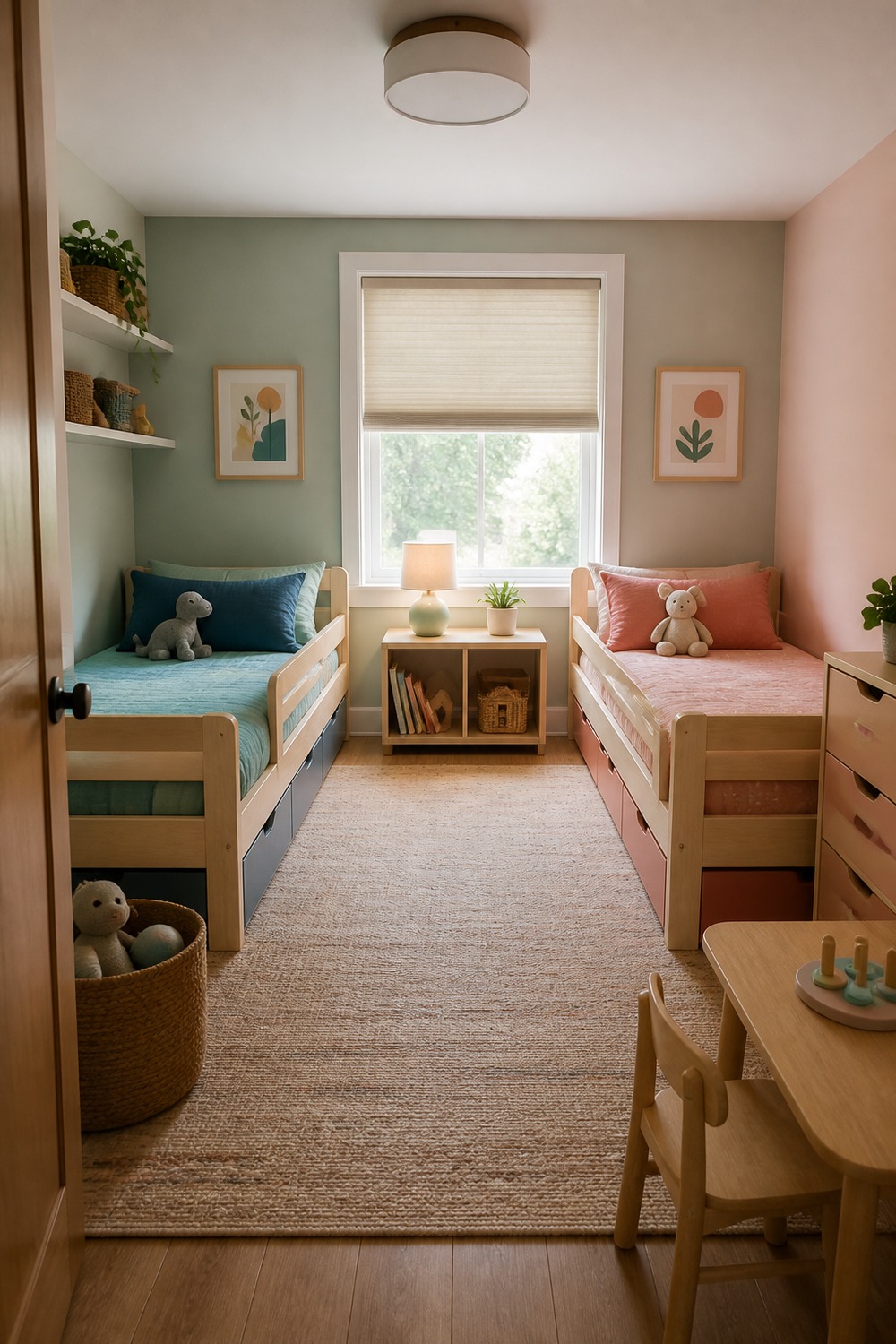
Parallel beds make sense in a narrow room when the walkway stays truly clear. Underbed drawers take care of pajamas and spare sheets without adding another bulky dresser.
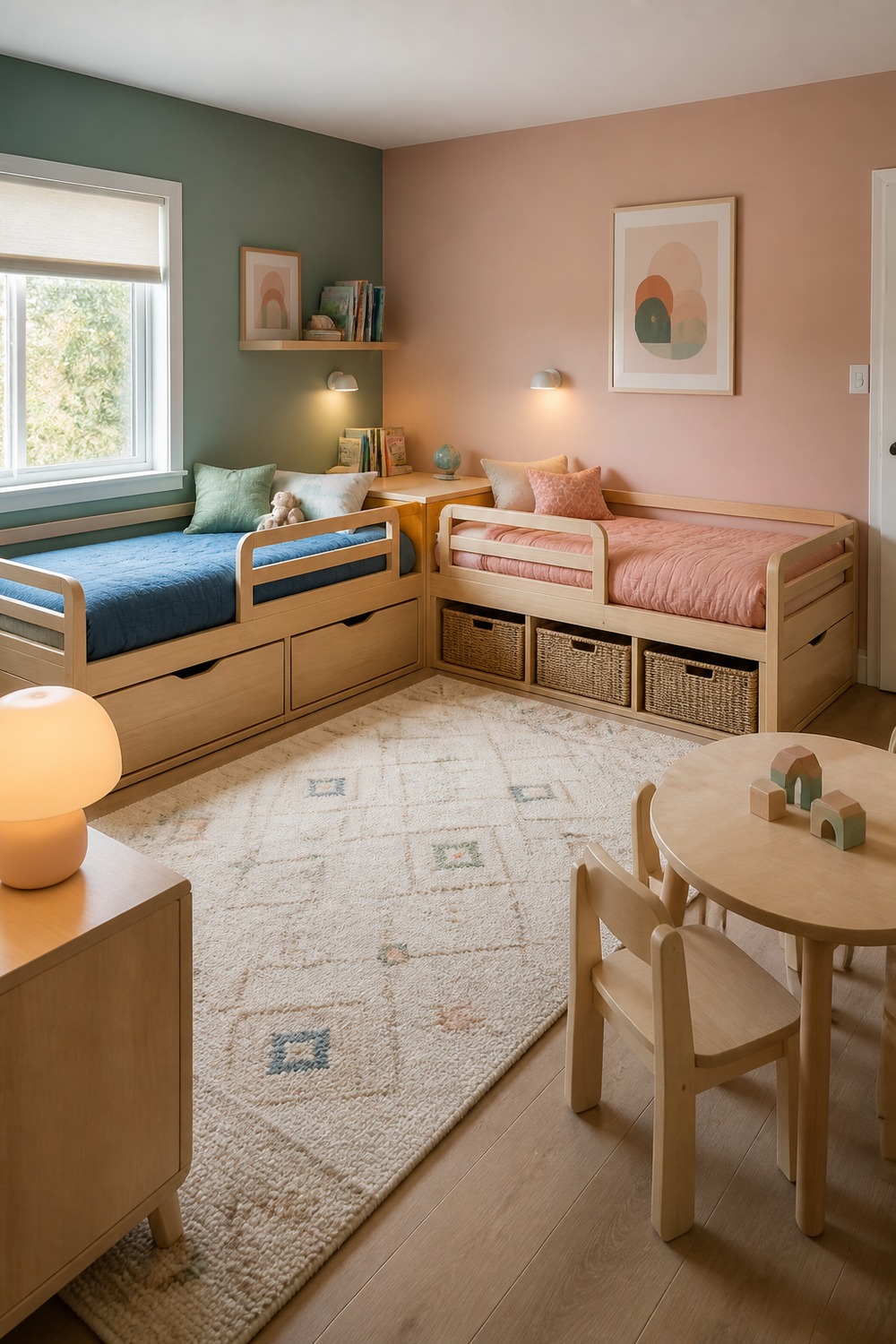
An L-shaped arrangement opens up a real patch of floor instead of leaving two skinny unusable strips. The corner baskets are close enough for toddlers to help with cleanup.
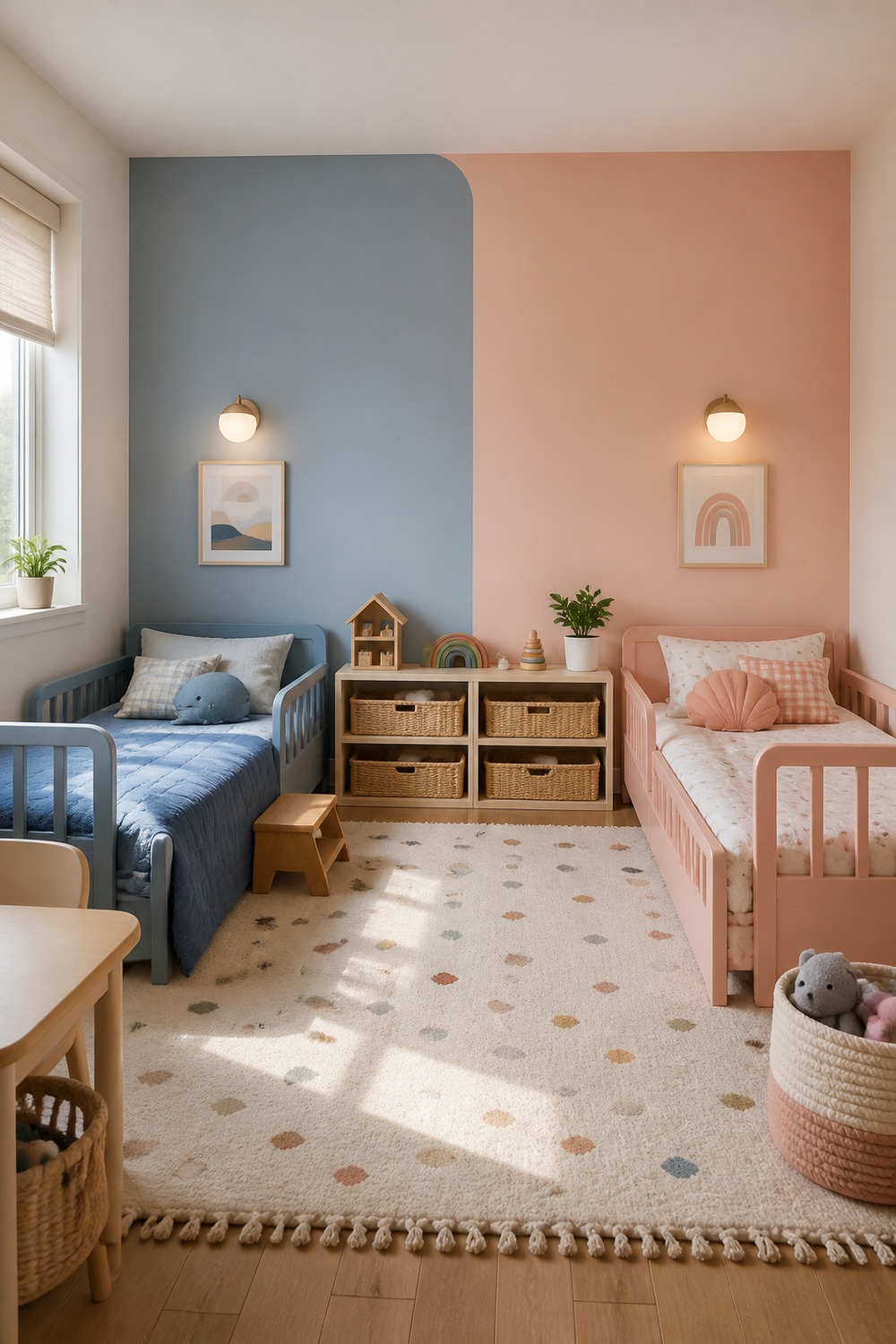
The blue and peach color blocks mark each side in one simple move. Because the paint carries the personality, the furniture can stay matching and easy to rearrange later.
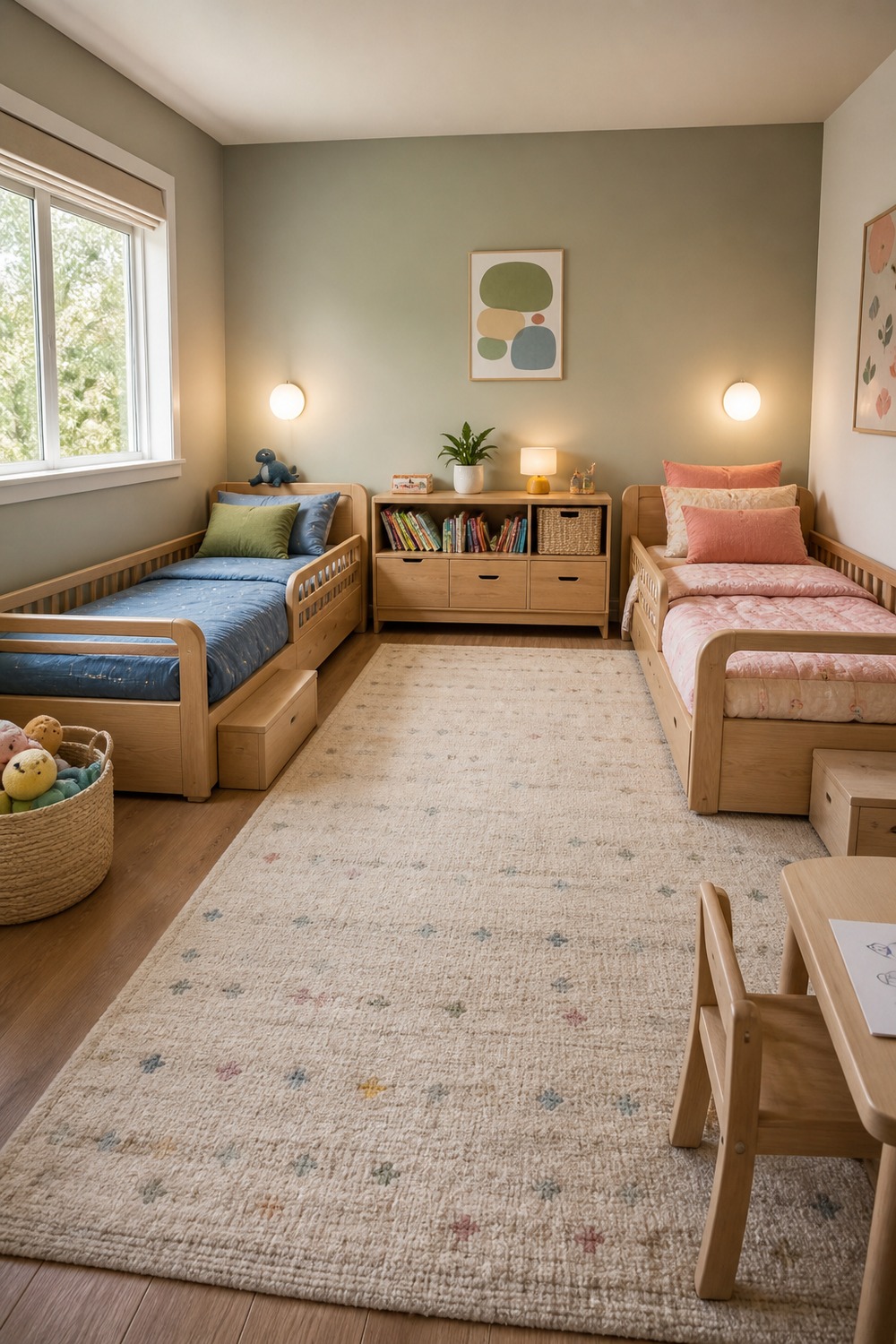
Matching pale-wood beds keep the room visually steady, while different bedding gives each child a recognizable spot. The neutral rug bridges both color palettes without looking overly coordinated.
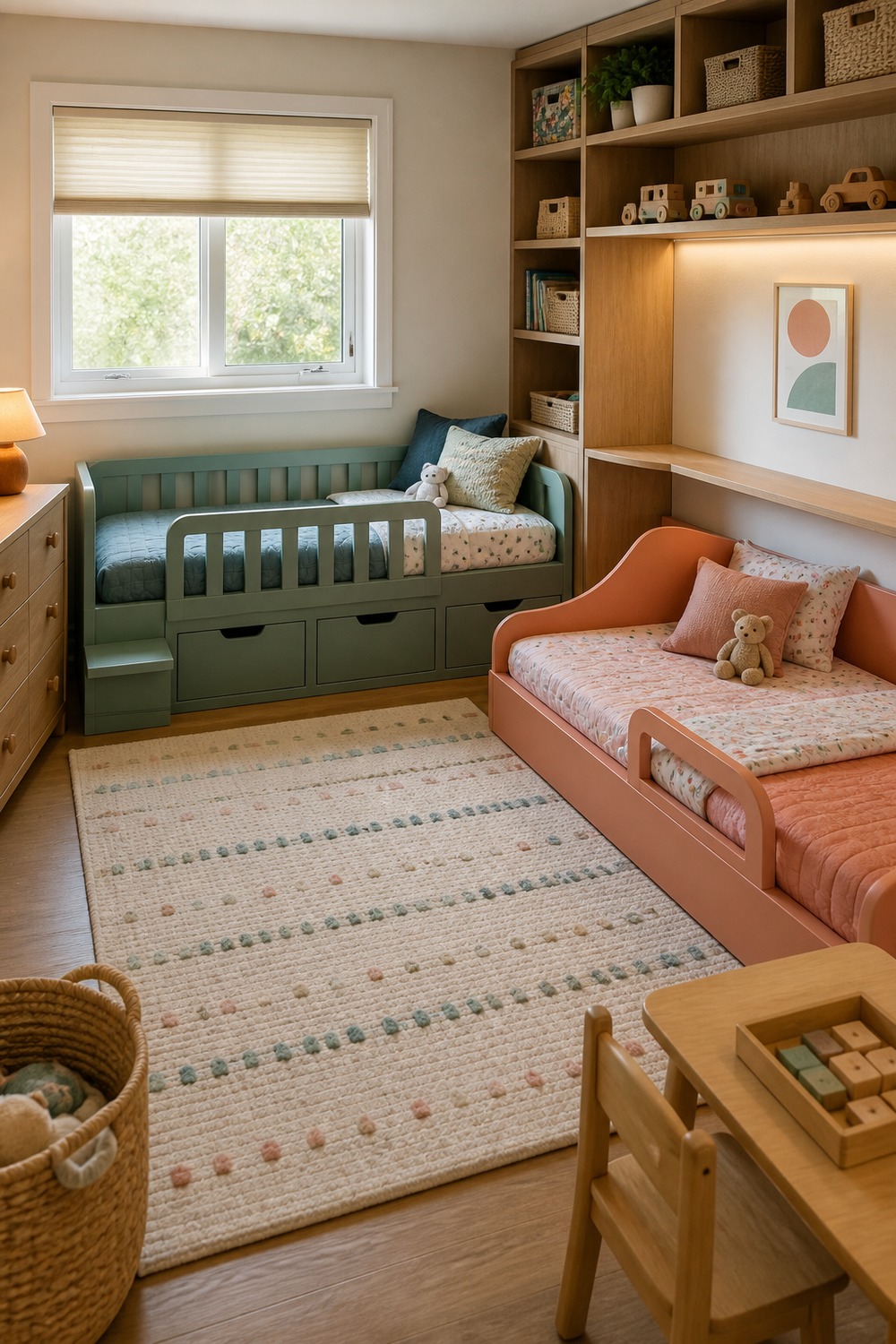
A floor-low second sleep zone is useful when a standard pair of beds would crowd the doorway. The broad landing matters here—it keeps getting in and out of bed from becoming an obstacle course.
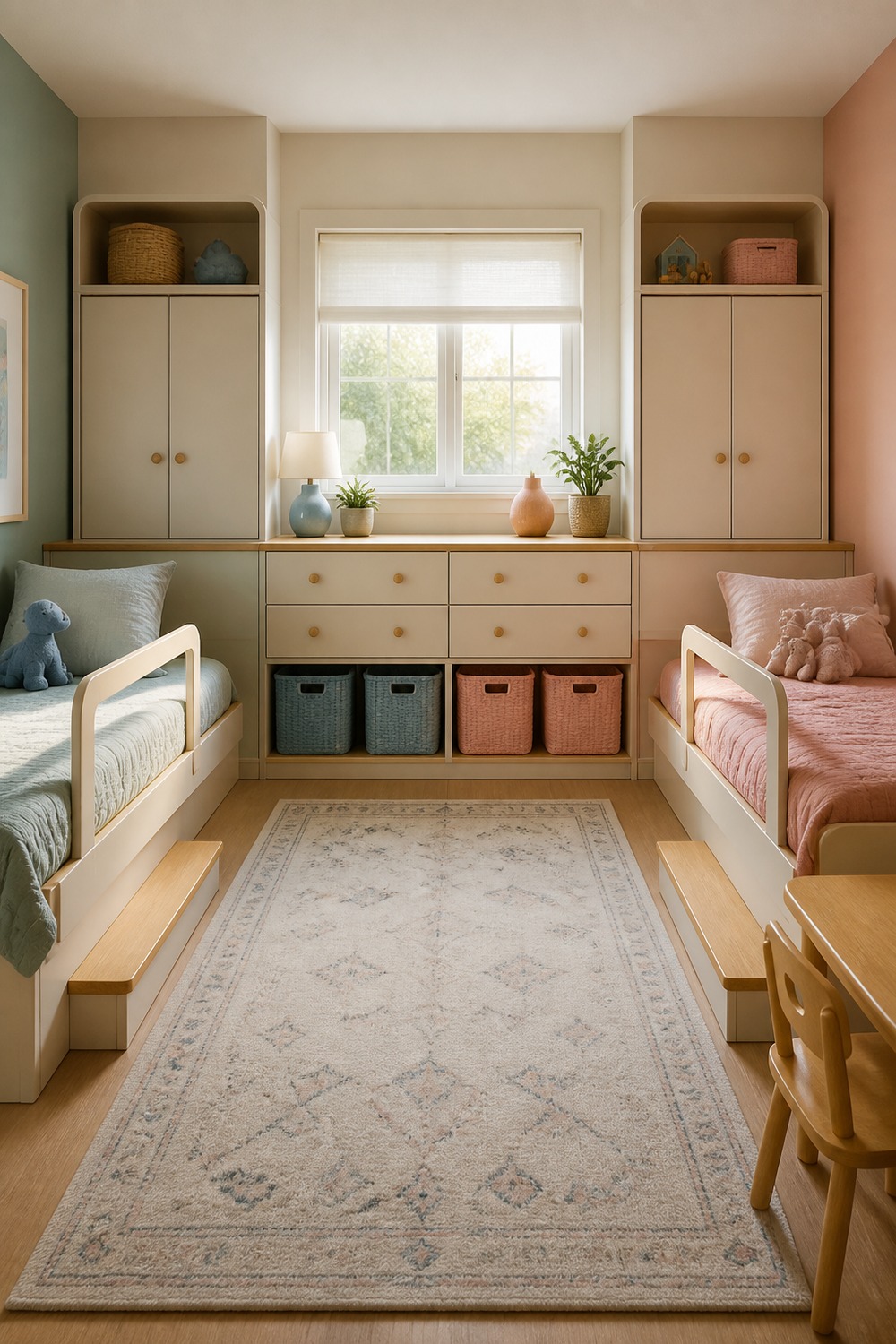
Closed storage across the back wall hides the noisy little stuff that makes shared rooms feel chaotic. Blue and blush baskets still give each child an obvious place for everyday favorites.
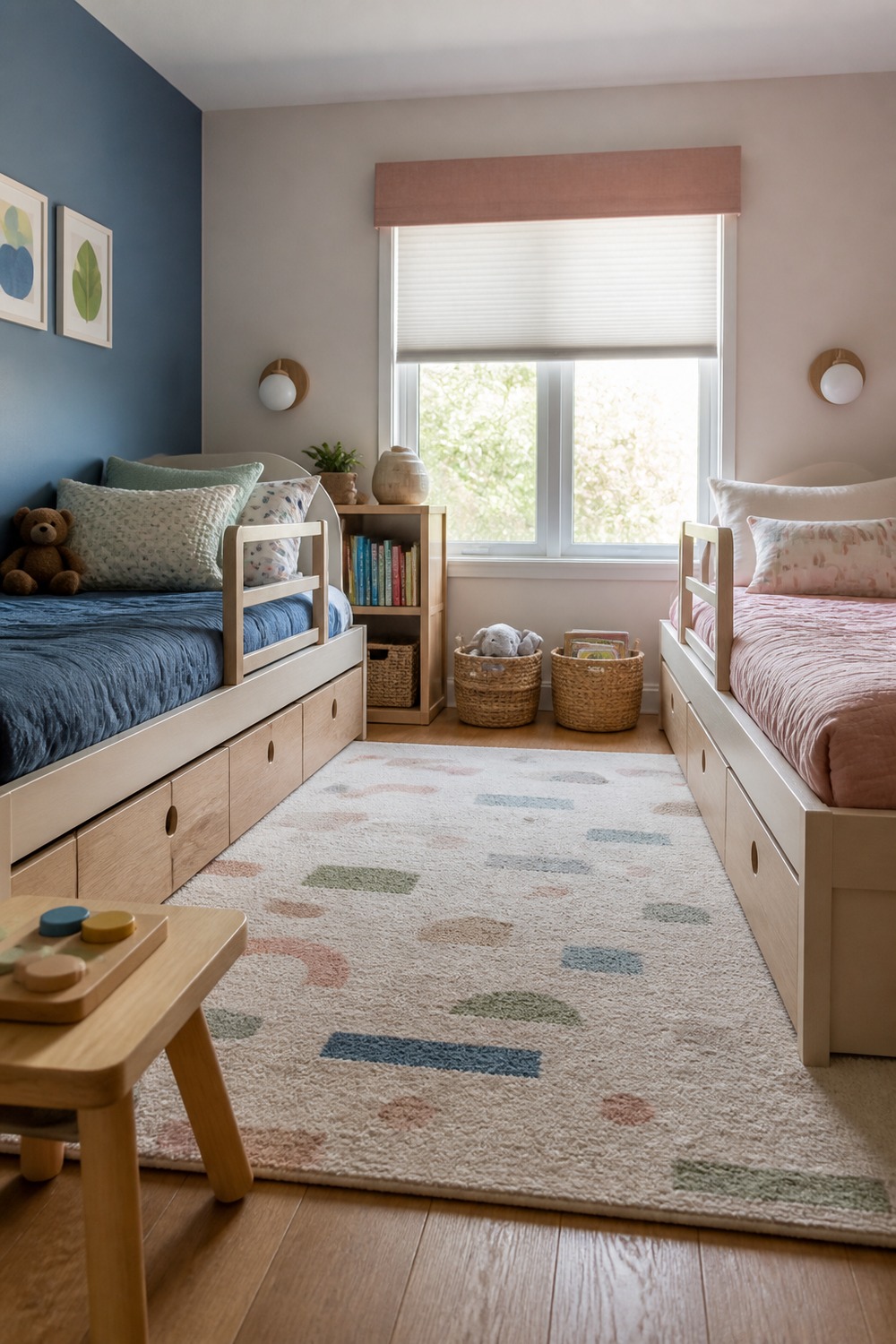
Deep drawers let both beds earn their footprint. I like that the rumpled quilts and book baskets feel normal, but the middle of the room remains easy to cross.
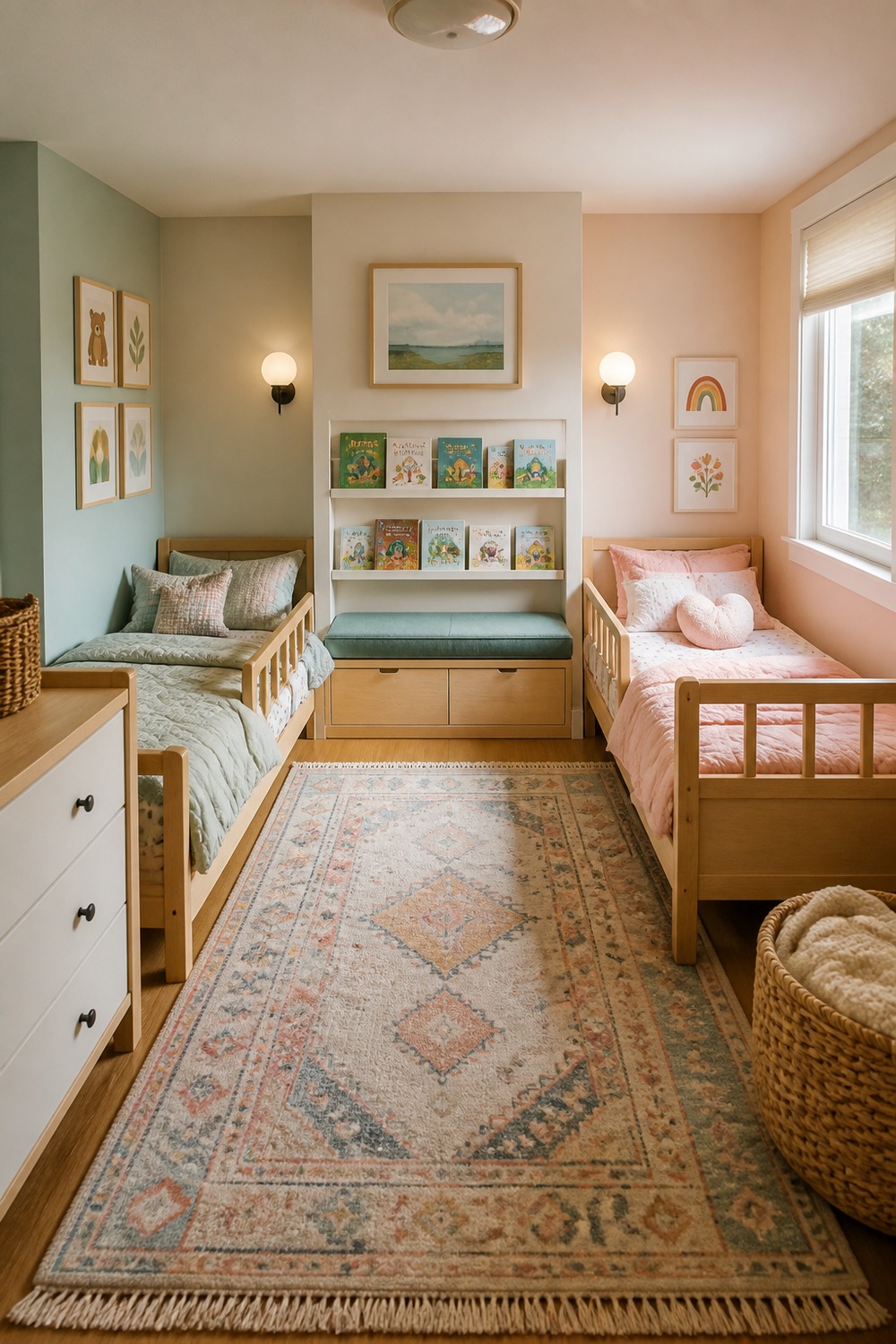
The reading nook gives both kids somewhere to settle before lights-out without climbing into the same bed. A fitted bench cushion and low book ledges make the corner useful, not just decorative.
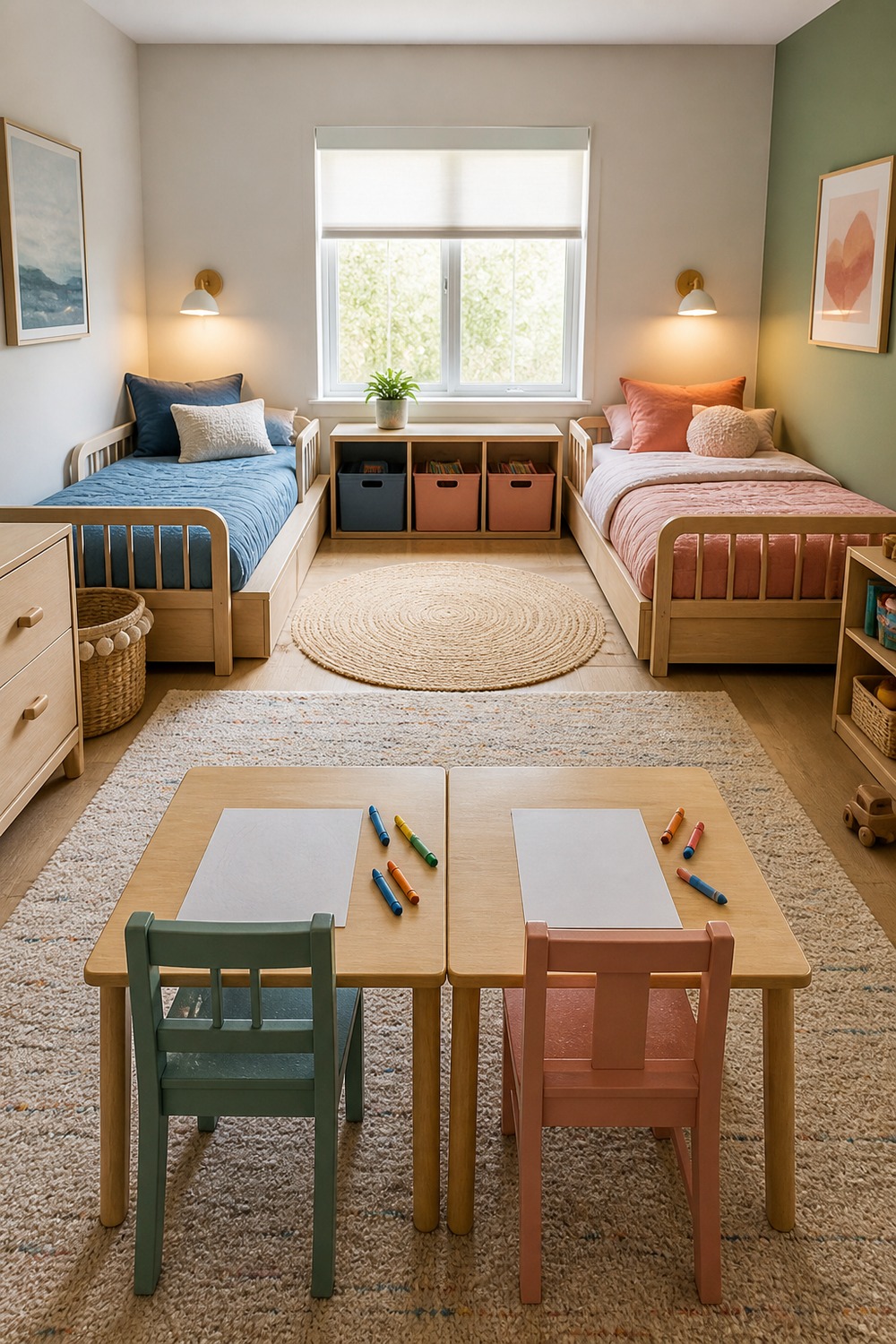
Two child-height activity desks prevent crayons and paper from taking over the beds. Keeping the chairs side by side also leaves the sleeping zones visually quieter.
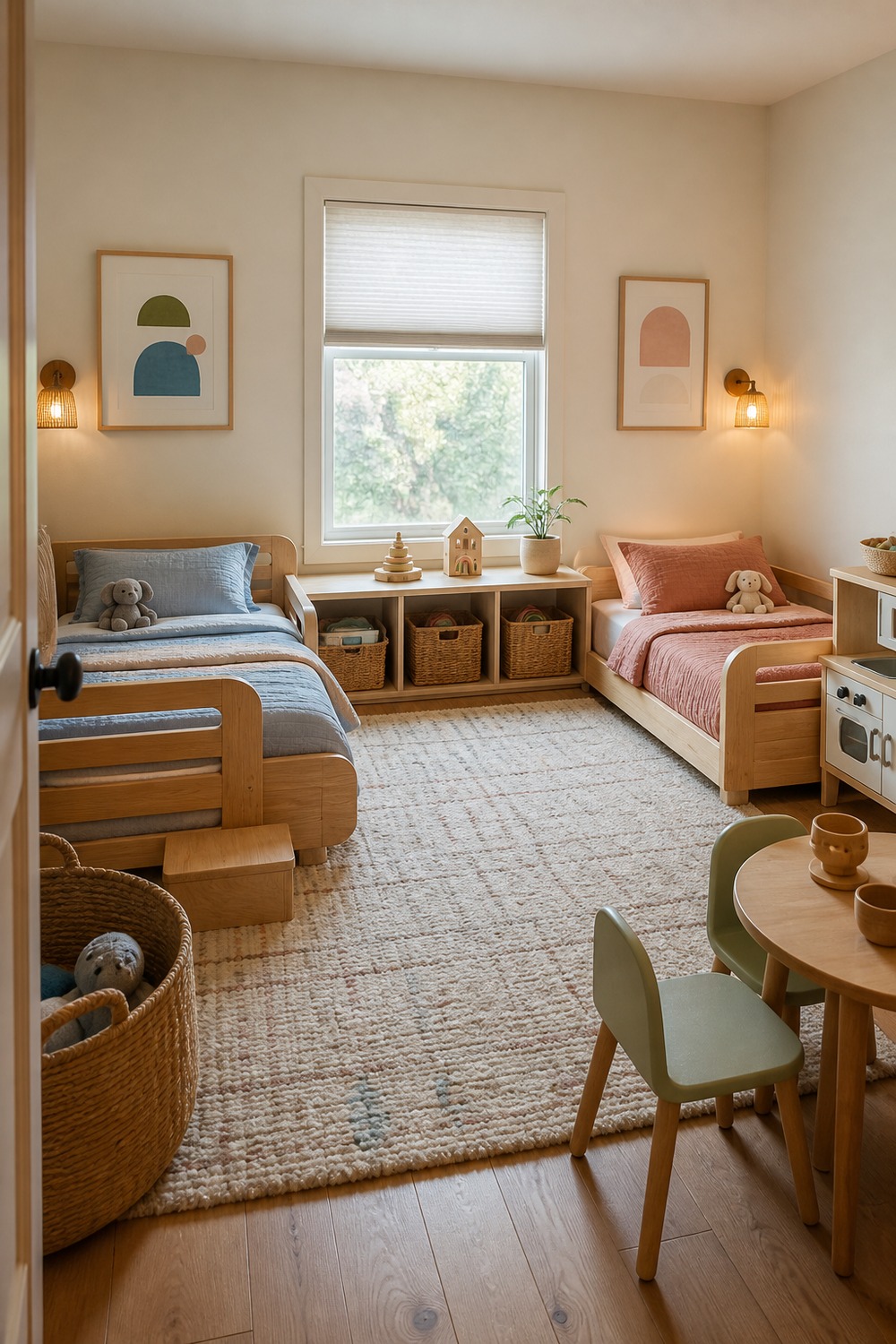
This neutral room avoids feeling washed out by using blue-gray and dusty rose in small doses. Natural wood and woven baskets add texture while the low beds keep the scale toddler-friendly.
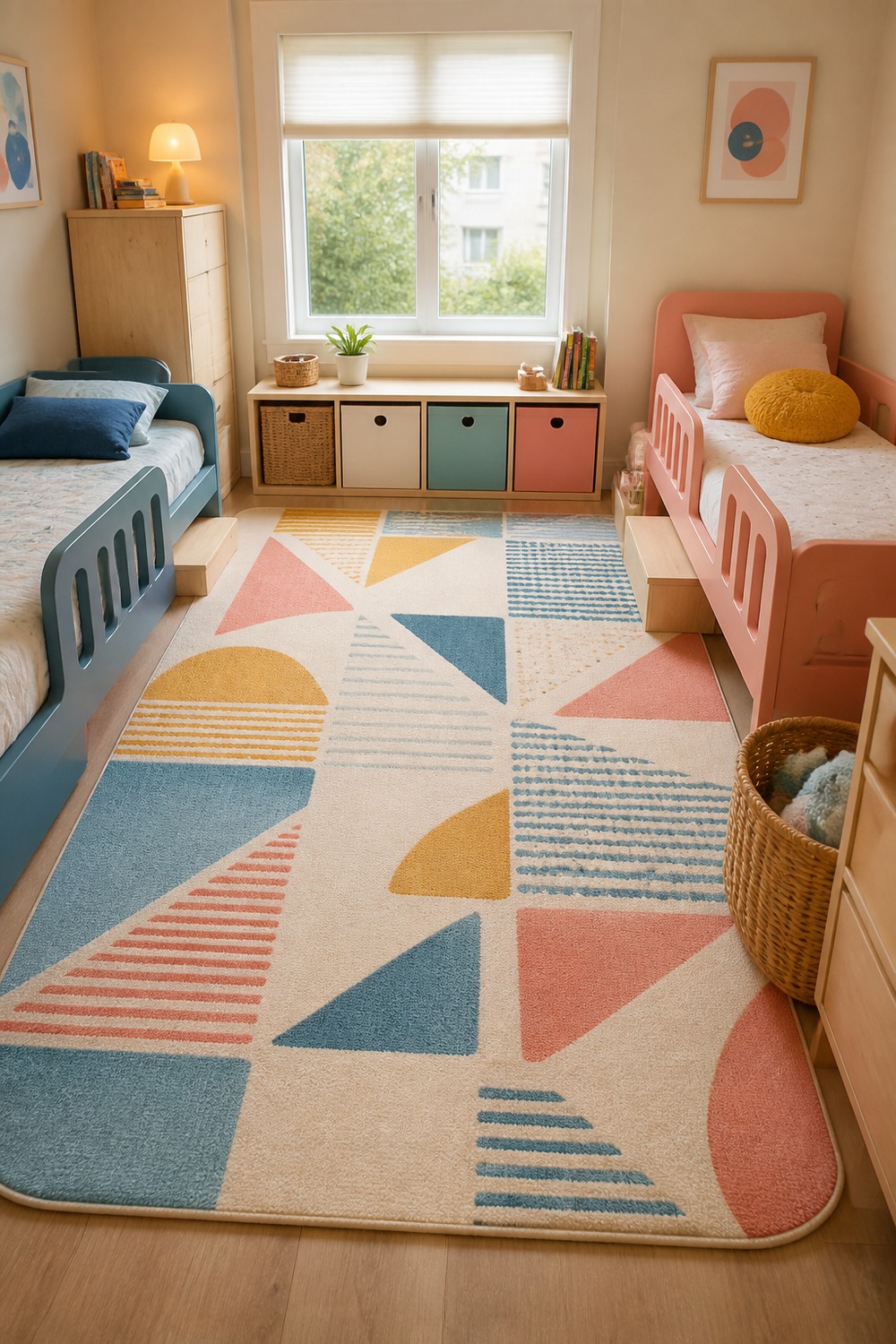
A colorful washable rug does a lot of work in the middle of a shared room. It defines the play zone, softens the floor, and connects the blue, coral, yellow, and cream details around it.
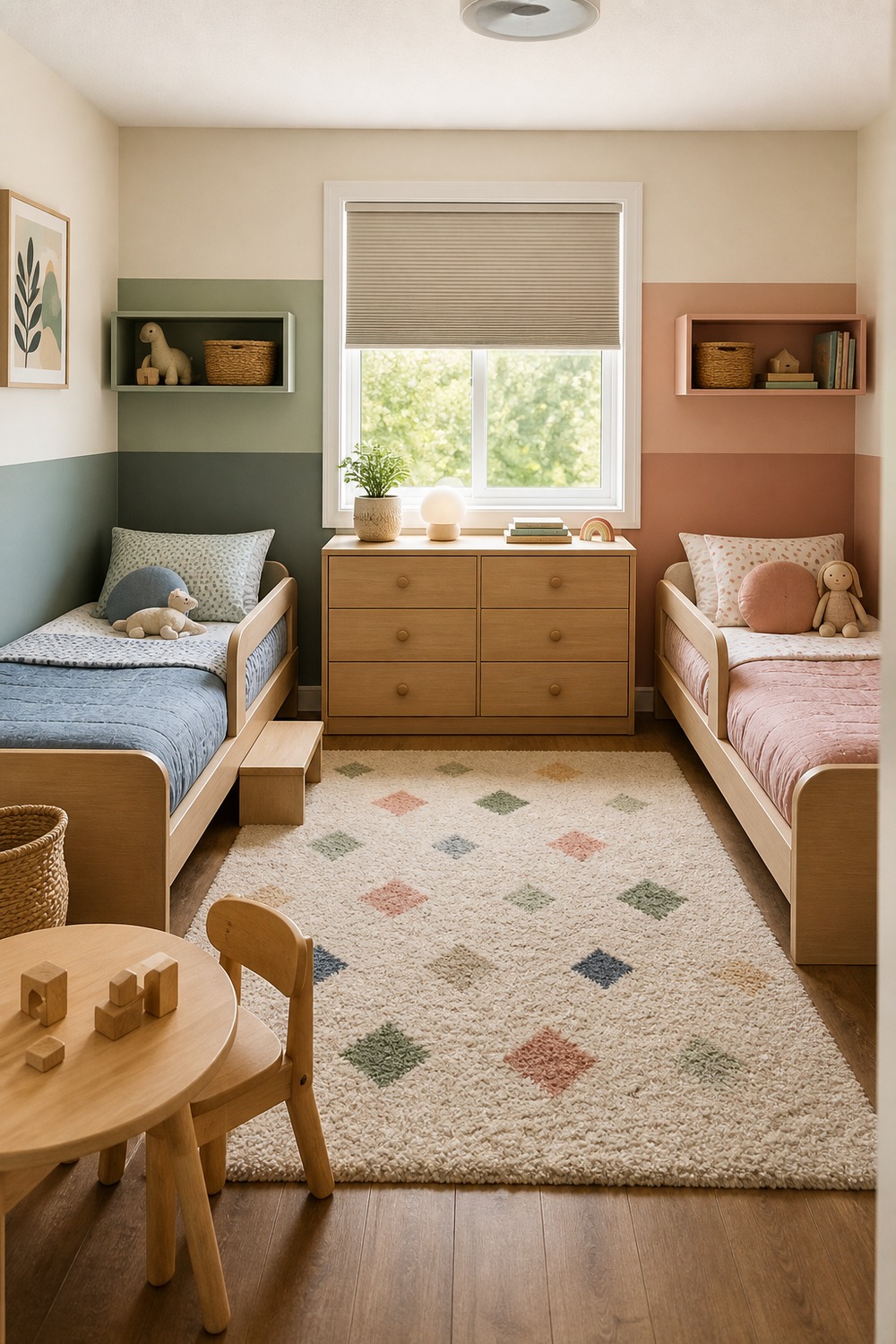
Placing the beds on the solid side walls keeps the window area open and avoids dangling cords near pillows. The low dresser below the clear wall section uses the brightest part of the room well.
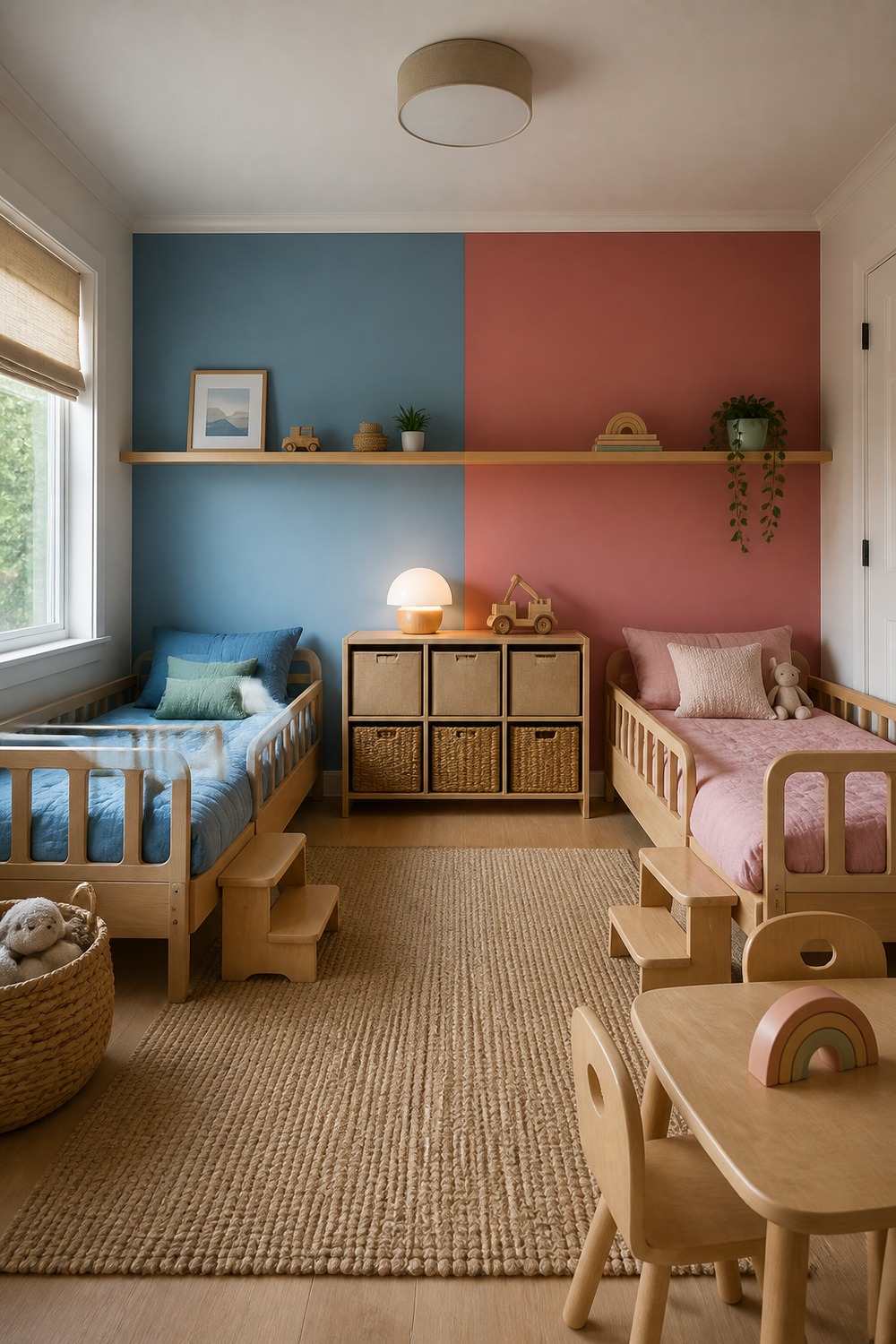
The split accent wall gives each bed a distinct backdrop without relying on names or themed signs. Repeating the same oak shelf across both colors pulls the two halves back together.
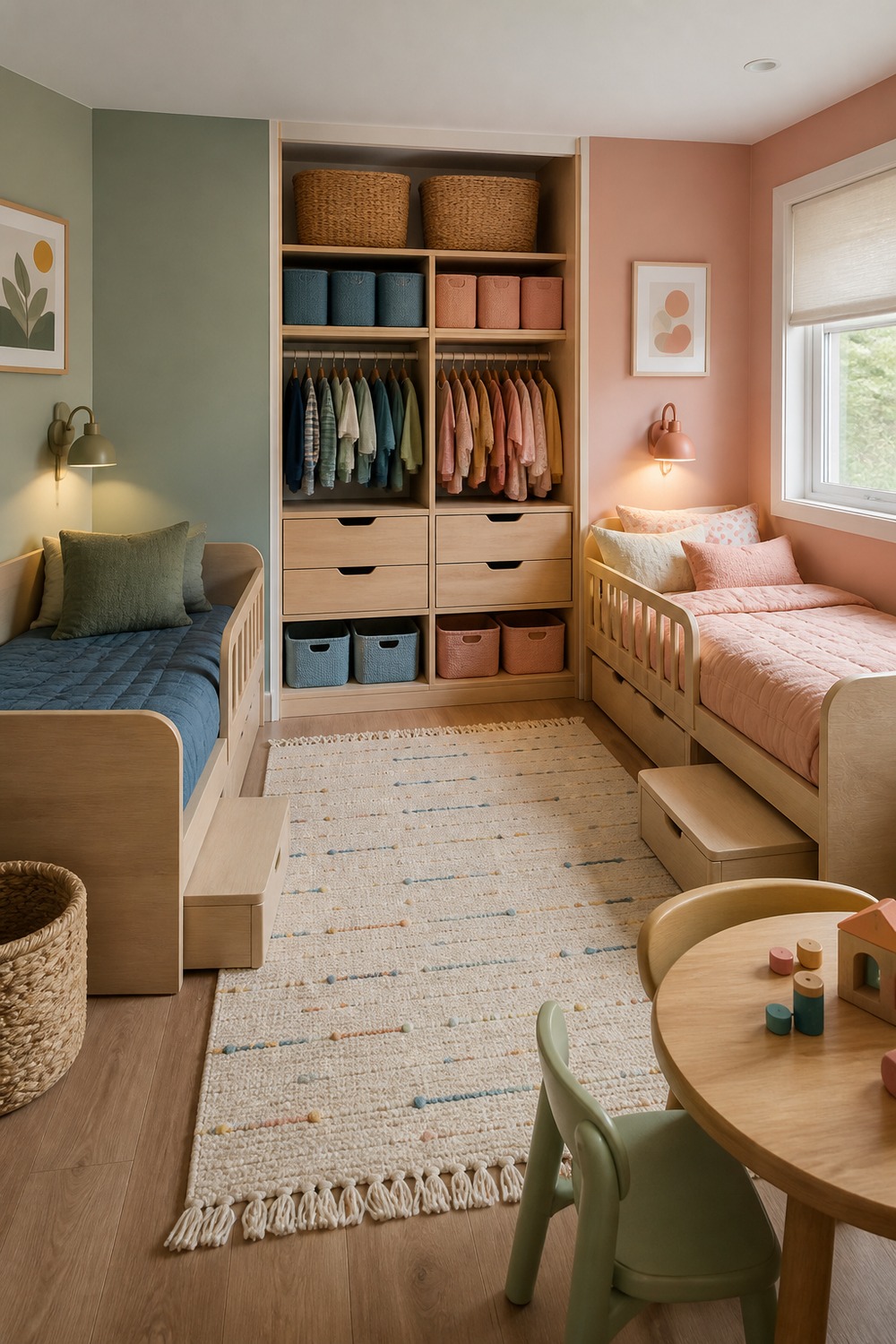
The closet works because the lowest drawers and baskets hold the things toddlers actually use. Separate blue and coral bins simplify sorting, while the shared hanging space stays visually tidy.
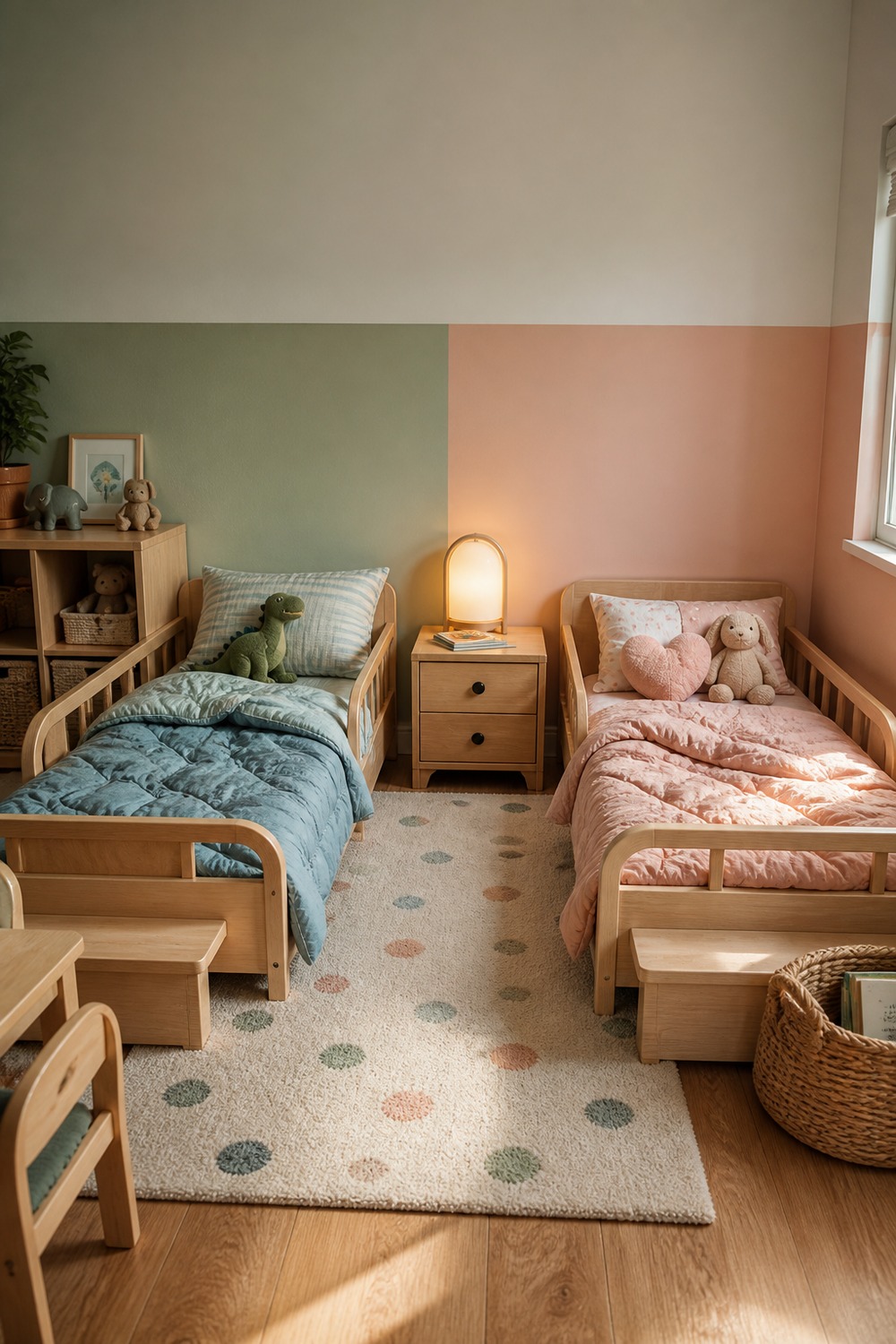
One enclosed lamp between the beds is easier than squeezing in two nightstands. Its warm pool of light reaches both sides, and concealed wiring keeps the setup cleaner around little hands.
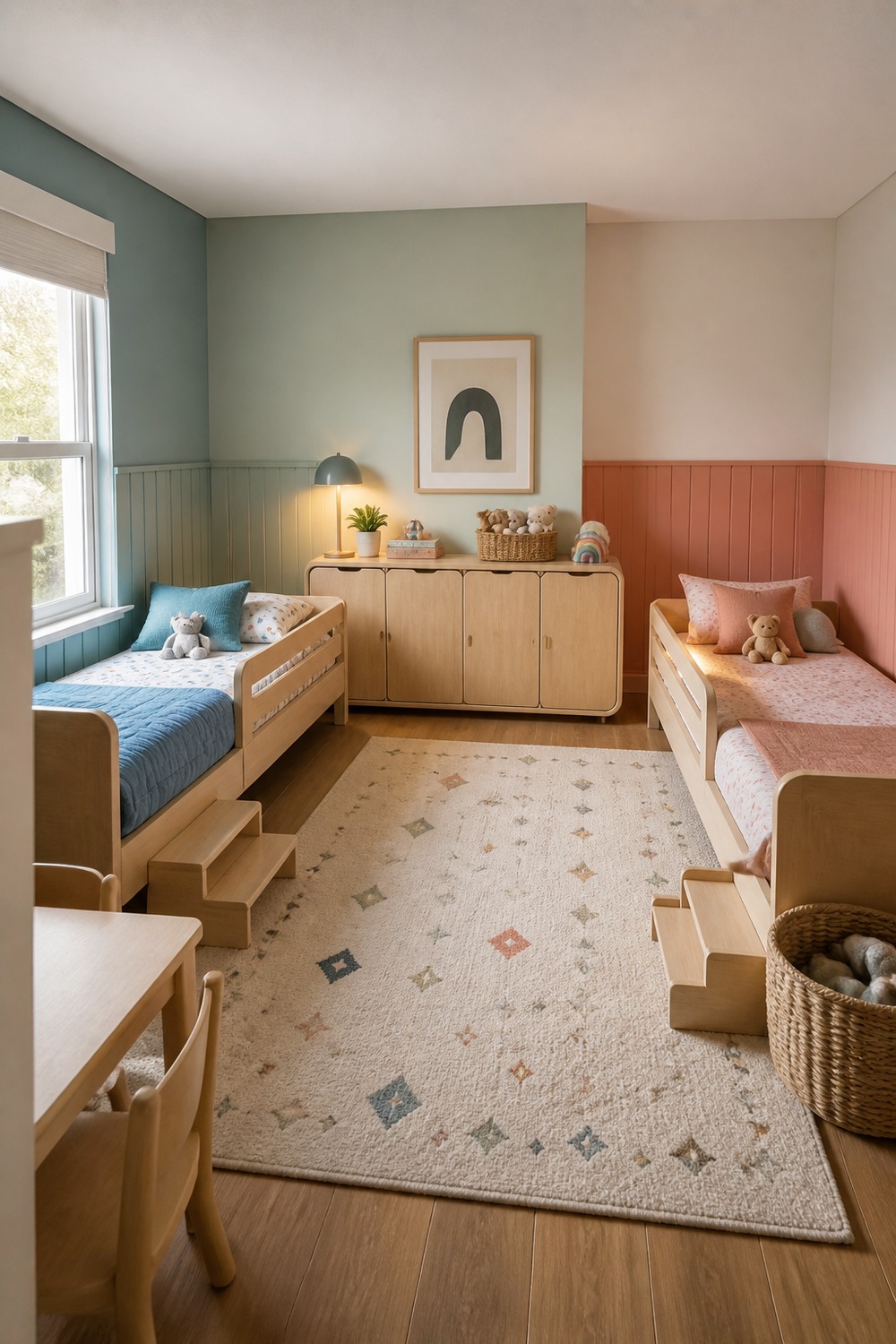
The low toy cabinet limits what stays on display, which makes rotating toys much less overwhelming. One open basket handles current favorites while the walkway remains free.
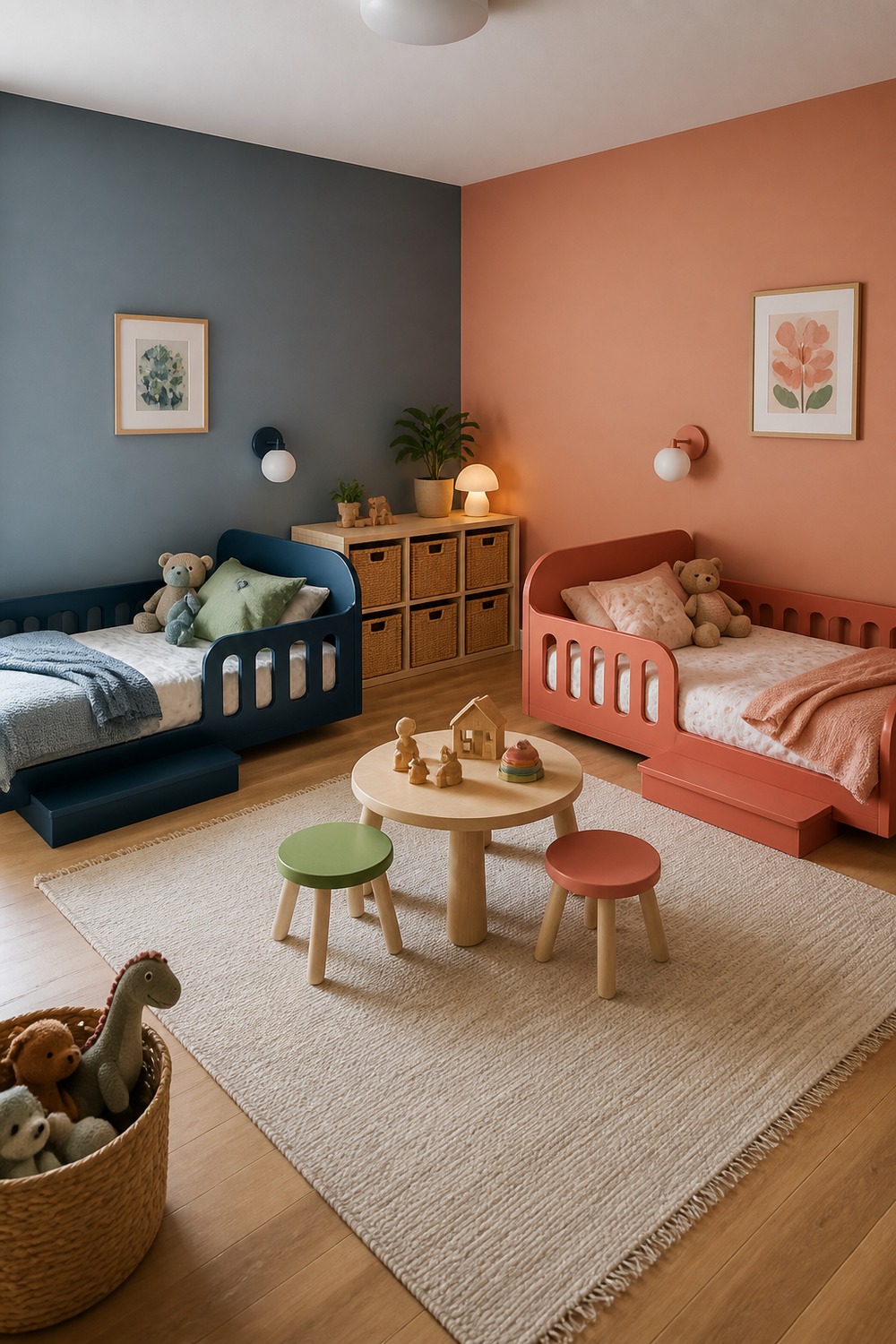
With one low bed along each side wall, the middle becomes a simple route from doorway to window. The rounded play table uses the center without creating sharp traffic pinch points.
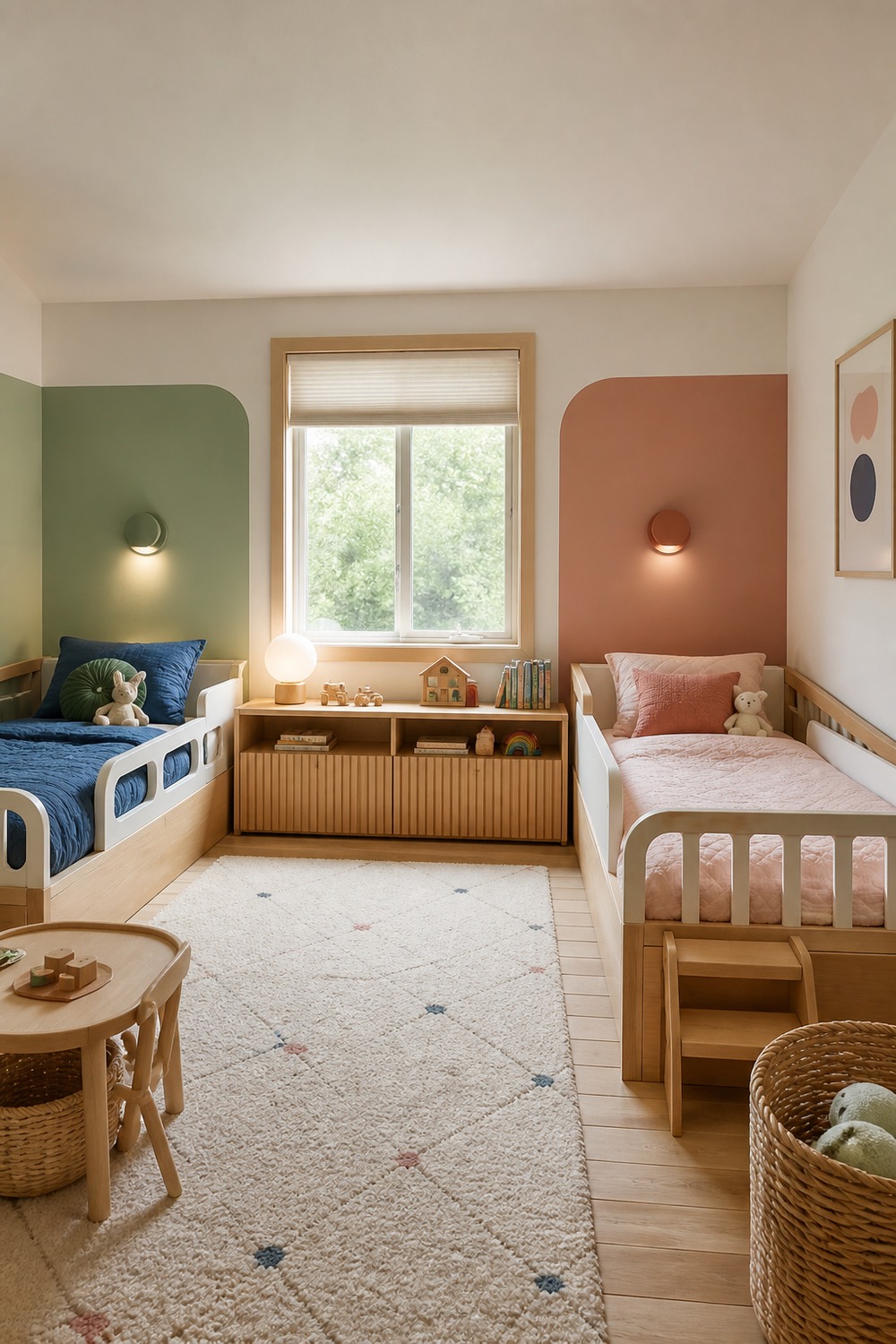
White oak, ribbed storage, and matte wall lights give this shared room a modern look without making it feel adult. Navy and rose bedding still make the two sleep zones easy to read.
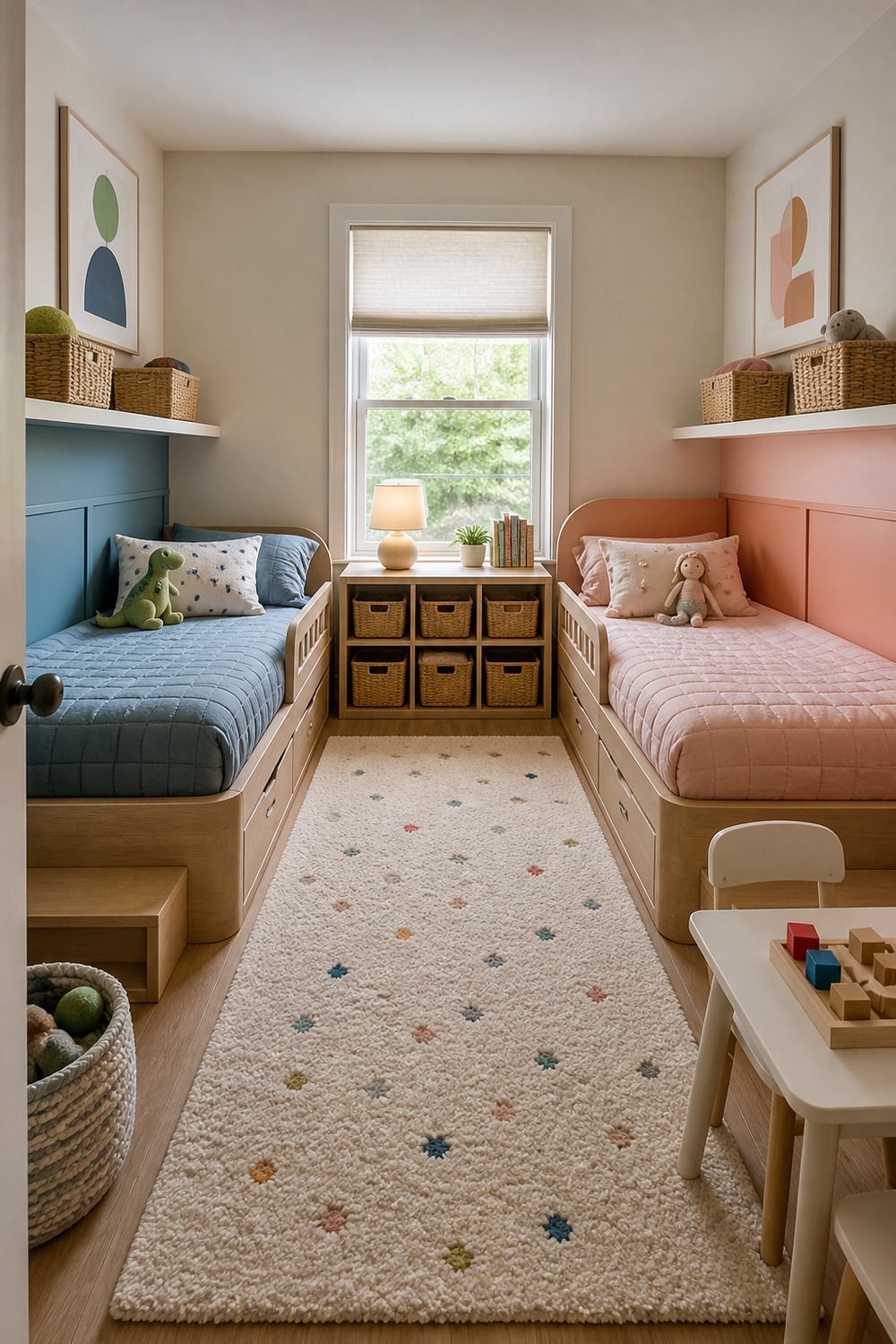
Shallow wall ledges use vertical space in a tiny room, but keeping them away from the pillows is the safer choice. Low individual baskets take care of the books and toys used every day.
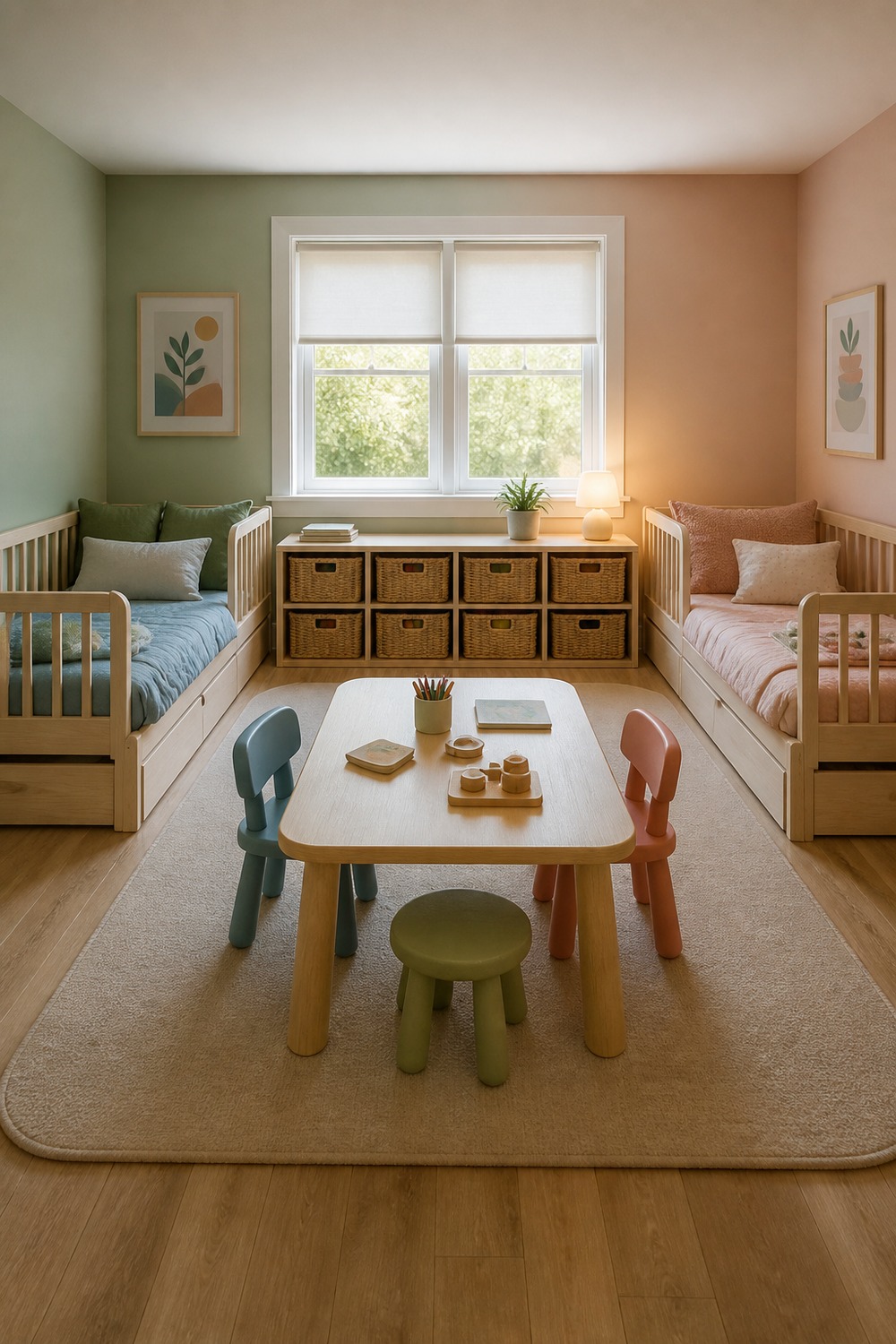
The center play table gives both children a shared activity spot while their beds stay separate. Its rounded shape leaves more forgiving clearance than a square table in the same footprint.
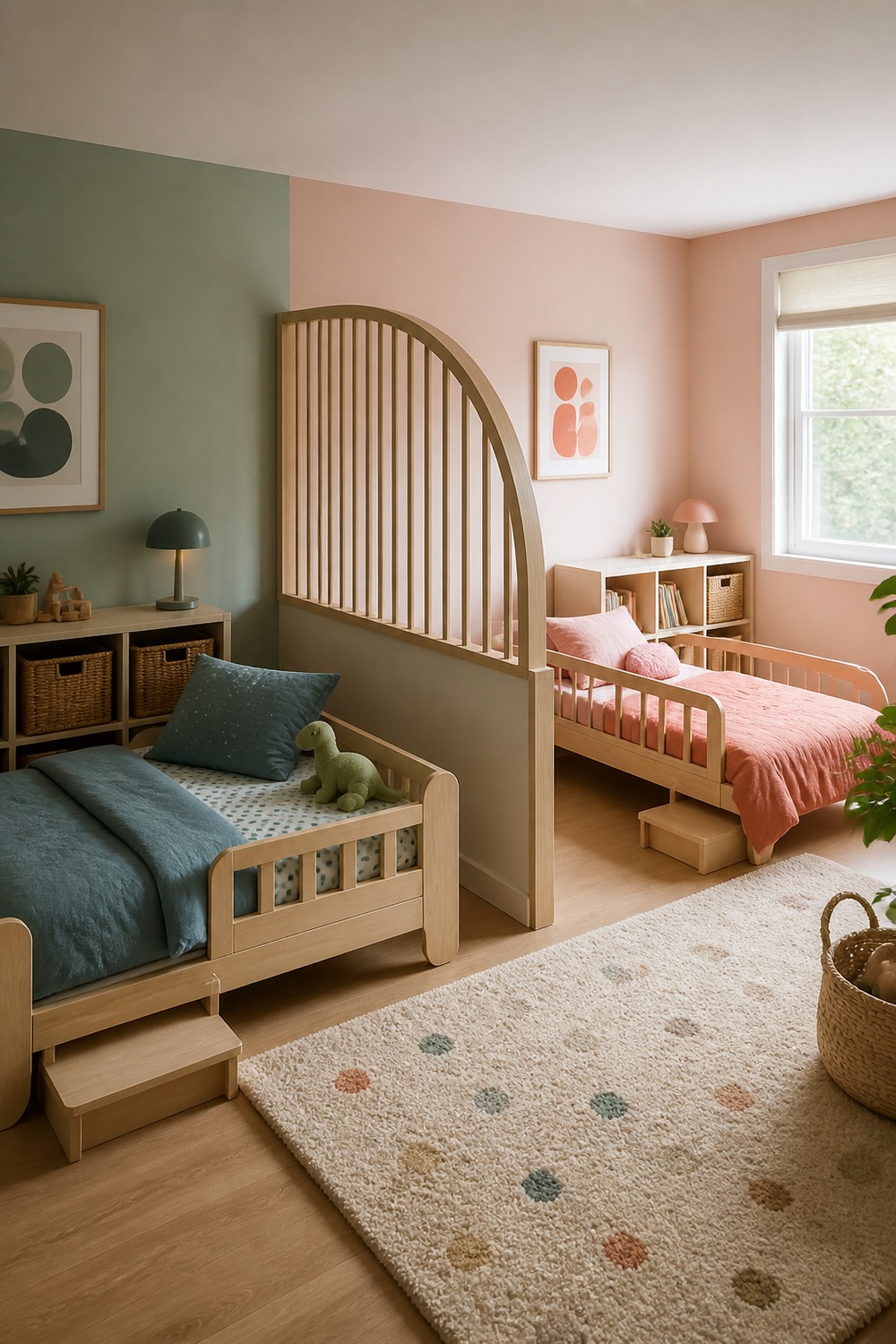
A curved half-height divider creates privacy without blocking the daylight or closing off the room. The blue-green and clay-coral sides feel distinct, yet the open walkway still joins them.

I work in tech, but my taste in design is straight out of a slow European village. Give me arches, aged brass, and a room that smells like books and coffee. That’s my kind of home.