Bright and airy kitchens can go a little flat when the whole room is just white cabinets and white counters. The prettiest ones here still feel open, but they bring in pale oak, soft stone, warm brass, muted greens, watery blues, and enough everyday texture to keep the kitchen from feeling empty.
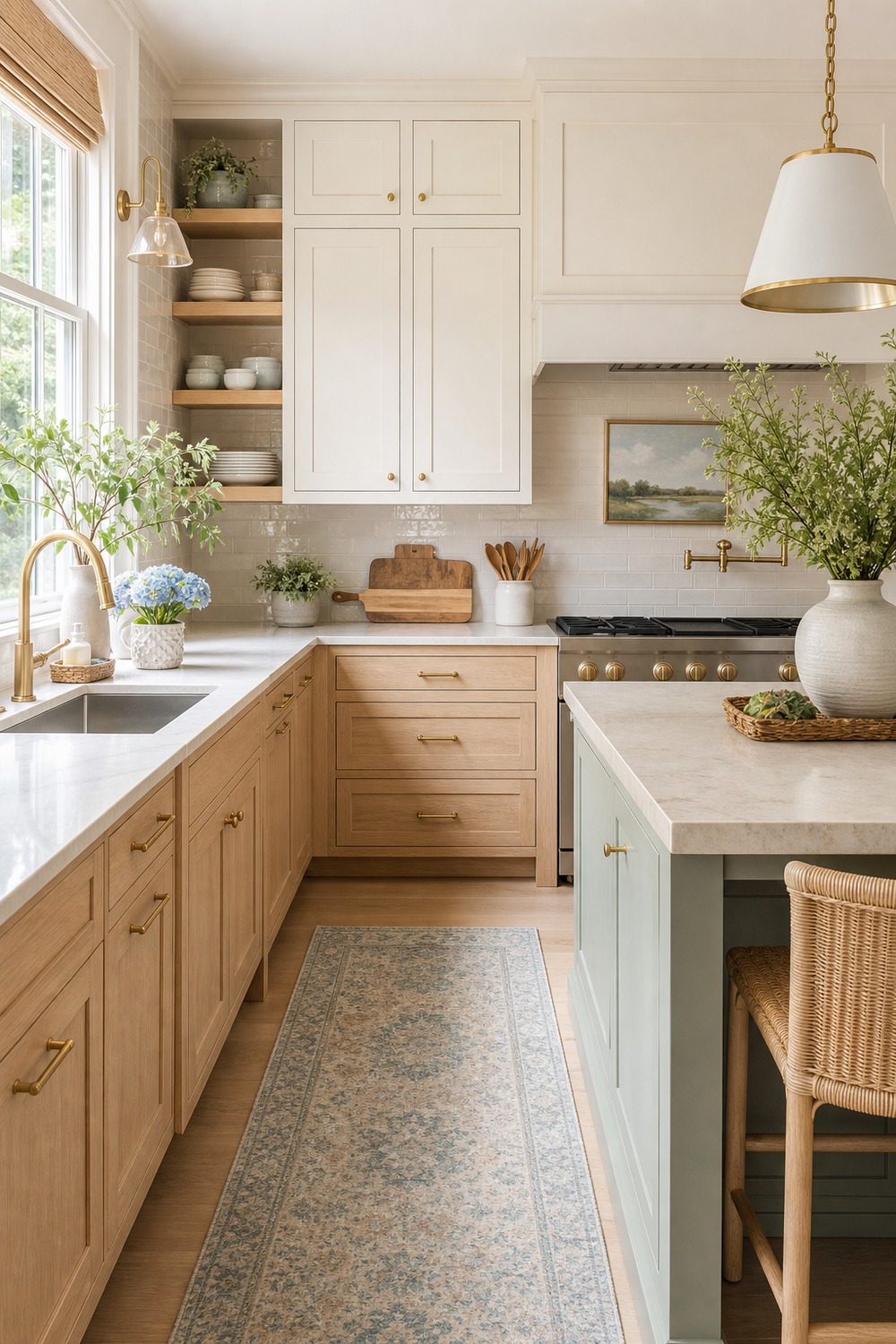
The pale stone counters are doing a lot here because they keep the kitchen light without making it look blank. I like the mix of white uppers and white oak lowers too; it gives the room a softer split, so the cabinets feel airy but there is still a grounded place for drawers, prep space, and daily dishes.
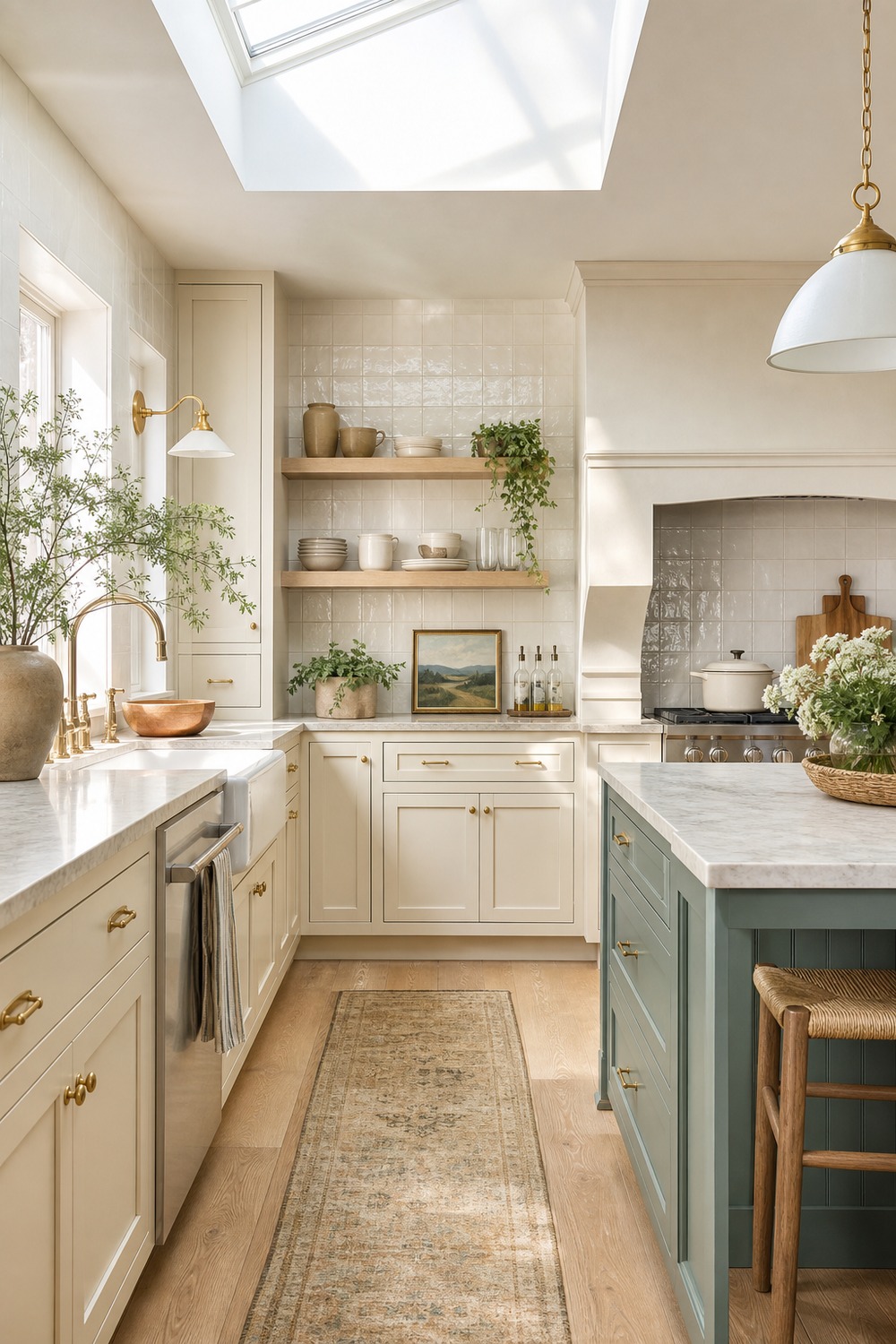
Cream shaker cabinets feel a little warmer than bright white, which makes this skylit kitchen easier to live with. The pale wood floor and handmade-looking tile add just enough movement, and the overhead light keeps the whole palette from turning beige or heavy.
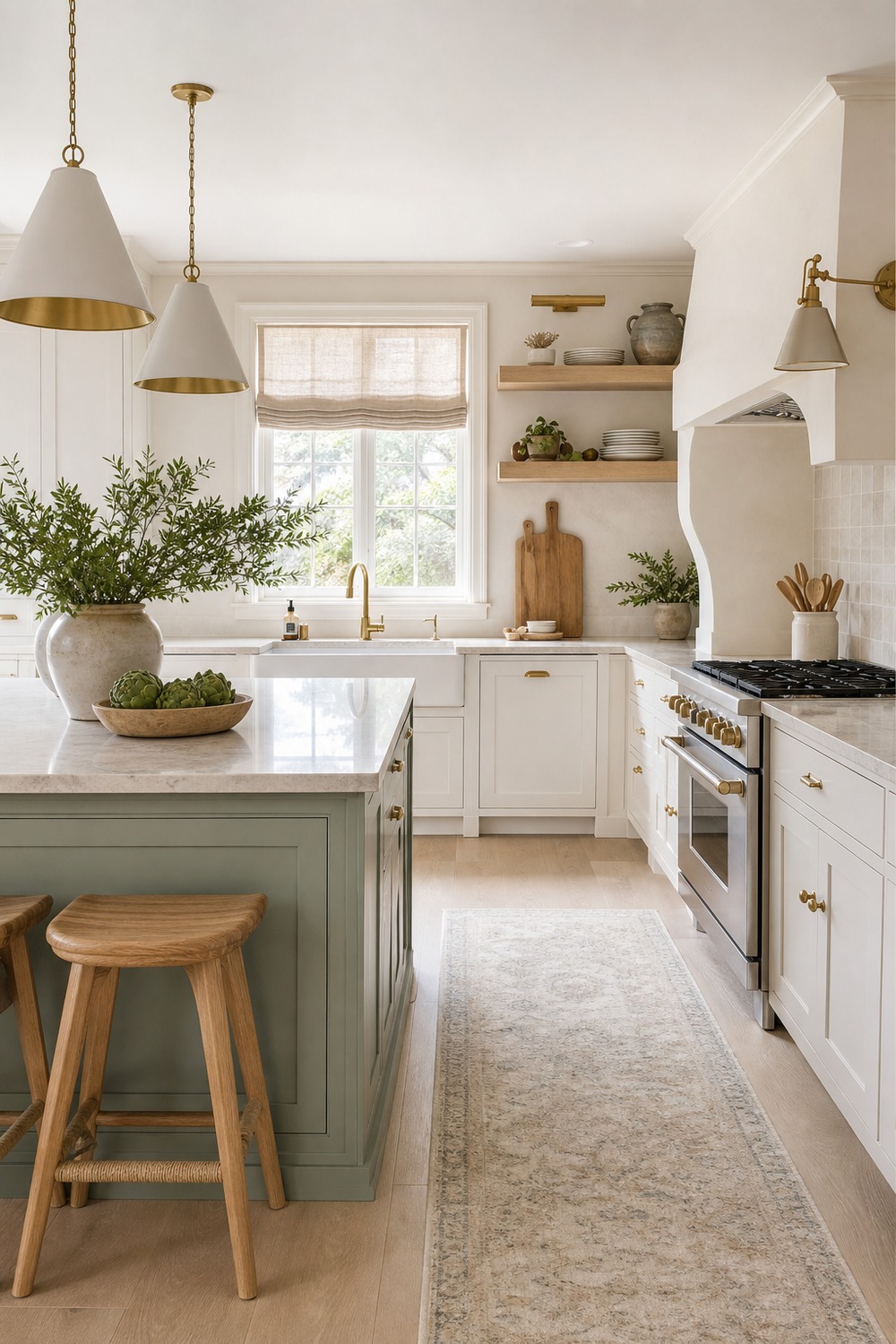
That soft sage island is the detail that makes the room memorable. It gives the white cabinets something calm to play against, while the oak stools and linen shade keep the color scheme feeling natural instead of overly decorated.
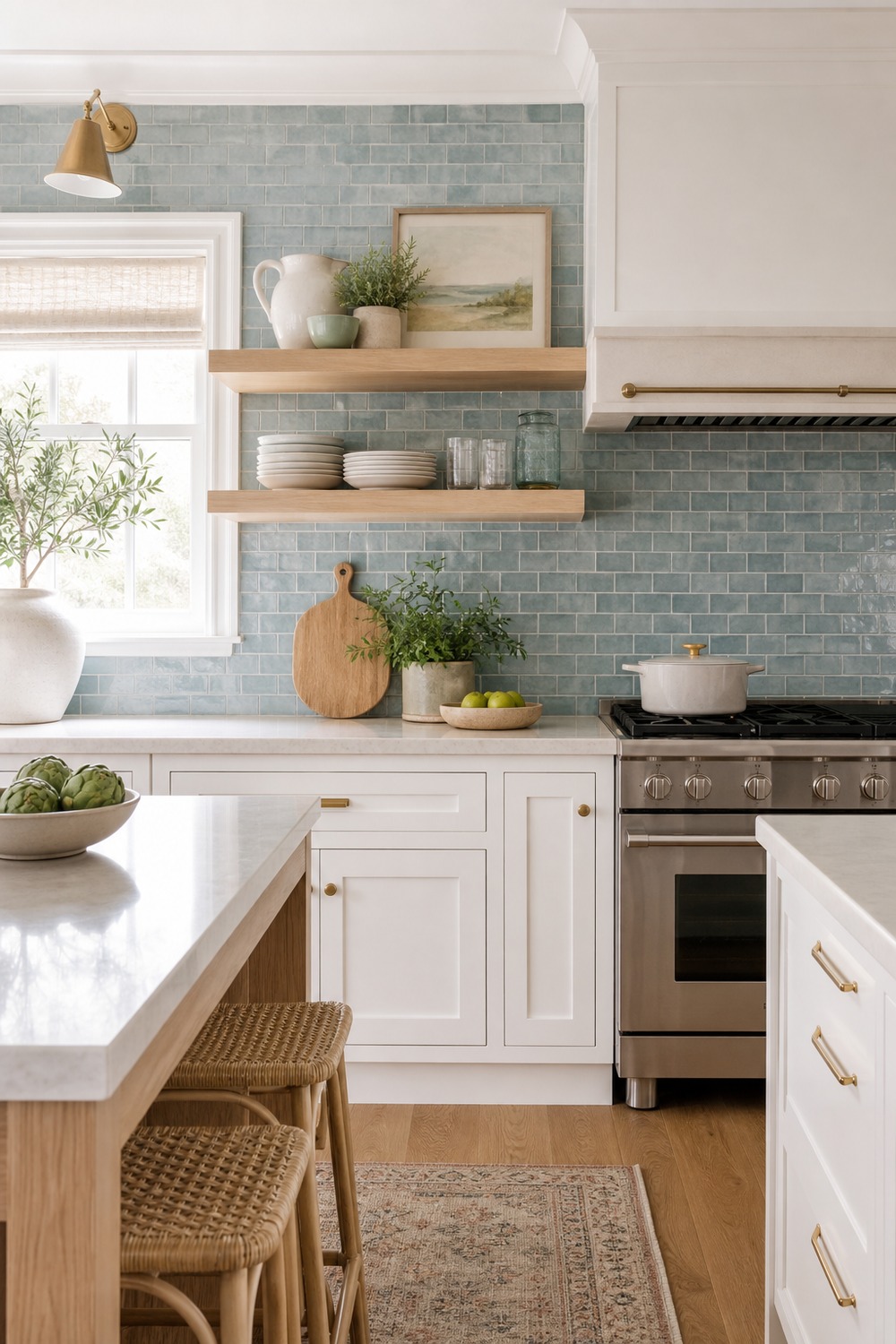
The watery blue tile makes this kitchen feel fresh in a way plain white tile would not. I like how the oak shelves warm up the backsplash, because the room still reads bright and clean but has a little color around the sink and counter area.
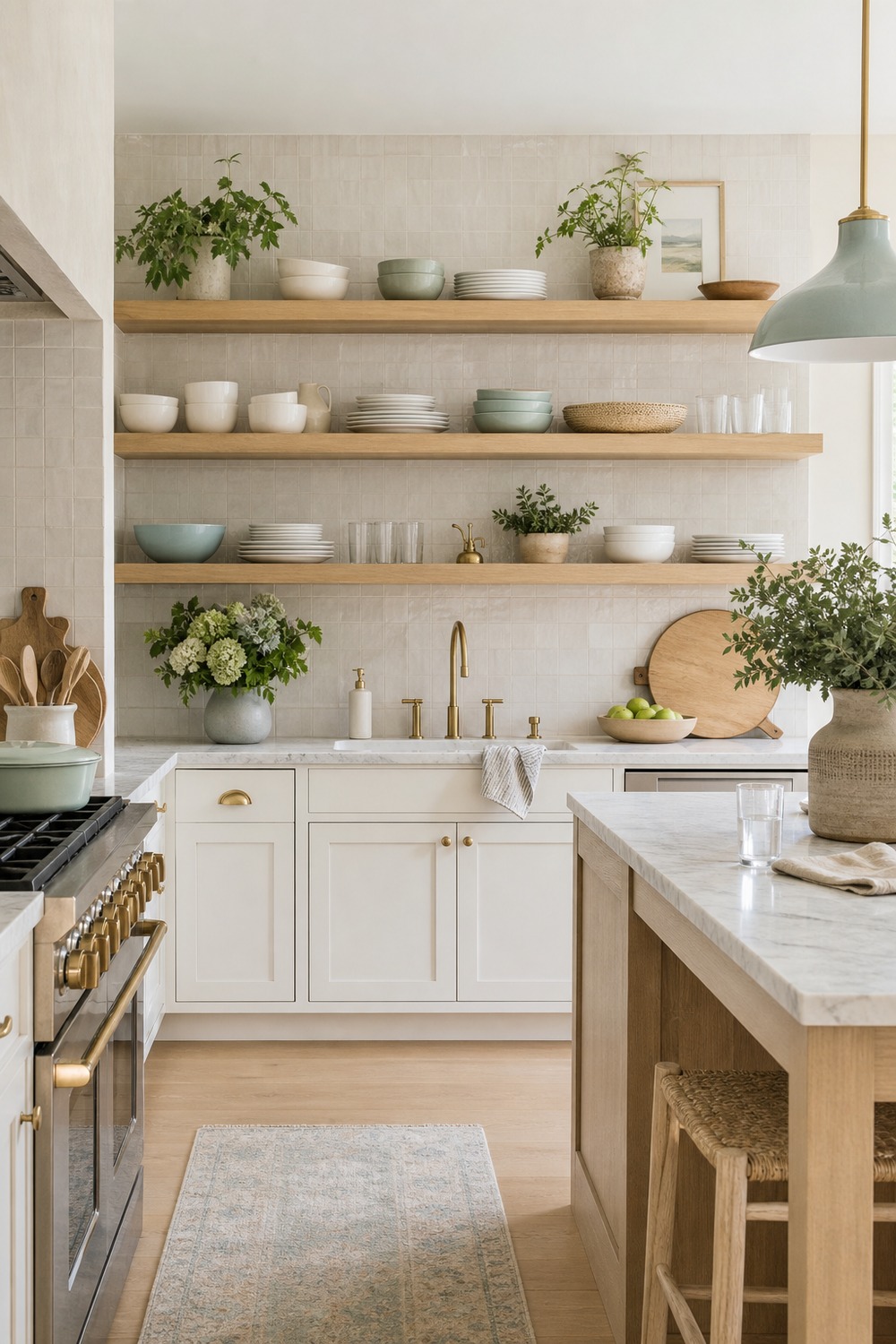
Open shelving can look cluttered fast, but this version stays quiet because the dishes are simple and the wood tone is pale. It gives the wall some warmth without closing the kitchen in, and it keeps the everyday pieces easy to reach.
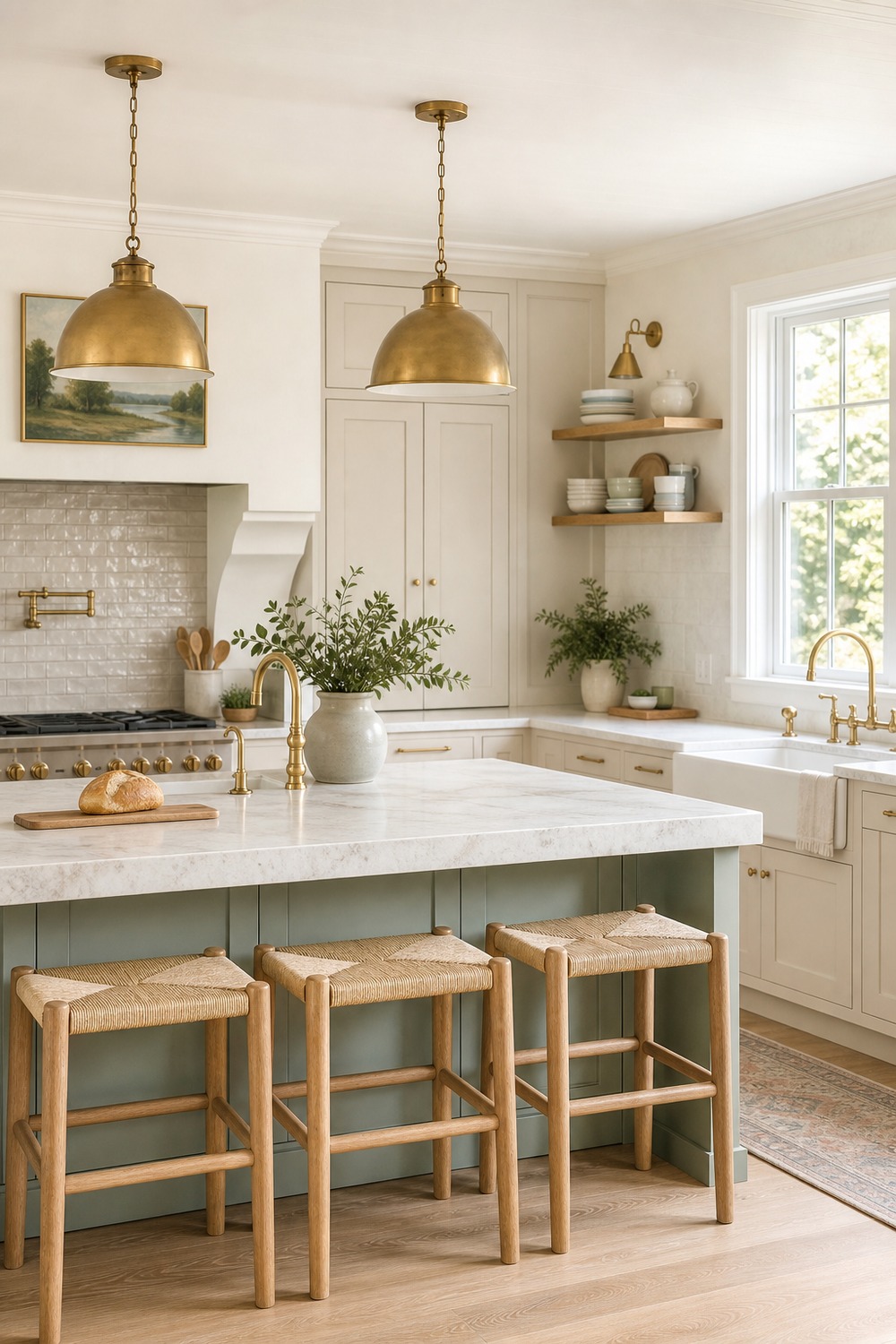
The brass pendants are what stop this kitchen from feeling too cold. They pull the eye down over the island, add a warmer glow to all the white surfaces, and make the stools feel like part of the color scheme instead of random furniture.
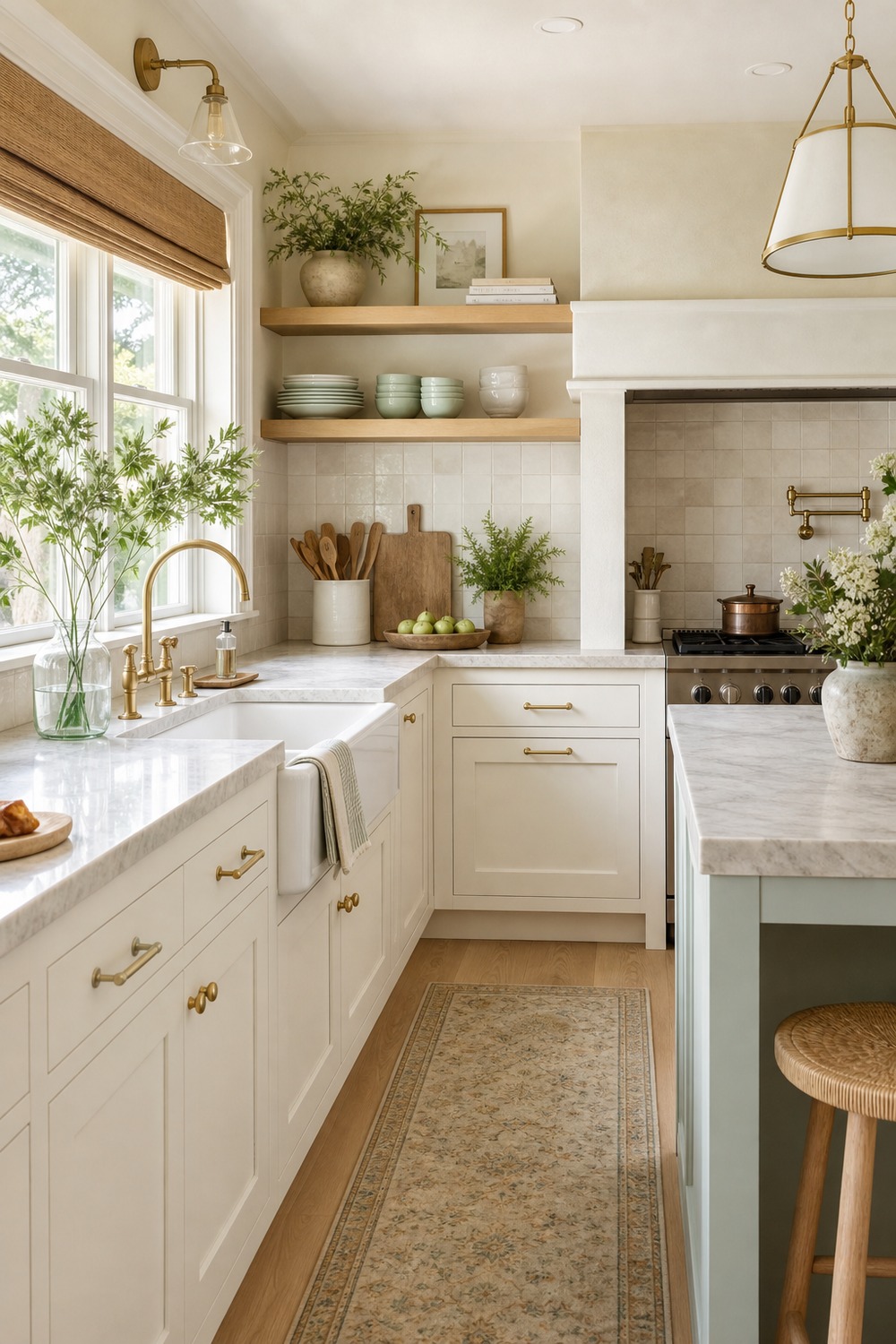
This cottage sink area has that soft, useful kind of lightness I always like in a kitchen. The apron-front sink, paneled cabinets, cream tile, and little oak shelf all feel simple, but together they make the corner look cared for without being fussy.
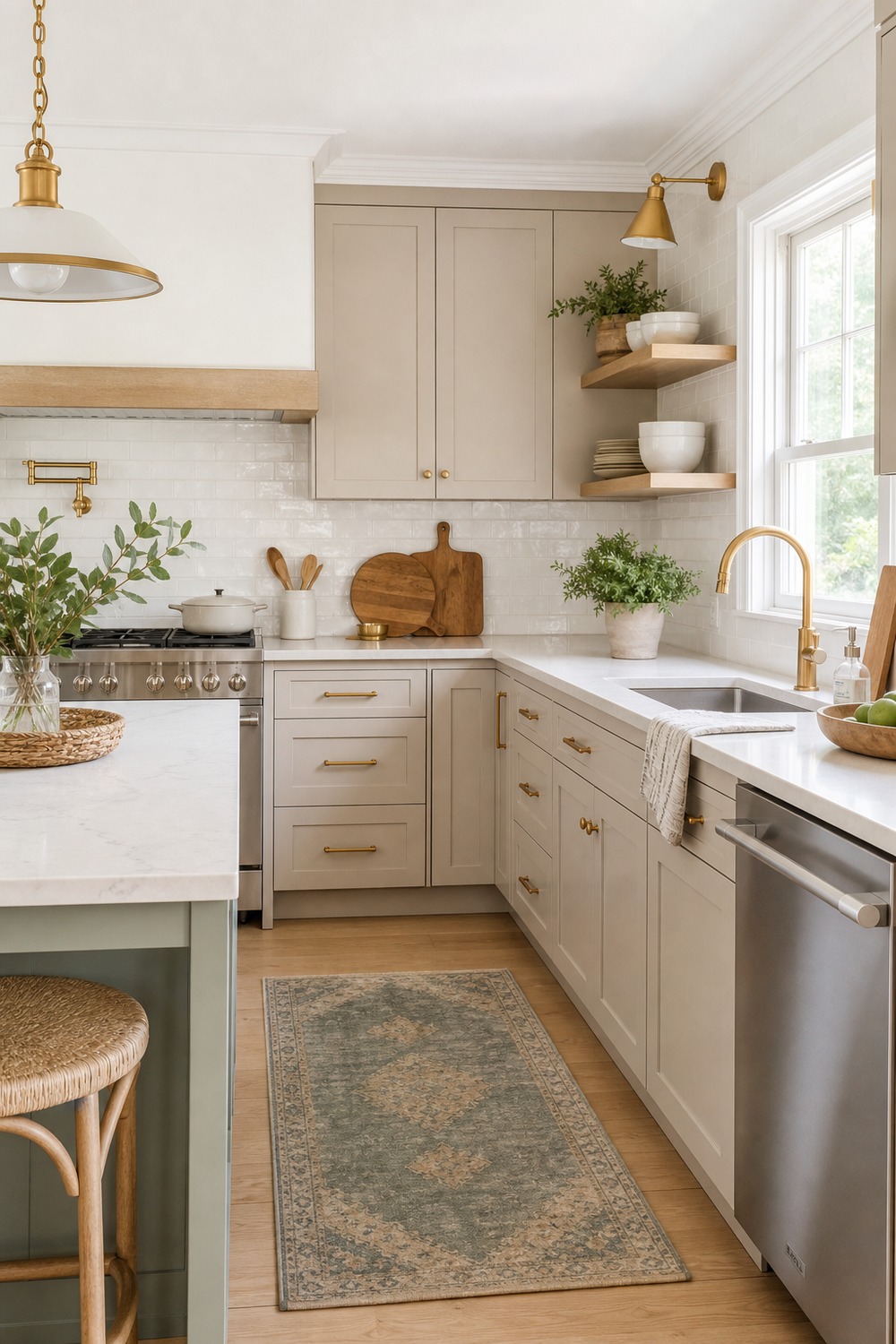
Greige cabinets are a nice middle ground when white feels too sharp but beige feels too muddy. The white tile keeps this palette bright, and the wood cutting boards plus brass faucet add those small warm breaks that make the counter feel usable.
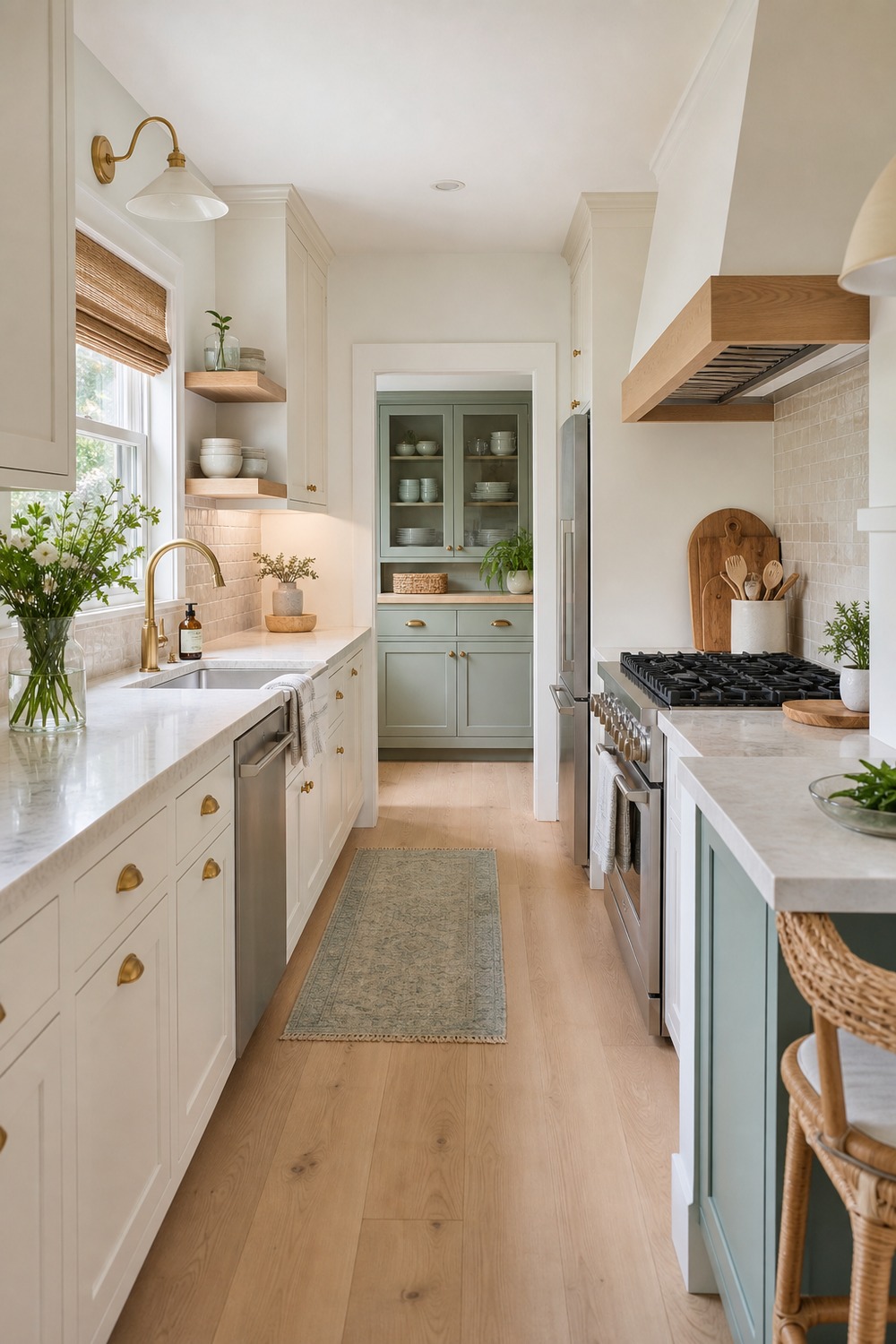
A galley kitchen needs a light palette more than most layouts because the walkway can feel narrow quickly. The white cabinets help the walls recede, while the pale oak floor gives the long view some warmth and keeps the space from looking like a corridor.
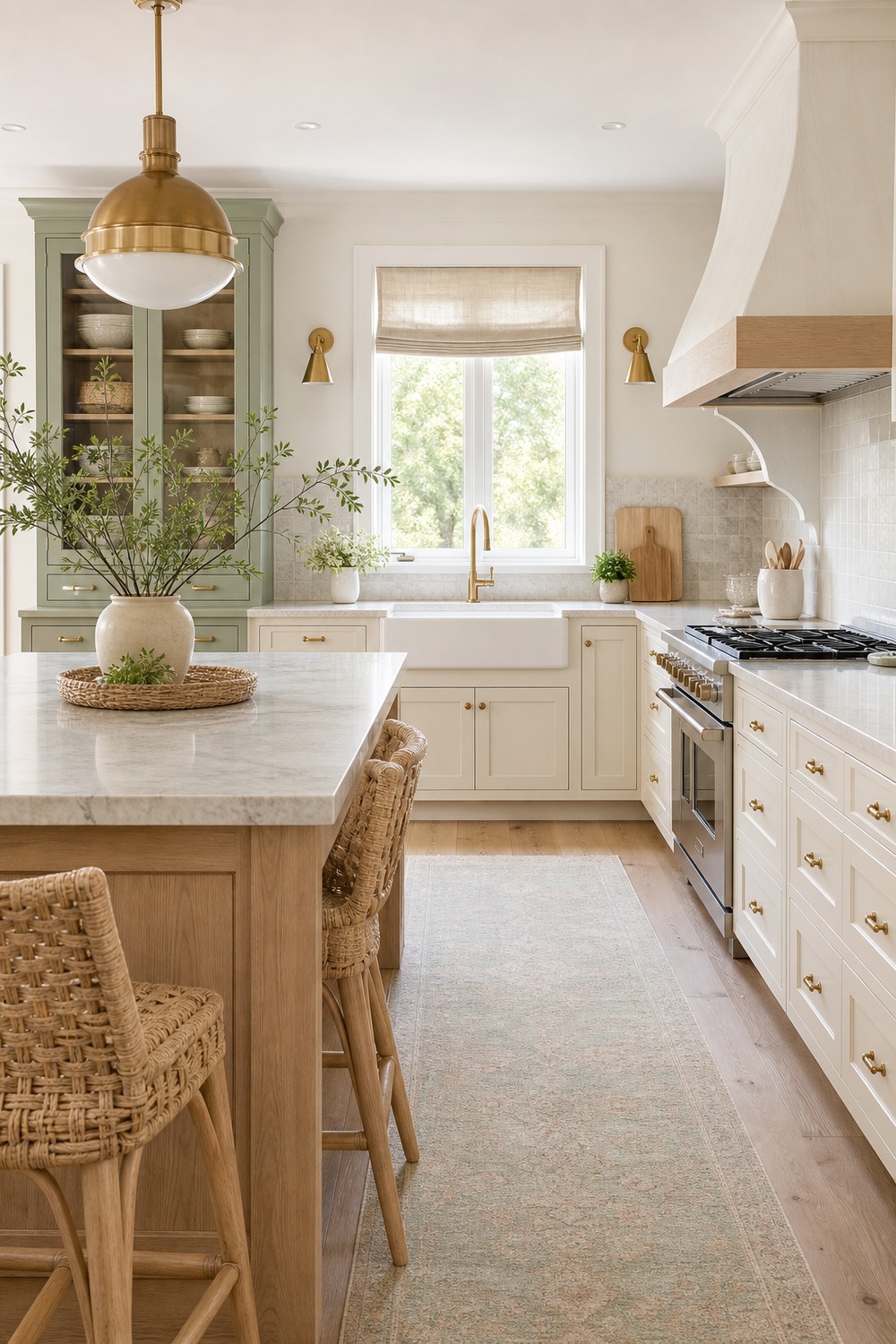
The woven stools are the quiet detail that makes this cream kitchen feel less polished in a good way. They add texture under the island, so the soft cabinetry and pale counters still feel relaxed instead of showroom-perfect.
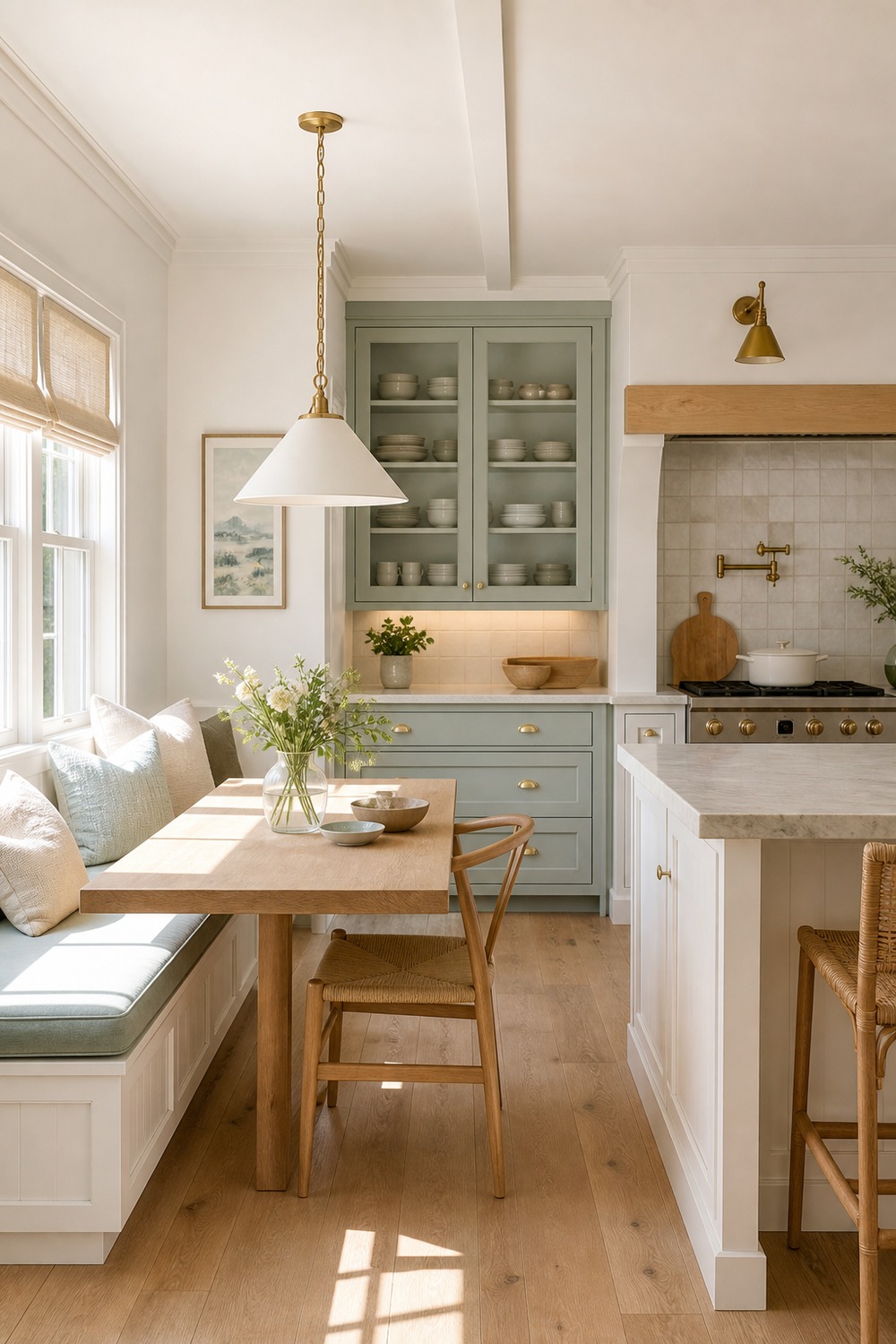
This breakfast nook keeps the airy color scheme going without making every surface a cabinet. The built-in bench, linen cushion, light wood table, and pendant give the kitchen a softer place to sit, which helps the whole room feel more lived in.
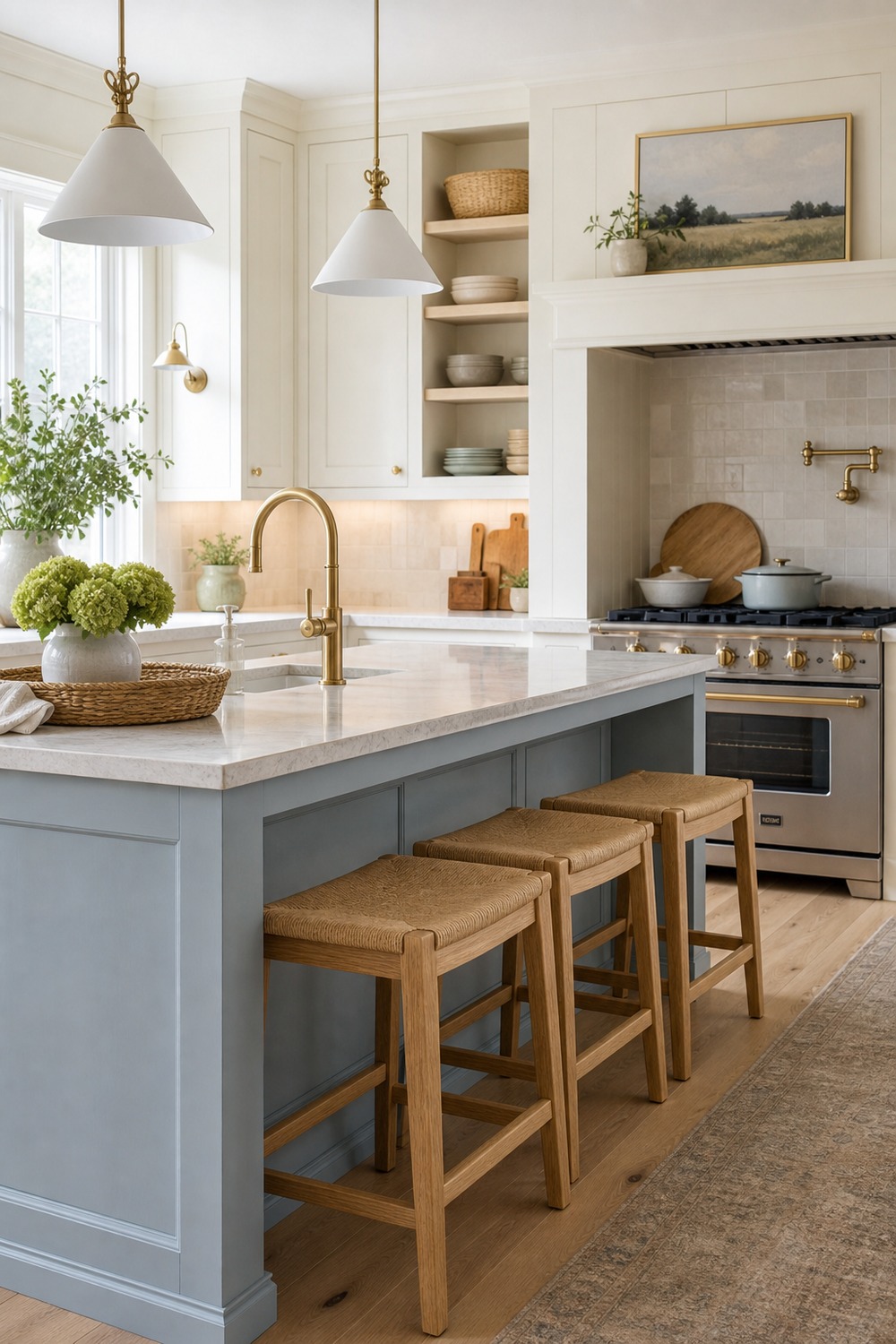
A blue-gray island works so well here because it is colorful without being loud. The white cabinets keep the room open, and the oak stools warm up the island so the color feels calm instead of icy.
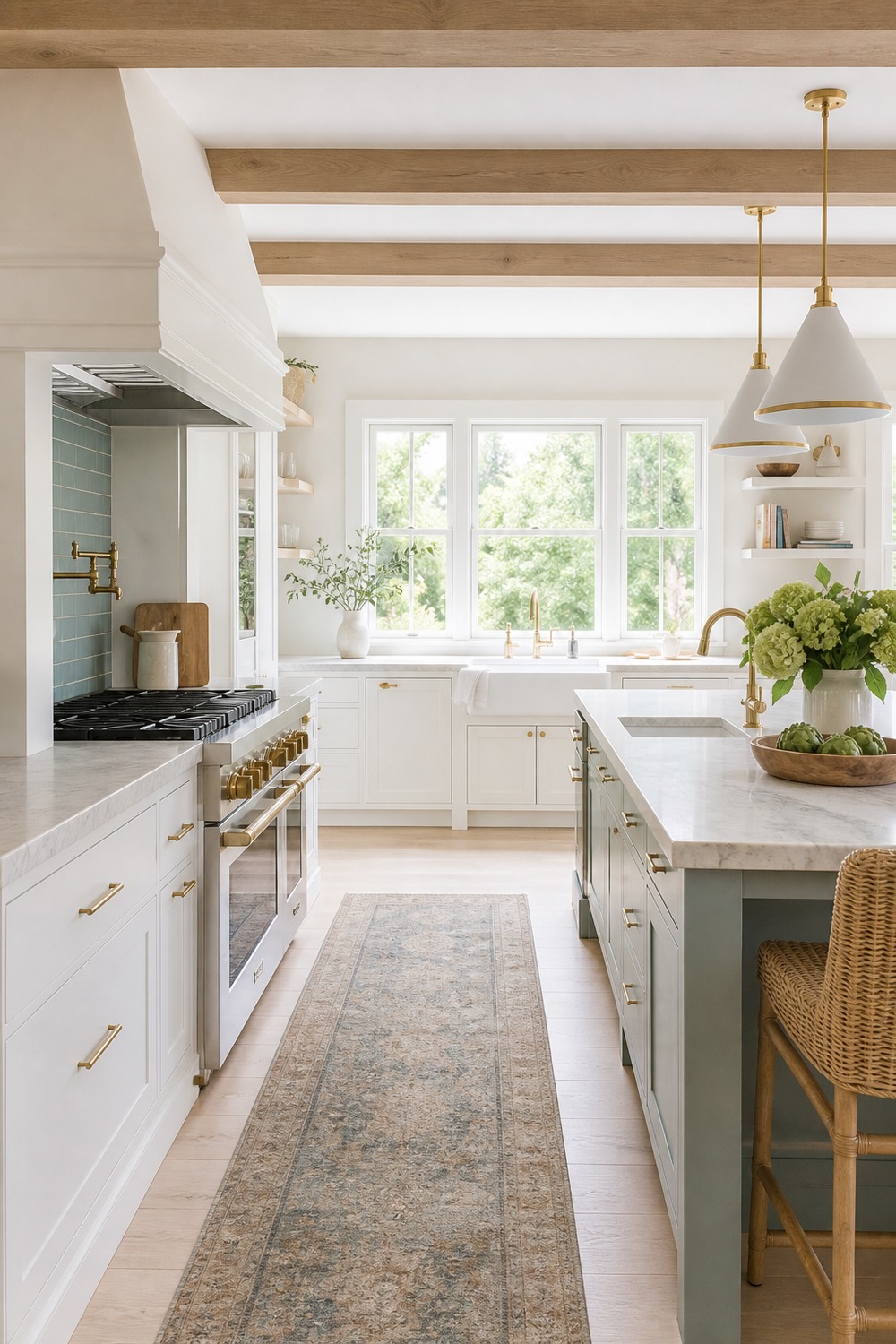
The wood beams give this minimal white kitchen a reason to feel warm. Without them, the room could look a little too clean, but the pale ceiling detail, brass lights, and runner make the open space feel more like a real kitchen.
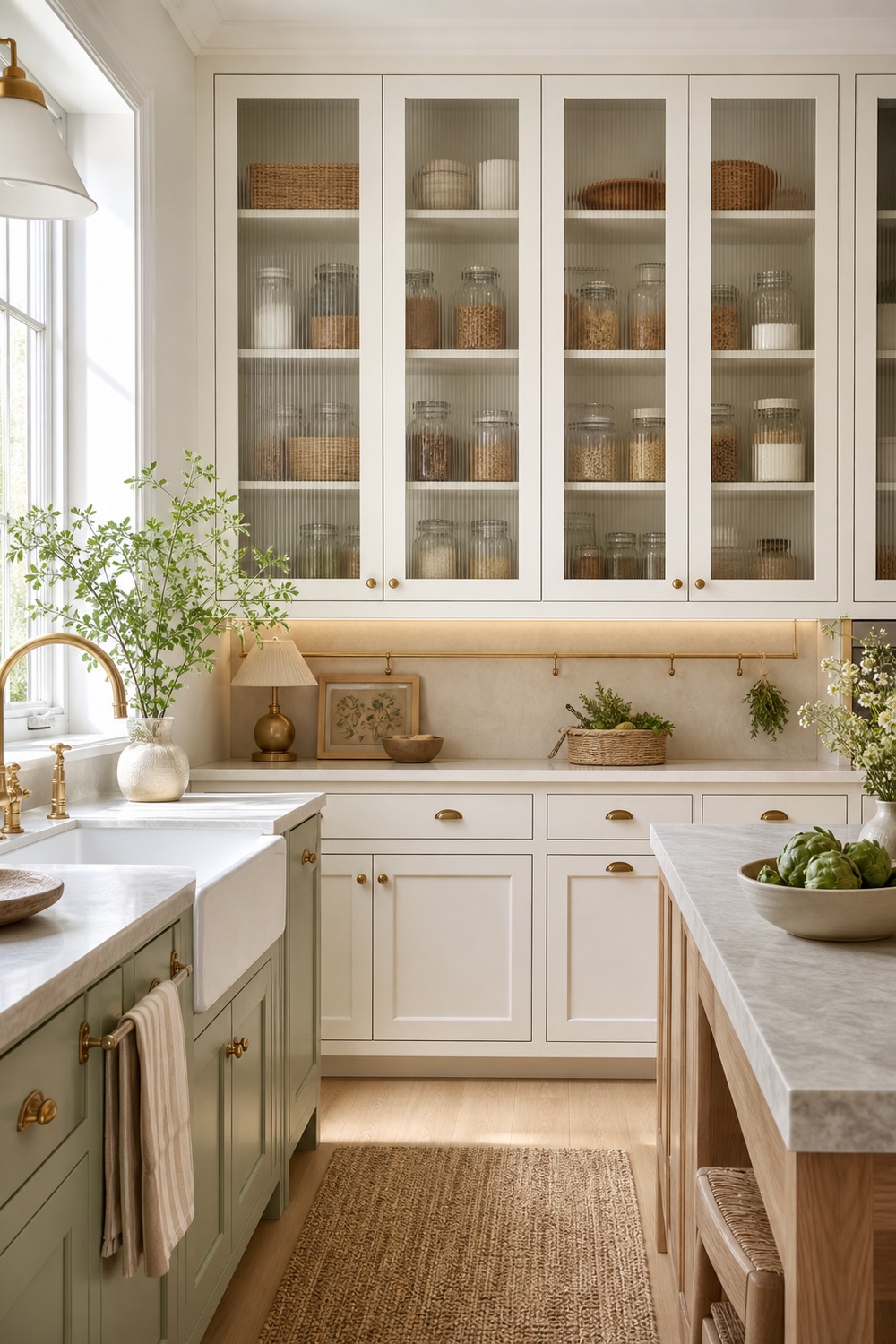
I like this pantry wall because it brings storage into the color scheme instead of hiding it completely. The ribbed glass doors soften what is inside, the brass rail adds a small warm line, and the pale cabinets keep the whole wall from feeling bulky.
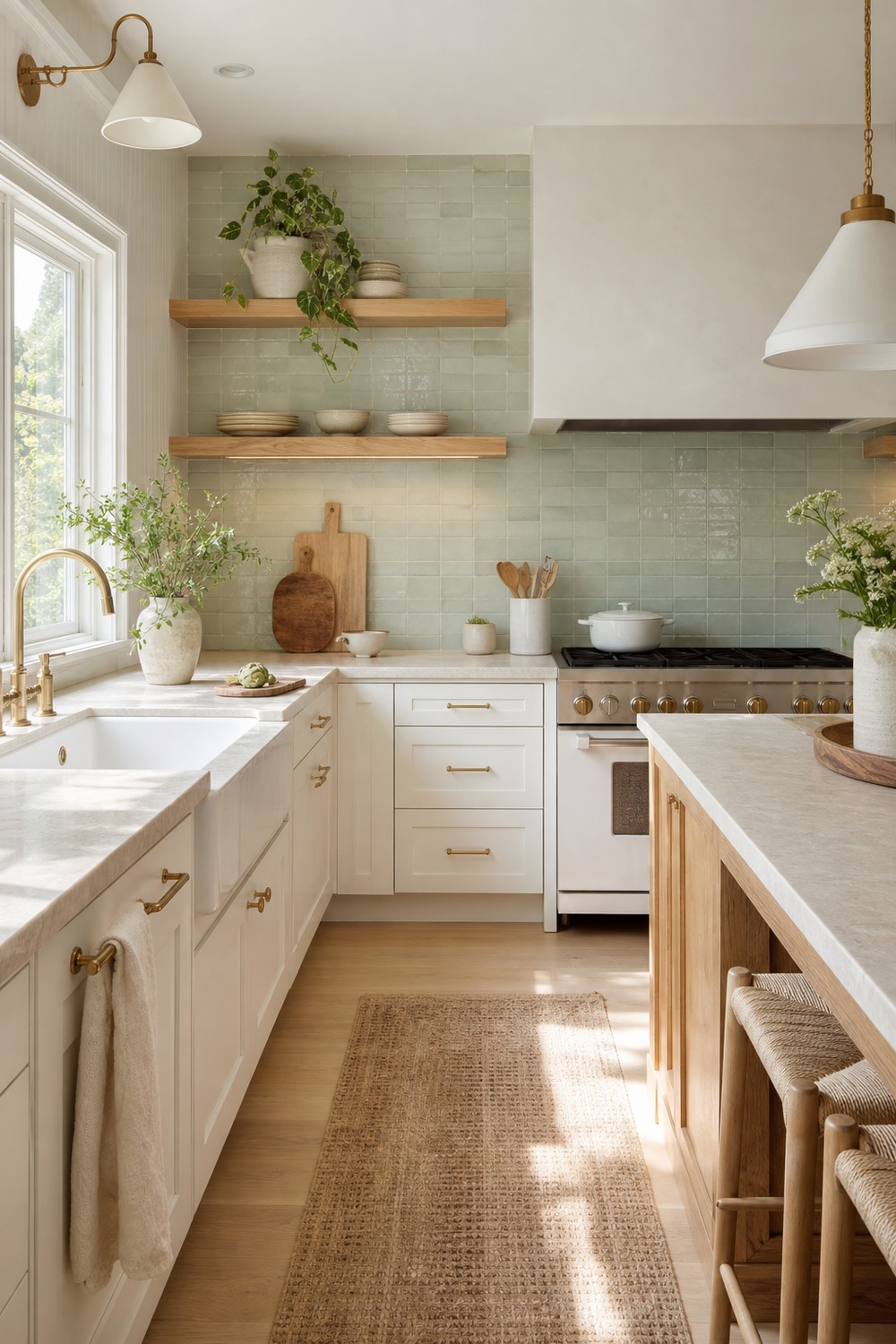
The sage tile accent is small, but it changes the whole mood of this white kitchen. It gives the backsplash area a gentle color wash, and the oak shelves make the green feel earthy rather than too pastel.
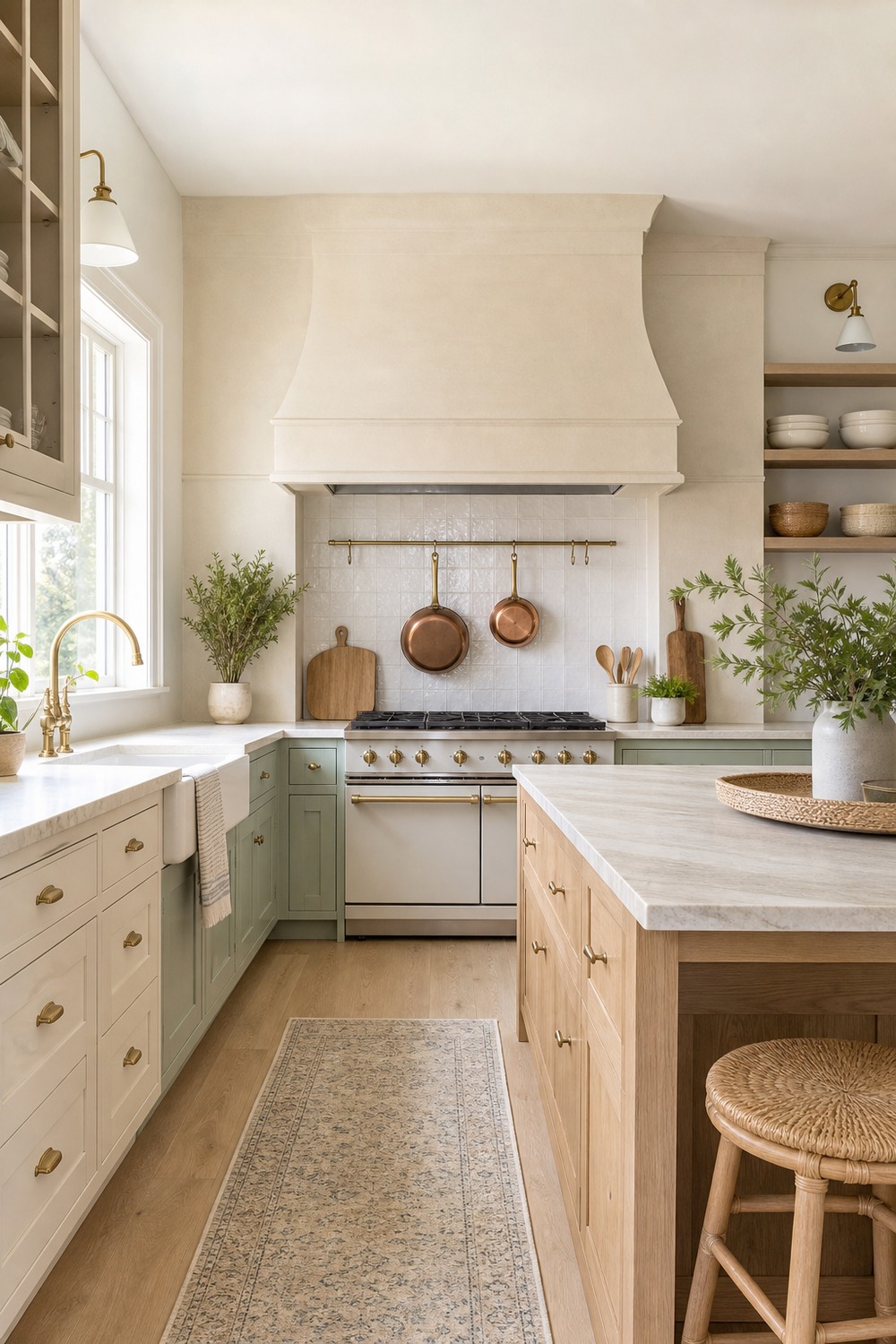
This range alcove has a nice calm weight to it. The light stone surround and white tile keep the cooking wall bright, while the brass pot rail adds function and a thin warm detail without crowding the backsplash.
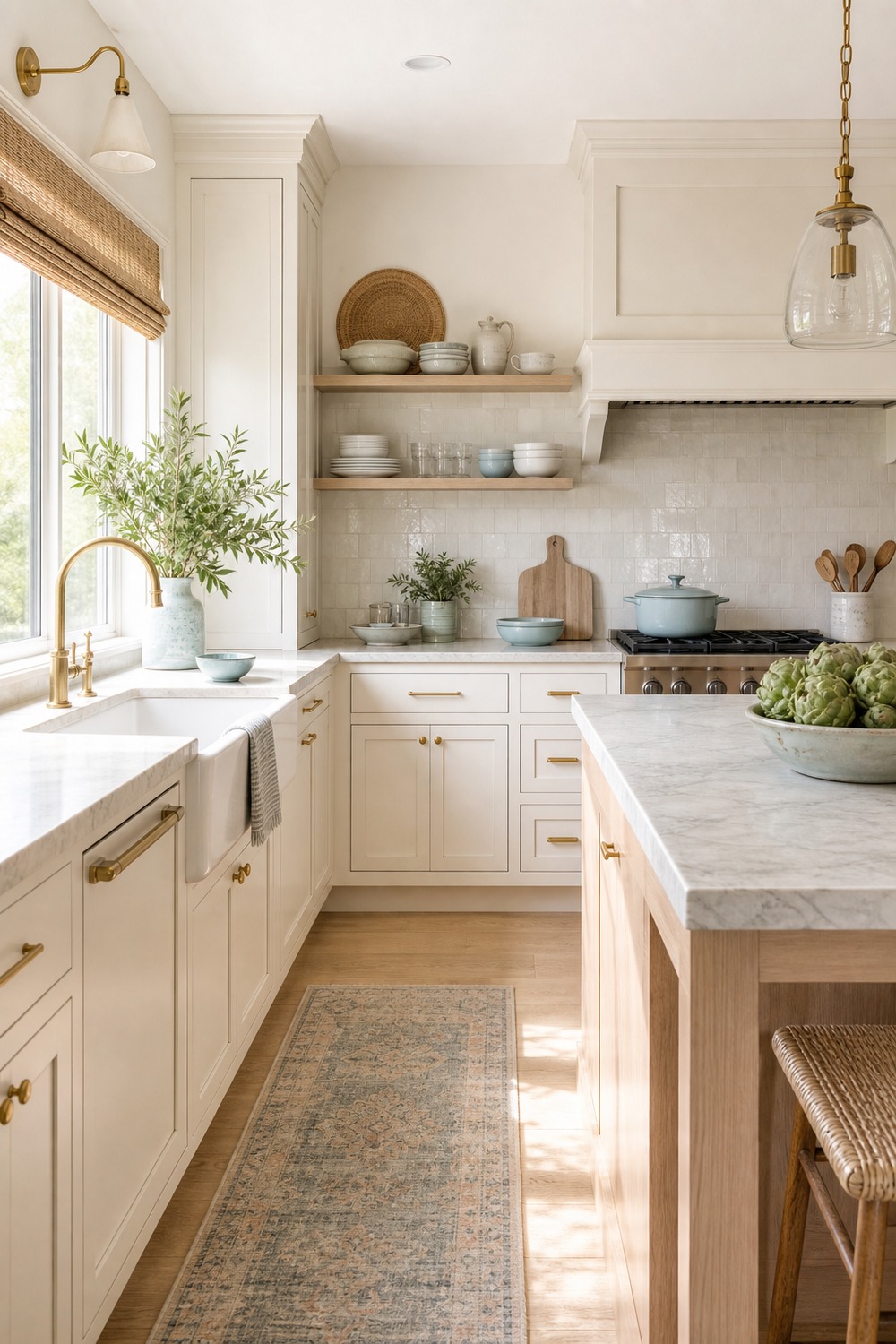
The coastal feeling here is subtle, which is why it works. Soft white cabinets, pale oak flooring, woven shade texture, and tiny watery-blue accents give the kitchen a breezy look without turning it into a themed beach room.
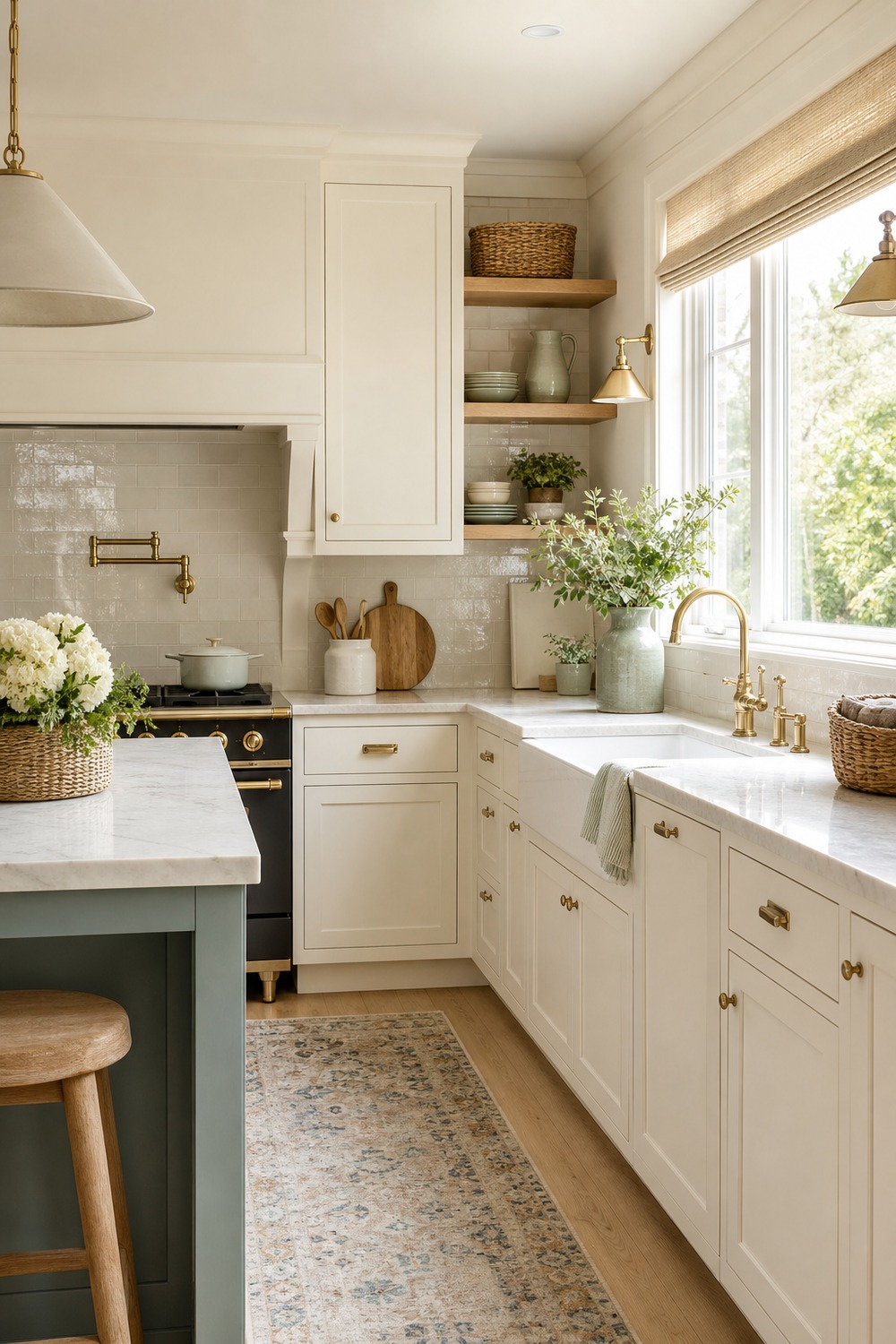
This farmhouse kitchen feels bright, but not bare. The cream cabinets and apron-front sink keep it classic, while the oak shelves, baskets, and pale stone add enough texture for the room to feel used in a normal week.
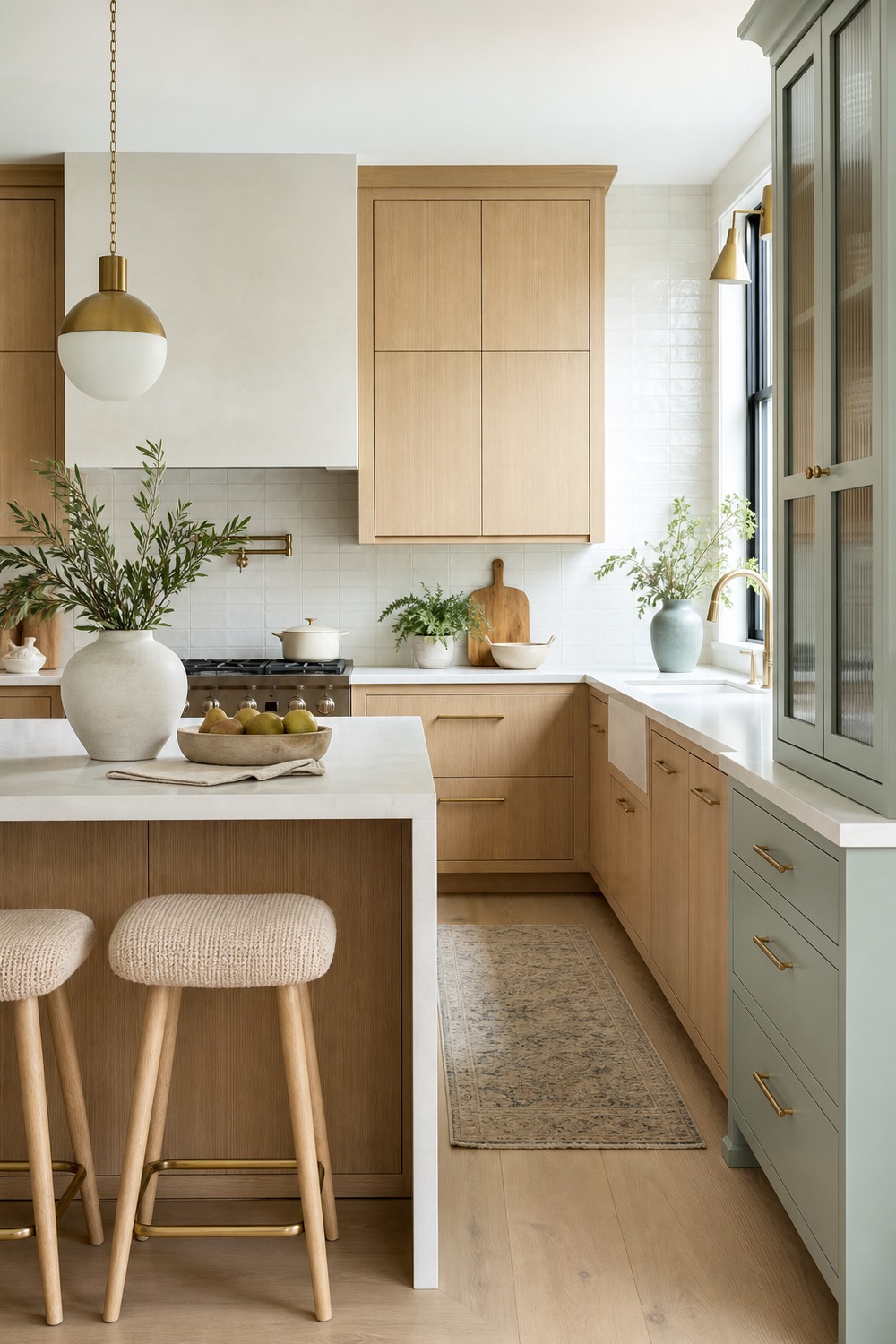
Flat-panel white oak cabinets make this kitchen feel modern without making it harsh. The waterfall counter keeps the lines clean, and the brass details give the pale wood a little polish so the room still feels finished.
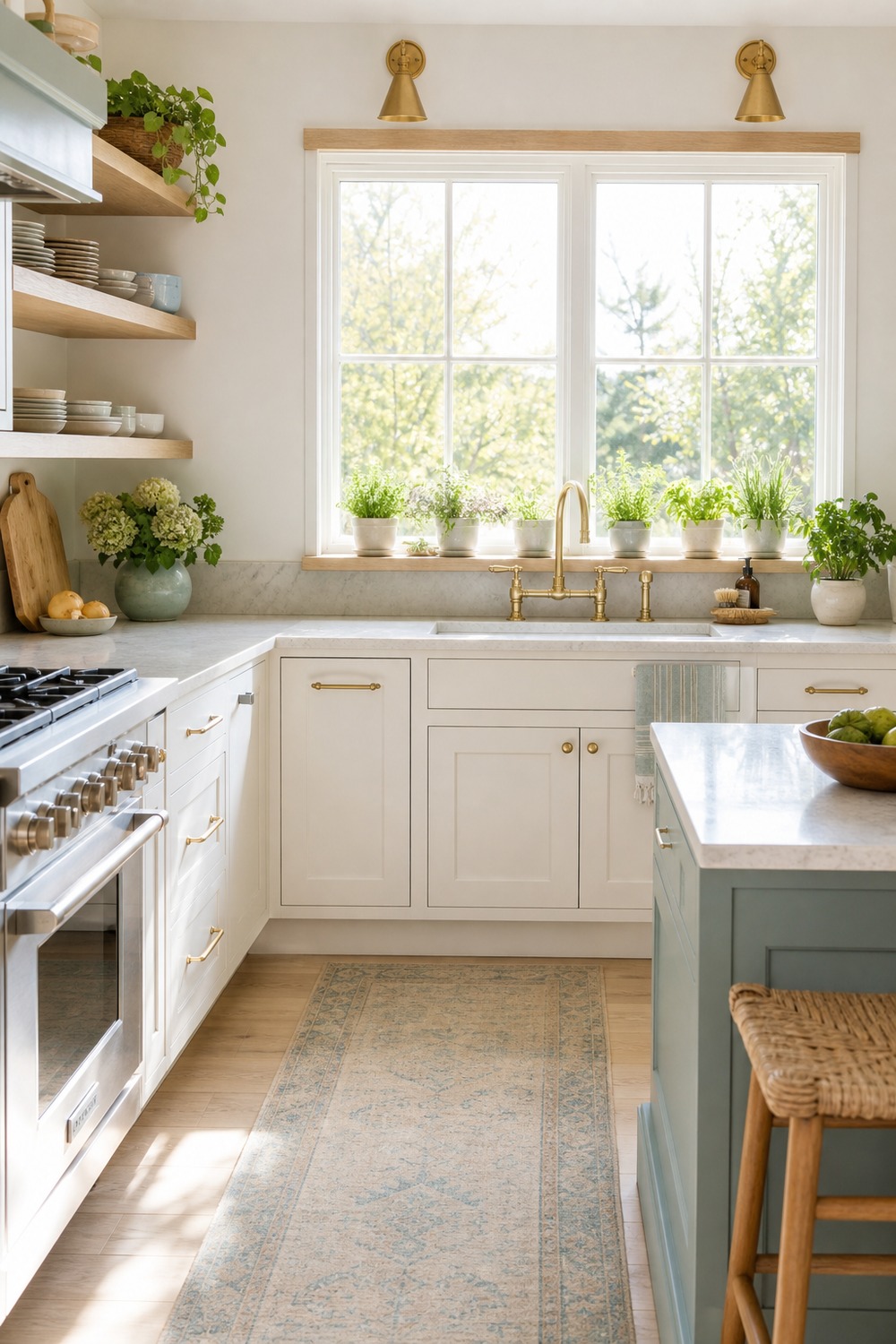
The herb window is such a simple way to make a light kitchen feel alive. Morning light, white lower cabinets, pale oak at the sill, and little pots of greenery bring color into the room without needing a strong cabinet shade.
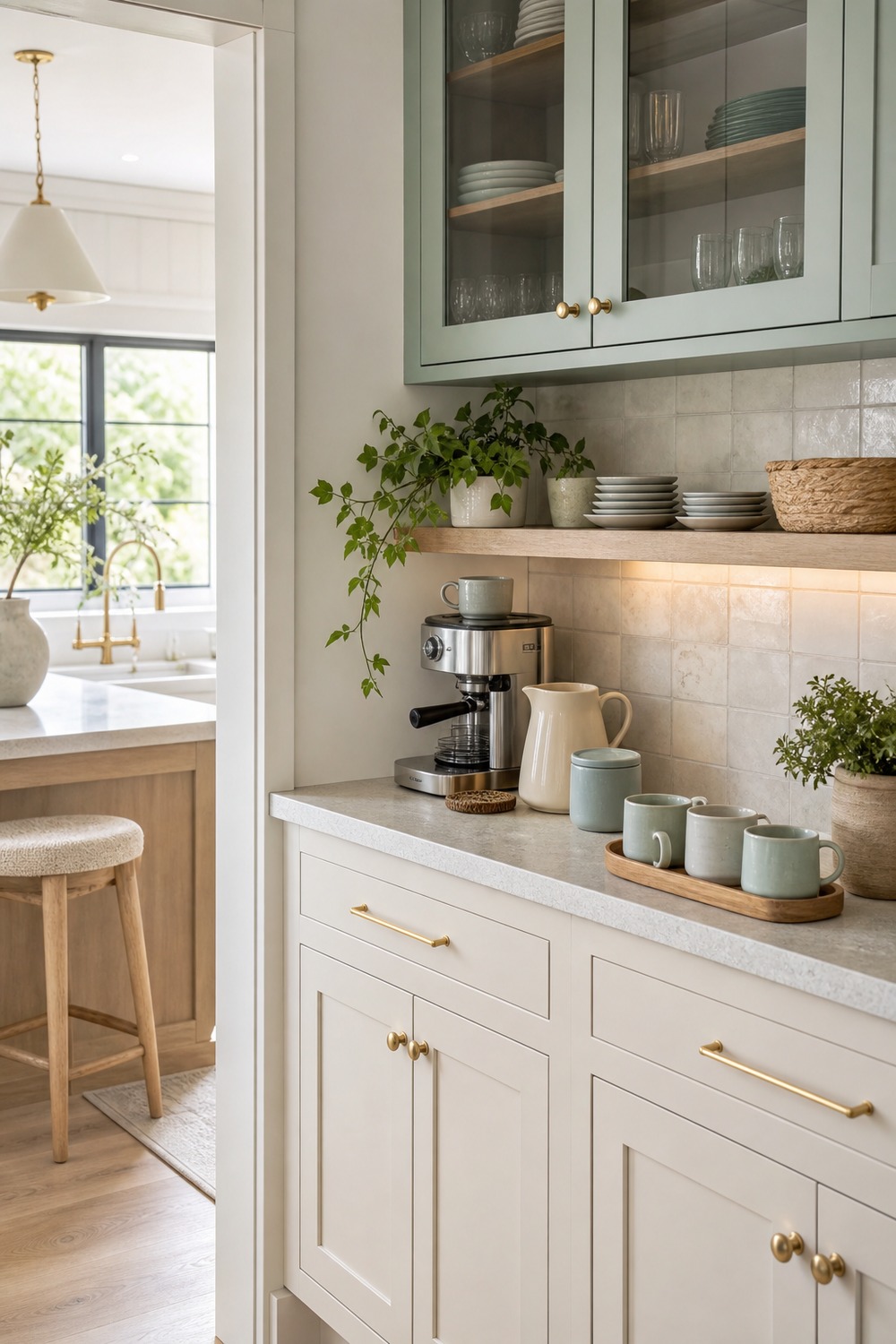
A small coffee and prep corner can still fit a bright color scheme if the details stay quiet. The cream tile, pale shelf, mugs, and tucked-away appliance make the counter feel useful, but nothing visually takes over the room.
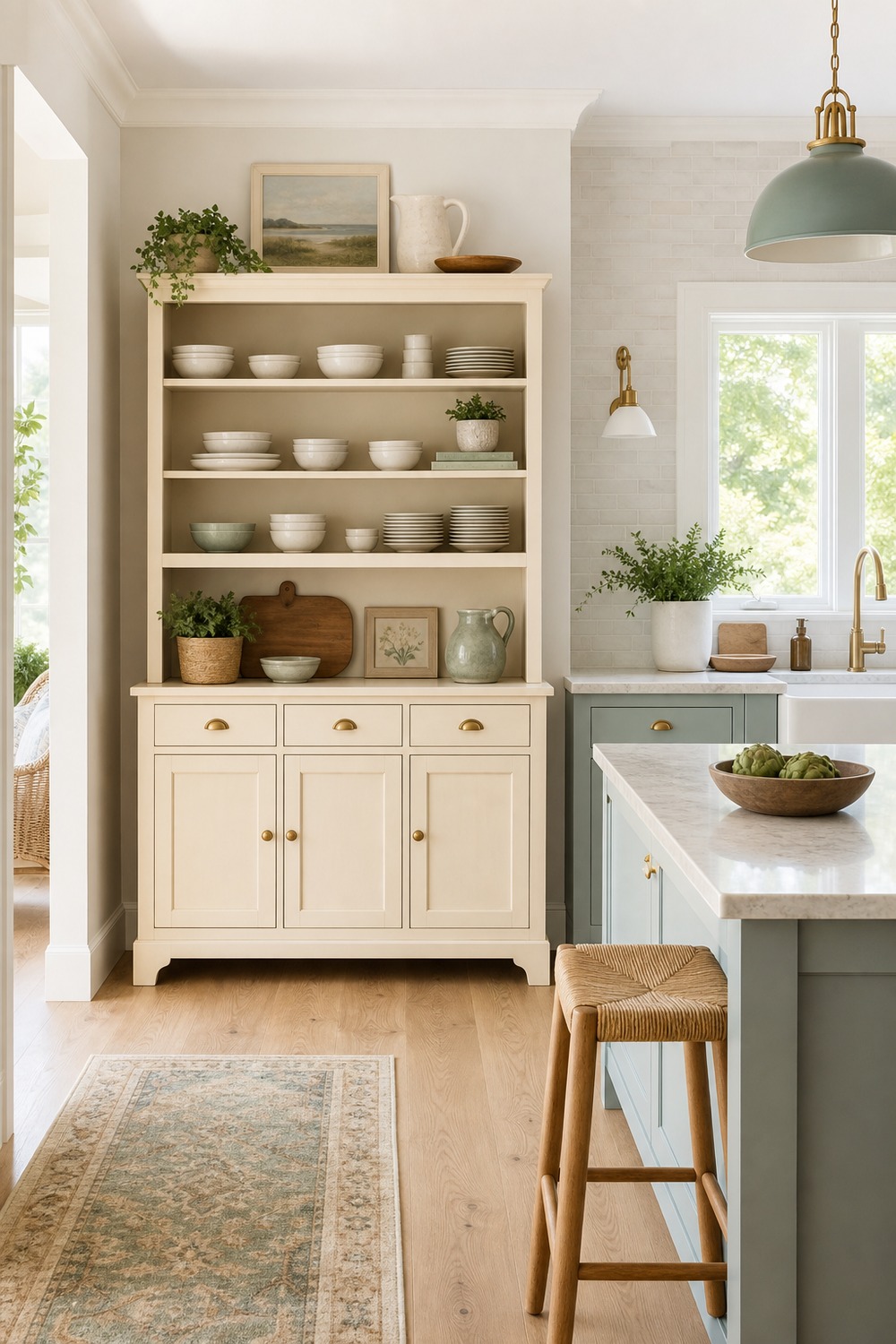
The freestanding hutch gives this kitchen a collected look while staying light. Cream paint, white dishes, a pale wood floor, and soft wall color keep the storage visible but not heavy, which is a nice trick for an airy room.
The best bright kitchen palettes usually have a little tension in them. White and cream keep things open, but pale wood, muted green, soft blue, brass, tile texture, and storage details are what make the space feel like an actual kitchen instead of a blank box.

I work in tech, but my taste in design is straight out of a slow European village. Give me arches, aged brass, and a room that smells like books and coffee. That’s my kind of home.