Brown kitchen color schemes can get heavy fast when the cabinets, floor, and counters all land in the same dark lane. The best rooms here break up the warmth with cream stone, clay tile, brass, woven texture, or one lighter wood note so the kitchen still feels layered and usable.
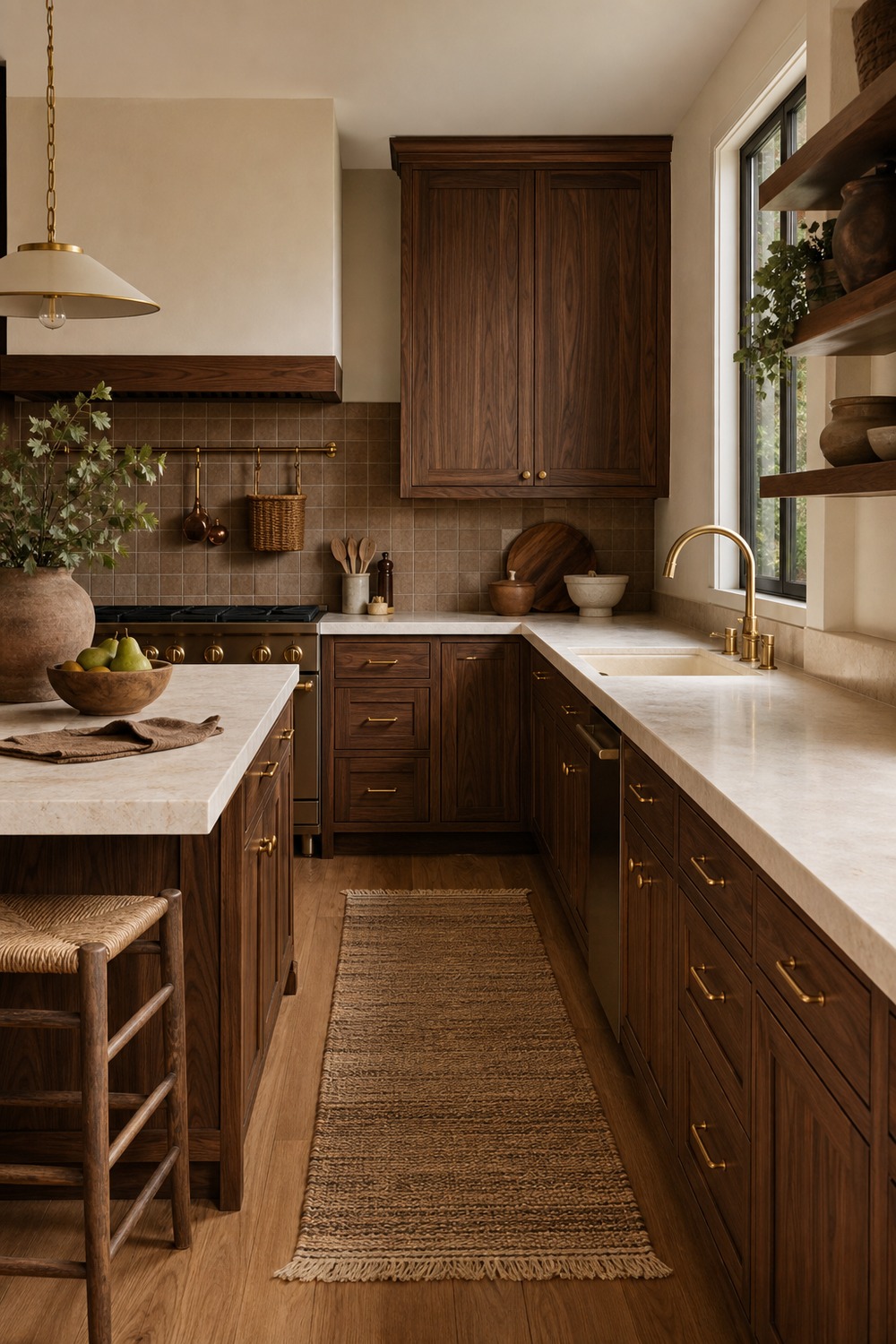
The walnut cabinets are doing the heavy lifting here, but the cream stone counters keep the whole kitchen from feeling boxed in. I like how the brass pulls add a small bit of shine without competing with the wood grain.
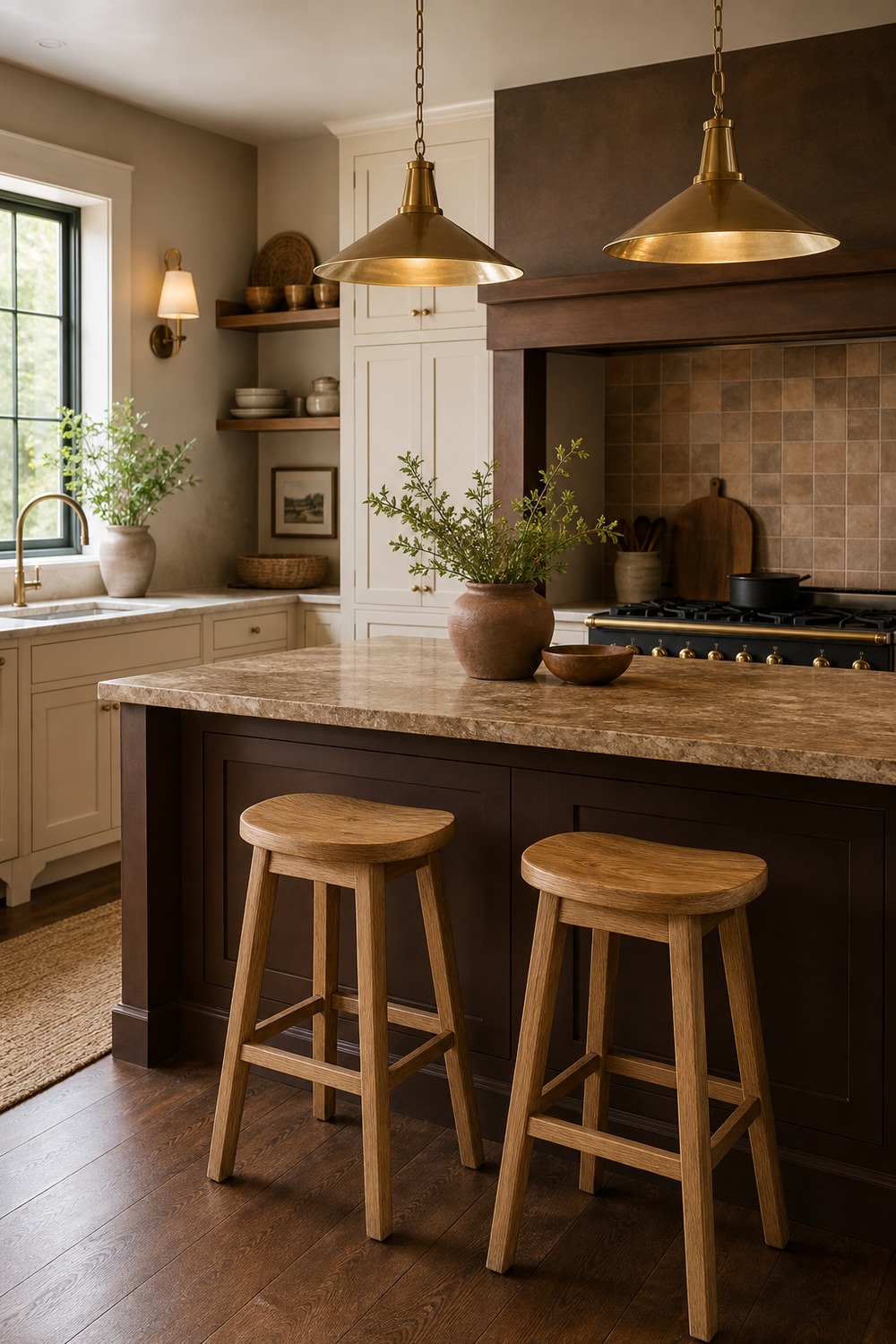
A mocha island can look too serious if everything around it is equally dark. The oak stools and pale perimeter cabinets soften this one, and the walkway still feels open enough for everyday cooking.
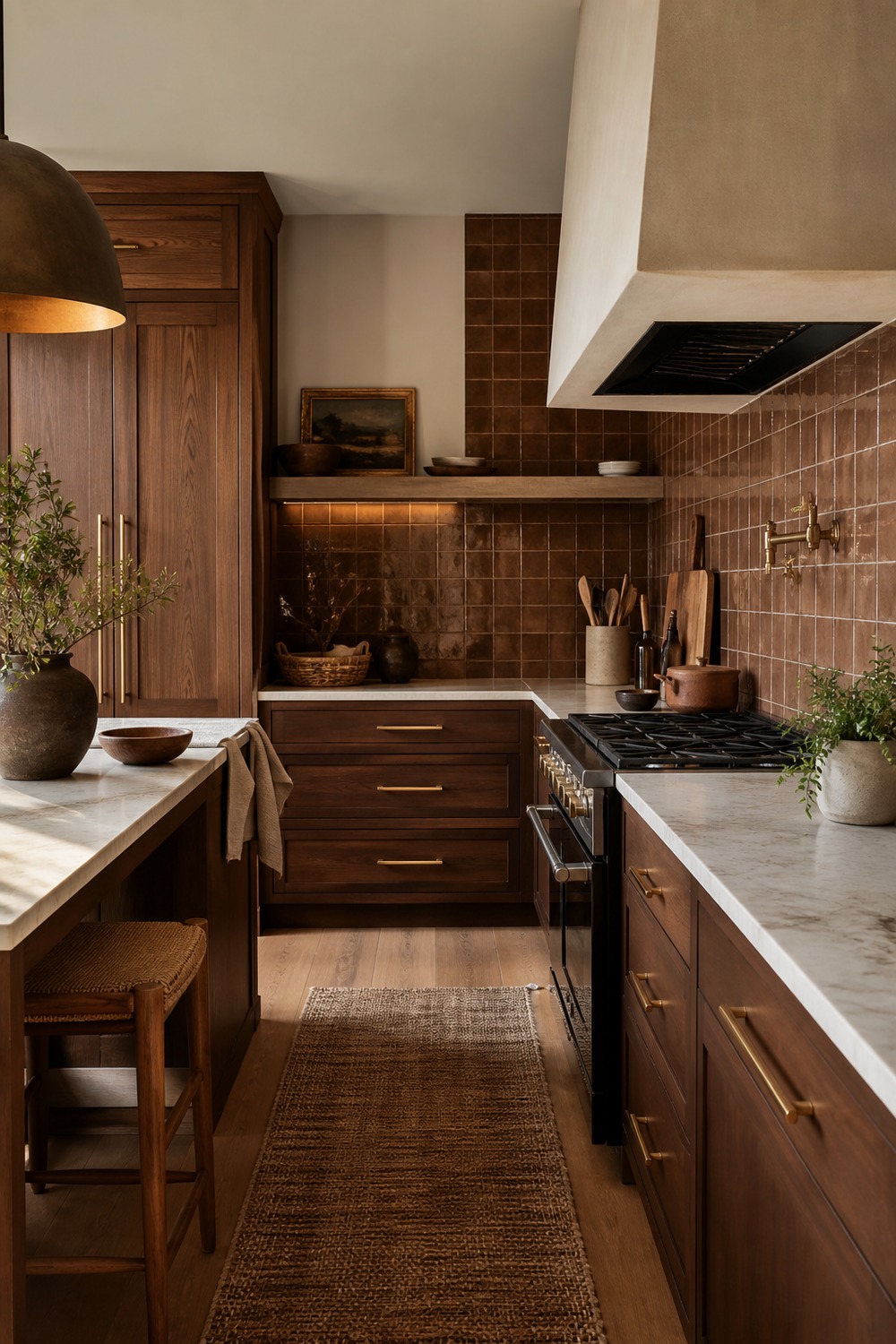
The handmade-looking brown tile is the detail that makes this kitchen feel less flat. It gives the wall movement, while the dark drawers and simple counter keep the palette grounded.
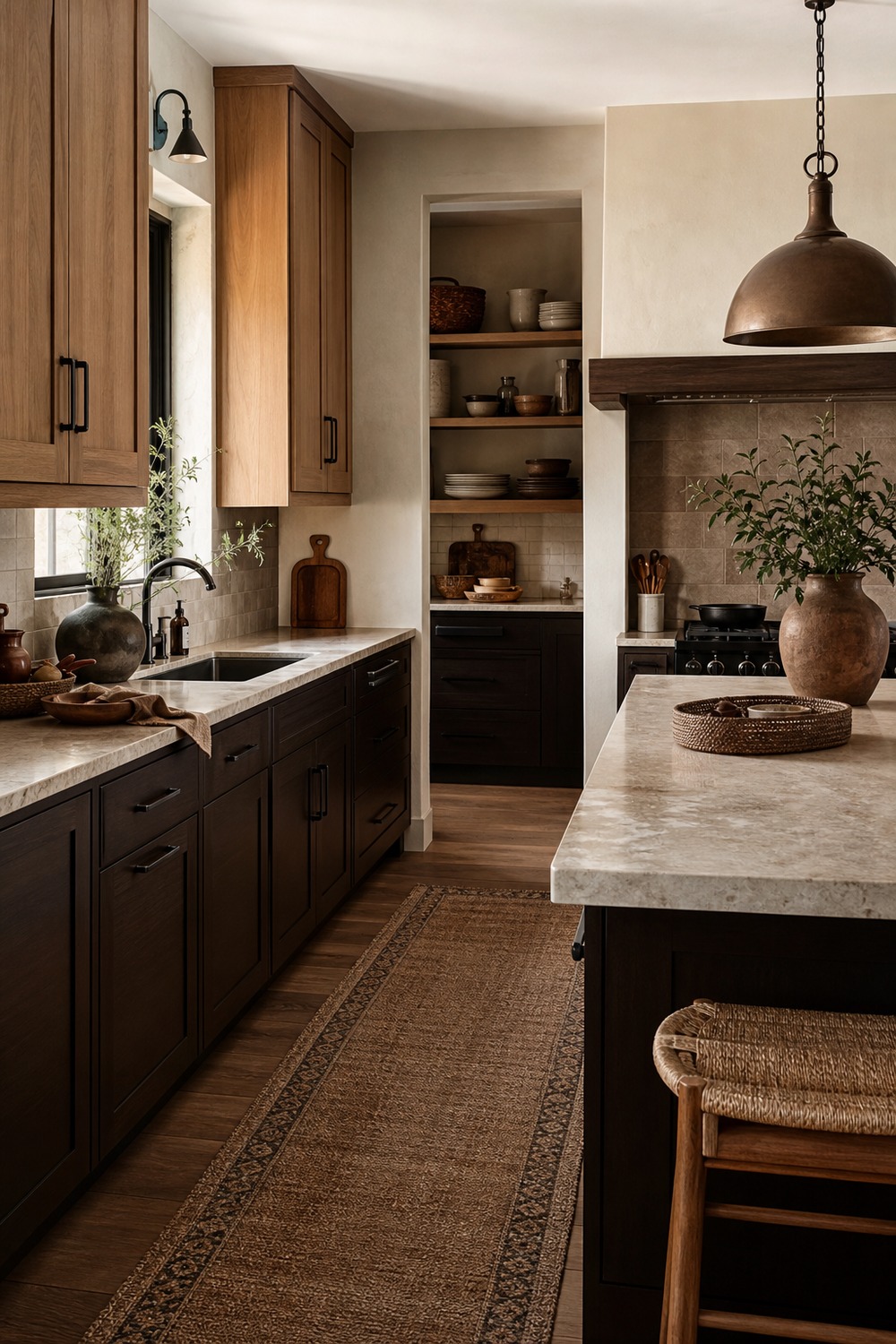
This two-tone mix works because the oak and espresso are separated clearly instead of blurring together. The lighter wall space gives the deeper base cabinets room to breathe, which matters a lot with brown kitchens.
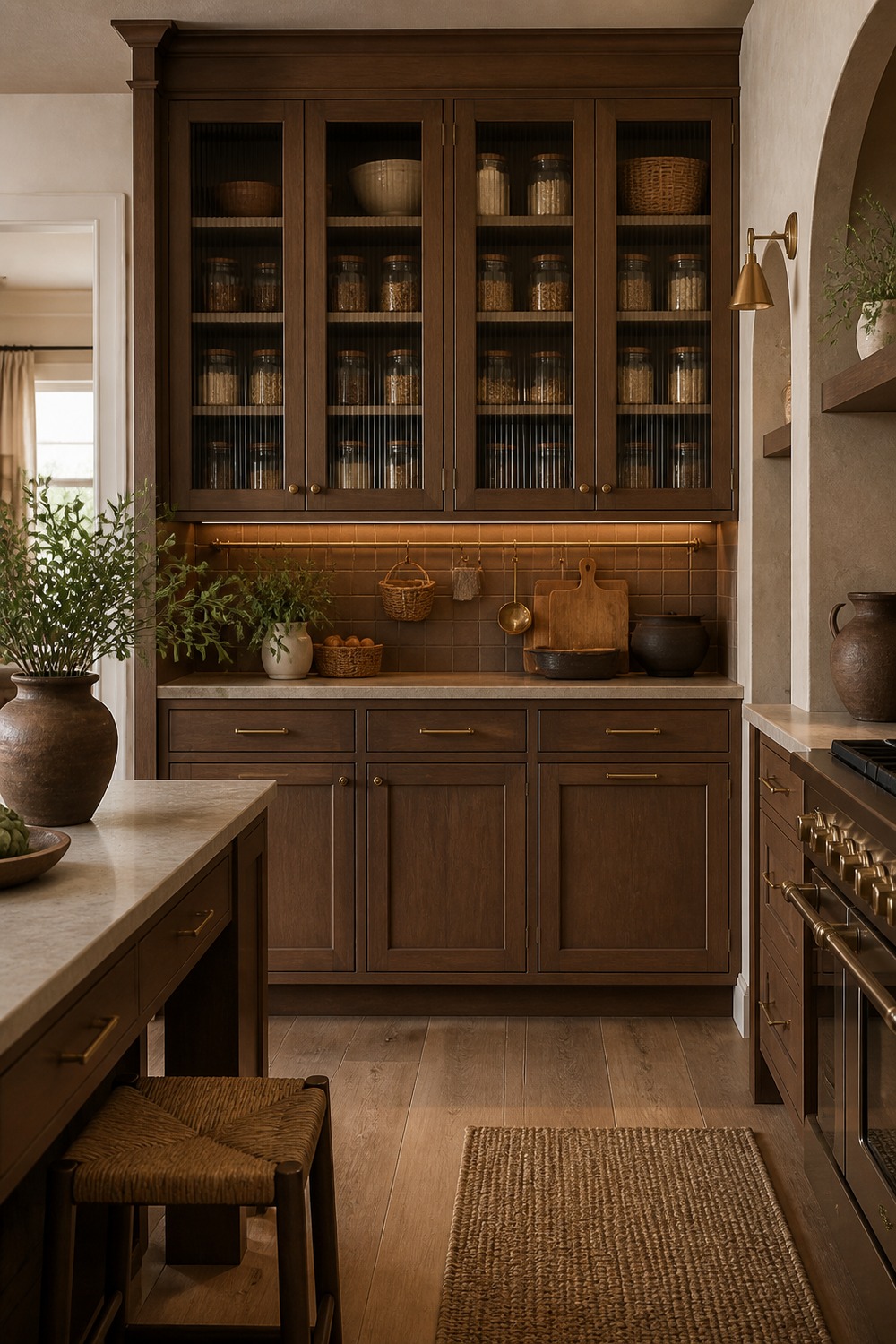
A full pantry wall could easily feel bulky, but the ribbed glass breaks up the cabinet mass. It still gives that warm brown storage moment without turning the kitchen into one solid wall of wood.
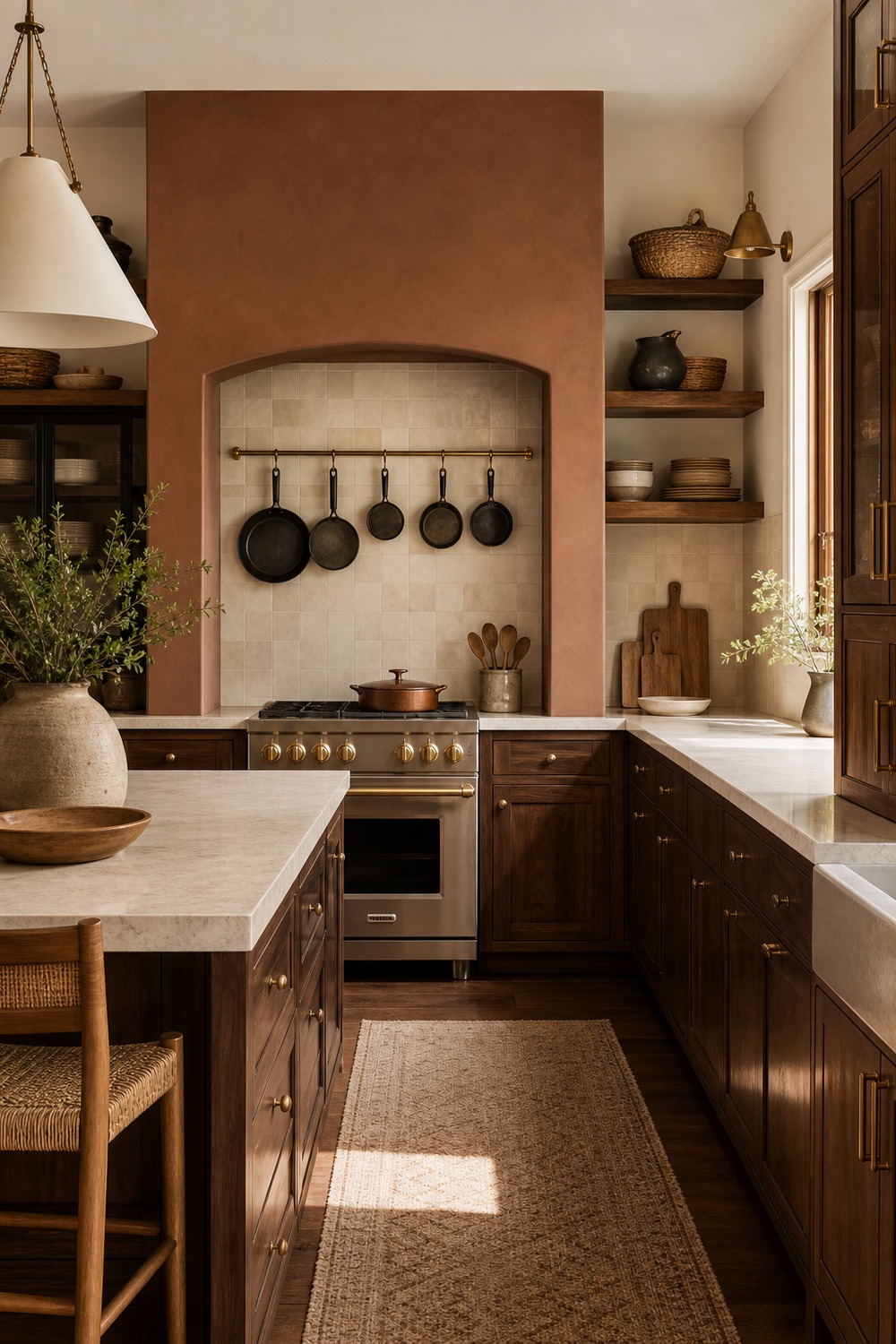
The clay-brown range alcove feels like a softer way to bring brown into the room. It warms up the cooking zone, and the cream tile around it keeps the color from taking over every surface.
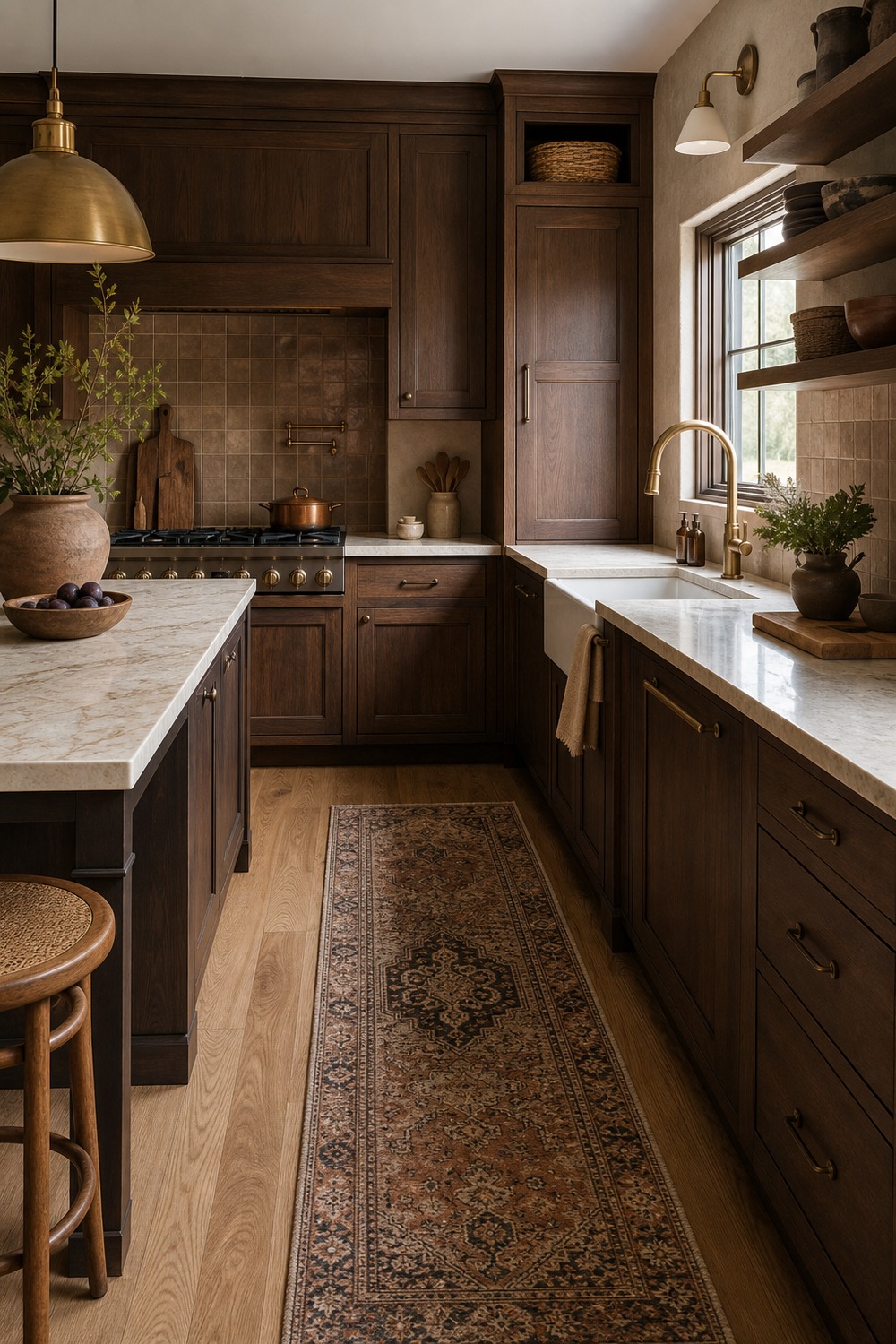
That vintage runner changes the whole mood of the kitchen. The brown cabinetry already feels rich, but the patterned floor detail makes the space look collected instead of showroom-perfect.
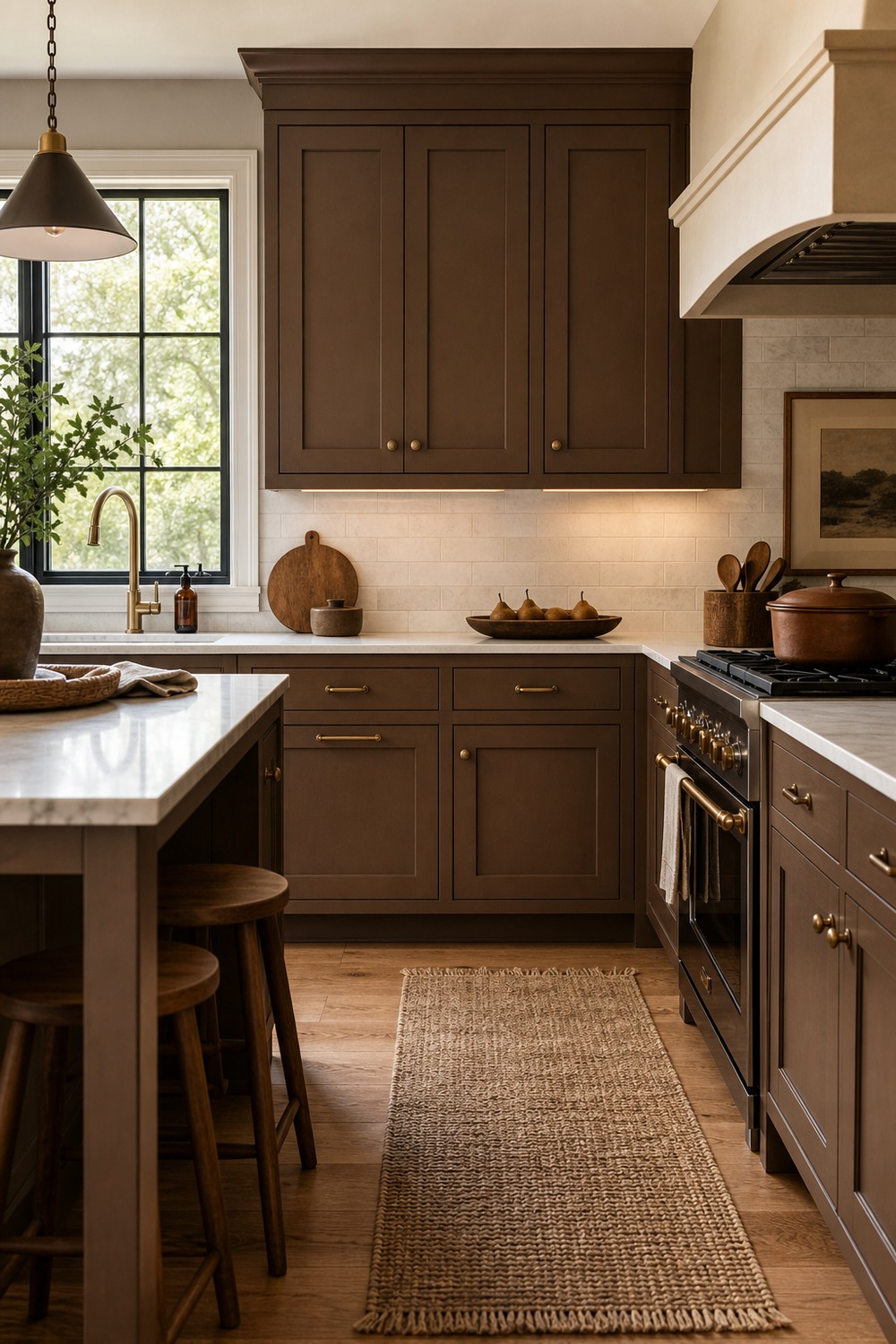
Cocoa shaker cabinets have a classic feel, and the bright stone backsplash keeps them from reading too heavy. The oak floor adds another brown tone, but it is light enough to make the palette feel layered.
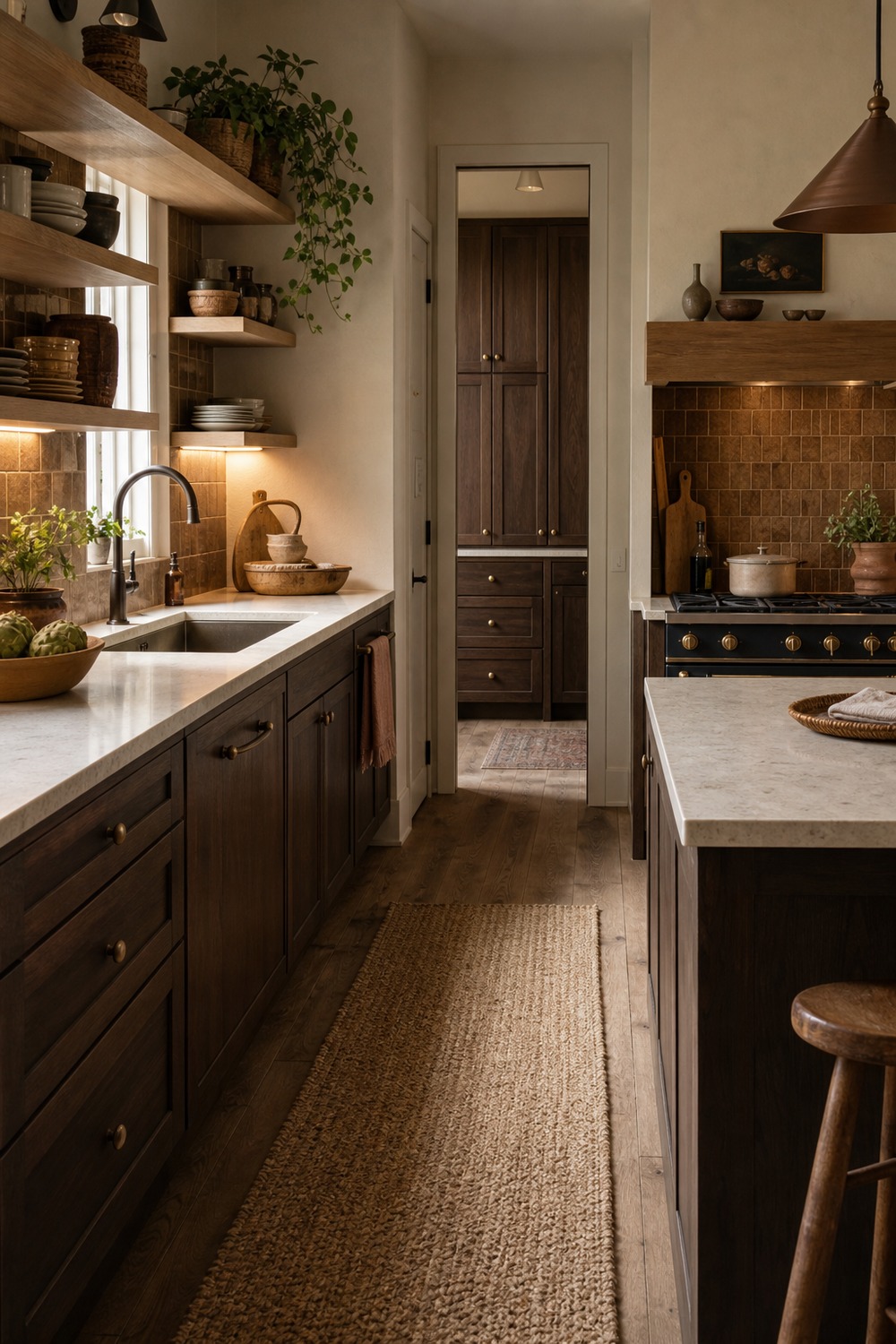
This galley kitchen is a good reminder that brown does not have to make a small space feel cramped. The cream counters, narrow runner, and vertical cabinet lines keep the room feeling tidy and pulled together.
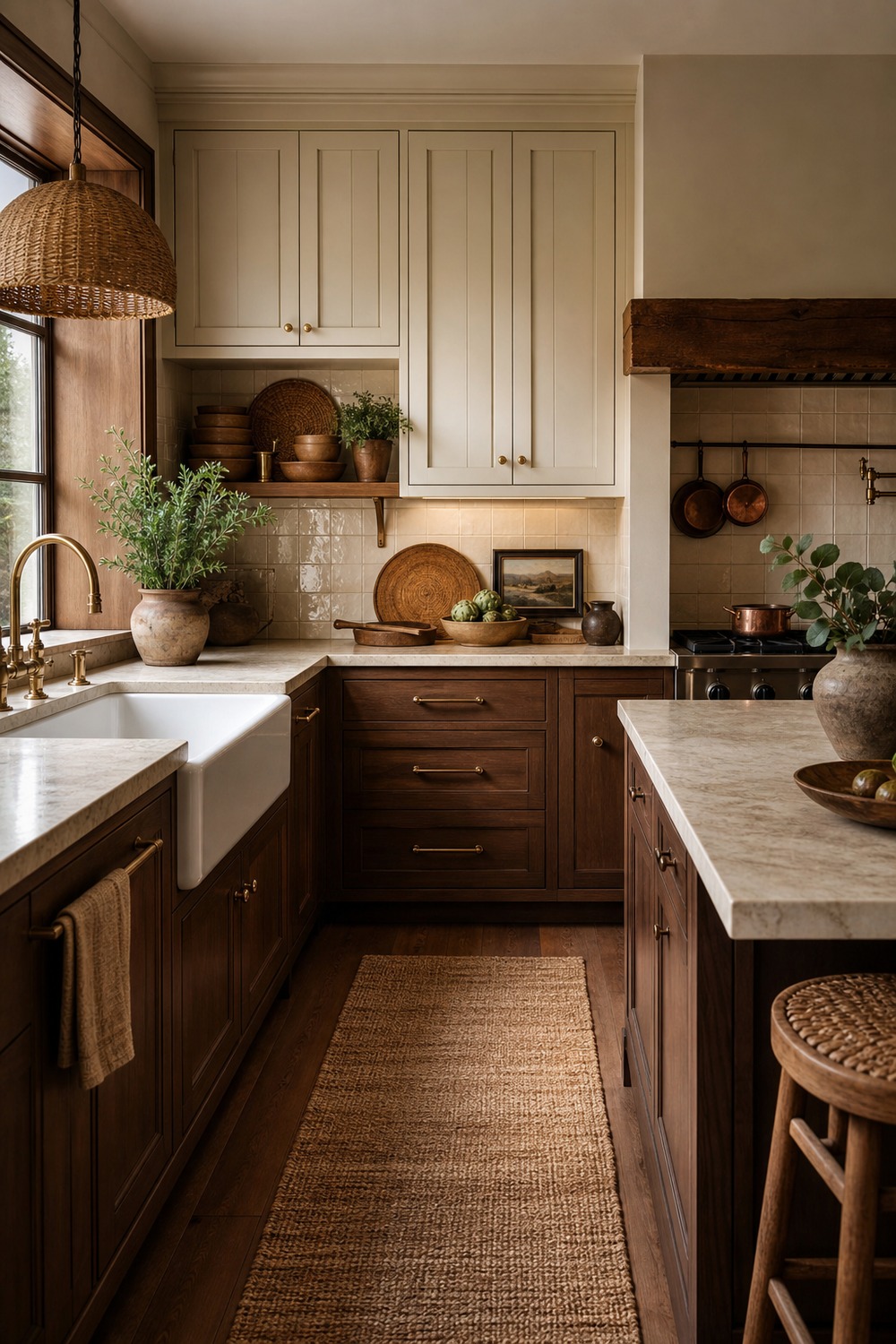
The cottage mix feels warm without getting too sweet. Brown base cabinets give it depth, while the cream uppers and open shelf make the sink wall feel lighter and more relaxed.
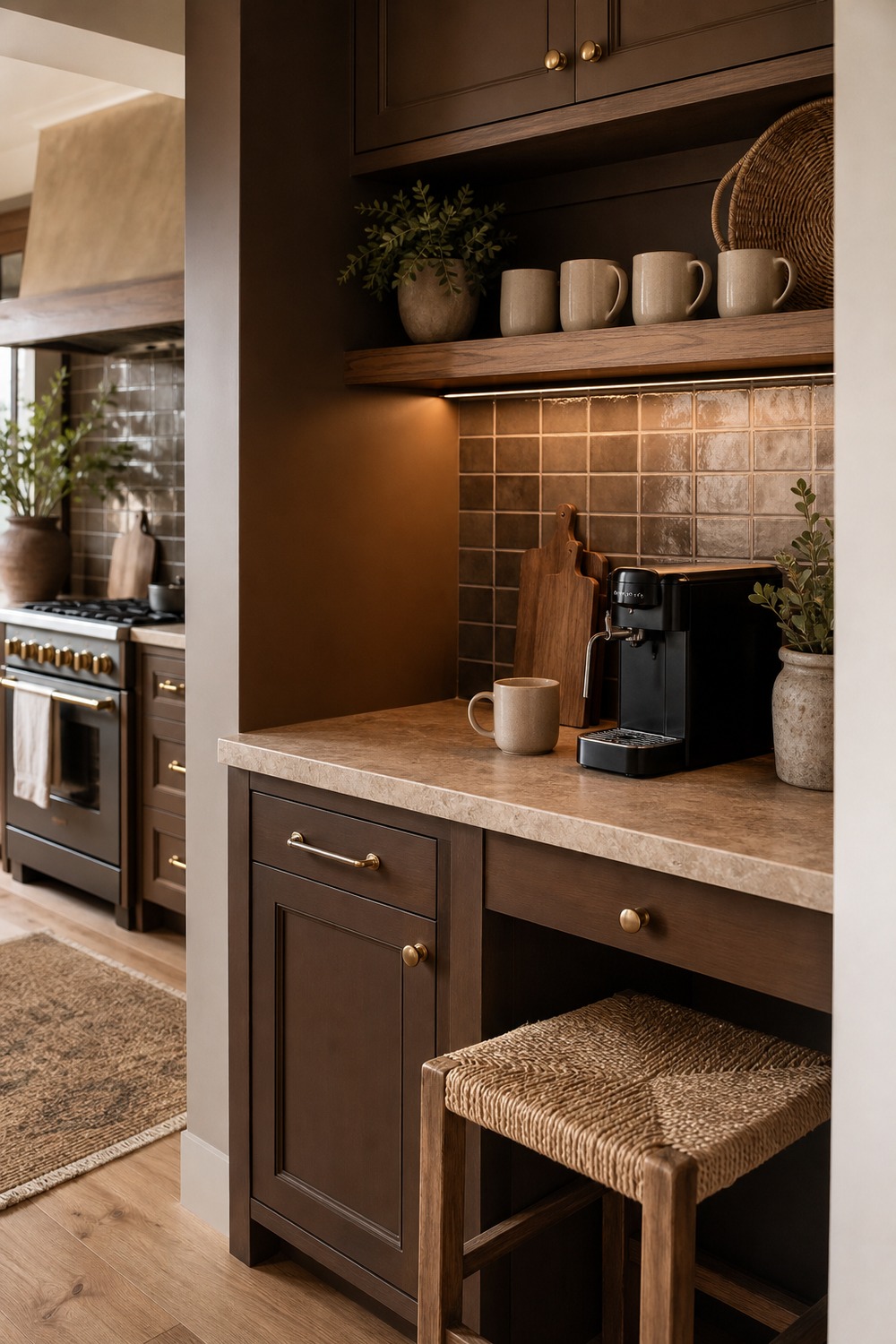
A small prep corner like this makes the brown palette feel useful, not just pretty. The mugs, wood shelf, and compact counter turn the darker mocha tones into a spot that feels easy to use in the morning.
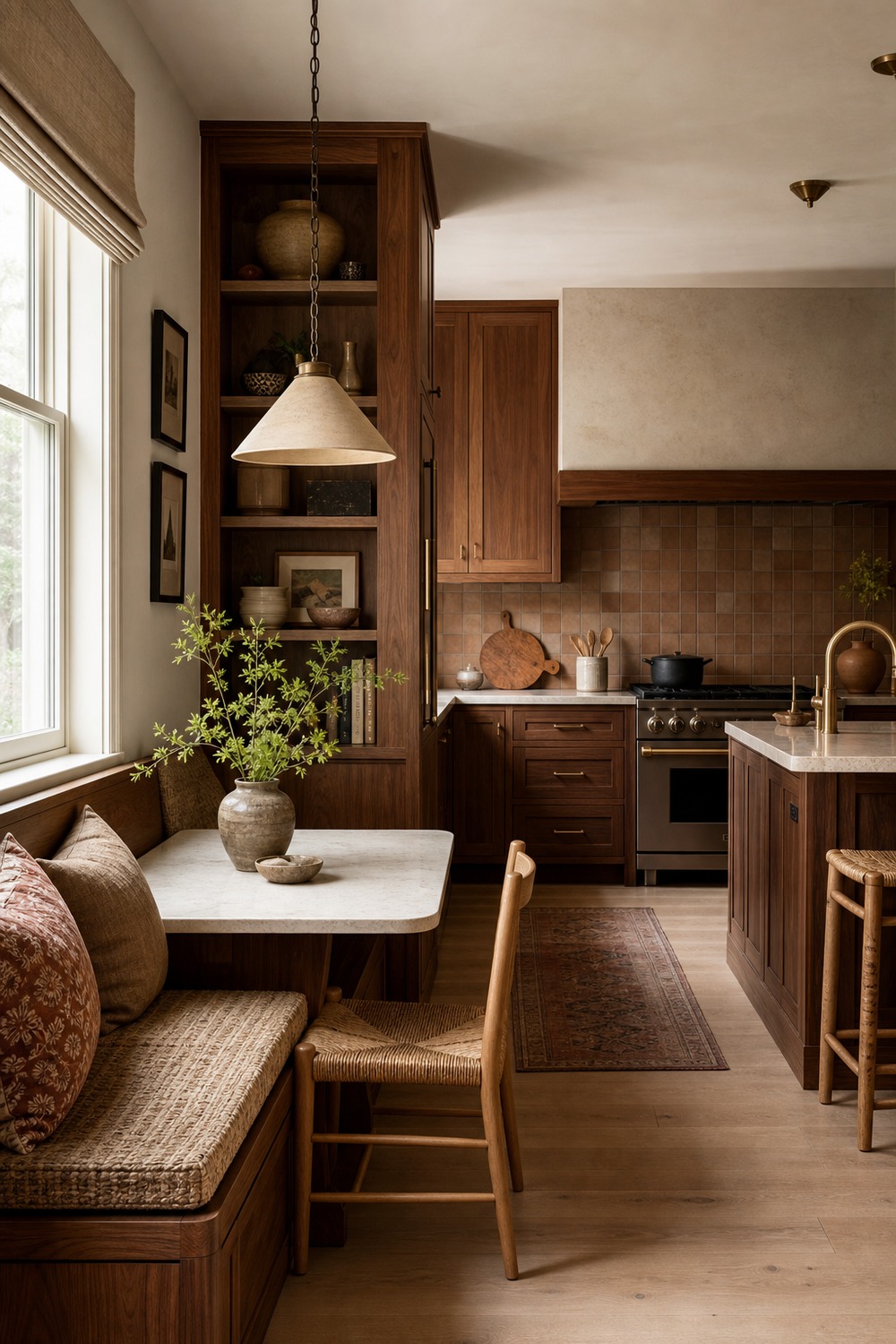
The walnut bench gives this kitchen a built-in, finished feeling. I like that the cream table and woven cushion lighten the corner so the nook still feels comfortable rather than heavy.
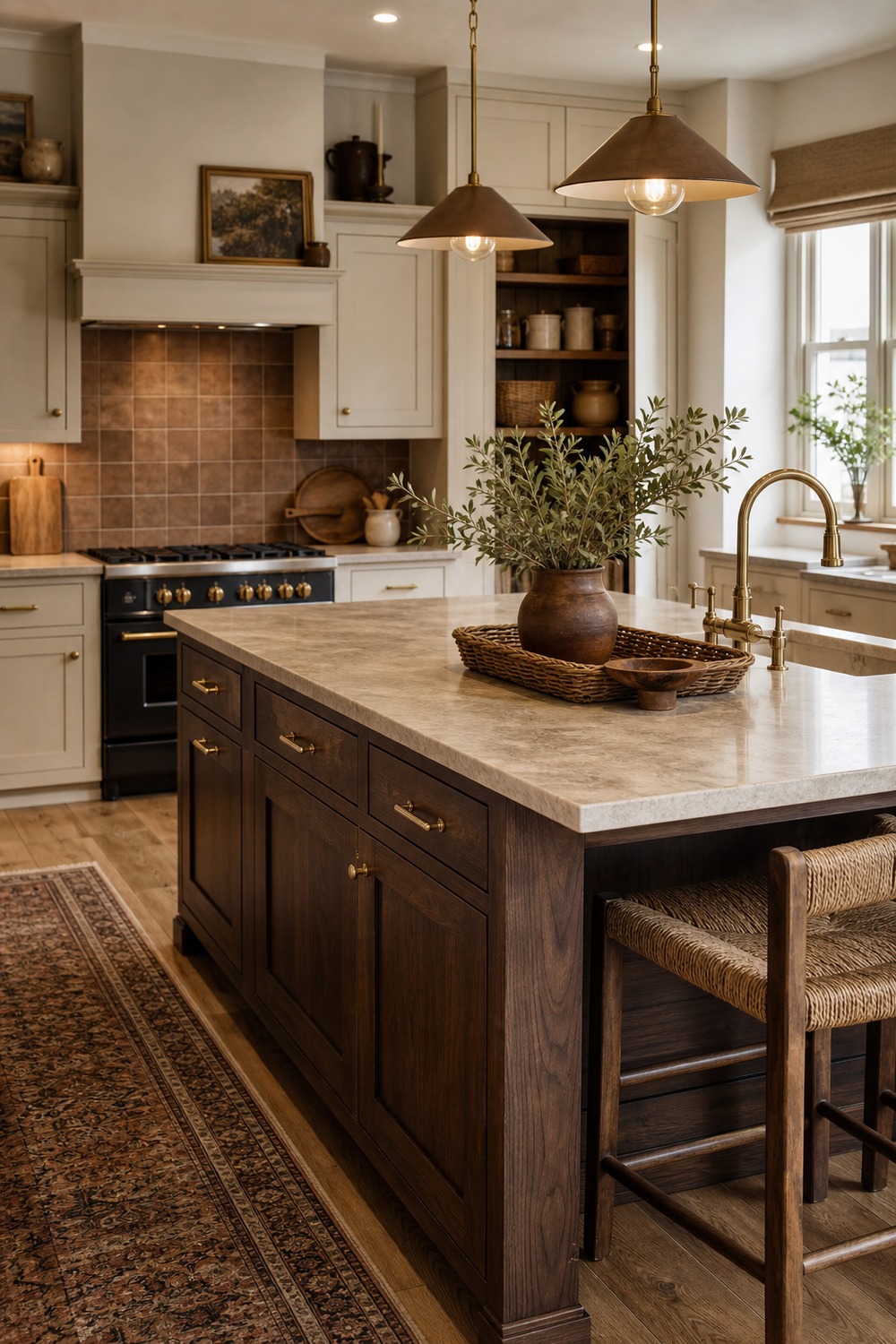
A dark brown island can anchor a kitchen beautifully when the hardware and counter have enough contrast. The brass details here make the island feel intentional, while the pale stone keeps the prep surface bright.
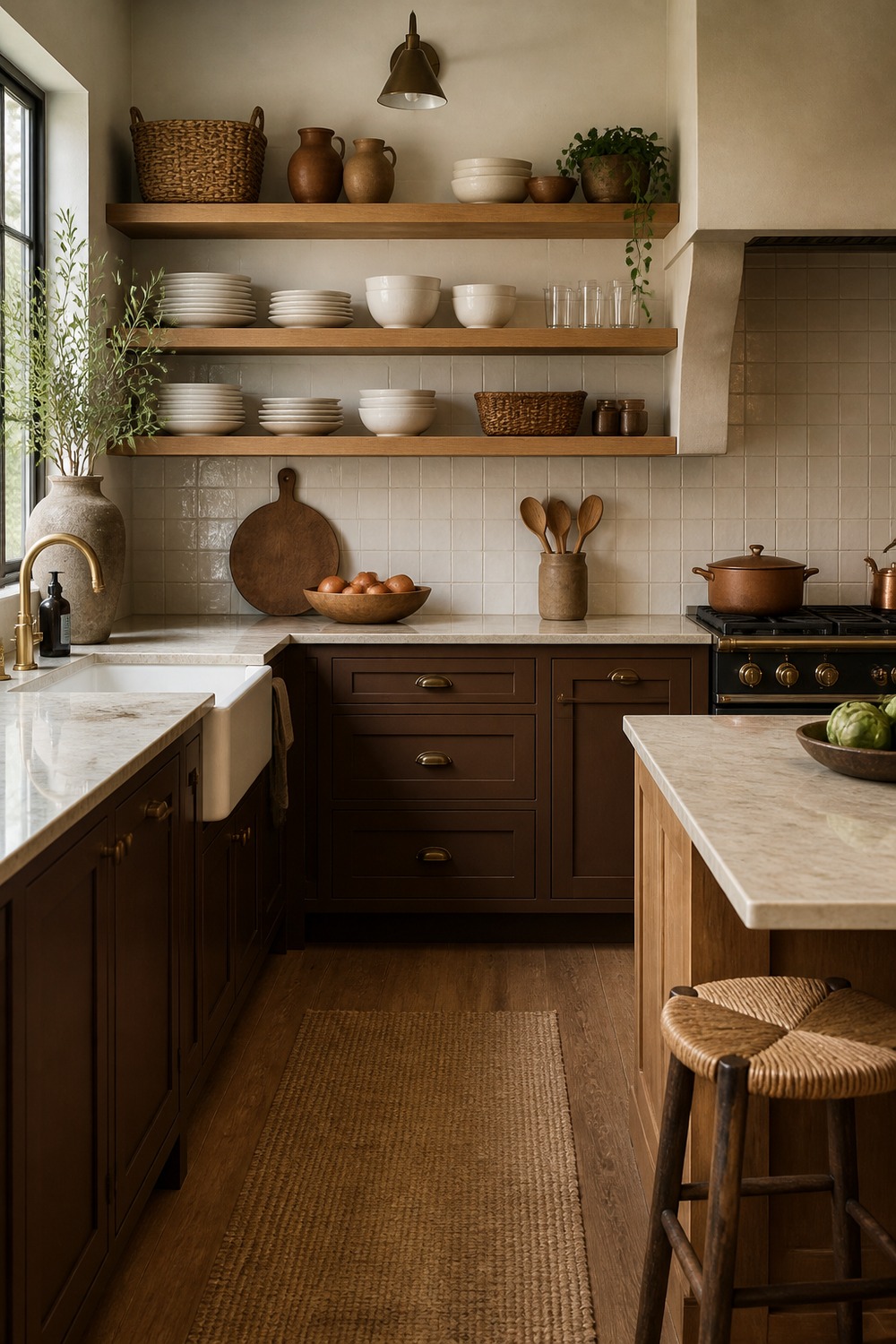
Open shelving helps this brown kitchen feel less closed off. The baskets, white dishes, and warm wood shelf add texture, but the palette still stays calm and connected.
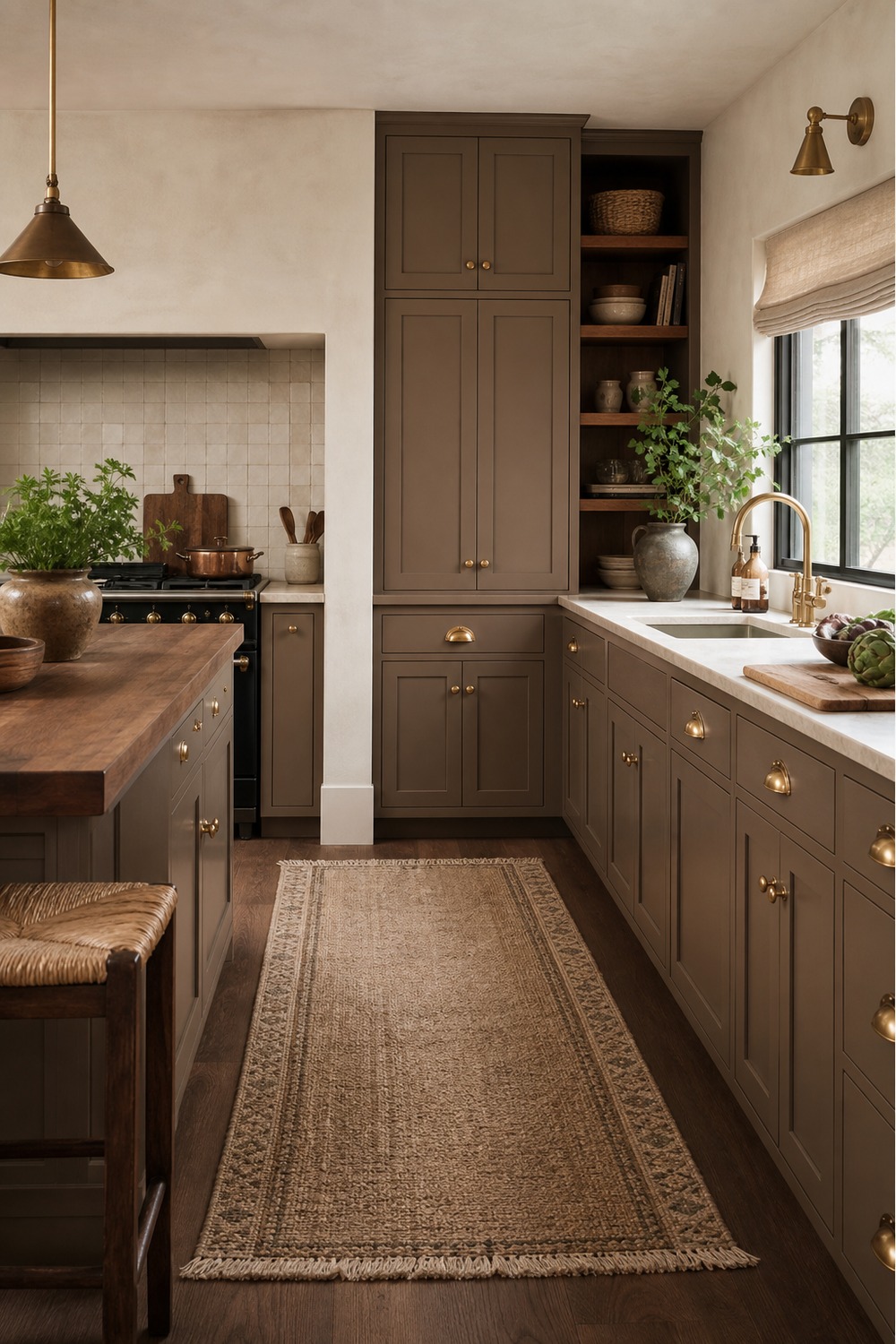
Taupe-brown is a softer route if espresso or walnut feels too dark. The cream tile and butcher-block detail give this kitchen a gentle warmth that would be easier to live with day to day.
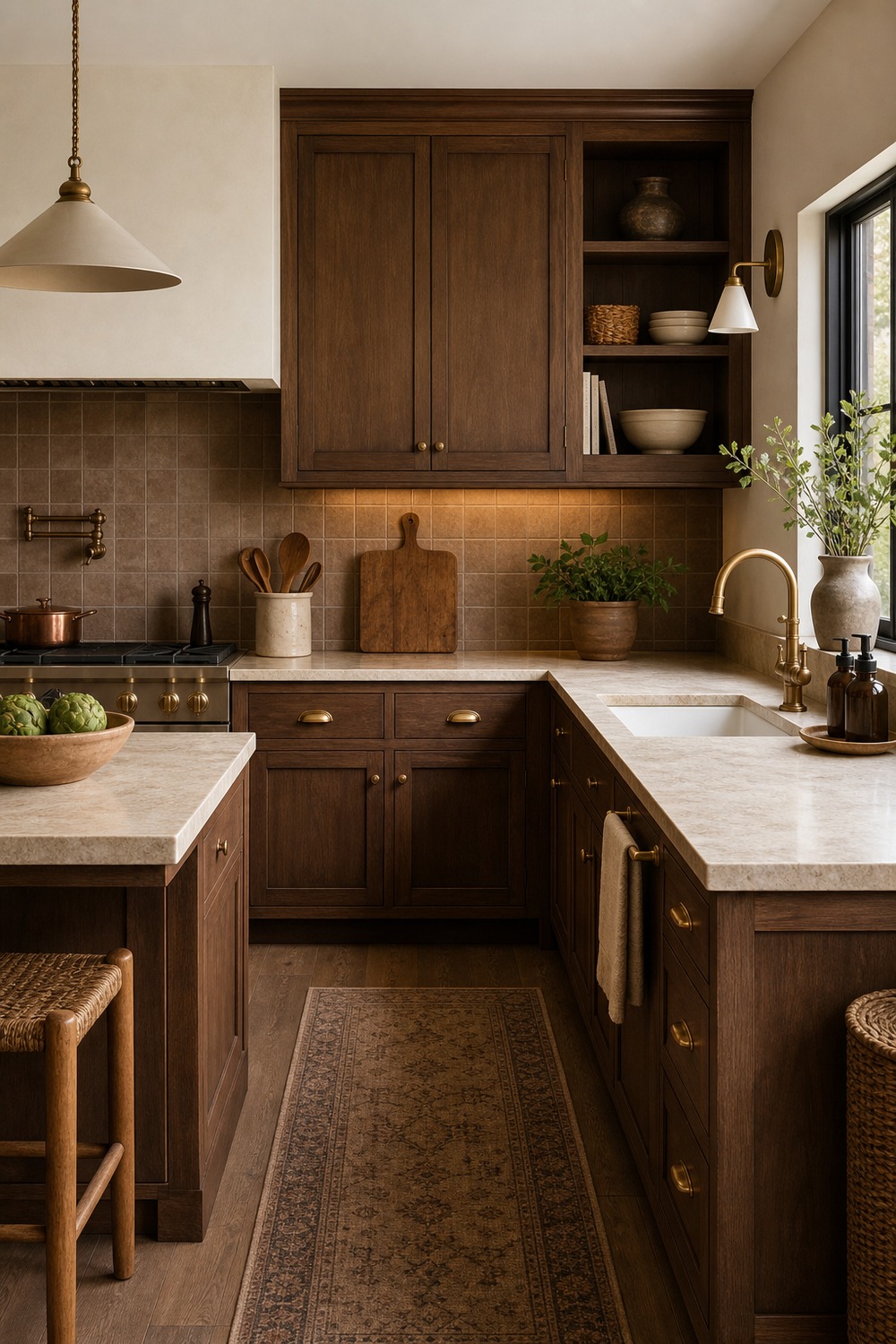
This walnut-and-cream combination feels timeless because neither color has to fight for attention. The wood gives the kitchen depth, and the warm stone counter keeps the whole room from looking stark.
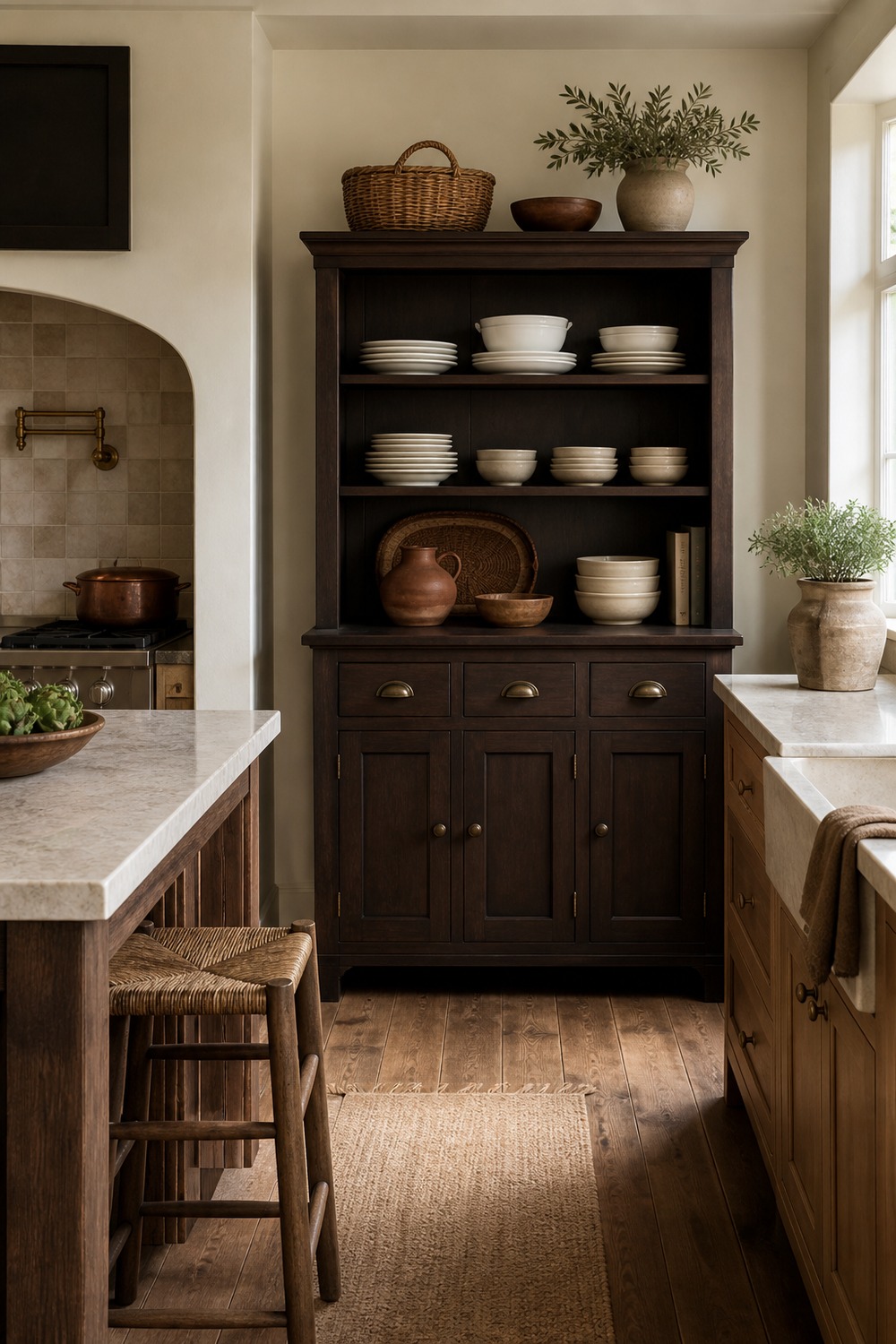
The espresso hutch makes the kitchen feel more collected, almost like a piece of furniture was brought into the room. Against the lighter wall and simple dishes, the dark brown finish feels rich instead of bulky.
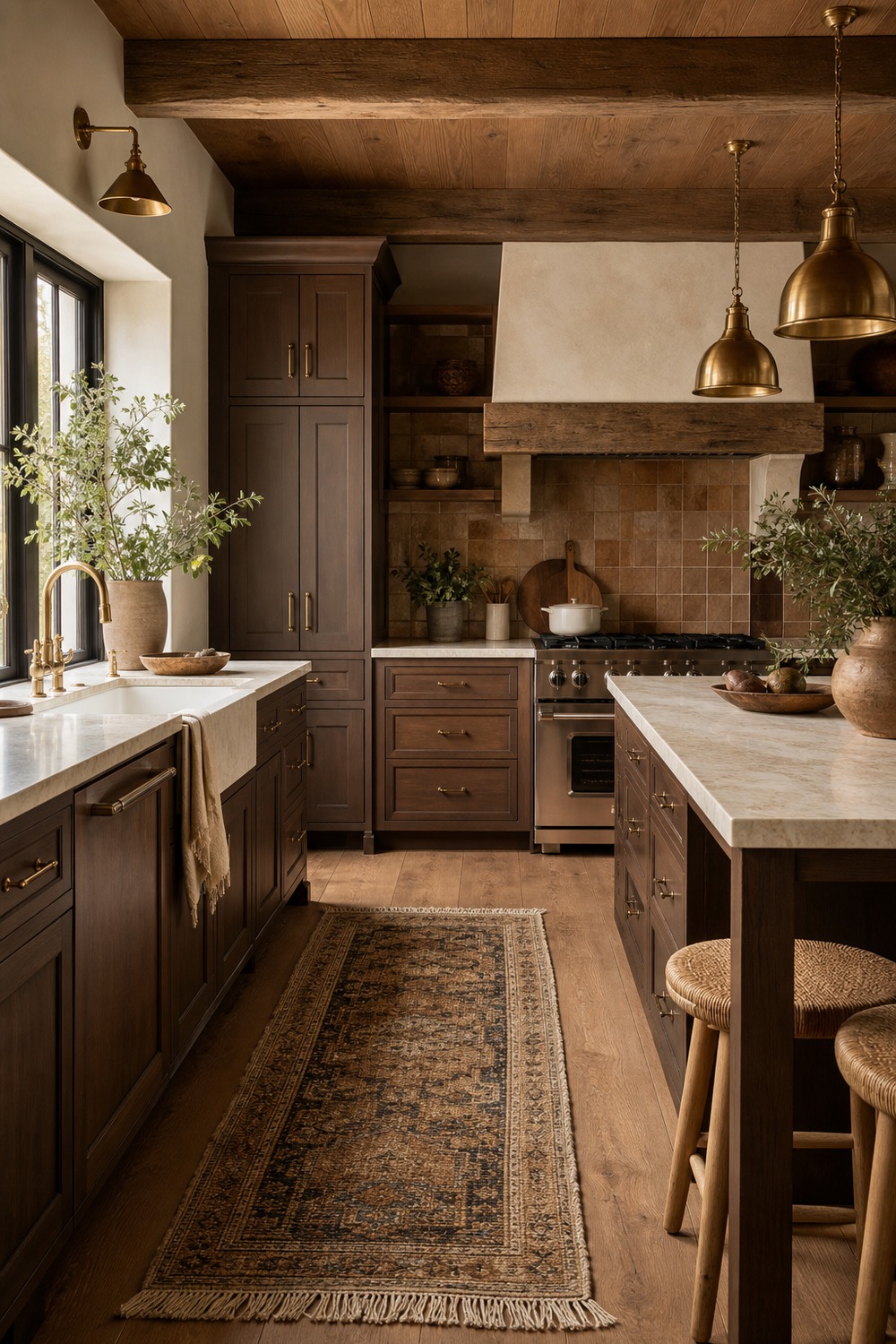
The warm wood ceiling adds another layer of brown without relying only on cabinets. Because the counters and backsplash stay light, the room gets that enveloping feeling without becoming too dim.
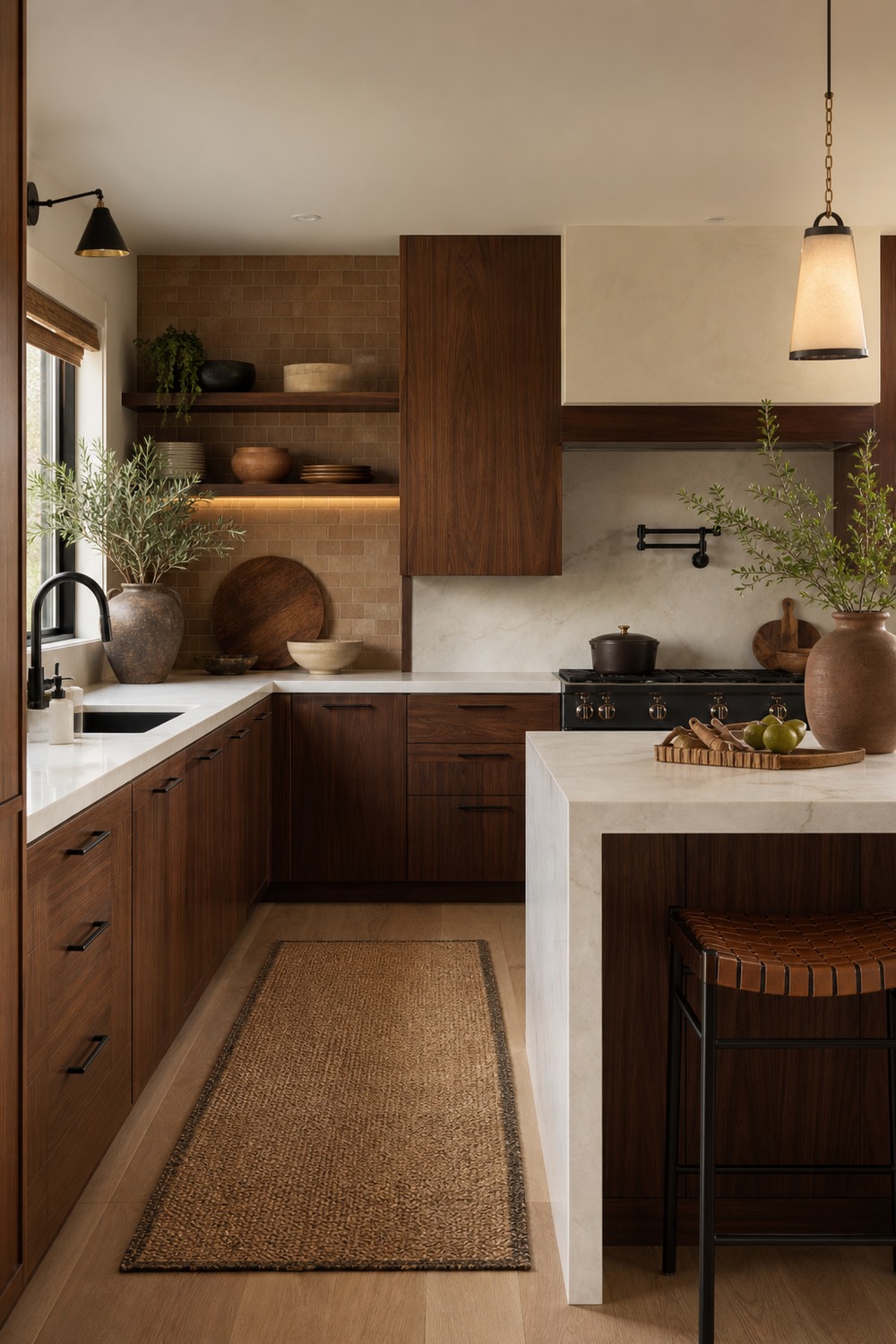
Flat-panel brown cabinets can look sleek, but they need contrast so they do not feel like one big block. The waterfall counter and black accents make this kitchen feel modern while still keeping the wood tone warm.
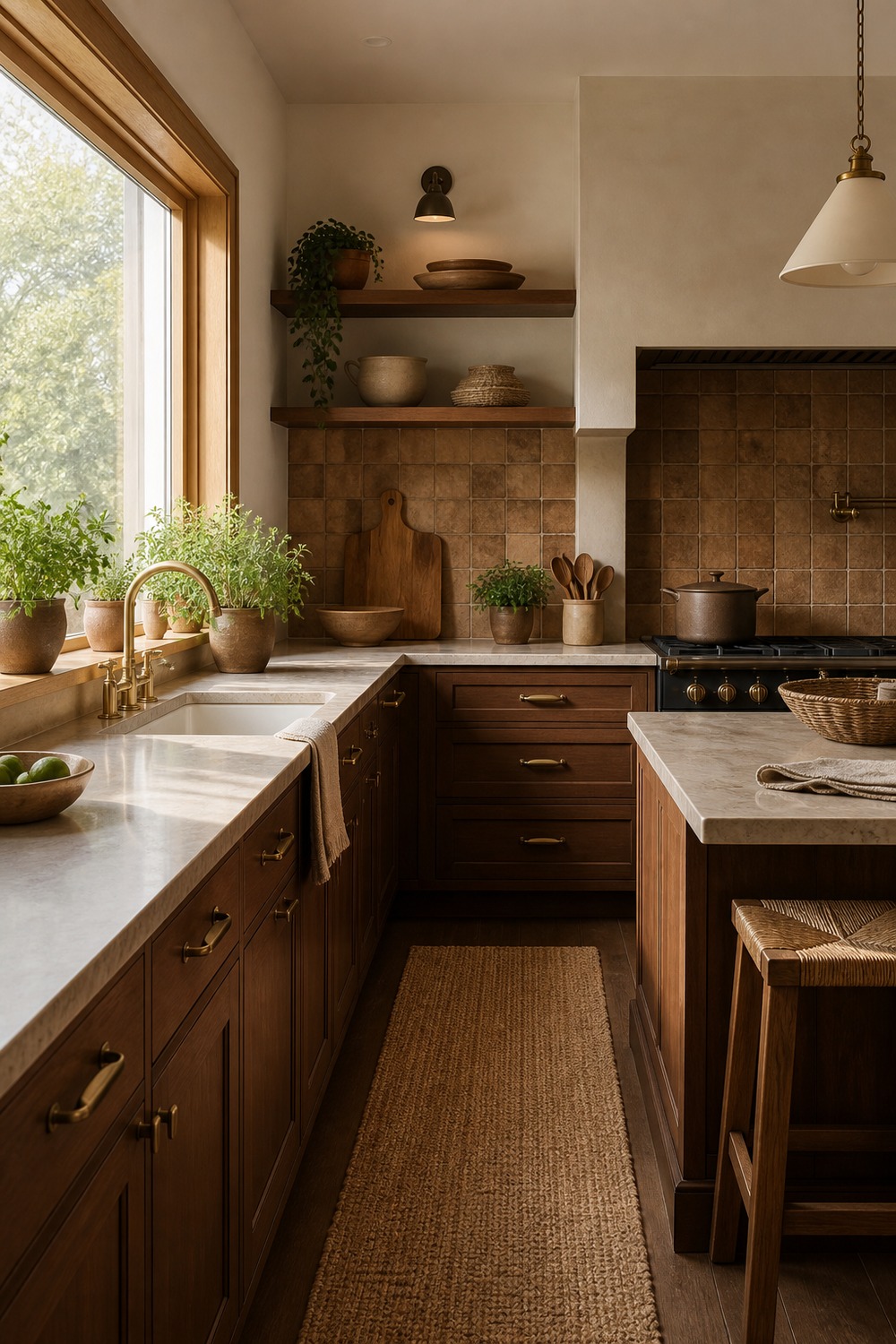
The window is what keeps this darker tile moment fresh. Brown cabinets and tile bring the warmth, while the daylight and oak sill stop the color scheme from feeling closed in.
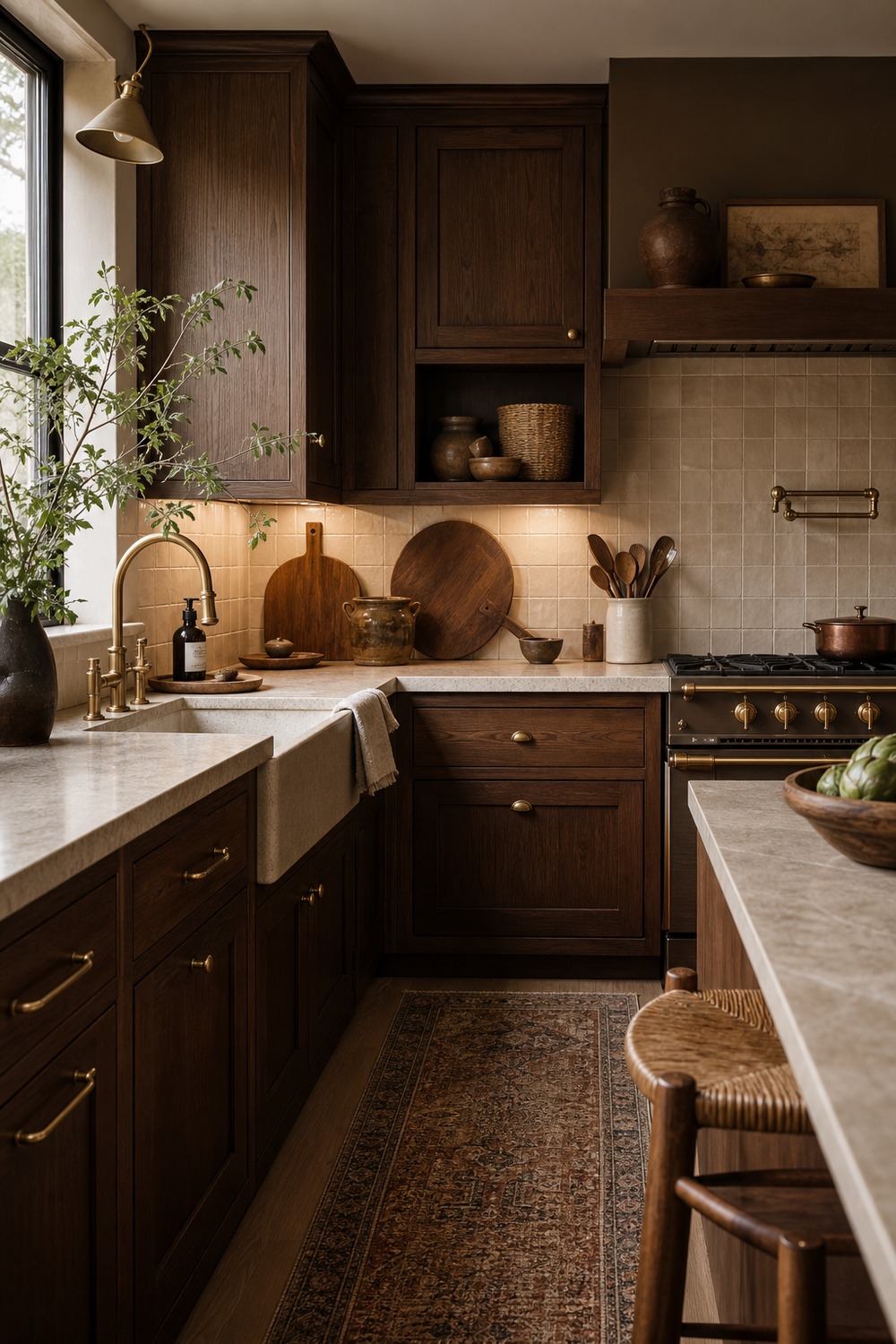
This moody corner has the kind of depth that works when the lighting is handled well. The cream tile, brass faucet, and cutting boards give the dark brown cabinets enough texture to feel inviting.
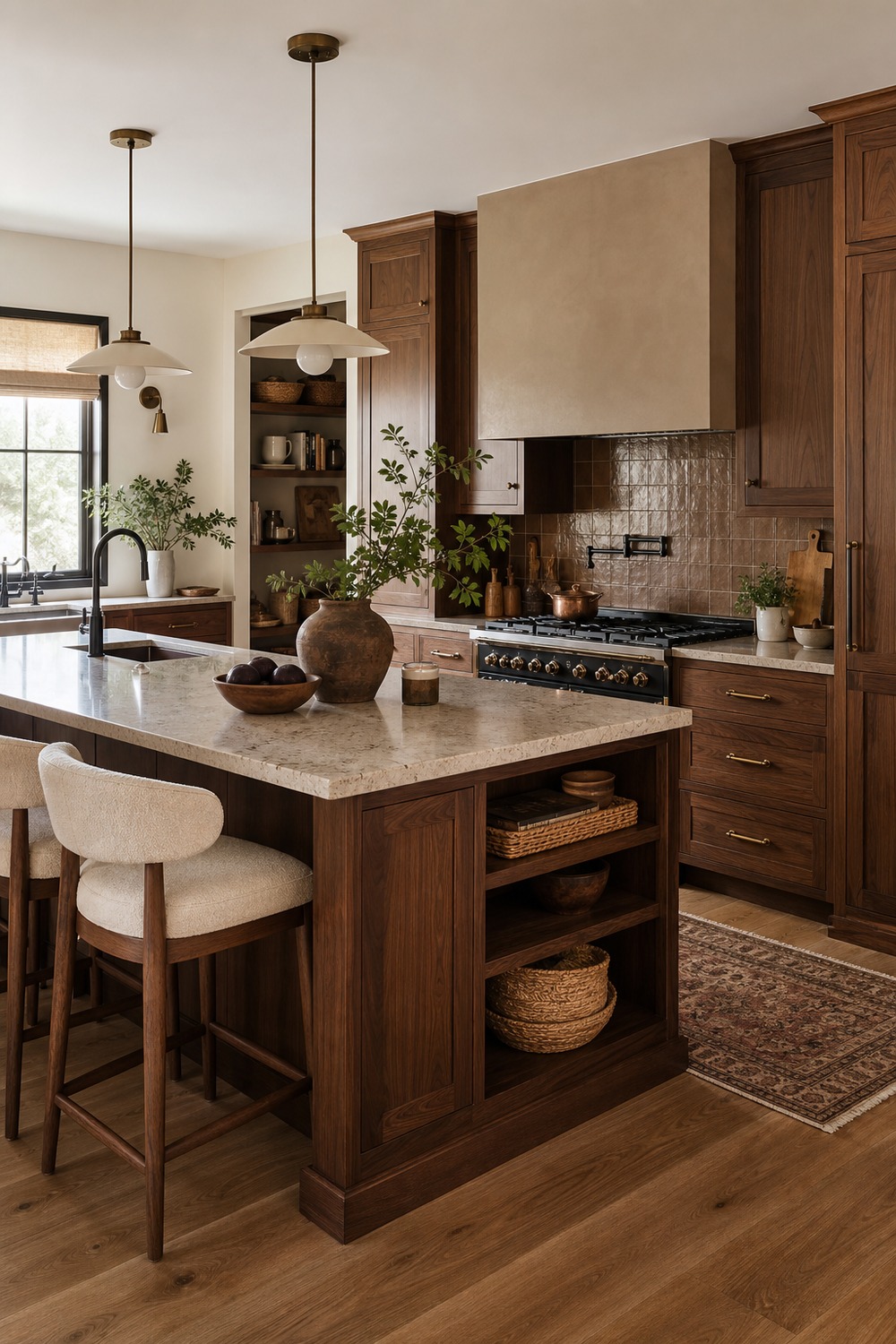
The island seating makes the brown palette feel social instead of formal. Cream stools, pendant lights, and a pale stone top keep the center of the room bright enough for people to actually gather there.
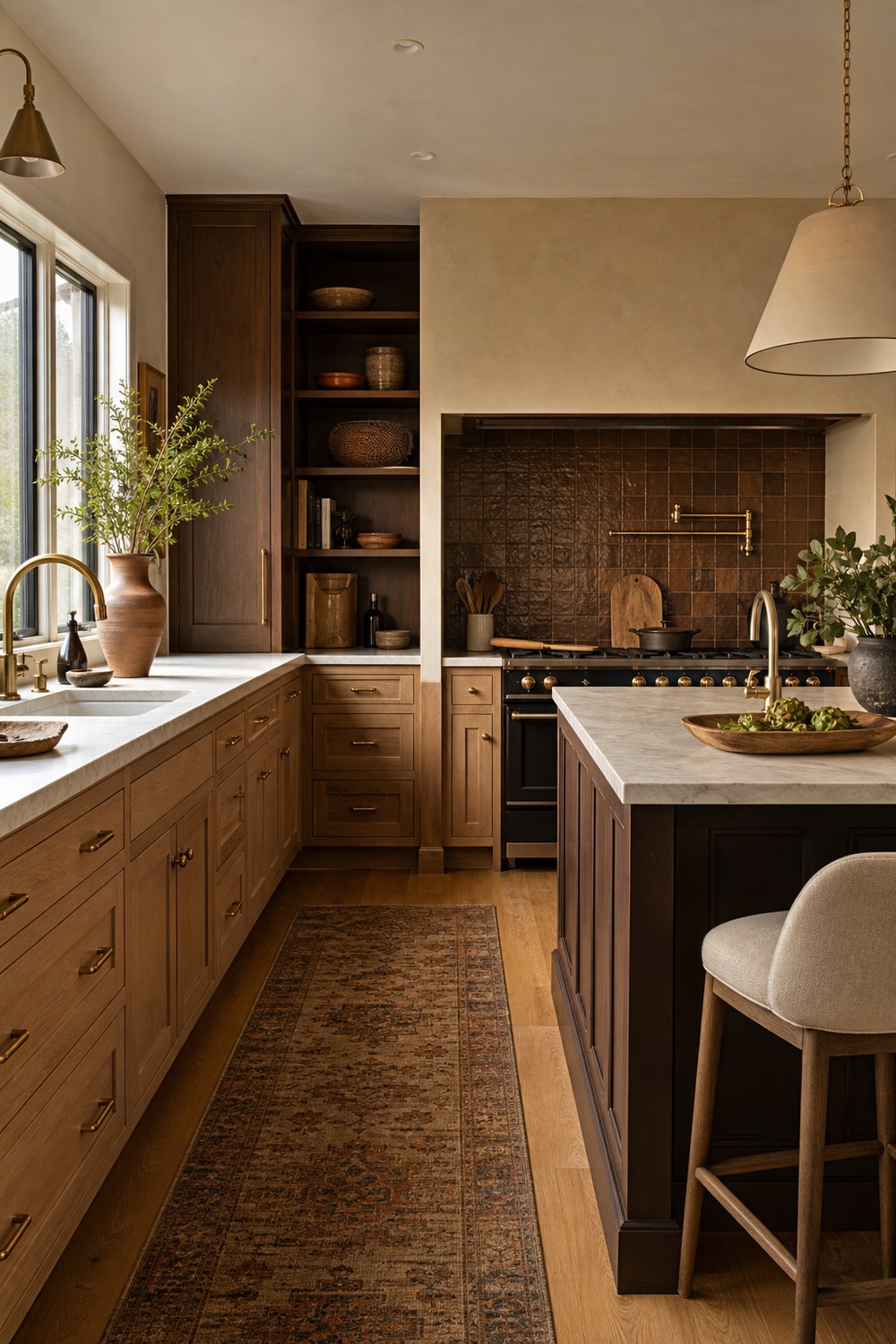
Light oak and mocha are a nice pair because they give the kitchen two different brown notes. The softer stools and cream stone keep the darker island from overpowering the rest of the room.
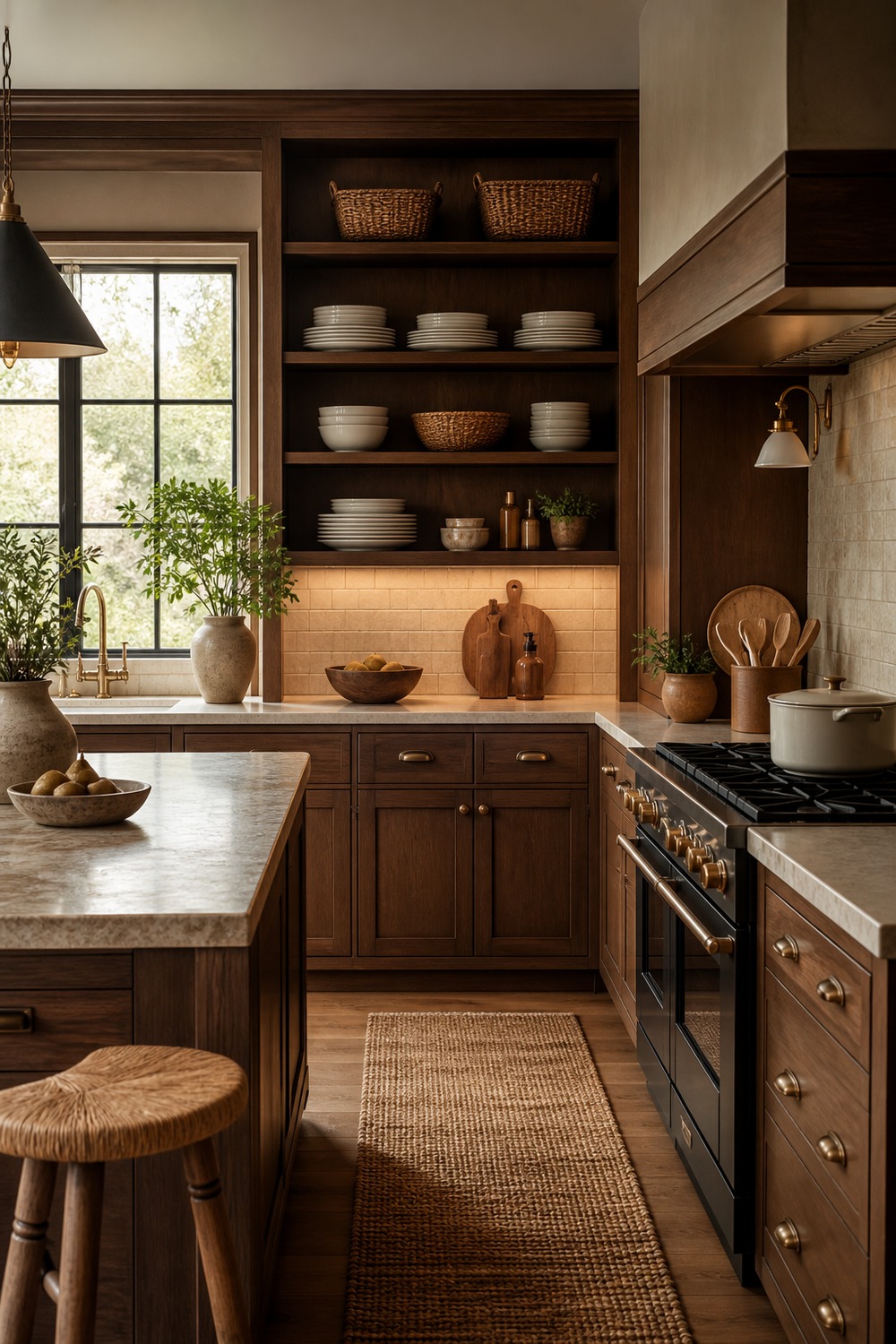
Dish storage can become part of the color scheme when it is this visible. The brown cabinet wall, open shelf, and plain white dishes add rhythm without needing a lot of extra decor.
Brown works best when it has something to play against. A little cream, brass, tile, lighter oak, or woven texture can make the whole kitchen feel warmer without making it feel heavy.

I work in tech, but my taste in design is straight out of a slow European village. Give me arches, aged brass, and a room that smells like books and coffee. That’s my kind of home.