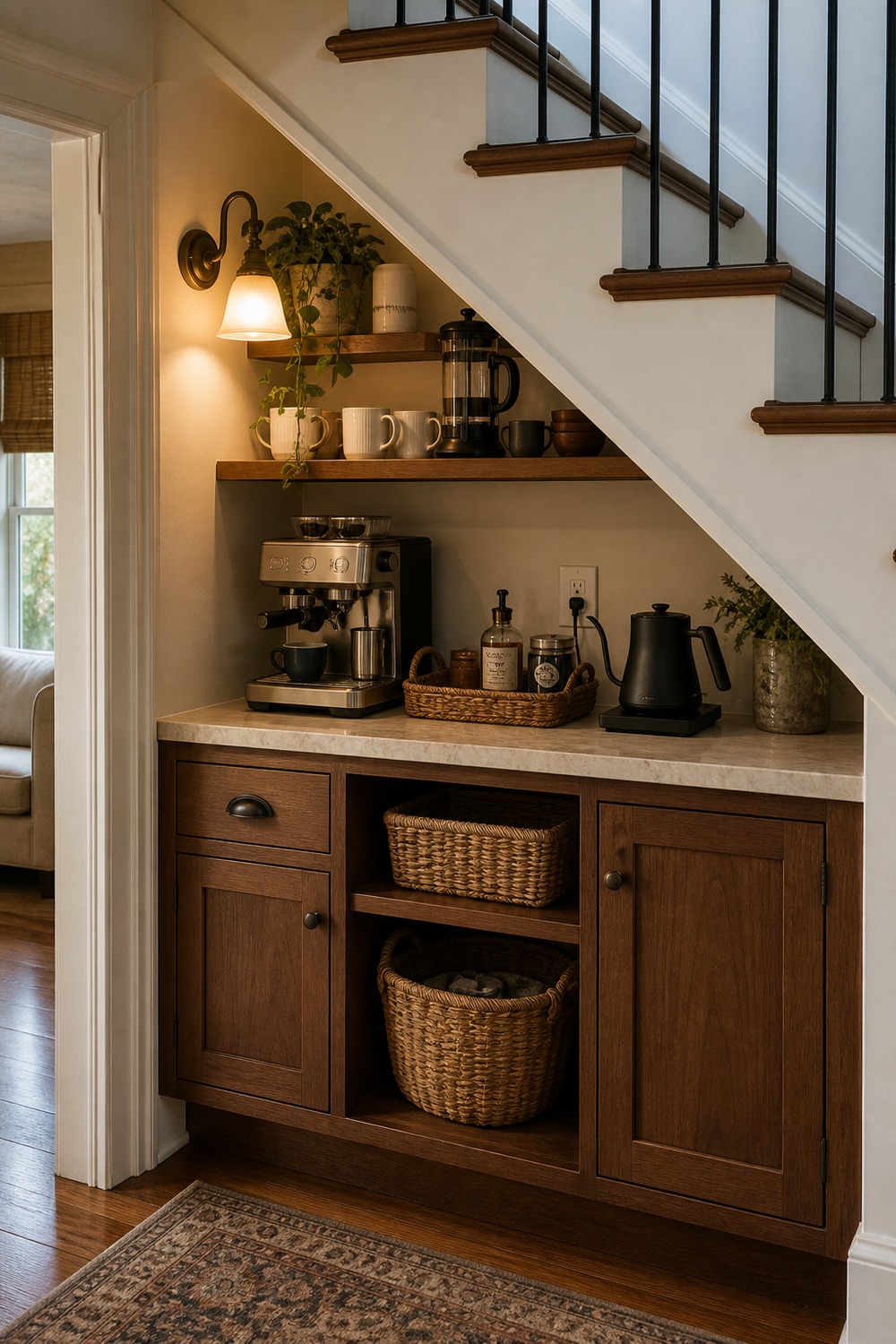
The sloped cabinet makes the staircase angle feel like part of the design instead of wasted space. I like the mix of closed storage, open mugs, and a real counter because the coffee maker has a home without leaving every bag and filter on display.
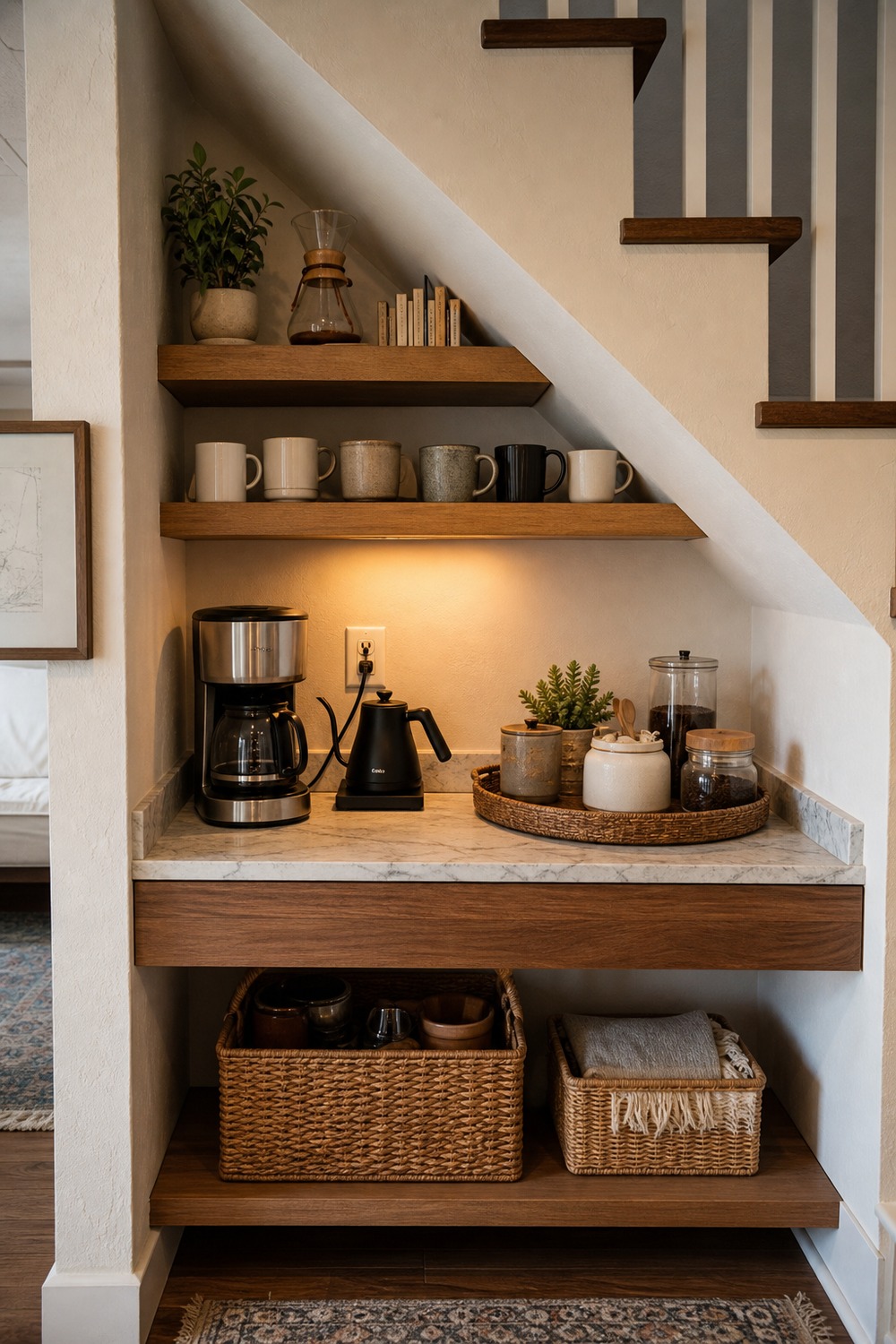
Floating shelves are doing a lot here without making the nook feel heavy. The mugs stay easy to grab, the baskets soften the hard stair line, and there is still enough counter depth for pouring coffee without knocking into a row of decor.
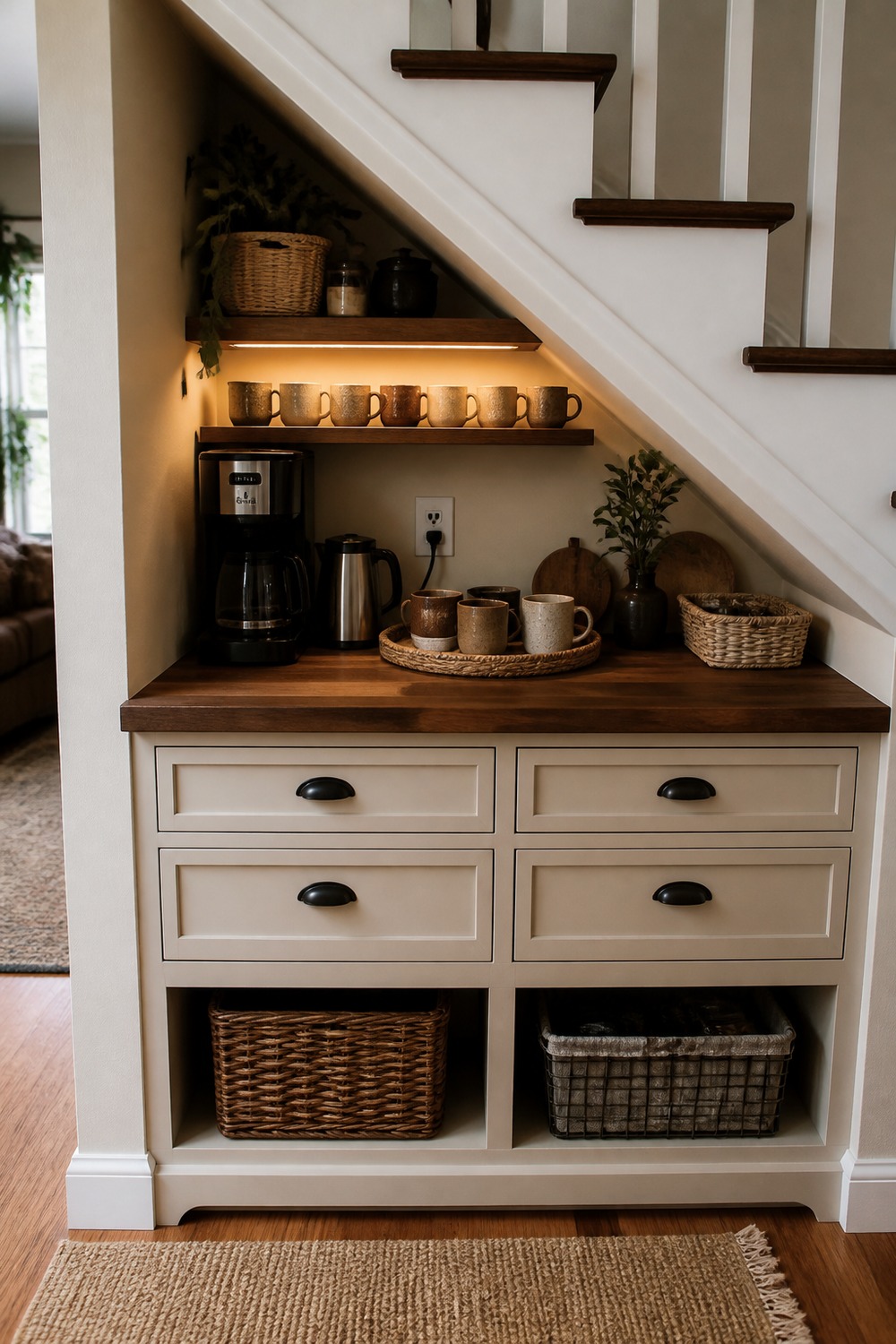
Drawers make this one feel especially livable. It has the pretty shelf moment on top, but the everyday things like pods, napkins, spoons, and backup mugs can disappear below instead of turning the whole counter into storage.
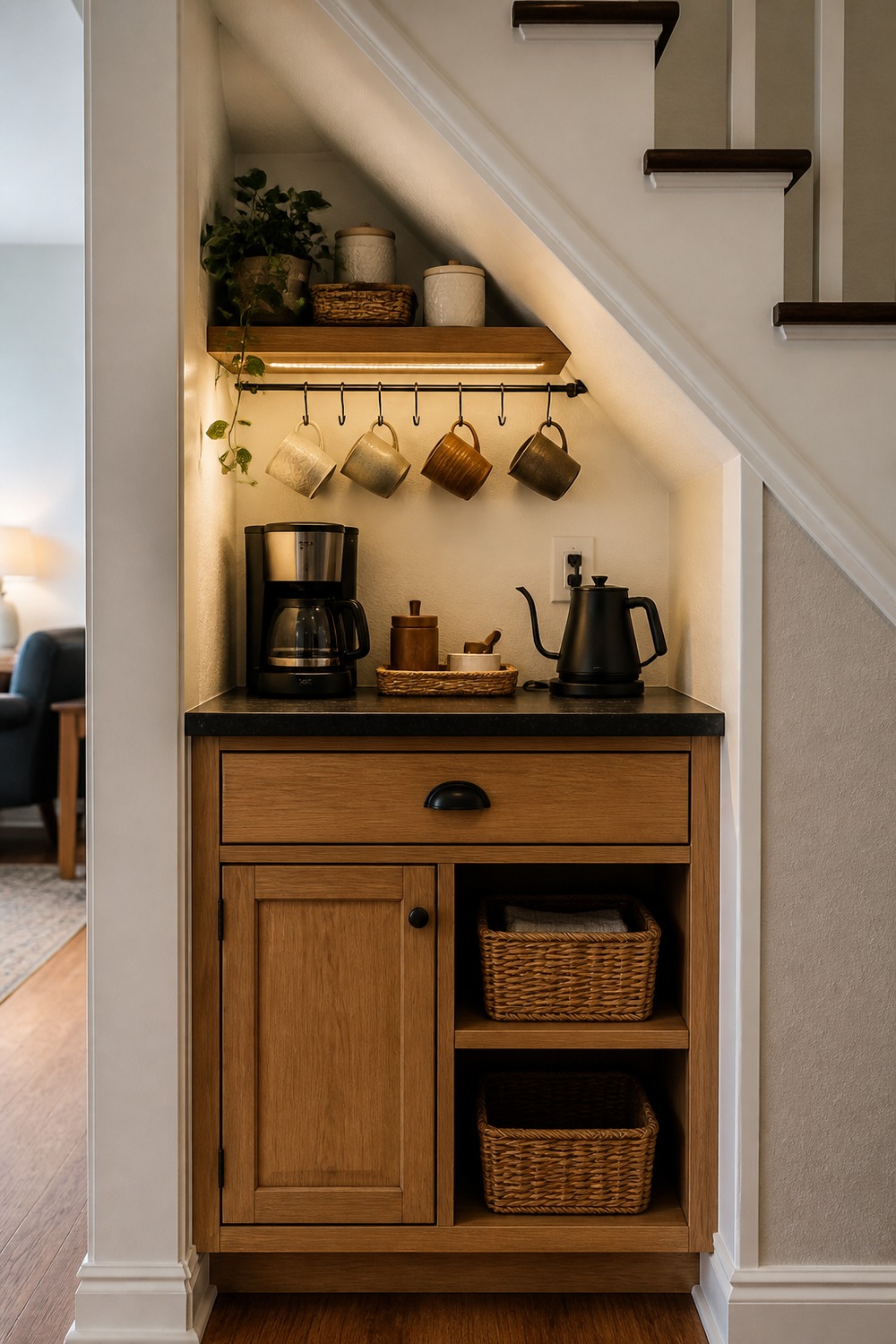
This tiny alcove works because it does not pretend to be a full kitchen. A narrow cabinet, a small machine, and a few warm shelf details are enough to make the stair wall feel useful while still leaving the walkway clear.
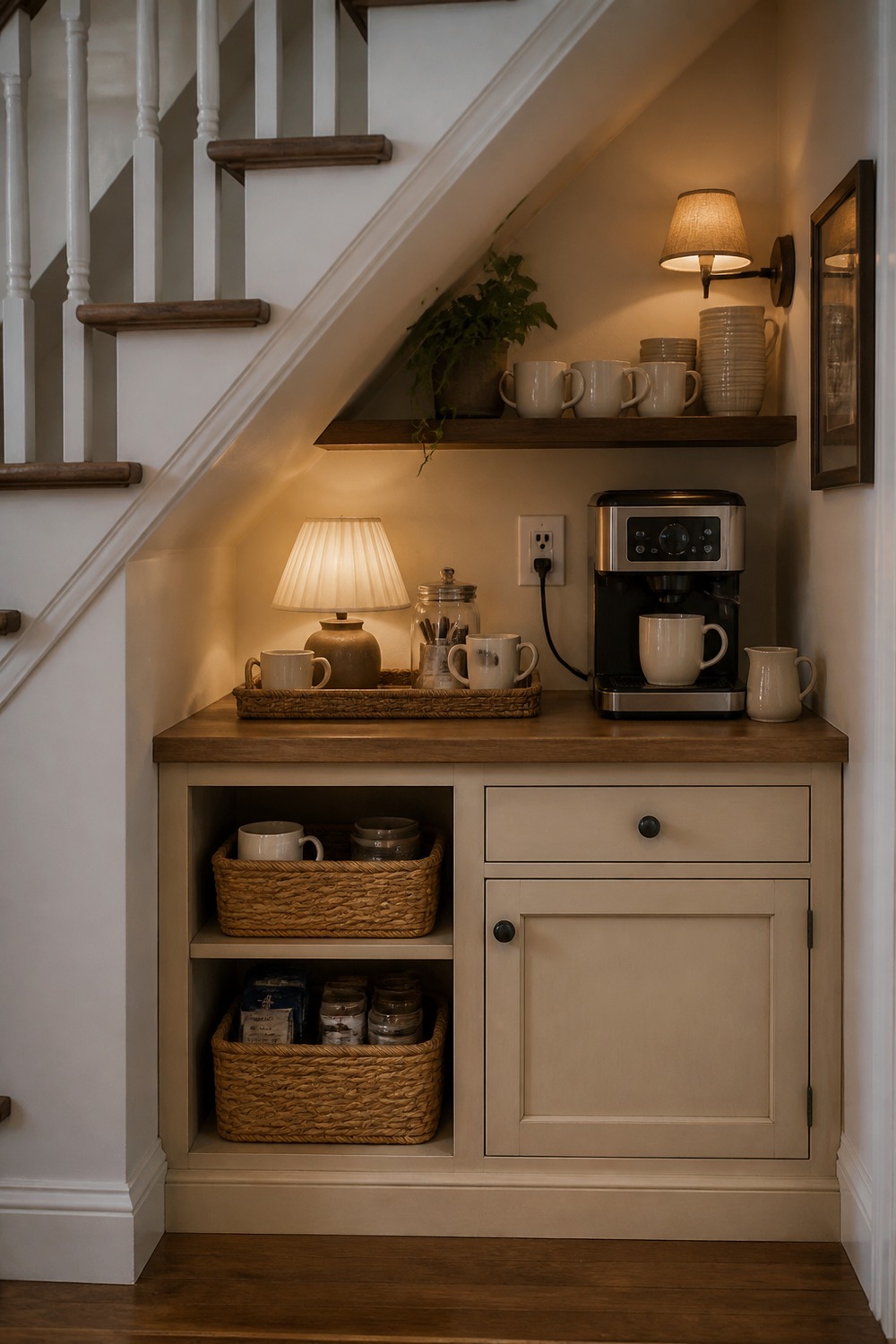
The lamp is the detail that makes this feel less like an appliance corner. That small pool of light helps the coffee station feel intentional at night, and the mix of baskets and cups keeps it from looking too showroom-perfect.
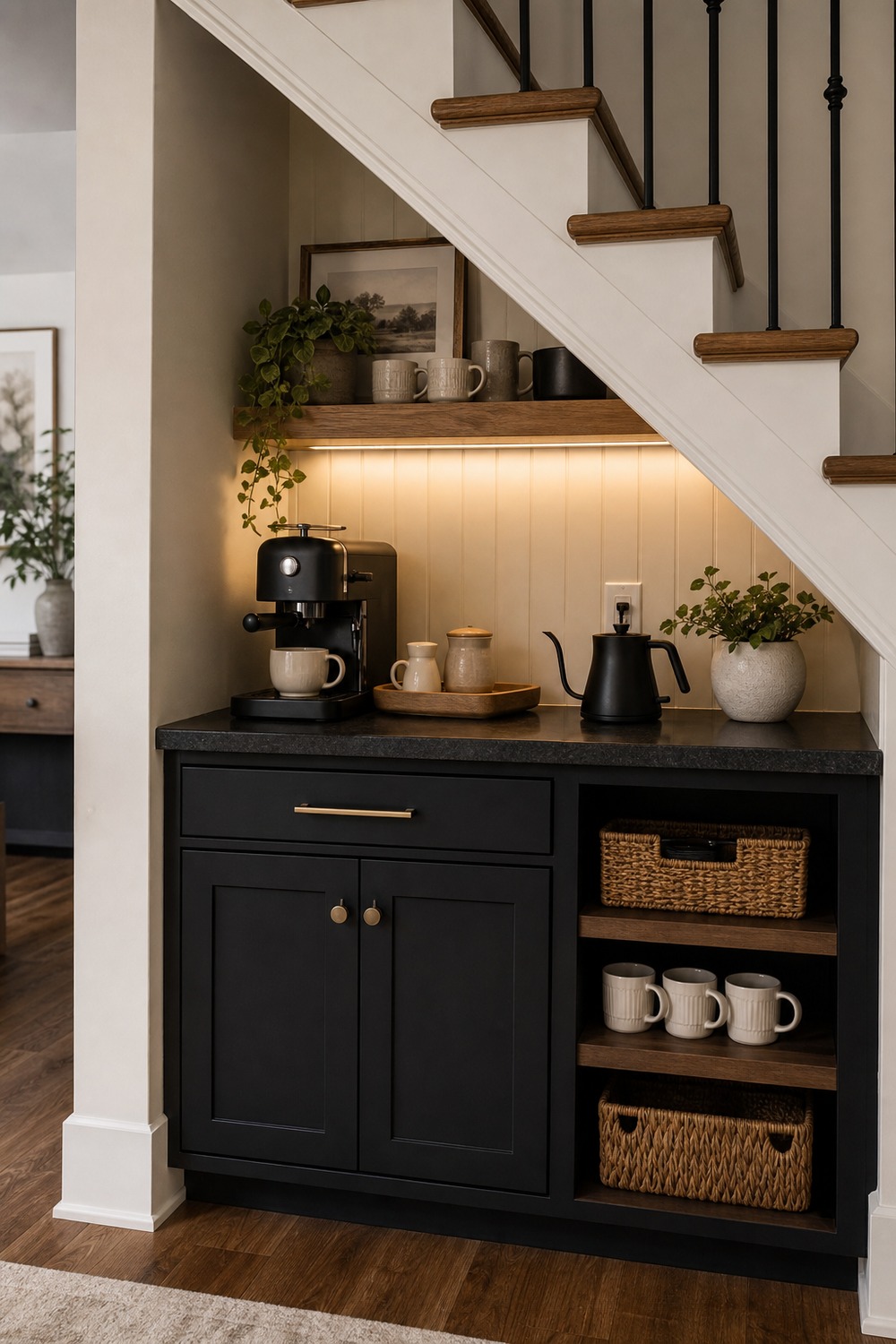
Black cabinetry gives this under-stair coffee bar a sharper, more built-in look. The dark base hides visual clutter well, while the lighter counter and shelves keep the whole setup from feeling like a shadowy little cave.
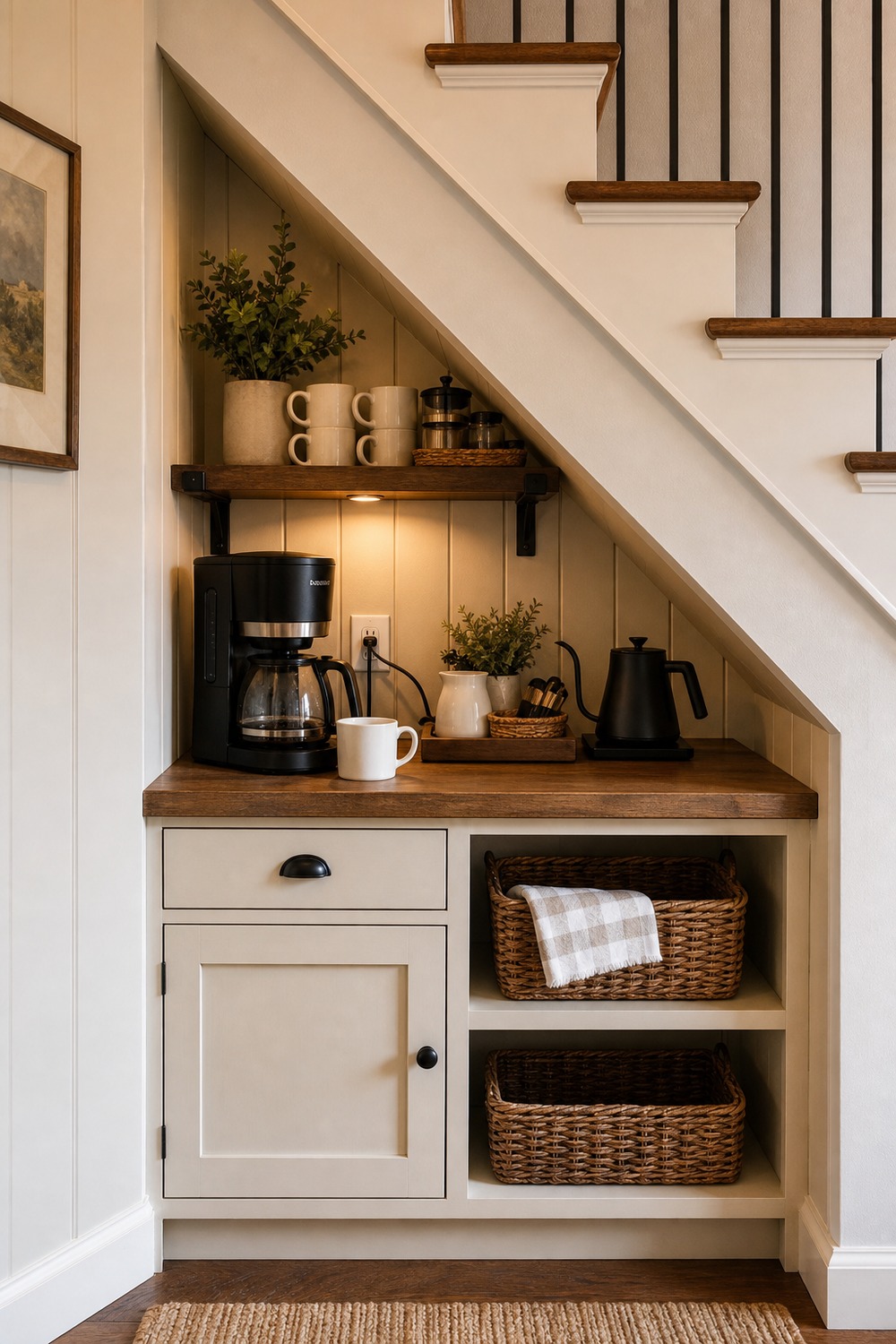
This farmhouse nook has that easy morning feeling without going overboard on signs or props. The wood tones, baskets, and simple counter setup make the awkward stair triangle feel like a small pantry corner that actually gets used.
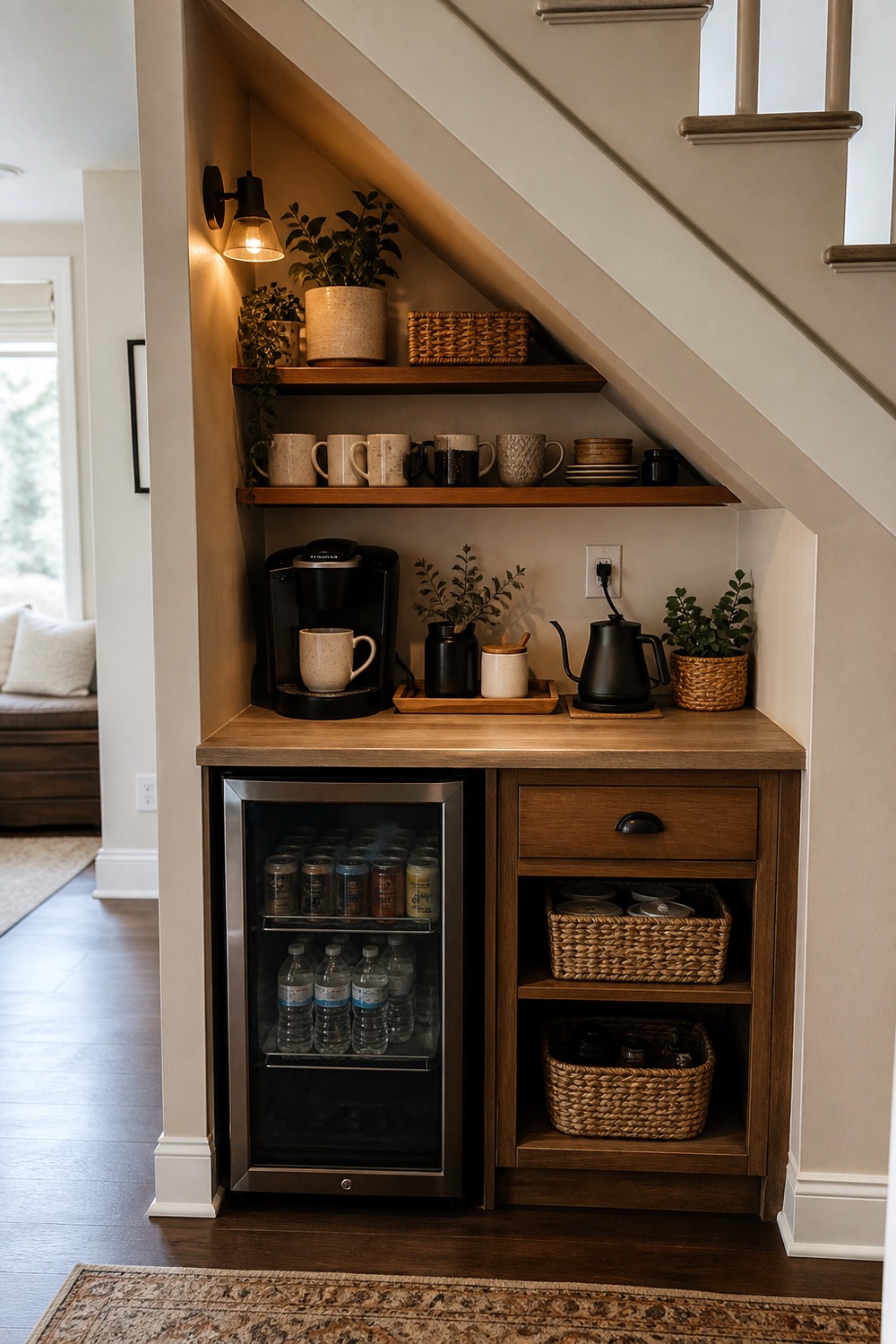
Adding a mini fridge makes this feel like a real drink station, not just a coffee machine tucked somewhere random. It would be handy for creamers, cold brew, or bottled drinks, especially if the stairs sit near a living room or guest area.
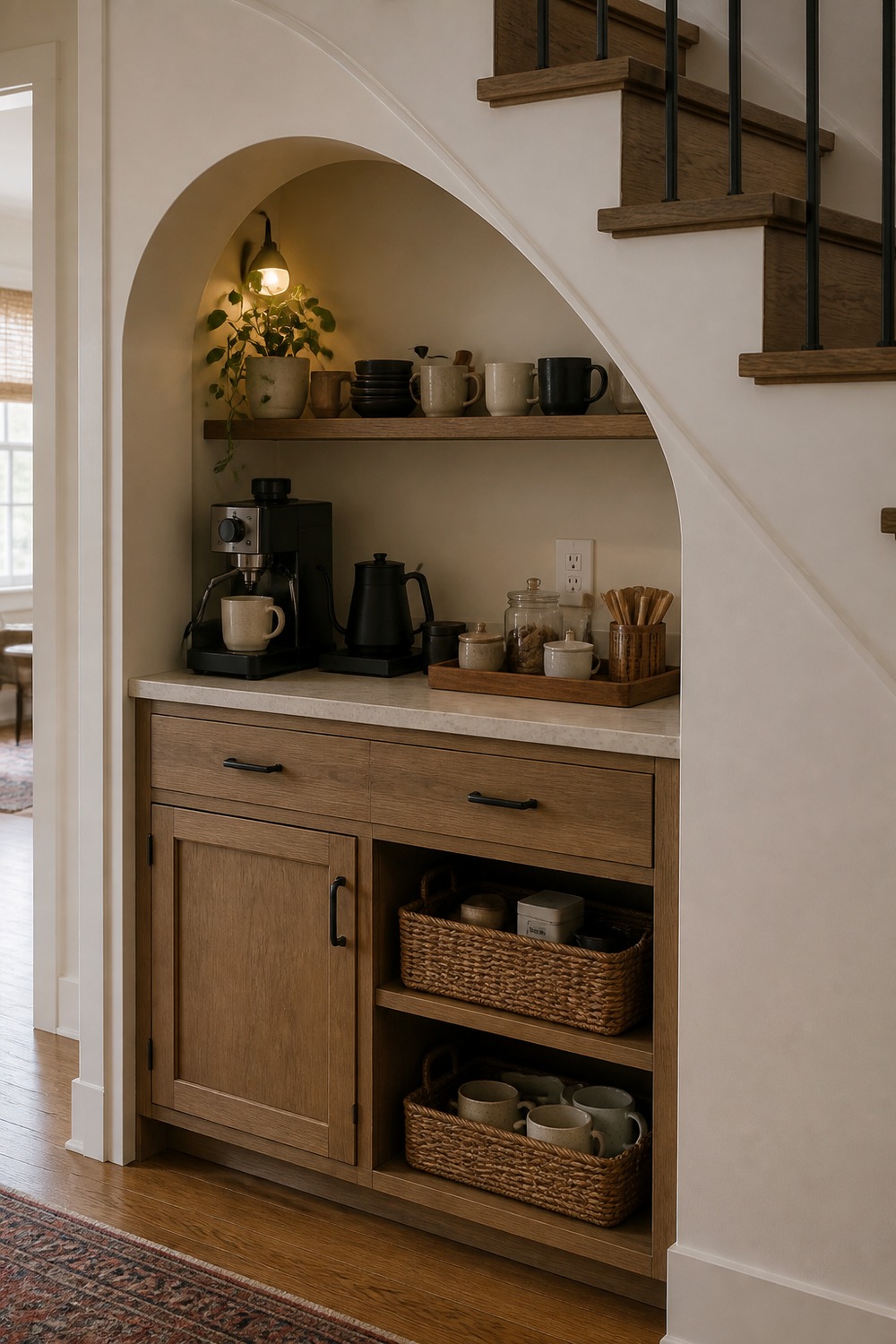
The arched niche softens the whole stair corner in a really pretty way. I like how the curve gives the coffee bar a finished frame, while the counter still stays practical enough for mugs, jars, and the machine.
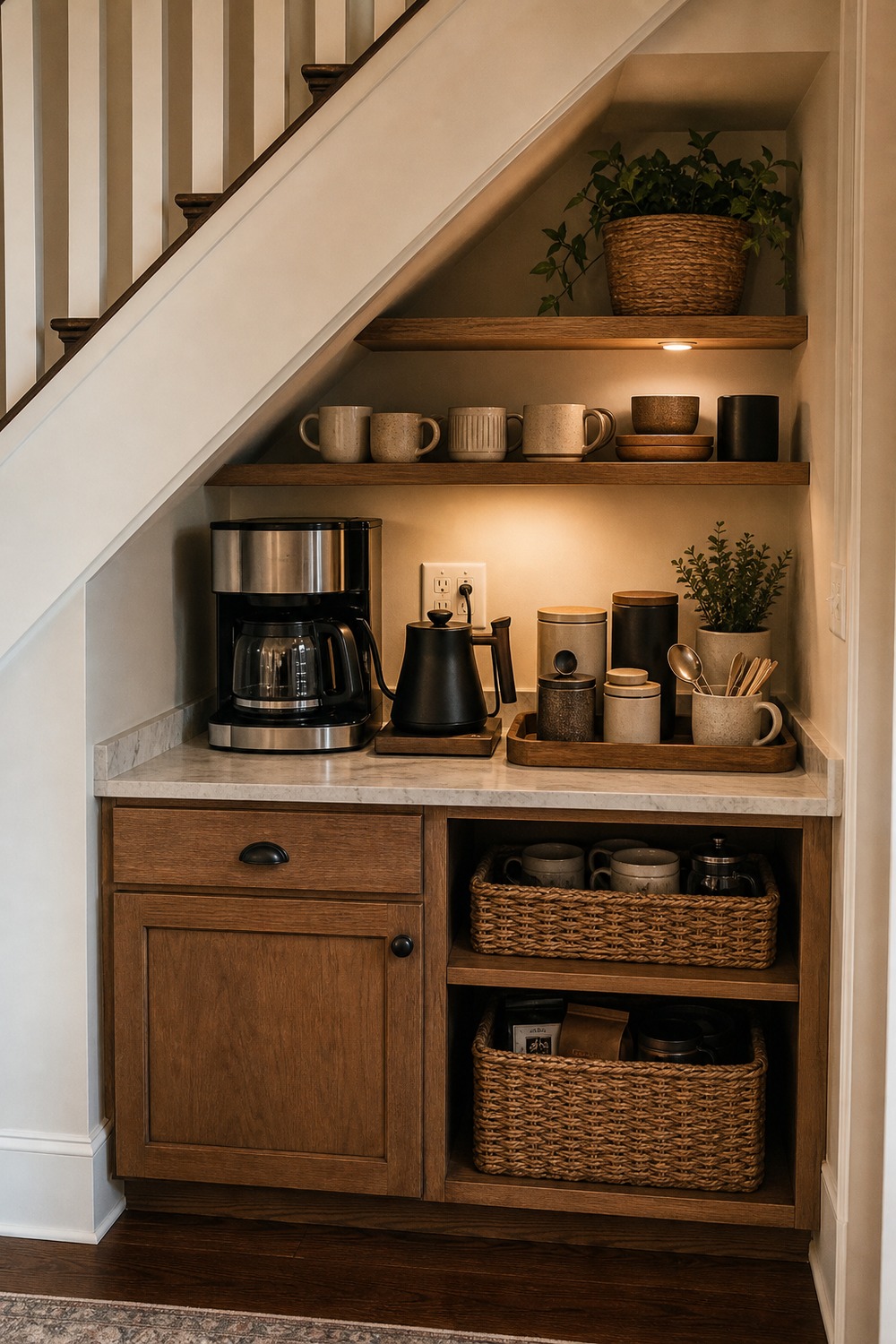
This coffee-and-tea setup feels useful for a house where not everyone drinks the same thing. There is room for a kettle, cups, and small canisters, so the nook works more like a little beverage stop than a one-appliance display.
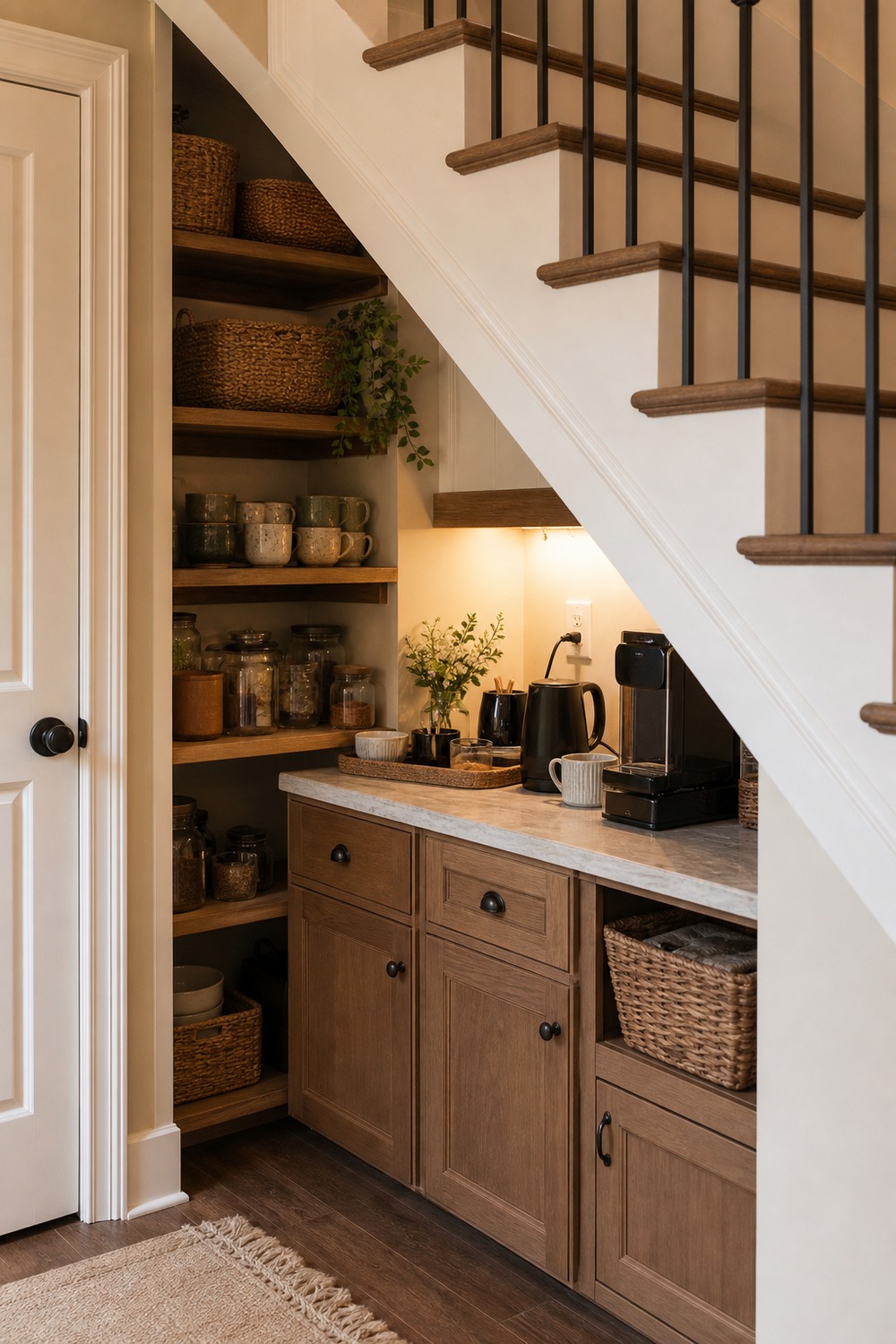
The pantry-style storage is what makes this one smart. It gives all the extra boxes, syrups, mugs, and filters somewhere to go, which is usually the part that makes a coffee bar look messy after the first week.
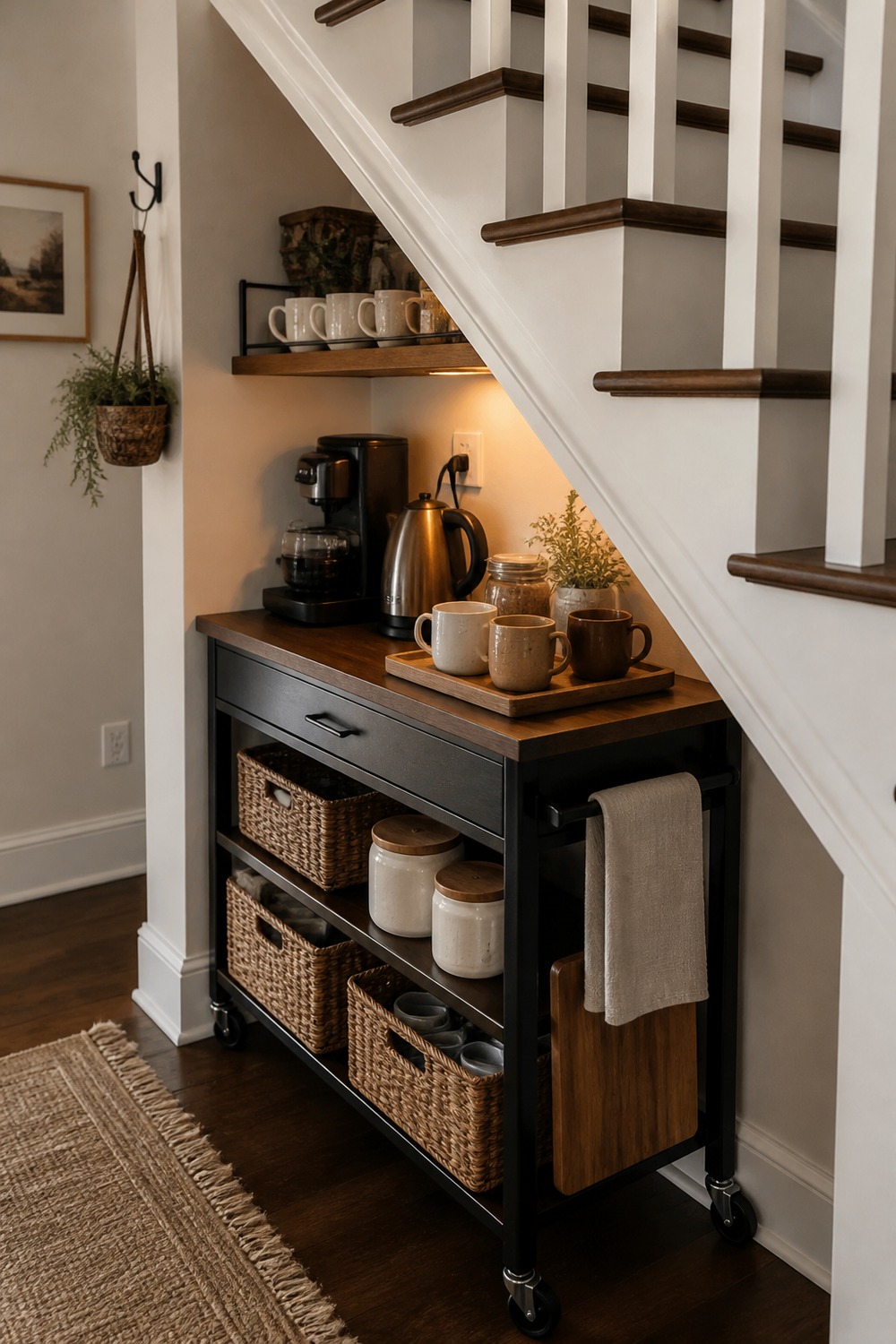
A tucked-in cart is a nice option when built-ins are not happening. It still uses the stair space, but it feels flexible enough for a rental or a house where the coffee zone might need to move later.
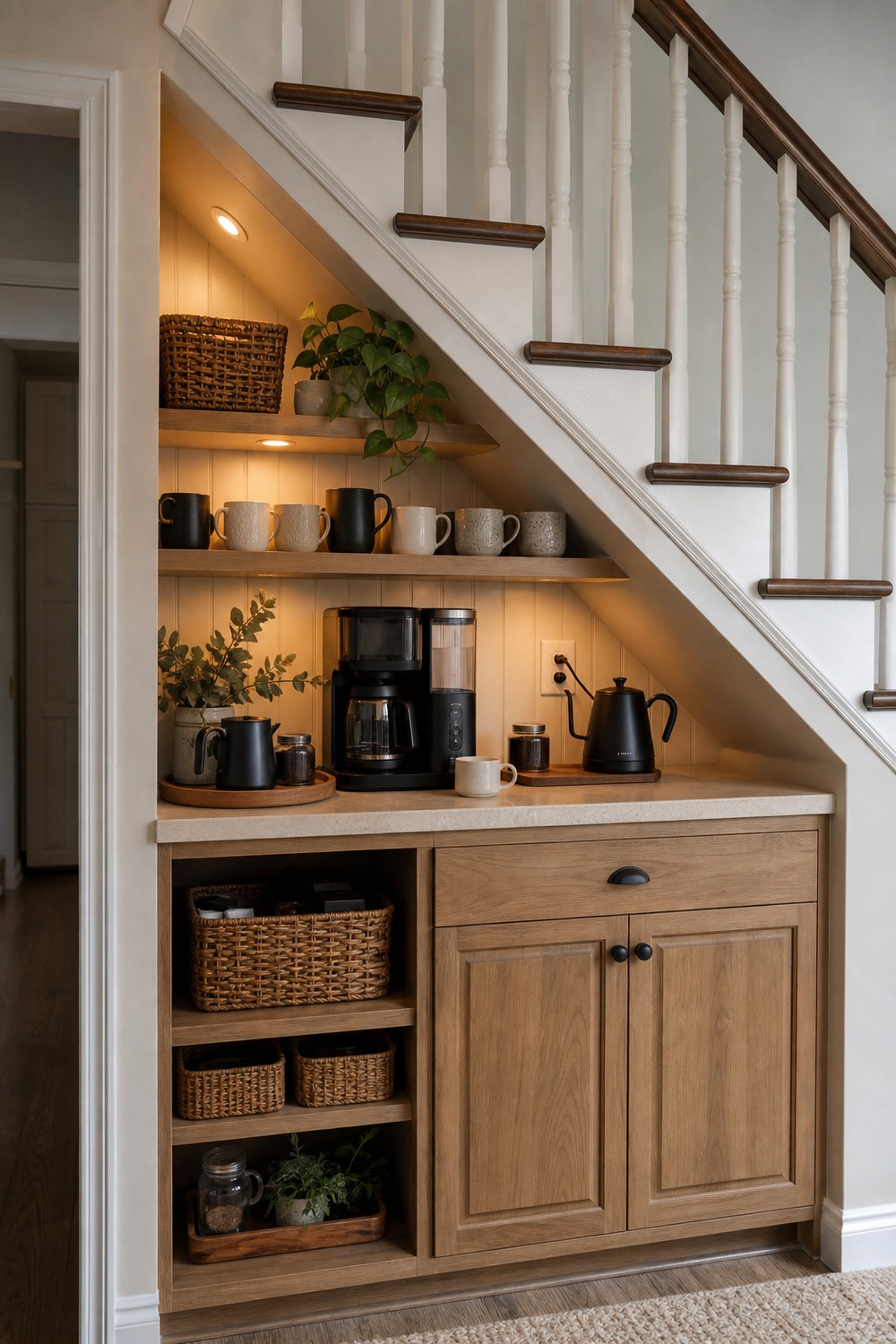
This has the calm look of a custom built-in without feeling too precious. The shelves give the eye something pretty to land on, and the cabinet base keeps the everyday supplies from competing with the stair shape.
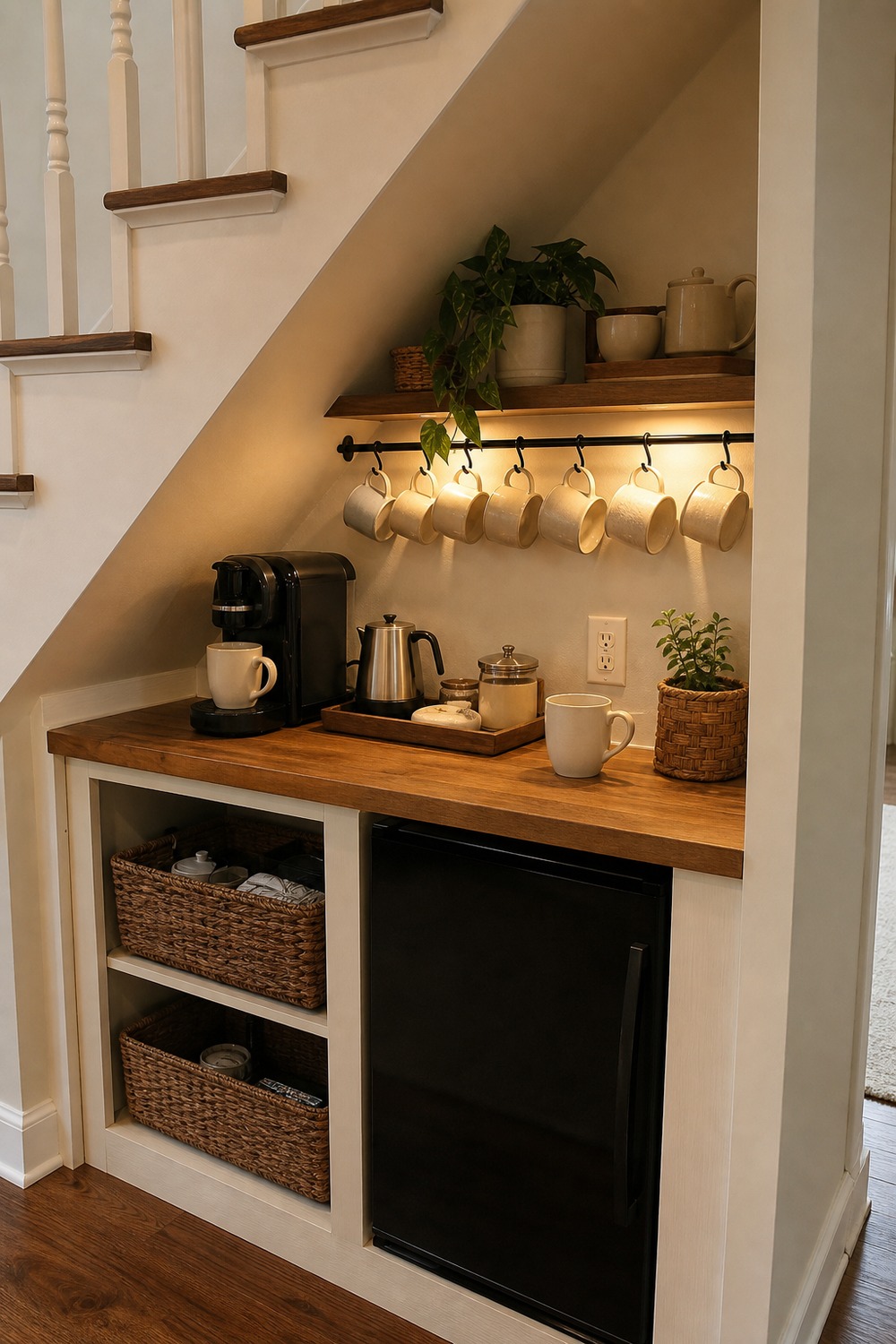
The mug rail makes the corner feel personal without filling every shelf. Hanging the mugs also frees up cabinet space, which matters in a small under-stair setup where every inch has to earn its place.
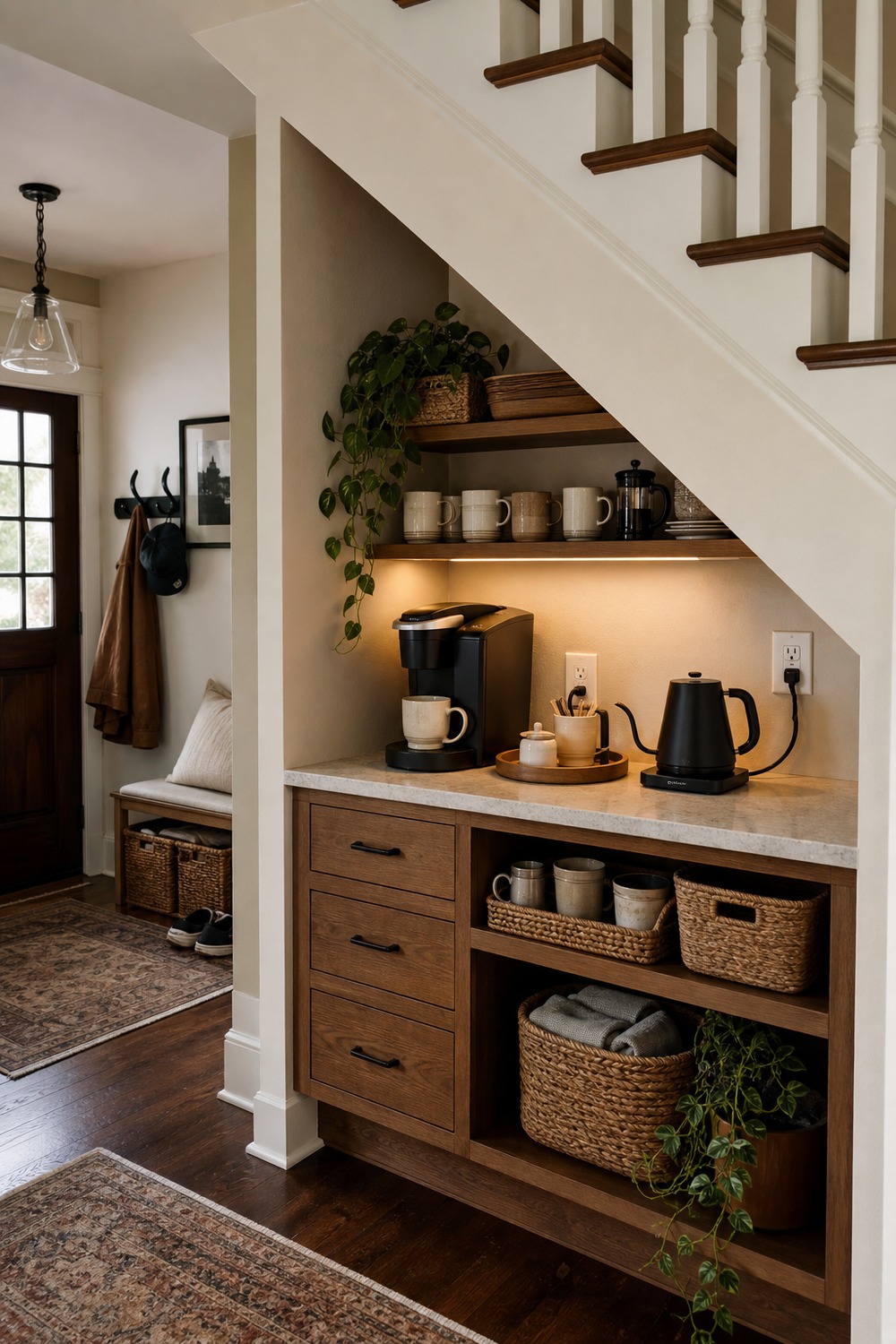
I like this near-entry version because it would be easy to use on the way out the door. The trick is keeping the counter tight and tidy so it feels like a helpful stop, not another drop zone for keys and mail.
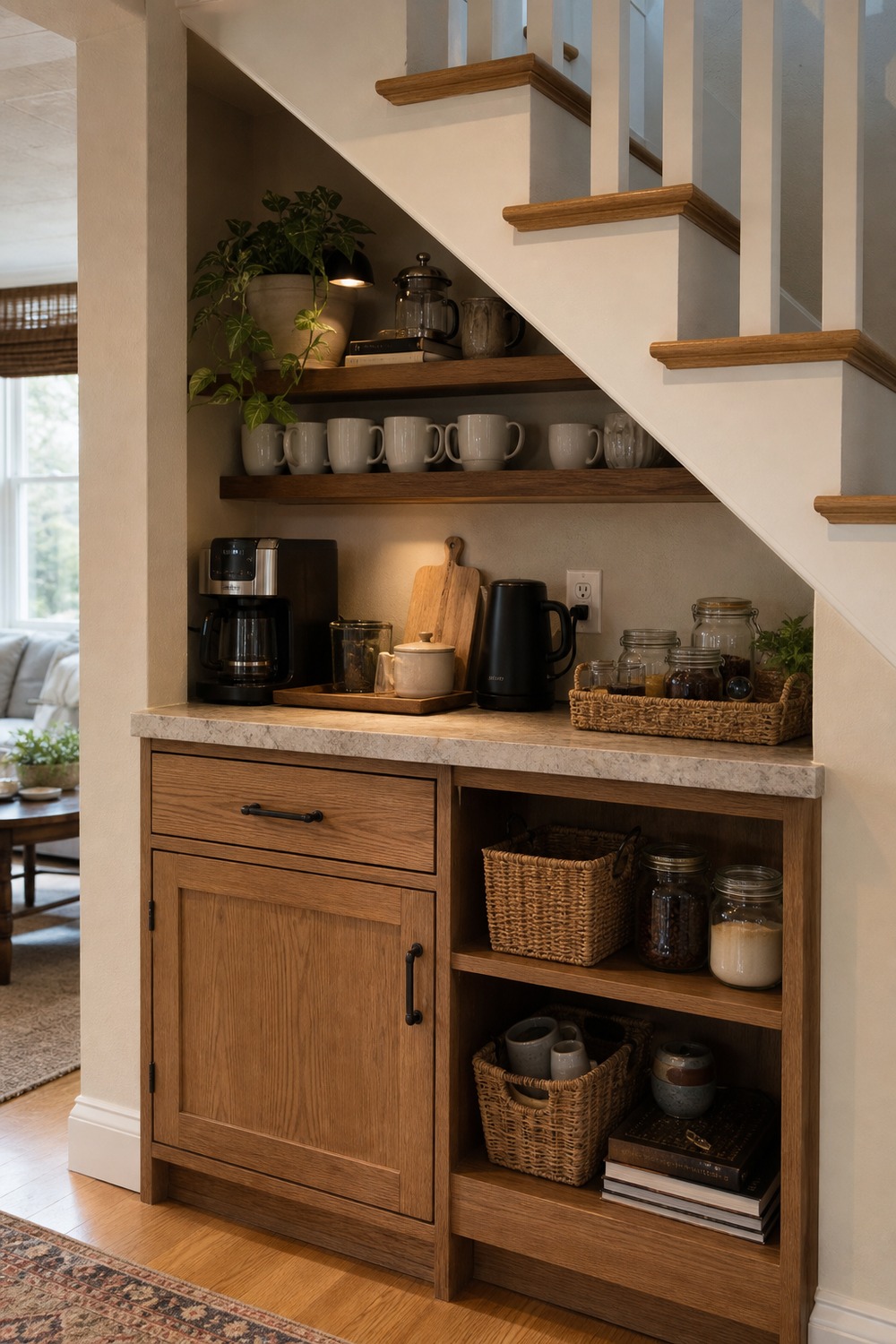
The neutral cabinet keeps the stair nook quiet, which is helpful when the space is already visually busy. Warm wood, simple mugs, and a clean backsplash give it enough texture without making the small corner feel crowded.
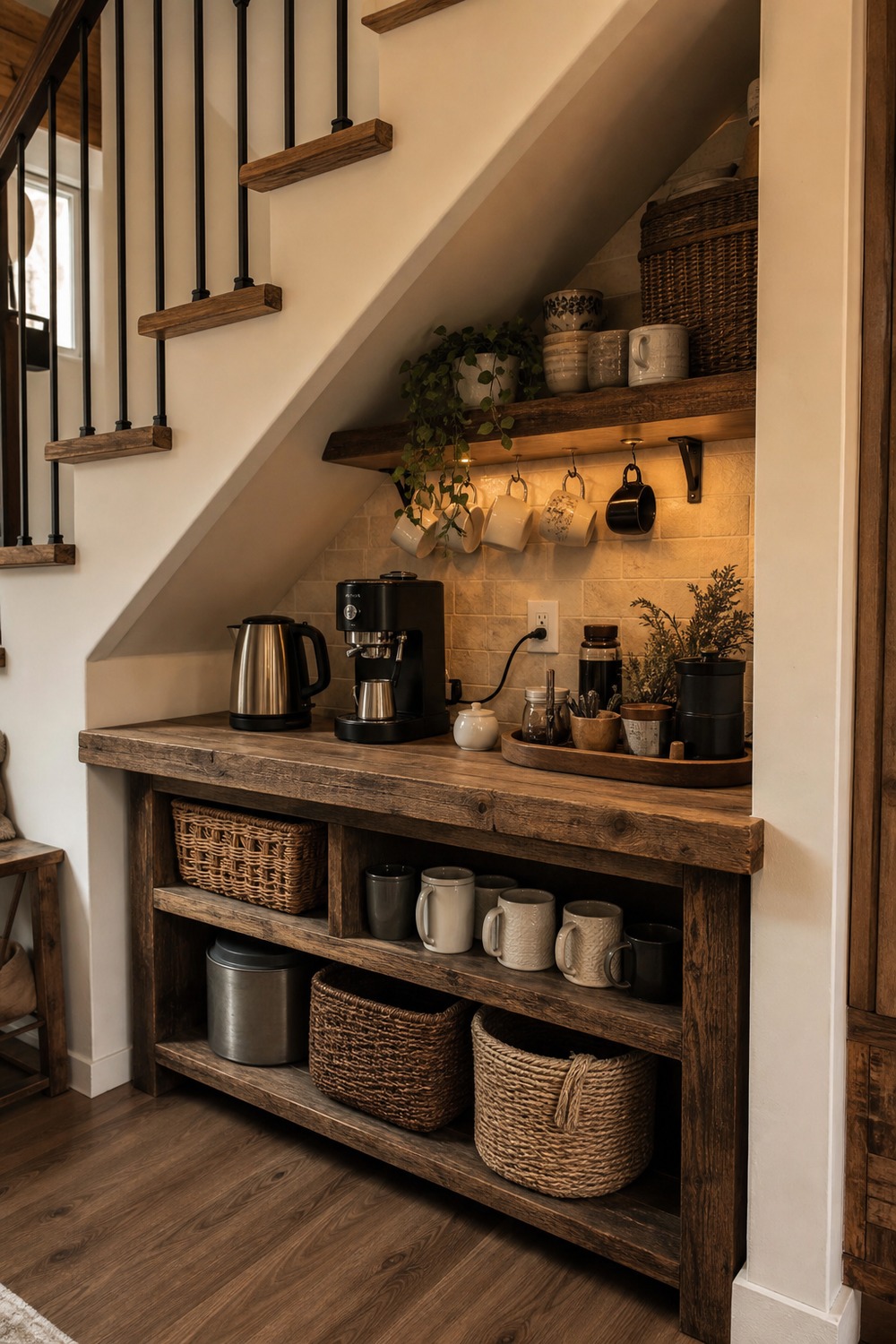
Rustic wood makes the under-stair angle feel warmer and less awkward. This one would be easy to style with stoneware mugs, a small tray, and a few jars, but the materials are strong enough that it does not need much fuss.
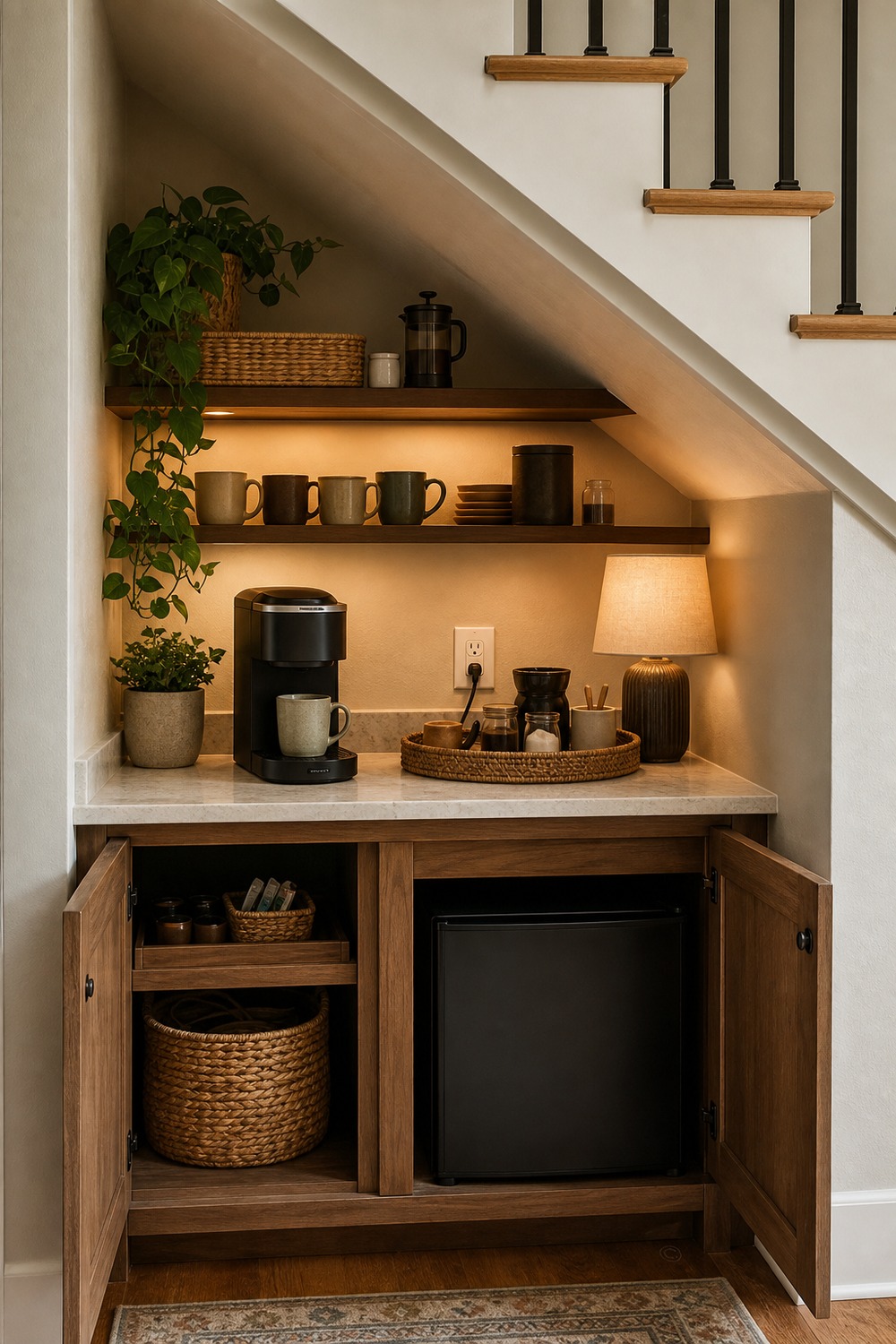
An appliance-garage setup is such a good answer for coffee clutter. The machine can stay plugged in and ready, but the doors help hide the bulky parts when the stairs are visible from the main room.
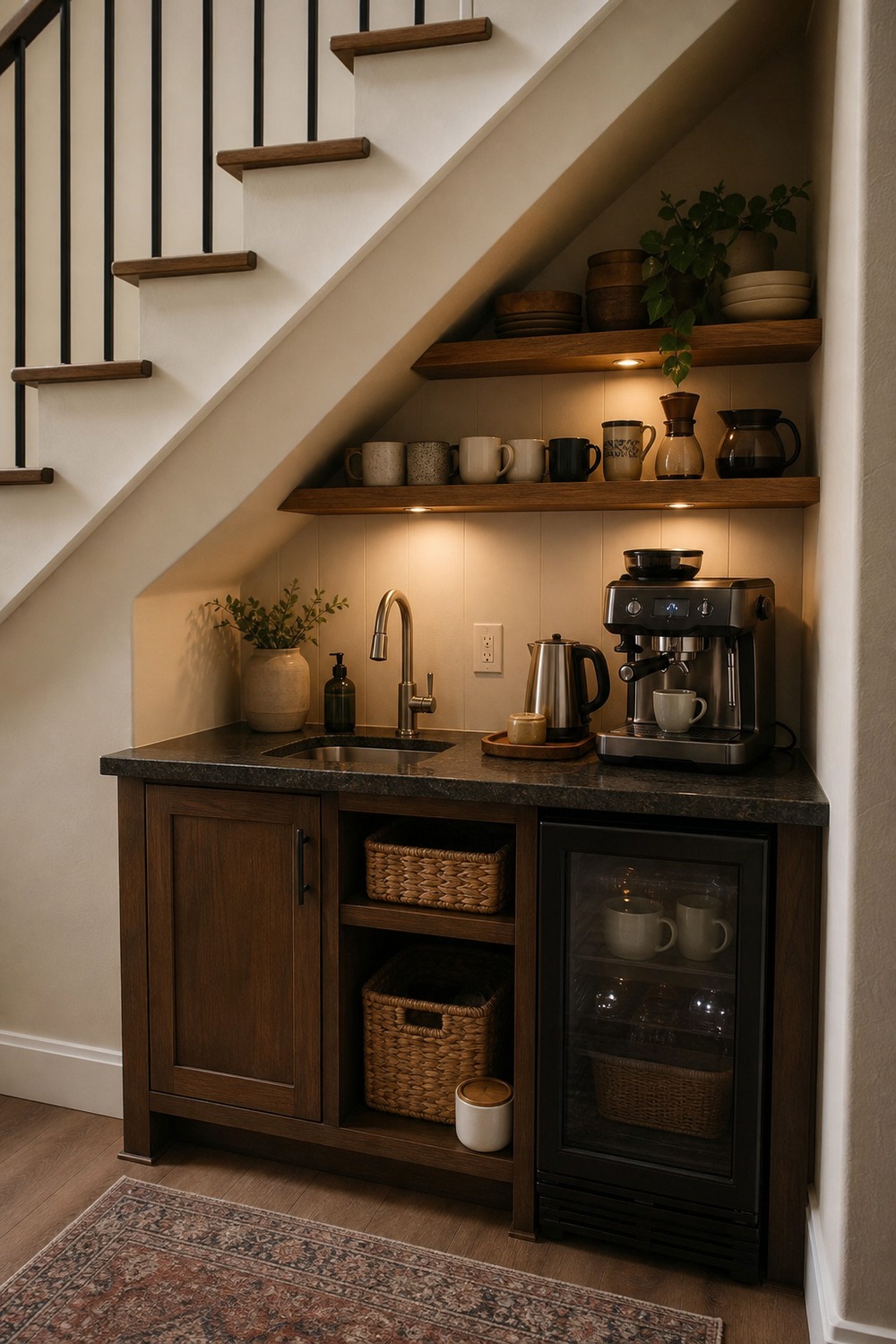
A small sink takes this from cute coffee corner to genuinely useful station. It would make rinsing cups and filling the machine easier, and the darker cabinetry helps all the practical plumbing and storage feel more polished.
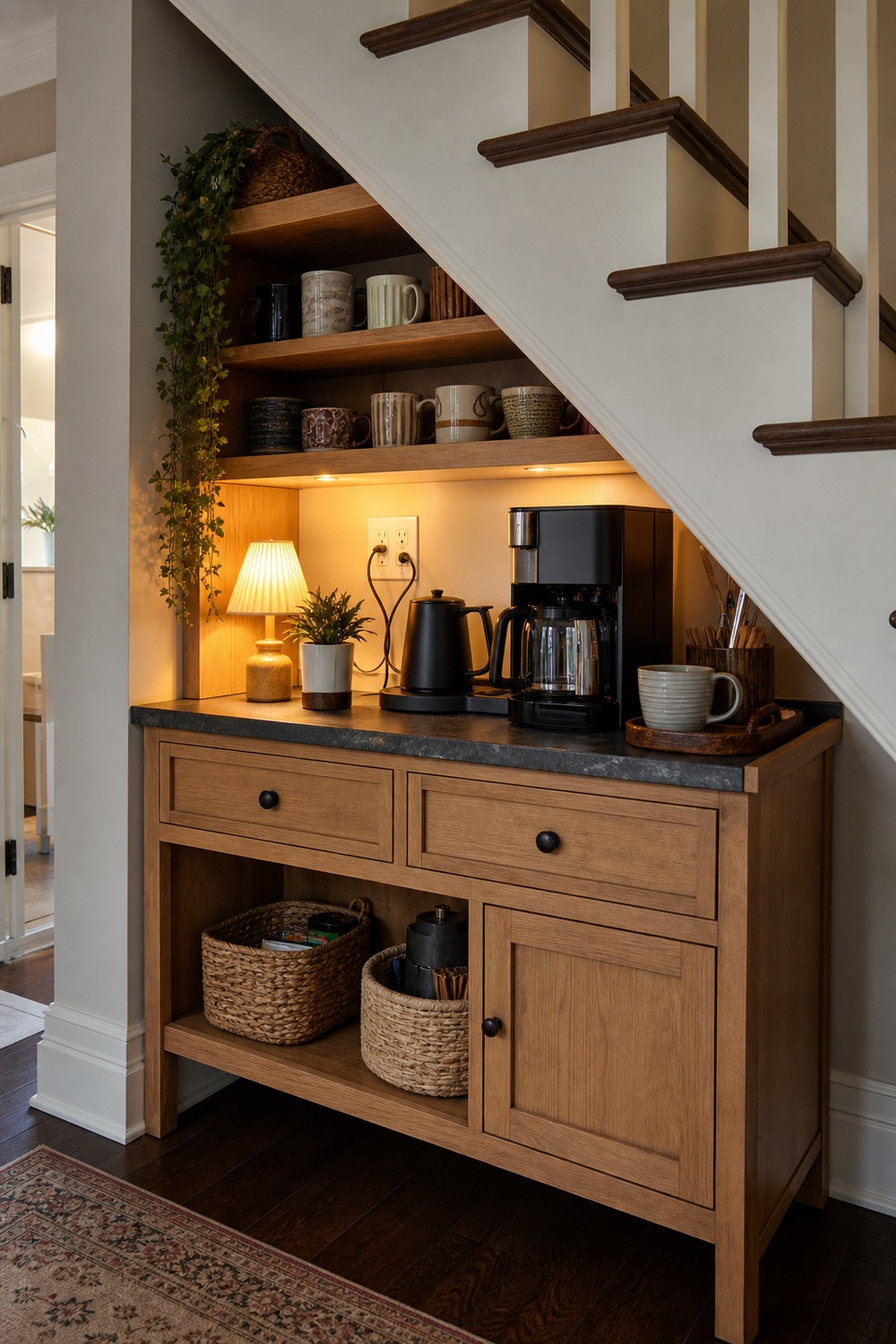
The hutch shape works nicely under stairs because it gives the nook a furniture-like outline. It feels collected and homey, but the closed lower section still handles the less-pretty stuff that usually comes with coffee supplies.
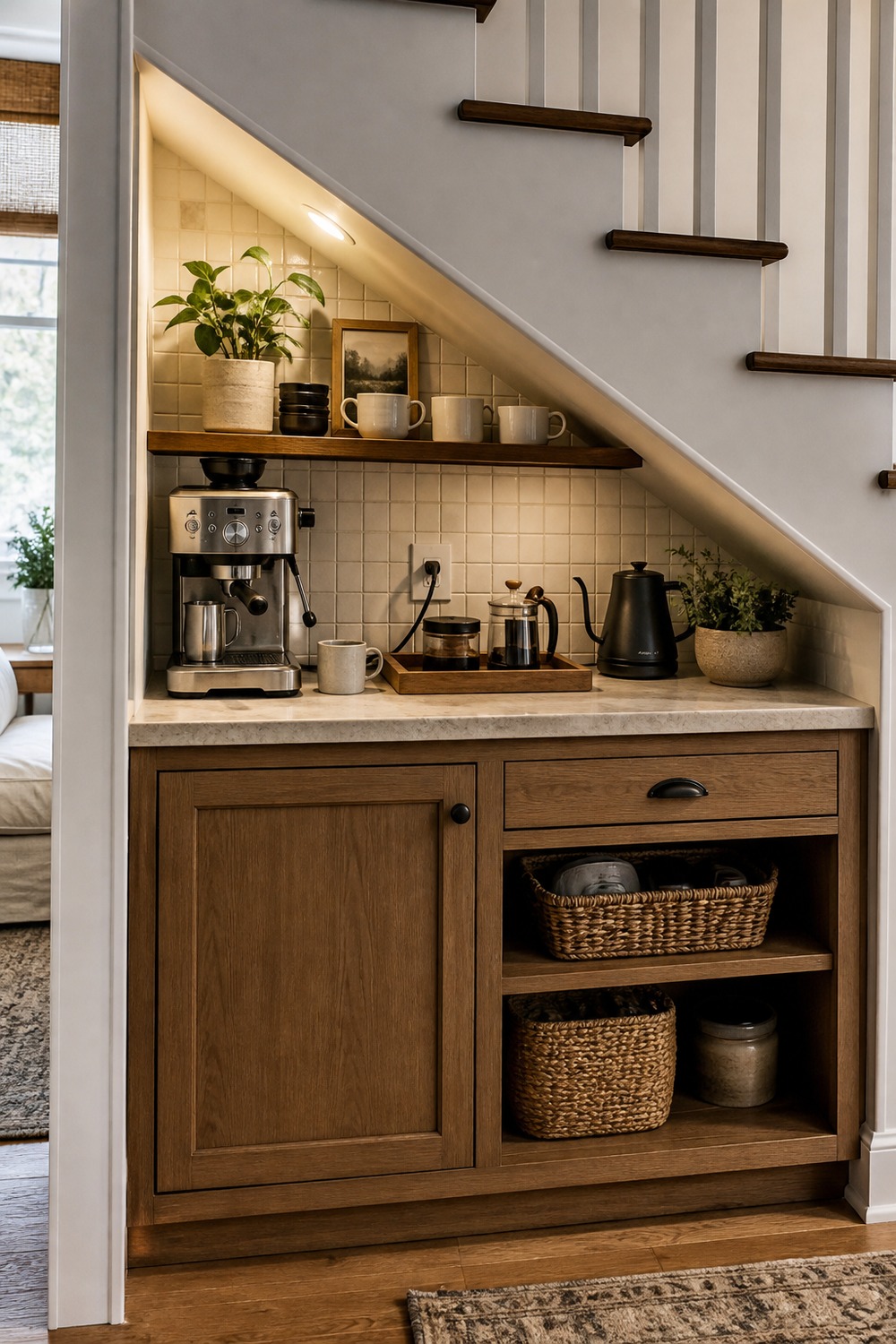
Tile makes this counter feel durable instead of temporary. The backsplash adds a little pattern and texture, while also making the coffee area easier to wipe down when sugar, grounds, and splashes show up.
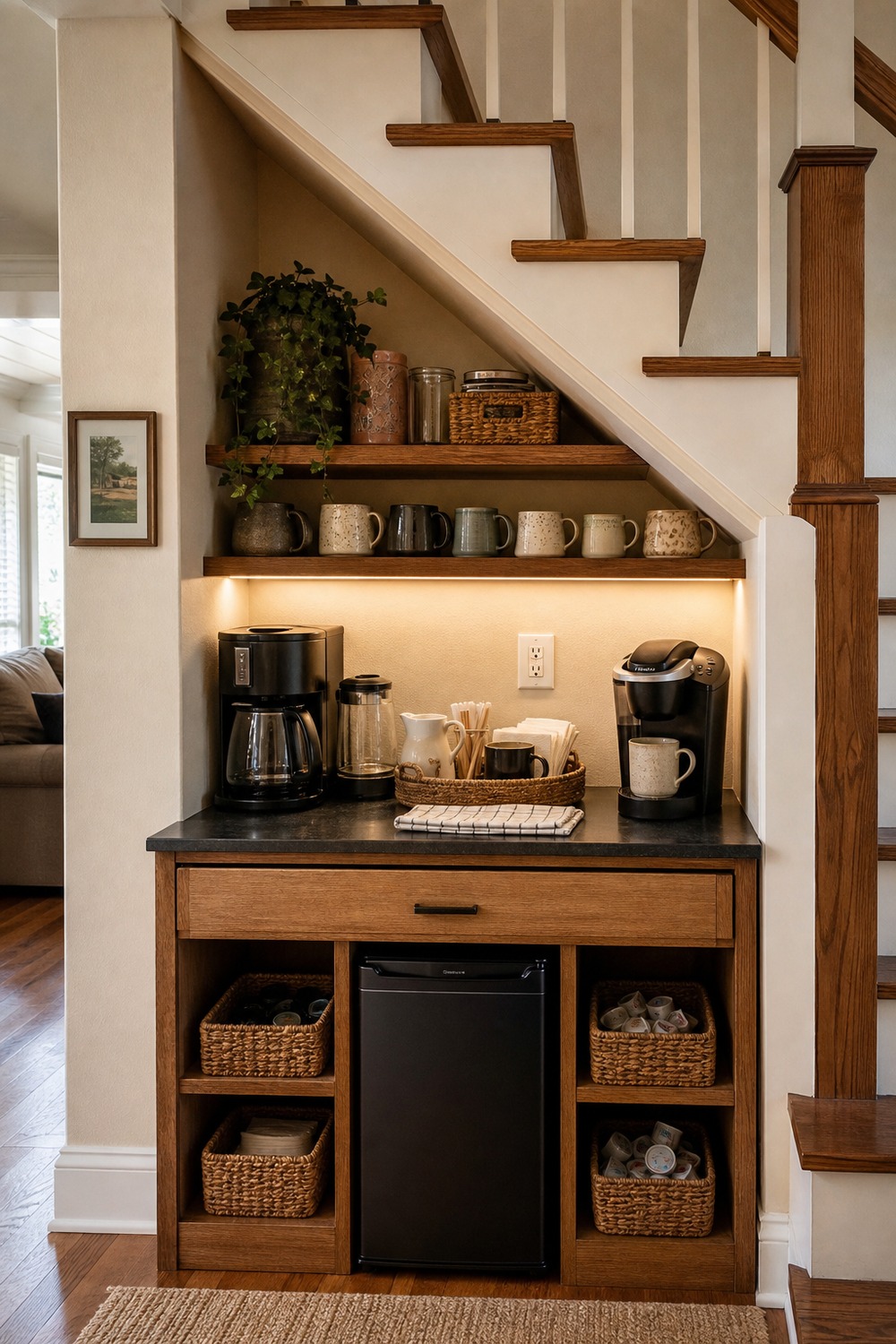
This compact hosting station would be great near a dining area or basement lounge. The fridge, mugs, and counter all sit together, so guests can help themselves without everyone crowding the main kitchen.
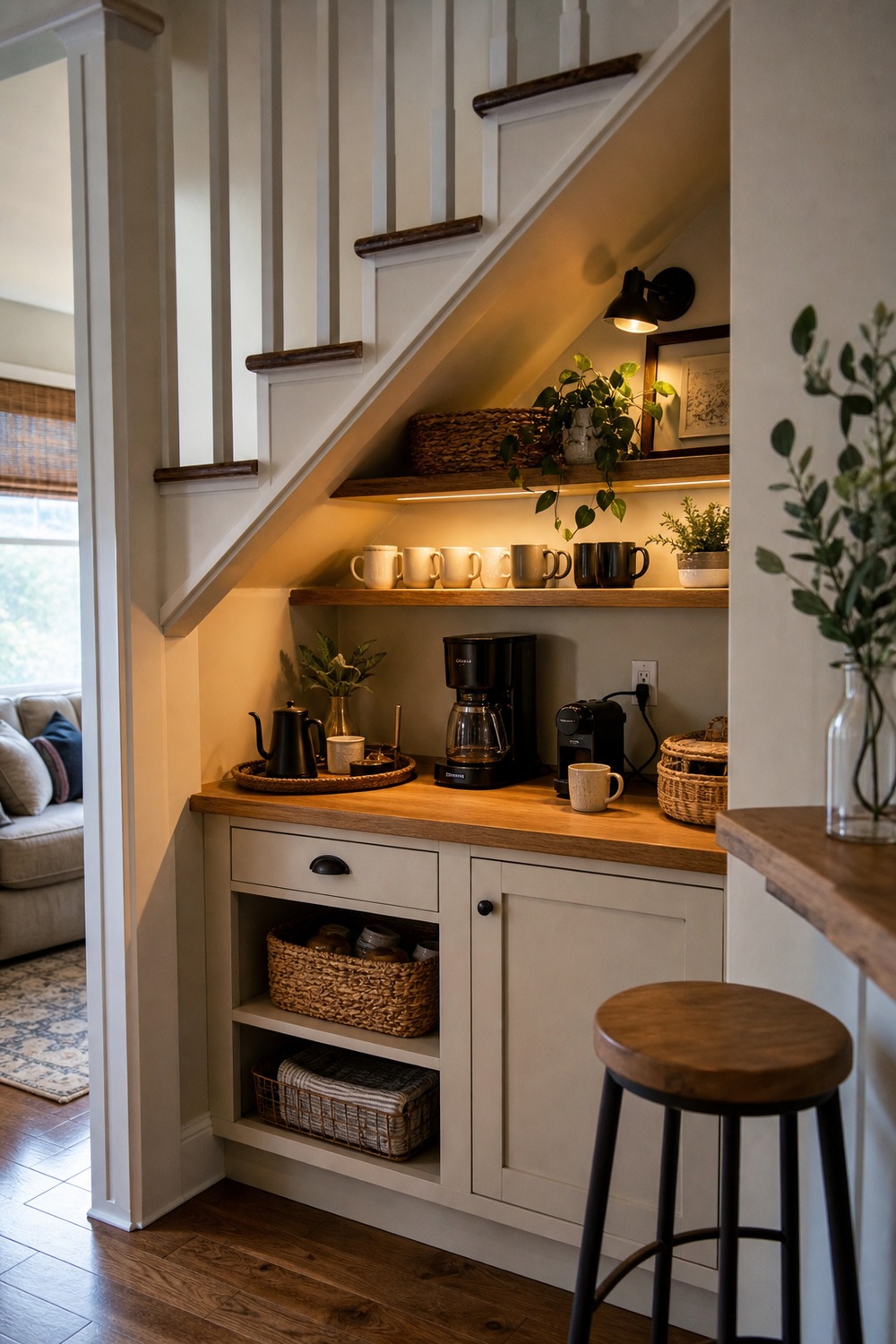
The little seating edge makes this one feel more relaxed than a standard cabinet wall. It still reads as a coffee bar first, but there is enough room nearby to set down a cup or pause for a minute.
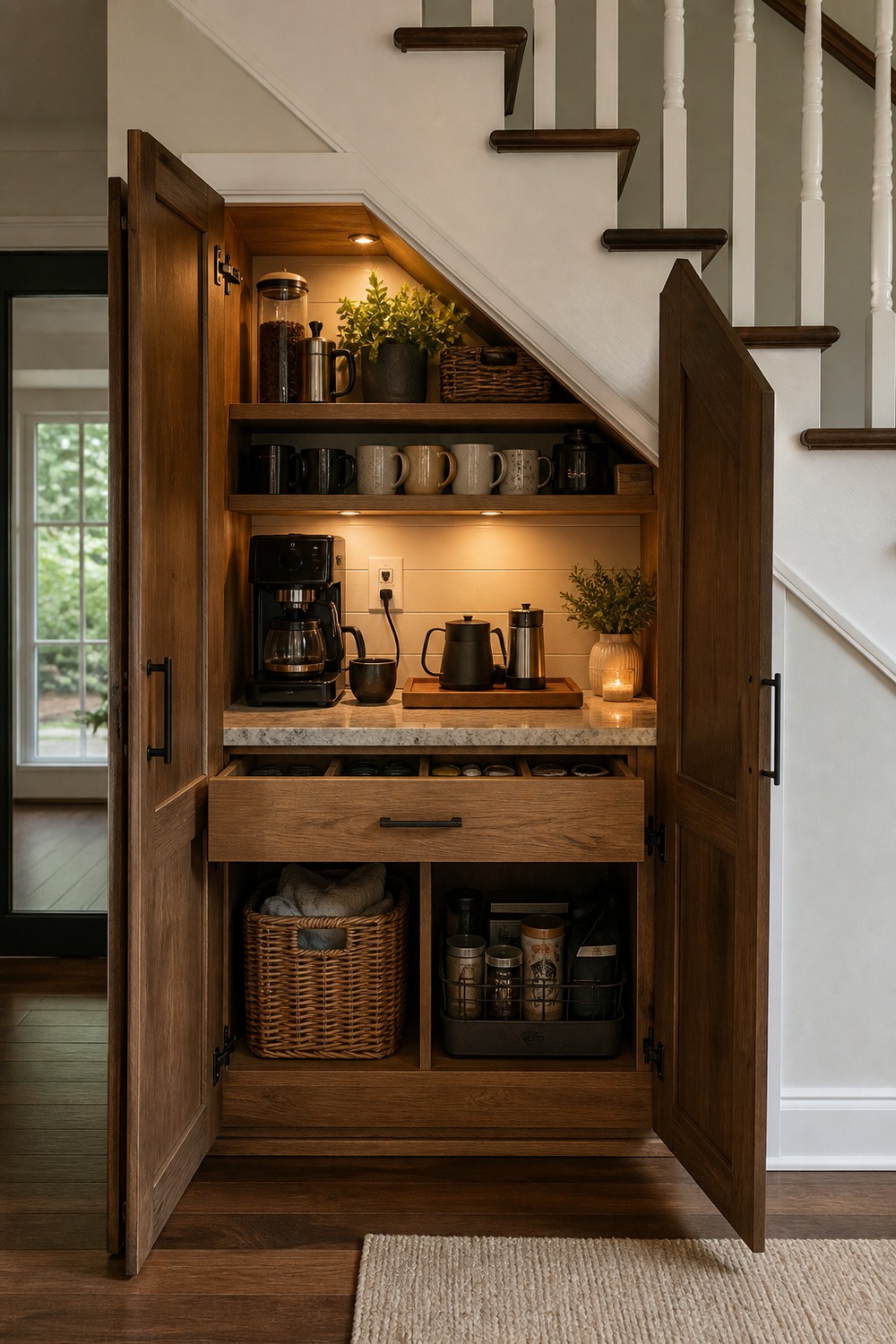
Hidden doors are a clever way to keep an under-stair coffee bar from looking busy all day. I like that the setup can open up for mornings, then close back down so the stair wall feels clean again.
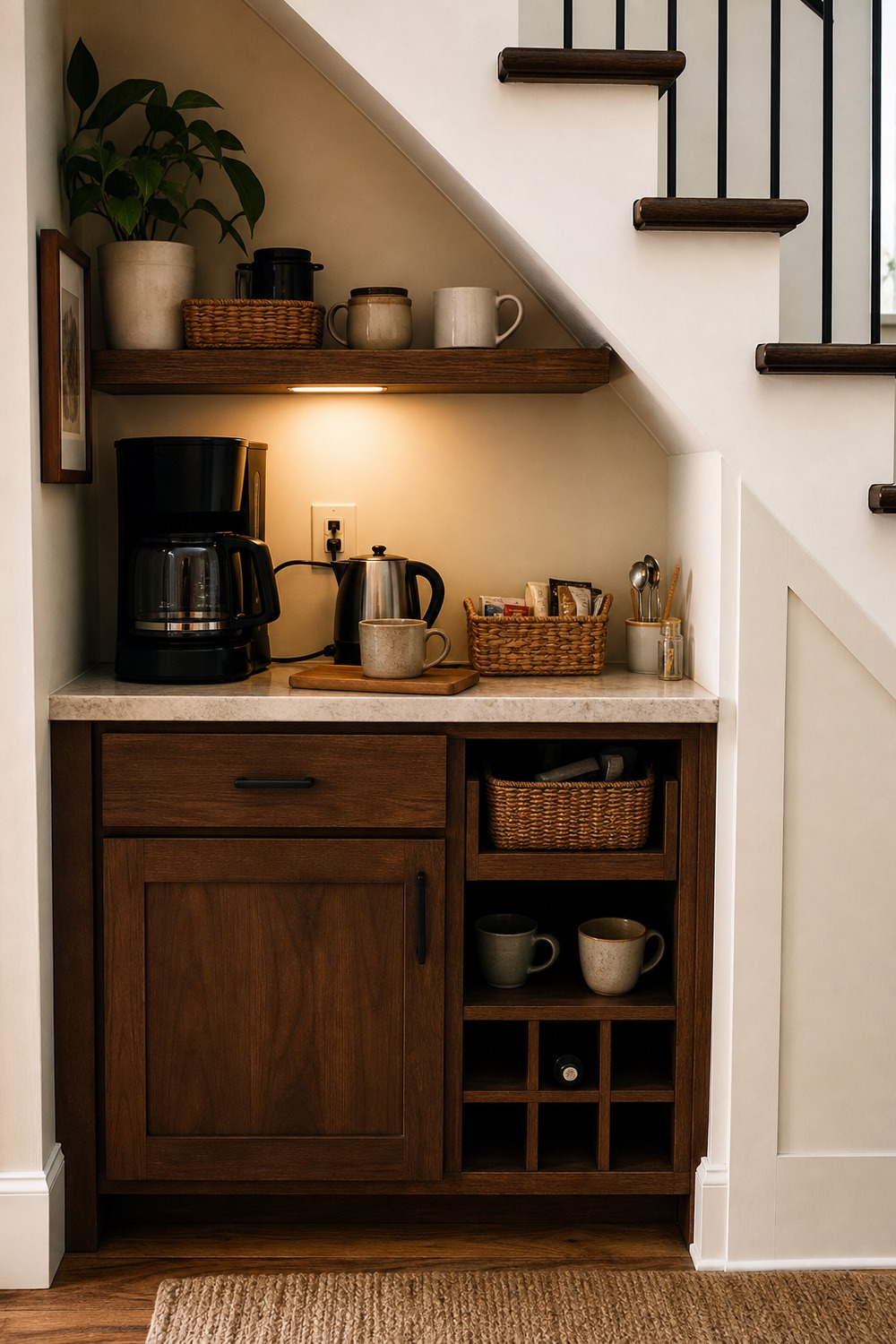
This everyday nook is probably the most realistic version for a lot of homes. It has enough shelves, counter space, and cabinet storage to be useful, but it still leaves the under-stair area feeling simple and easy to live with.
The under-stair coffee bars that work best are not the ones packed with the most decor. They are the ones that handle the machine, mugs, spoons, and extra supplies in a way that still feels easy on a normal morning.

I work in tech, but my taste in design is straight out of a slow European village. Give me arches, aged brass, and a room that smells like books and coffee. That’s my kind of home.