The best coffee bar ideas still make sense after a normal Tuesday morning. There has to be room for the mug you actually use, the spoon that gets left out, and the supplies you do not want sitting everywhere.
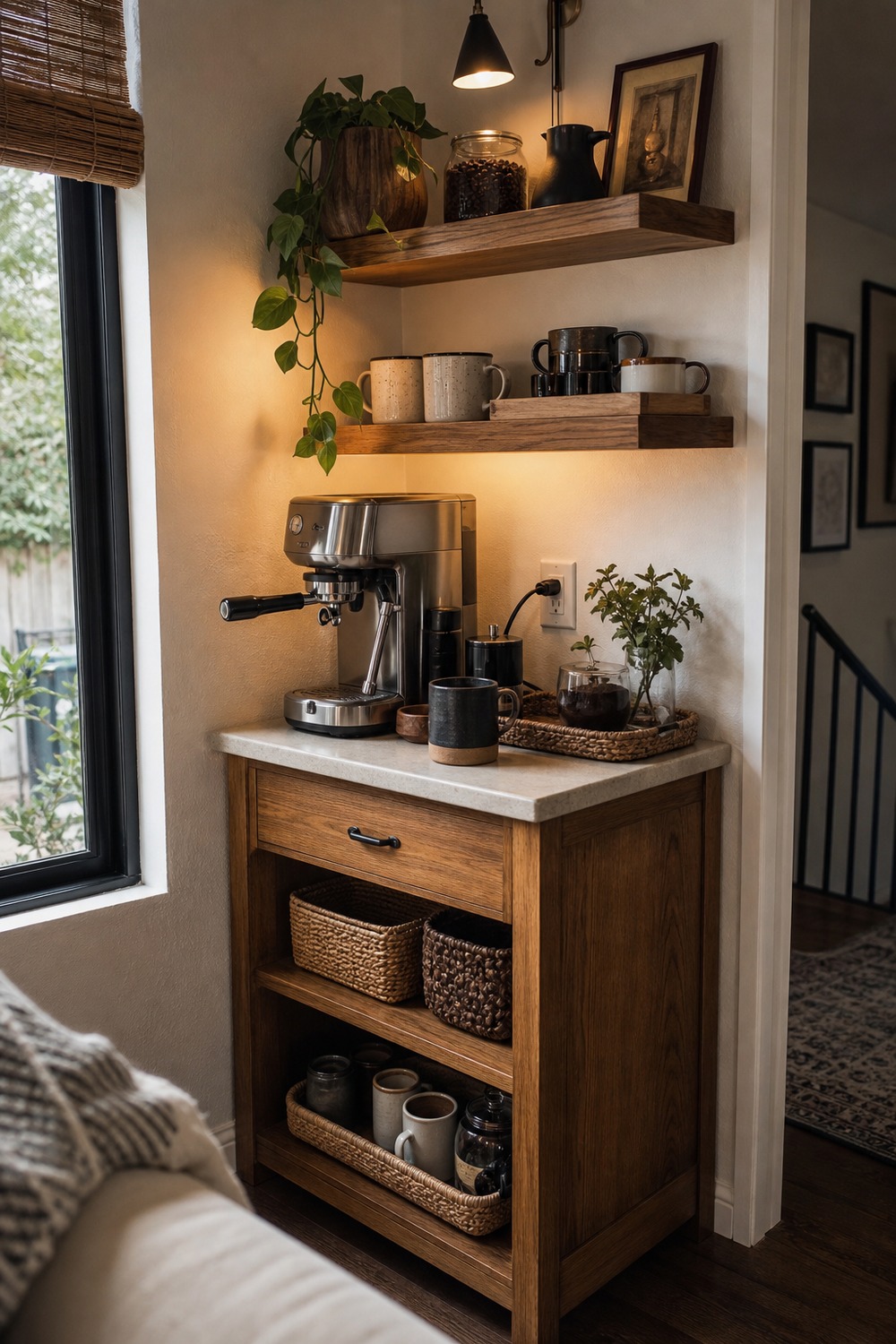
The narrow corner cabinet works because it gives the coffee maker a real landing spot instead of borrowing half the kitchen counter. I like the little mix of closed storage, mugs, and warm wood here; it feels easy to use on a rushed morning without looking like a pile of appliances.
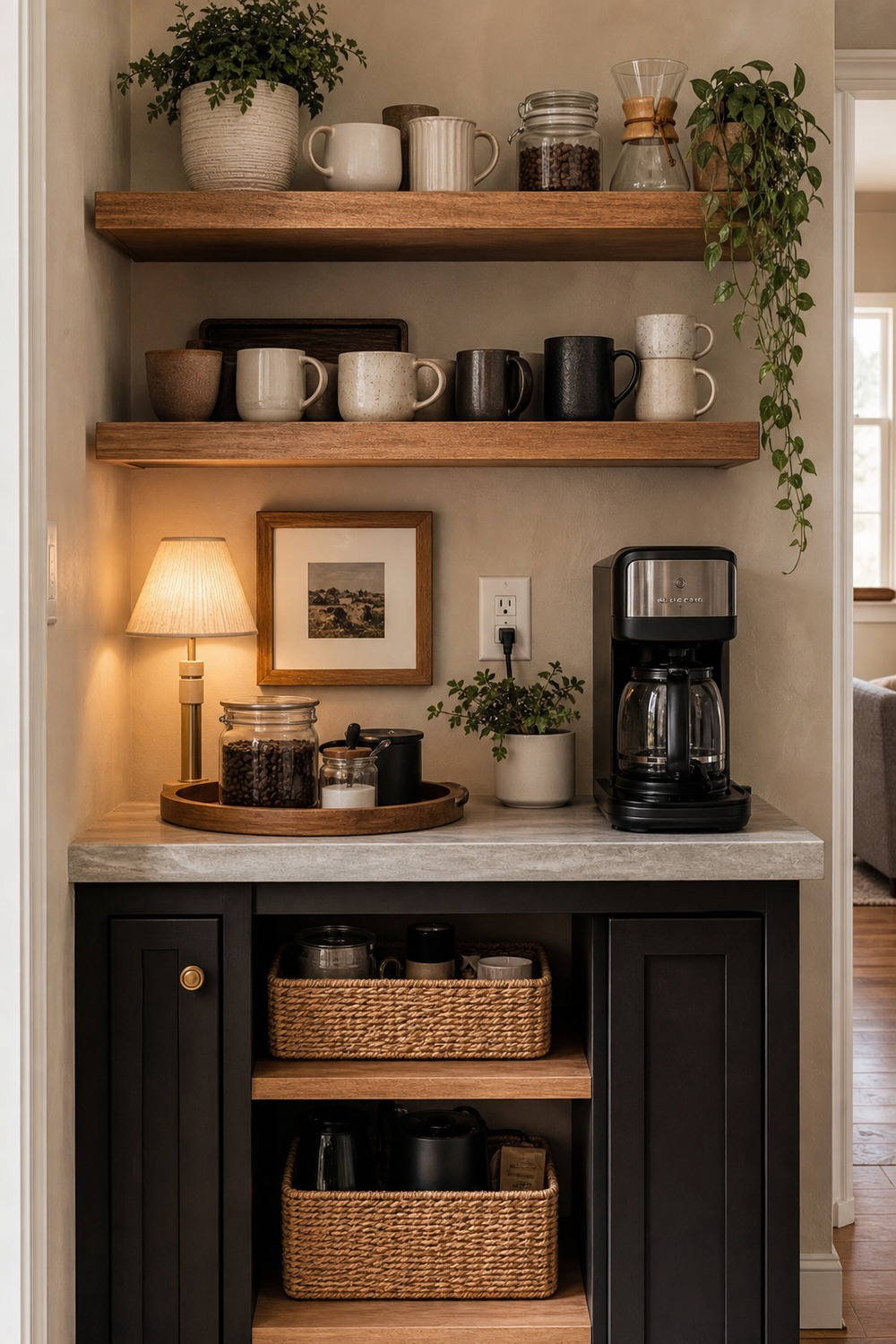
The floating shelves make this coffee nook feel light, but they still do a lot of work. Mugs can stay within reach, the machine has breathing room underneath, and the wall space keeps the setup from feeling squeezed into the corner.
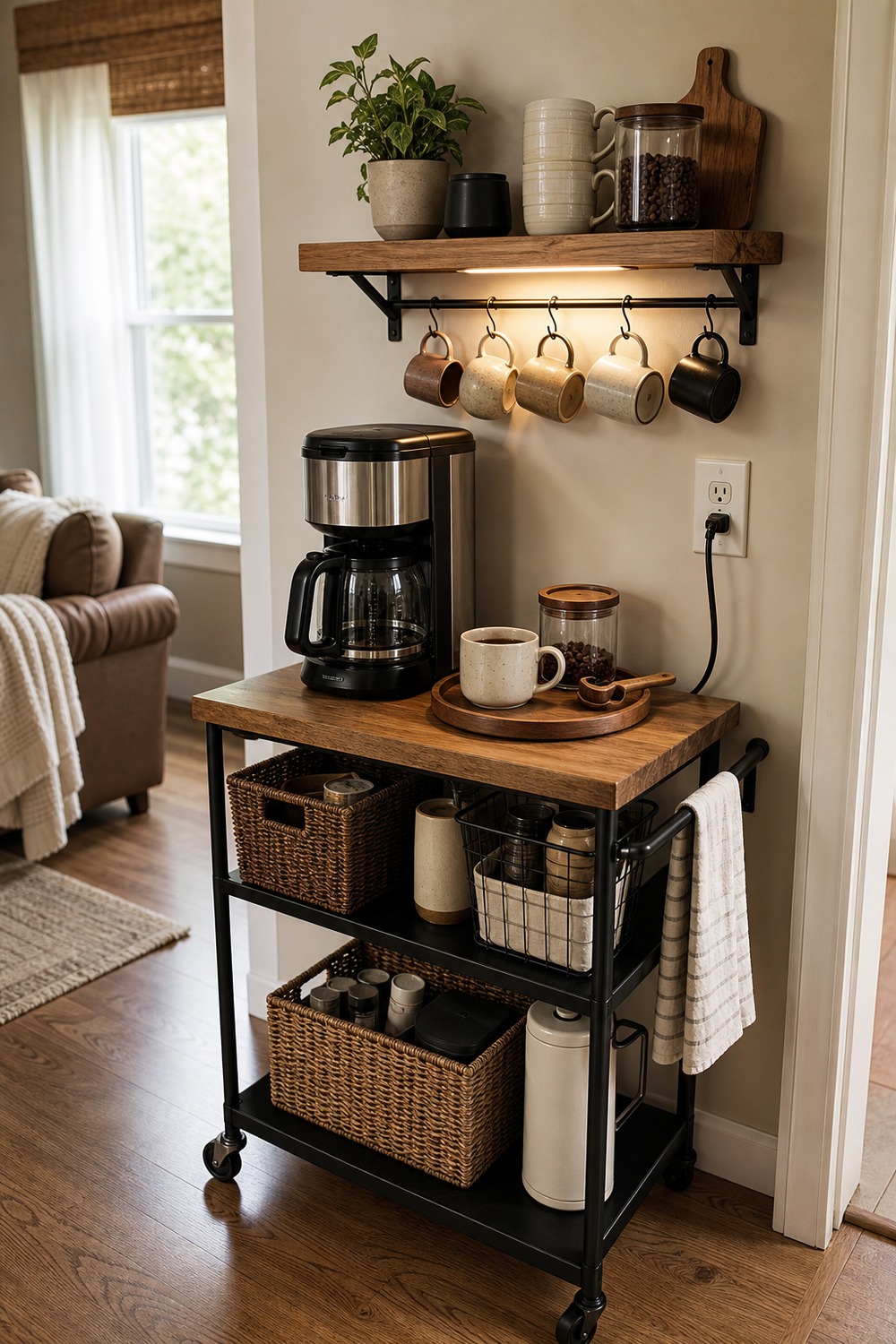
A rolling cart is one of those ideas that makes sense when there is no perfect built-in spot. The trays, baskets, and stacked mugs give everything a home, and it can shift around if the kitchen layout changes later.
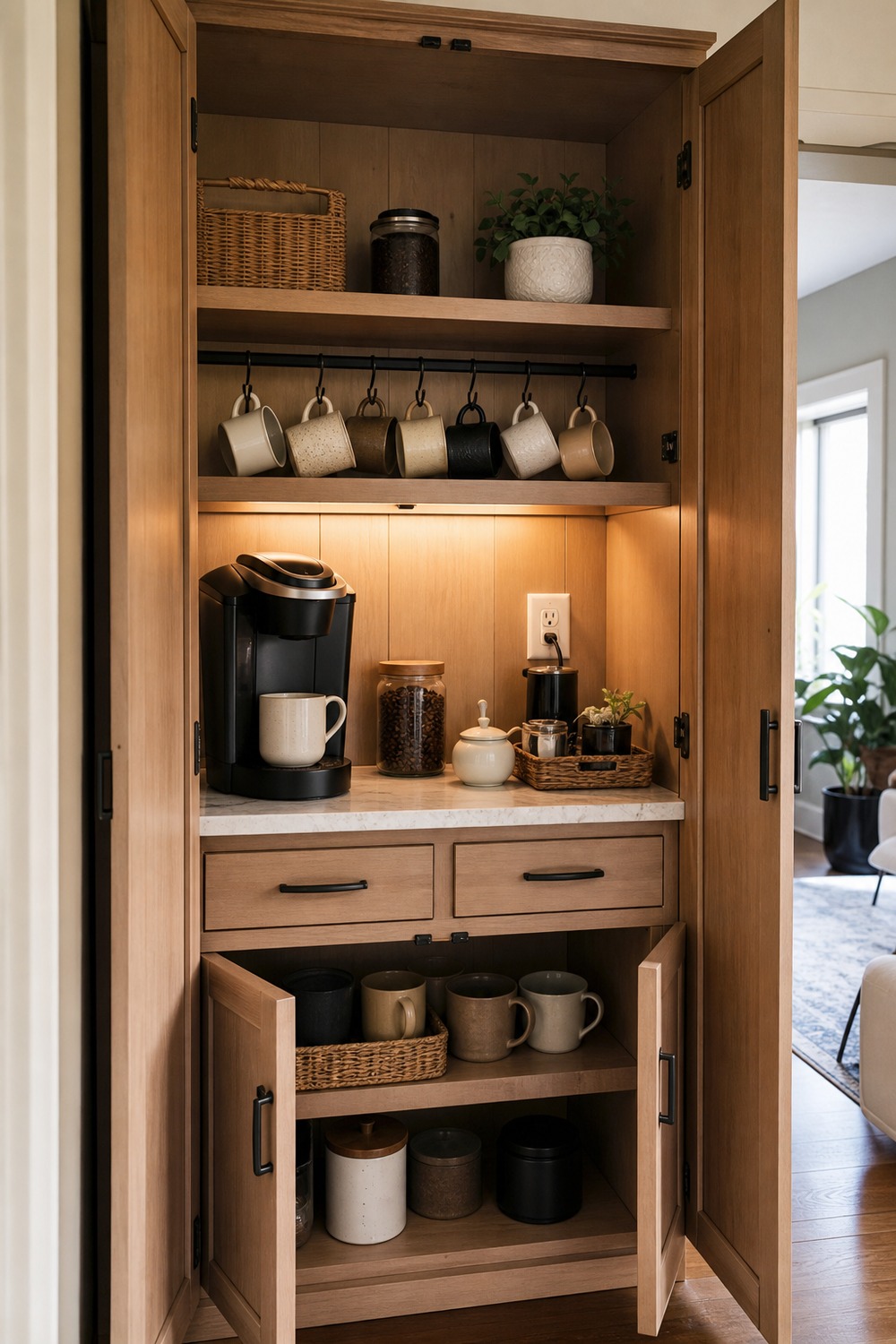
This hidden cabinet setup feels especially smart for anyone who hates visual clutter. The doors can close on extra pods, syrups, filters, and random mugs, but the inside still feels styled enough to enjoy when it is open.
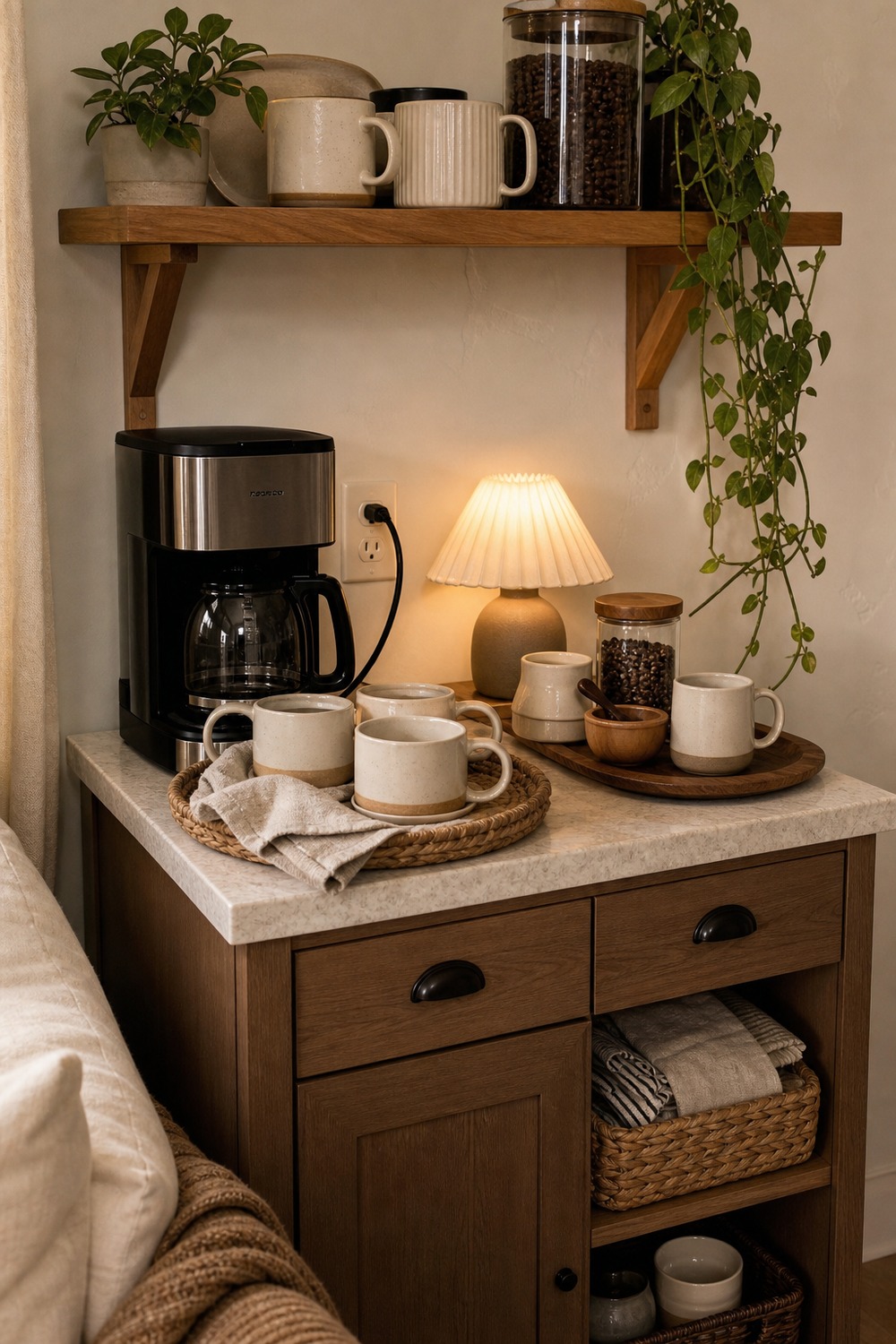
The warm wood and cream palette keeps this little coffee corner from feeling like a utility zone. A few open shelves, soft neutral dishes, and a clean counter make it pretty, but the storage is still doing the practical work.
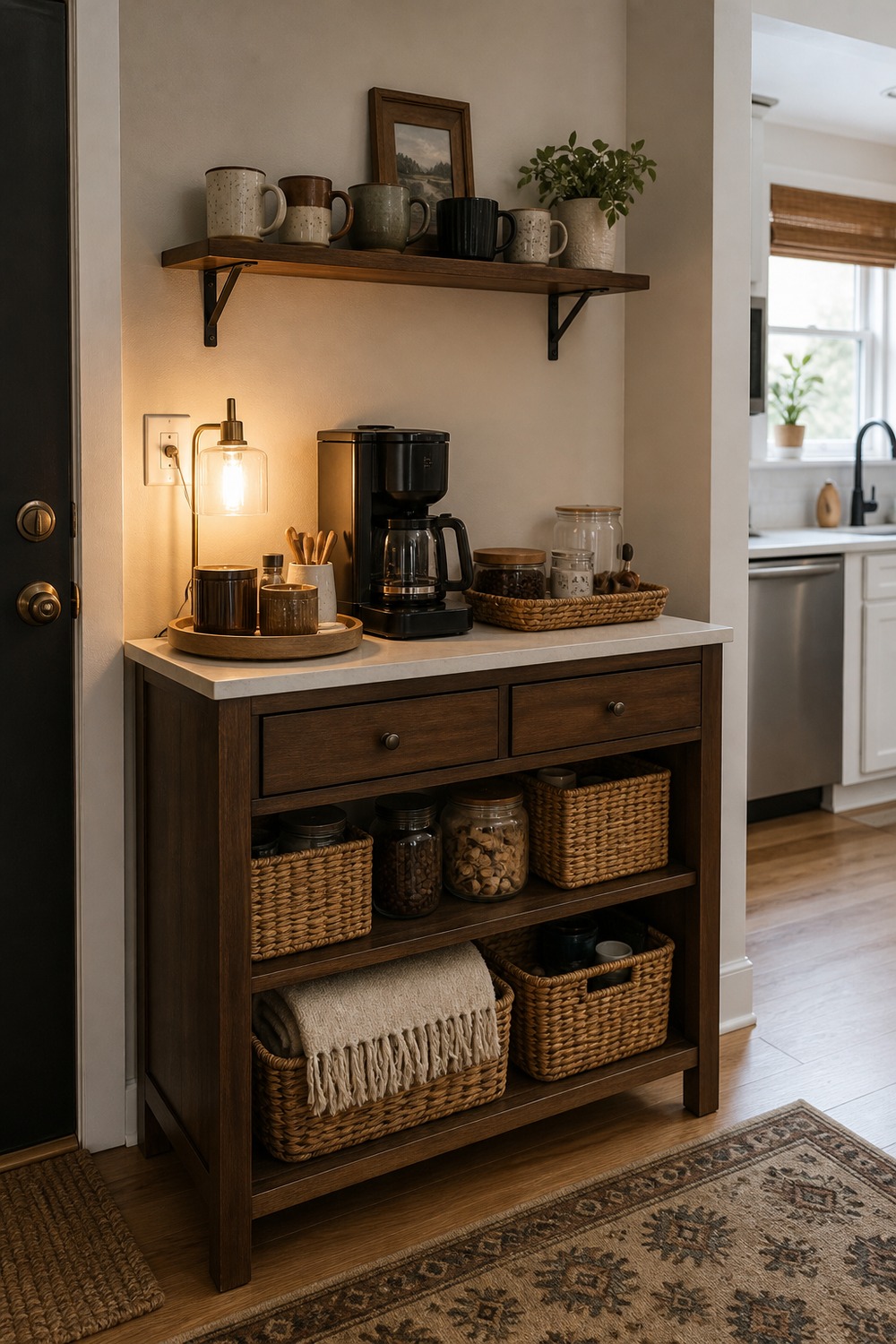
I like this idea for an apartment because it uses a small wall instead of asking for more kitchen space. The narrow cabinet can hold mugs and beans, while the top stays clear enough for actually making coffee.
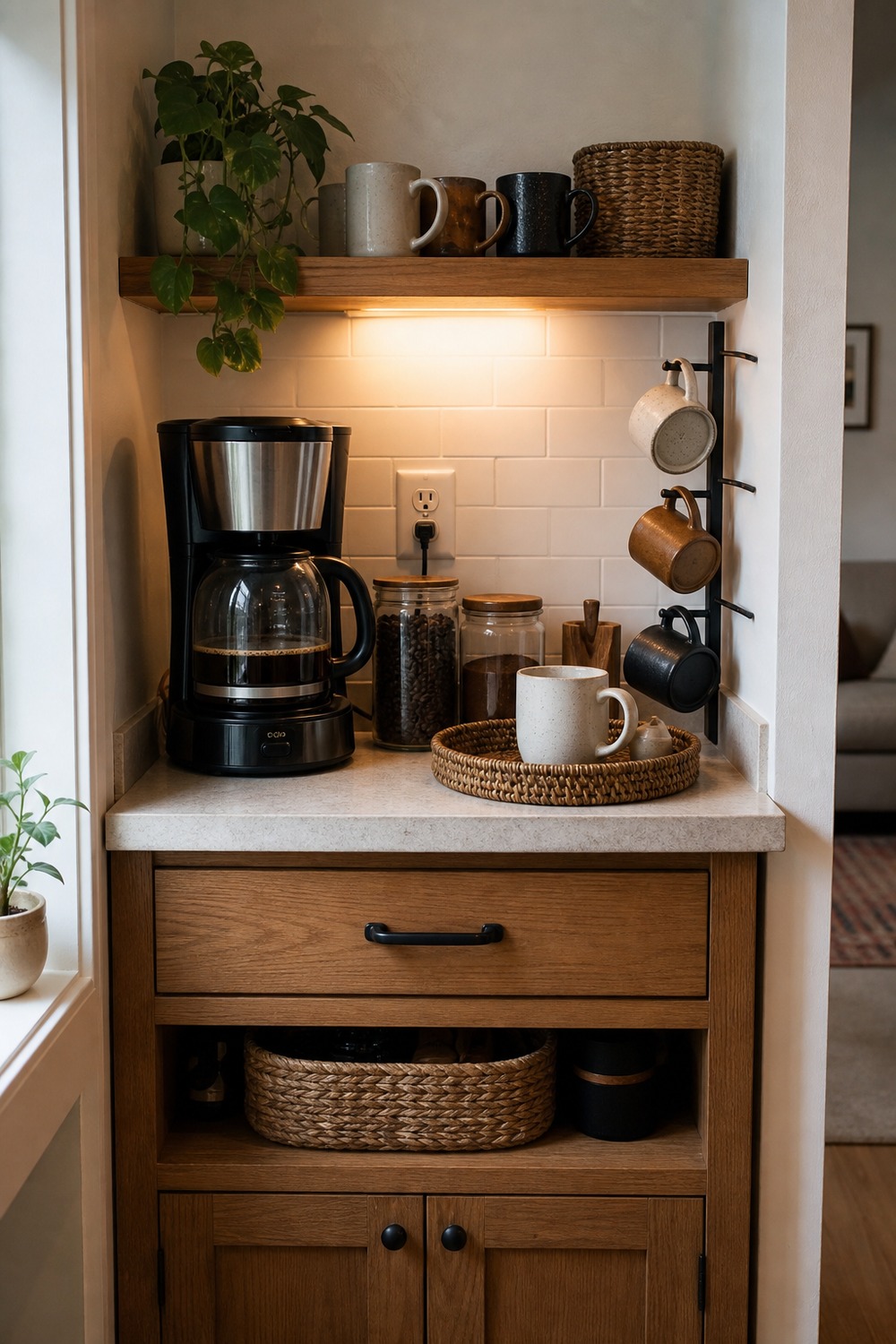
This one is simple, but that is the point. A small counter zone with shelves above it makes the coffee routine easy to see, and the baskets or jars keep the tiny things from spreading everywhere.
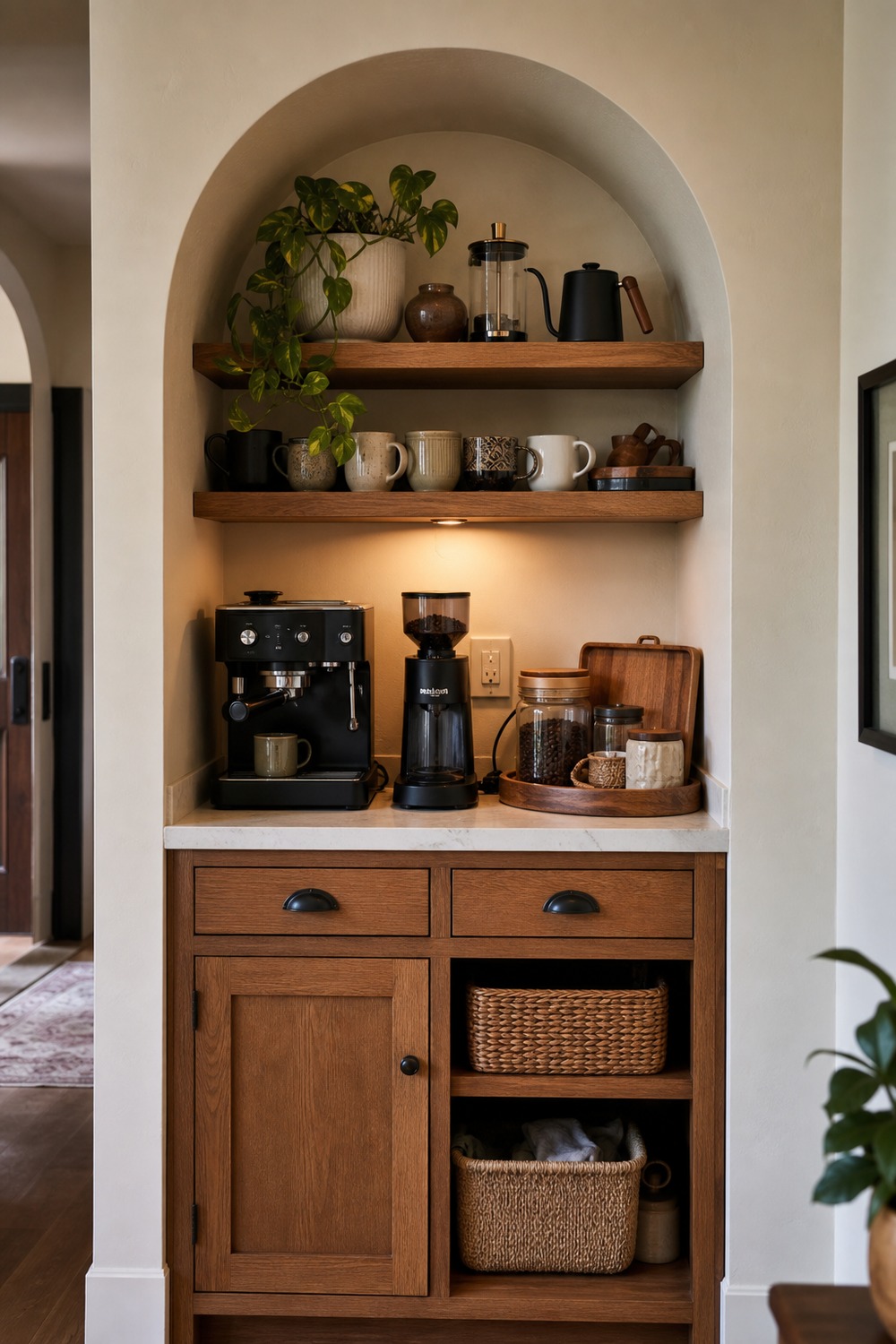
The arched niche makes the coffee bar feel intentional, almost like it was always supposed to be there. It adds shape to a plain wall while still leaving room for the machine, cups, and a few everyday supplies.
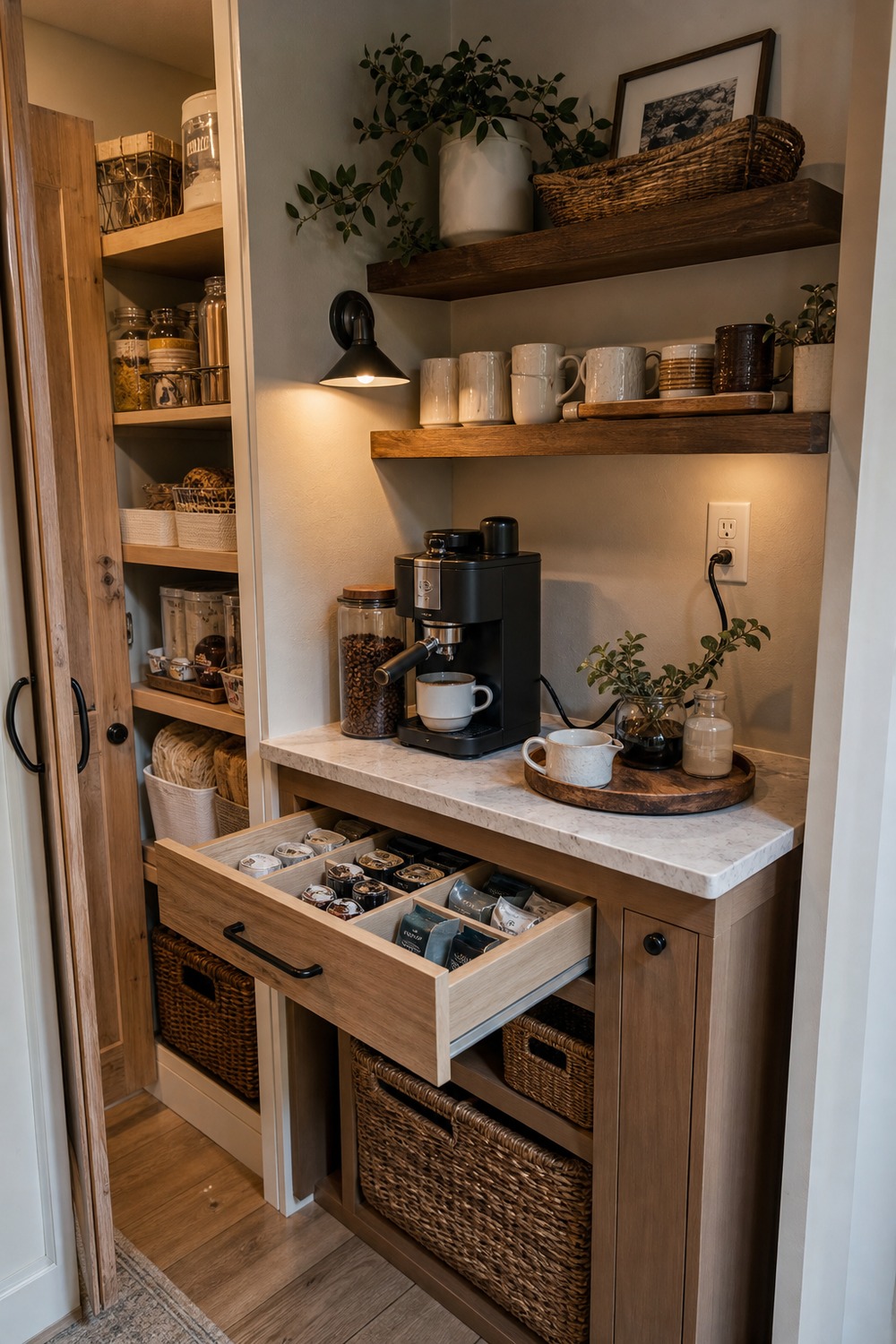
A pantry-adjacent coffee station is so useful because the backup supplies can live nearby without sitting out. The counter stays focused on the machine and mugs, while the rest can disappear behind cabinet doors.
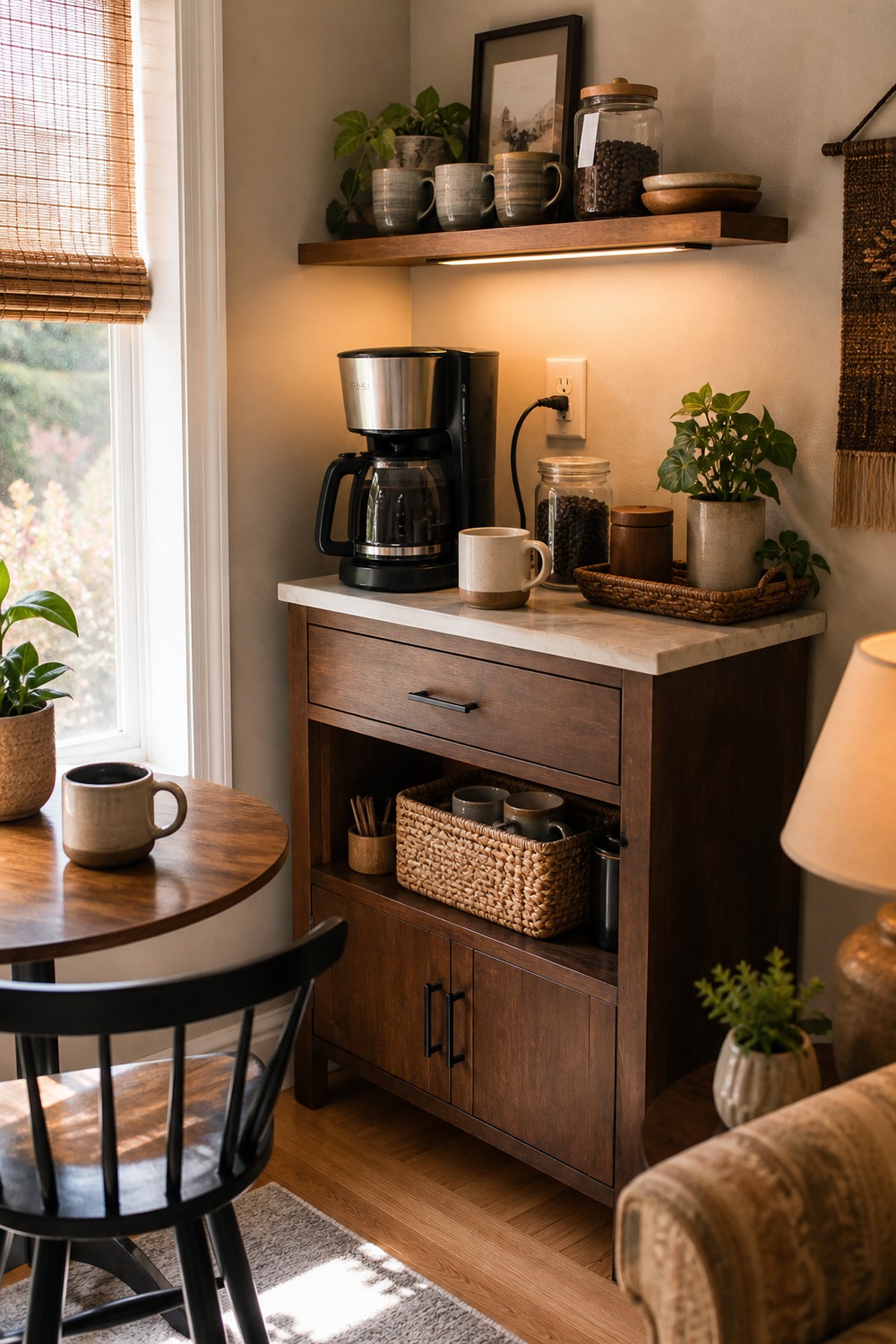
This coffee cabinet feels like it belongs beside a breakfast nook. The storage underneath handles the not-so-pretty extras, and the open styling up top keeps the whole area feeling casual instead of overly arranged.
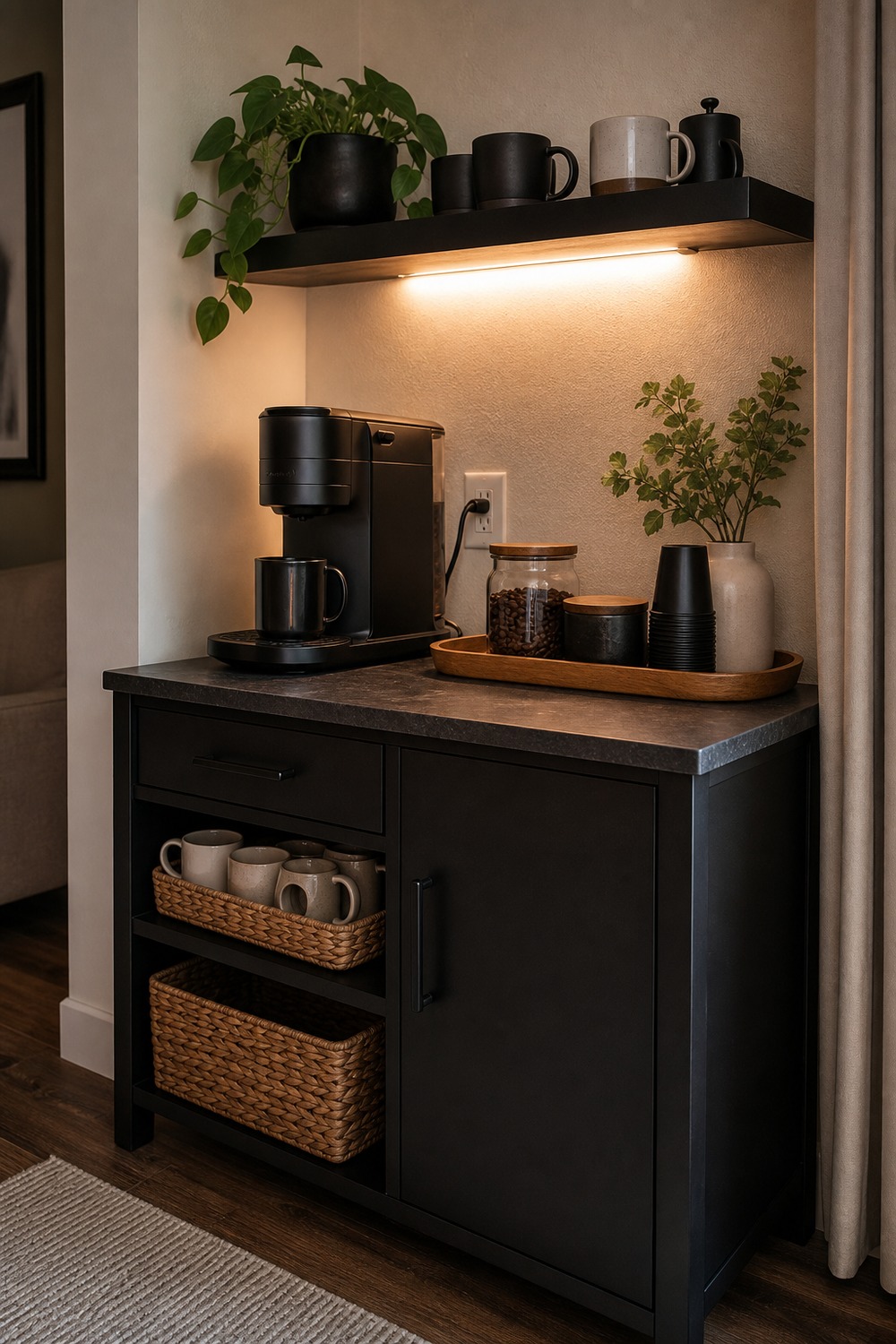
The black cabinet gives this coffee bar a little more weight, which I like against all the lighter kitchen details. It feels tidy and grown-up, but the mugs, jars, and wood accents keep it from looking too sharp.
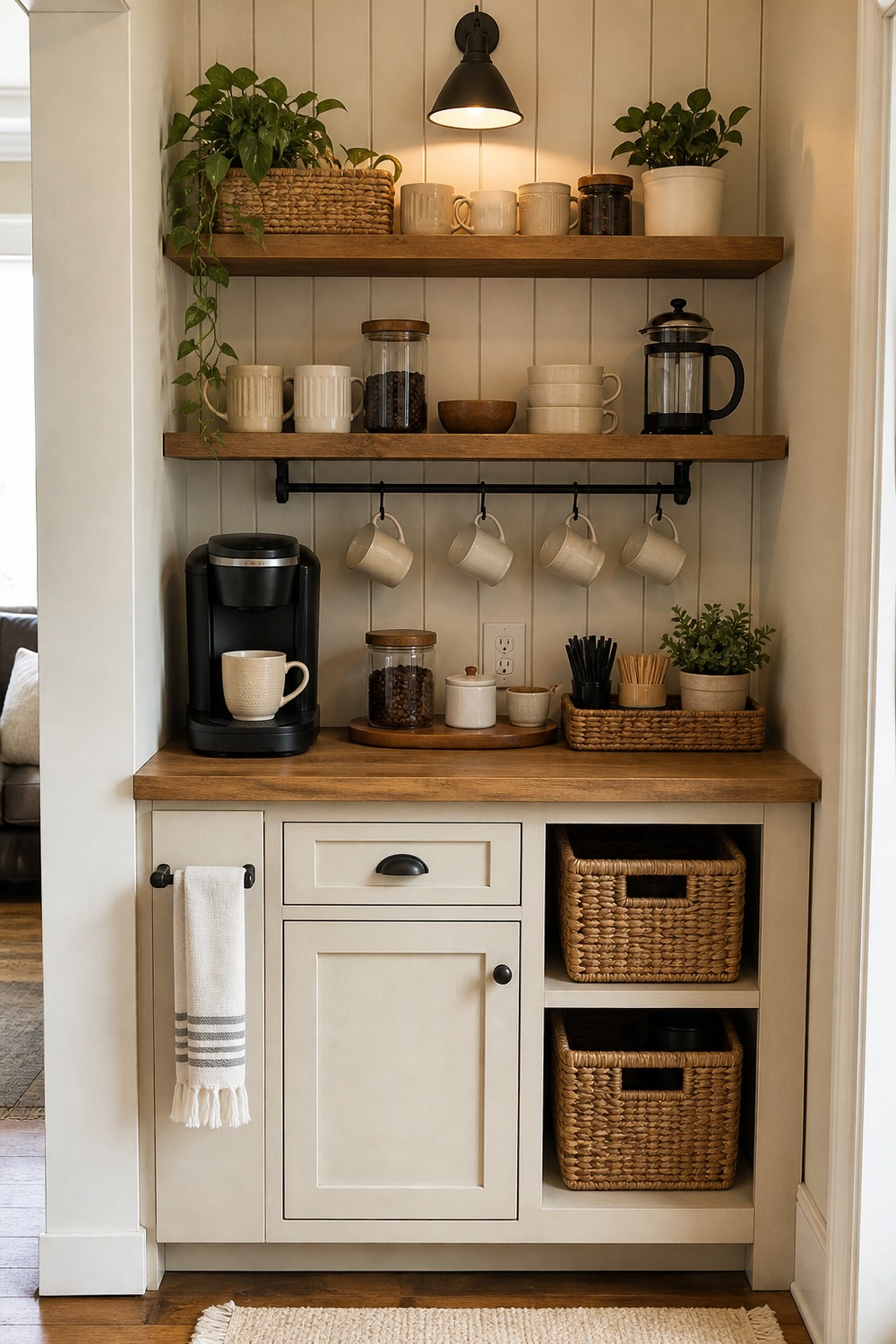
This farmhouse version works because it is not trying to be huge. A compact cabinet, simple shelves, and a few practical containers give it that collected kitchen feeling without turning the corner into a full display wall.
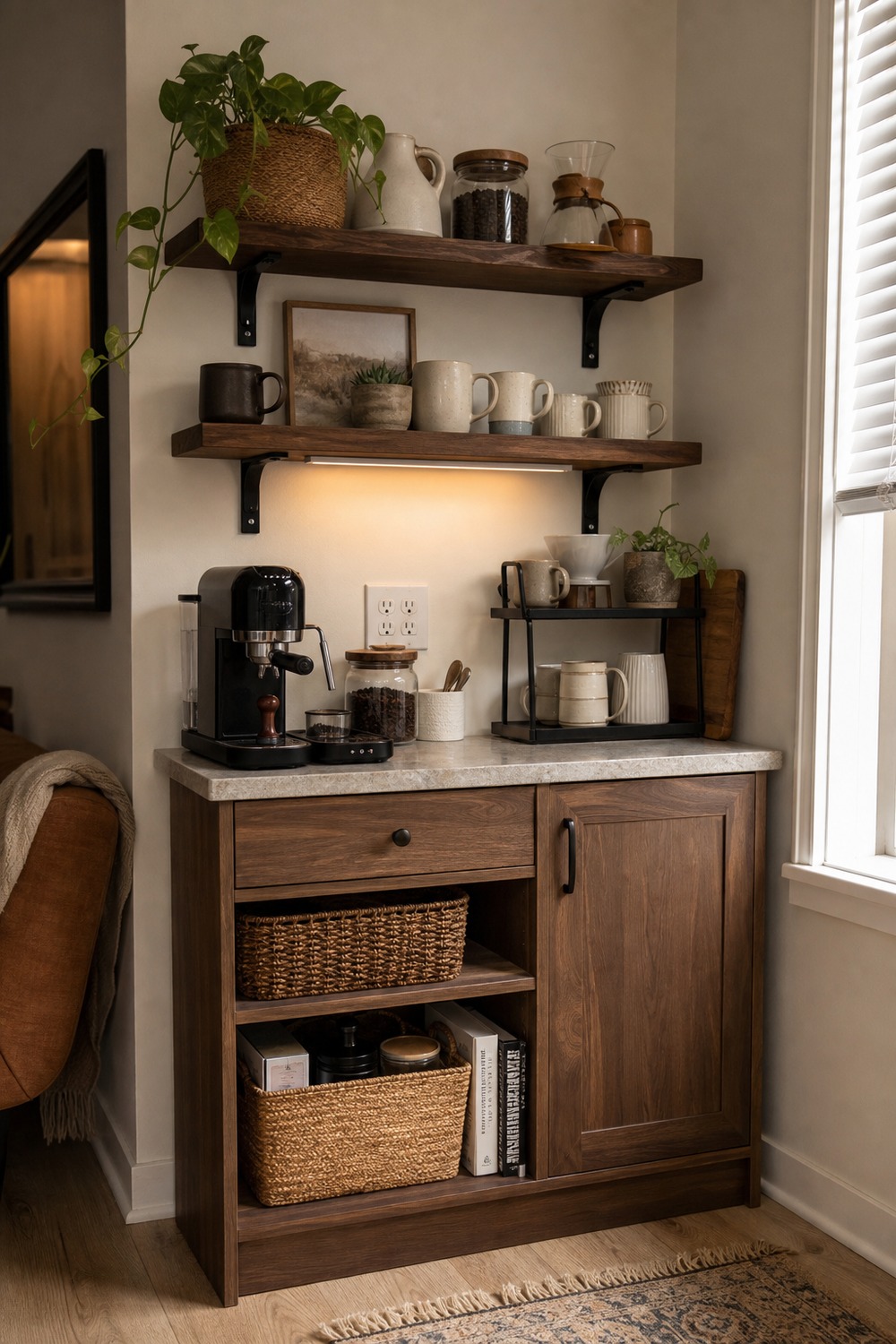
The renter-friendly shelf idea is nice because it adds storage without a major remodel. It gives mugs and coffee canisters a place to go, and the whole setup could move or change without tearing apart the kitchen.
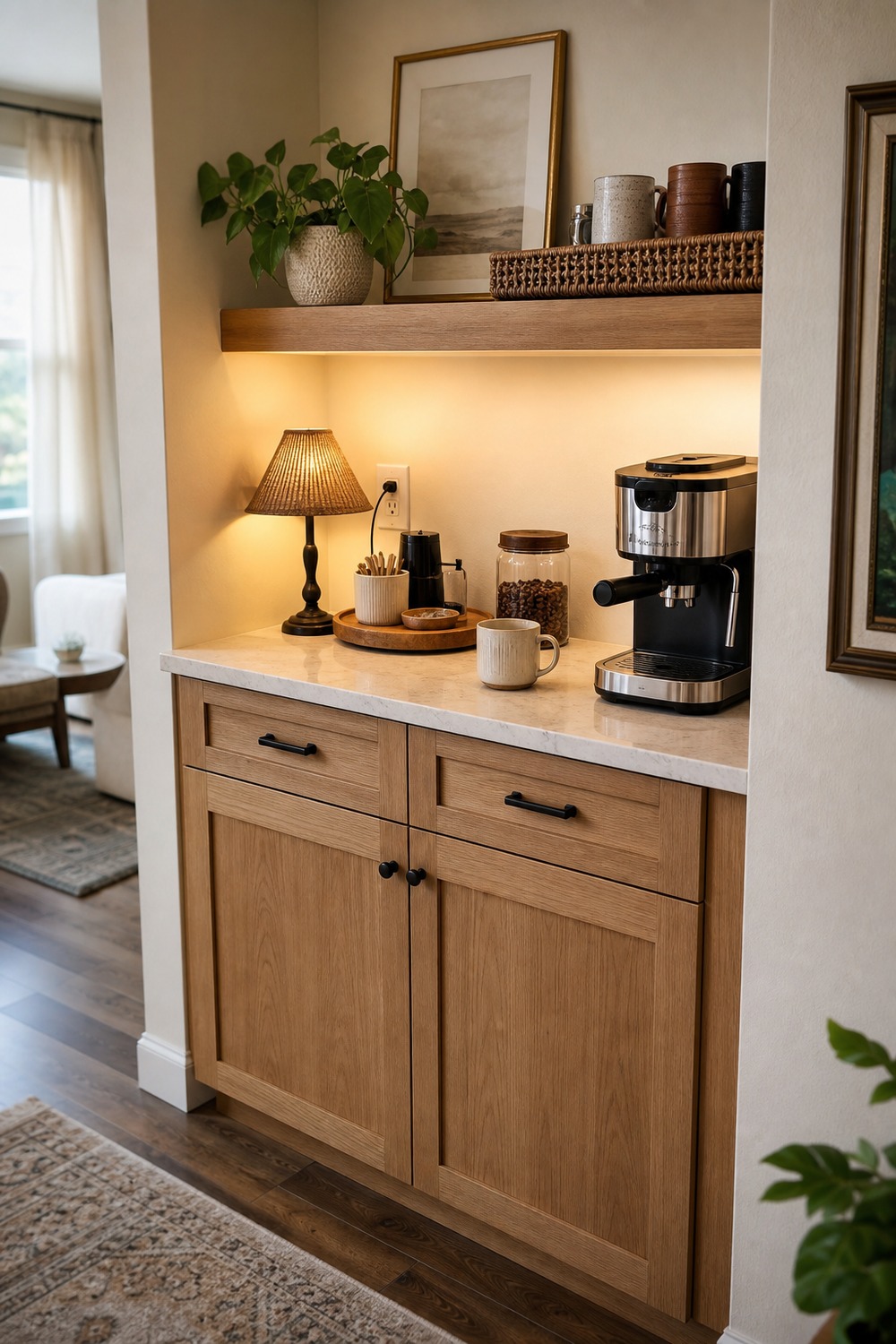
Closed storage is the quiet hero here. The pretty pieces can stay visible, but the extra filters, spare mugs, and messy packaging have somewhere to hide, which is what makes a home coffee bar easier to live with.
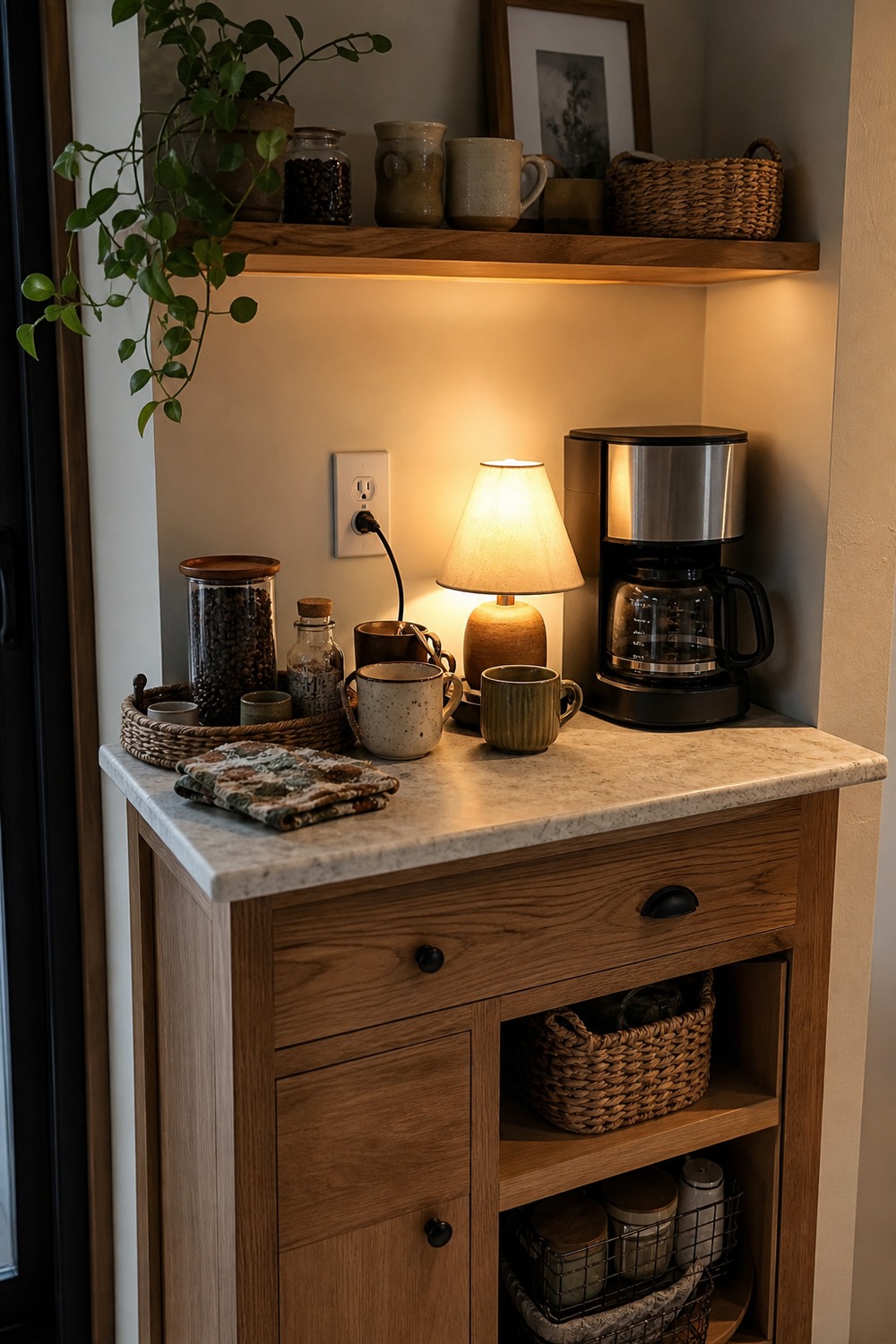
The small lamp changes the mood of this corner more than anything else. It makes the coffee bar feel like part of the room at night, and it is a softer choice than relying only on overhead kitchen lighting.
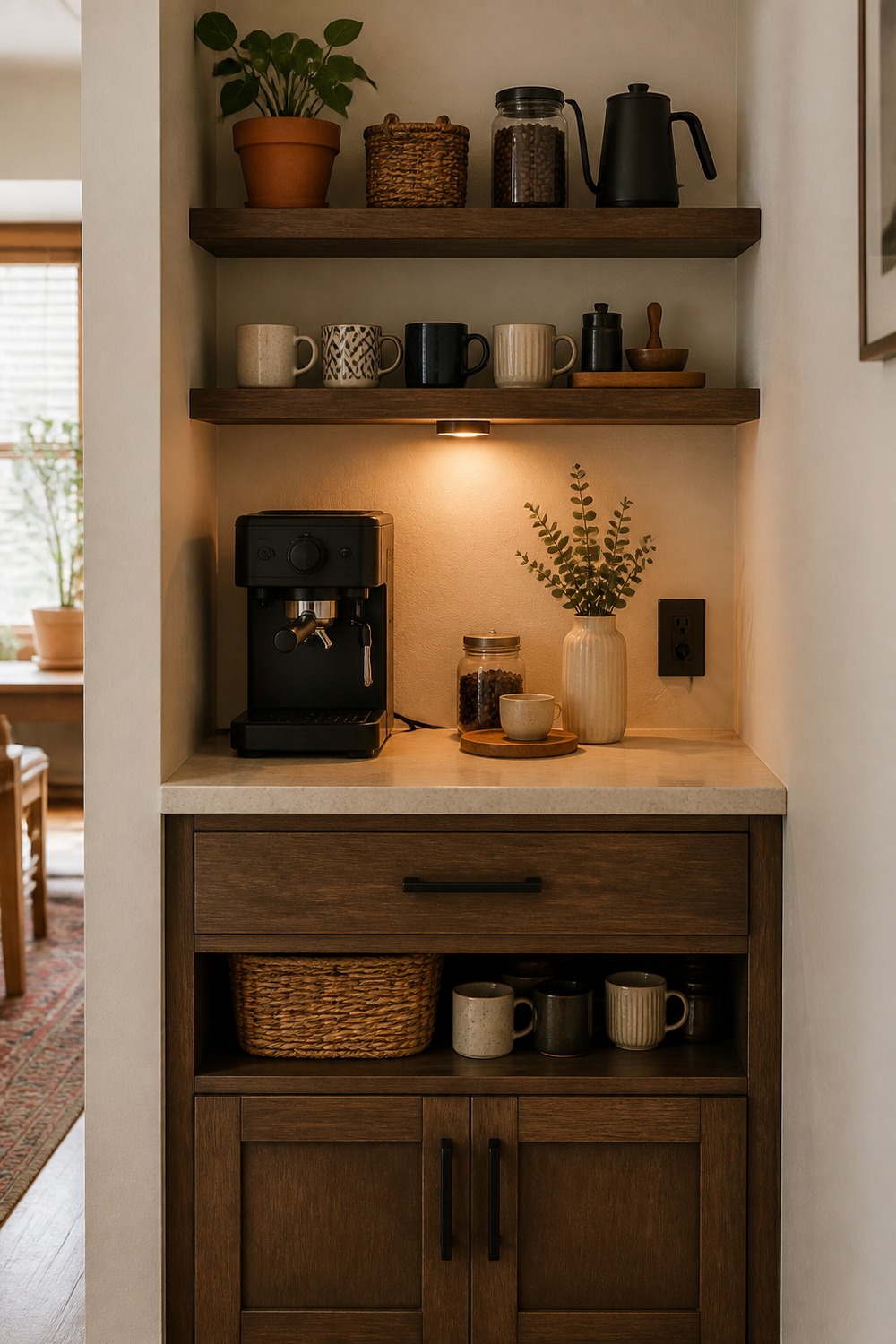
A tiny alcove can feel awkward until it gets one clear job. Here, the shelves and counter turn that little recess into a real coffee station, with just enough storage to keep the routine from spilling into other areas.
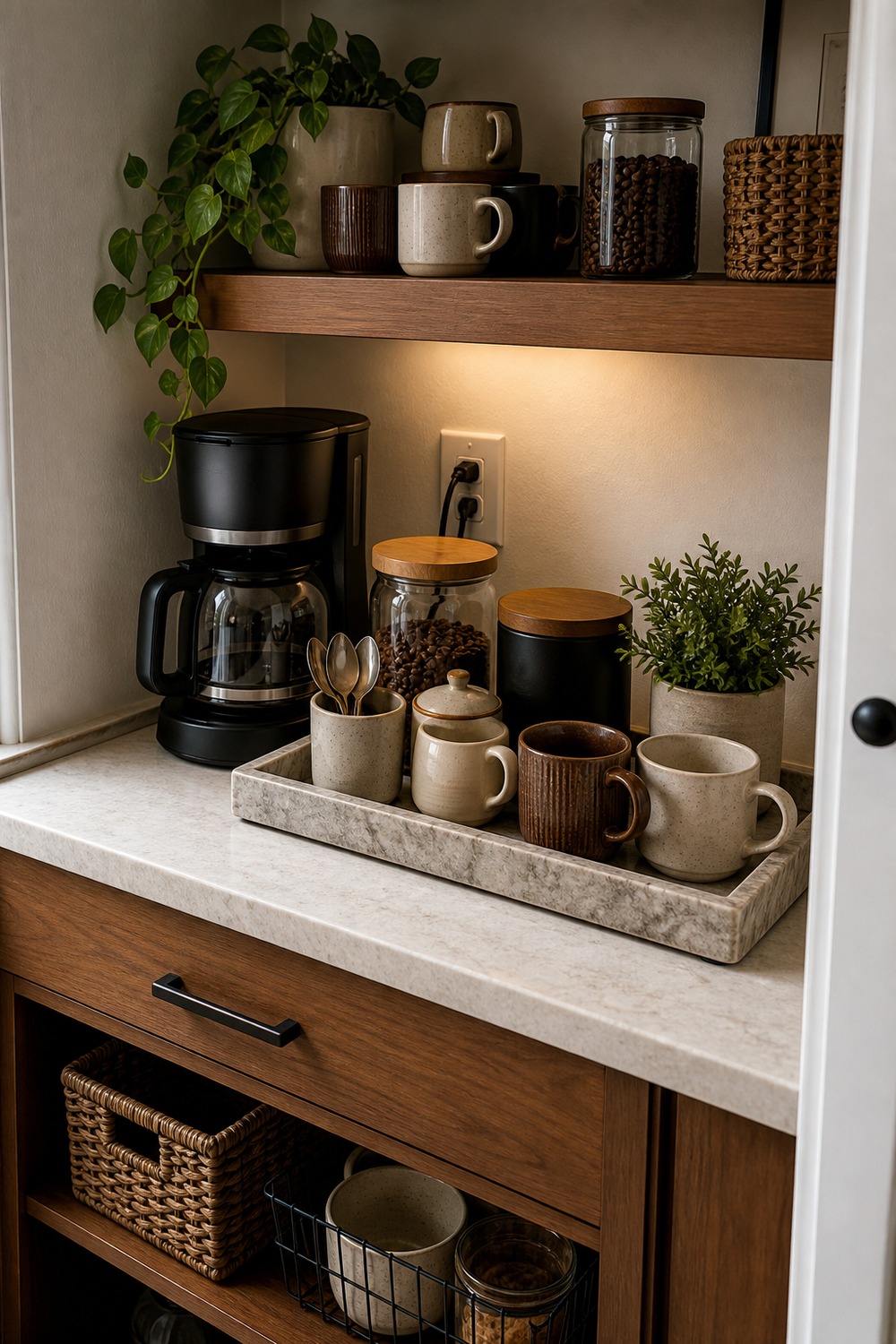
The tray setup is great for keeping coffee and tea pieces from wandering across the counter. It makes the mugs, jars, spoons, and kettle feel grouped together, which is helpful if the space is small or shared.
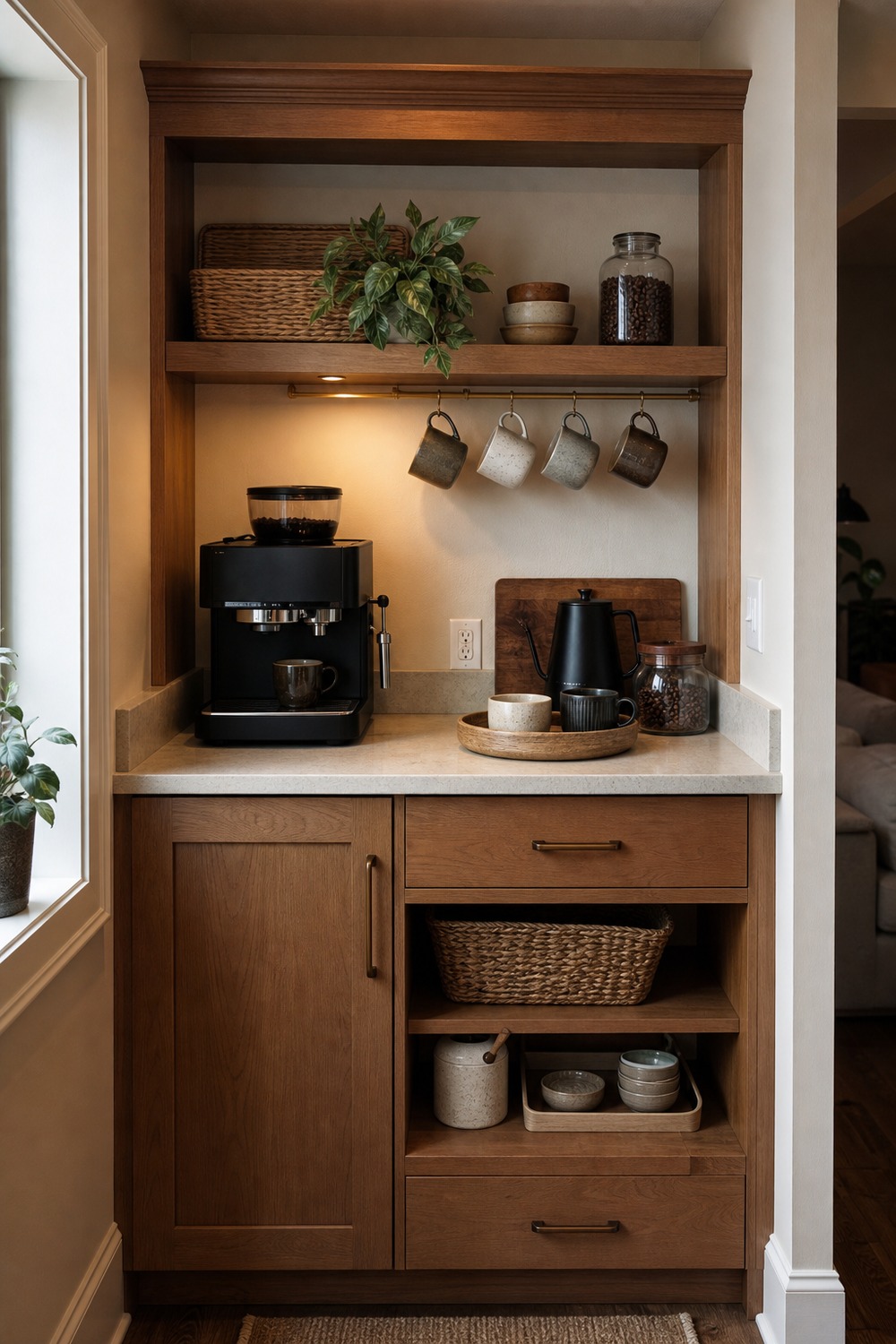
This has the feel of a built-in without needing a huge custom project. The cabinet base, shelf styling, and balanced counter space make the coffee bar look finished while still leaving room to use it every day.
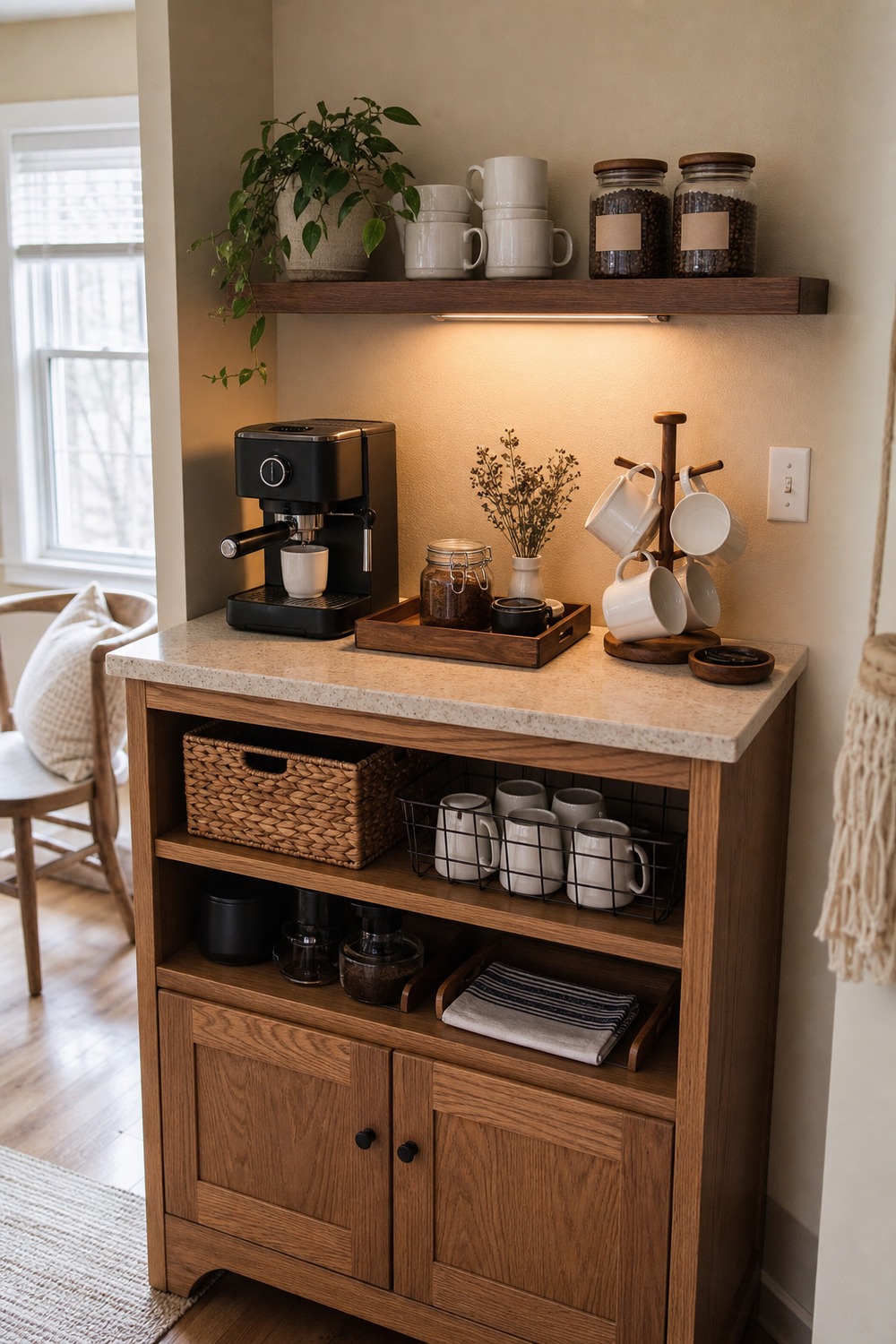
The neutral palette keeps this coffee bar calm, but the texture matters more than the color. Wood grain, woven storage, ceramic mugs, and a little greenery make it feel layered instead of flat.
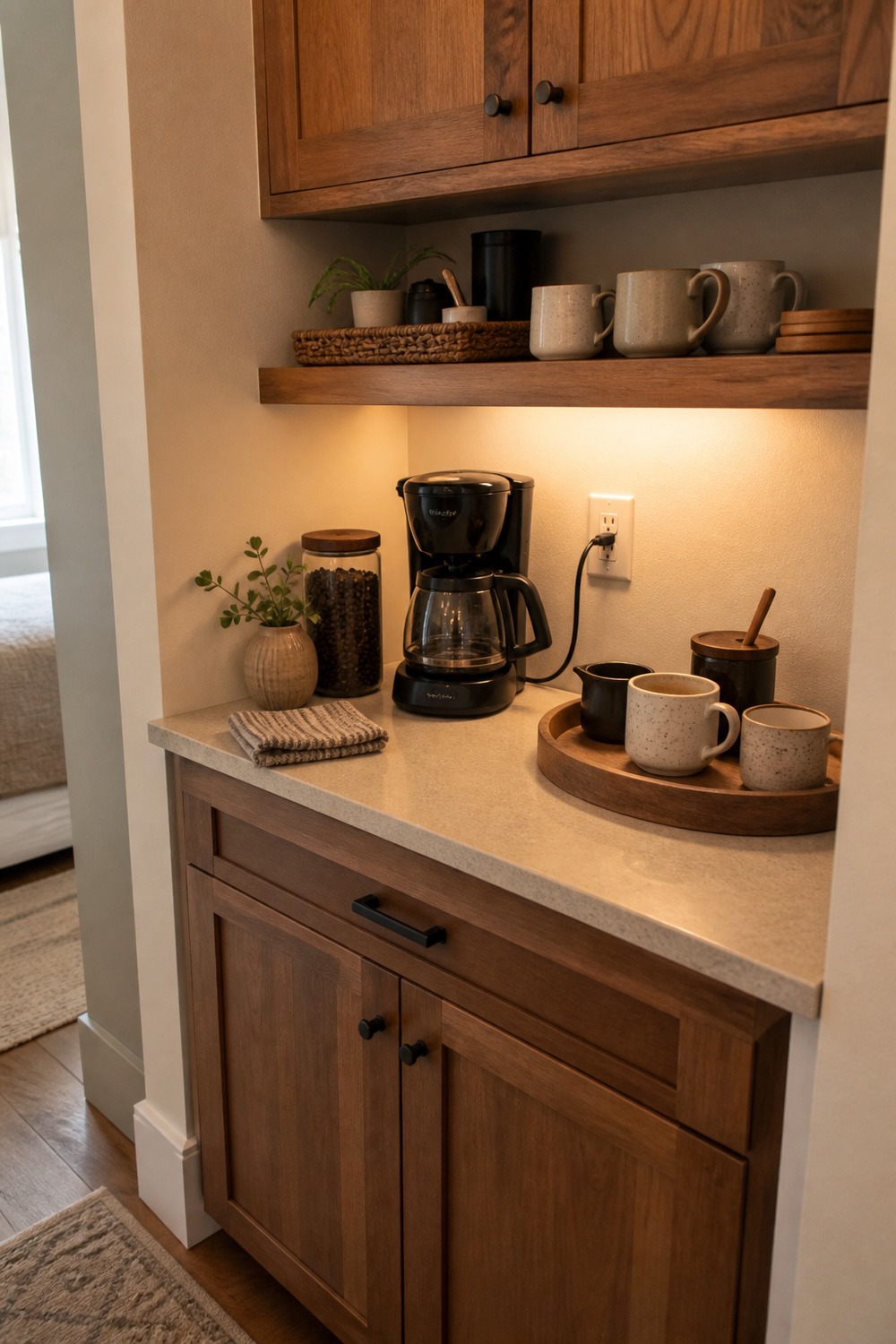
An under-cabinet nook is one of the easiest ways to make a coffee bar feel natural in a kitchen. The machine stays near the outlets, the shelves above can hold mugs, and the rest of the counter still feels usable.
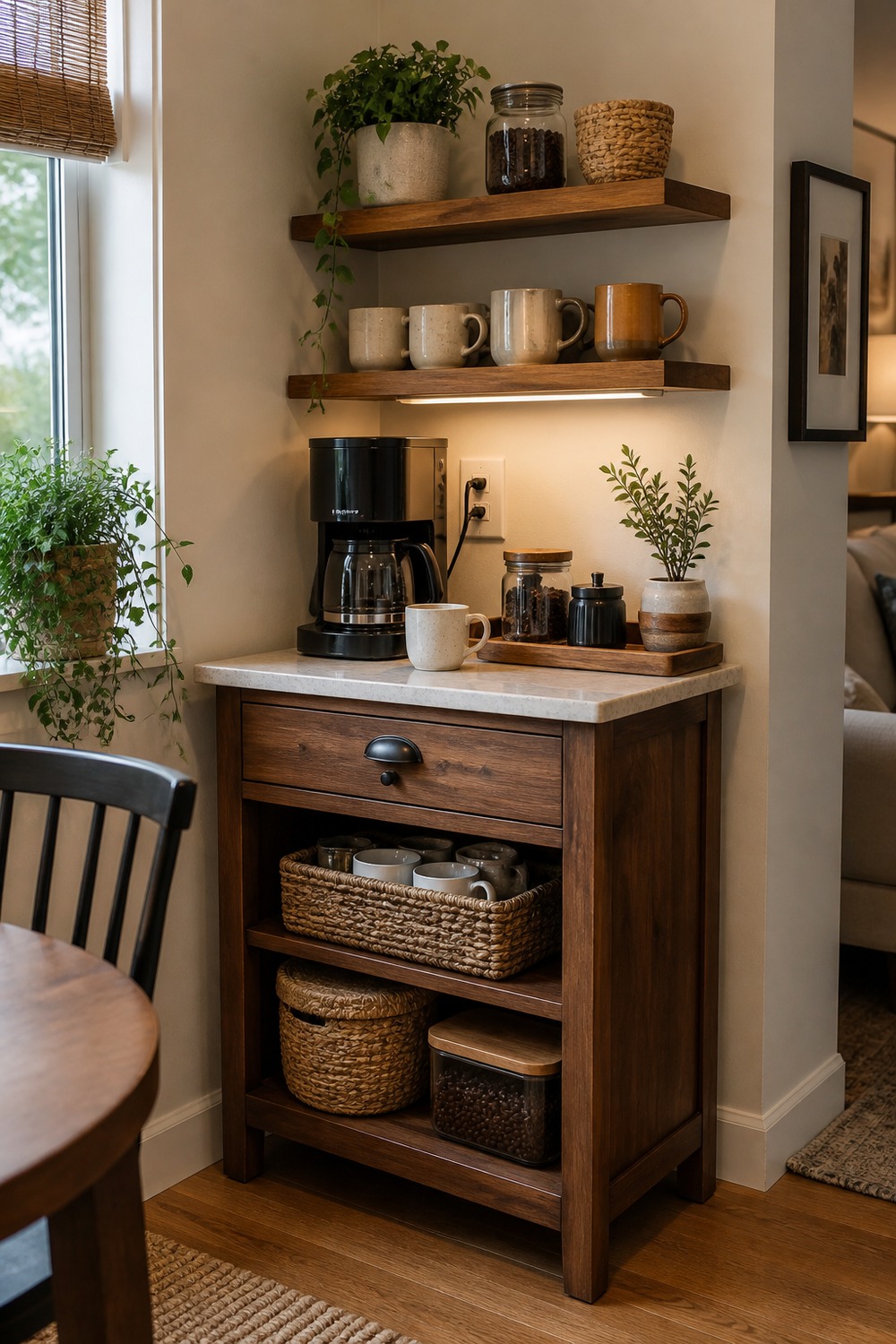
This unused dining corner finally has a purpose. A slim cabinet and a few shelves can turn a blank wall into a coffee spot without crowding the table or making the room feel like it gained extra furniture.
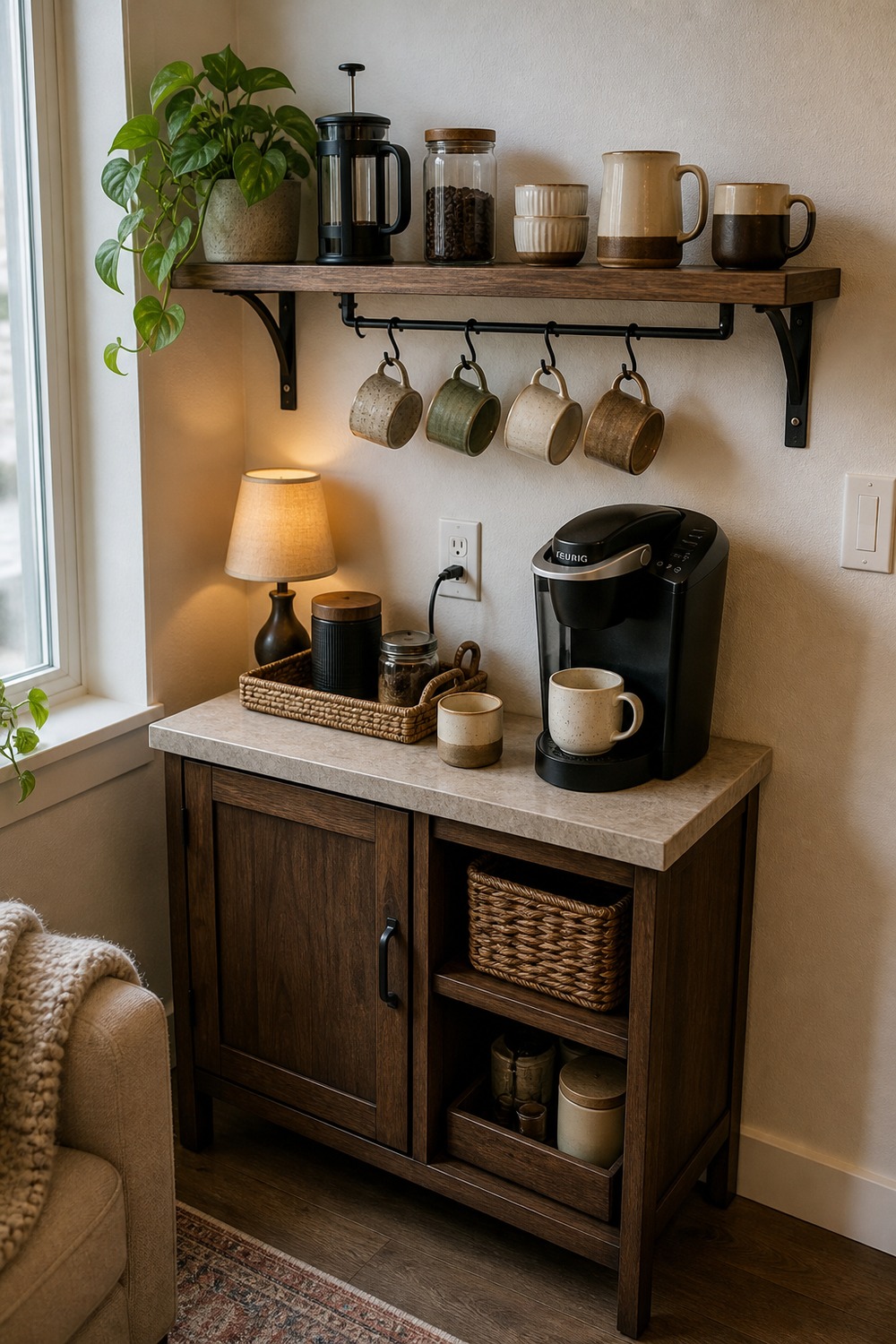
The wall-mounted shelf keeps the footprint tiny, which is useful when floor space is already spoken for. I like how the vertical storage gives the coffee bar some presence without needing a wide cabinet underneath.
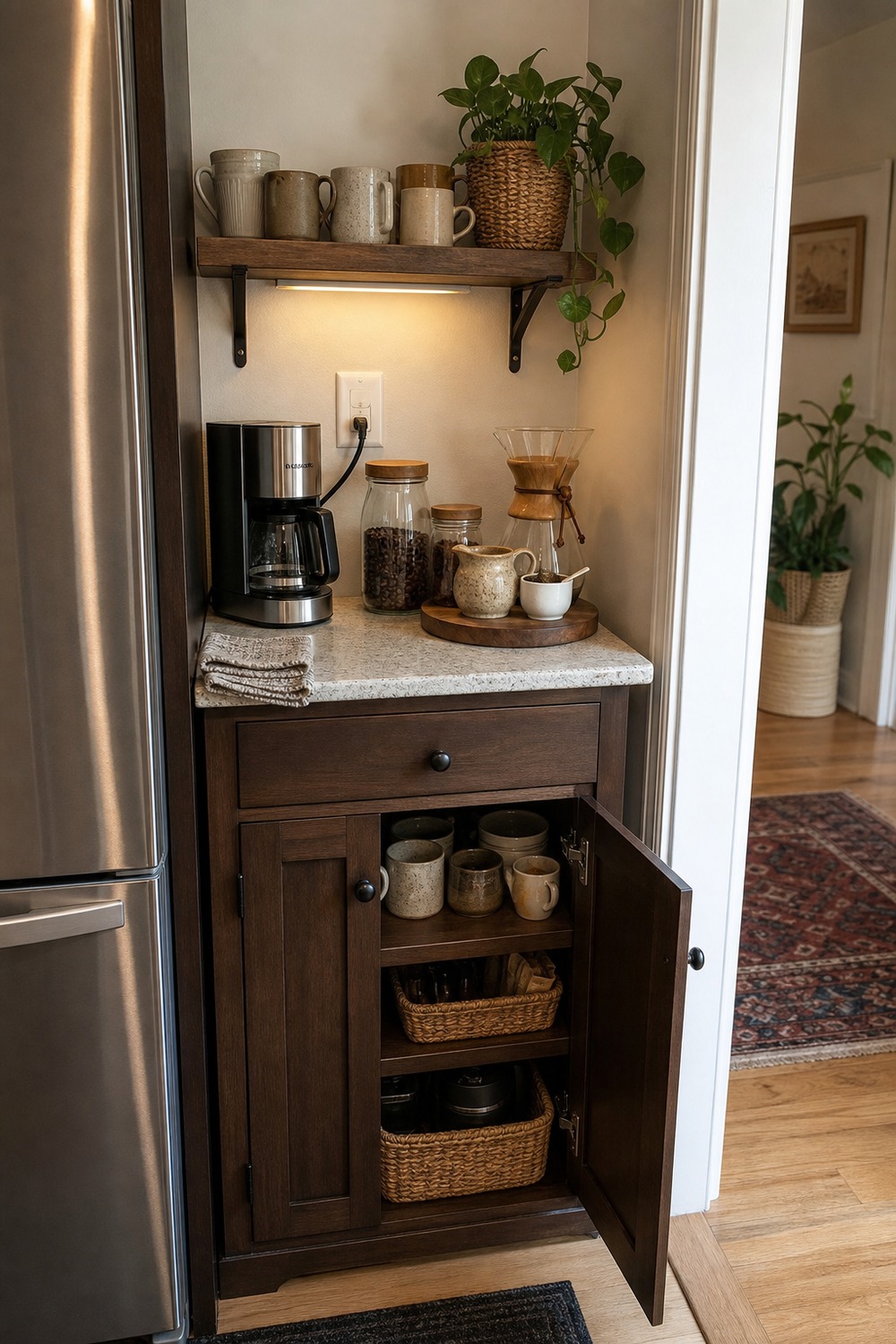
The fridge wall is a practical place for a coffee cabinet because it is already part of the kitchen flow. This setup makes use of that side space and keeps mugs, beans, and the machine close to the morning routine.
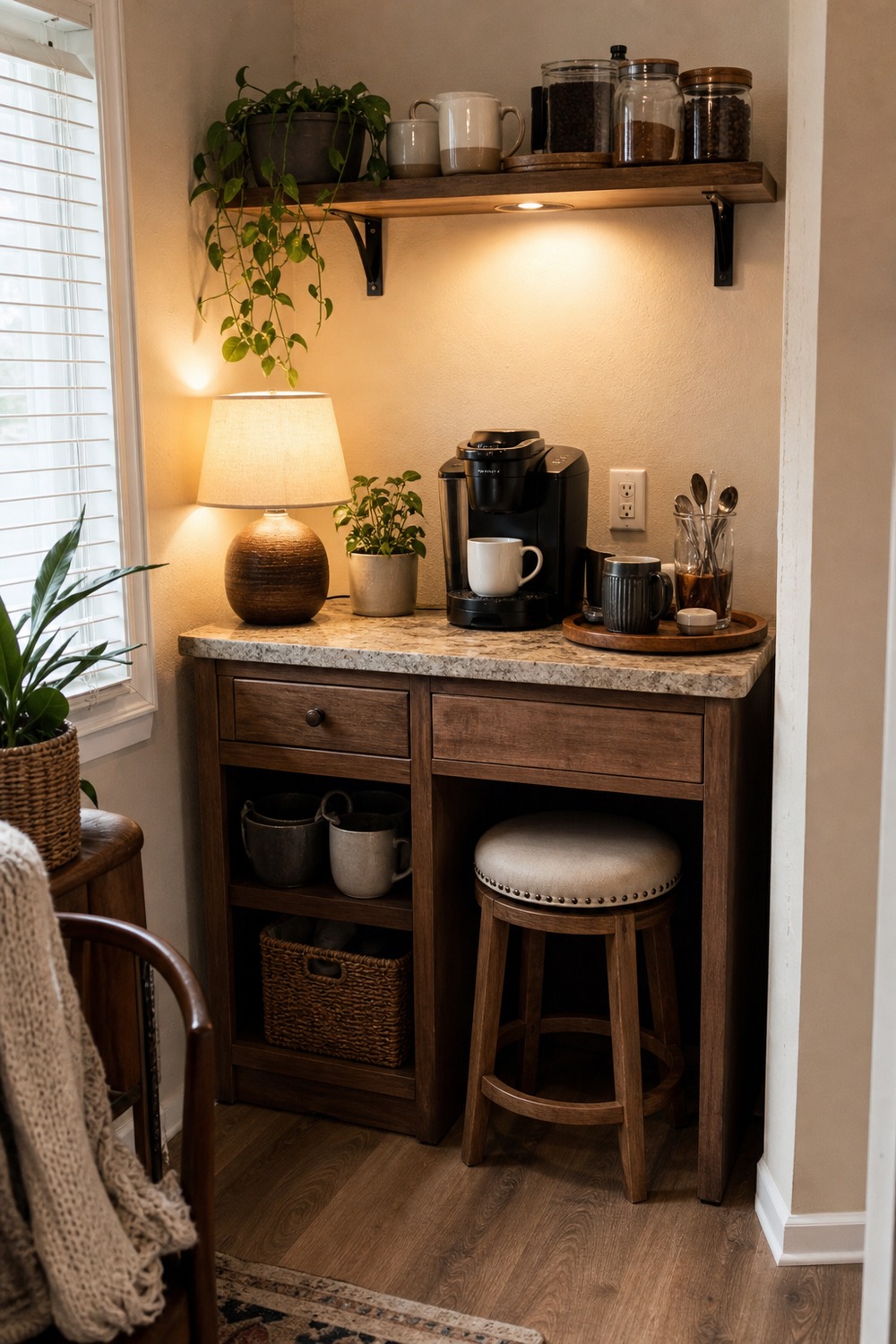
The stool storage makes this corner feel more flexible than a standard cabinet setup. It can hold a basket, a small seat, or extra supplies, and the coffee bar still reads as tidy from across the room.
A good coffee bar does not have to take over the room. If the mugs, machine, spoons, and extra supplies each have a place, even a tiny corner can start feeling like part of the home instead of another clutter spot.

I work in tech, but my taste in design is straight out of a slow European village. Give me arches, aged brass, and a room that smells like books and coffee. That’s my kind of home.