Dark kitchen cabinets can look amazing, but they also show every weak spot in the room. I care most about the counters, backsplash, lighting, and wood tones around them, because that is usually what keeps the kitchen from feeling heavy.
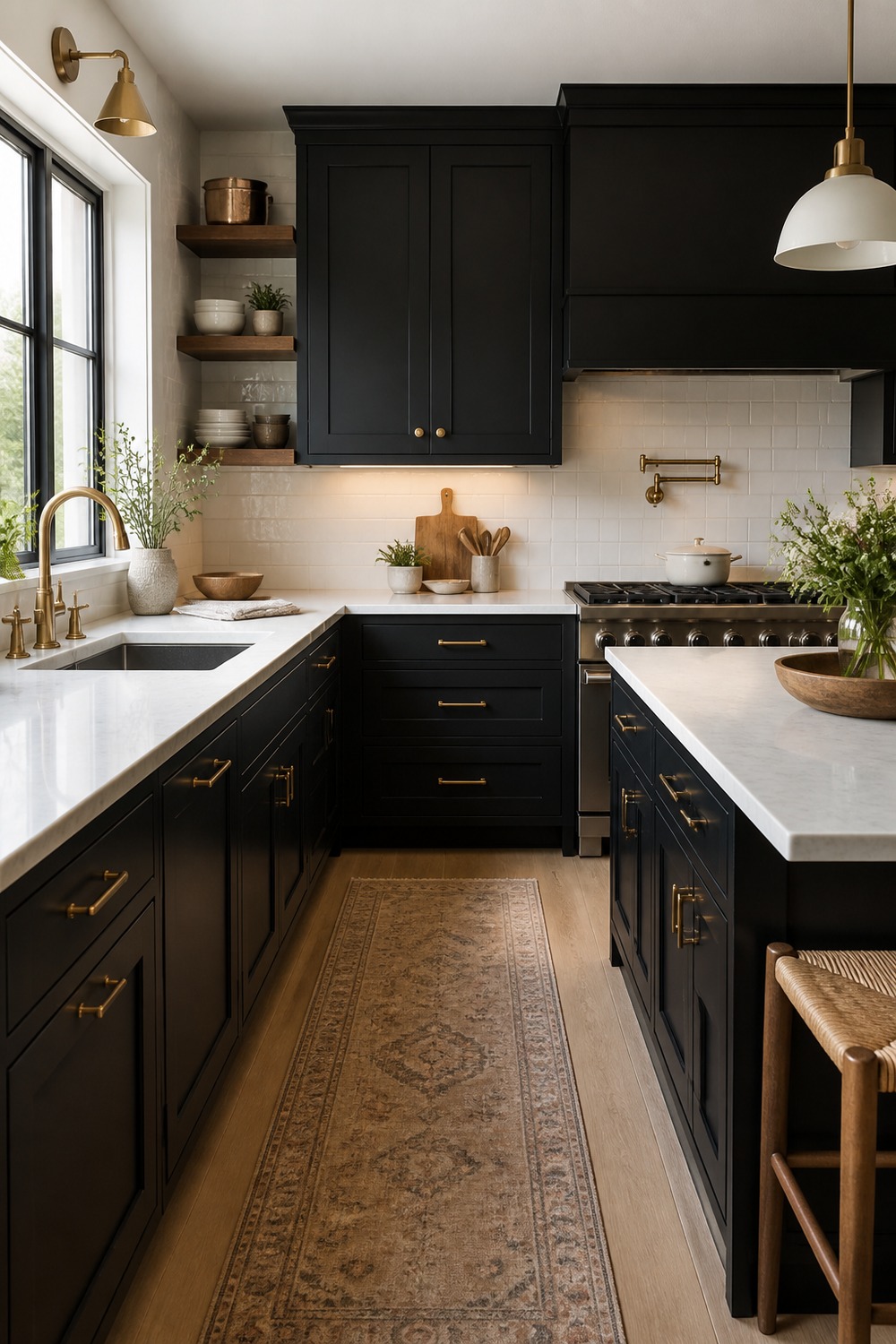
Matte black shaker cabinets are bold, but the white stone keeps them from swallowing the whole room. I like the oak shelves here because they give the wall somewhere warmer to land, and the brass pulls make the dark color feel finished instead of flat.
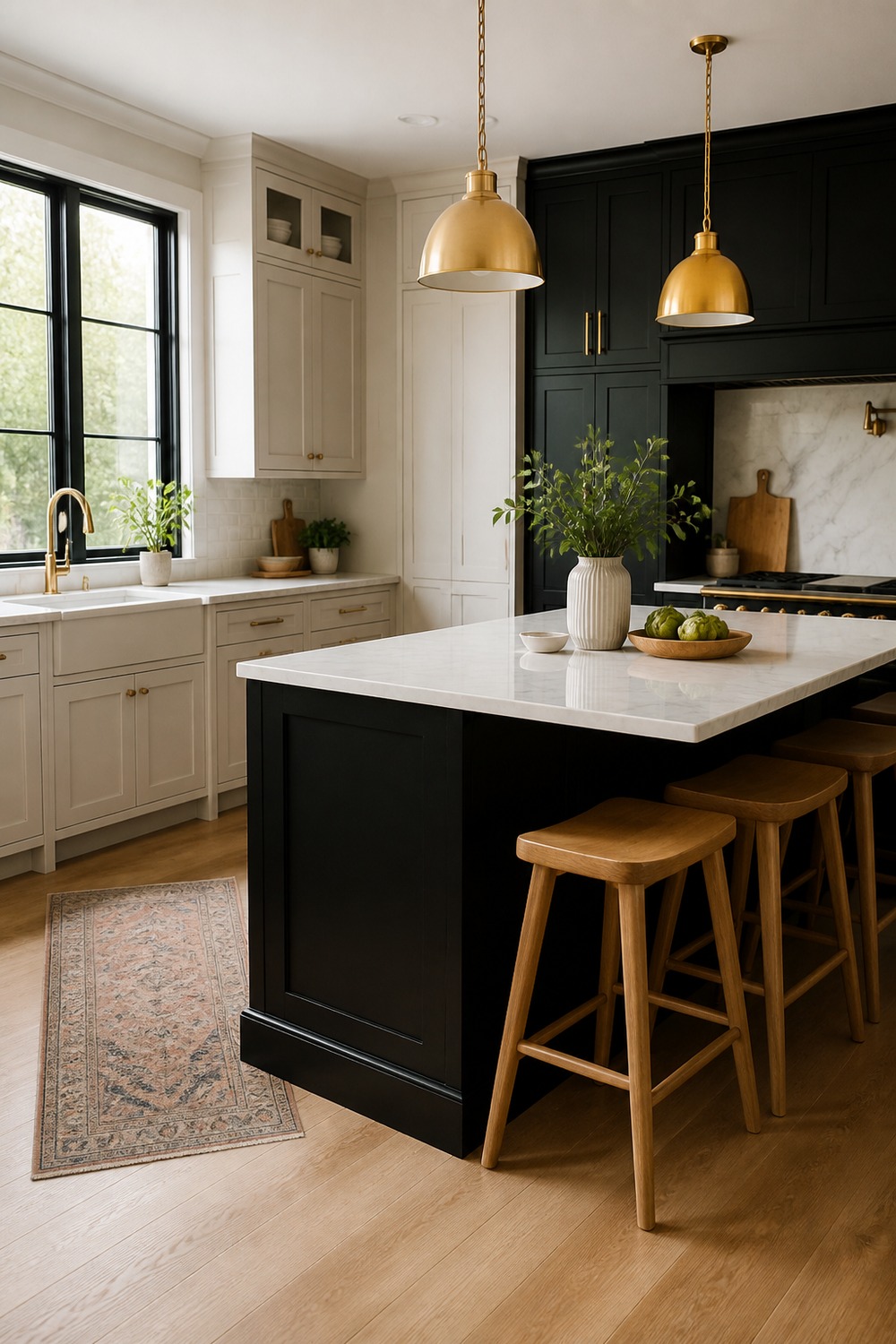
This is the kind of dark-cabinet palette that still feels easy to sit in. The black island gives the kitchen weight, while the wood stools and creamy perimeter cabinets soften the contrast so the room does not feel like one big black block.
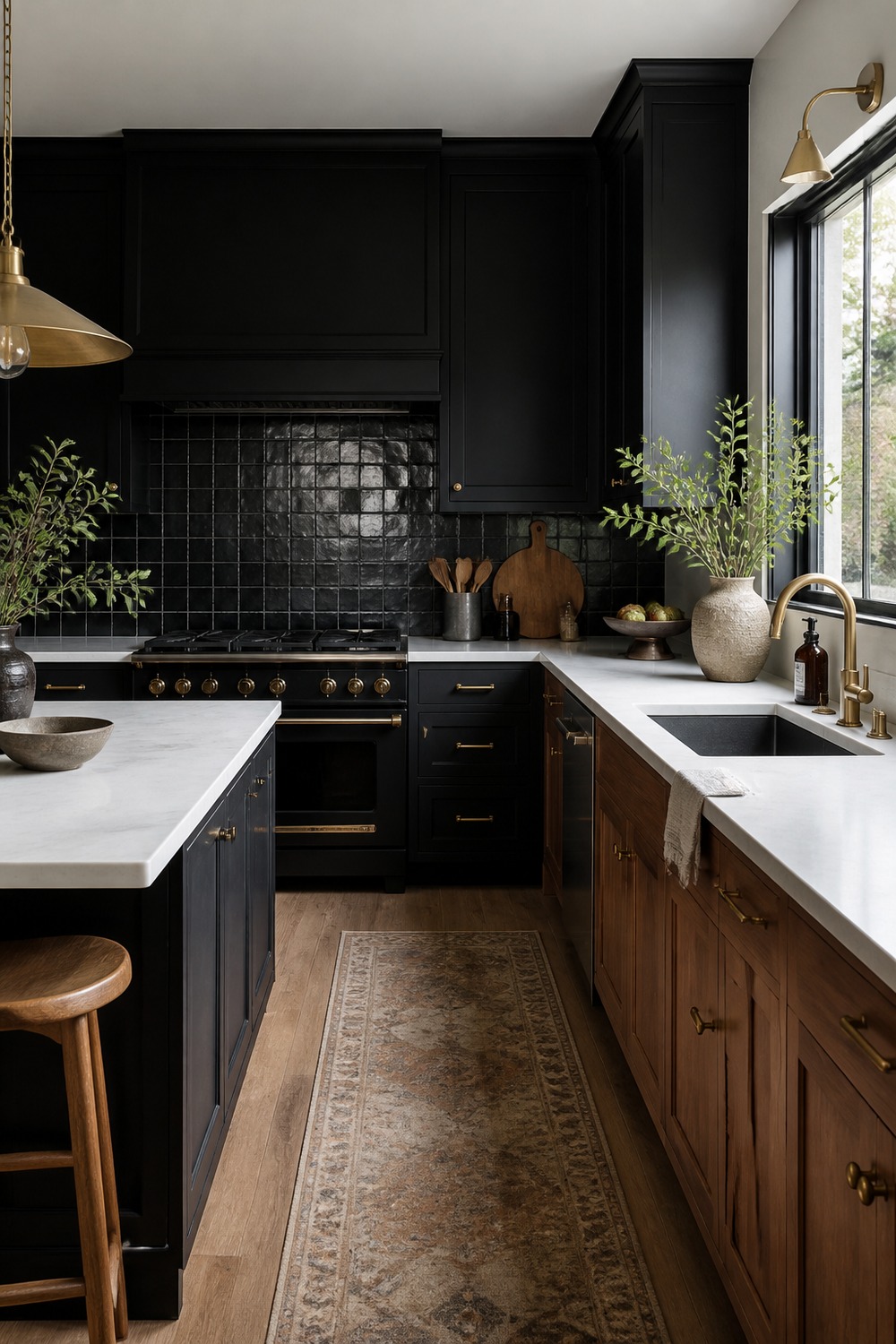
The glossy dark tile is what makes this one interesting to me. It gives the black cabinets a little movement, and the white counter keeps the prep area bright enough that the whole corner still feels usable.
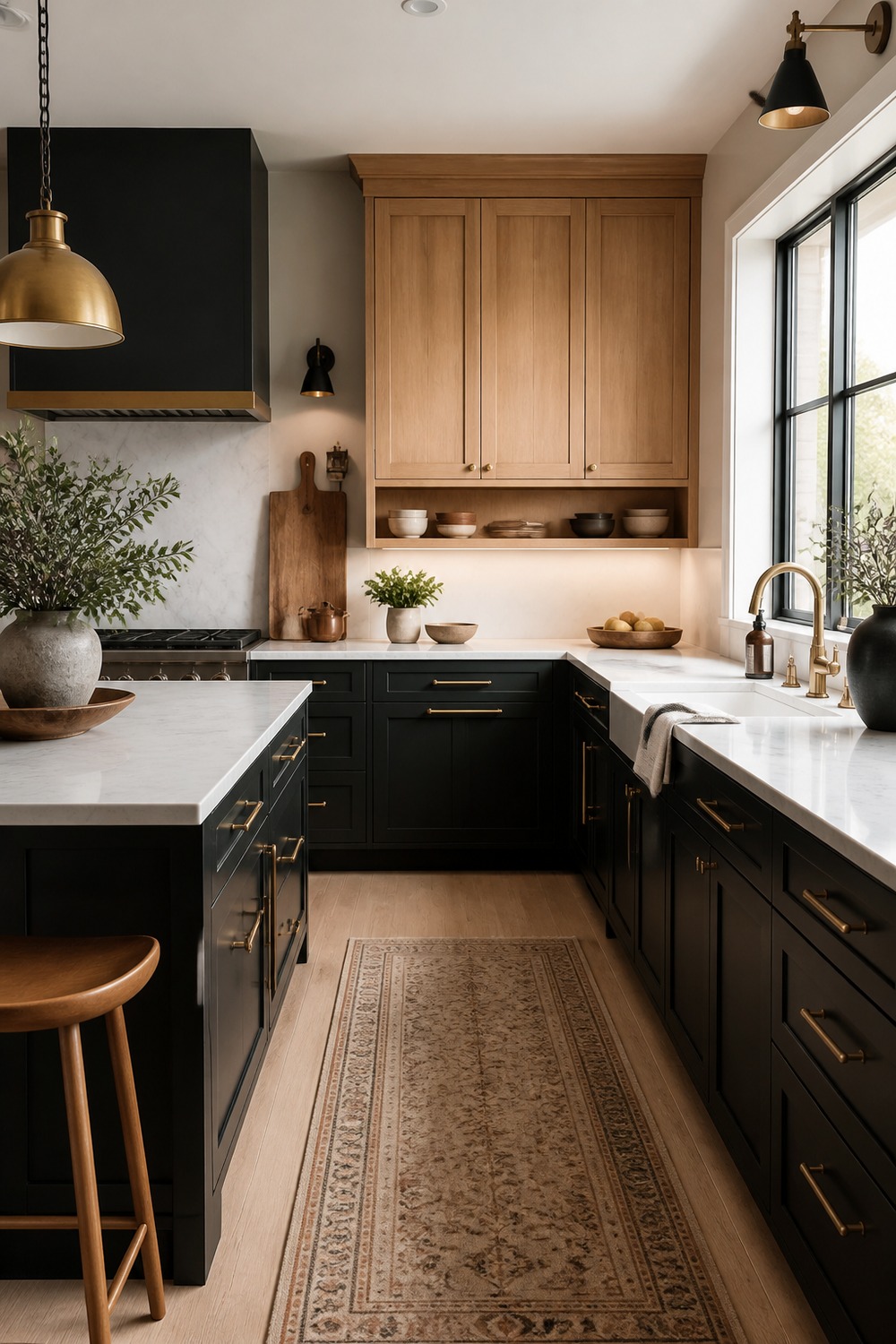
Black and oak is such a good pair when the room needs depth but not drama everywhere. The darker lower cabinets handle the grounding, while the natural wood uppers make the color scheme feel warmer and less severe.
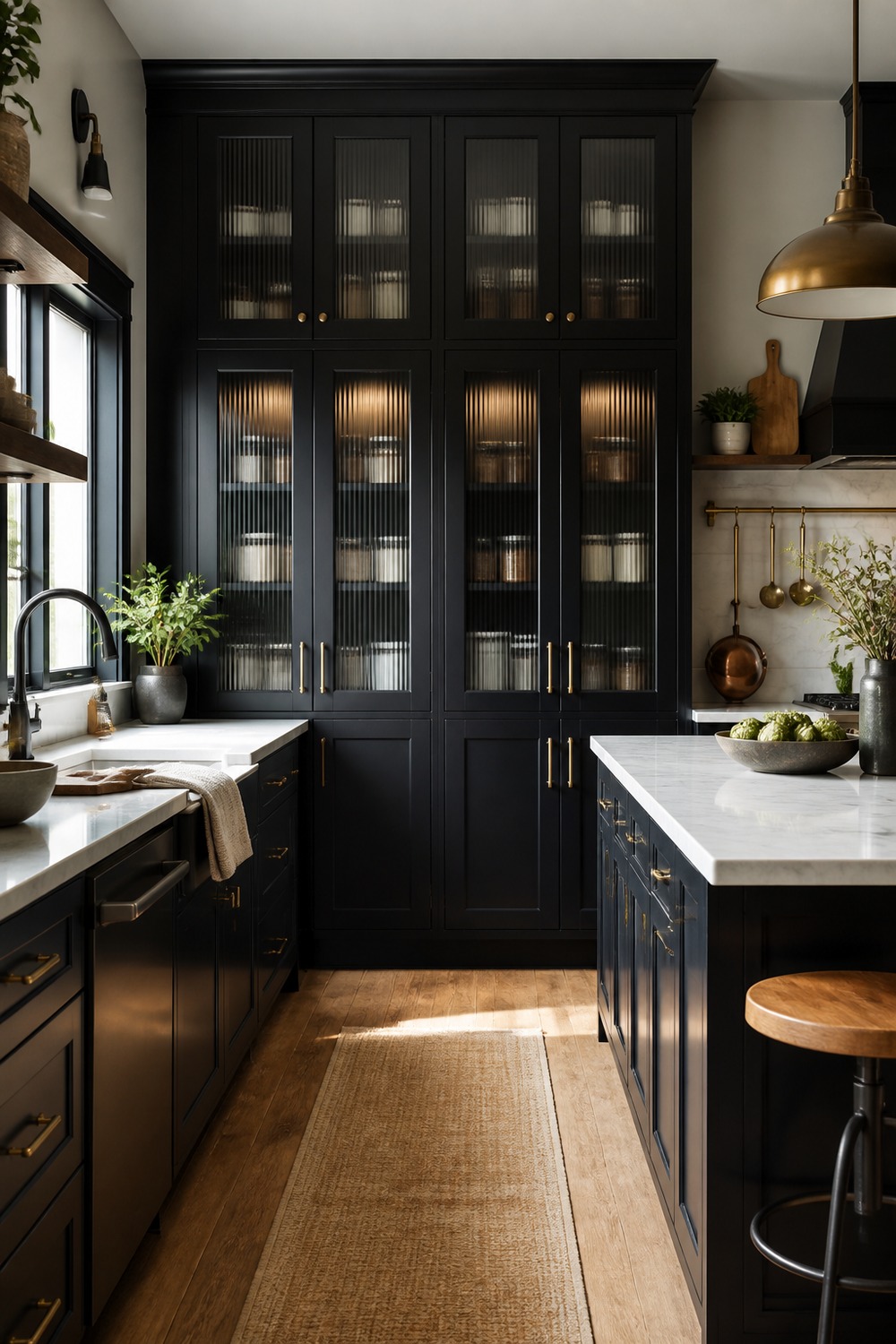
A tall black pantry wall can feel heavy fast, but the ribbed glass breaks it up in a really pretty way. I like that the storage still looks closed and tidy, while the glass gives just enough texture to keep the cabinets from feeling solid and bulky.
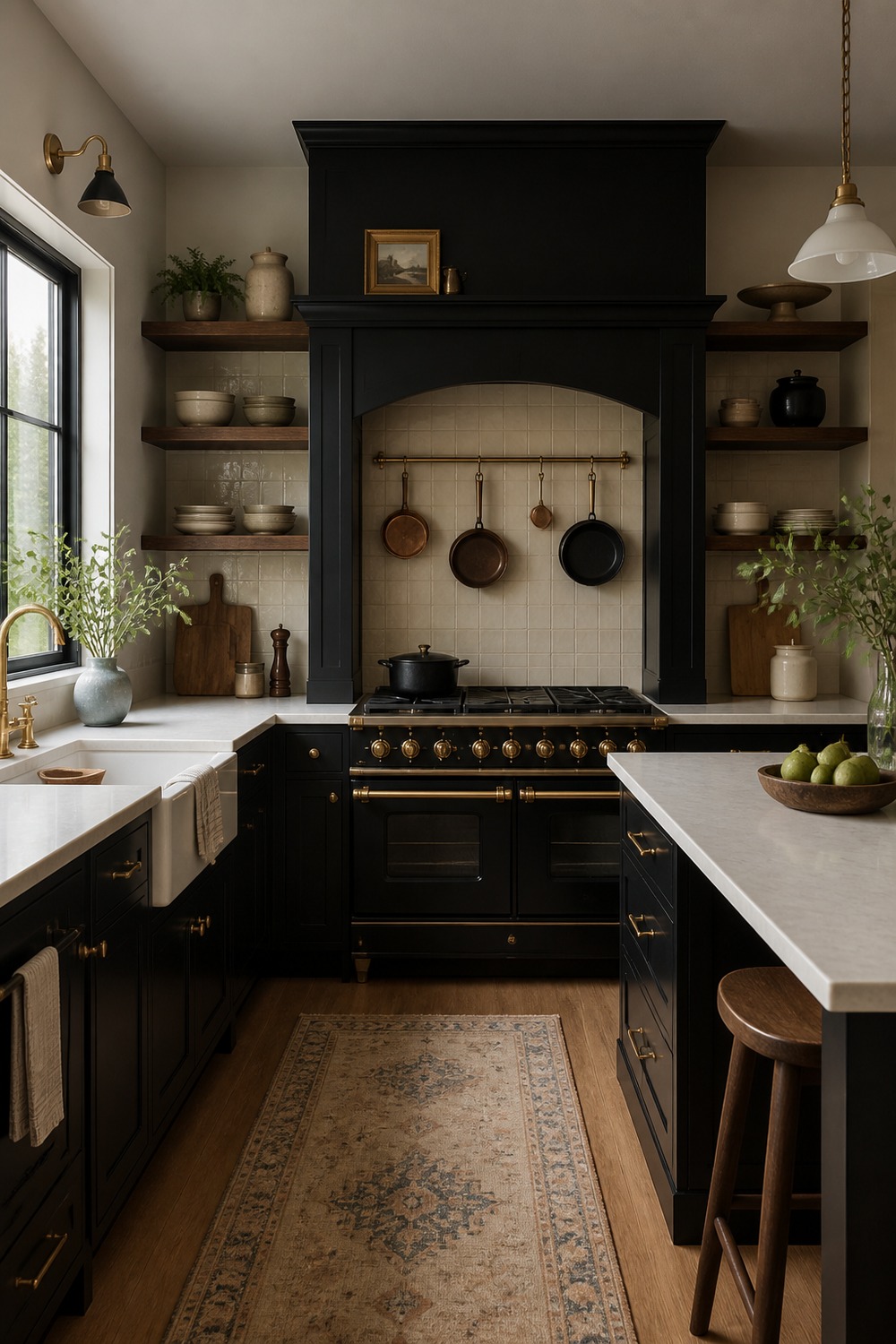
This range wall feels dramatic without turning the kitchen into a dark cave. The black hood surround is the anchor, but the cream tile and warm shelves keep the cooking zone bright enough for real weeknight use.
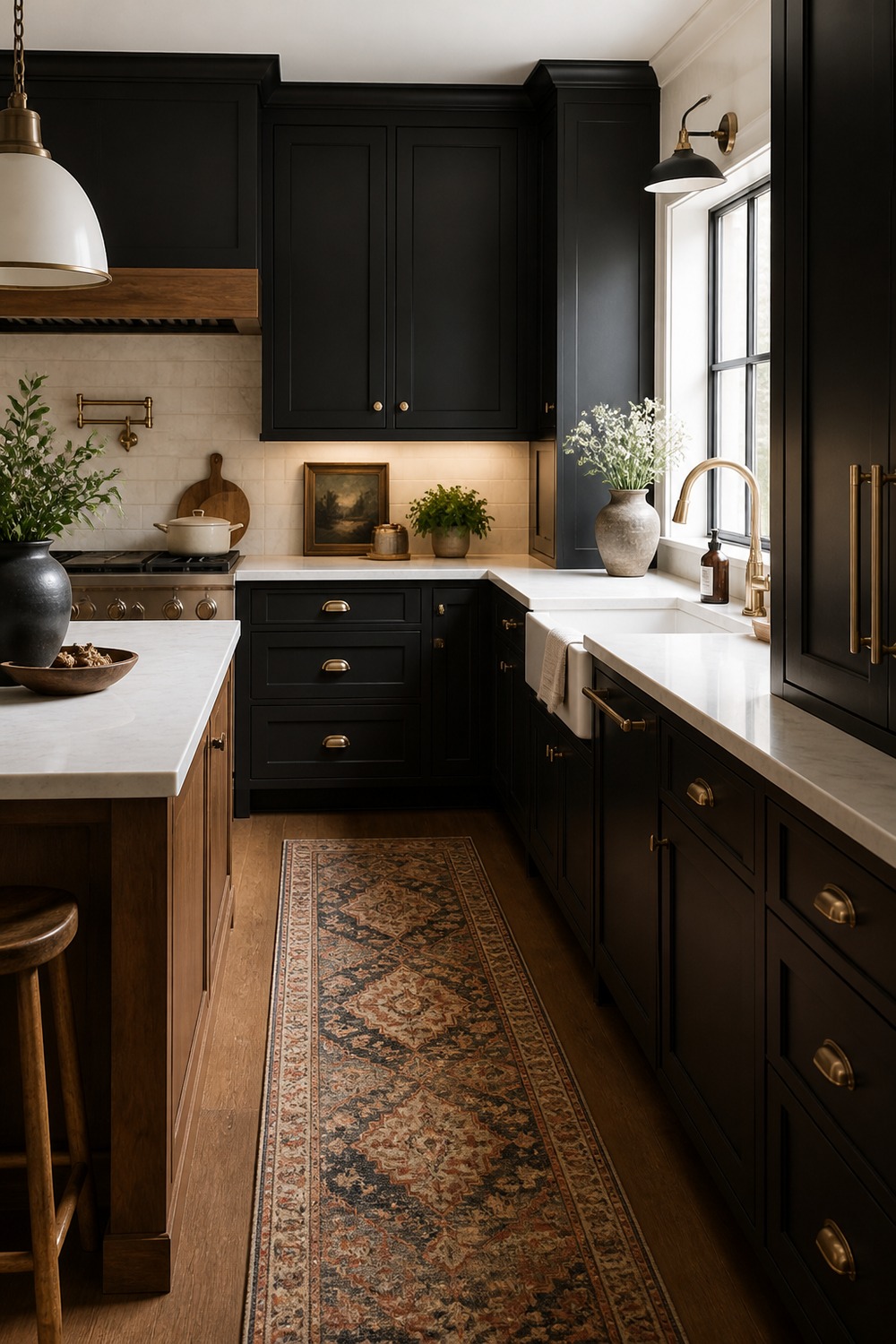
The vintage runner does a lot of work here. It brings pattern and age into the room, which makes the black cabinets feel more collected and less showroom-perfect.
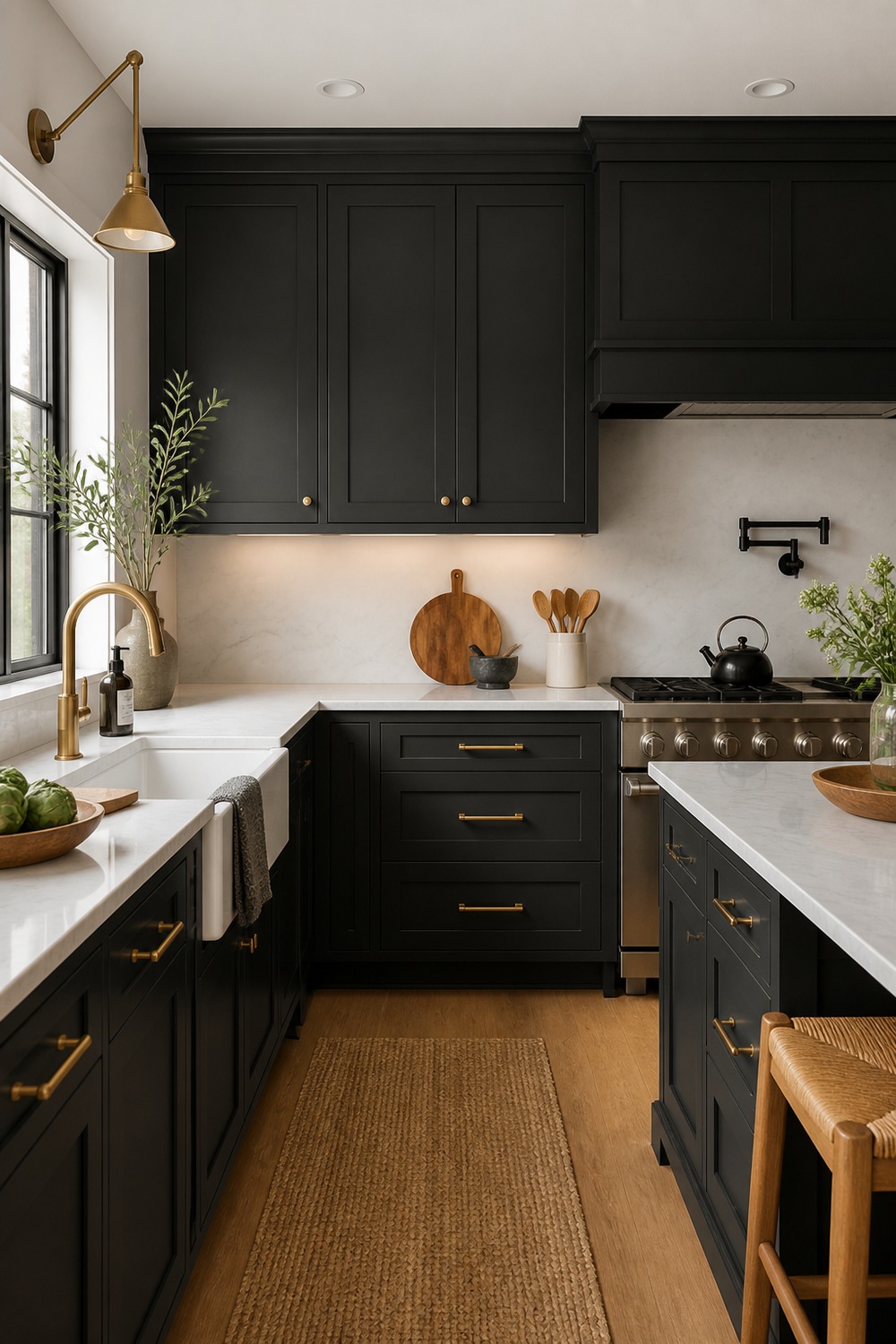
Charcoal is a softer way to do the dark-cabinet look if true black feels too sharp. The white stone and oak floor keep the palette clear, and the simple cabinet style makes the color feel calm instead of trendy.
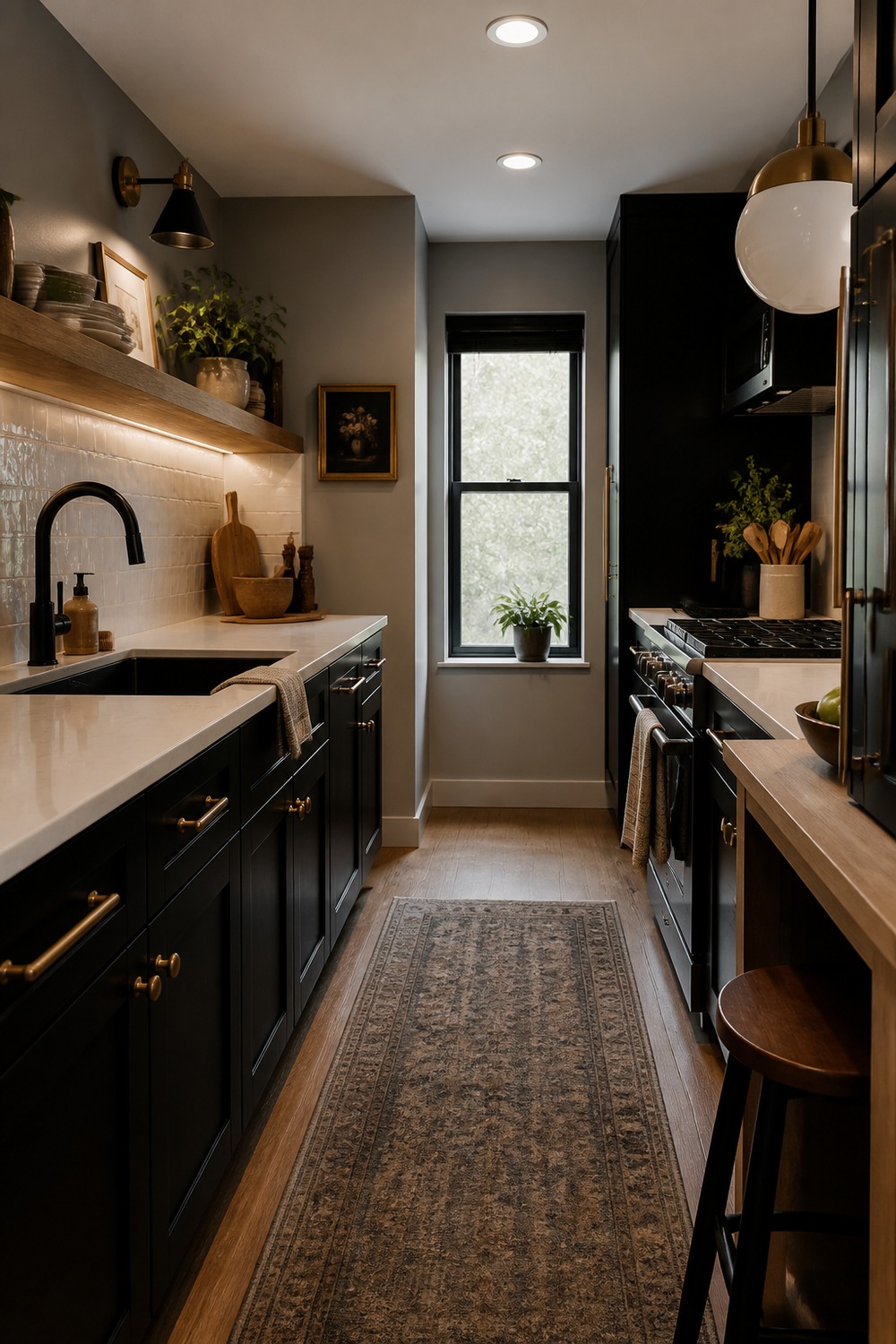
This small galley kitchen works because the dark cabinets are balanced with enough light surfaces. The cream counters and open walking path matter here, since a narrow kitchen can start feeling closed in really quickly.
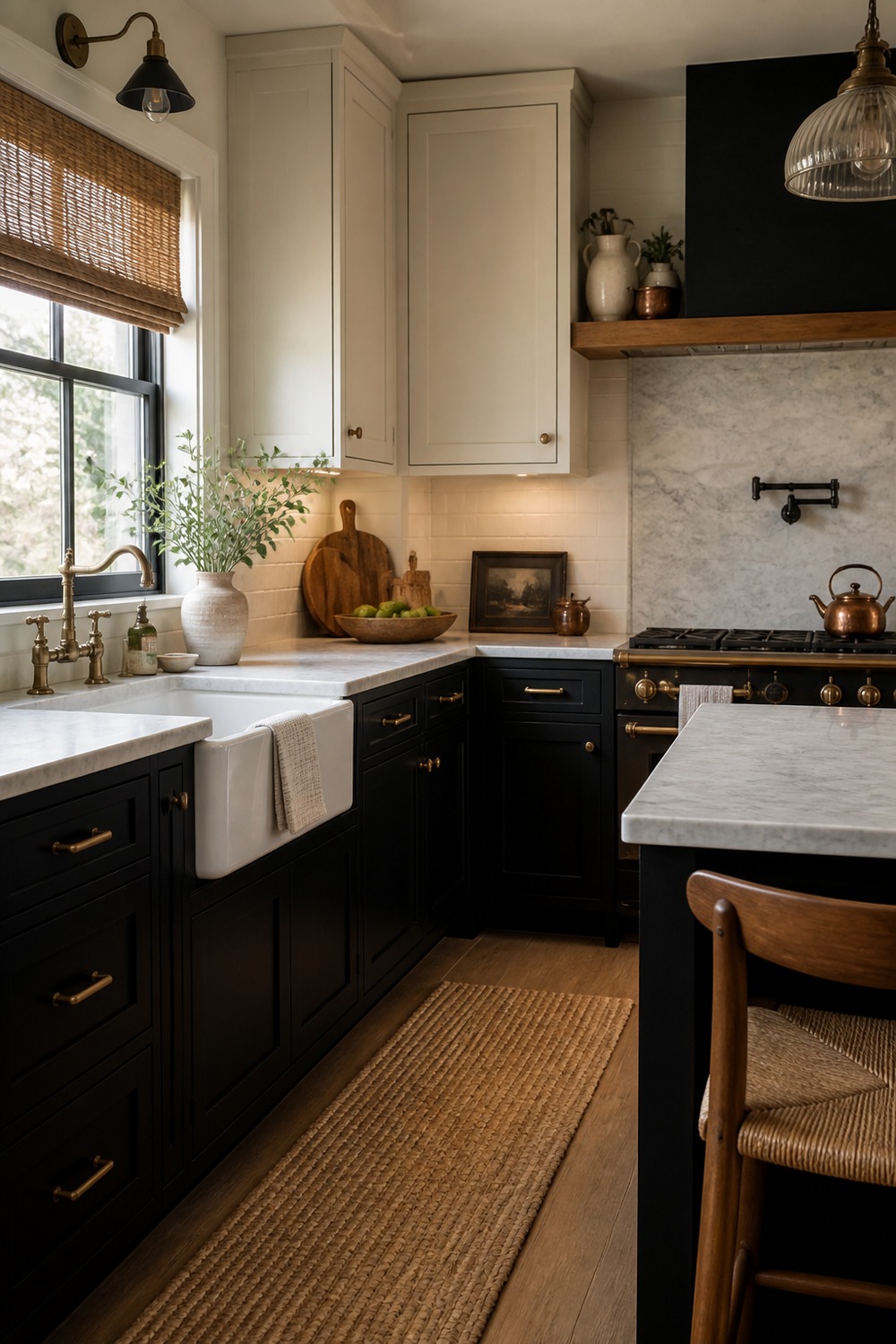
Black and cream always feels a little more relaxed than black and bright white. The paneled details and oak shelf give this kitchen that cottage softness, while the darker base cabinets still make the room feel grounded.
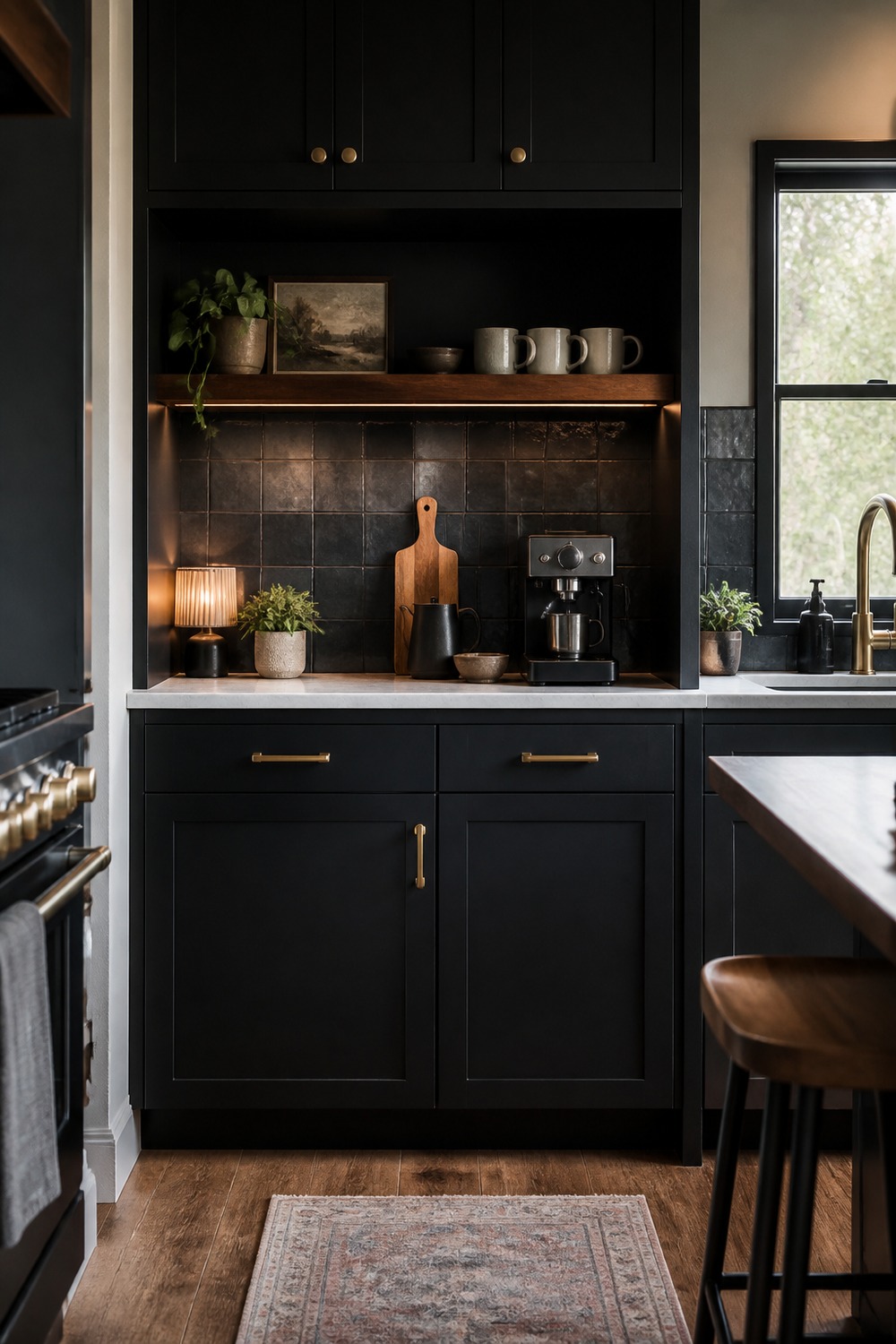
I like this as a darker little work zone rather than a full wall of heavy cabinetry. The black tile, wood shelf, and simple mugs make the corner feel useful for coffee or prep without adding a bunch of visual clutter.
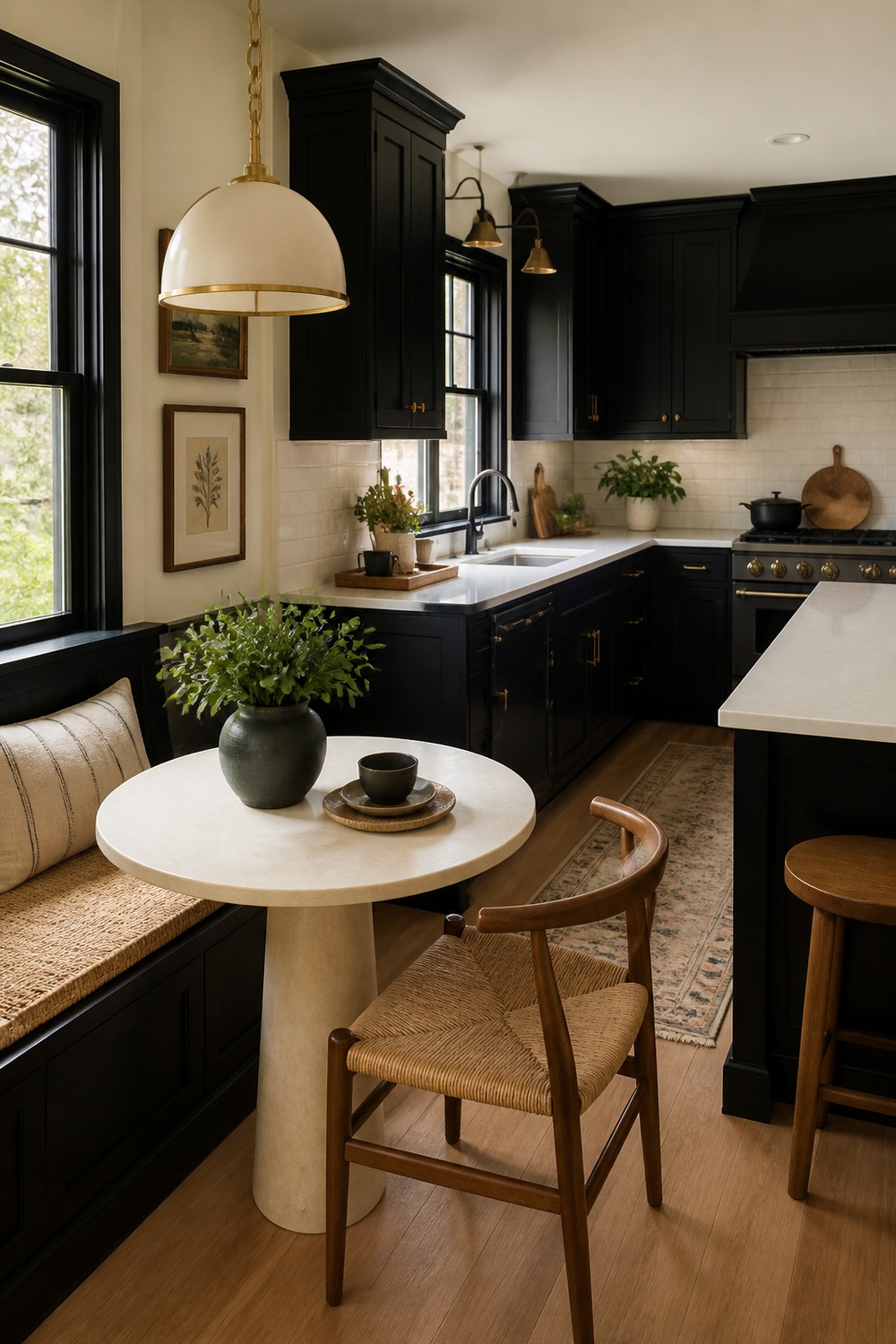
The built-in black bench makes this kitchen edge feel intentional instead of like leftover space. A small cream table and woven cushion help the dark color feel more welcoming, especially if the nook gets used for coffee, homework, or quick meals.
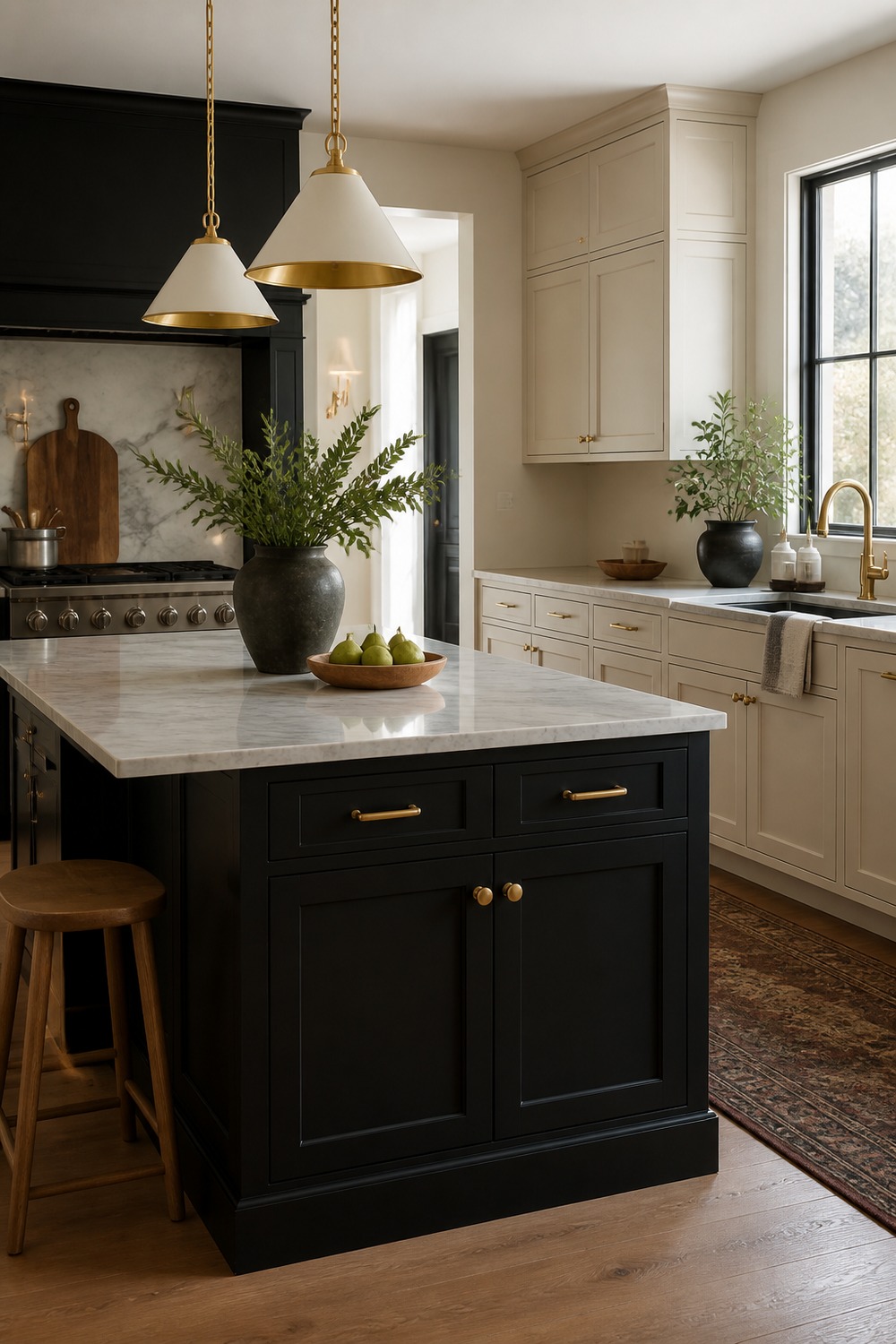
Brass hardware is the small detail that keeps this black island from looking too plain. The stone counter gives the surface brightness, and the warm pendant lights make the dark cabinet color feel richer.
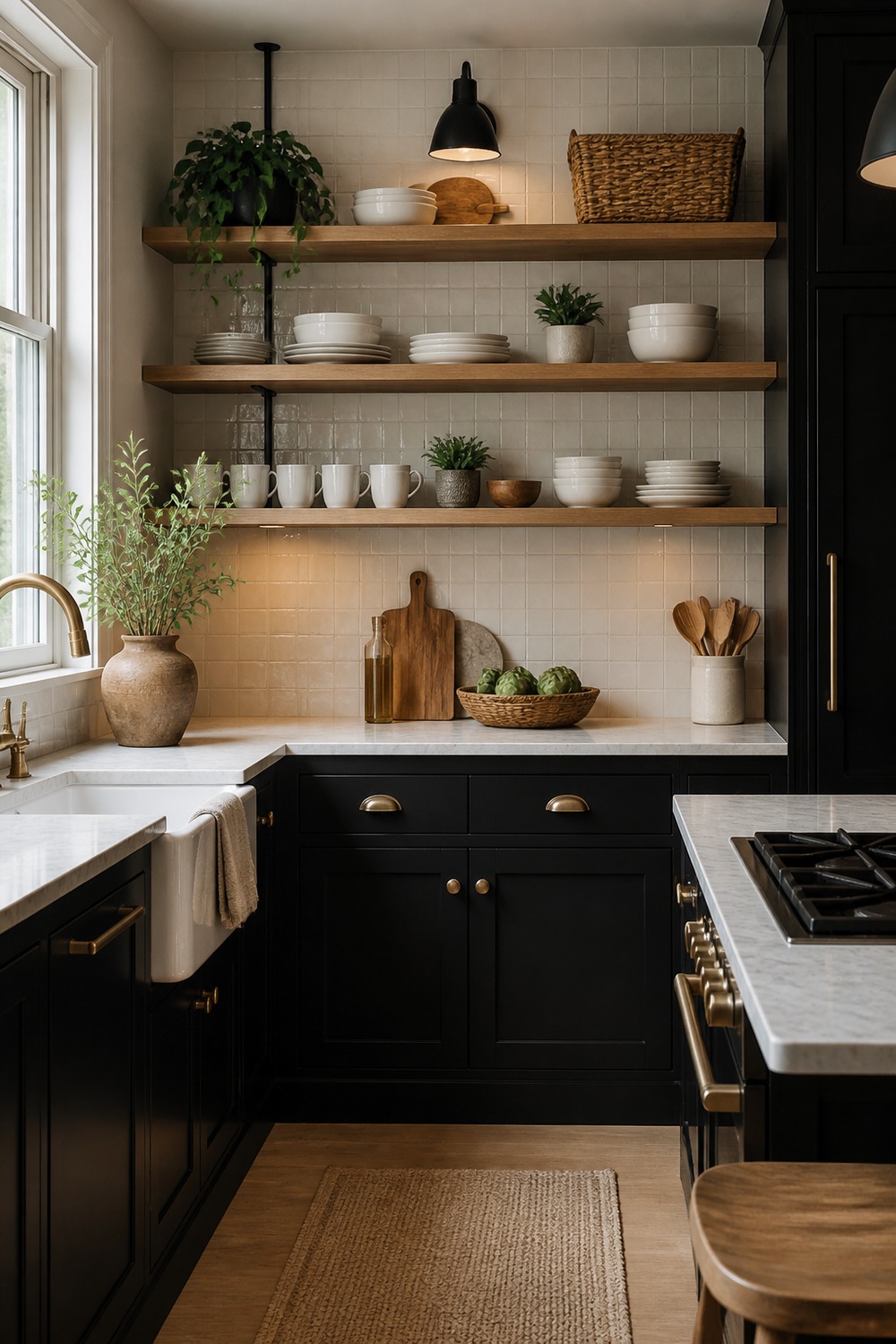
Open shelves can make dark cabinets feel less boxed in when they are used carefully. The wood shelves, white dishes, and baskets add lighter breaks, so the black lower cabinets still feel strong without taking over the wall.
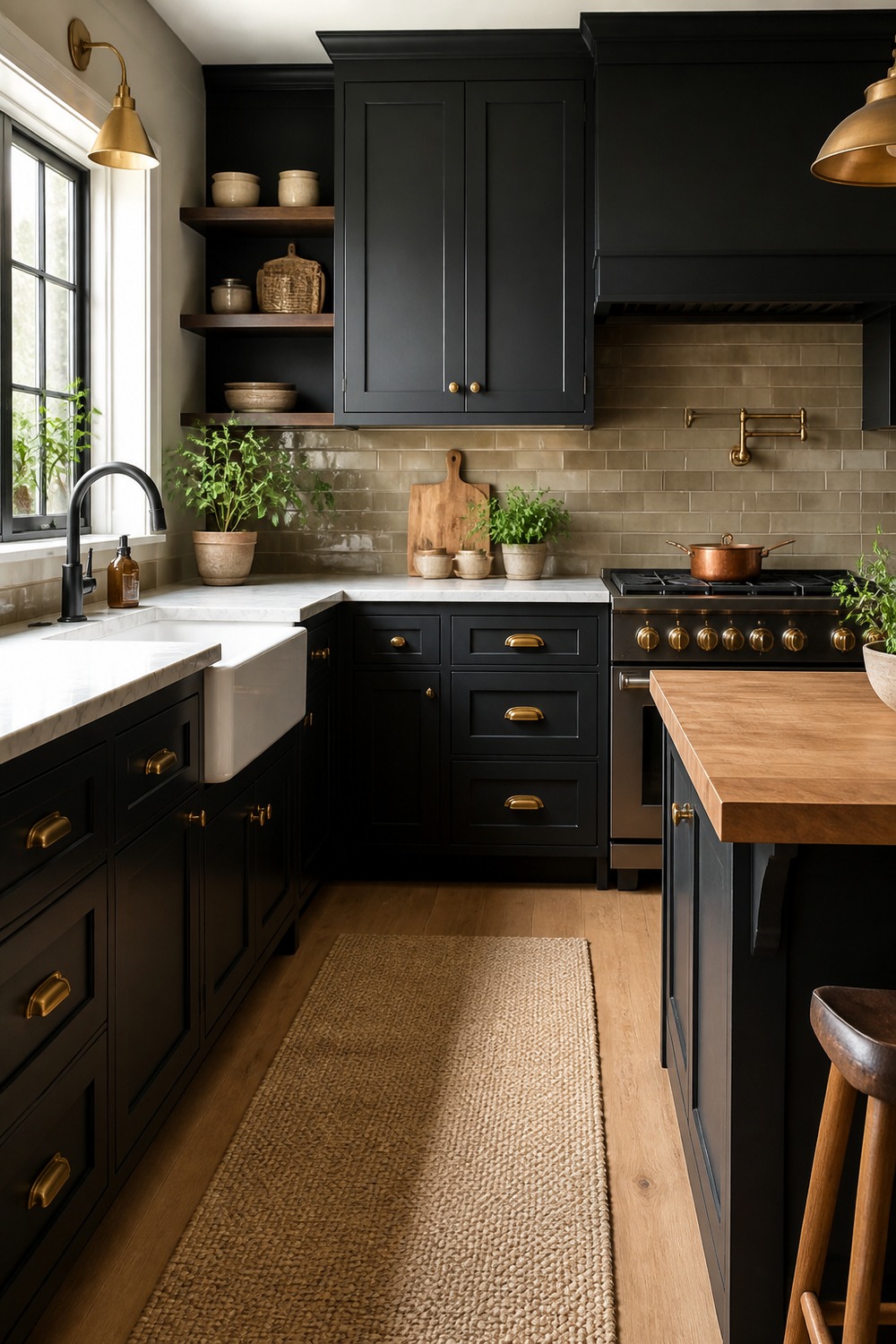
Taupe is a nice middle color with black cabinets because it softens the contrast without going beige everywhere. The butcher-block detail and brass hardware make the scheme feel warmer, which matters a lot when the cabinets are this dark.
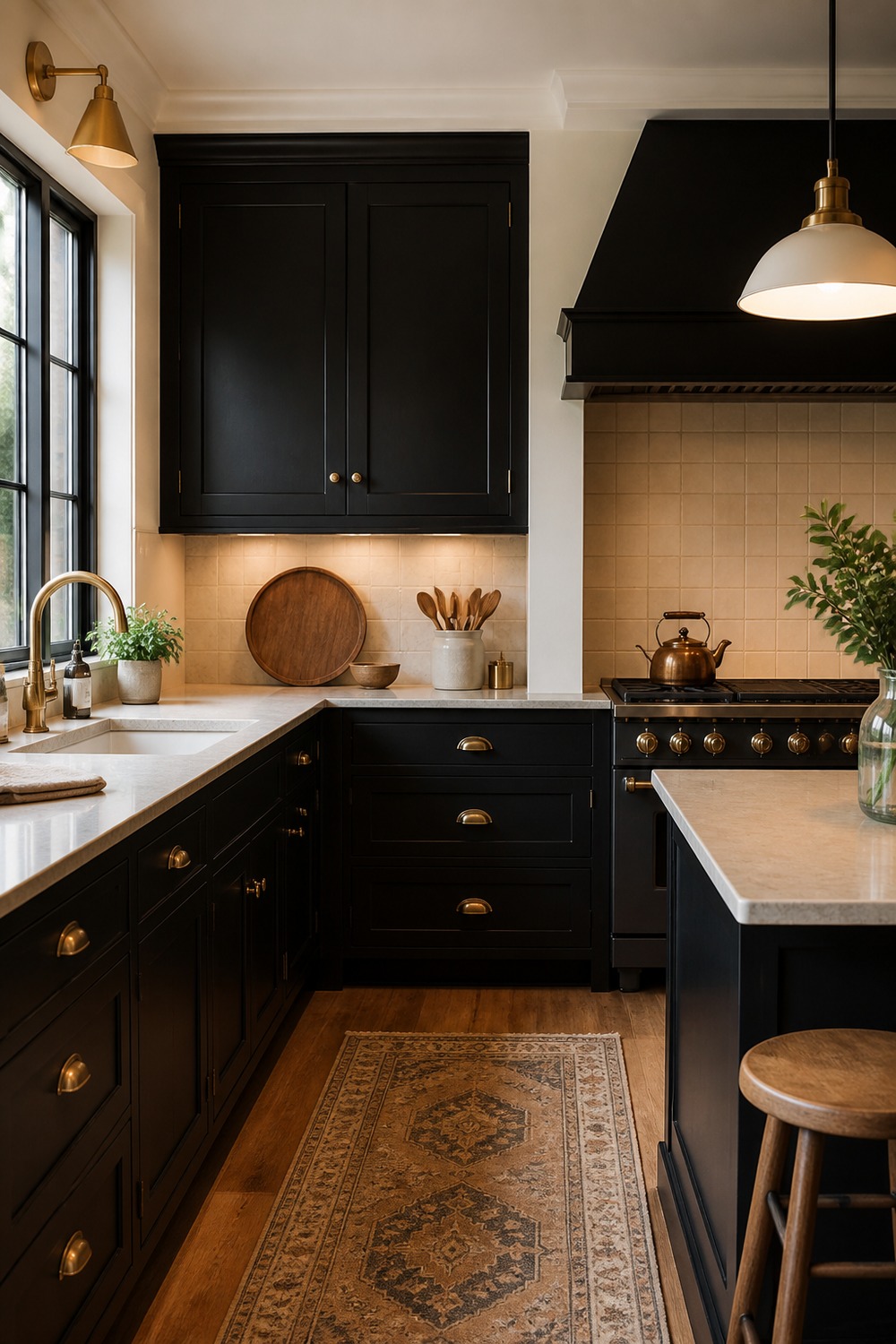
This one feels more classic than trendy to me. Black cabinetry, cream walls, and a warm stone counter are simple choices, but together they make the kitchen feel settled and easy to keep looking pulled together.
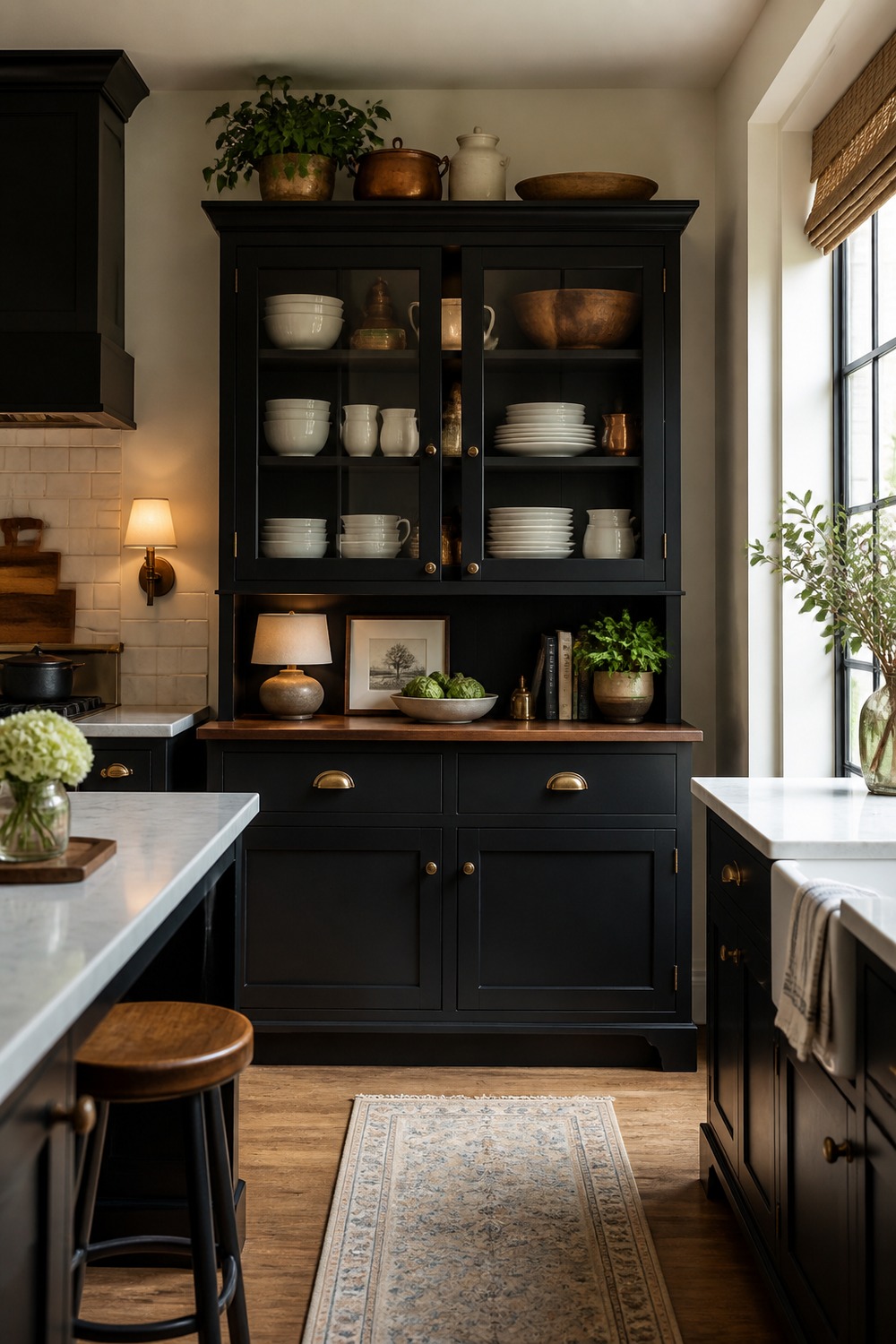
A freestanding black hutch is a good way to bring dark cabinetry into a kitchen without committing every cabinet to the same color. The plates and cream wall around it keep the piece from feeling too heavy.
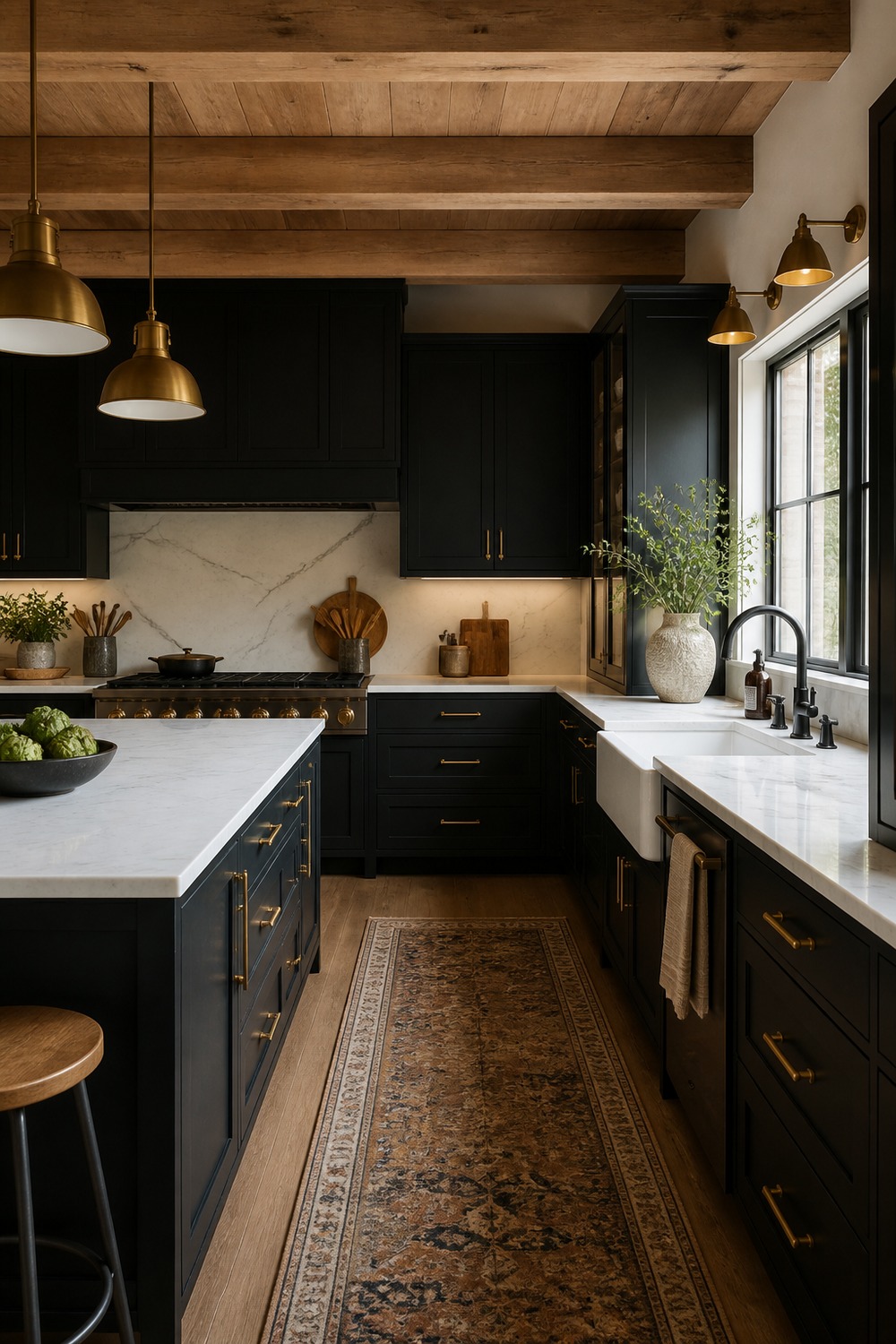
The warm wood ceiling changes the whole mood of this dark kitchen. Instead of black cabinets feeling stark, the beams pull the color scheme toward something richer, softer, and a little more lived-in.
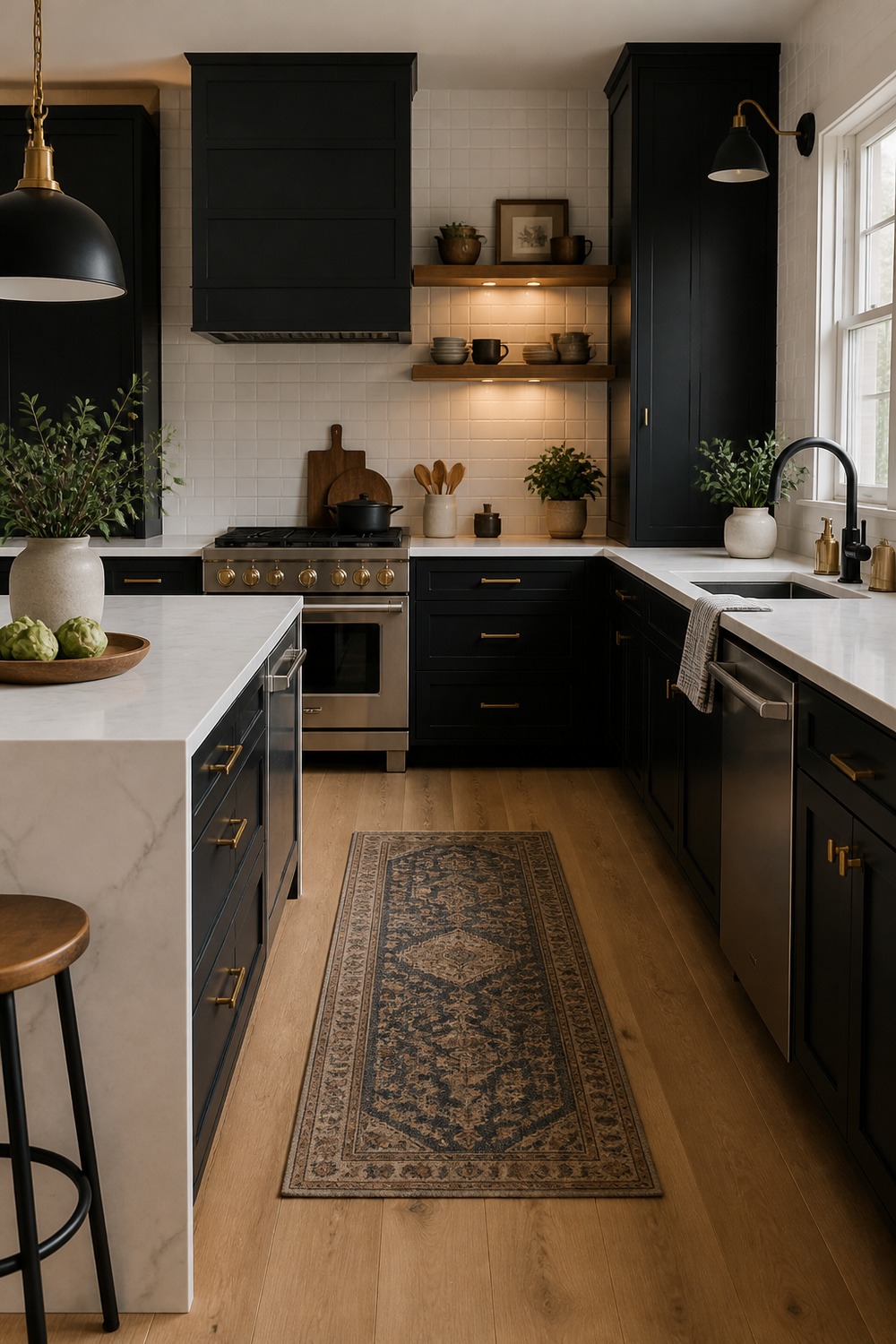
Flat-panel black cabinets need clean contrast so they do not read too cold. The waterfall counter, walnut accents, and open shelf detail give this modern kitchen enough texture to keep the dark color from feeling blank.
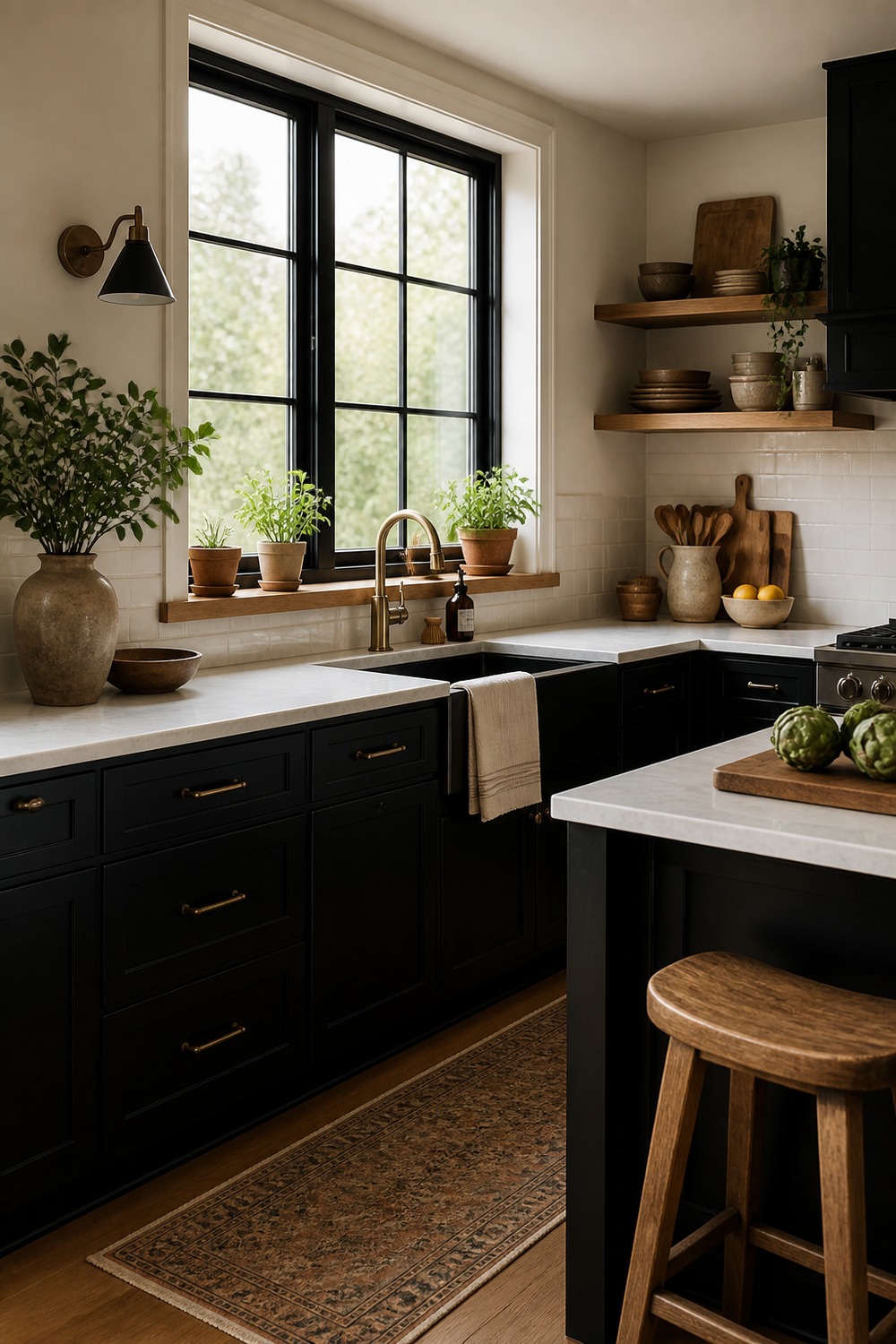
A window over the sink makes black cabinets much easier to live with. The daylight, brass faucet, and pale counter all help the dark lower cabinets feel intentional instead of gloomy.
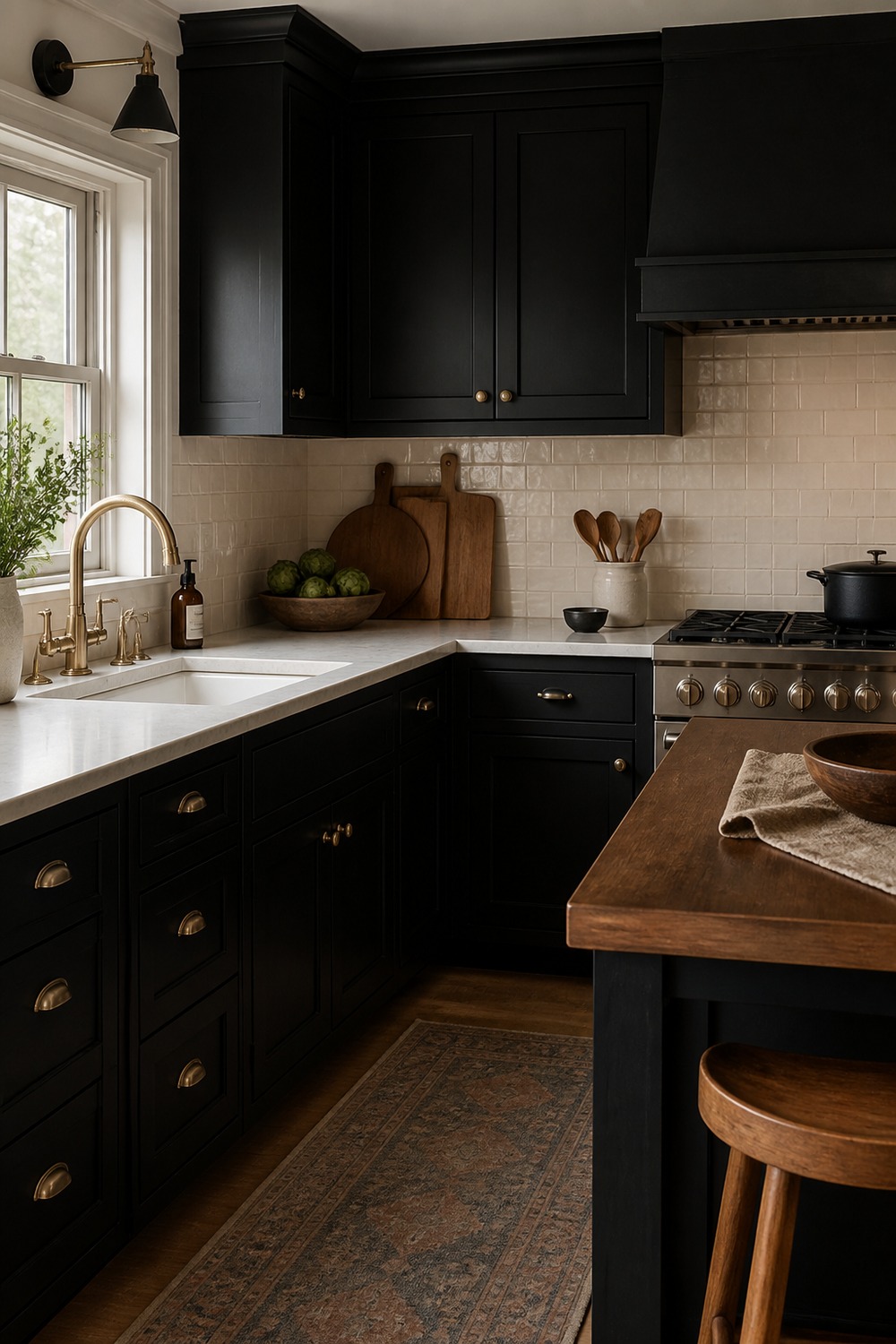
This corner is moody in a good way because the black cabinets are not alone. The warm lamp glow, wood counter pieces, and patterned rug give the color scheme a real-room feeling, not just a dramatic paint choice.
The best dark-cabinet kitchens usually have something softening the edges: warm wood, cream tile, brass, daylight, or a textured runner. That is what makes the color scheme feel like a real kitchen instead of just a bold cabinet choice.

I work in tech, but my taste in design is straight out of a slow European village. Give me arches, aged brass, and a room that smells like books and coffee. That’s my kind of home.