An earthy kitchen still has to survive real counters: dishes by the sink, crumbs on the island, and that cutting board that somehow never gets put away. I like this kind of palette best when it has one grounded note, like olive paint, clay tile, walnut, or warm stone, instead of turning the whole room beige.
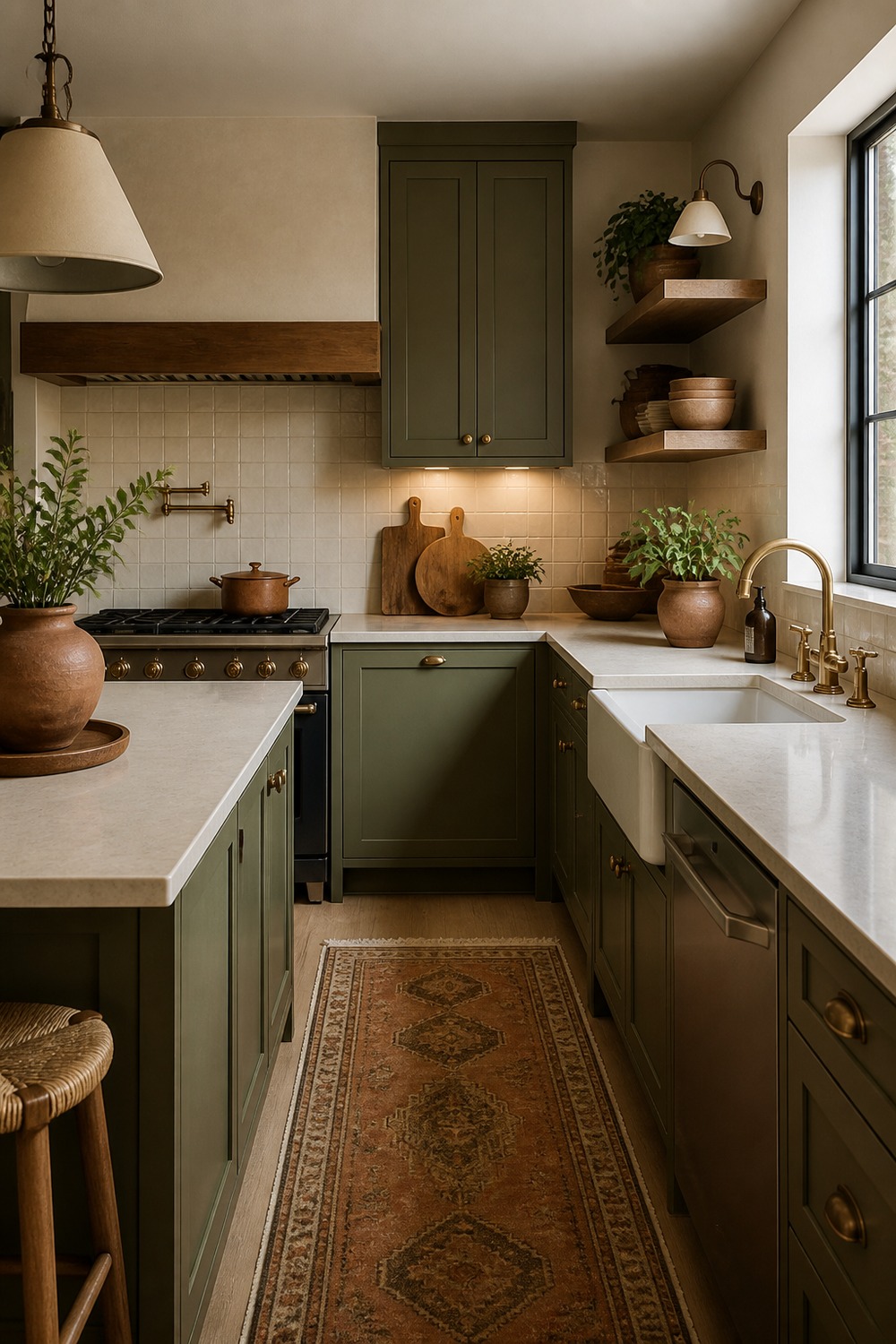
Olive green cabinets are an easy way to make a kitchen feel grounded without making it too dark. The cream stone counters, oak shelves, and aged brass pulls give the room enough contrast, so the color reads warm and usable instead of heavy.
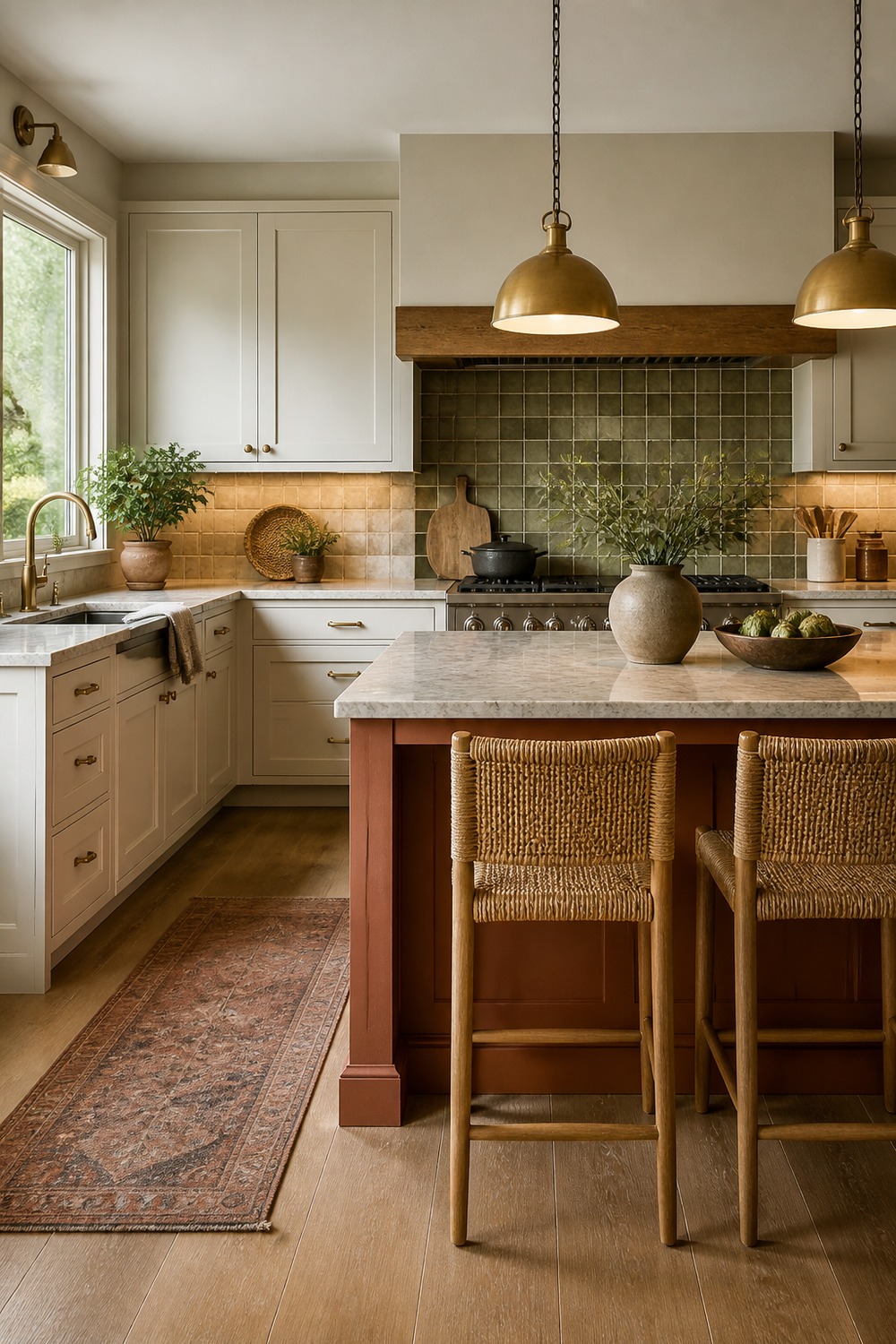
The terracotta island is the whole reason this kitchen works for me. It adds that clay, sun-baked color in the middle of the room, while the warm white cabinets and woven stools keep the palette light enough for everyday cooking.
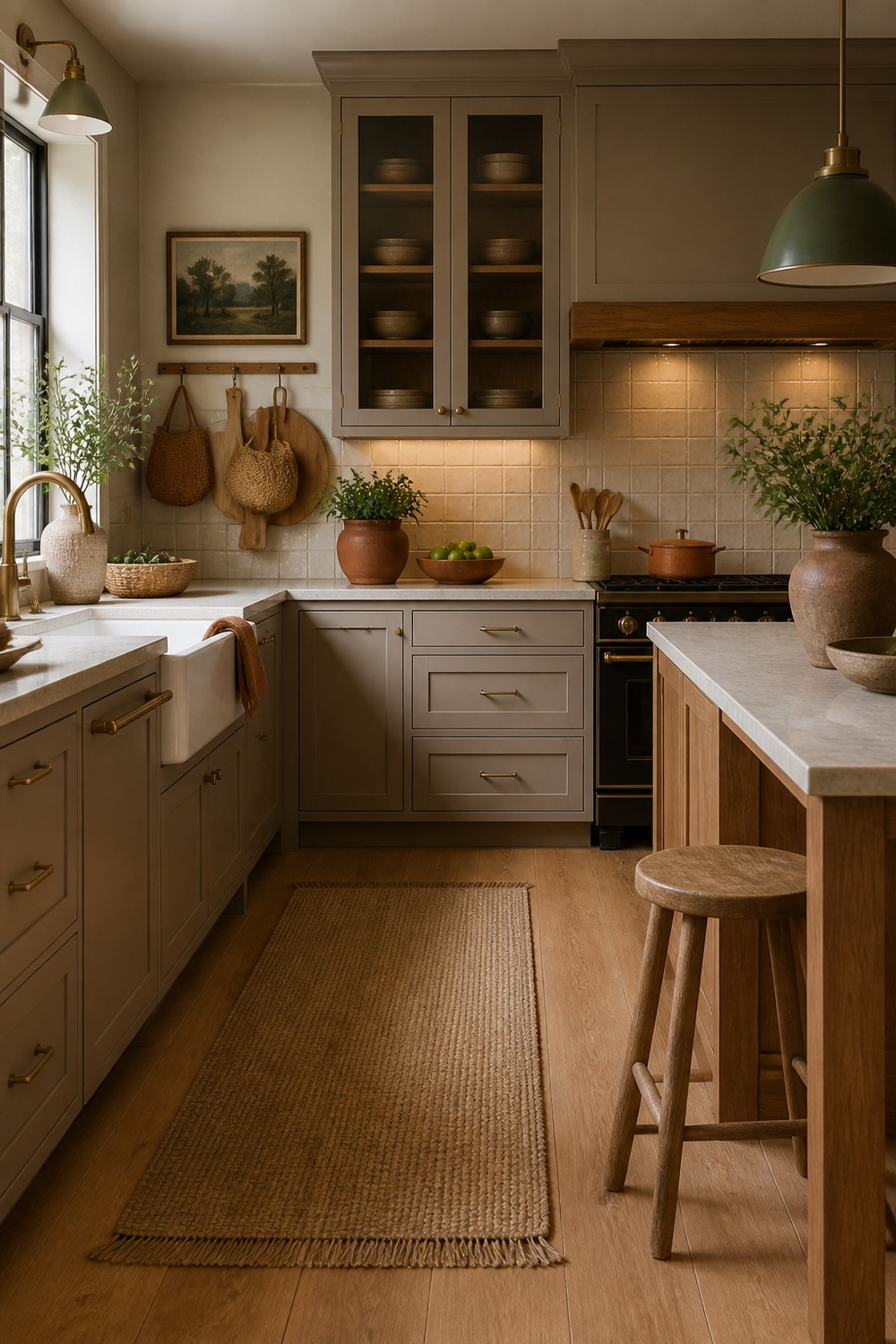
Mushroom taupe is such a good cabinet color when beige feels too plain but green feels like too much of a commitment. The handmade-looking tile and pale stone counter make the room feel soft, but the shaker doors still keep everything clean and practical.
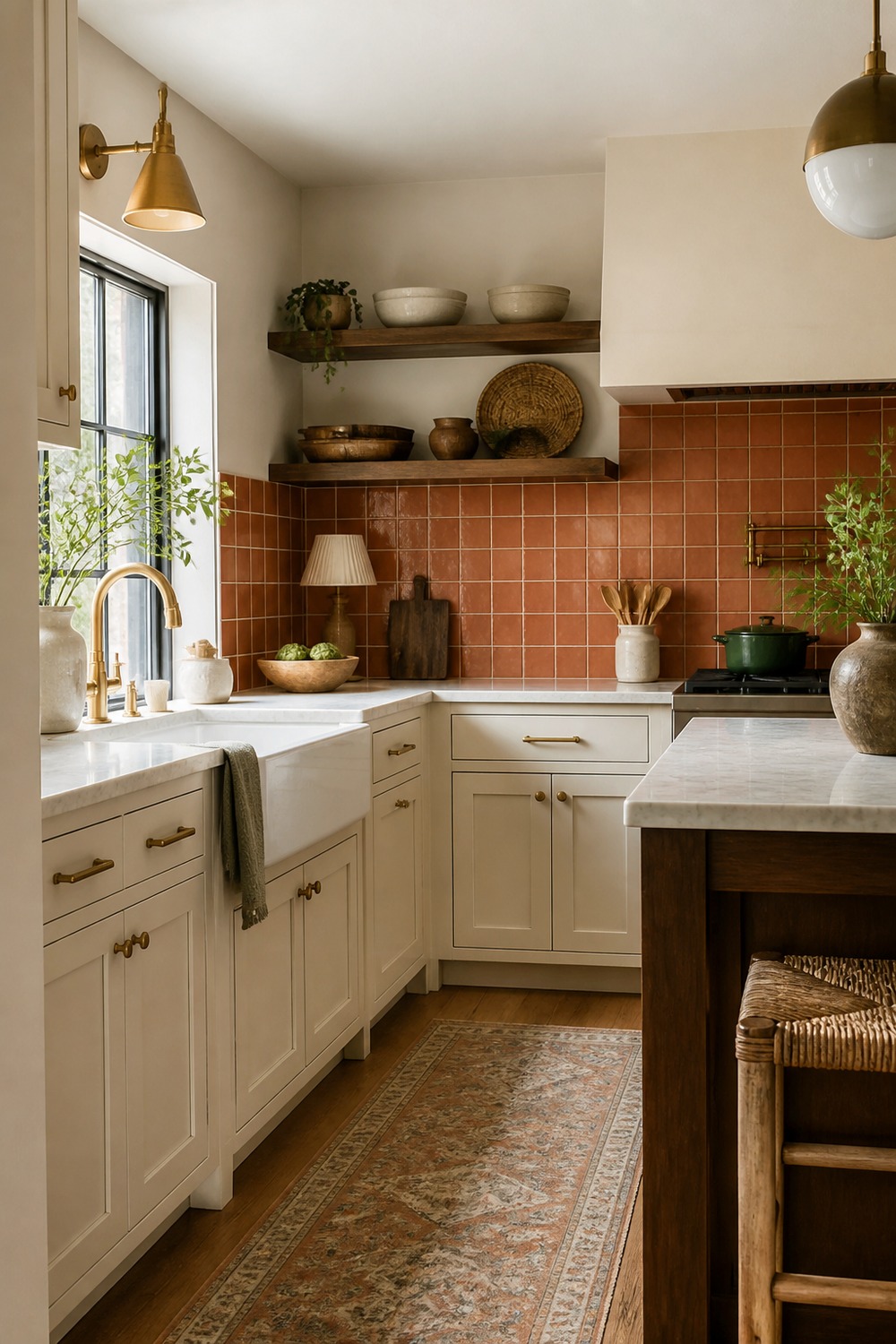
This clay tile backsplash brings in warmth without needing a loud cabinet color. I like how the cream cabinets and walnut shelves calm it down, because the tile still gets to be the earthy detail you notice first.
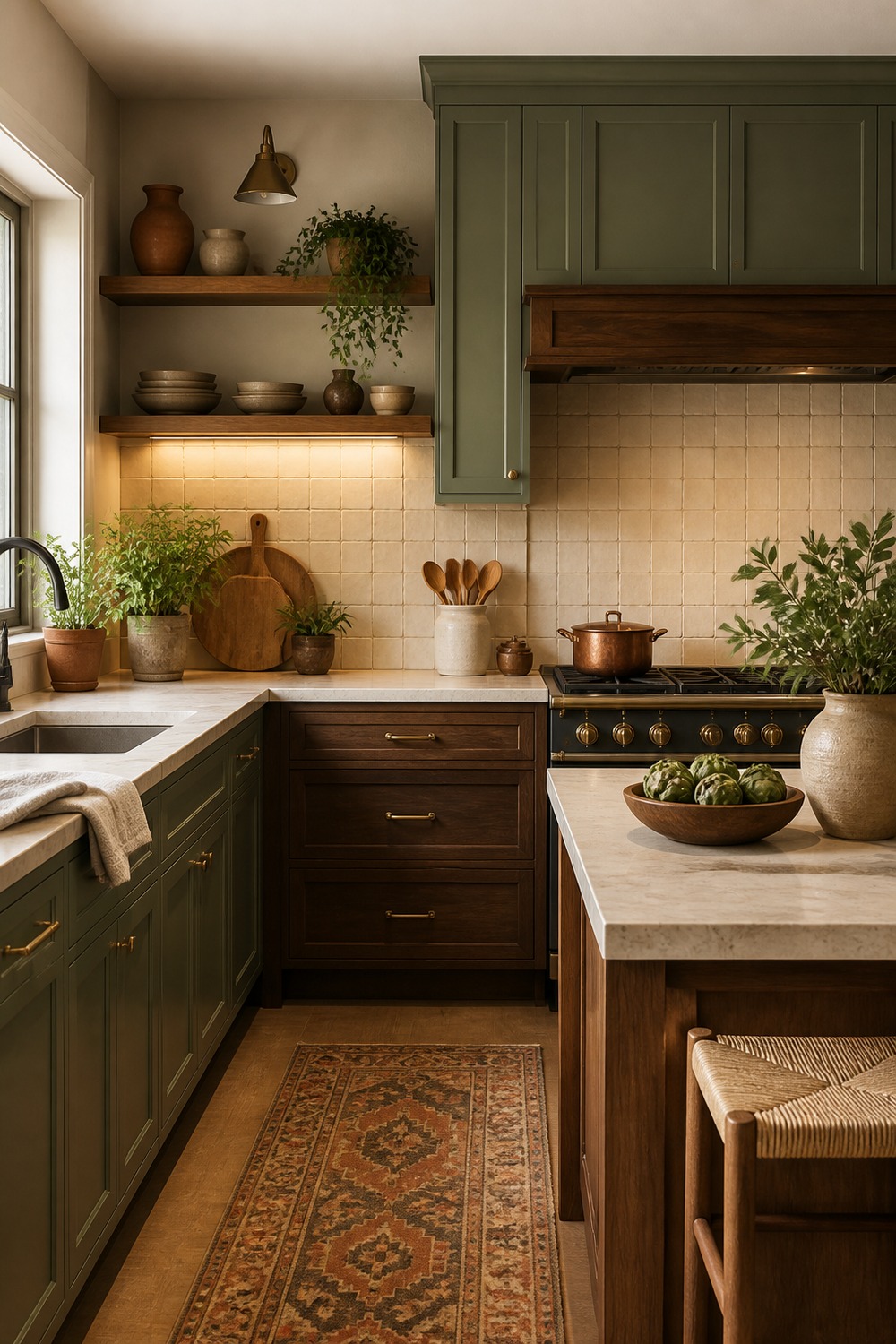
Sage and walnut always feel good together because one softens the room and the other gives it weight. The cream tile, deep drawers, and little herb moment by the counter make this feel like a kitchen that can be pretty and still useful.
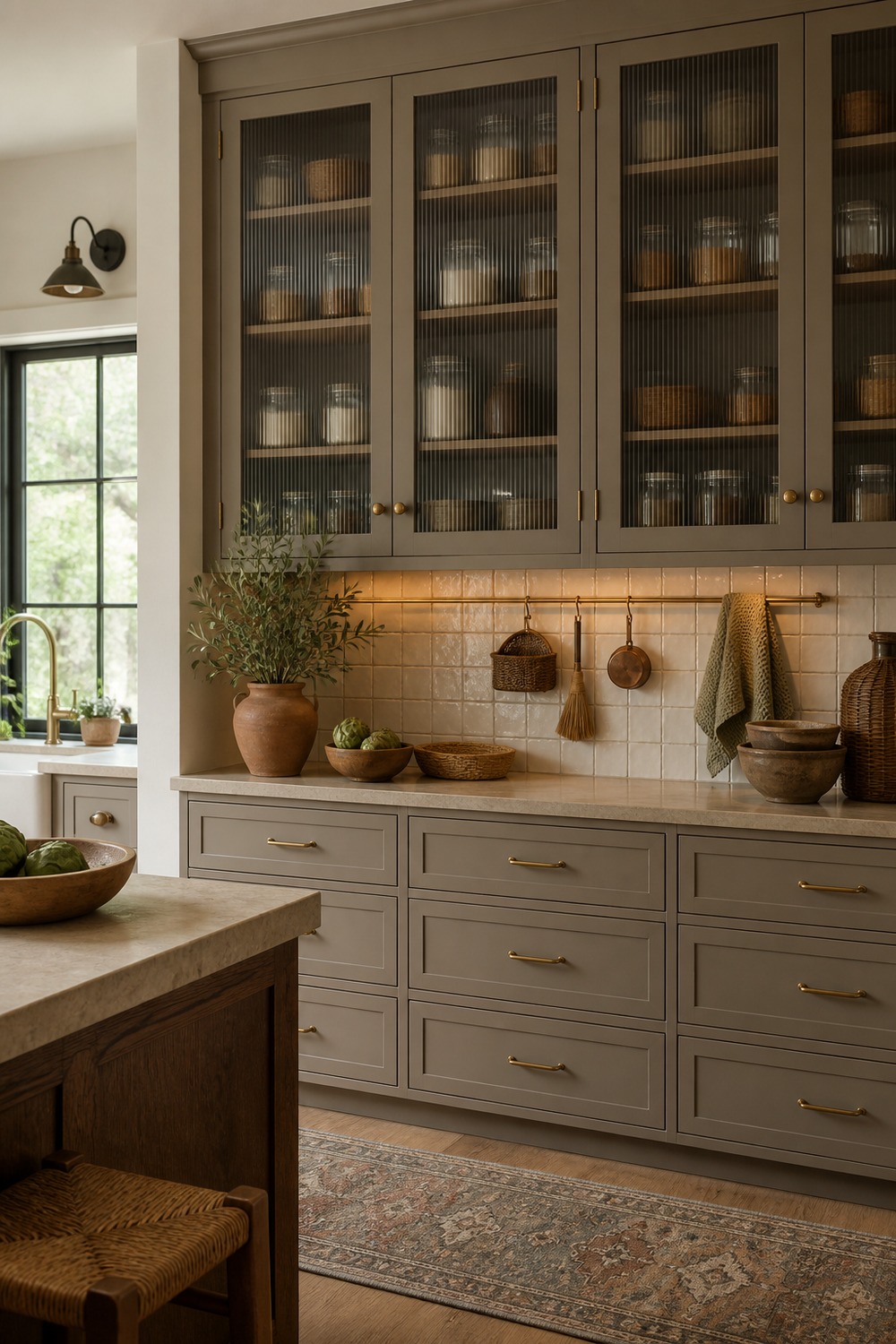
A pantry wall like this proves earthy colors do not have to be dramatic. Taupe cabinetry, ribbed glass, brass rails, and warm wood create a quieter palette, which is nice for a storage-heavy wall that could easily look bulky.
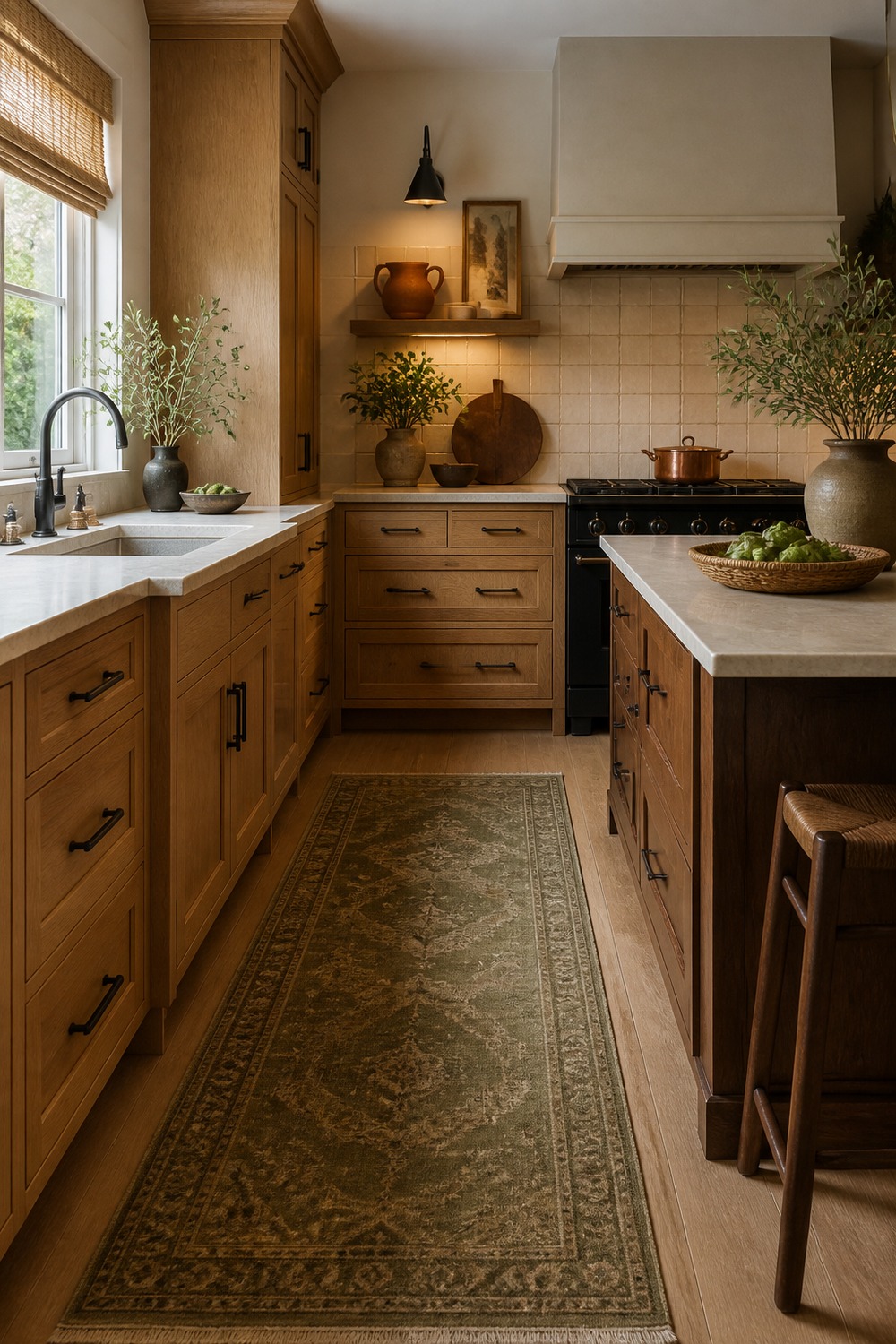
The warm oak does most of the work here, but the olive runner is what makes the palette feel finished. It breaks up all the wood, adds softness underfoot, and keeps the kitchen from looking like one flat neutral box.
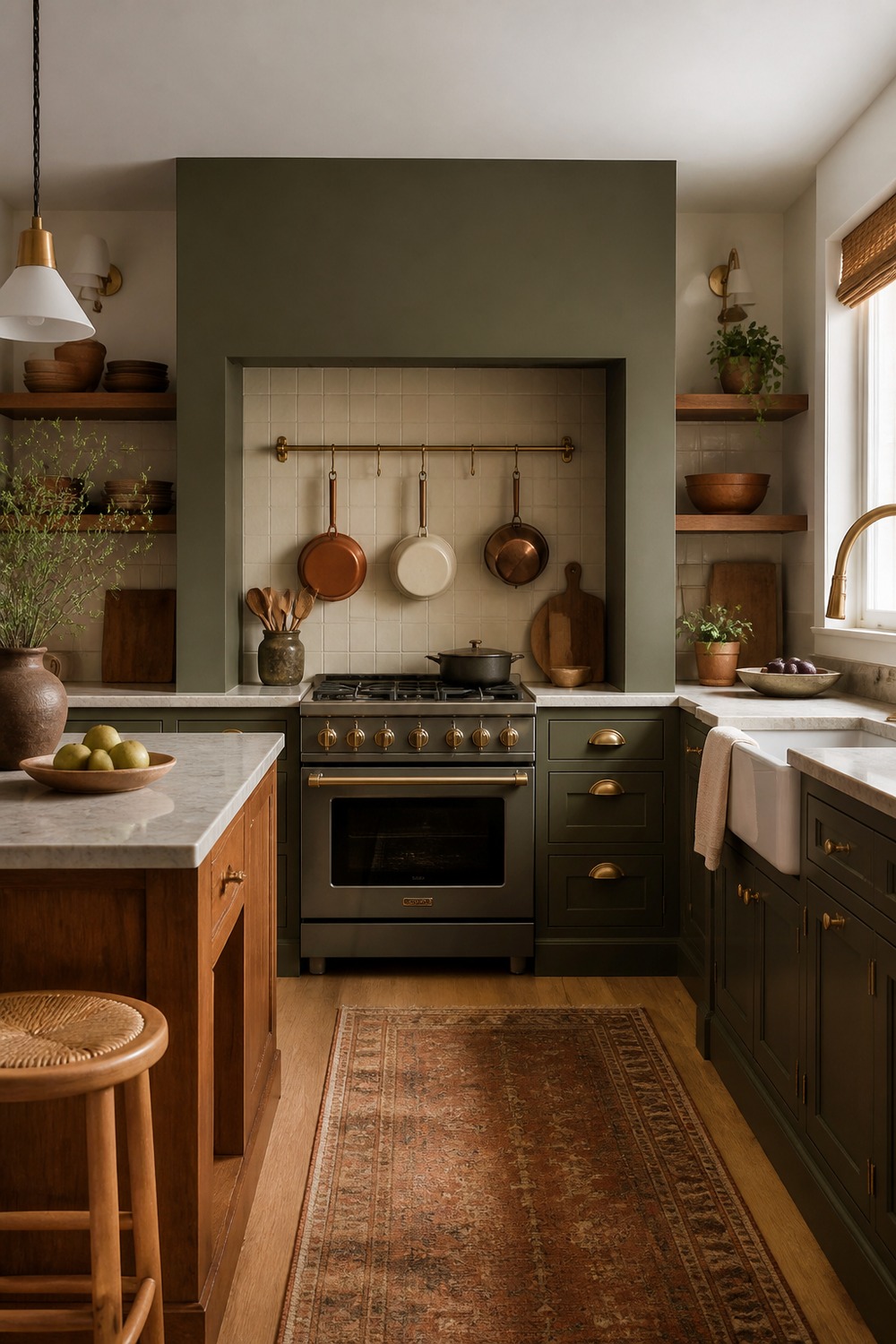
This olive range alcove has a moodier look, but the cream tile and walnut shelves stop it from feeling closed in. I like that the brass rail is both pretty and useful, especially in a cooking zone where the details should earn their space.
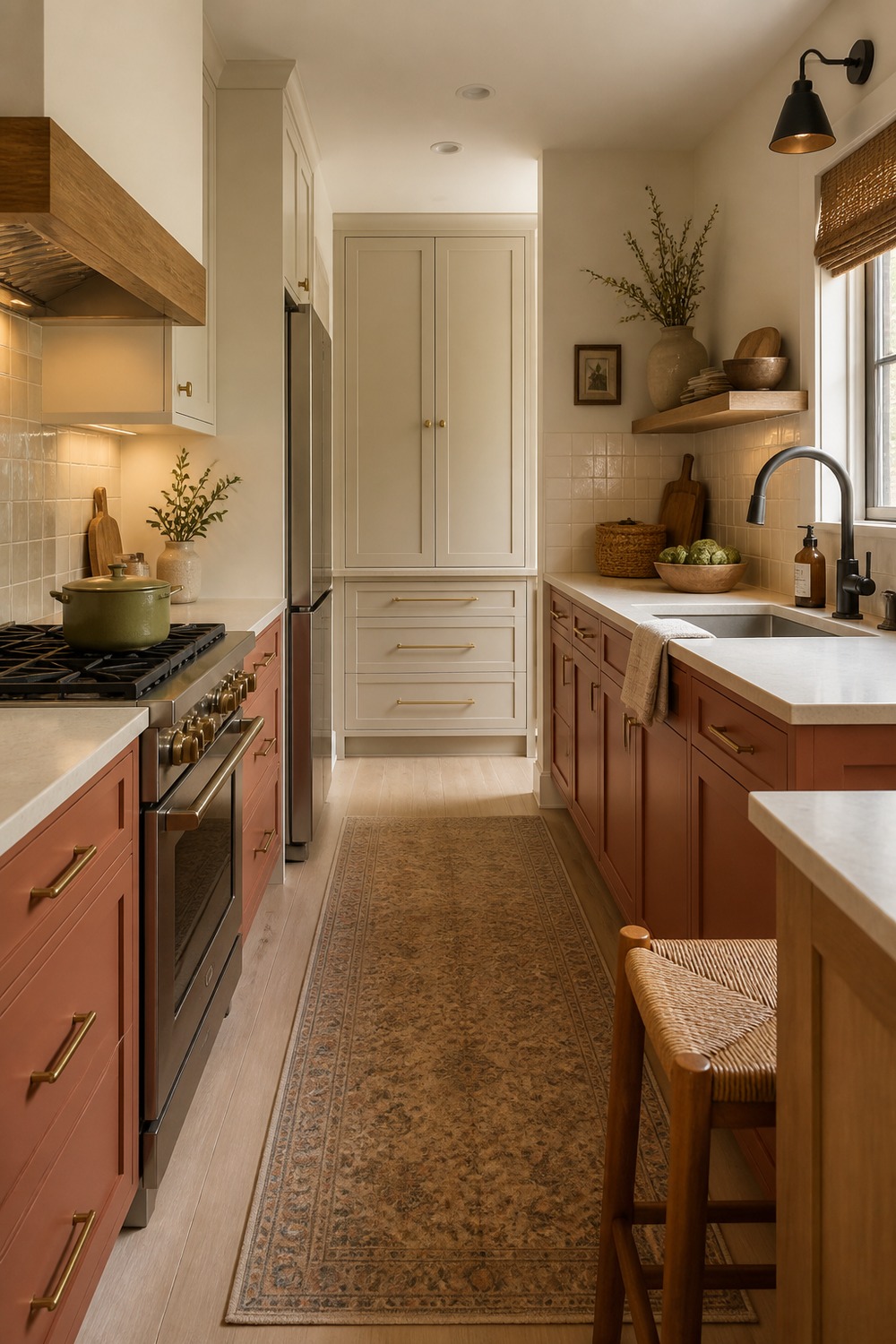
A small galley kitchen can handle earthy color if the contrast is clear. The clay lower cabinets, warm white uppers, and narrow runner keep the space bright, while still giving it more personality than an all-white setup.
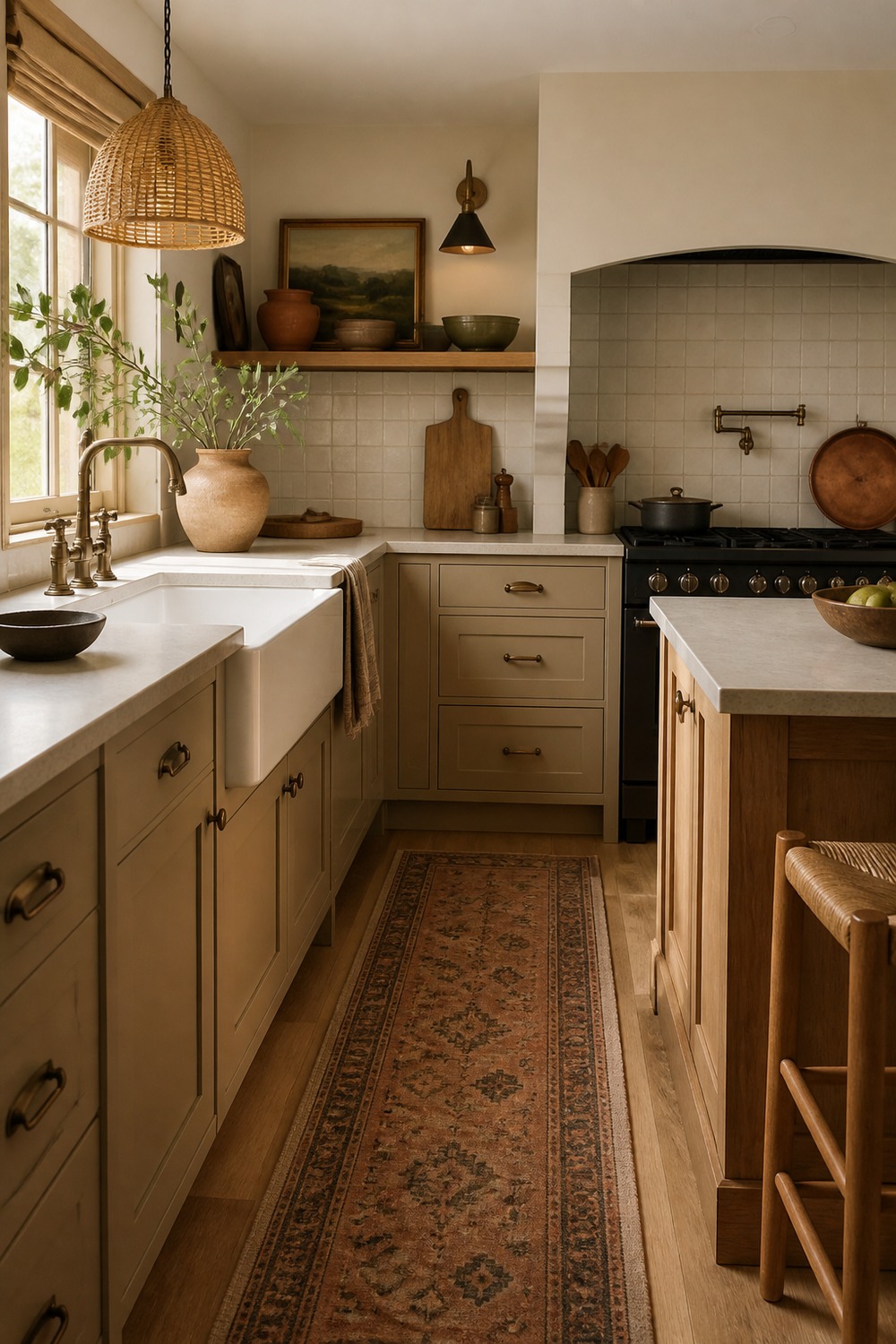
Sand beige cabinets feel calm here because they are paired with oak, woven shades, and a proper cottage sink. It is a softer kind of earthy palette, the kind that would work well if you want warmth without going green or terracotta everywhere.
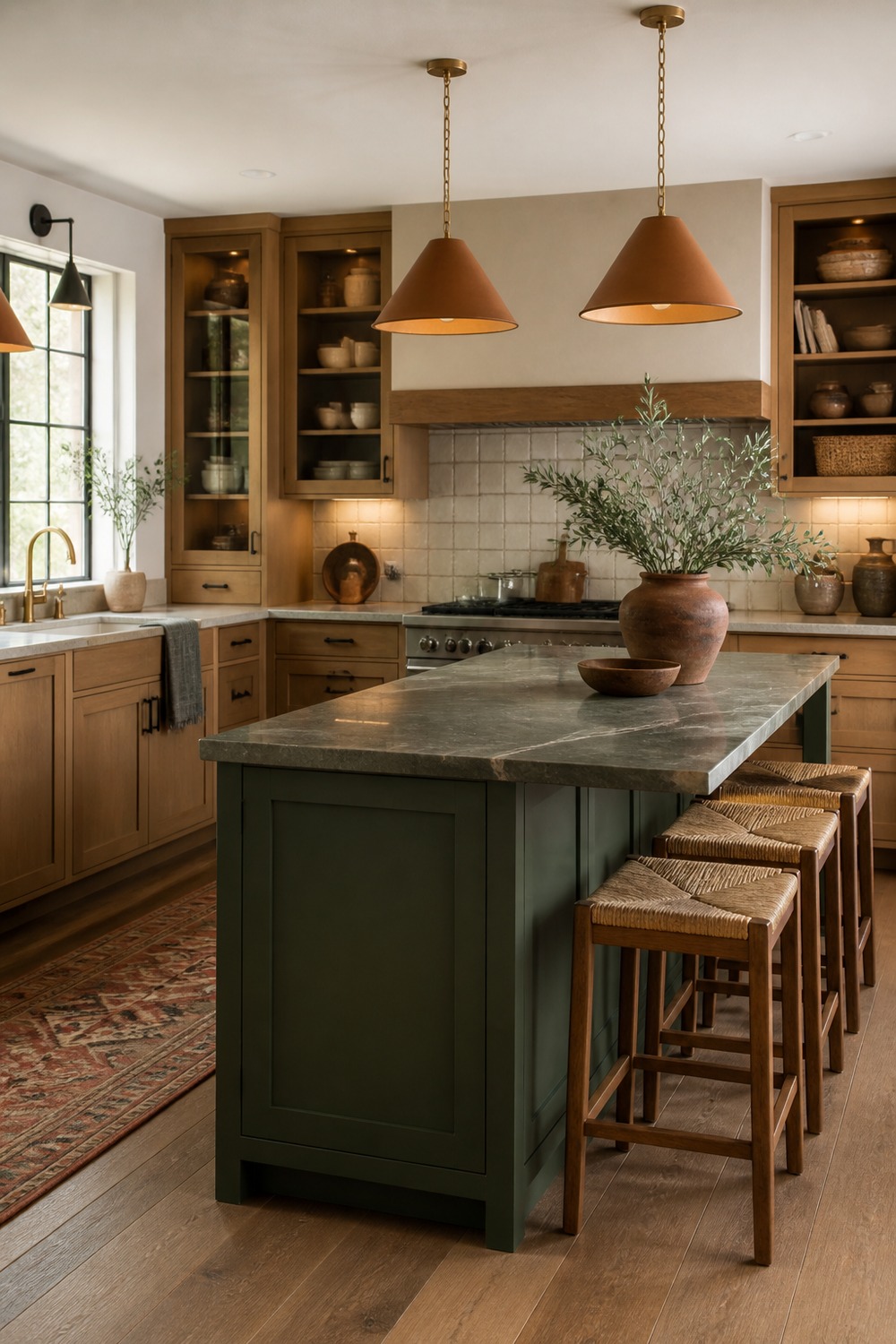
The forest green island gives this kitchen a stronger focal point, especially against the lighter oak cabinets around it. Wood stools and warm pendants make the darker color feel intentional instead of severe.
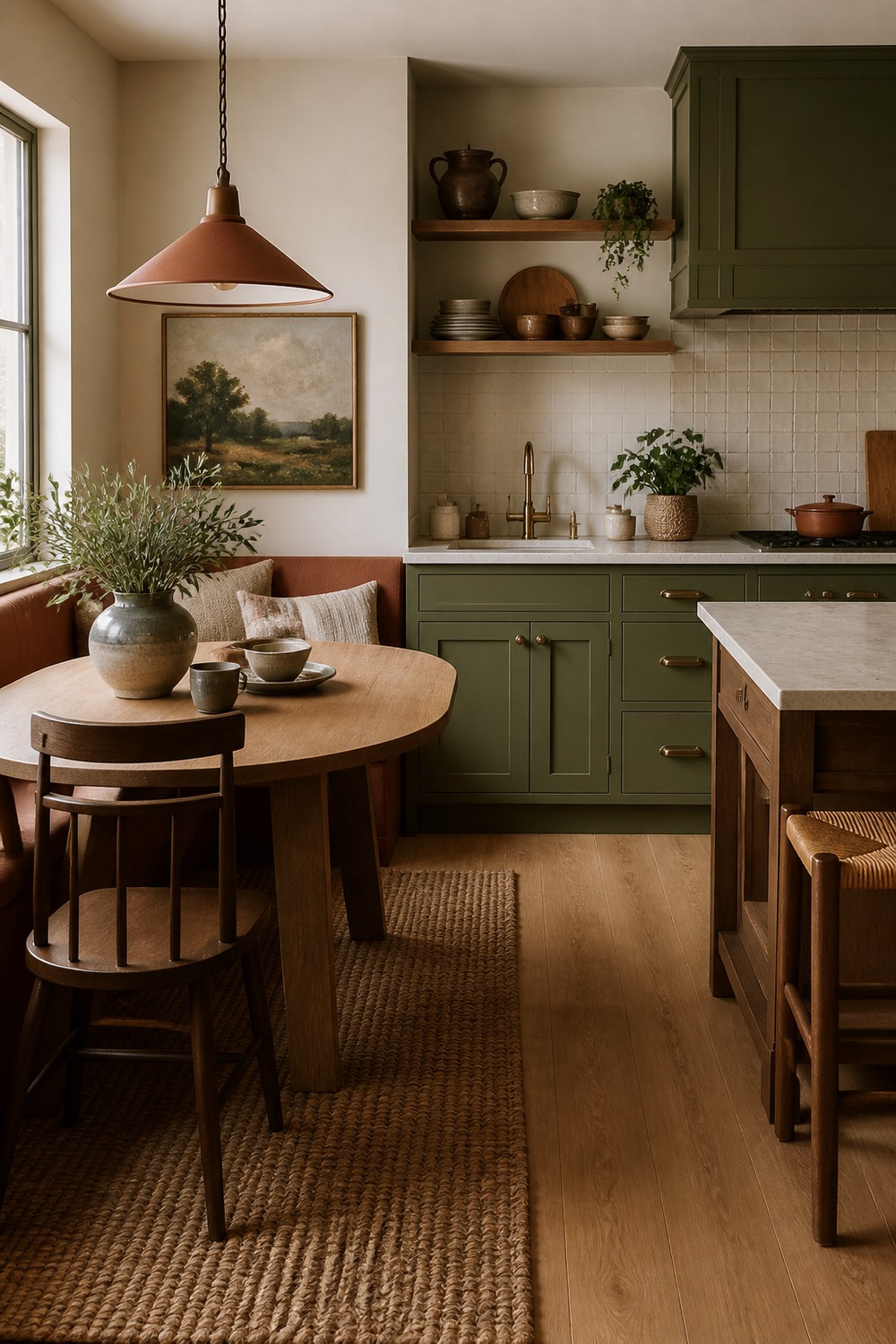
This breakfast nook edge is a nice reminder that the color scheme does not stop at the cabinets. The clay bench, oak table, linen cushion, and pendant all pull the kitchen palette into the eating area without making it feel overly matched.
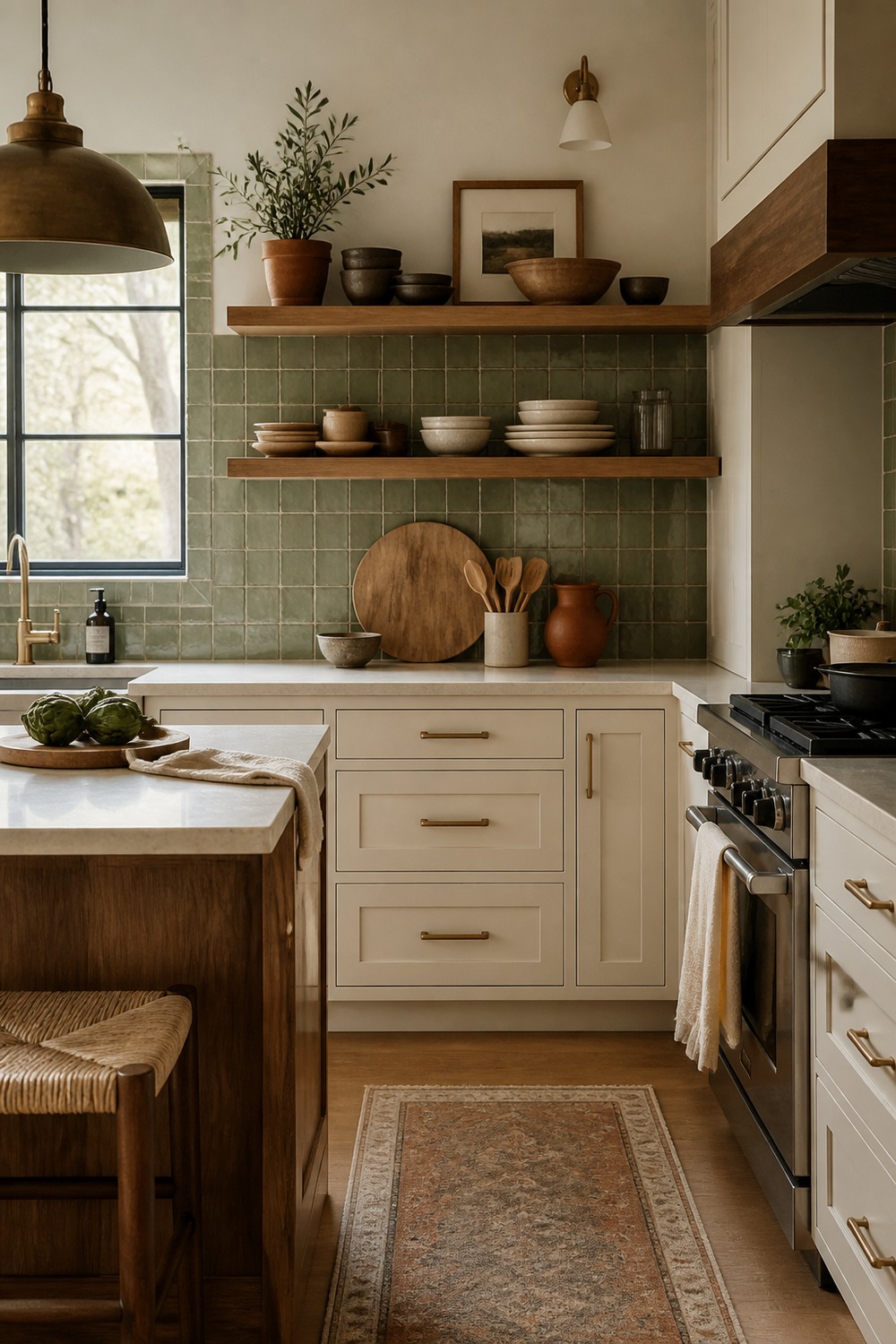
Muted green zellige-style tile adds movement in a way flat paint cannot. The uneven shine, cream cabinets, and wood shelves make the color feel handmade and relaxed, which is exactly what keeps an earthy kitchen from looking stiff.
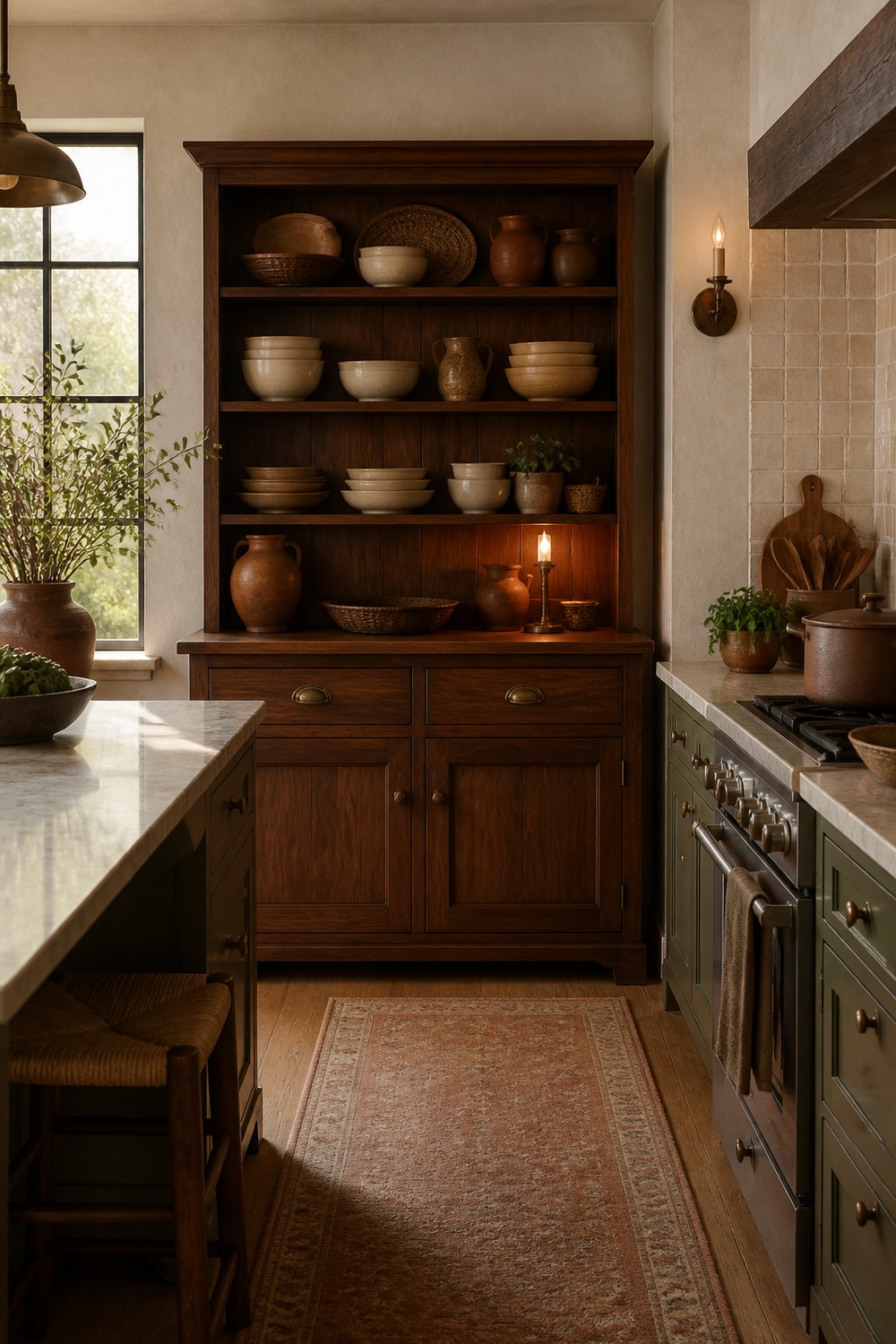
The walnut hutch gives this kitchen a more collected feeling, almost like an older piece was worked into the room. Cream dishes, clay pots, plaster walls, and muted green cabinetry make the palette feel layered instead of newly bought all at once.
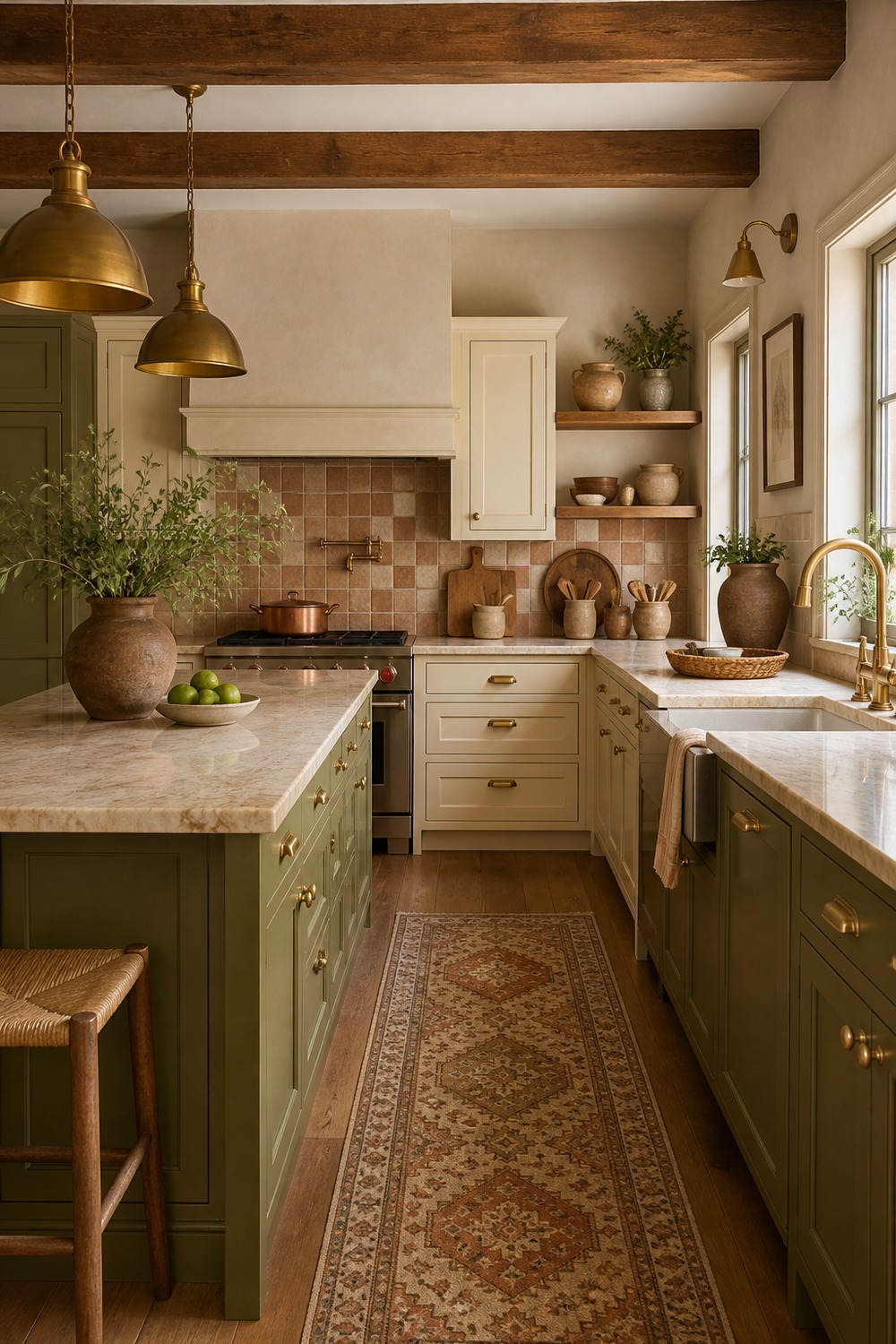
Warm ceiling beams can completely change how green and cream cabinets feel. Here they make the whole kitchen look more grounded, while the stone counters and brass lights keep the color scheme from drifting too rustic.
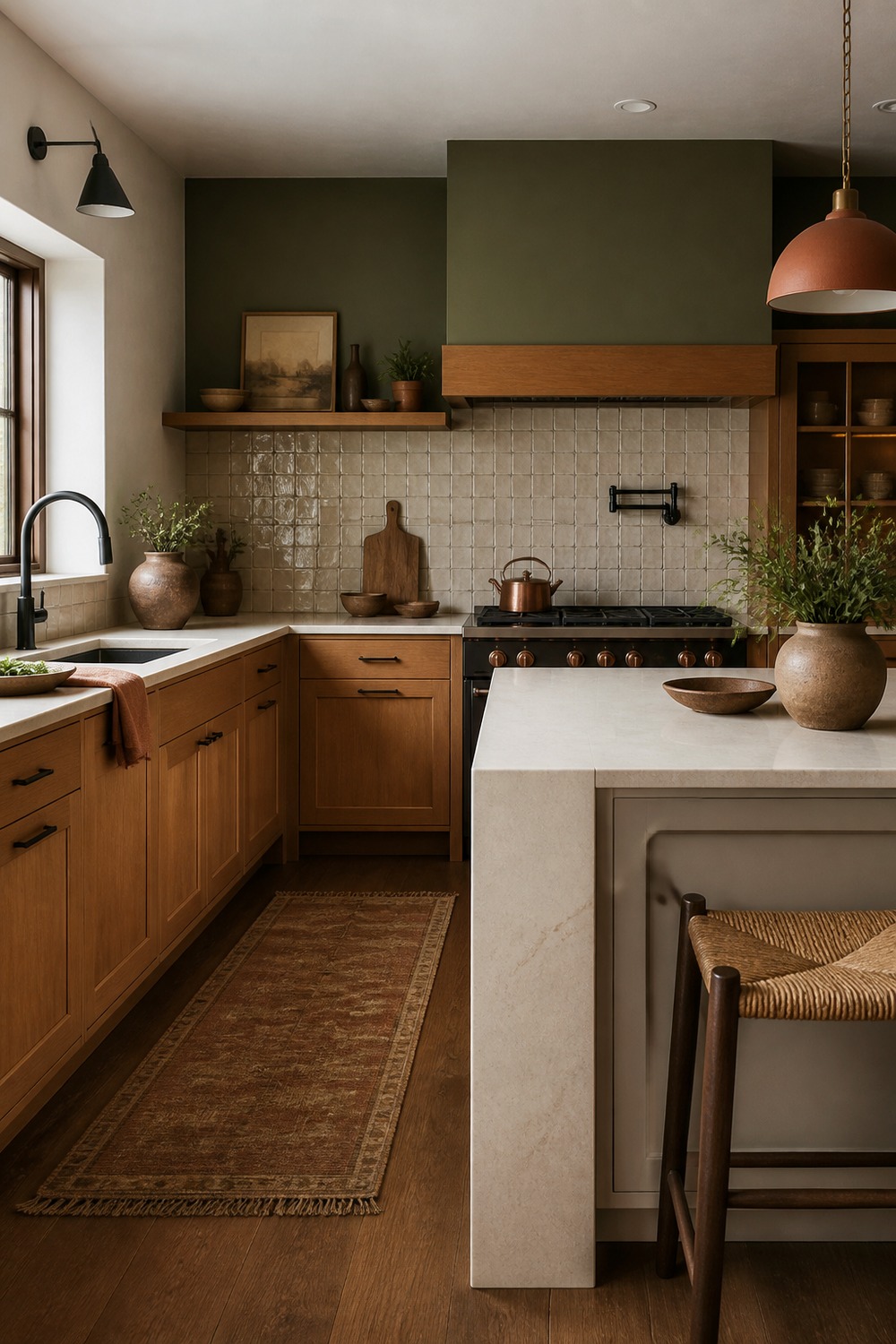
This is the cleaner, more modern version of an earthy palette. Flat-panel oak, taupe, olive, and a cream waterfall counter give the room a sharper shape, but the warm materials keep it from feeling cold.
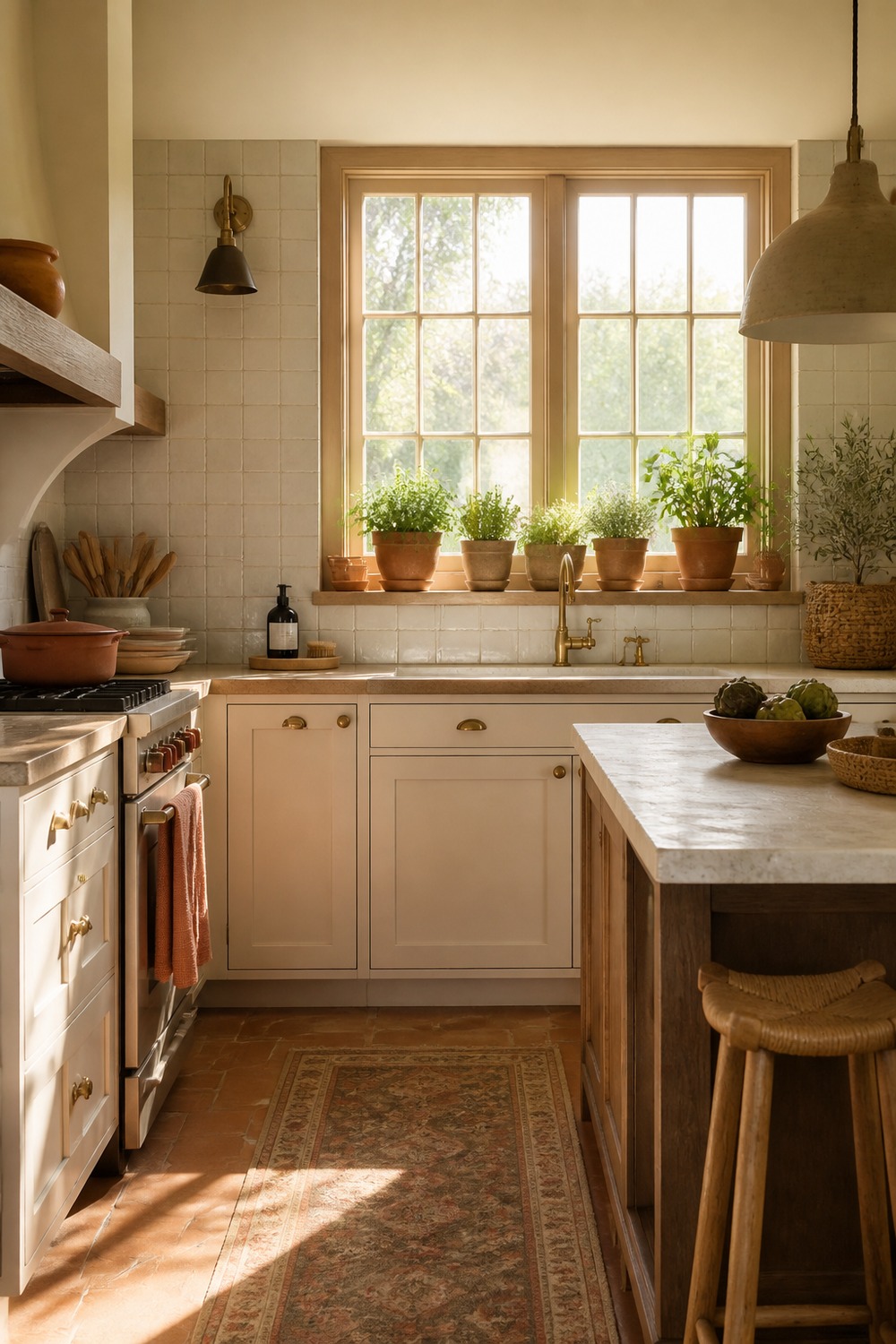
The sunny window corner is simple, but it does a lot for the palette. Warm white cabinets, an oak sill, clay tile, and fresh herbs make the room feel natural without needing a big statement color everywhere.
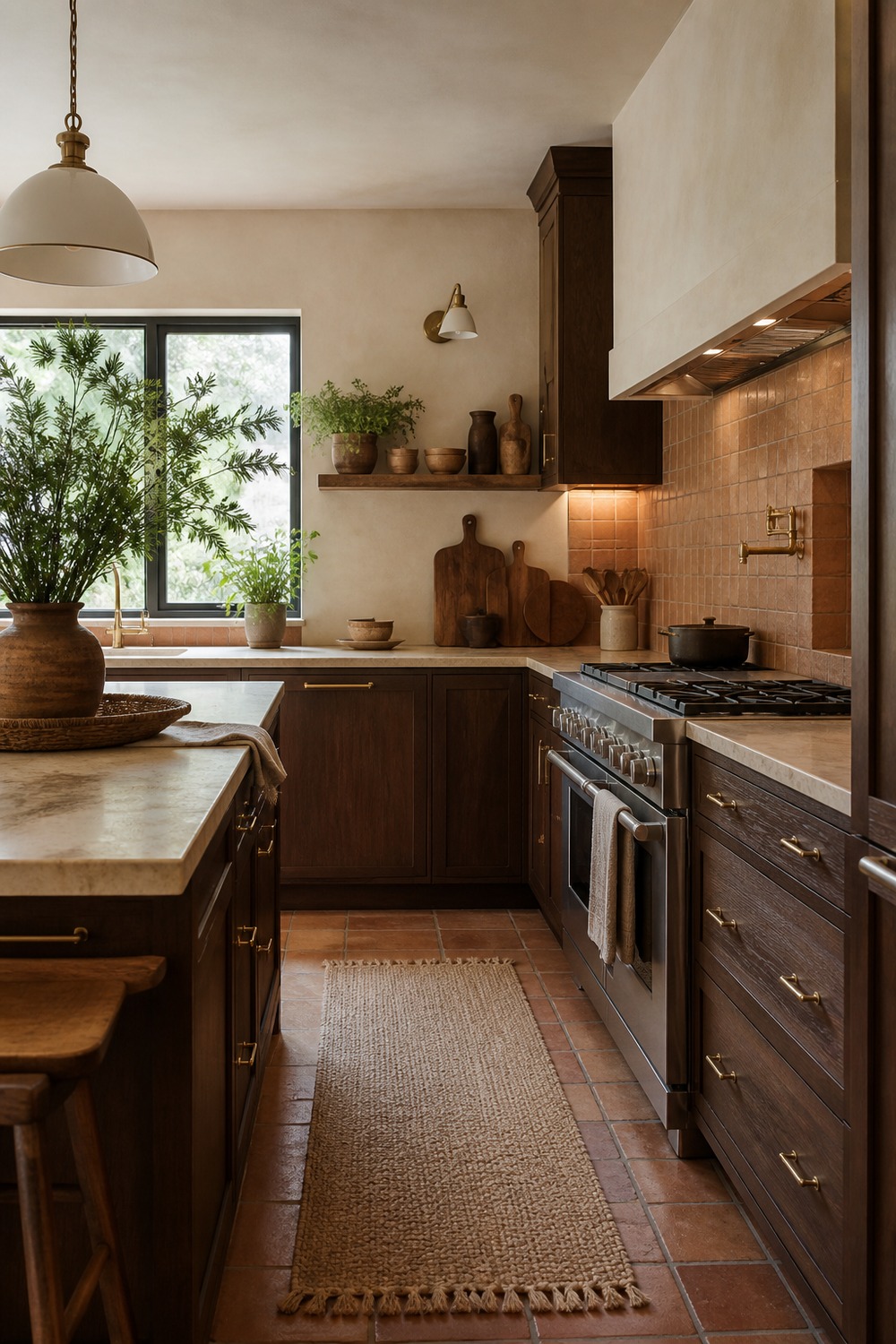
Espresso wood can feel heavy fast, but the clay tones and cream plaster lighten it up here. I like this mix for a kitchen that wants depth, because the darker cabinetry feels balanced by all the warmer surfaces around it.
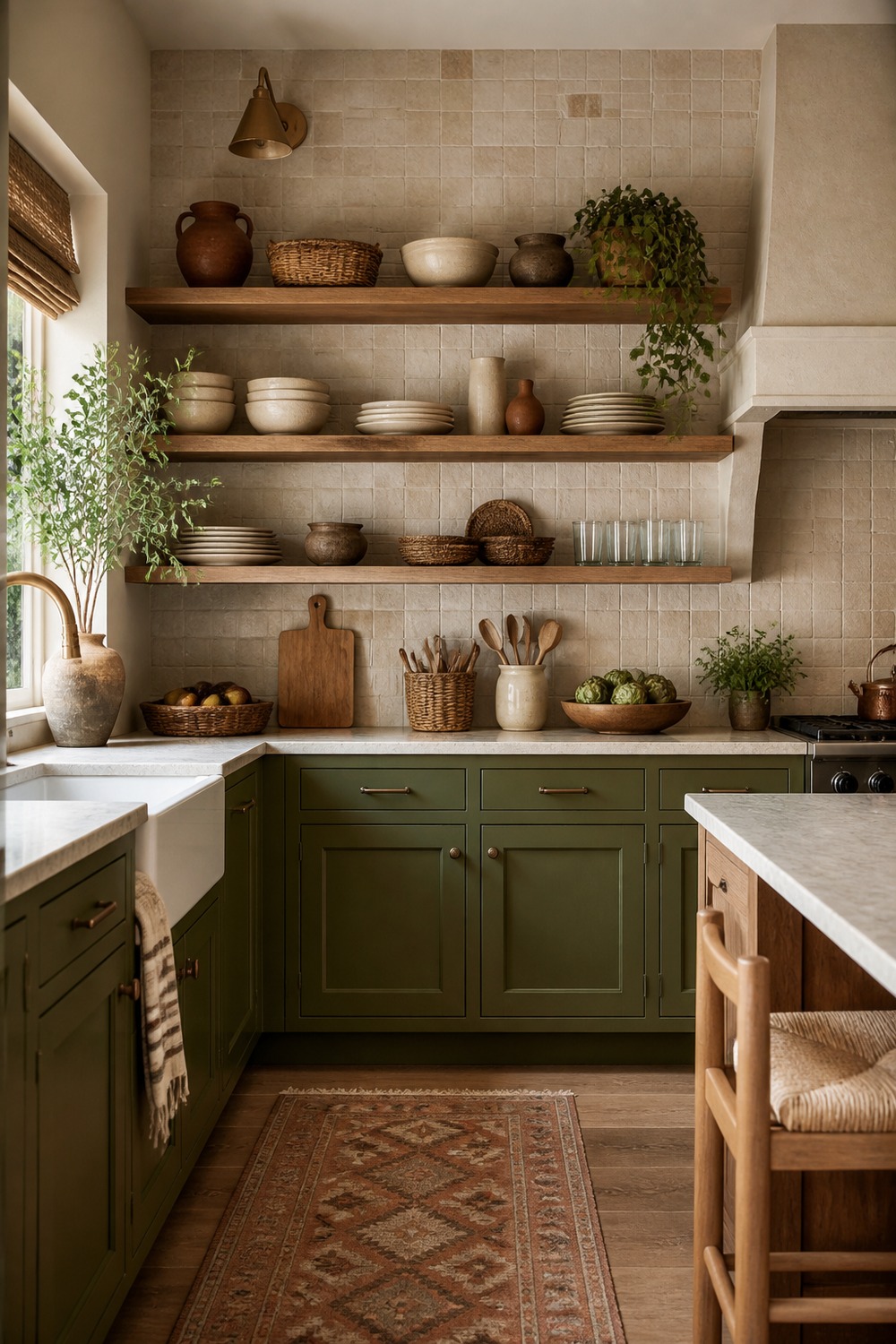
Open shelving can look cluttered if the colors fight each other, but this one stays calm. Olive lower cabinets, oak shelves, cream dishes, baskets, and pottery all sit in the same earthy family without becoming one-note.
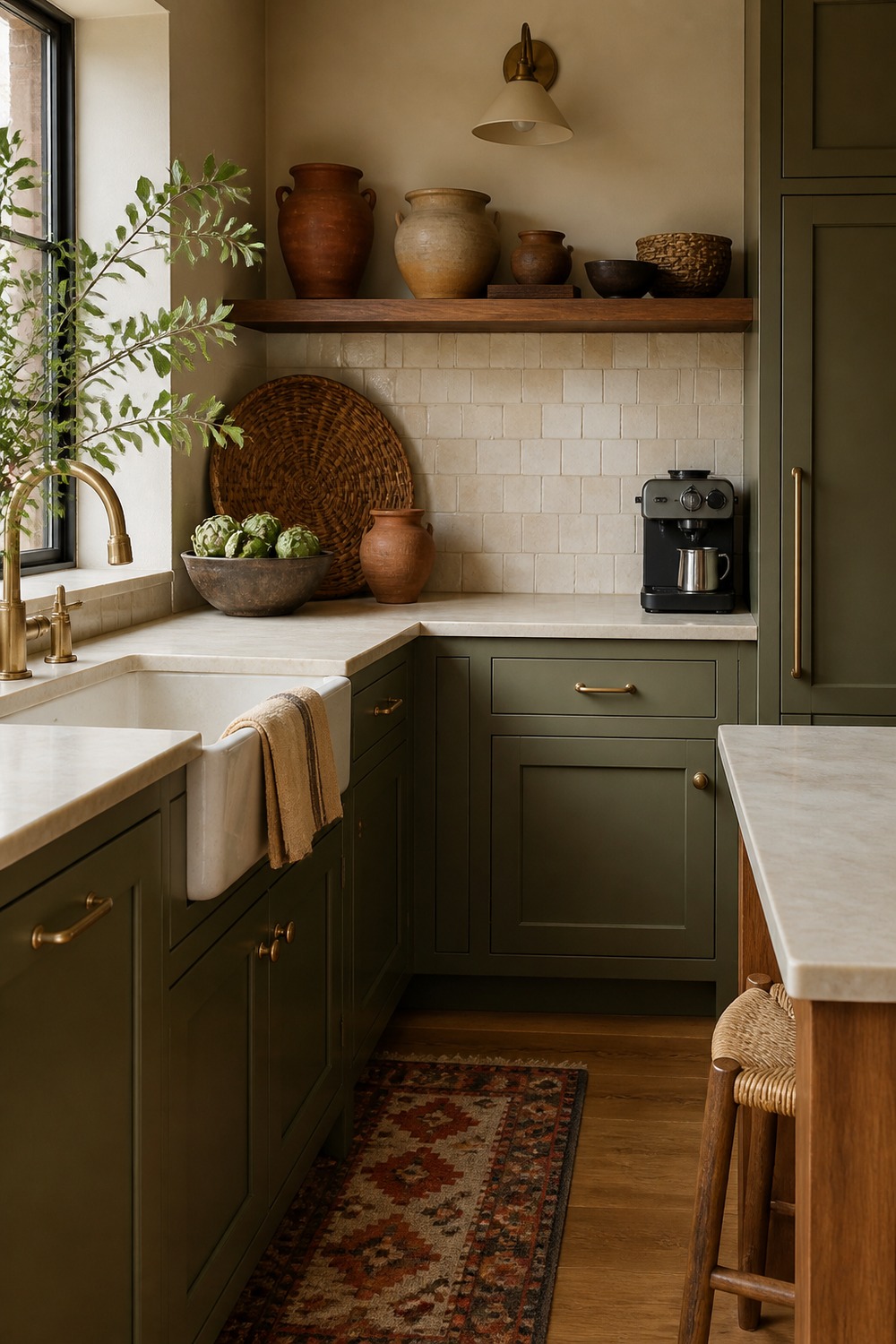
A prep corner like this is where earthy colors actually have to function. The cream stone, walnut shelf, olive base cabinet, and tucked-away appliance make the space feel styled, but still ready for chopping, coffee, or quick cleanup.
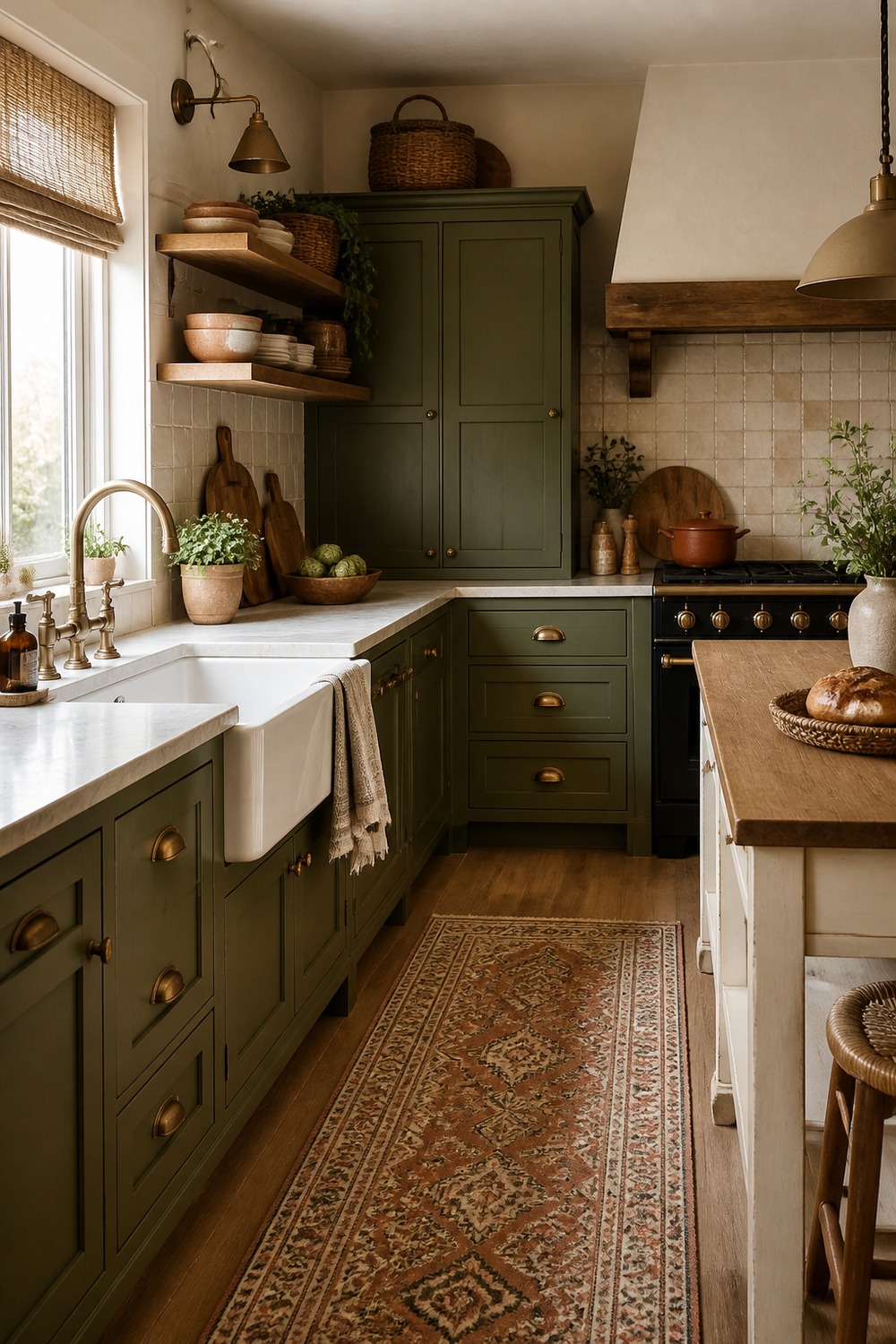
This farmhouse kitchen feels settled because the palette has a few different kinds of warmth. Olive cabinets, oak shelves, cream stone, a simple sink, and a worn runner all work together without making the room feel overly themed.
Earthy kitchen color schemes usually work better when they are layered instead of flat. A little olive, clay, taupe, oak, cream stone, or aged brass can make the room feel warm without making it feel dark or muddy.

I work in tech, but my taste in design is straight out of a slow European village. Give me arches, aged brass, and a room that smells like books and coffee. That’s my kind of home.