Small kitchens in tiny homes get annoying when the color looks pretty but every mug, pan, and drying towel has nowhere to go. I like palettes that keep the room light, give the shelves some breathing room, and still make the tiny counter feel usable.
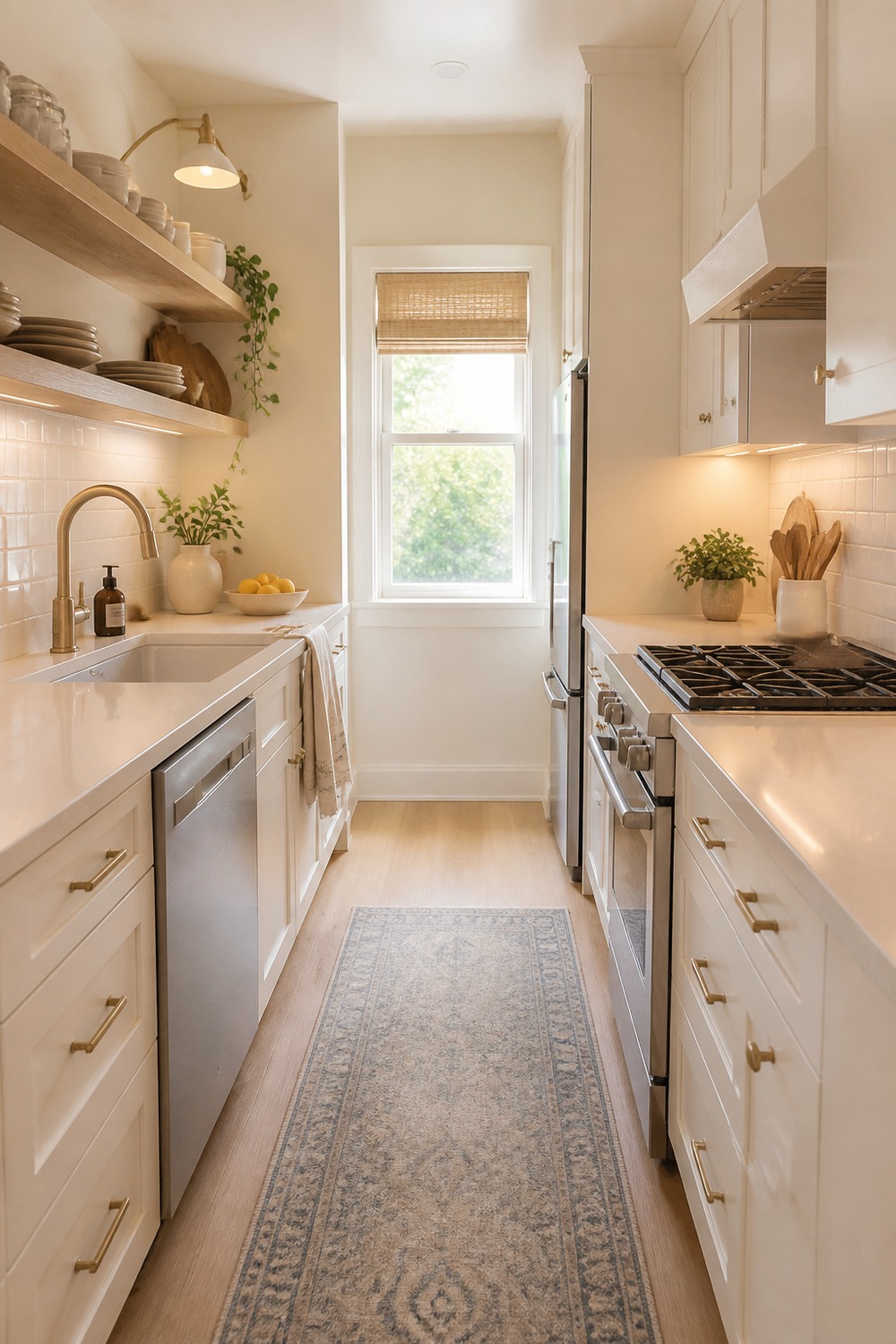
Warm white is usually the safest tiny-kitchen move, but this version still has some life to it. The pale oak shelf, cream counter, and under-cabinet light keep the galley bright without making it feel like a blank rental box.
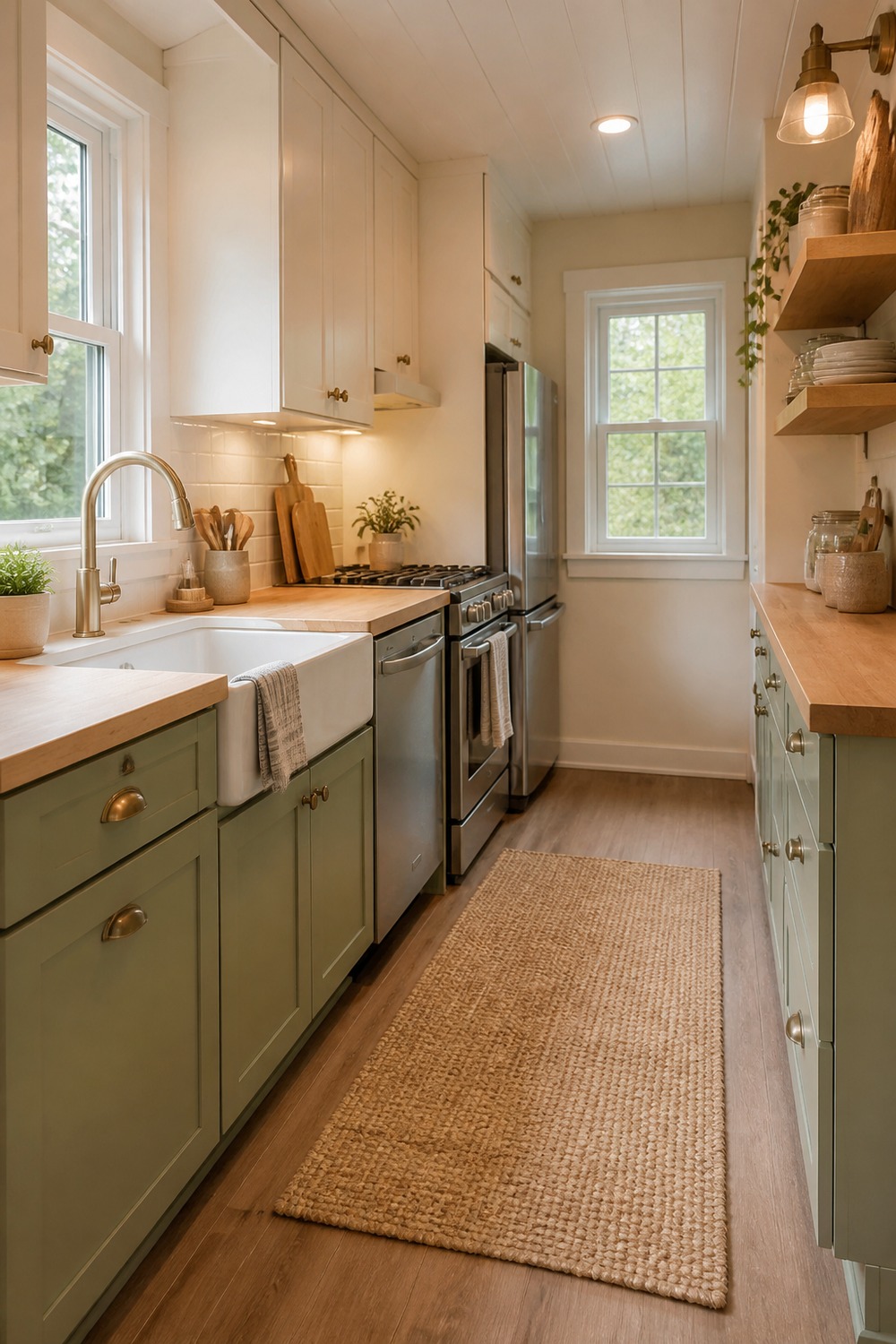
Sage lower cabinets are a nice middle ground when full color feels too heavy. I like how the white uppers keep the wall light, while the butcher-block counter gives the tiny sink zone a warmer place to land dishes and coffee cups.
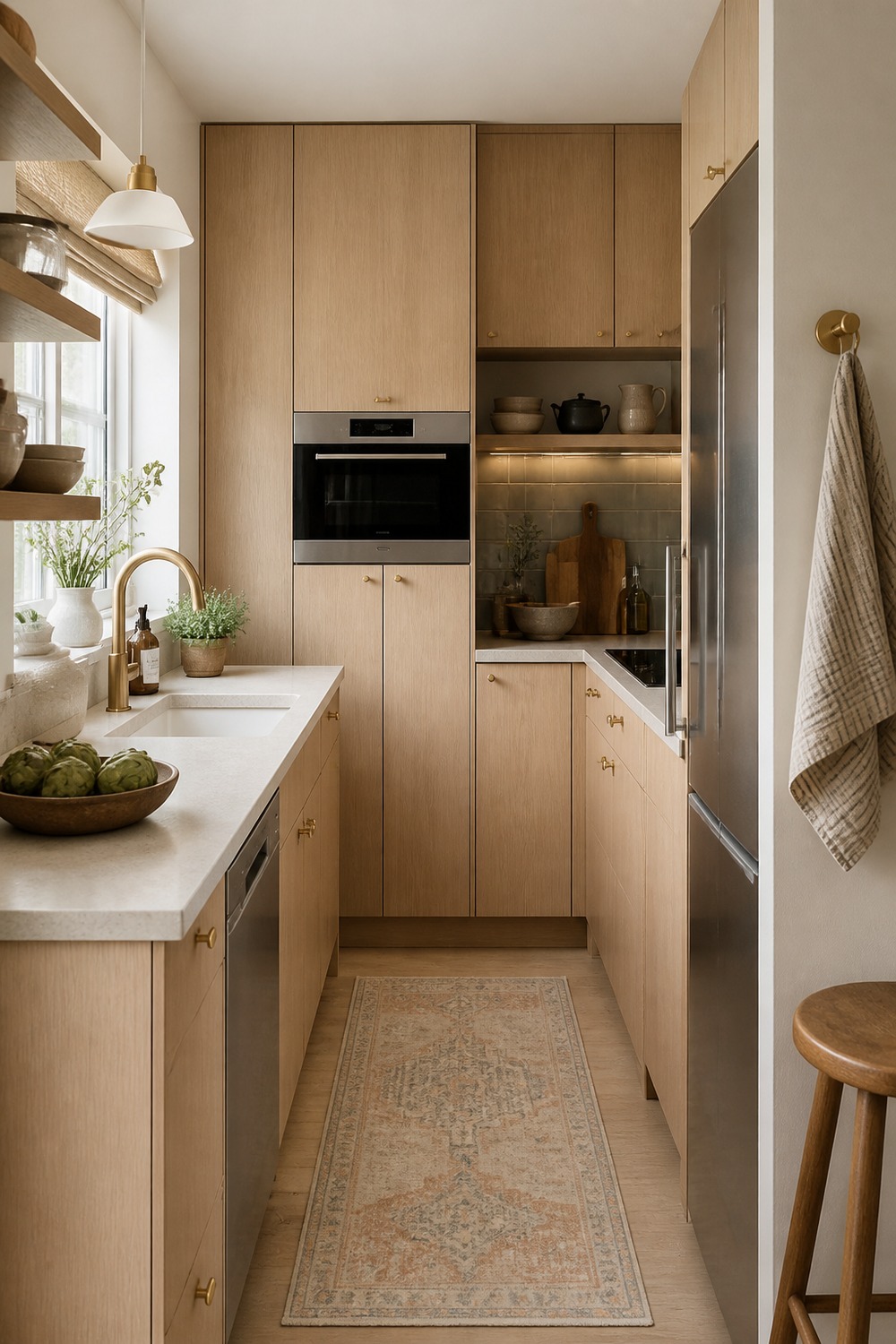
This pale oak and cream palette feels calm because the storage almost blends into the room. The flat cabinet fronts, hidden appliance wall, and soft counter color make a micro kitchen look intentional instead of packed with random pieces.
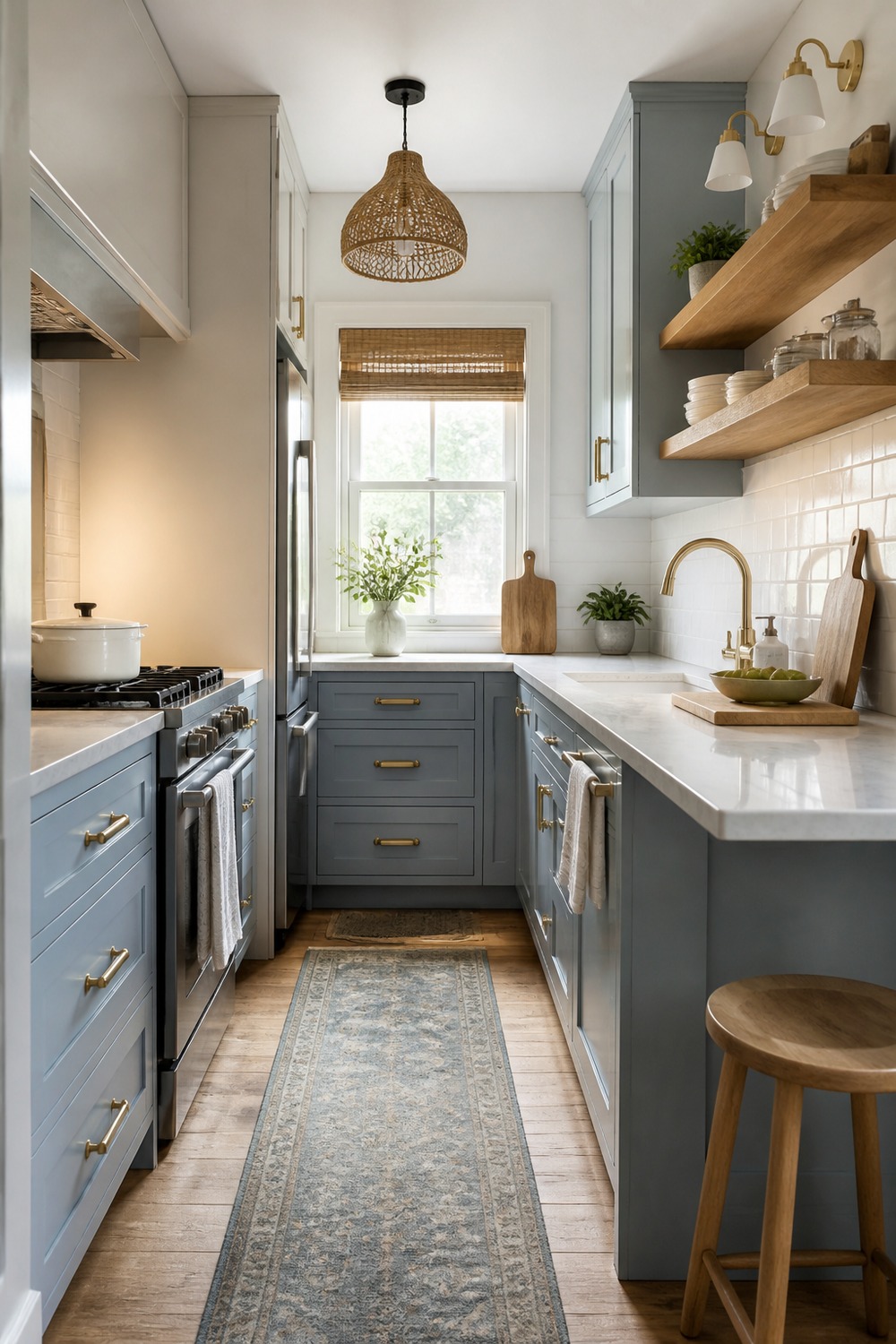
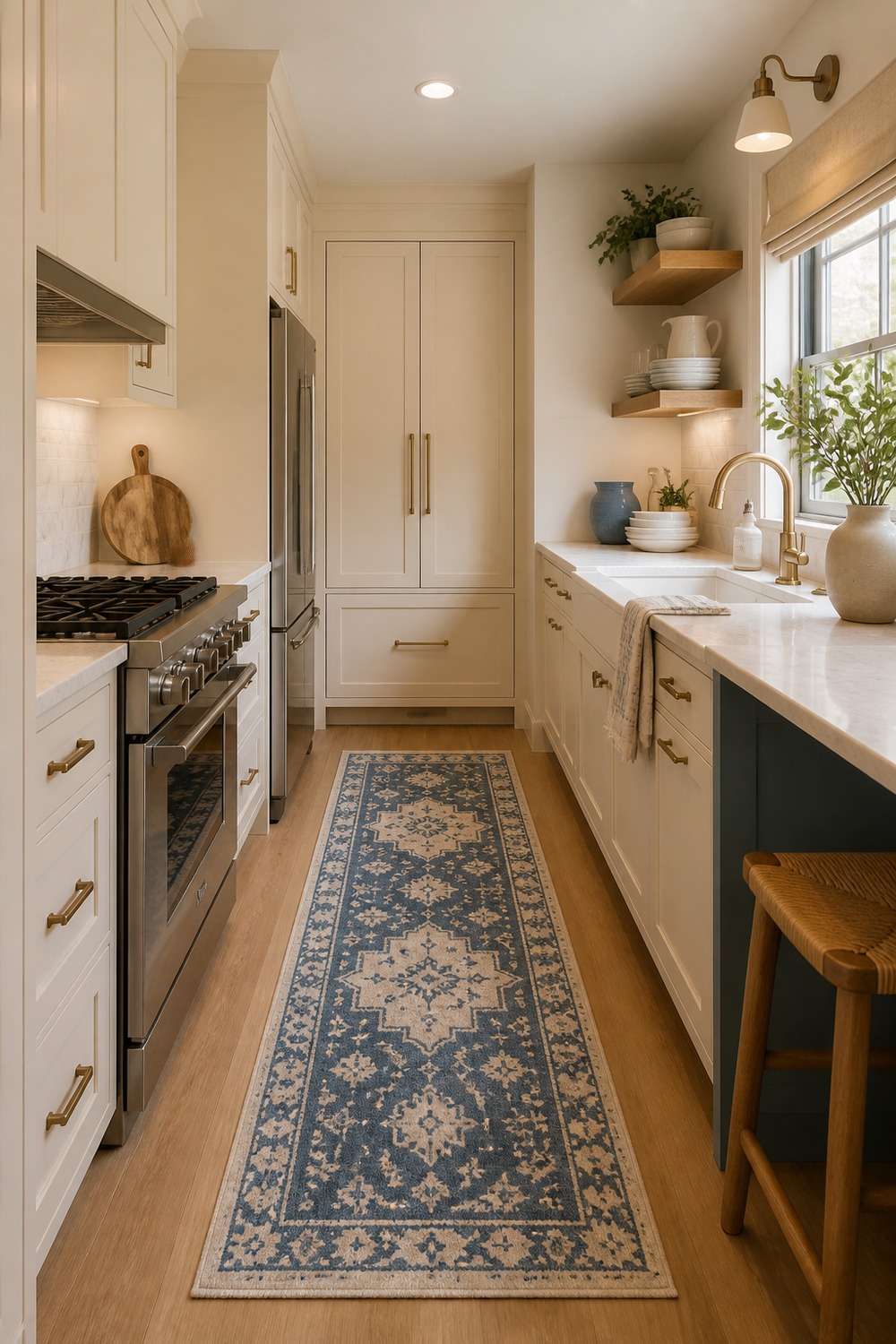
Soft blue works best in a small kitchen when it has enough warm texture around it. The oak shelf, brass pulls, white tile, and slim runner stop the blue from feeling chilly, which matters when the room is already narrow.
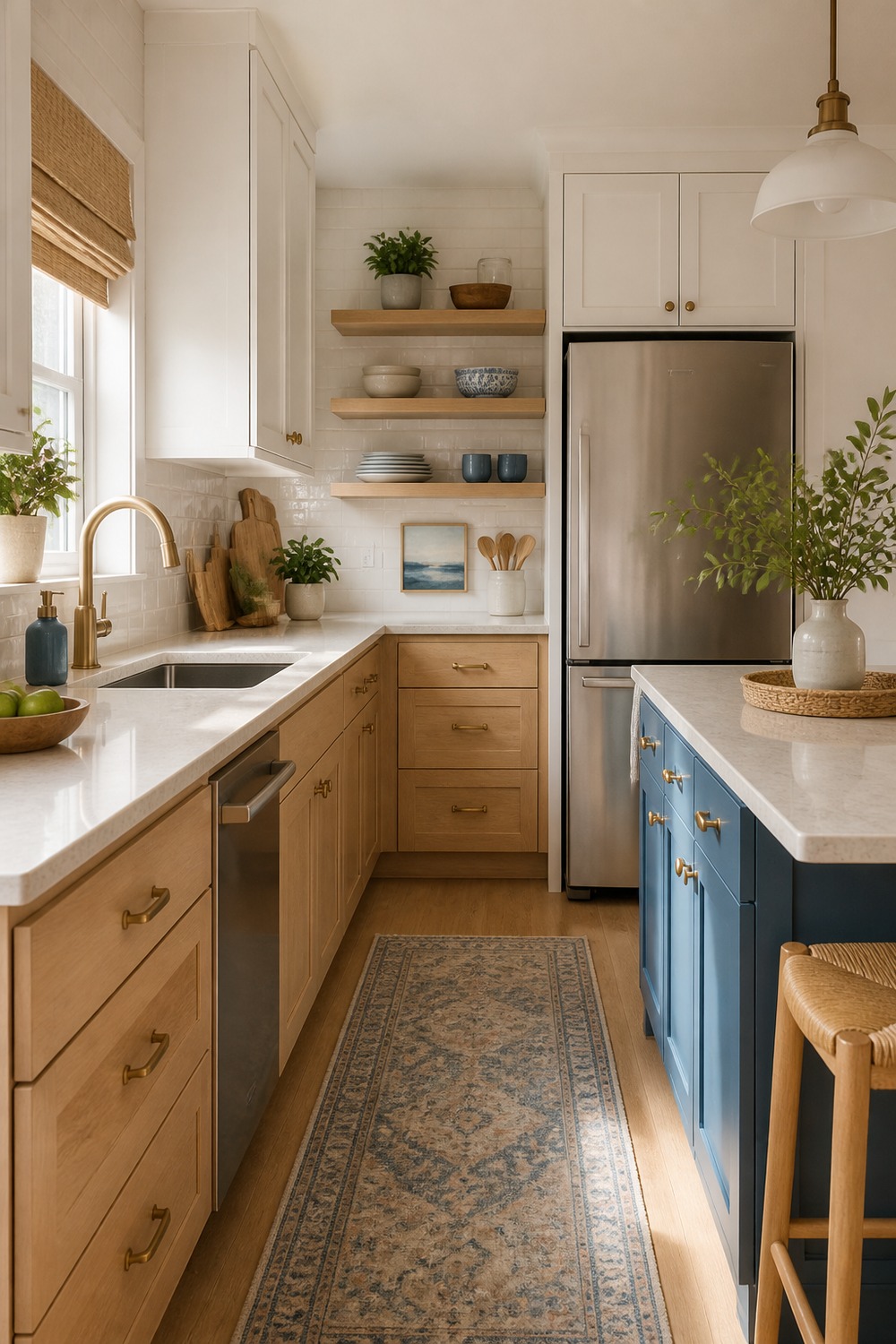
The white-and-wood mix is simple, but it does a lot for a tiny home kitchen. White uppers keep the eye moving upward, while the wood drawers ground the lower half and make the compact fridge wall feel less appliance-heavy.
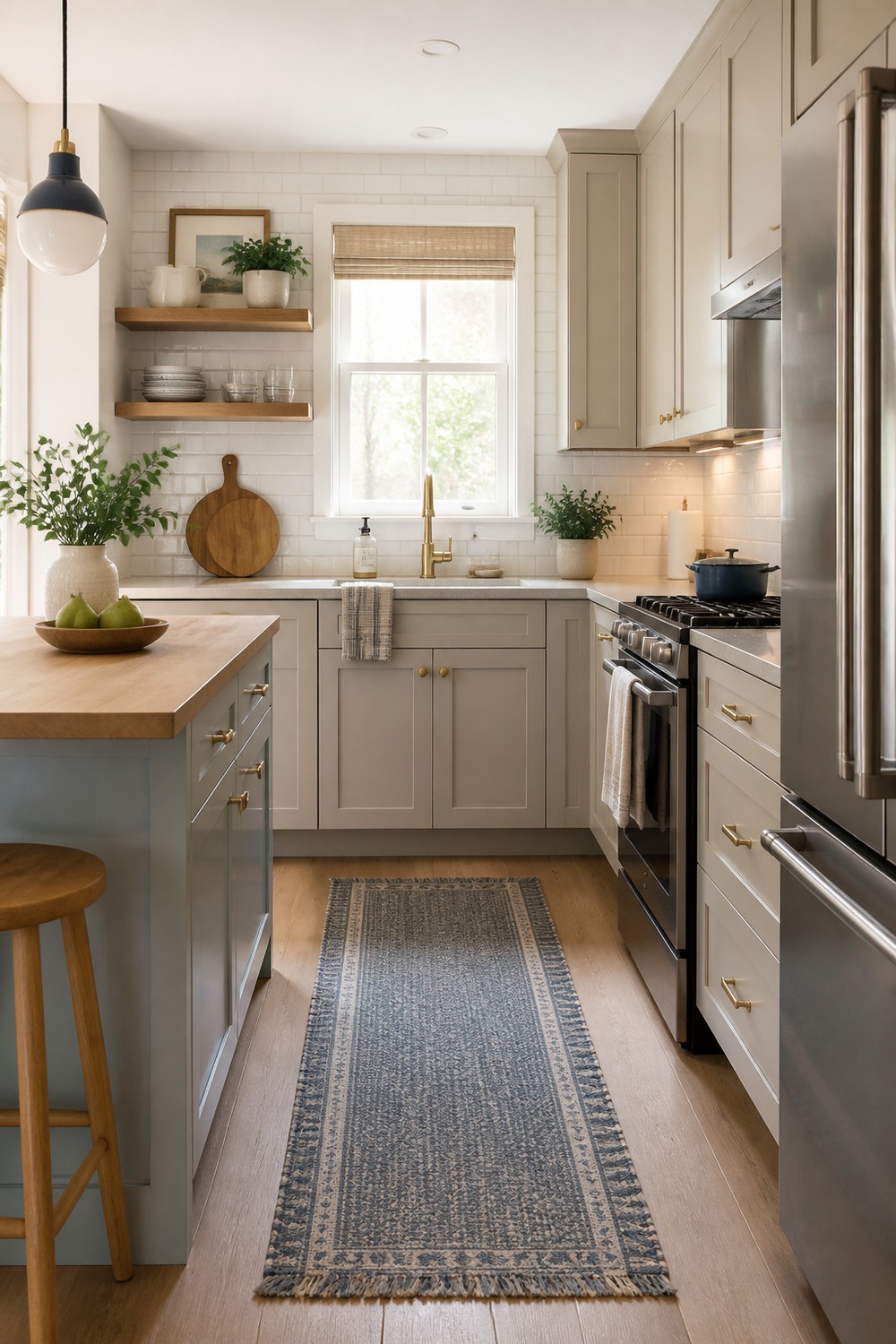
Light greige is one of those colors that can quietly fix a cramped apartment kitchen. It is softer than plain white, but the white tile, cutting board, and little plant keep the sink area bright enough for everyday prep.
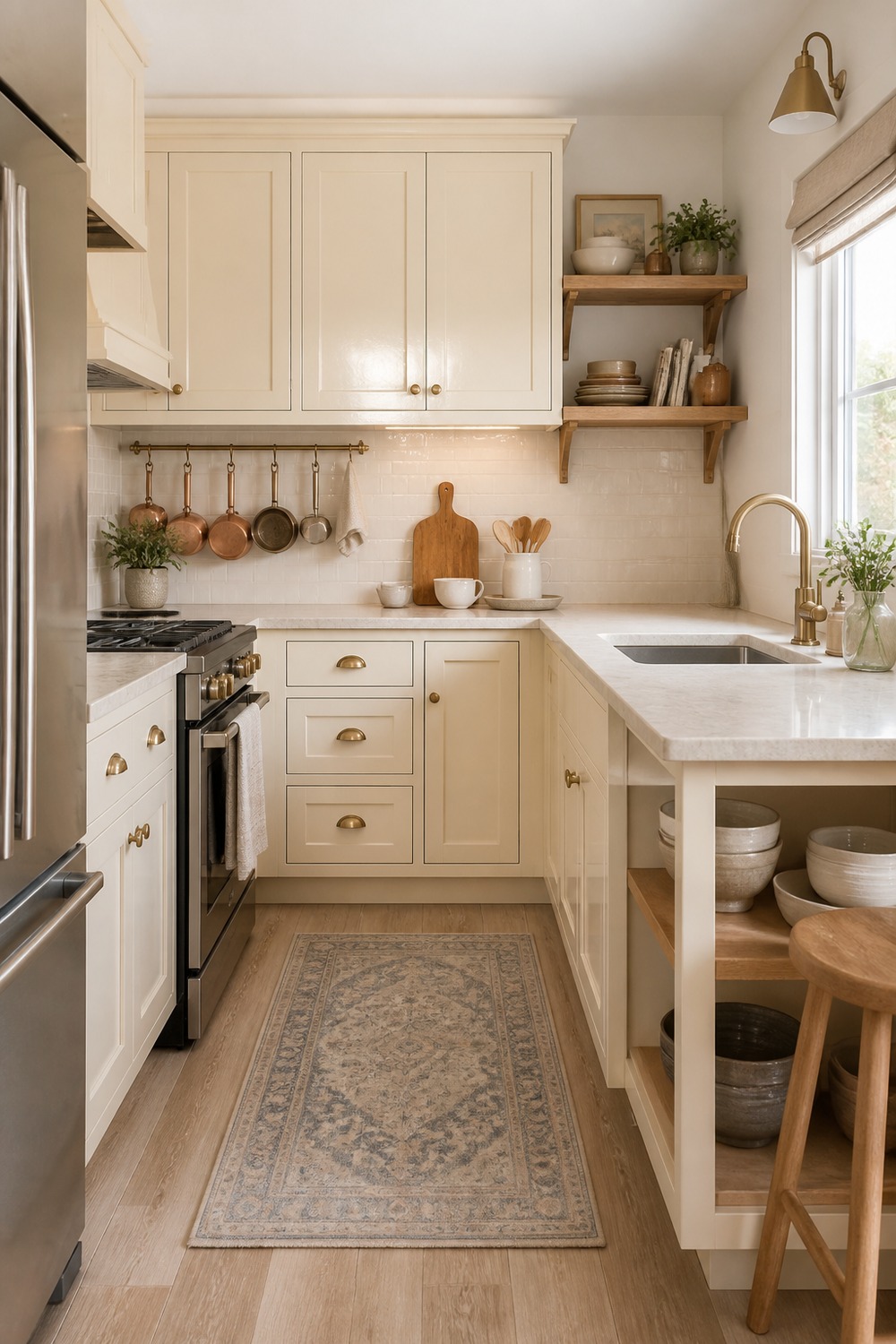
Buttery cream gives this tiny kitchen a warmer mood without going dark. The pale stone counter and brass faucet make the color feel finished, while the small wall rail keeps everyday cookware close instead of eating up drawer space.
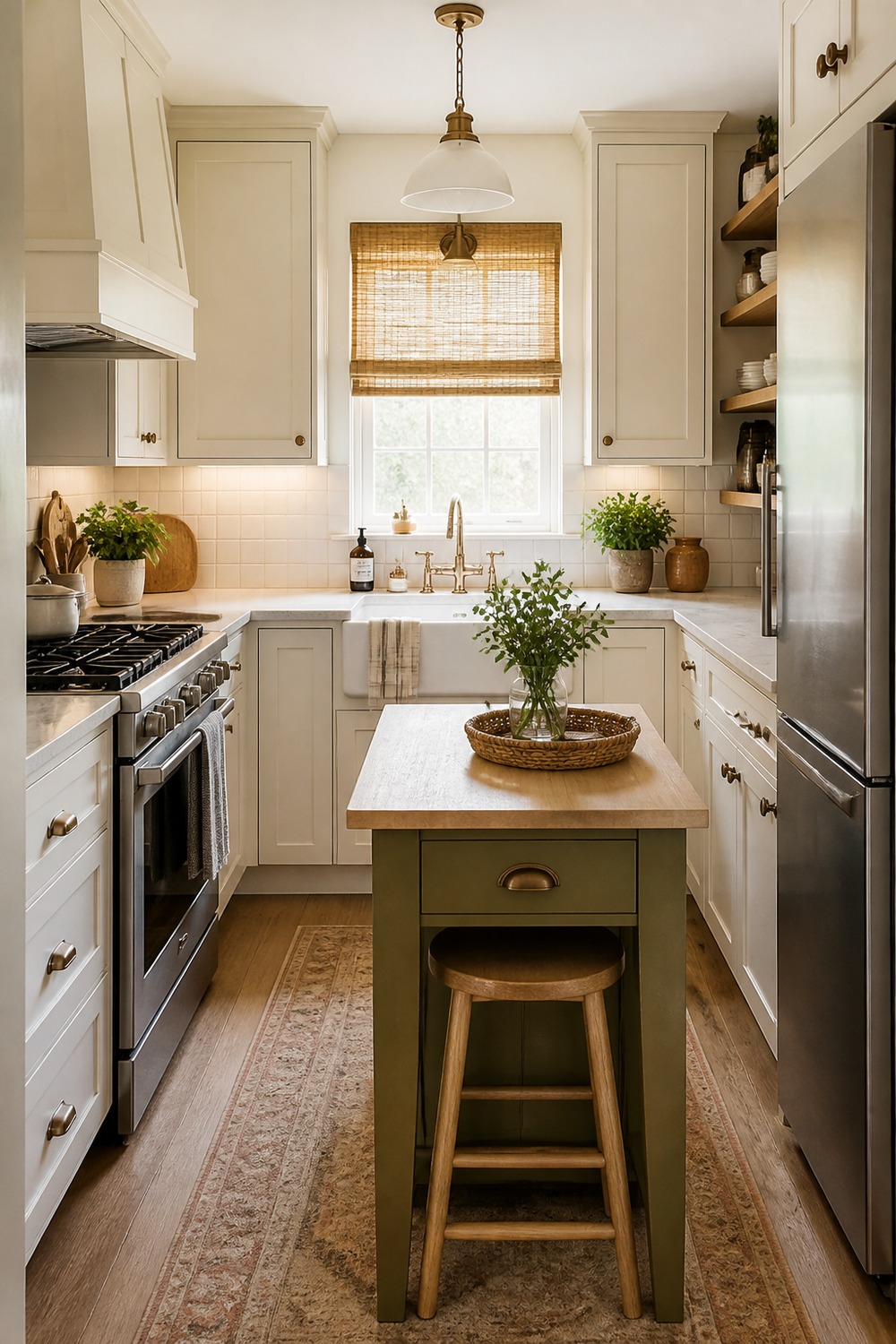
A little olive on the island cart is enough color for this kind of footprint. The stool tucks in, the warm white cabinets stay calm, and the tiny landing surface gives the kitchen somewhere to pause between chopping, serving, and cleaning up.
The checker runner makes the neutral cabinets feel more collected instead of plain. I like that the color is mostly low and narrow here, so the aisle still feels open while the floor adds some personality.
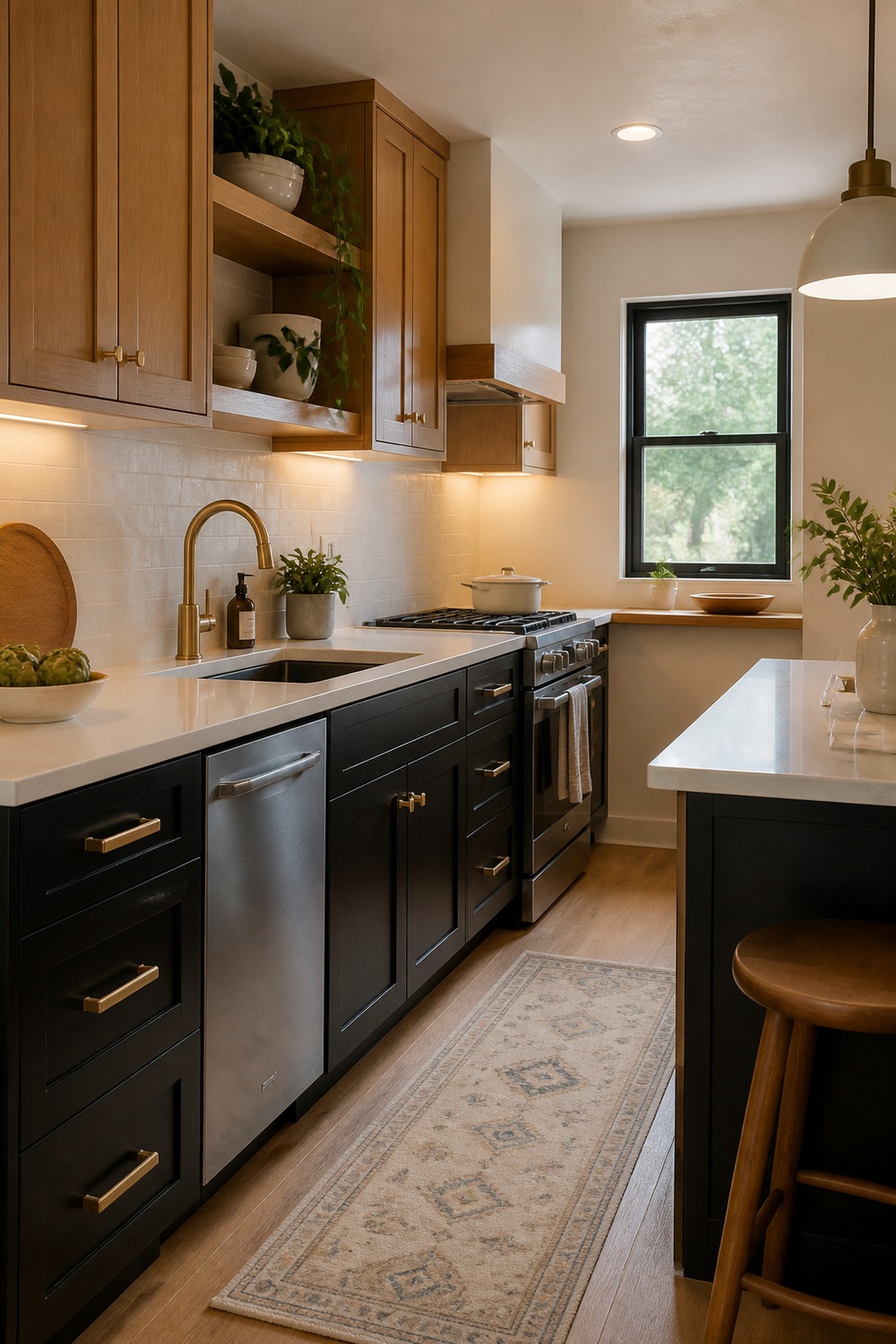
Black lower cabinets can work in a tiny kitchen when the upper half stays lighter. The oak, cream counter, and under-shelf glow keep the dark base from swallowing the room, and the clear walkway still feels usable.
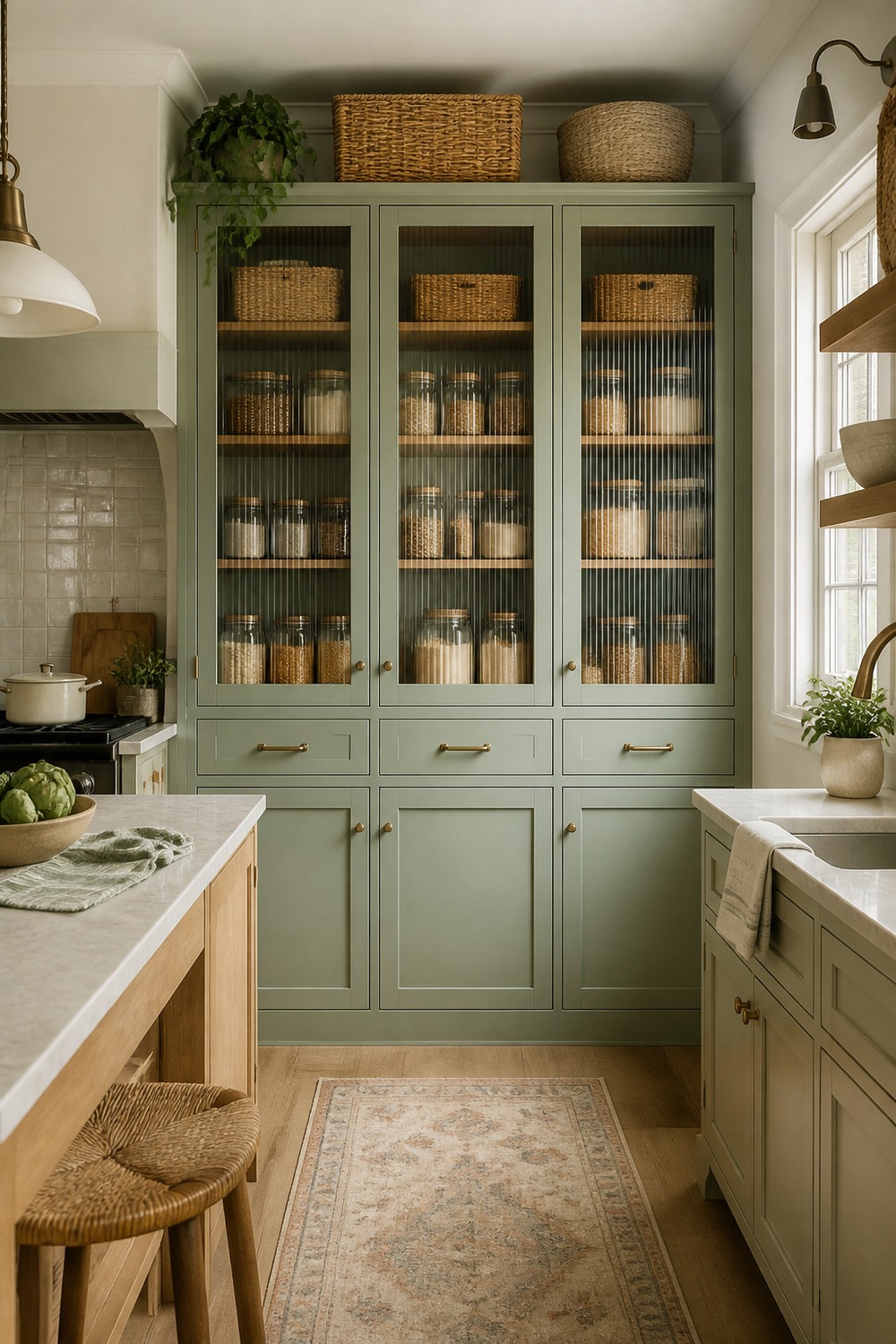
This pantry wall is a good reminder that color does not always have to sit on the main cabinets. The soft sage storage, ribbed glass, baskets, and unlabeled jars give the kitchen a calmer place to hide the less-pretty daily stuff.
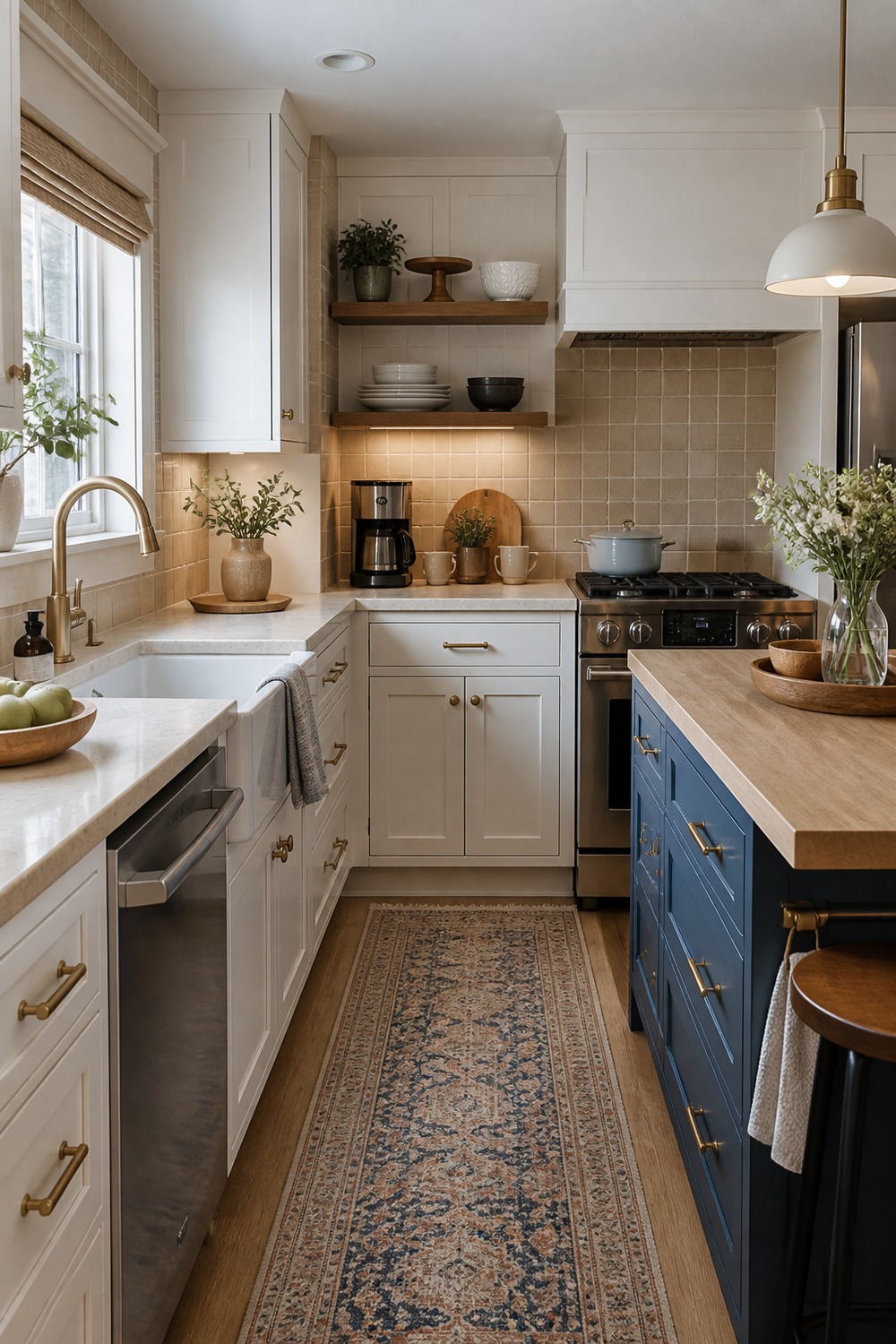
Warm beige tile is subtle, but it changes the whole mood of a compact prep corner. The grout texture, white cabinets, and oak shelf make the backsplash feel cozy without taking over the small wall.
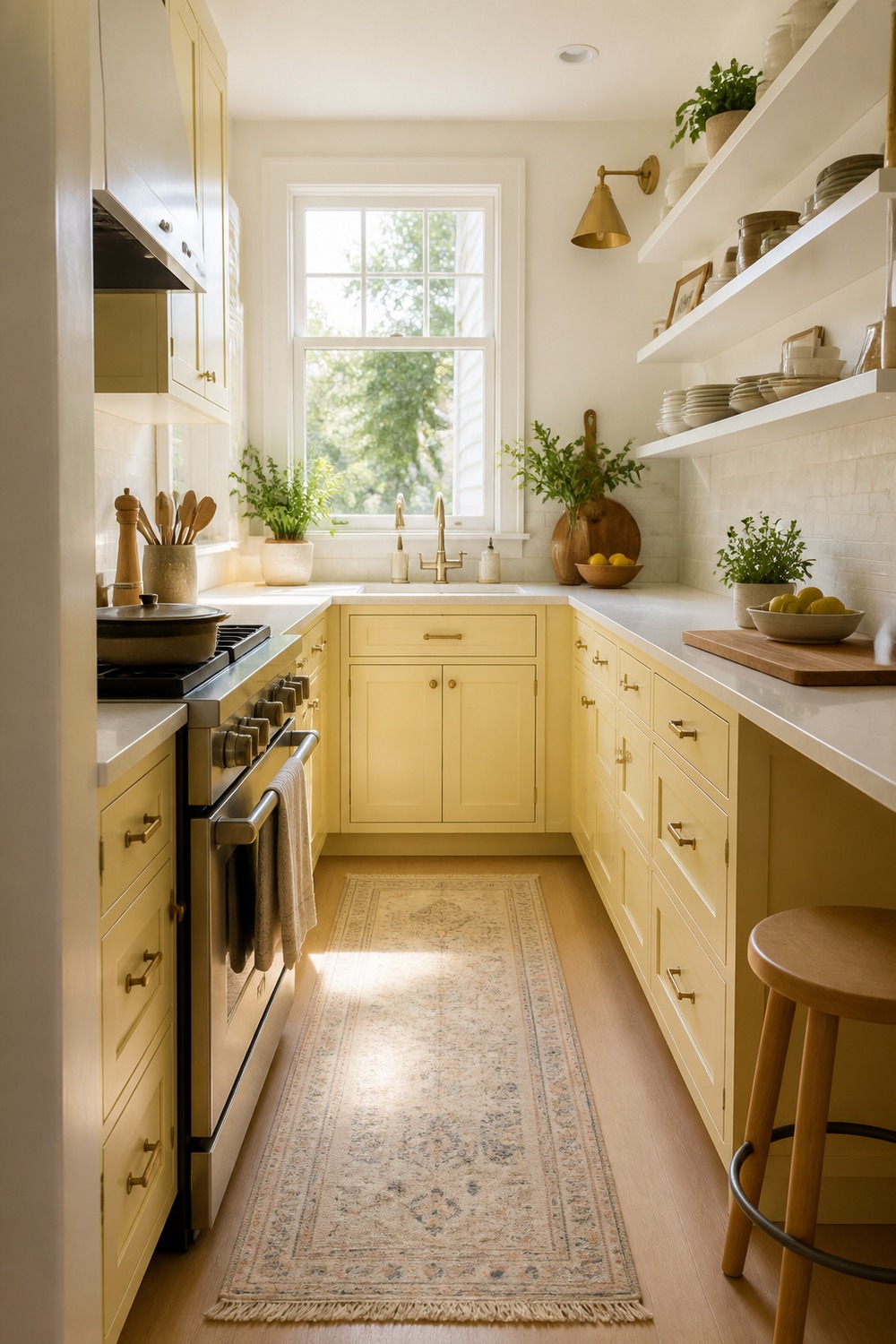
Pale yellow can go childish fast, but this version stays soft enough for a tiny kitchen. The white upper shelves and cream counter tone it down, while the daylight makes the lower cabinets feel cheerful instead of loud.
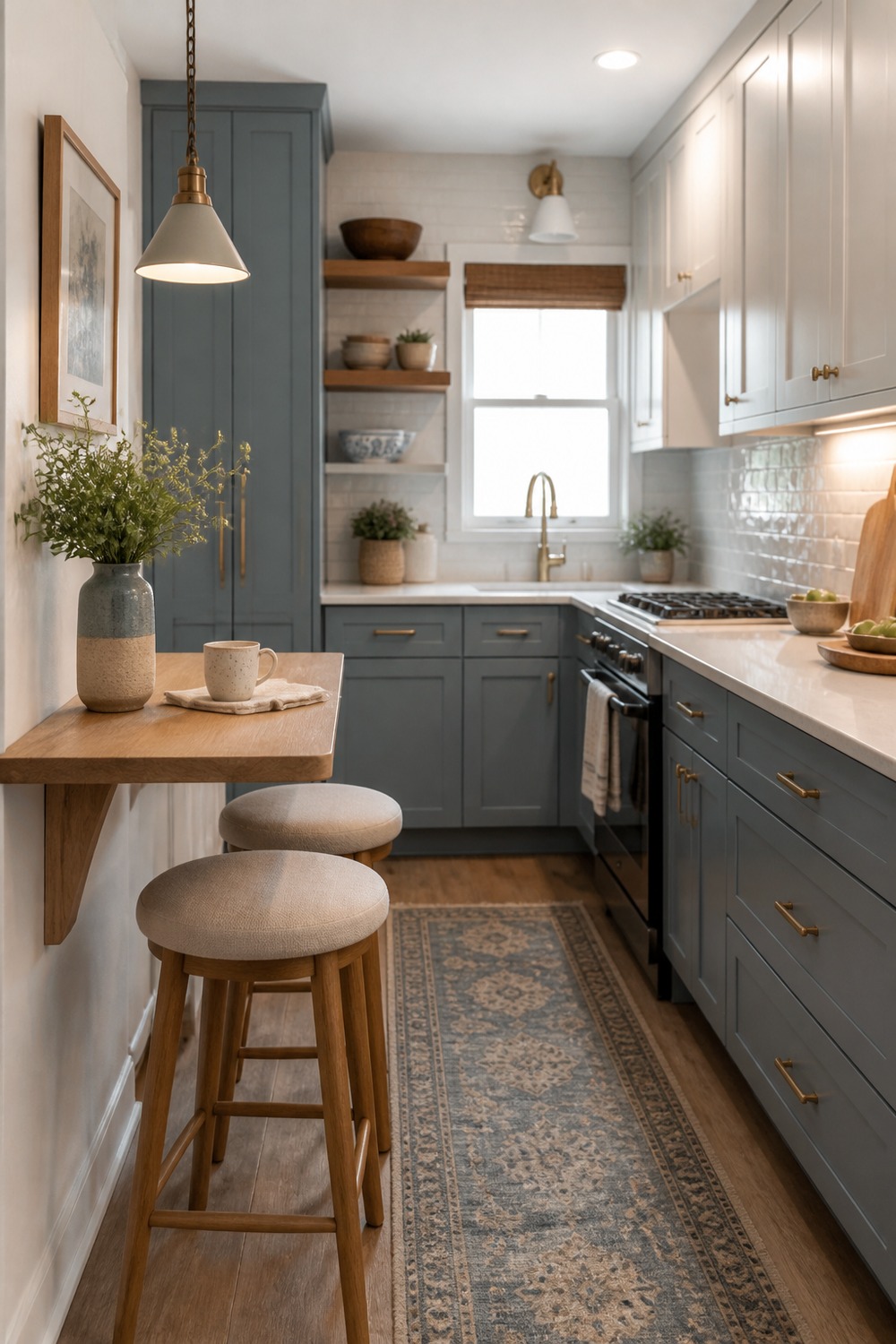
The breakfast ledge adds function without asking for a full dining nook. Light cabinets, tucked stools, and a small pendant keep the color scheme practical because the same little edge can handle coffee, a quick plate, or extra prep.
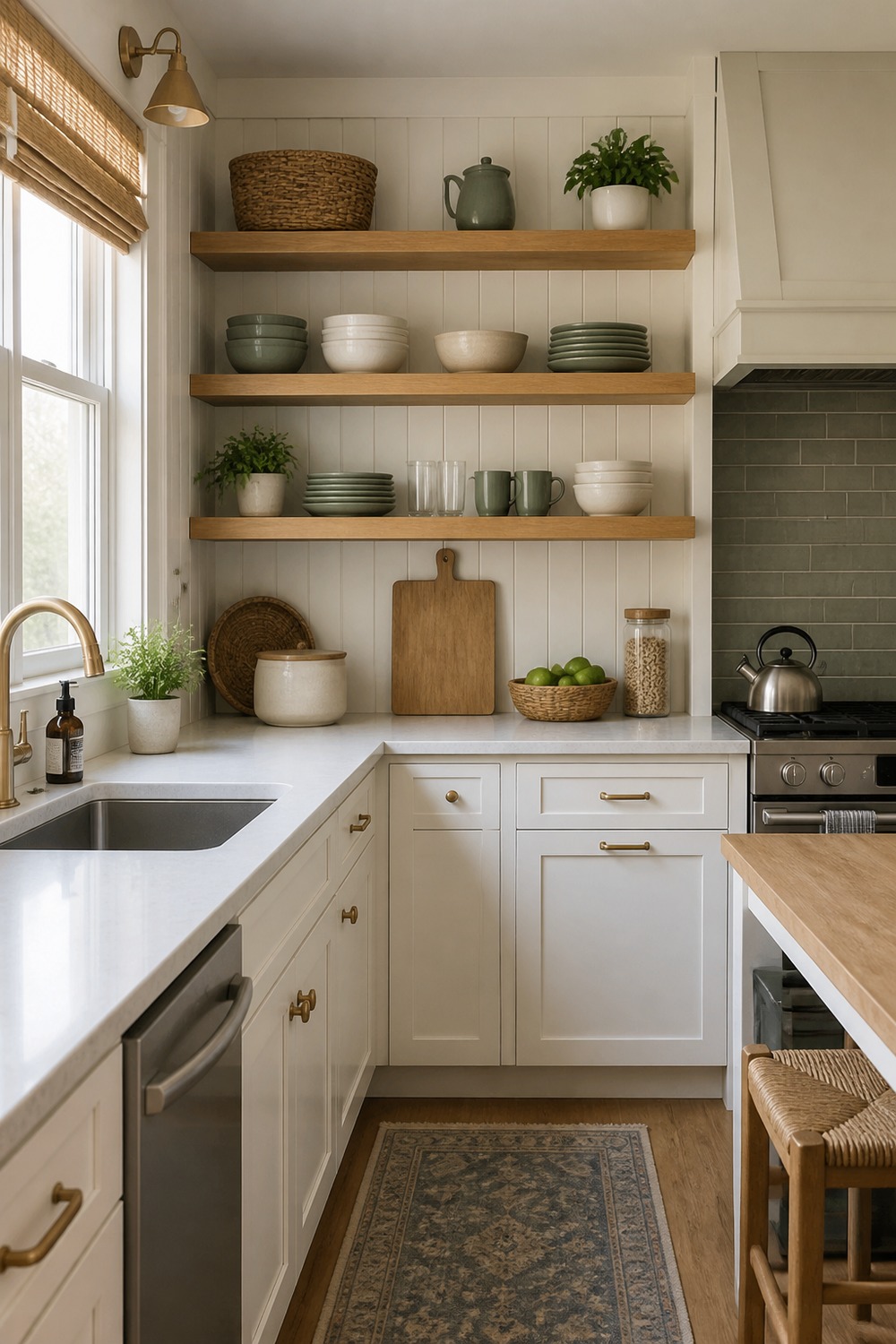
Open shelving can look cluttered in a tiny kitchen, so the color choices have to stay edited. The white base, oak shelves, muted green dishes, and baskets give the wall detail while still leaving enough visual space to breathe.
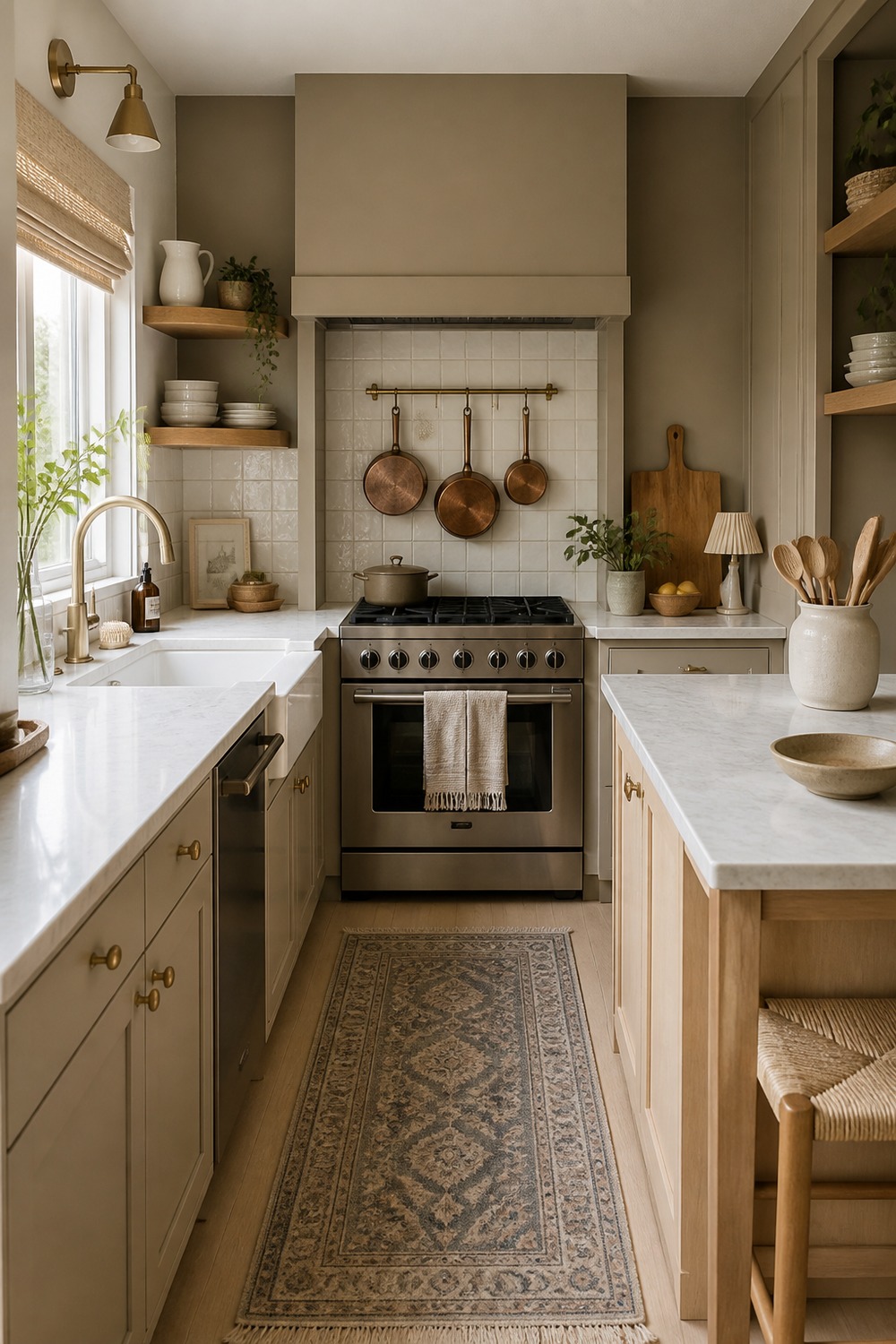
Taupe around the range is a softer choice than going fully dark. It gives the stove wall some depth, and the cream tile keeps the cooking zone from feeling boxed in or too heavy for a small footprint.
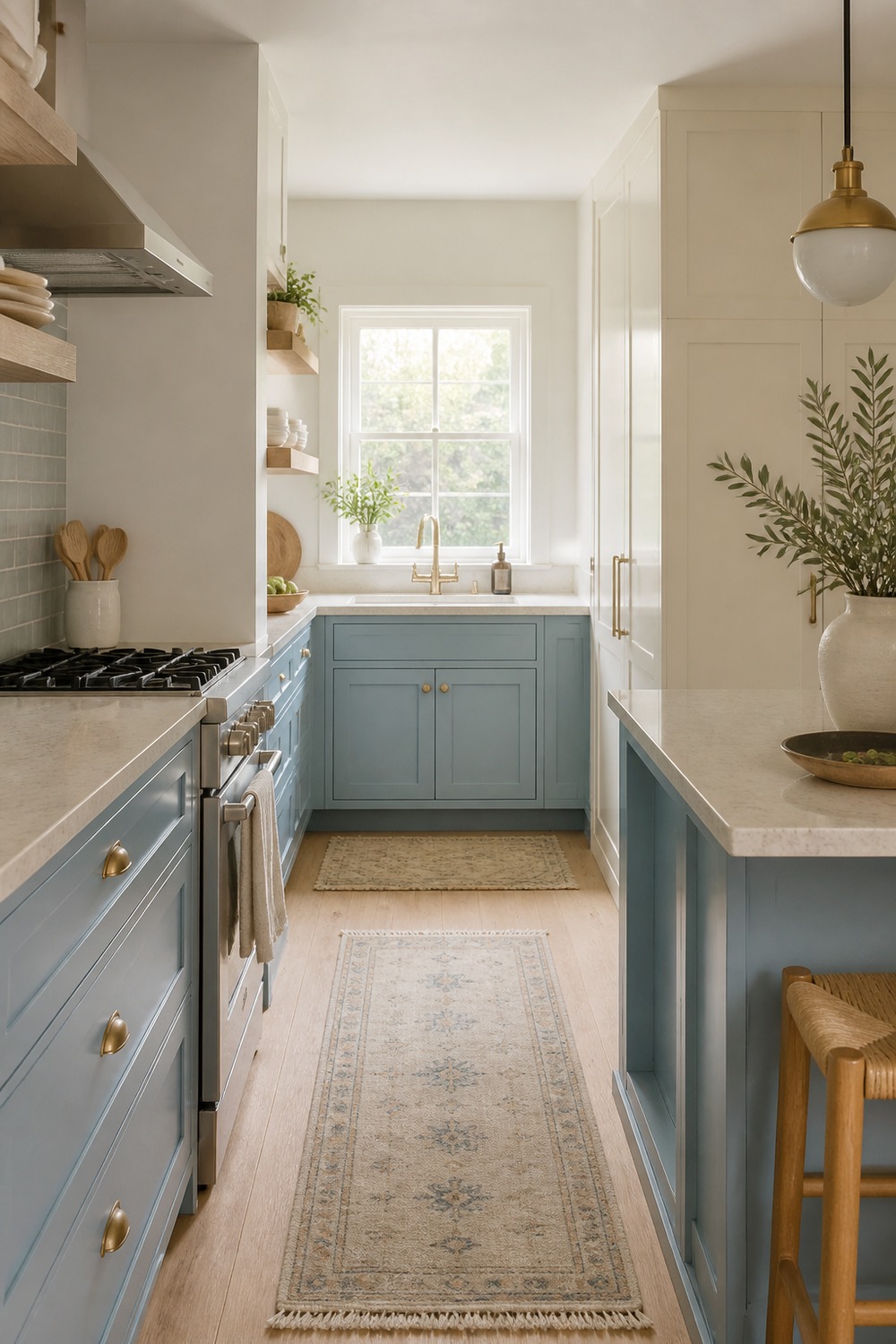
Gloss-free warm white is doing the quiet work here. The pale oak floor and soft window light keep everything reflective but not shiny, which makes the studio kitchen feel cleaner without turning it into a showroom.
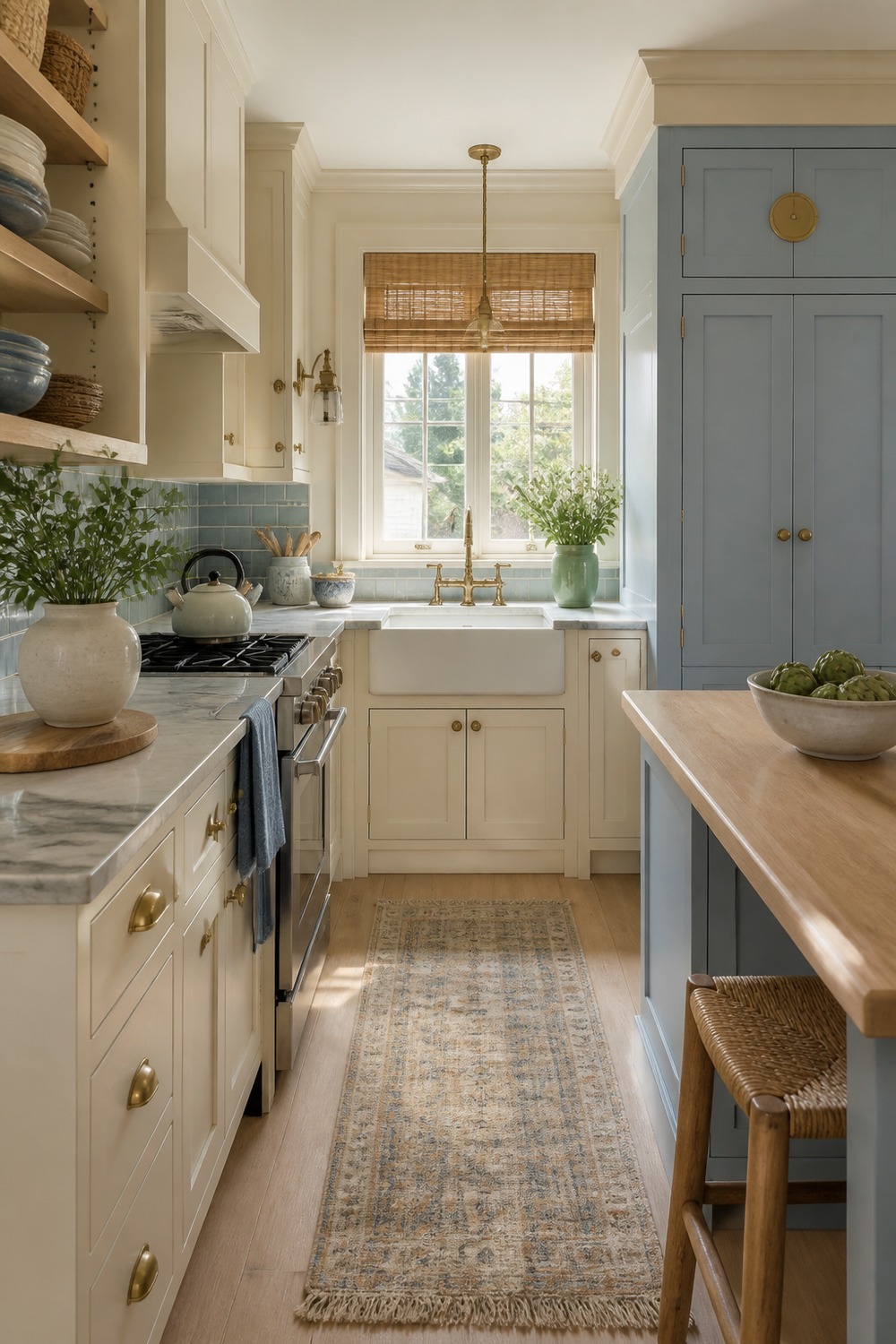
This cottage sink wall has the sweetest mix of cream and pale blue. The paneled cabinets, woven shade, and compact sink area make the color feel charming, but it still looks like a real place to wash dishes every night.
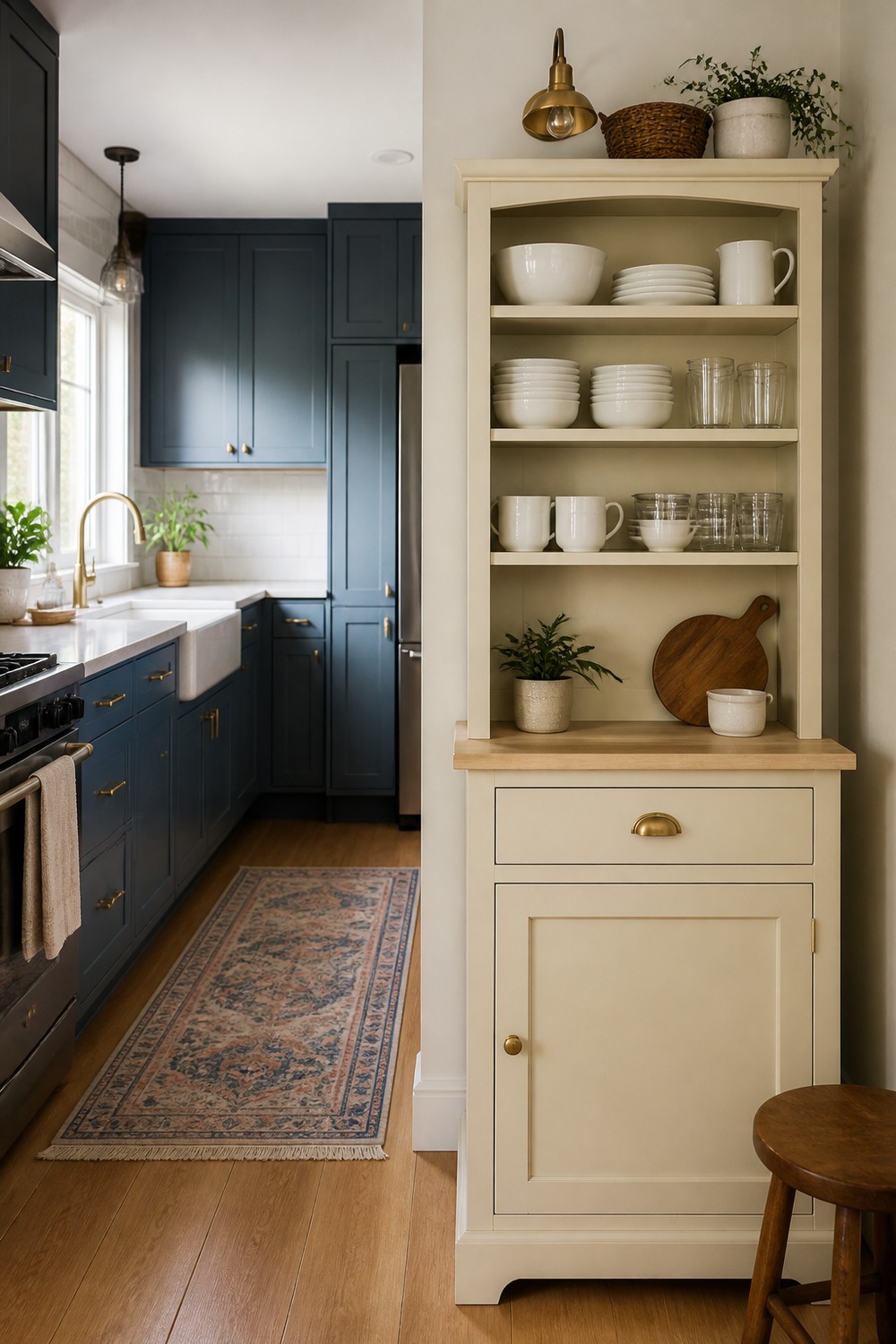
A narrow hutch is a smart way to bring color and storage into a tiny kitchen without adding more upper cabinets. The cream finish, white dishes, and wood floor make the dish storage feel like part of the room instead of overflow.
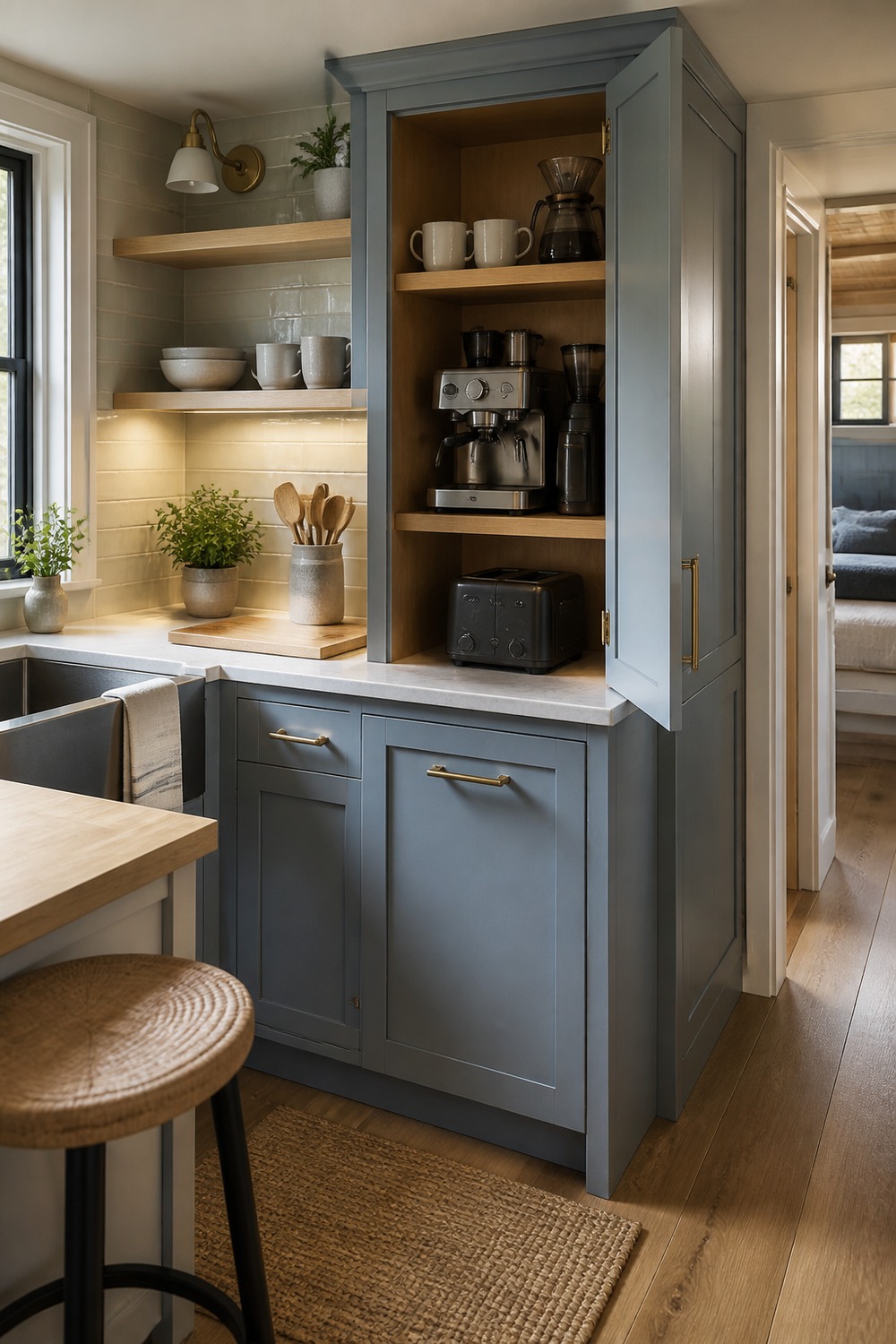
The hidden-appliance corner feels practical in a very tiny-home way. Keeping the prep surface clear matters more than adding another accent color, and the soft cabinet palette makes the tucked-away storage look clean instead of secretive.
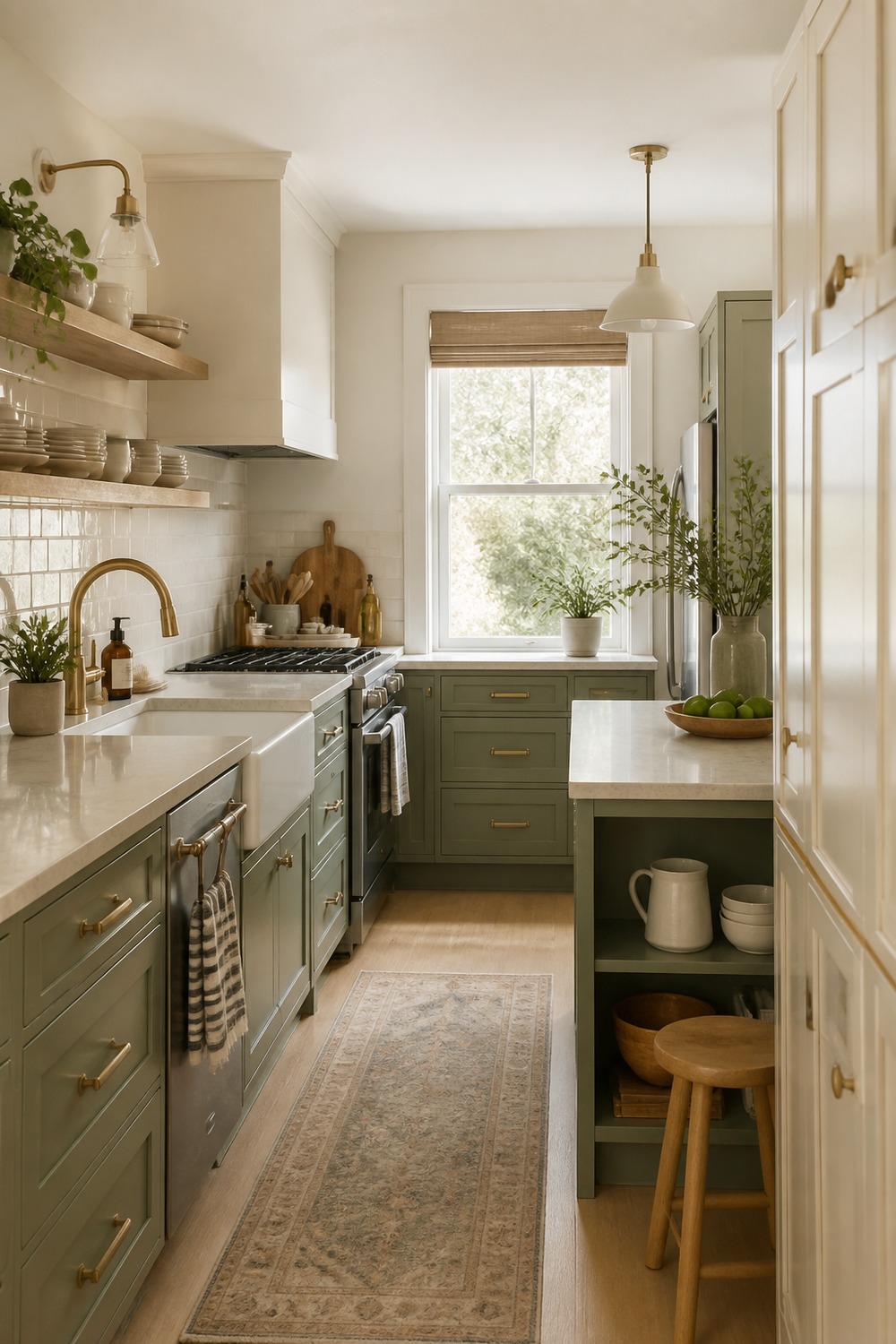
This final mix feels settled because the colors share the work: oak for warmth, sage for softness, cream stone for brightness. The clear walking path is the part I like most, because a pretty tiny kitchen still has to let someone cook in it.
A tiny kitchen palette has to do more than look cute. Light-reflecting cabinets, warm wood, one muted color, simple tile, and storage that actually fits can make the space feel calmer without pretending it is bigger than it is.

I work in tech, but my taste in design is straight out of a slow European village. Give me arches, aged brass, and a room that smells like books and coffee. That’s my kind of home.