Black countertops can make a kitchen look incredible, but they need the right colors around them or the whole room starts to feel heavy. I like these schemes because the dark counters stay visible, while the cabinets, tile, wood, brass, and softer wall colors give each kitchen a different mood.
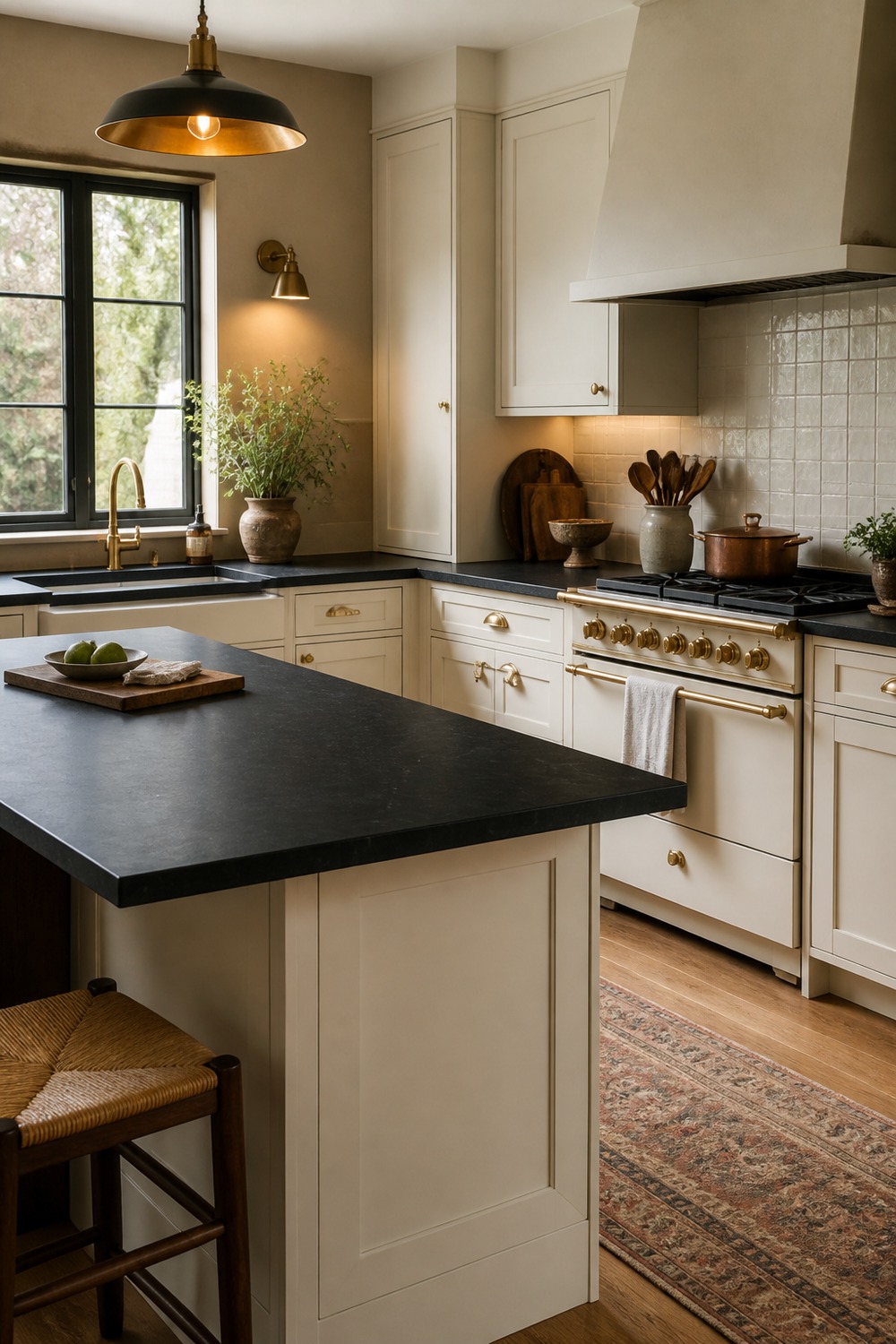
Black soapstone is doing the heavy lifting here, but the warm white cabinets keep it from feeling severe. I like the mix of matte counter surface, quiet cream tile, and aged brass because it gives the kitchen contrast without making every corner feel dark.
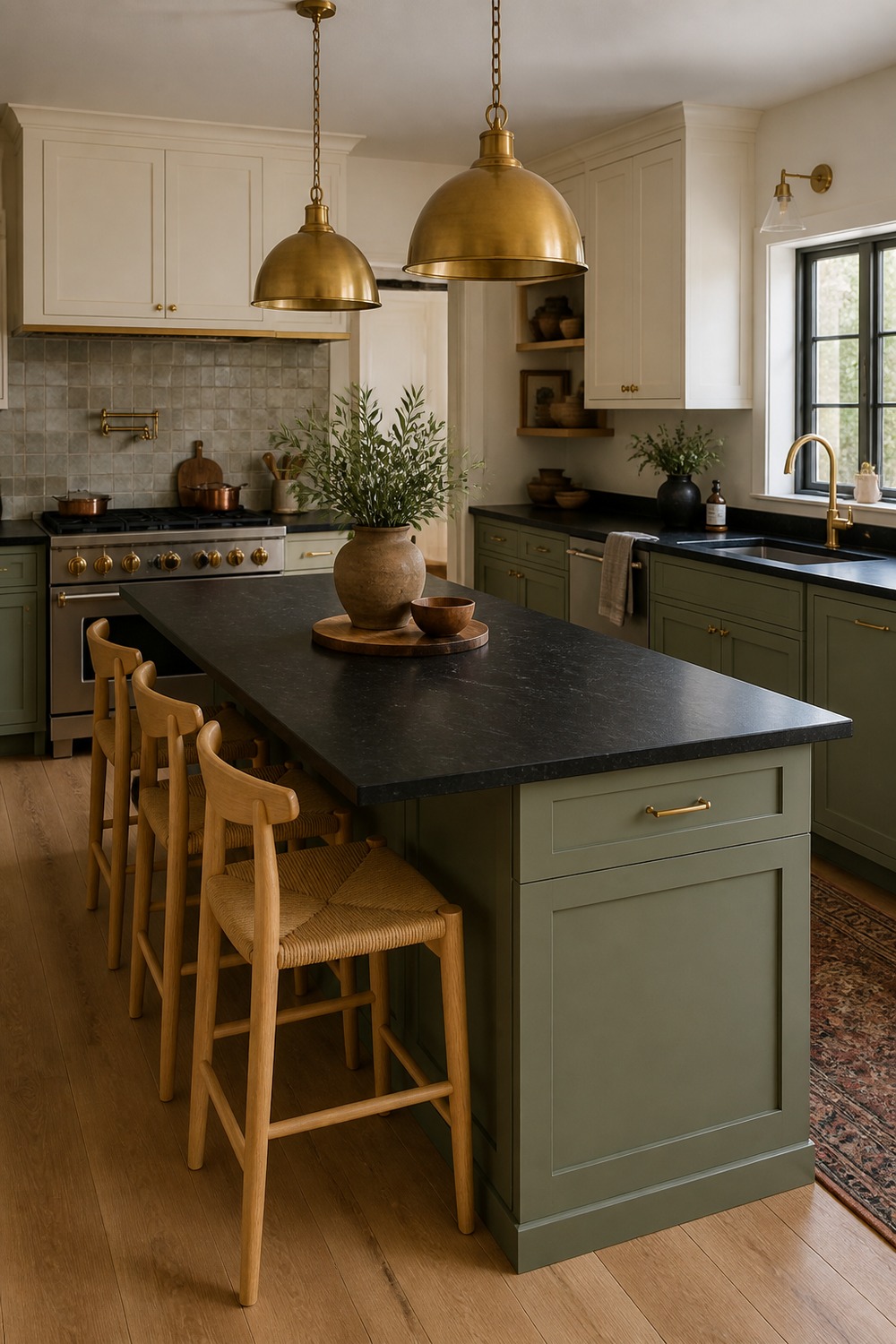
Sage cabinets are such a good partner for black quartz because they soften the whole room immediately. The island still feels bold, but the muted green lowers, pale uppers, and simple hardware make the color scheme feel calm enough for everyday cooking.
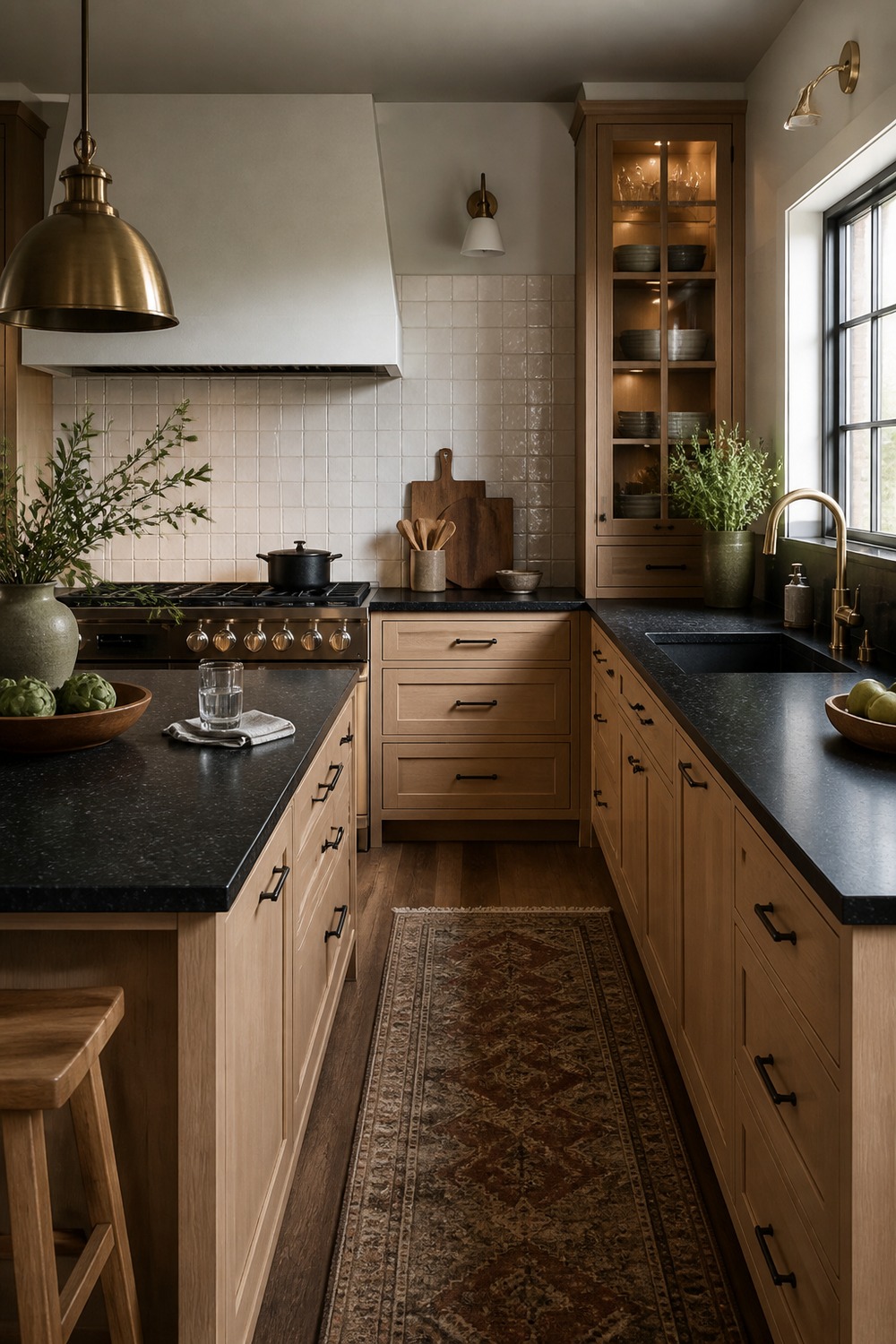
This one feels more natural and less dramatic because the white oak cabinets bring in so much grain. The black granite counters add polish, while the flat cabinet fronts and dark bronze pulls keep the kitchen from drifting into a too-sweet farmhouse look.
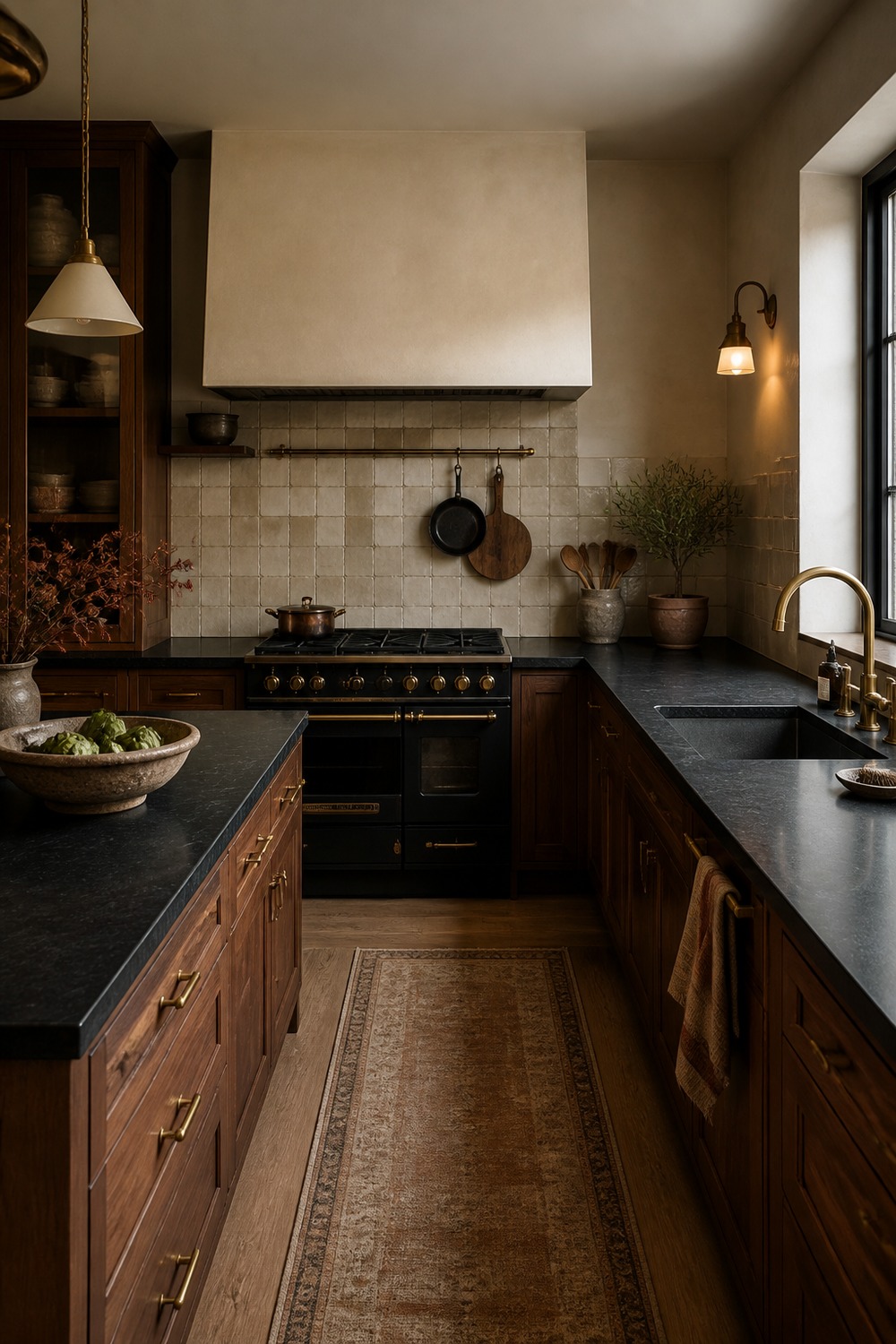
Walnut with black counters can get heavy fast, but this kitchen has enough cream wall space and brass detail to breathe. The darker counter line grounds the range wall, and the warm wood makes the whole palette feel rich instead of cold.
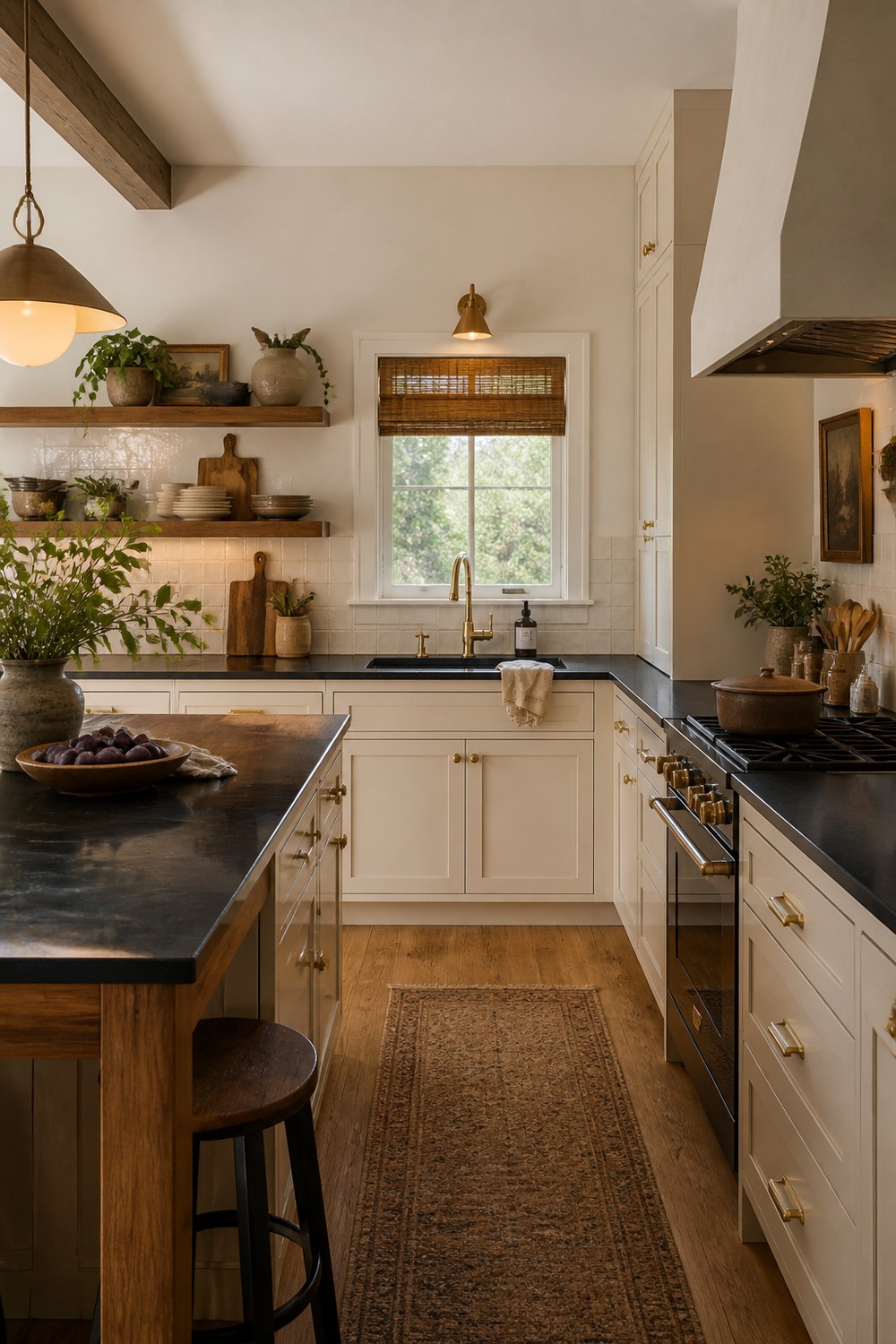
The cream cabinets make the black perimeter counters stand out in the best way. I like this kind of contrast because dishes, cutting boards, and small appliances would not visually disappear into a dark cabinet wall.
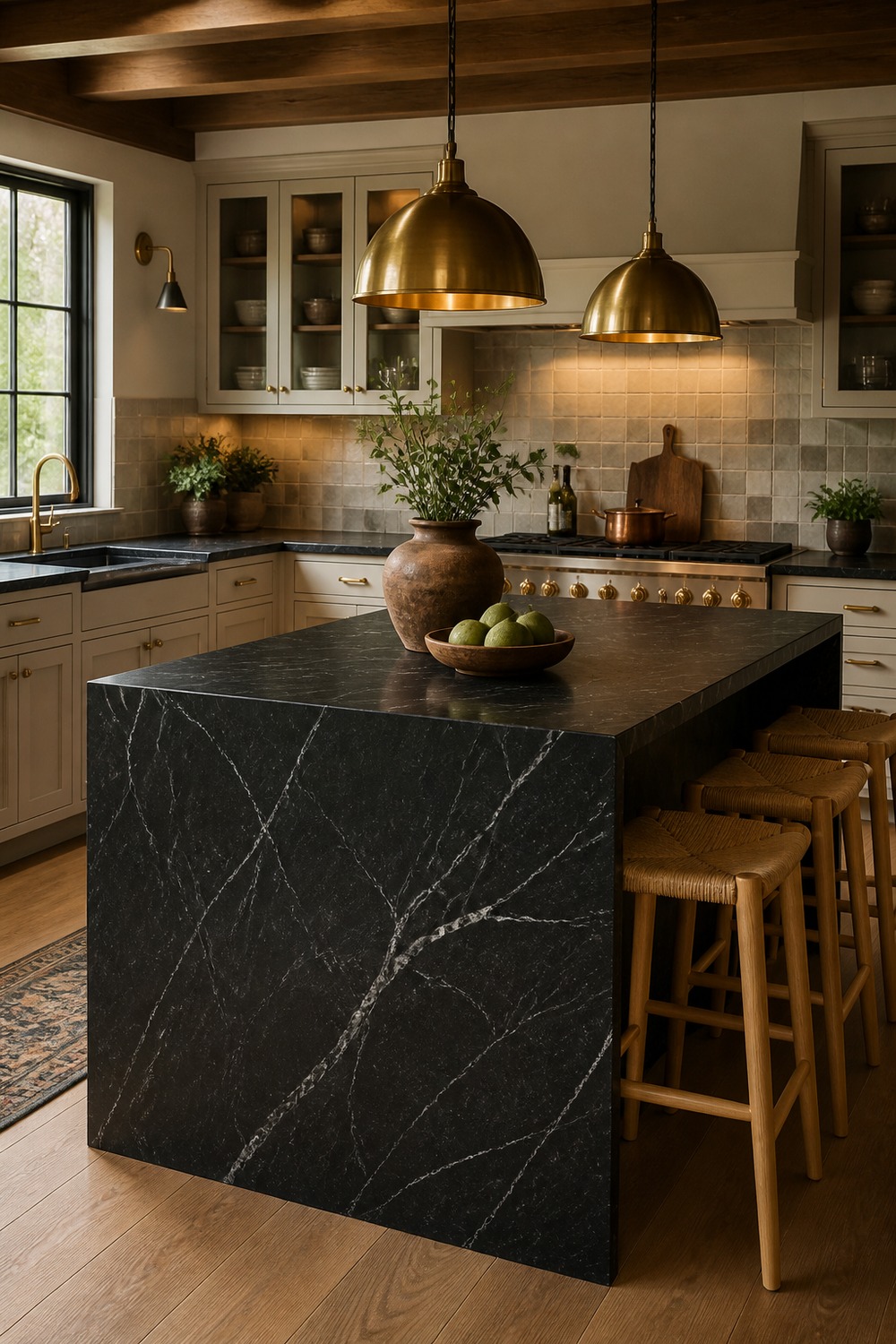
A waterfall island makes black stone feel intentional, almost like the main furniture piece in the kitchen. The greige cabinets and brass pendants keep the look from going too stark, and the long island surface still reads as useful prep space.
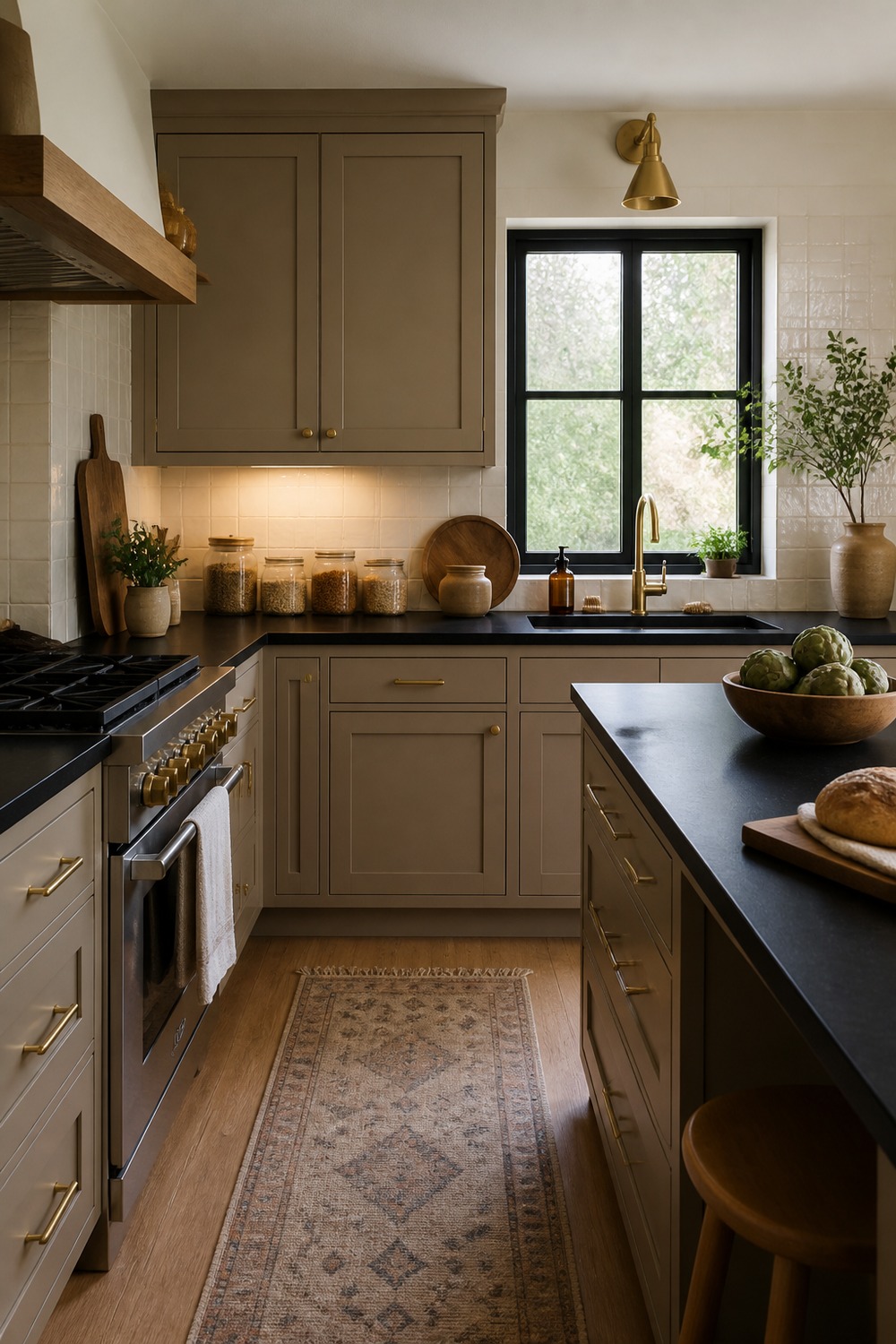
Taupe cabinets are a quieter choice, which is why the honed black counters look so good here. The handmade tile, soft neutral cabinetry, and a few glass jars give the room texture without competing with the dark stone.
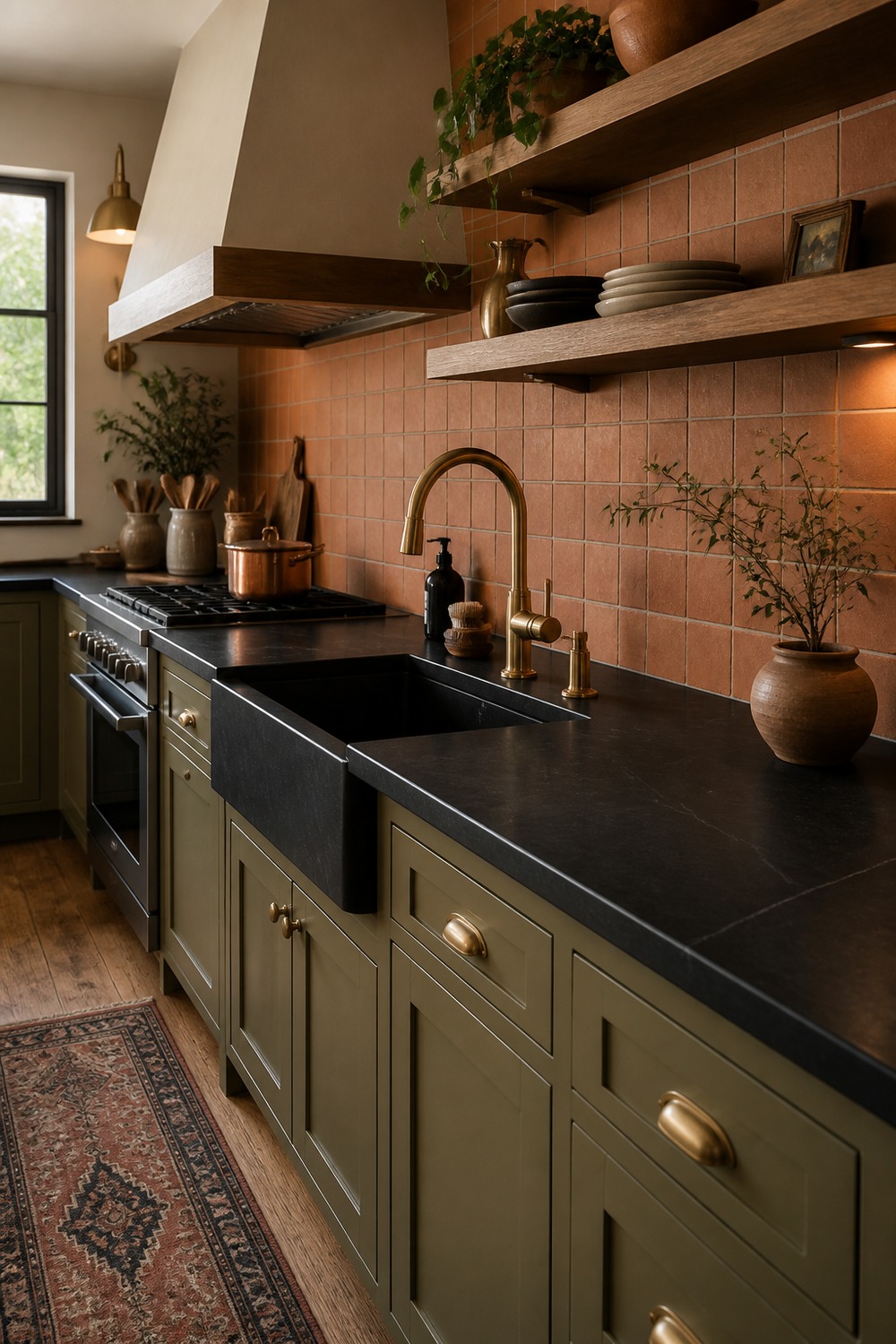
The terracotta tile changes the whole mood of the black countertops. Instead of feeling sleek and formal, the counter line feels warmer and more lived-in, especially with the walnut shelves and creamy cabinet color around it.
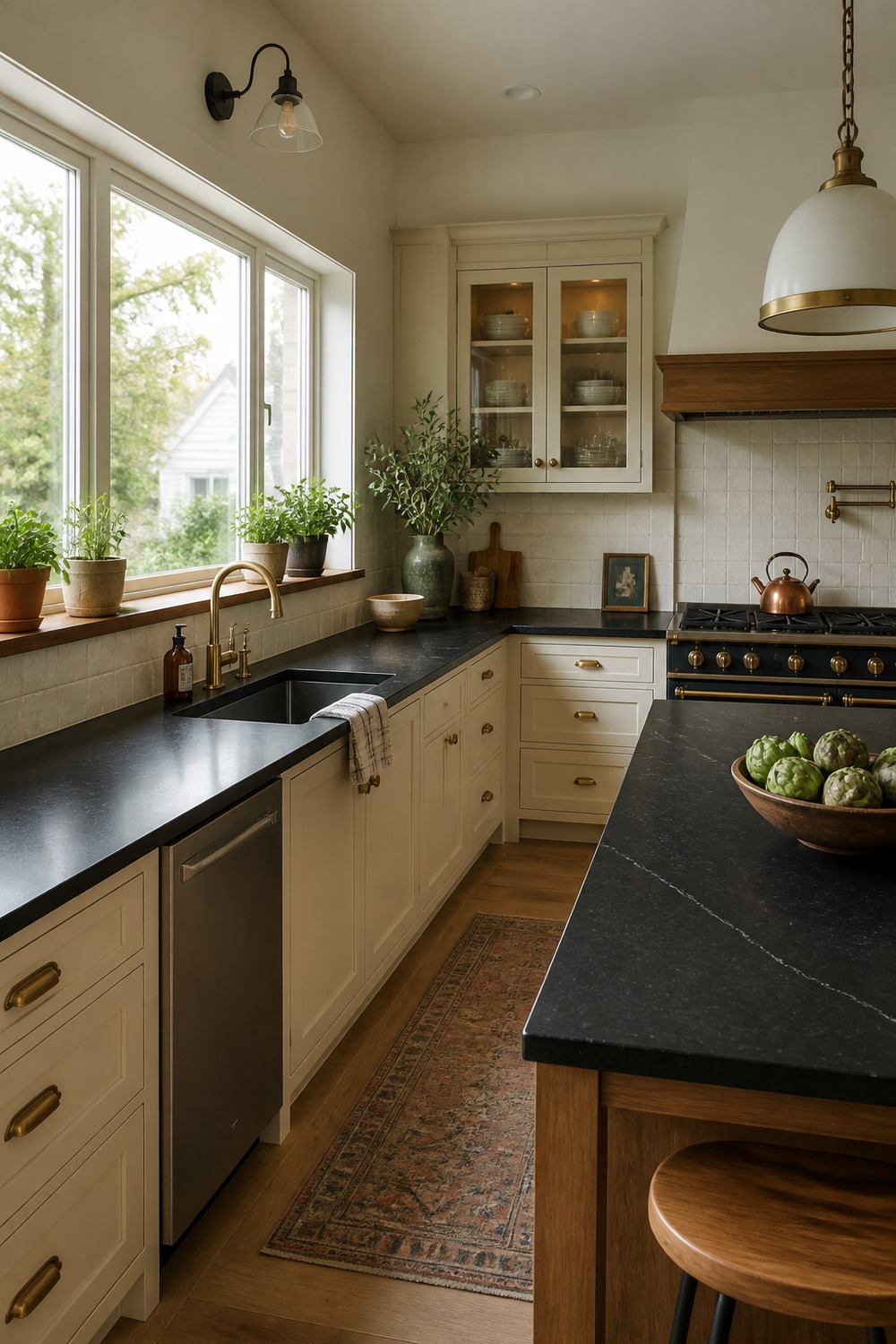
This is a clean way to use black counters if you still want the kitchen to feel bright. The white cabinets and big window keep the sink wall light, while the dark countertops add just enough definition around the work zones.
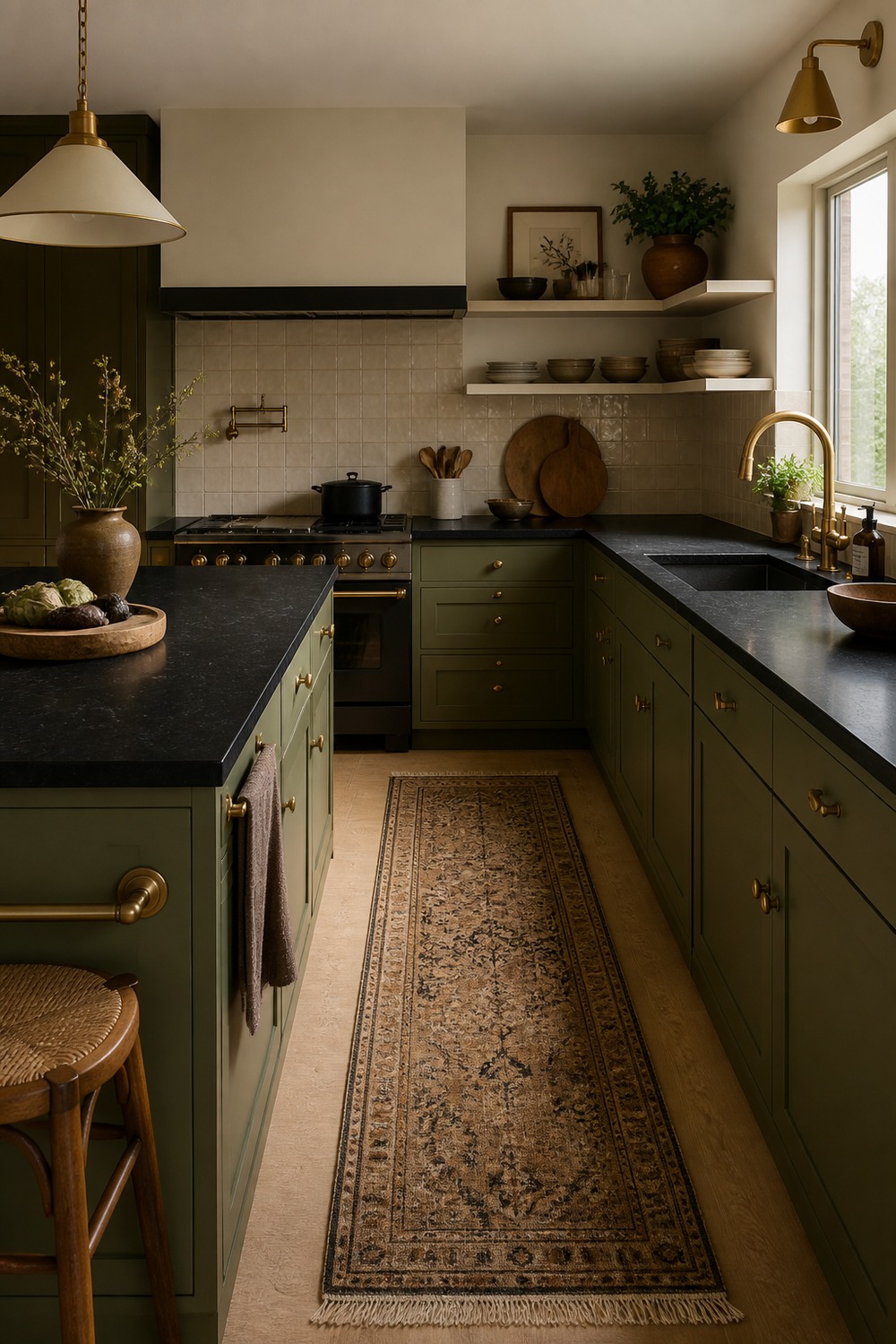
Olive green and black stone feel moody without being flat because both colors have depth. The runner, wood accents, and simple tile break up the darker cabinets so the kitchen still feels collected and usable.
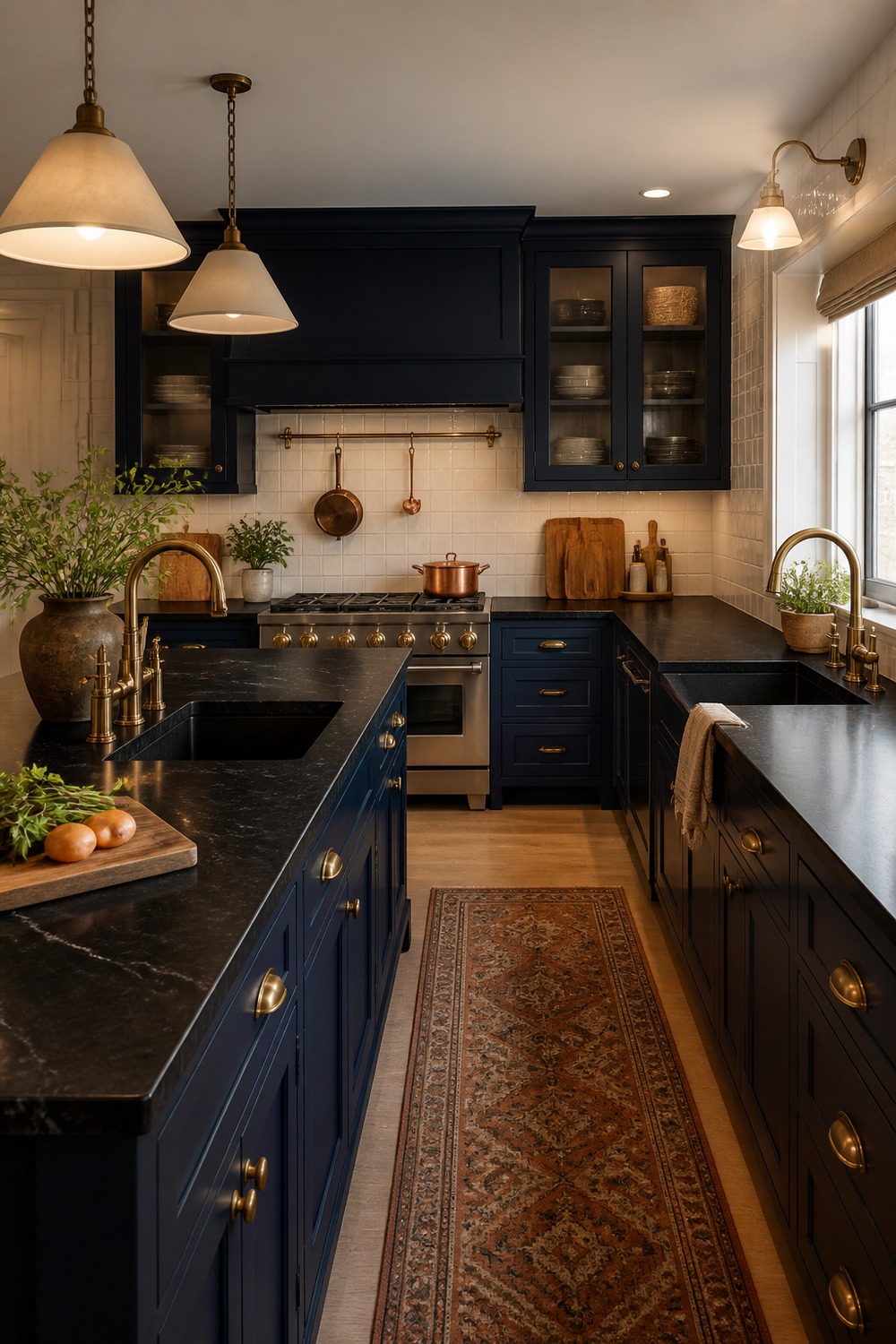
Navy cabinets with black countertops can sound like too much on paper, but the white tile backsplash makes it work here. The oak cutting boards and brass touches keep the dark colors from blending into one solid block.
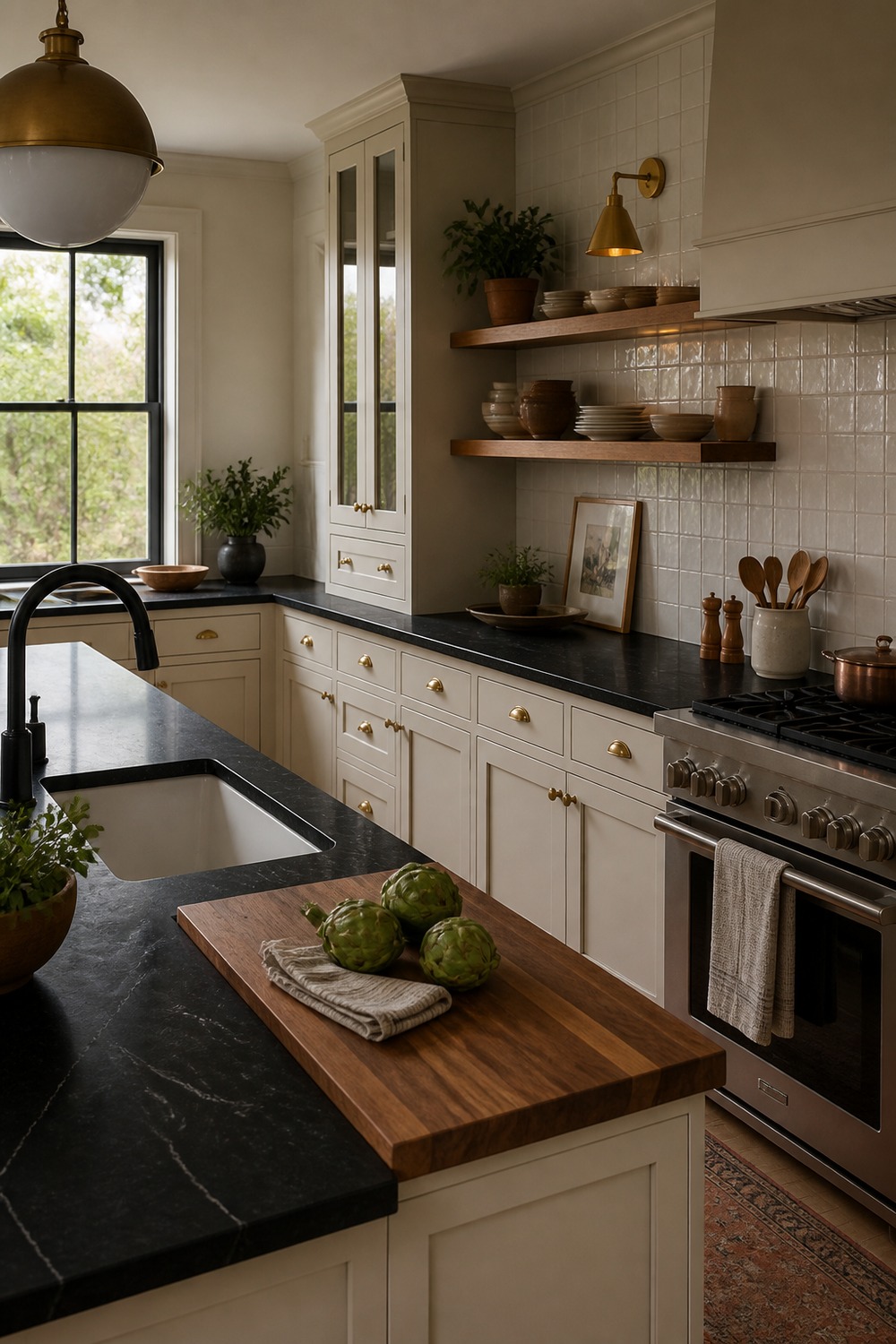
The little butcher-block prep area is what makes this one feel practical. Black perimeter counters give the kitchen the moody edge, while the wood insert warms up the place where someone would actually chop, set down groceries, or make coffee.
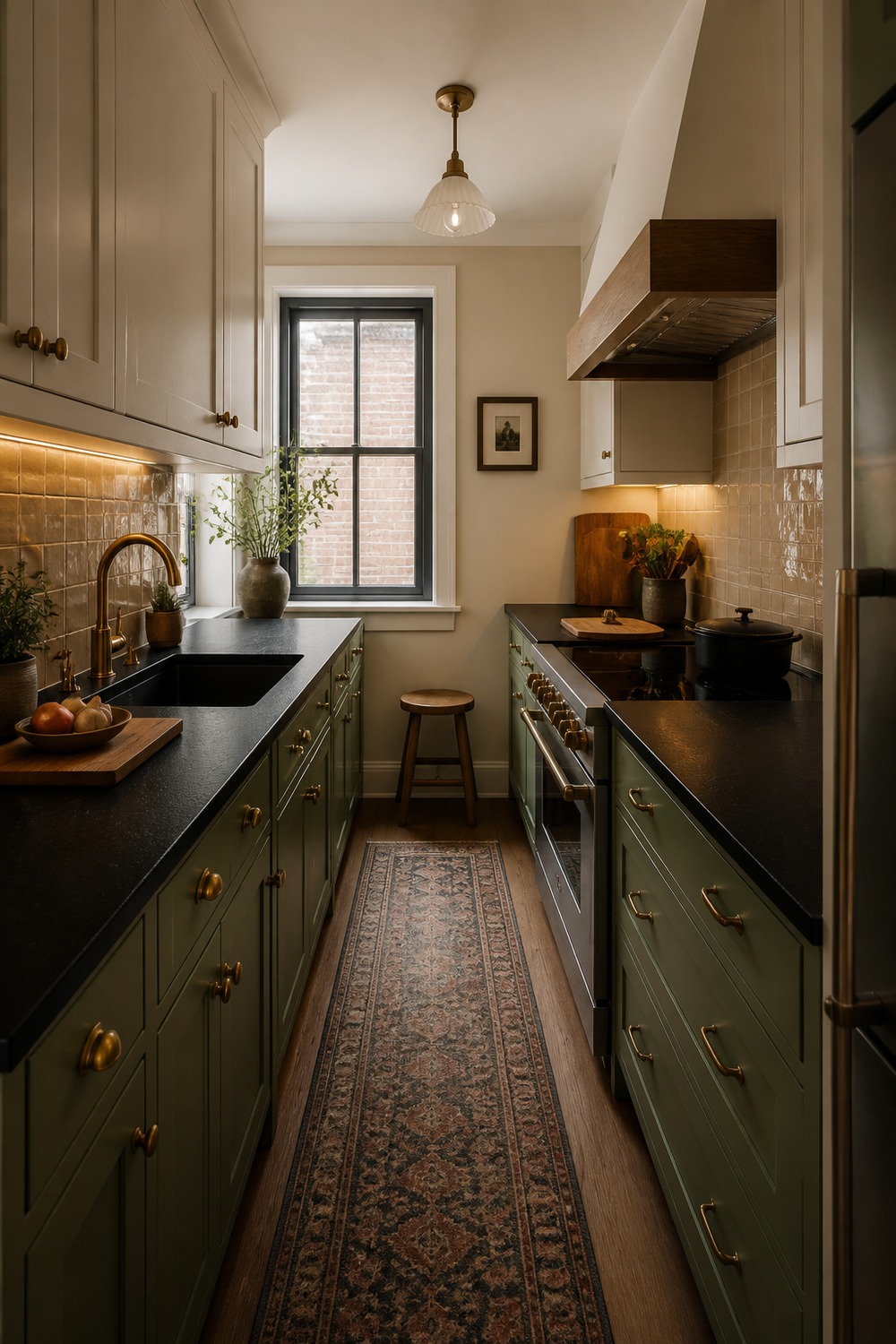
In a narrow galley, black countertops need light cabinets or the space can feel squeezed. The sage lowers, pale tile, and long counter run make this feel compact but still organized, with enough contrast to define both sides of the kitchen.
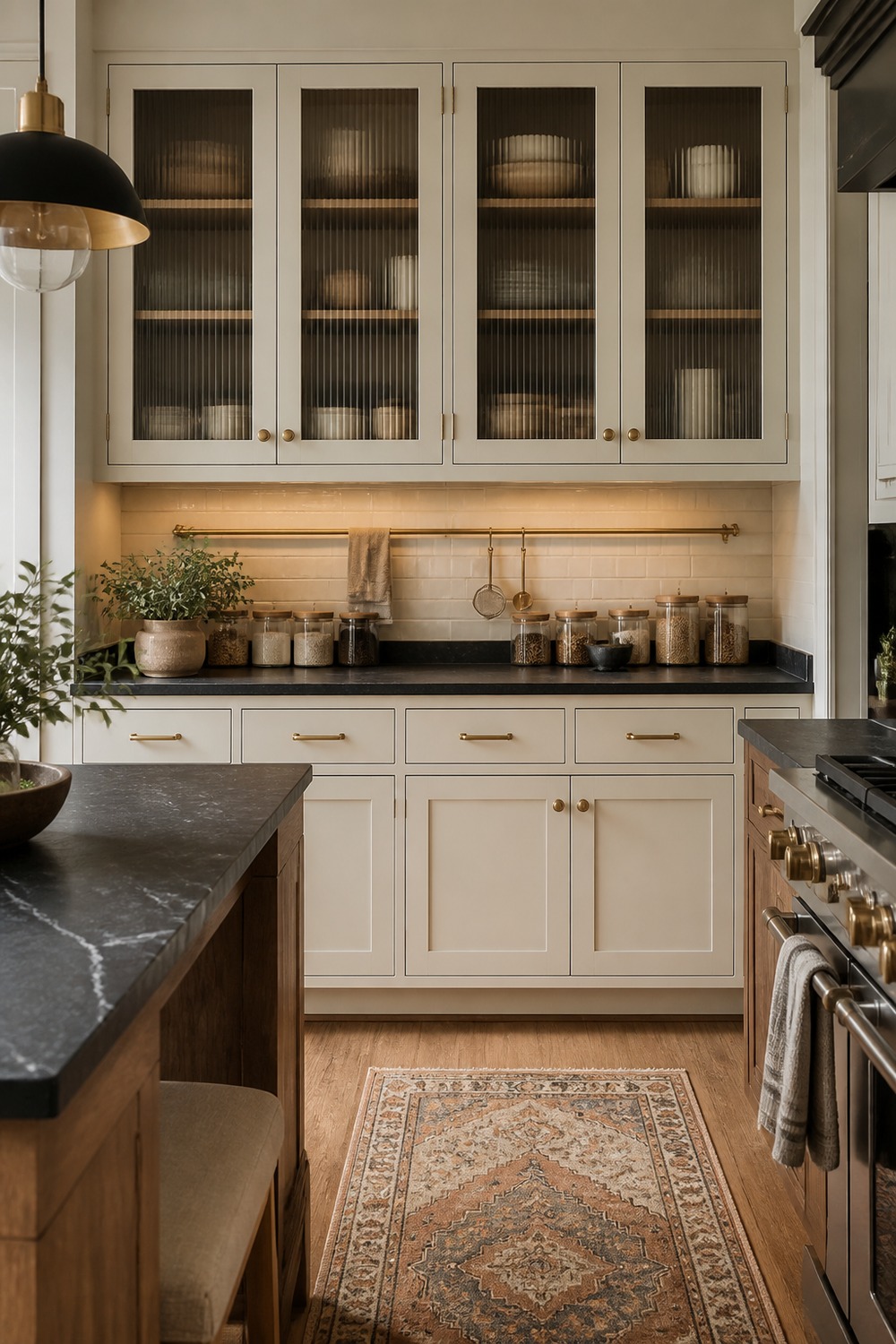
The ribbed glass pantry doors make the black counters feel less flat because there is texture happening above the work surface. I also like the brass rail here; it gives the range wall a useful detail without adding clutter.
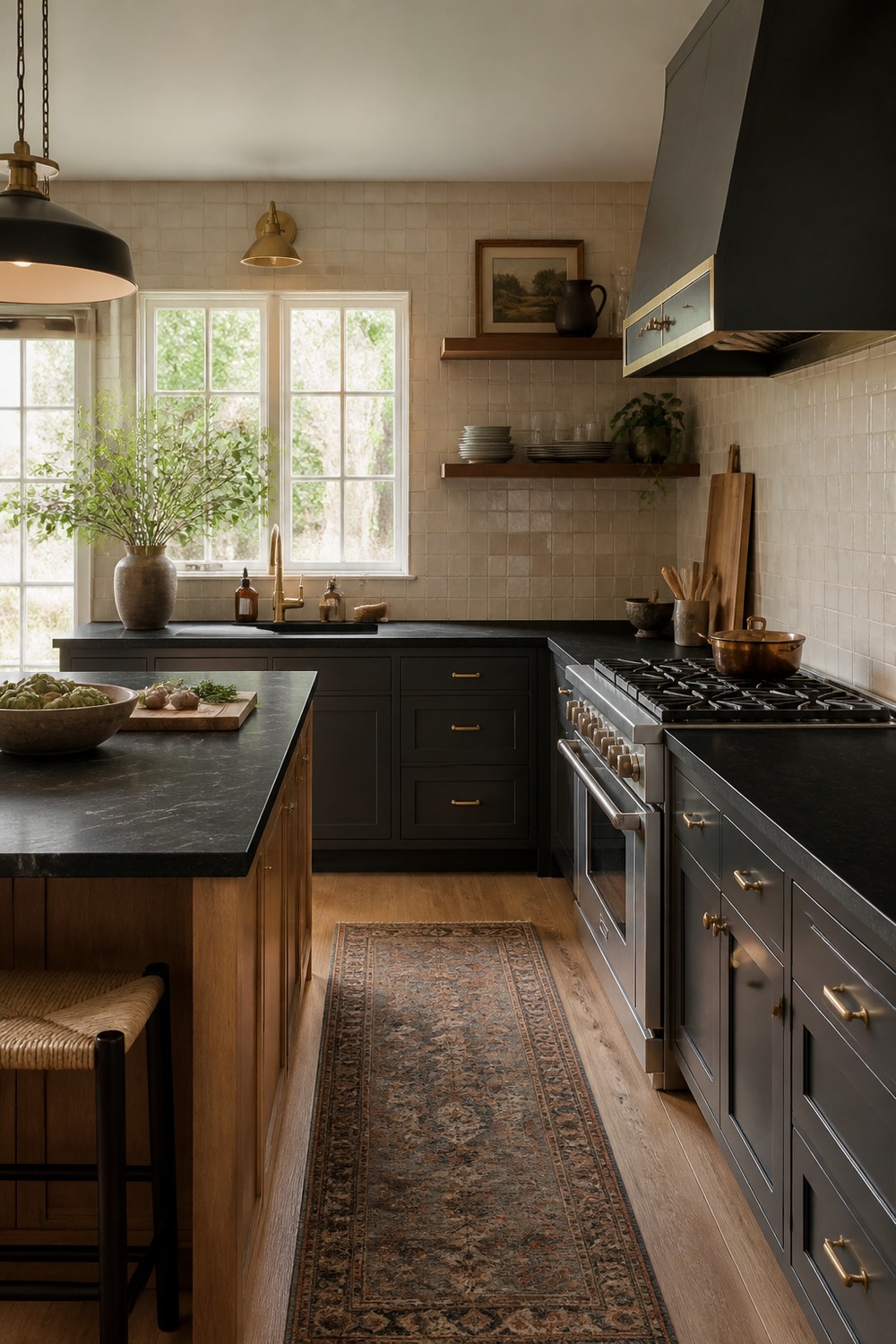
This is the darkest scheme in the set, and it works because the backsplash and floor are lighter. The nearly black counters blend with the charcoal cabinetry, but the cream stone and pale oak keep the kitchen from turning into a shadowy box.
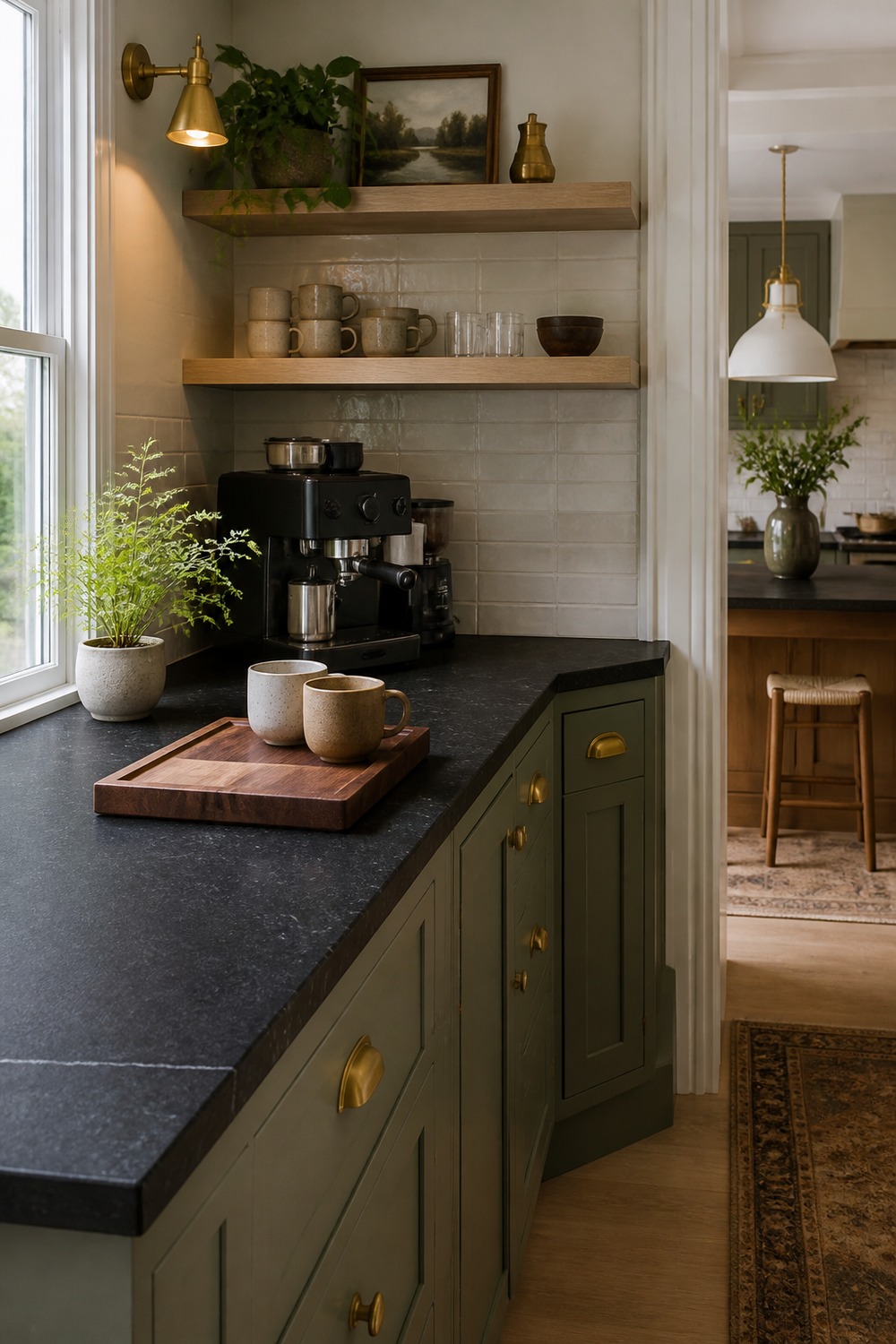
A small coffee or prep corner is a good place to use black counter material because spills and daily mess feel less precious. The white oak shelf and cream tile make the nook look styled, but it still feels like a spot that would get used every morning.
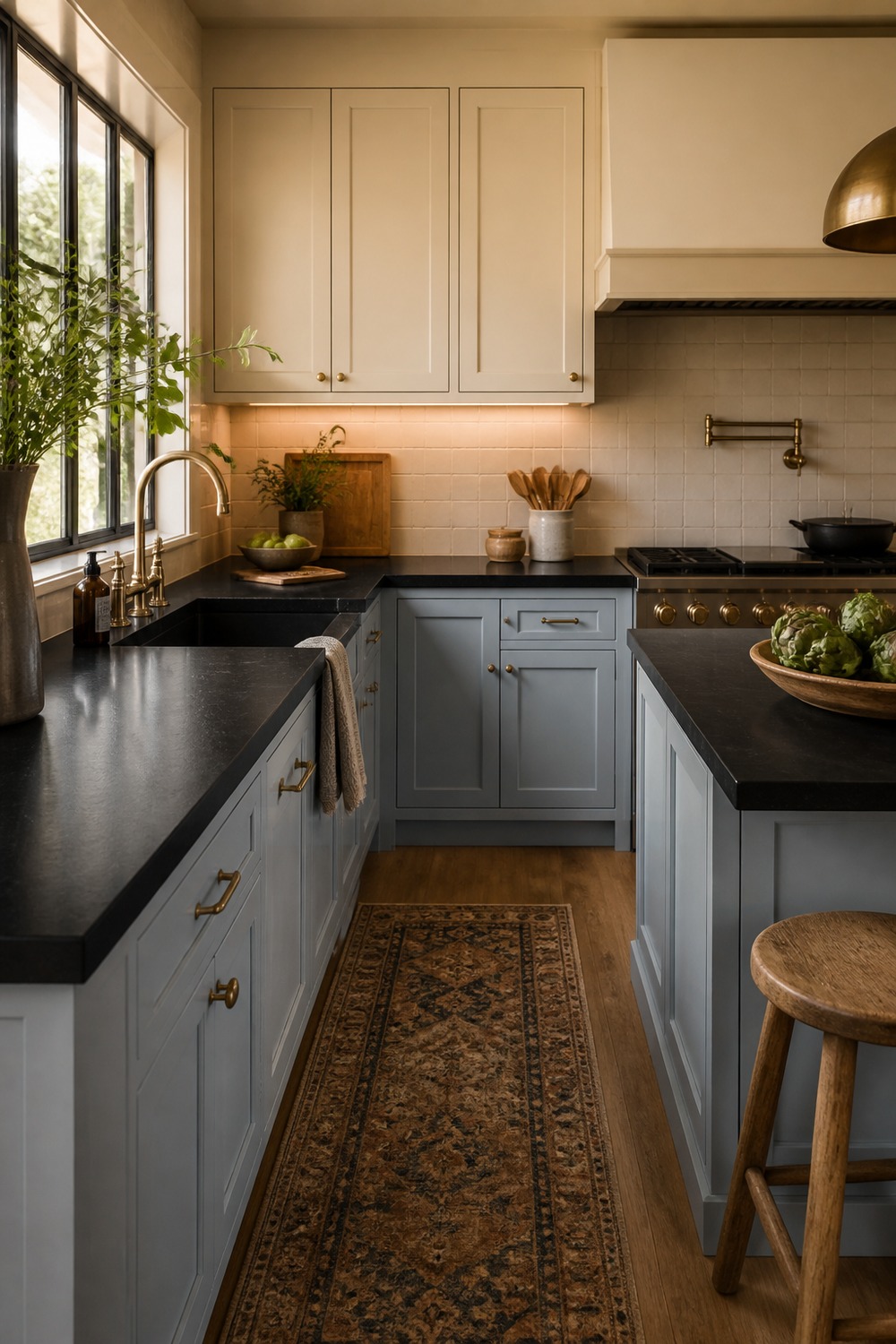
Pale blue cabinets give the black countertops a softer, almost coastal contrast. The dark surface keeps the kitchen from feeling too pastel, while the cream tile and simple hardware make the color scheme feel fresh rather than themed.
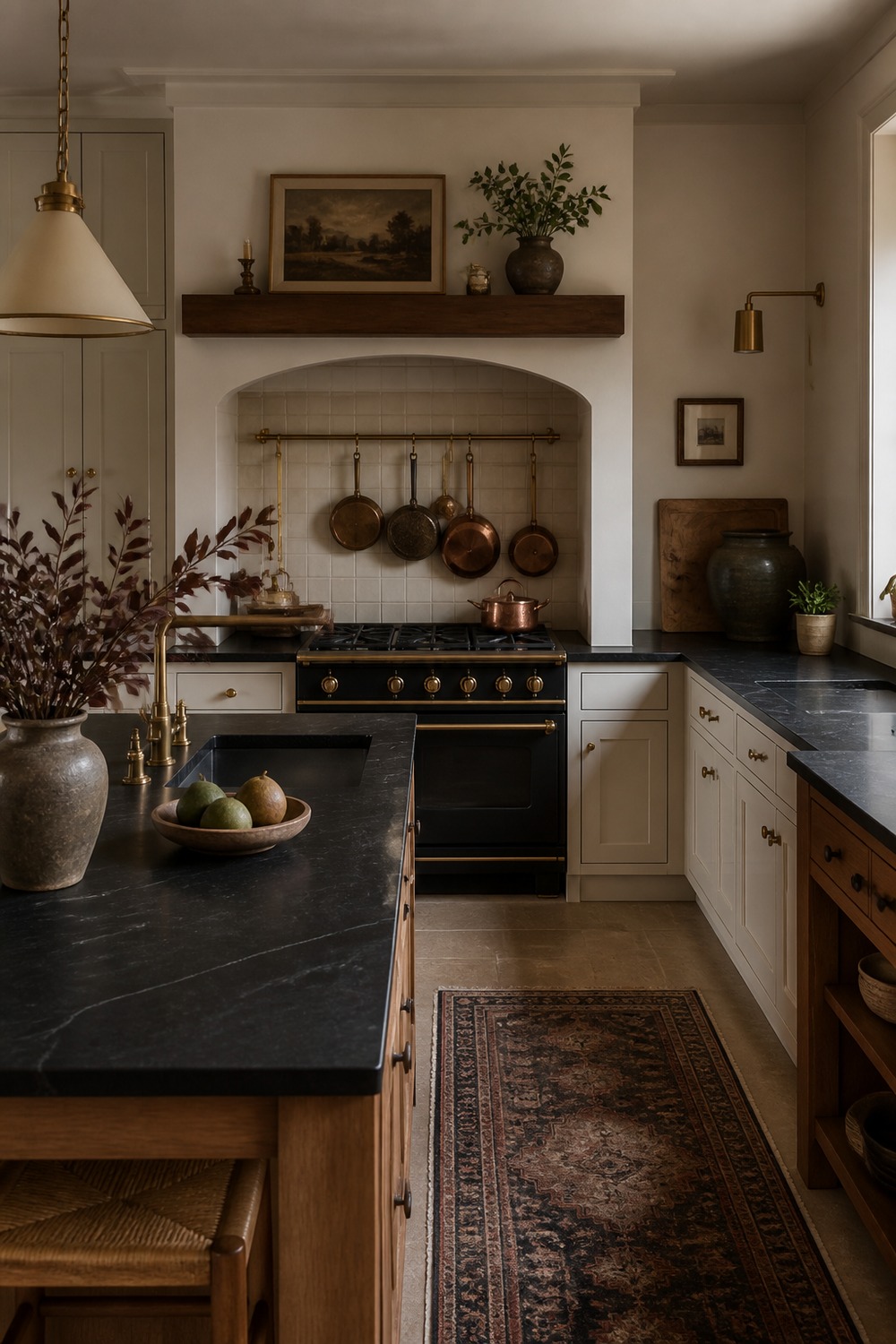
This range wall has that classic black-and-cream balance that always feels steady. The black counter line grounds the lower half, and the walnut shelf plus brass pot rail add just enough warmth above it.
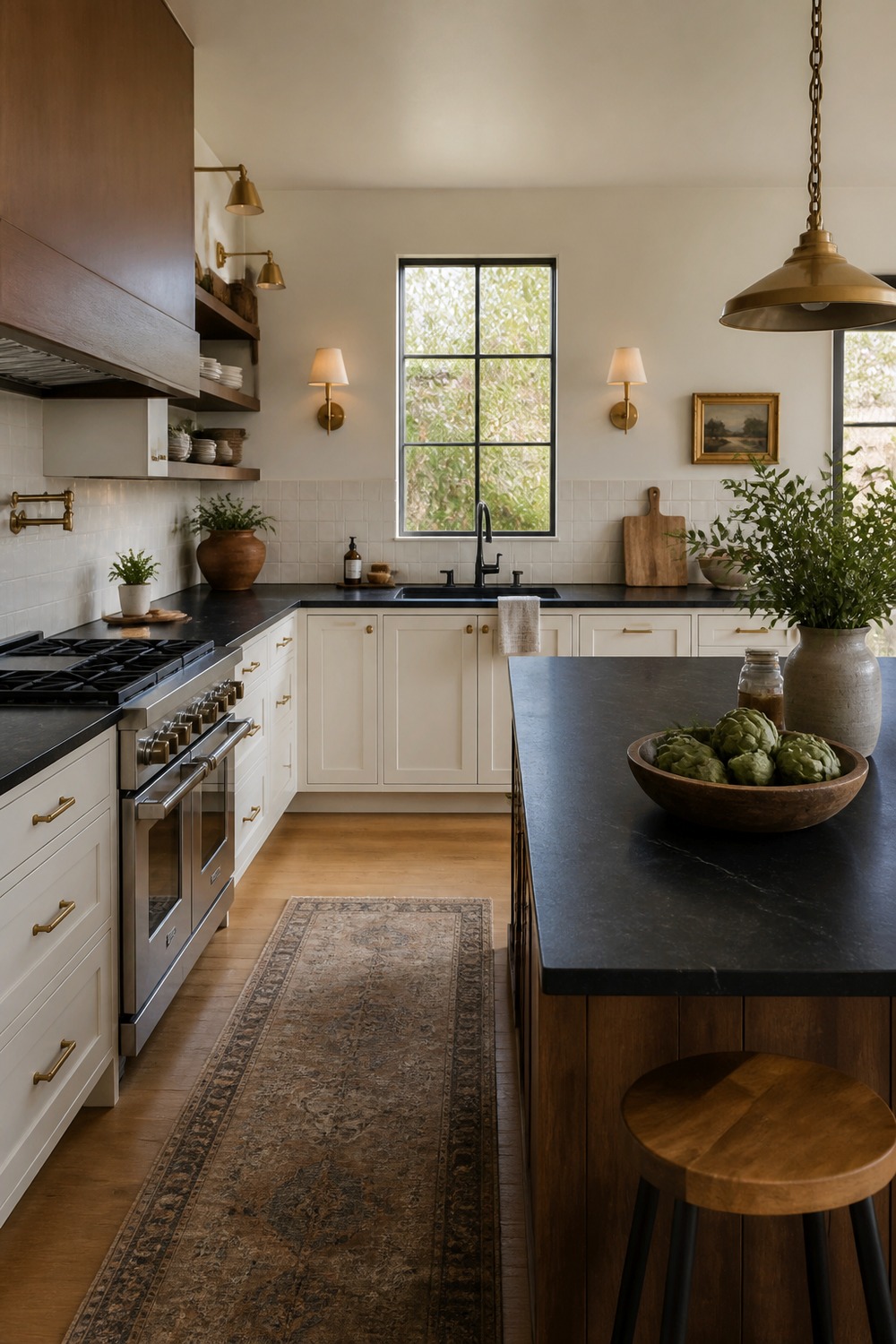
The slab cabinets make this black countertop idea feel more modern than the softer cottage kitchens. I like how the thin counter edges, walnut panels, and black faucet keep everything crisp without making the room look like a showroom render.
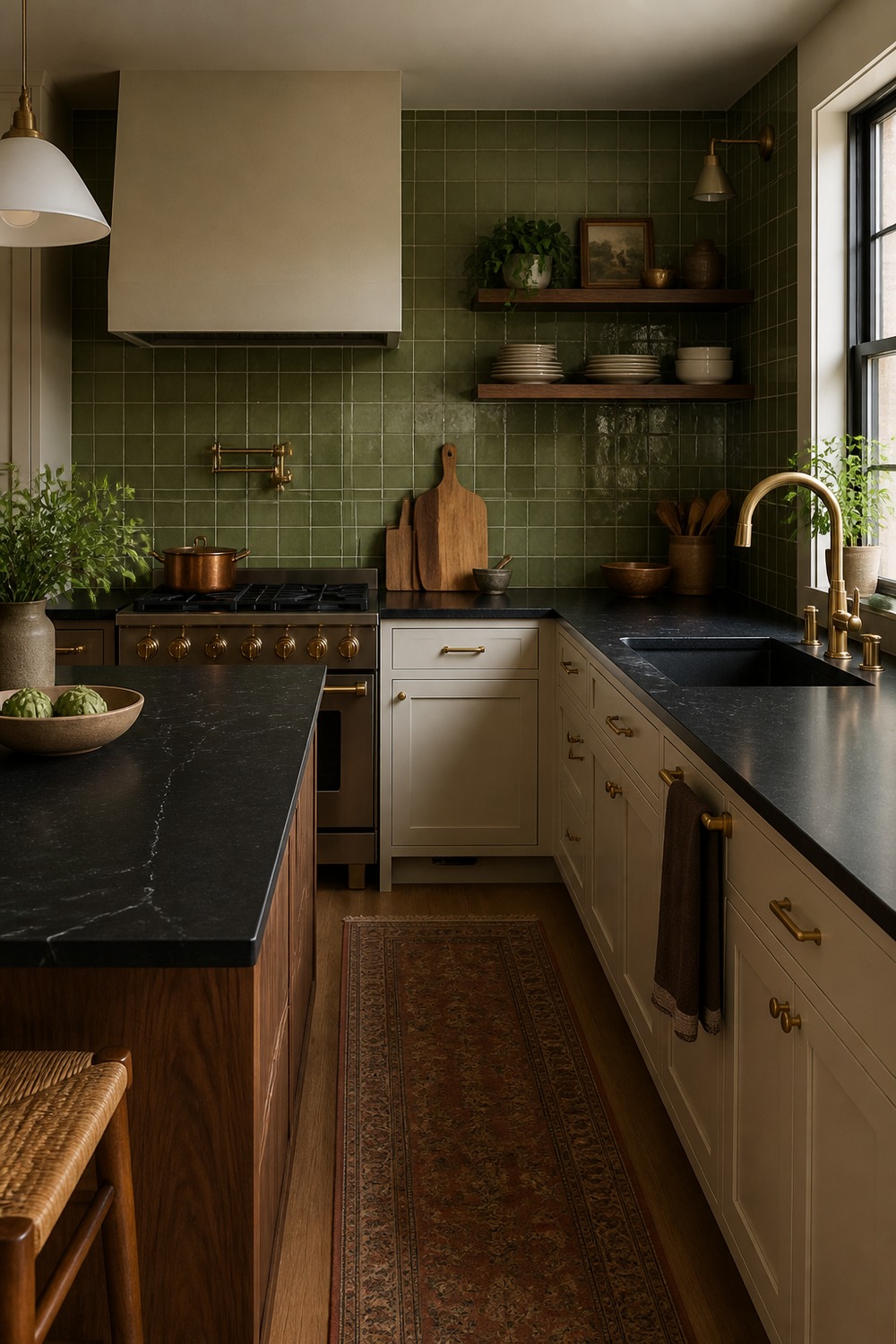
Green tile behind black counters gives the room a stronger color story without needing loud cabinets. The grout lines, cream lowers, and dark work surface all layer together, so the kitchen feels moody but still textured.
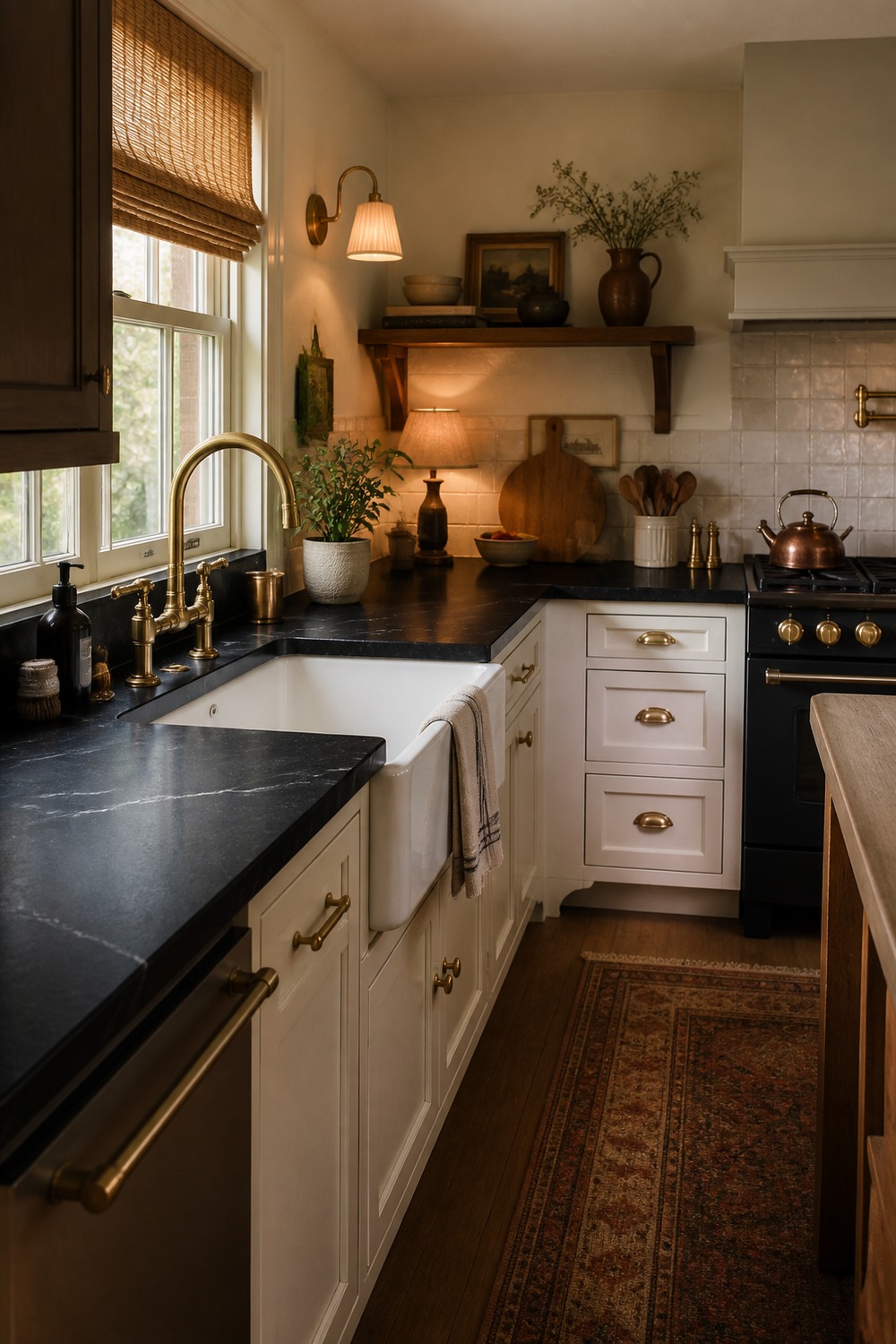
The cottage details make the black counters feel less formal here. A woven shade, apron-front sink, and oak shelf soften the stone, while the dark countertop still gives the whole sink wall a clear anchor.
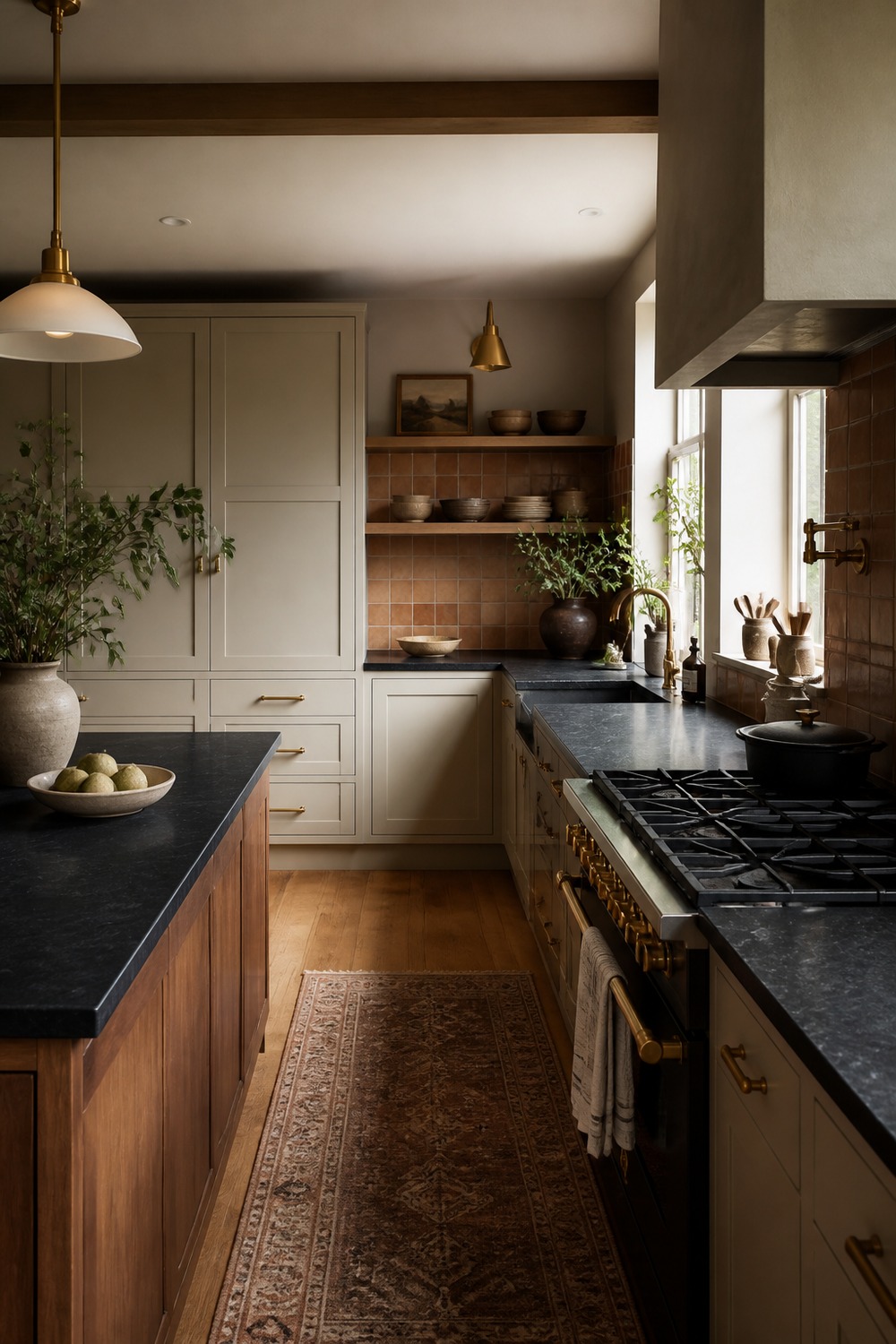
Clay tones and white oak are a nice way to warm up black counters without losing contrast. This would be especially good for someone who wants the drama of dark stone but still wants the kitchen to feel sunlit and relaxed.
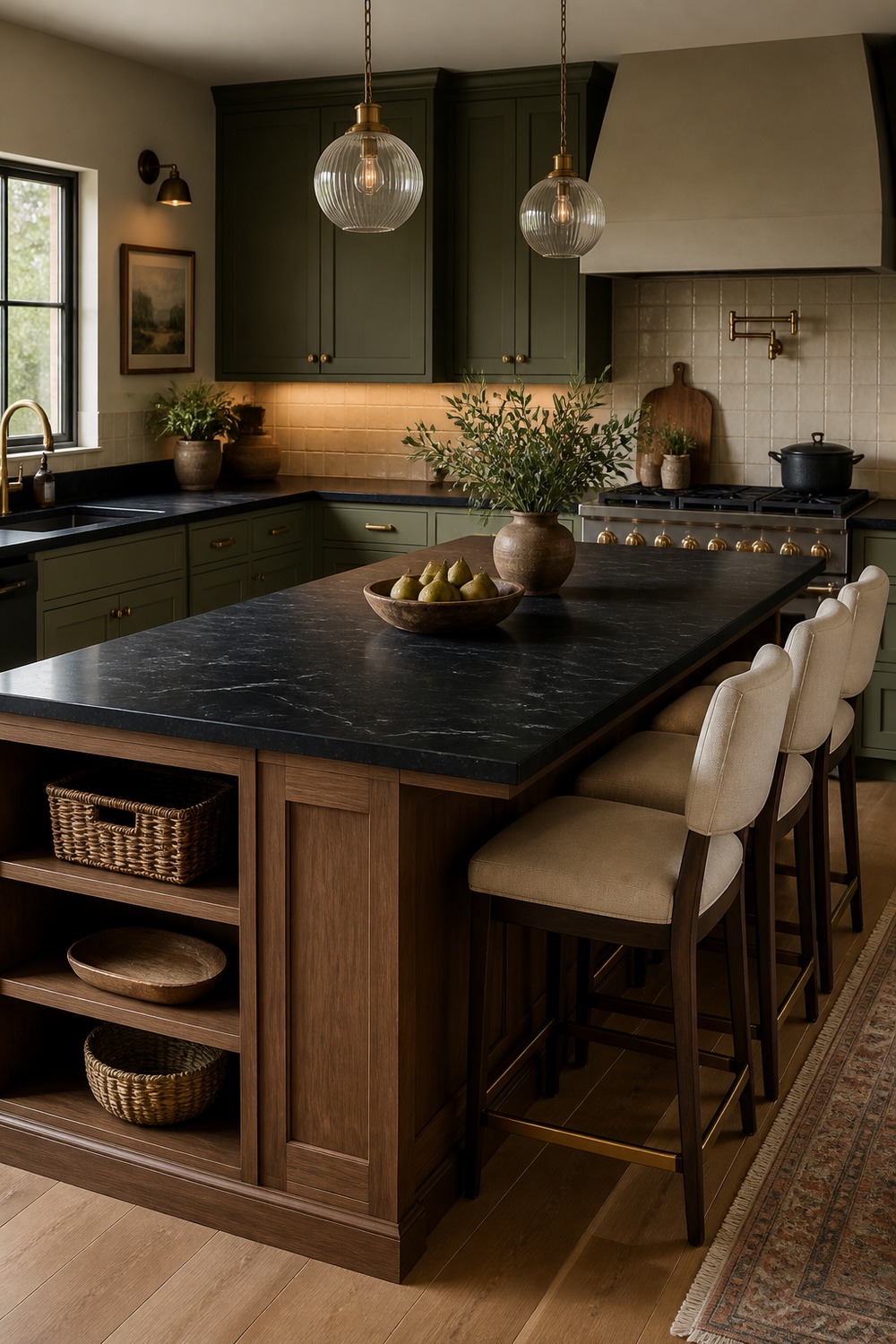
The island seating makes the black countertop feel like part of the living space, not just a work surface. Cream stools, sage perimeter cabinets, and warm wood details help the dark island top feel welcoming instead of heavy.
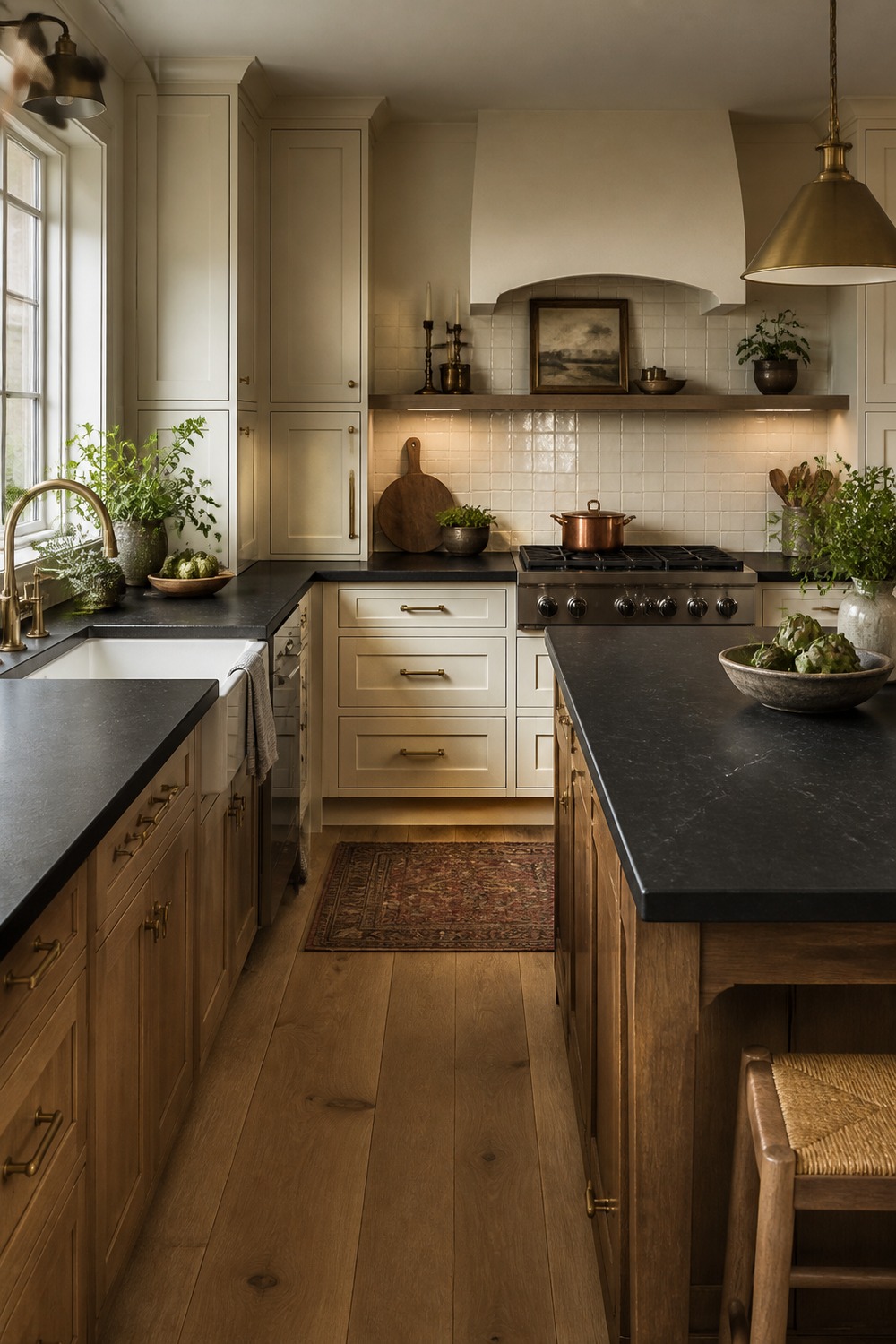
This full kitchen view pulls the palette together because the black counters repeat in more than one zone. The warm white cabinets, sage accents, and layered lighting keep the room from looking flat, which is exactly what a dark countertop scheme needs.
Black countertops work best when they are treated like the anchor, not the only feature in the room. Once the cabinet color, backsplash, lighting, and wood tones have some contrast, the darker surface starts to feel layered instead of flat.

I work in tech, but my taste in design is straight out of a slow European village. Give me arches, aged brass, and a room that smells like books and coffee. That’s my kind of home.