Green kitchens are easy to overdo when every surface starts competing for attention. The versions that feel best to me give the green something to lean on — cream stone, warm wood, brass, quiet tile, or a runner that makes the room feel used instead of staged.
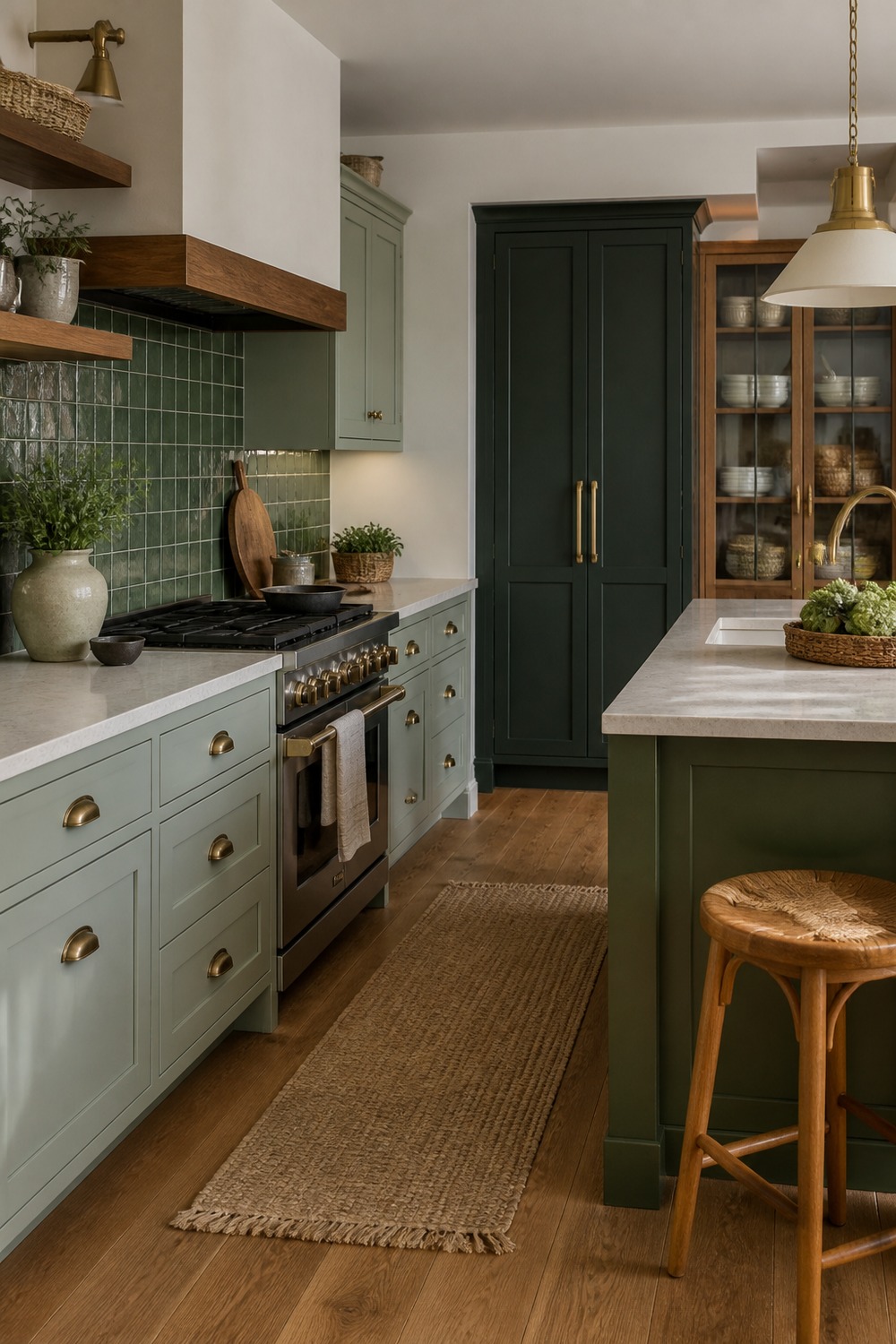
This sage shaker kitchen feels calm without turning bland because the cabinets have cream stone and warm oak nearby. The brass pulls and woven runner add just enough detail to make the green feel like part of a whole palette, not a paint color floating by itself.
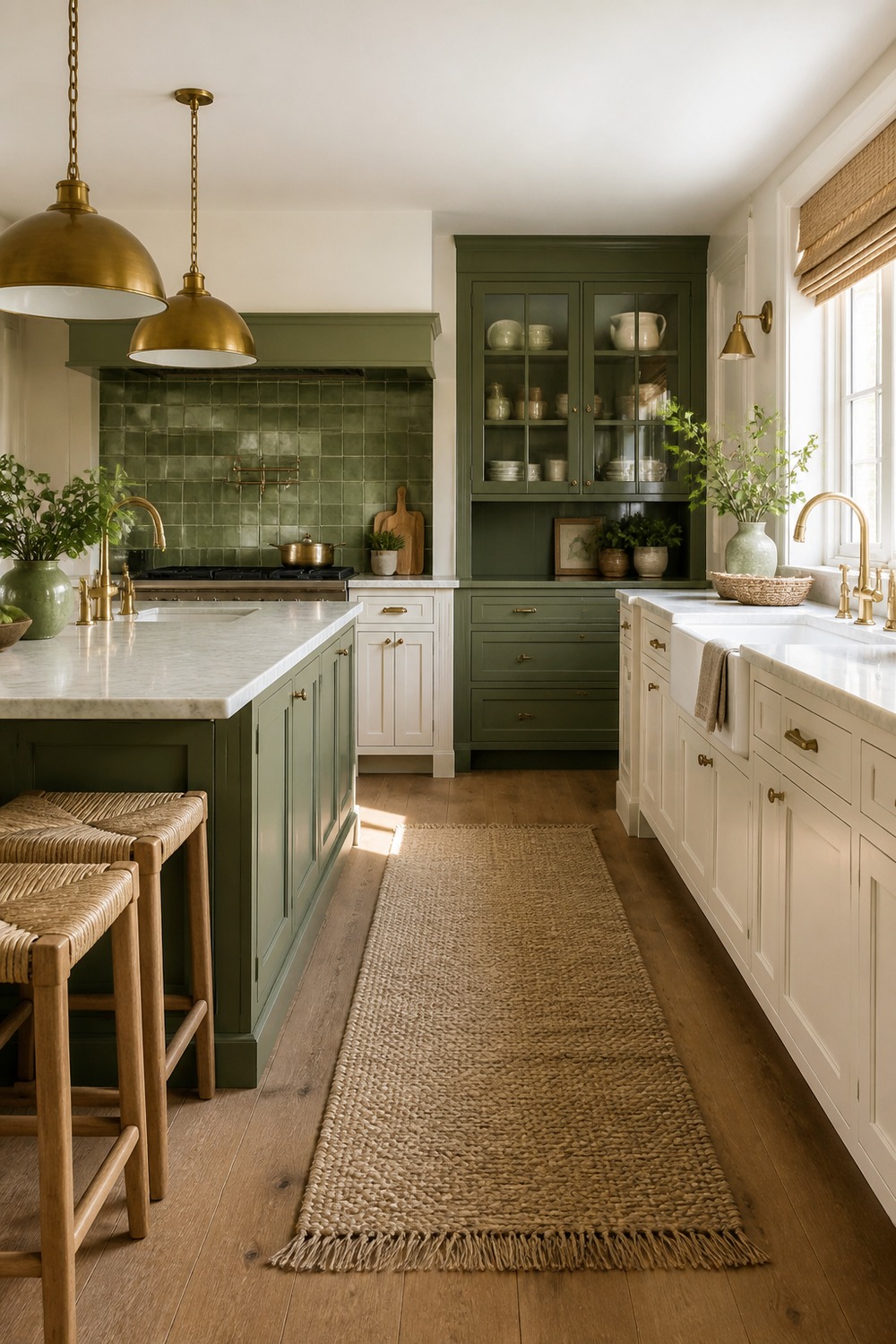
An olive island is such an easy way to test green if a full room of painted cabinets feels like too much. I like how the white perimeter cabinets keep the kitchen bright, while the woven stools and brass pendants stop the island from feeling too heavy.
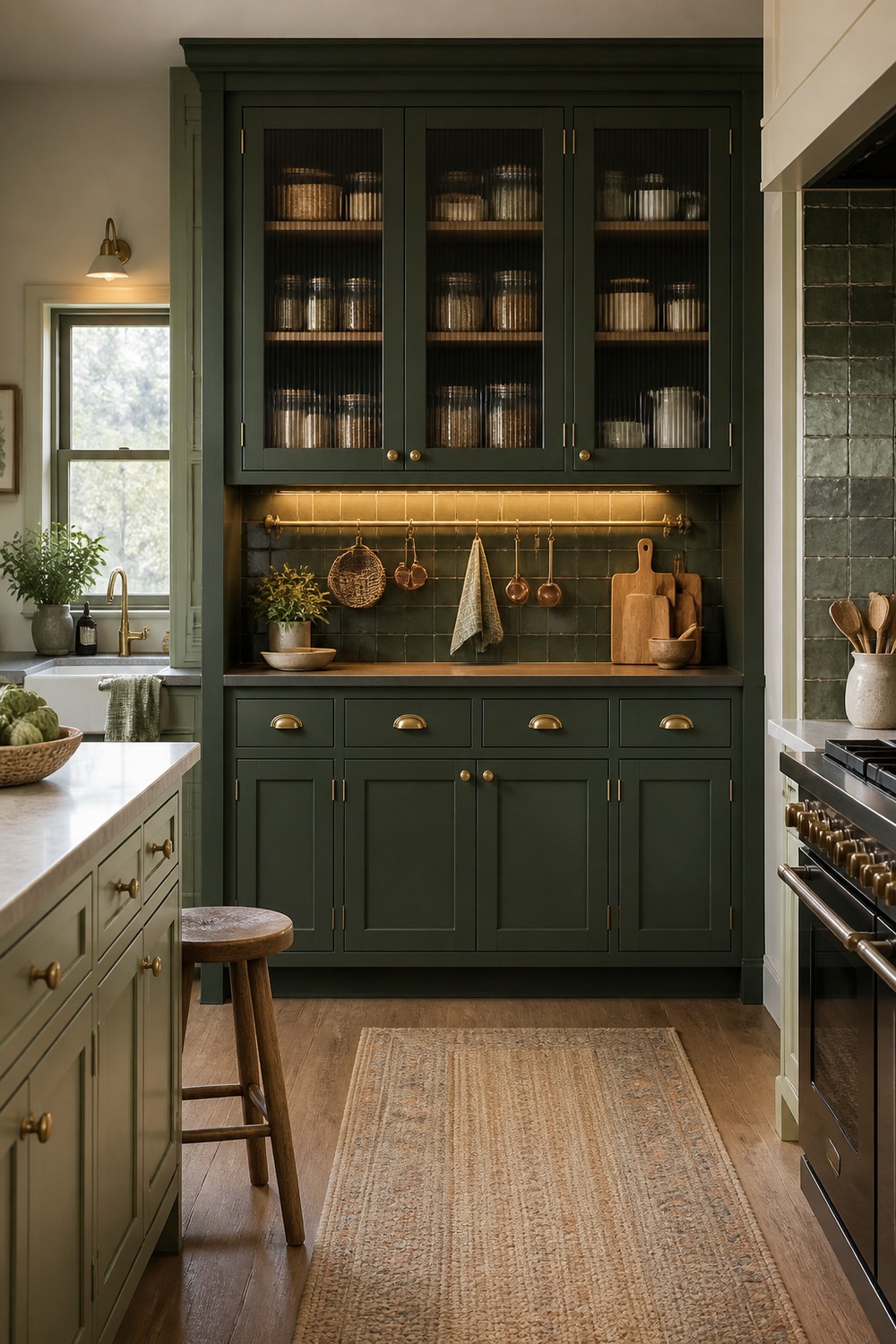
The forest green pantry wall gives this kitchen a stronger, furniture-like moment. Ribbed glass, brass hardware, and the cream counter break up the darker color so the storage still feels useful and not like one flat block of paint.
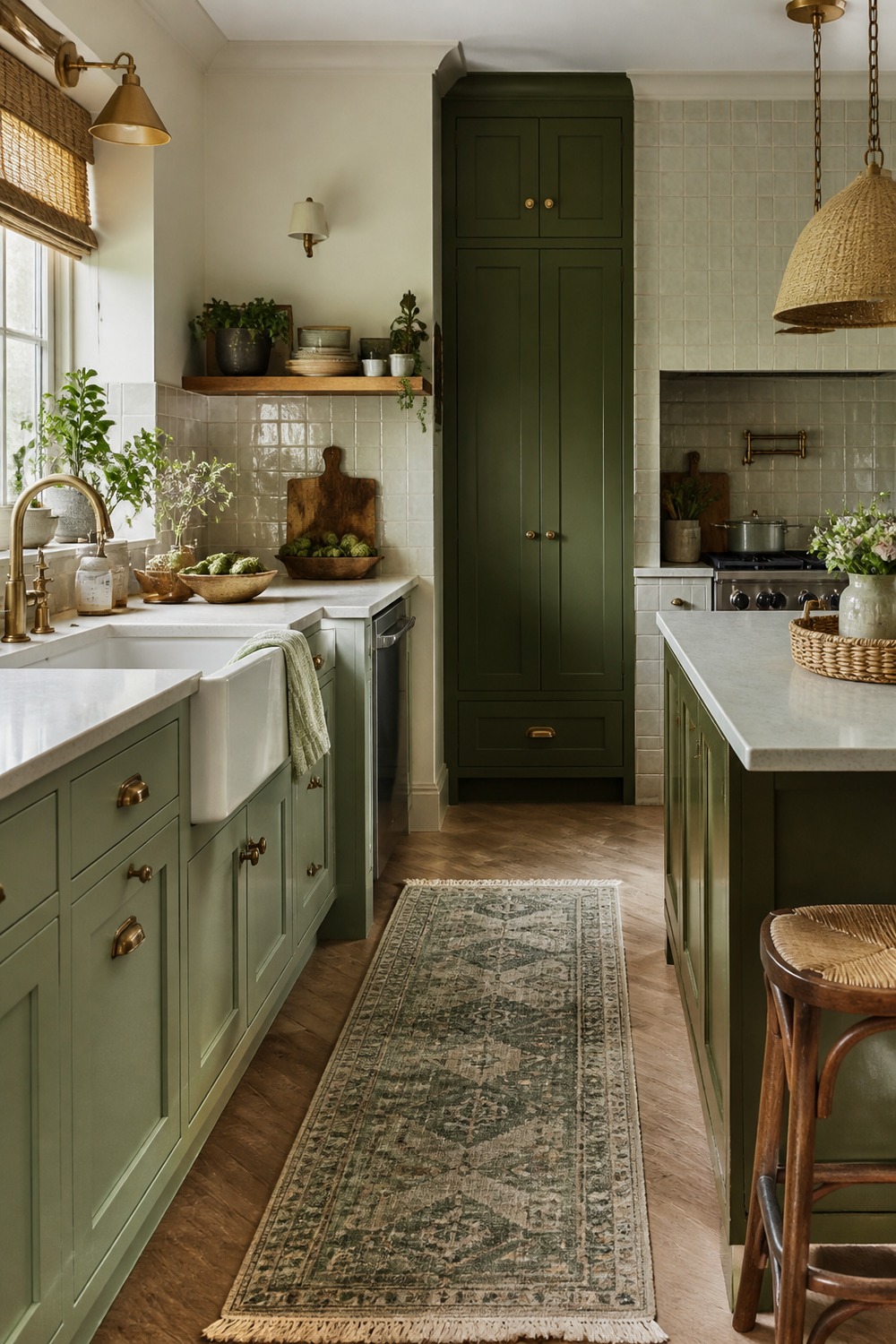
Muted mint can go sugary fast, but this cottage kitchen keeps it softer with cream tile, a farmhouse sink, and warm wood. The darker pantry cabinet in the background adds just enough contrast so the whole room does not wash out.
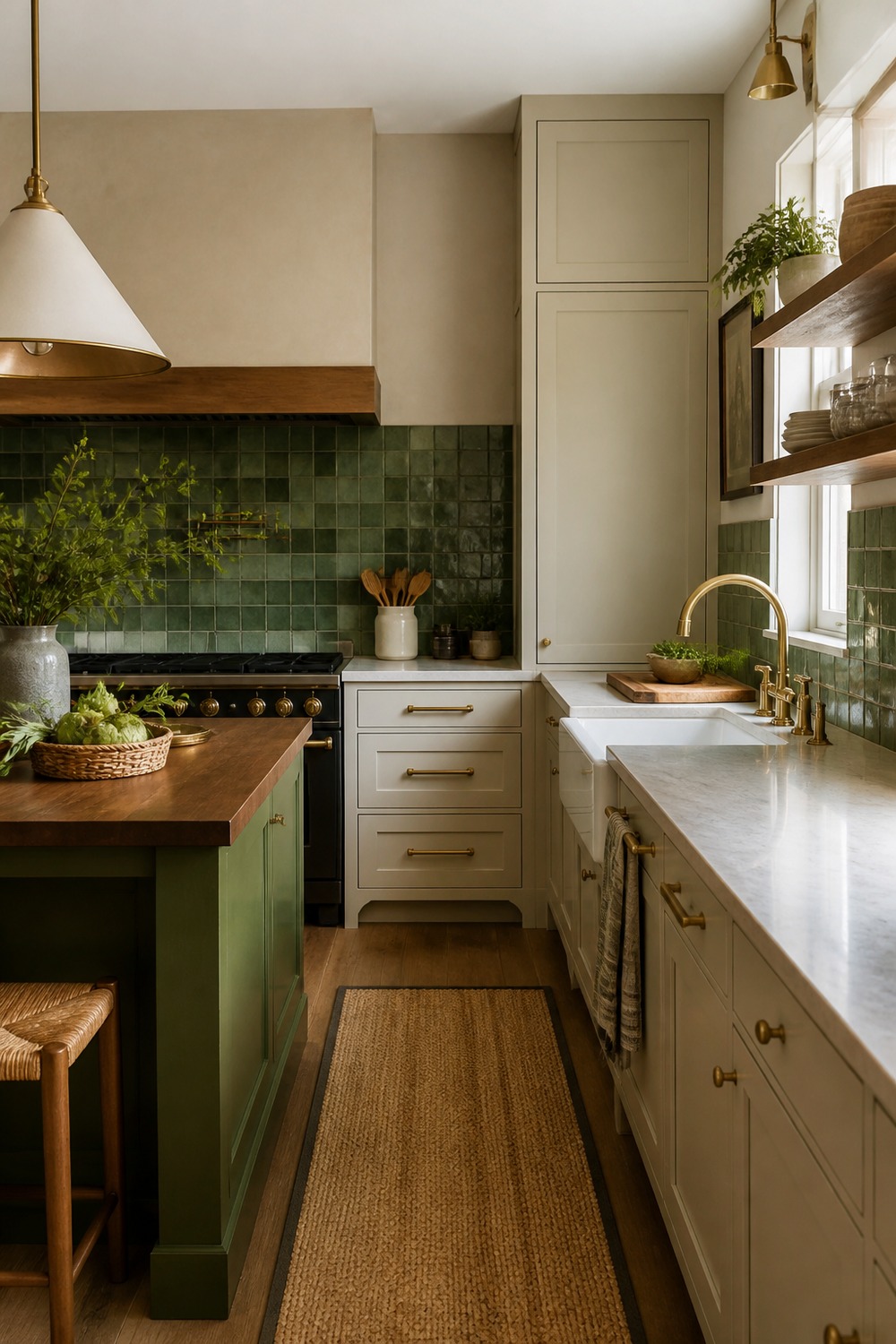
The green zellige-style backsplash is doing a lot of work here in the best way. It brings shine and variation behind the counter, while the cream cabinets and walnut shelves keep the color scheme from feeling too glossy or cold.
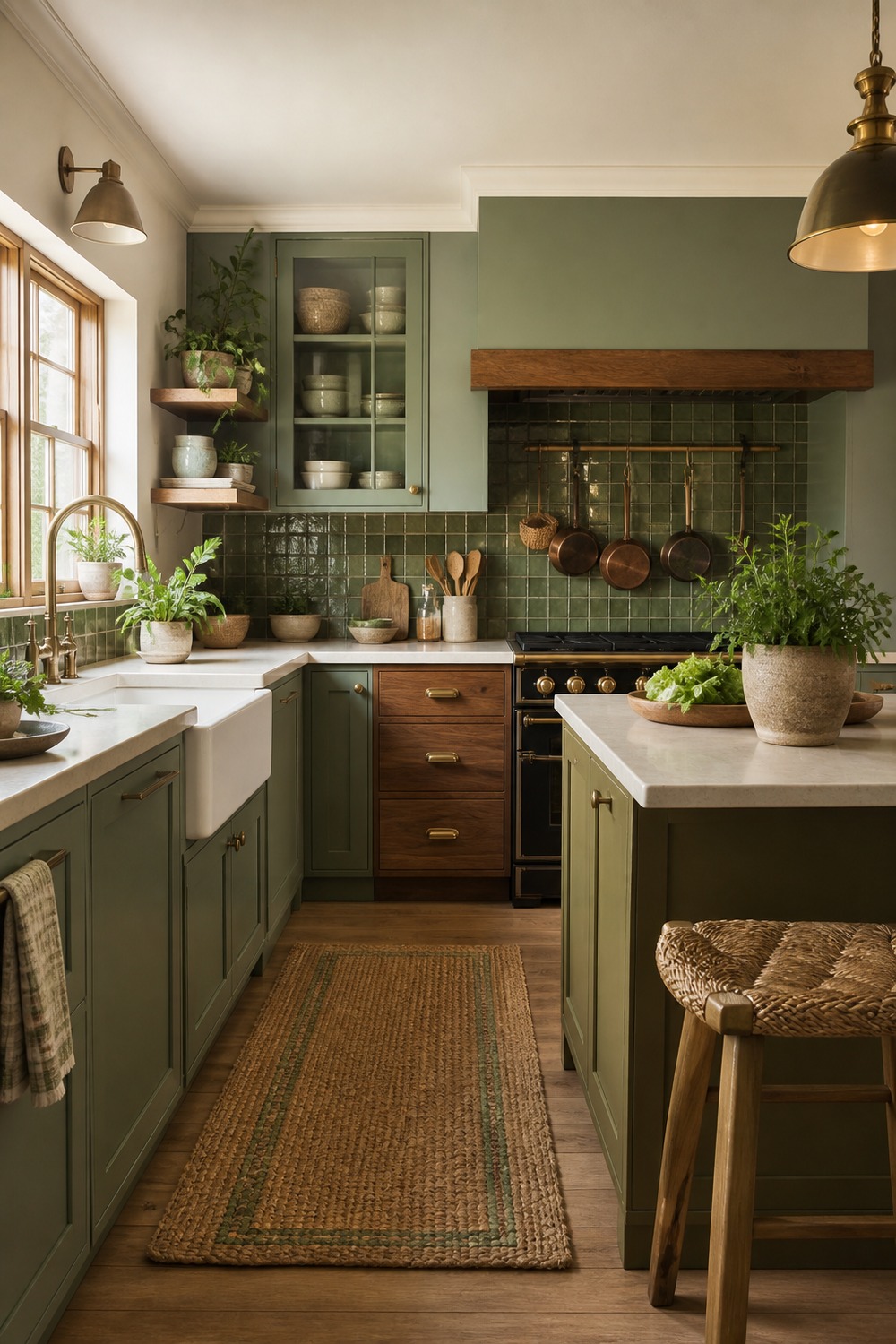
Sage and walnut together always feel more grounded than sage with plain white everything. The wood drawer fronts add warmth right where the kitchen needs it, and the green tile gives the prep wall a little movement without making it busy.
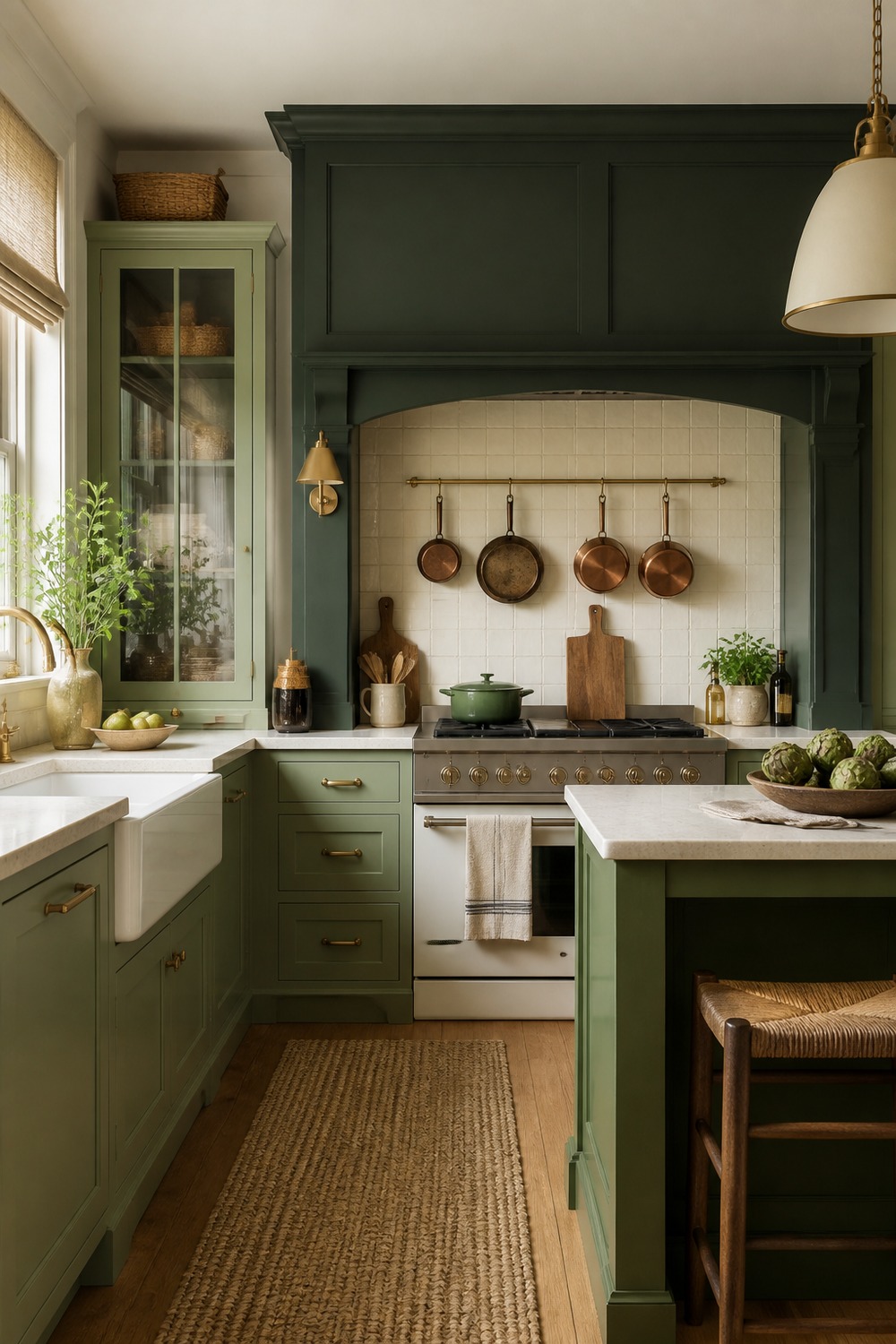
This darker range alcove has a moodier green story, but the cream tile keeps it from feeling closed in. I like the brass rail here because it makes the color feel connected to cooking and daily use instead of just a dramatic backdrop.
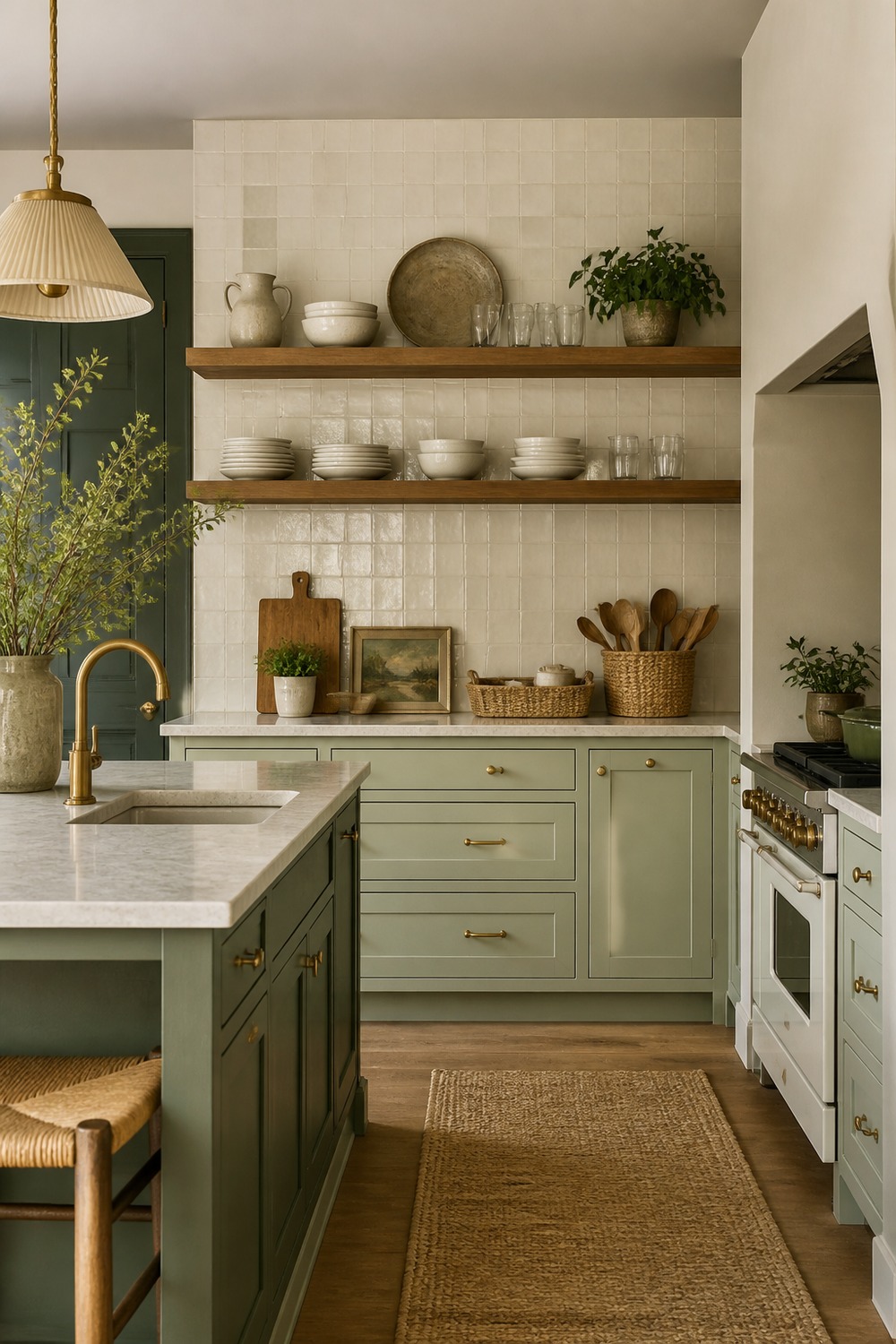
Pale green cabinets work nicely when the kitchen still needs to feel light. The oak open shelves, white dishes, and basket texture make the softer green feel layered, which is what keeps this from looking like a flat pastel room.
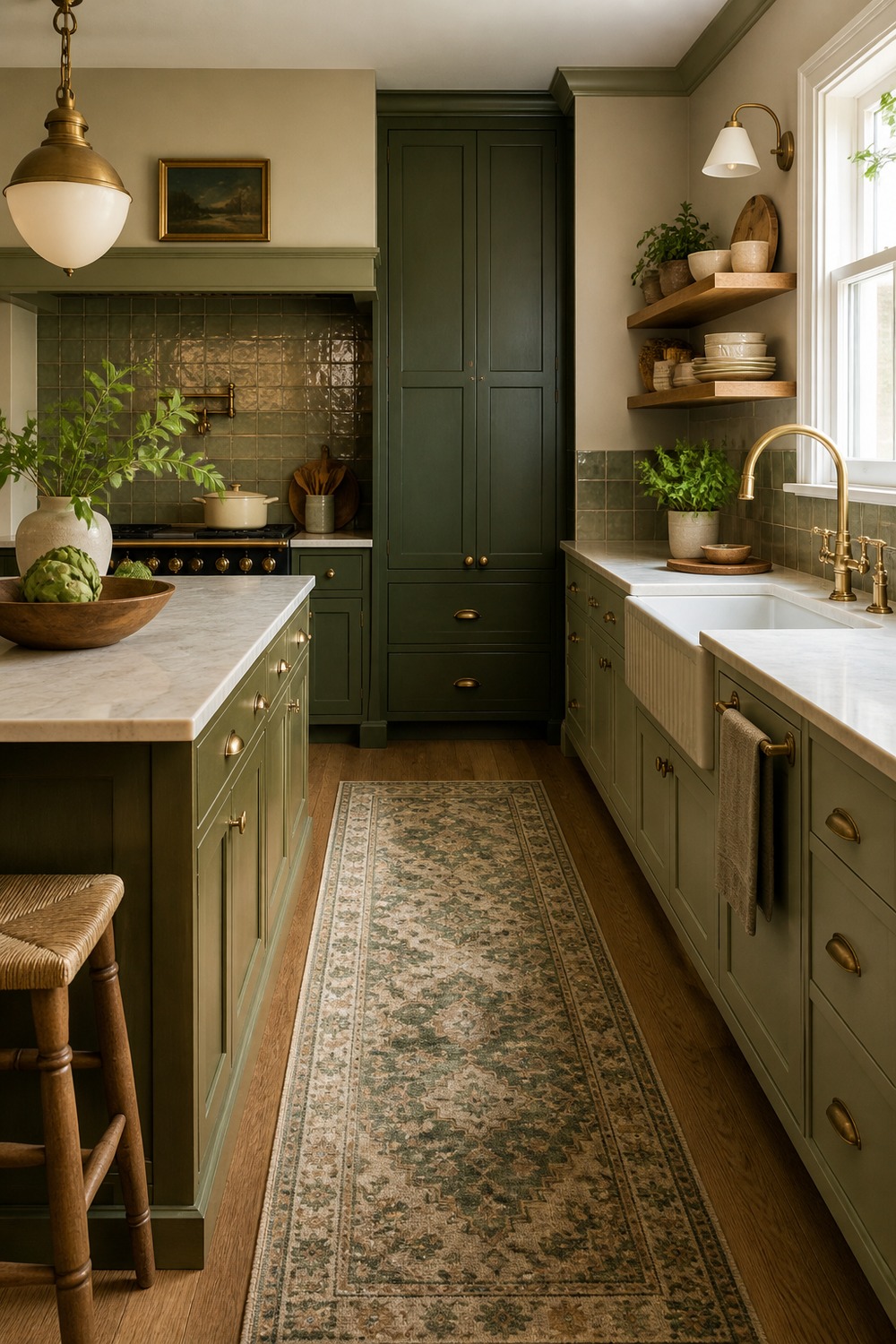
The vintage-style runner changes the whole feeling of this green kitchen. It brings a warmer color down to the floor, so the olive cabinets and brass faucet feel collected instead of overly matched.
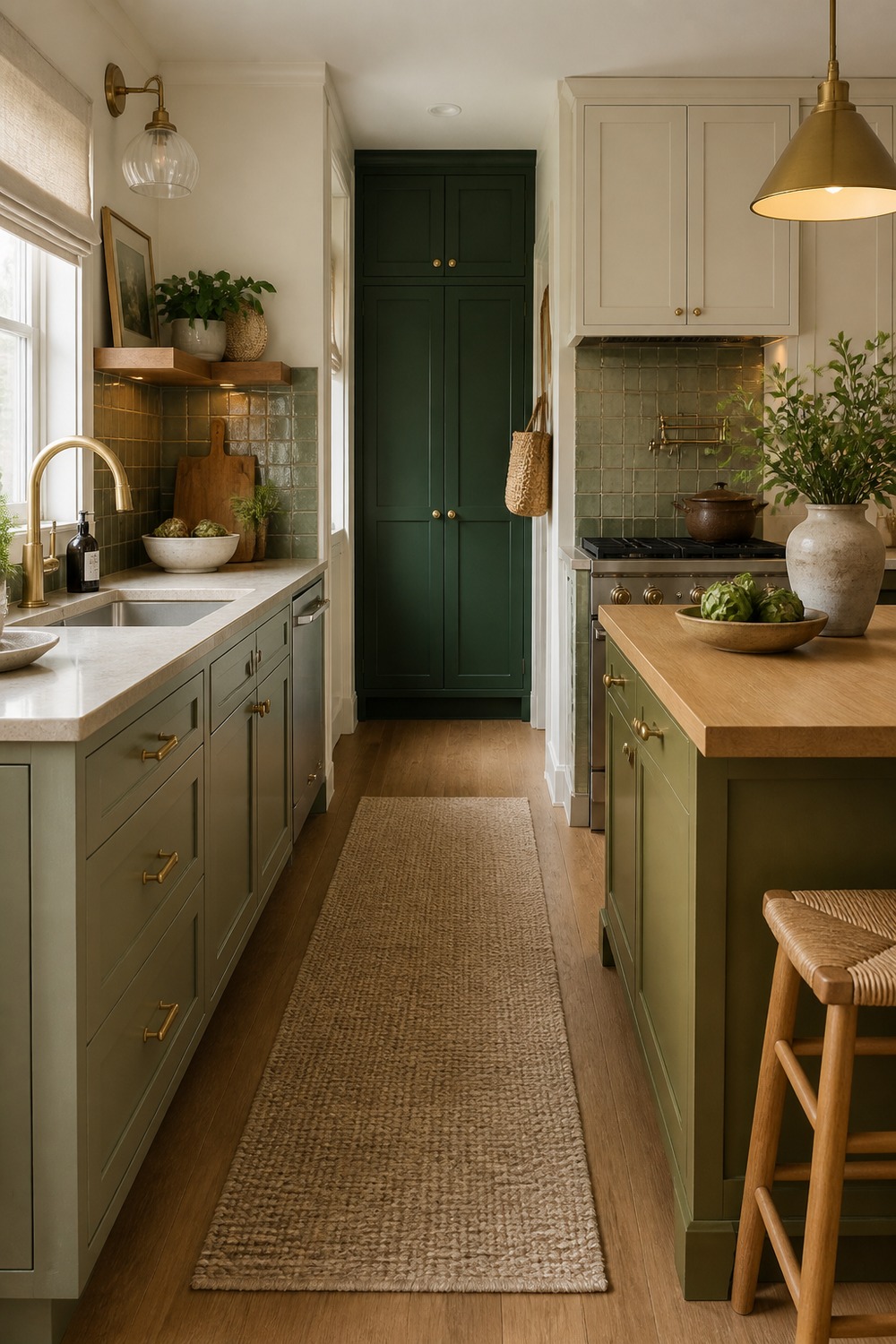
A small sage galley kitchen needs the palette to work a little harder because there is not much breathing room. The green lowers, slim shelf, and bright counter keep the space useful while still giving it a clear color point of view.
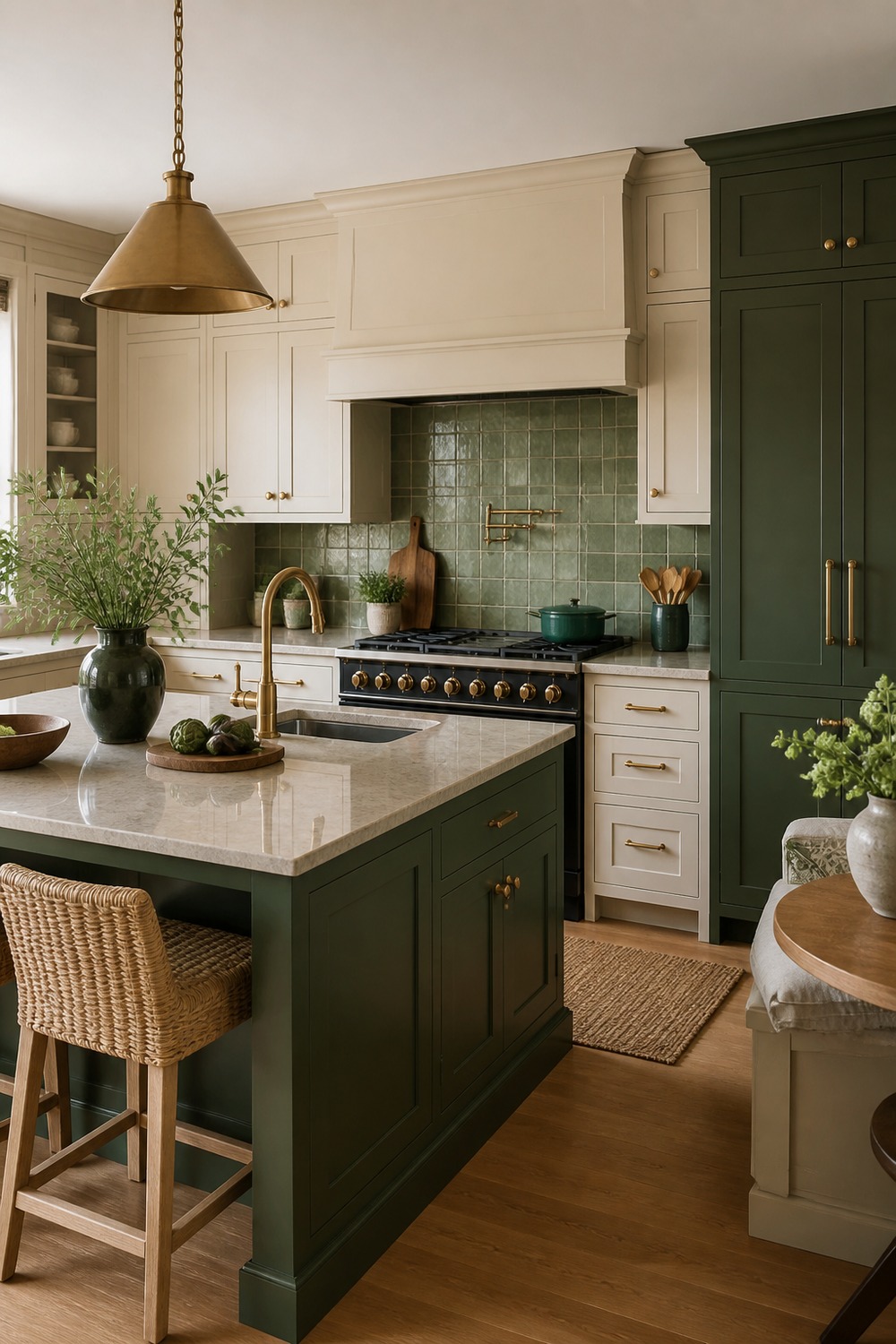
The emerald island is the boldest part of this room, but it does not take over because the rest of the kitchen stays creamy and simple. Brass hardware, pale counters, and open space around the stools help the darker green feel polished rather than loud.
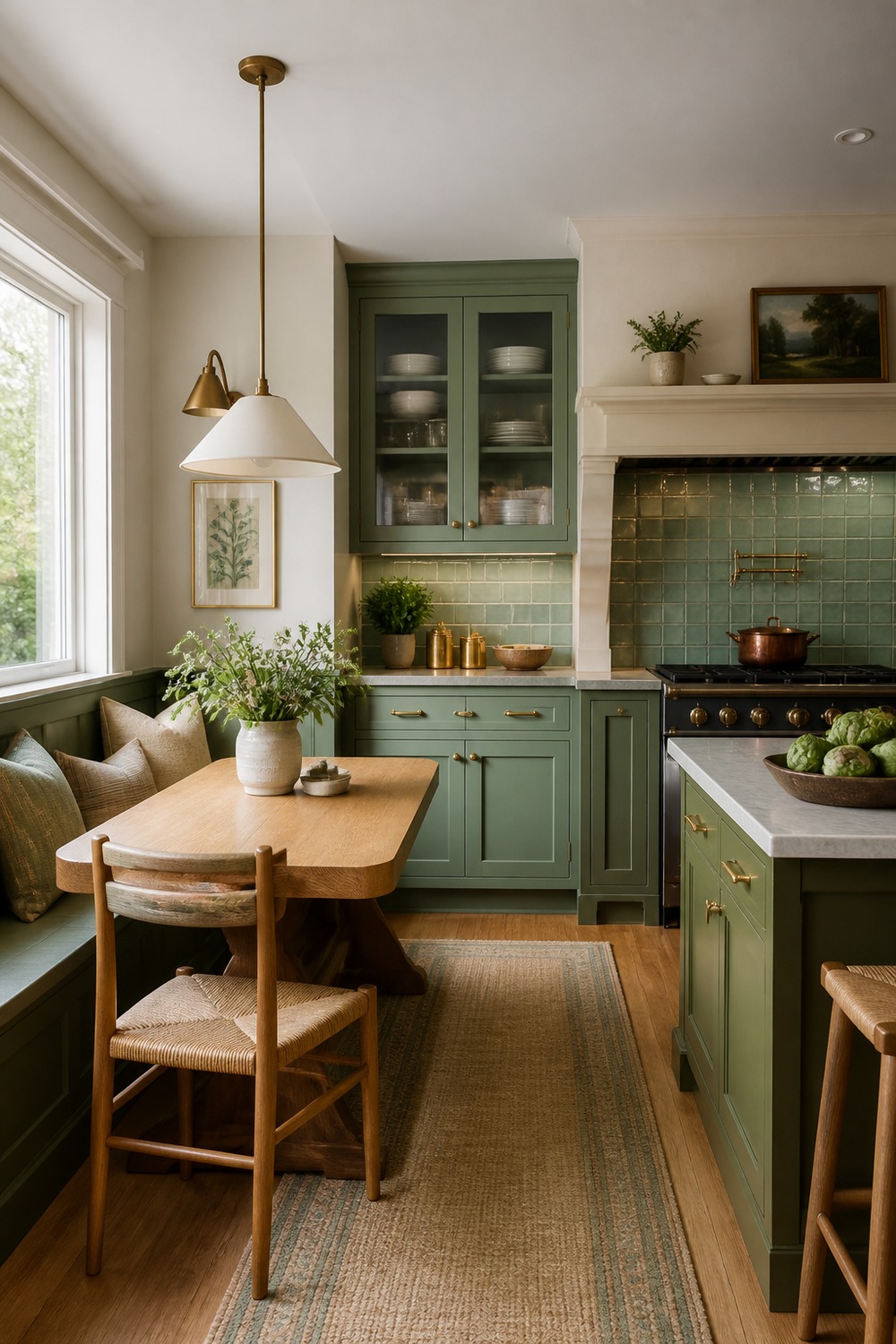
This breakfast-nook edge is a good reminder that green kitchen color schemes do not have to stop at cabinets. A built-in bench or cabinet run near the table can carry the color into the eating area without repainting every wall.
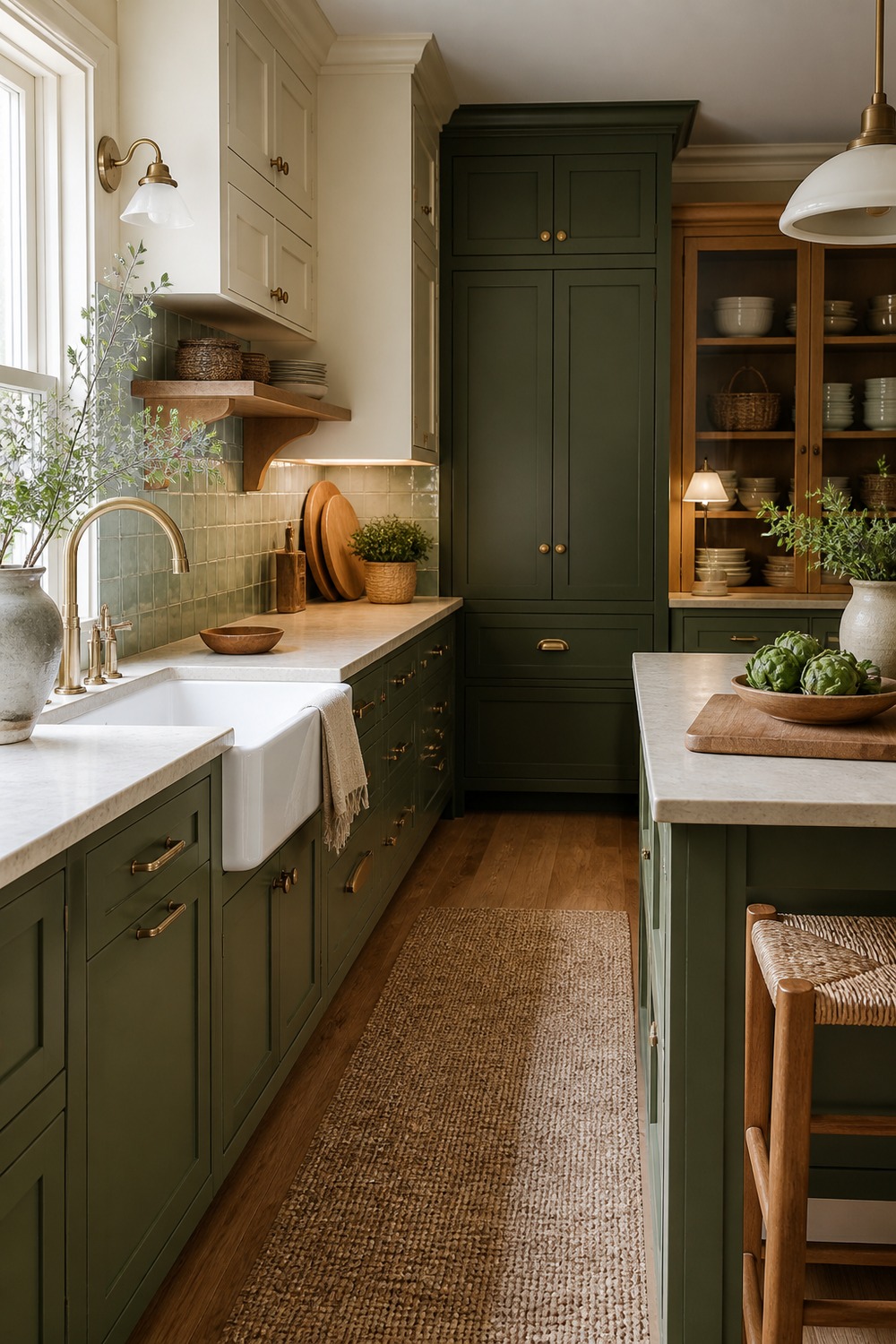
Olive and cream make this farmhouse kitchen feel soft but still grounded. The warm oak shelves are what make it feel livable to me, because they give dishes and everyday pieces a place to sit without breaking the color scheme.
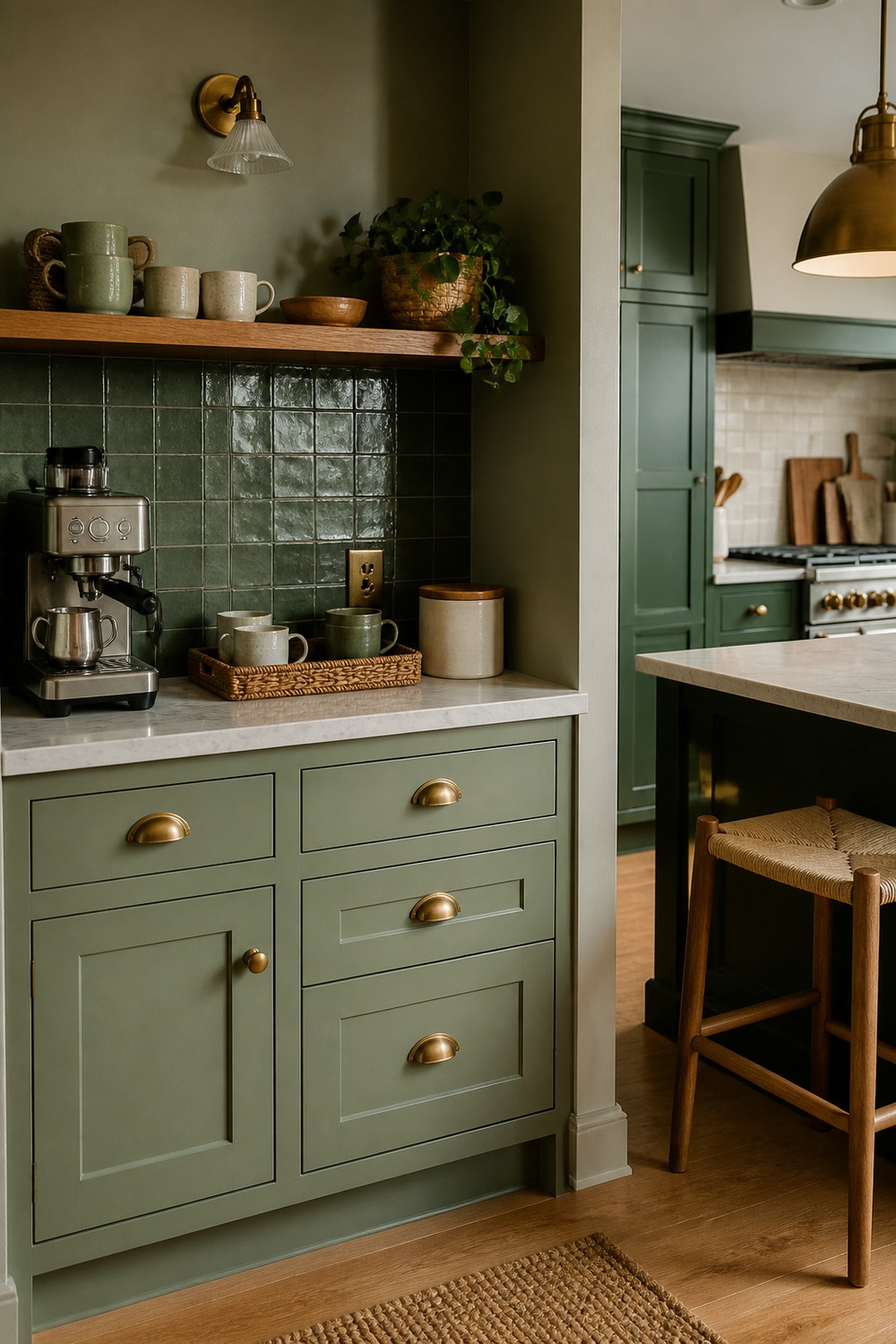
A green tile coffee and prep corner is a smaller way to bring the palette into a kitchen. The wood shelf, simple mugs, and compact counter make the color feel tied to an actual daily routine, not just a backsplash decision.
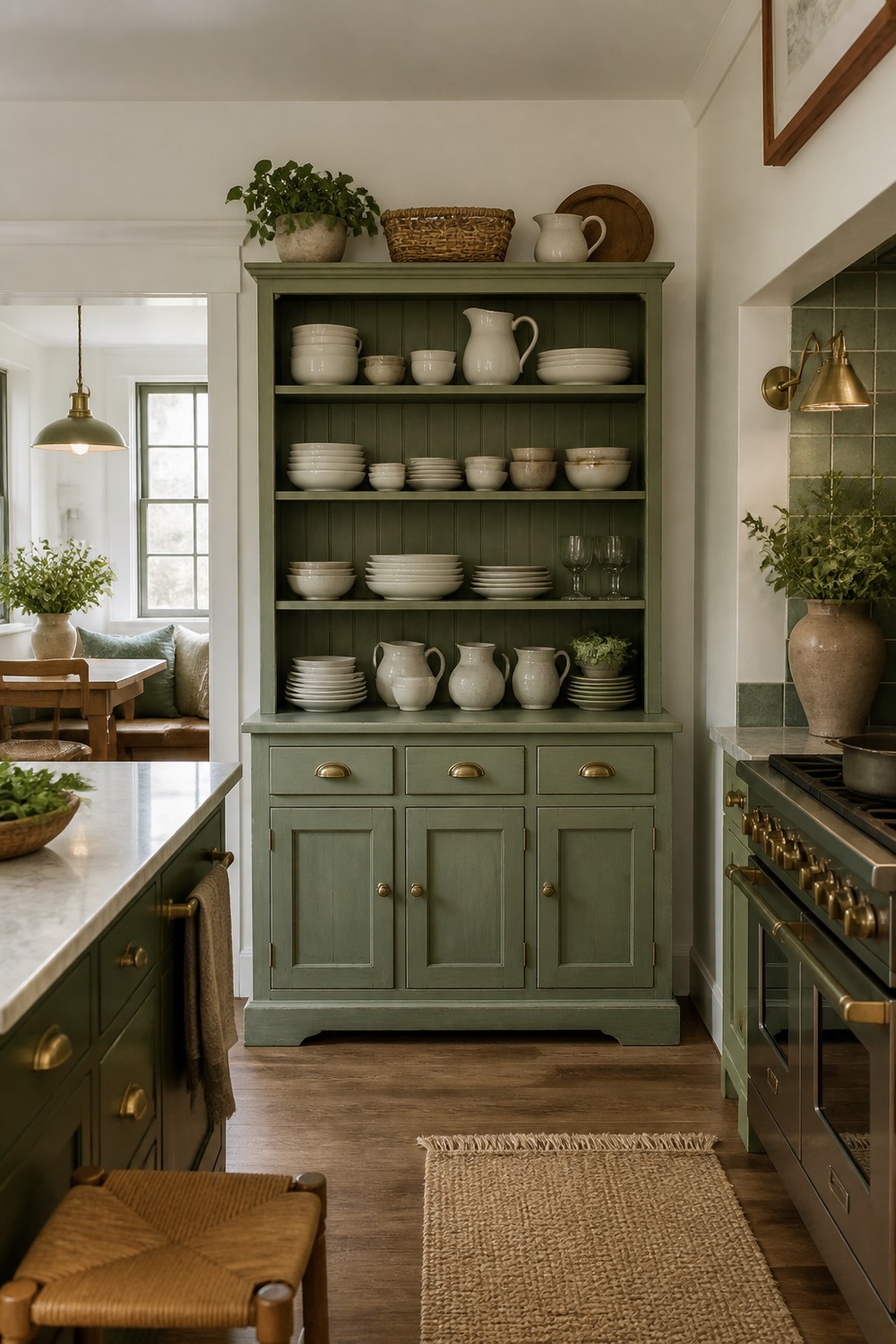
The freestanding sage hutch gives this kitchen a quieter green moment. I like that it adds storage and display space at the same time, especially with the cream wall and wood floor keeping the piece from feeling too formal.
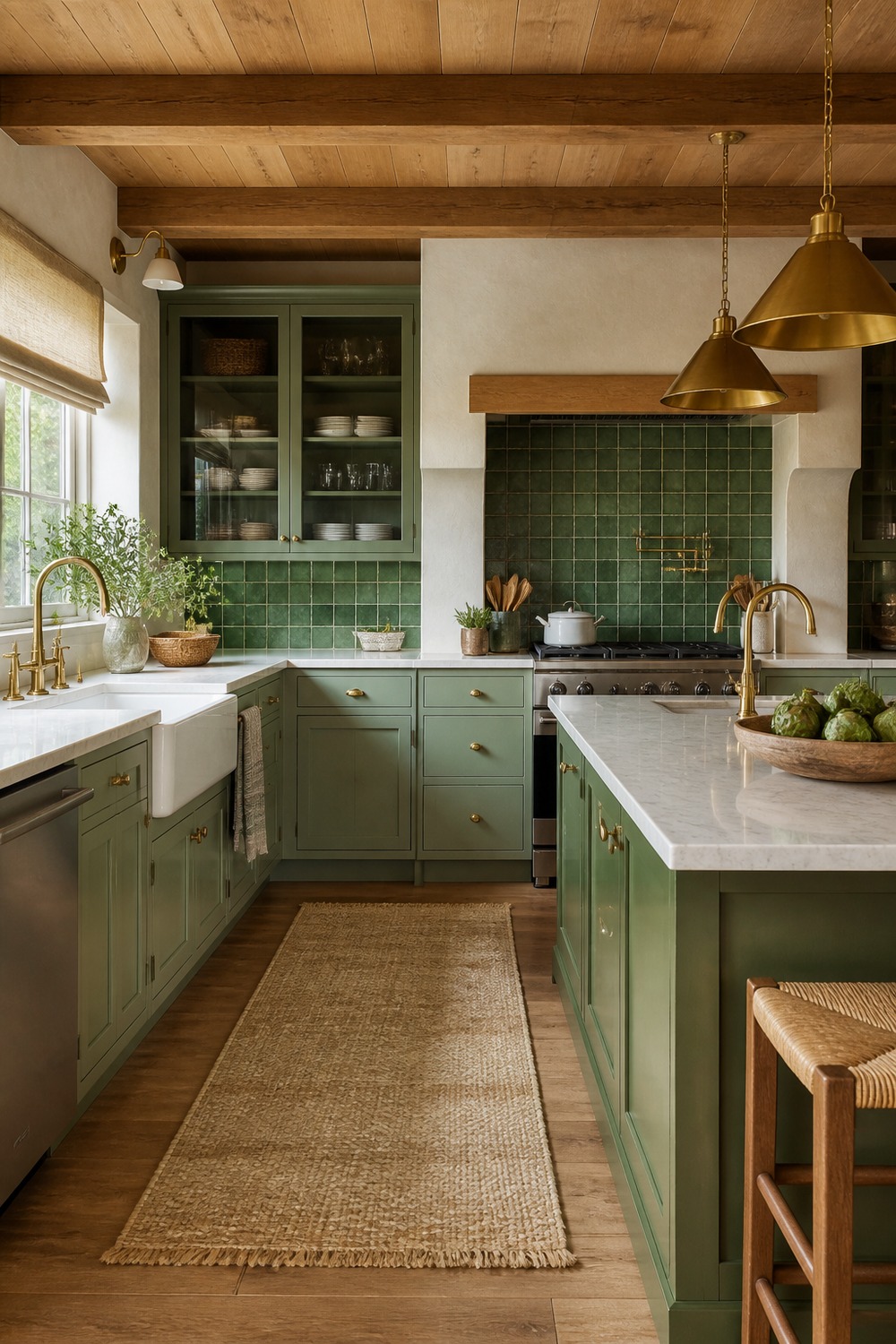
Warm wood beams make these green cabinets feel richer right away. The ceiling, brass details, and pale stone give the room enough contrast that the green reads earthy and intentional instead of heavy.
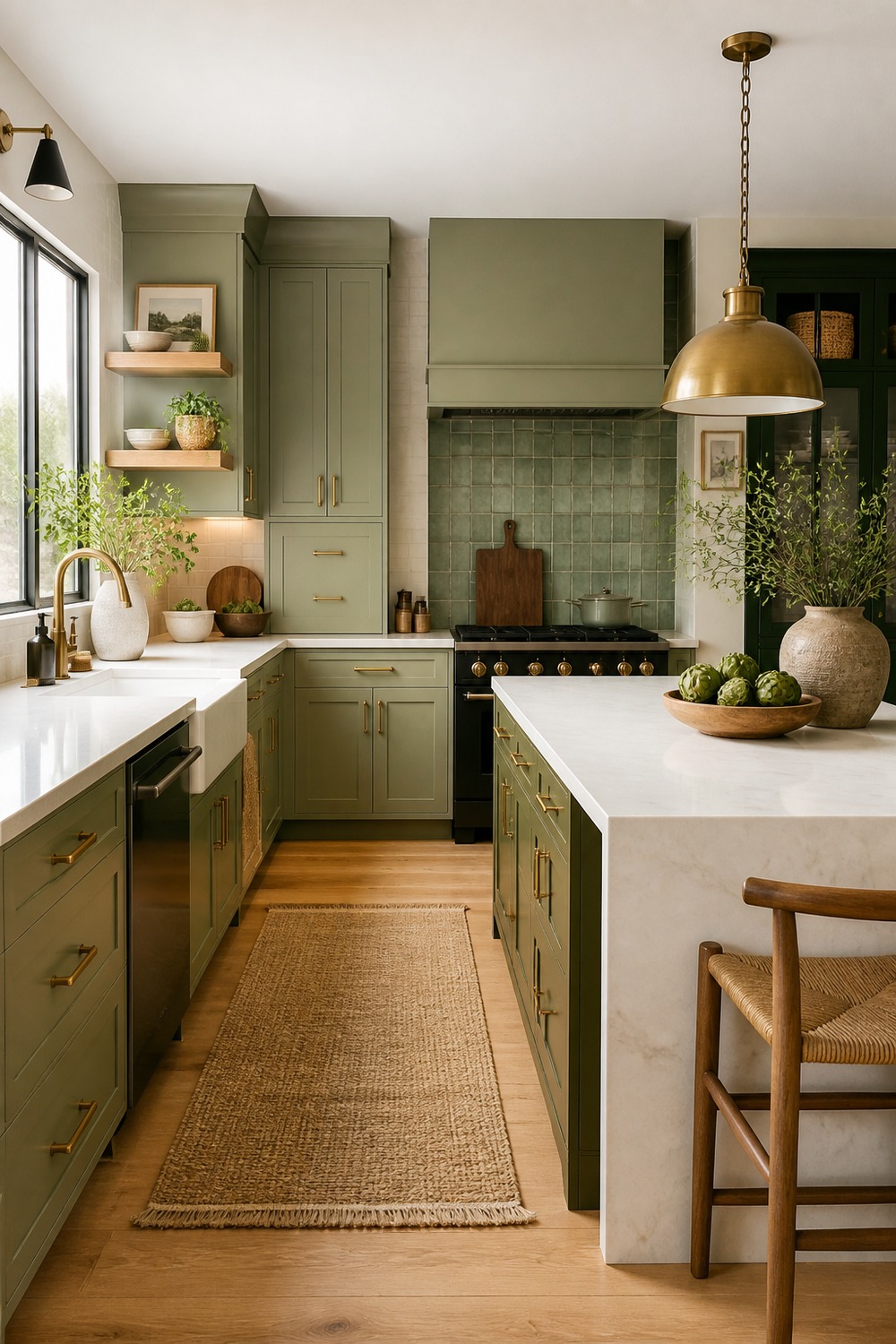
Flat-panel olive cabinets give this kitchen a cleaner modern look, but the wood shelves soften the edges. The white waterfall counter keeps the whole palette crisp while the green still brings some depth to the room.
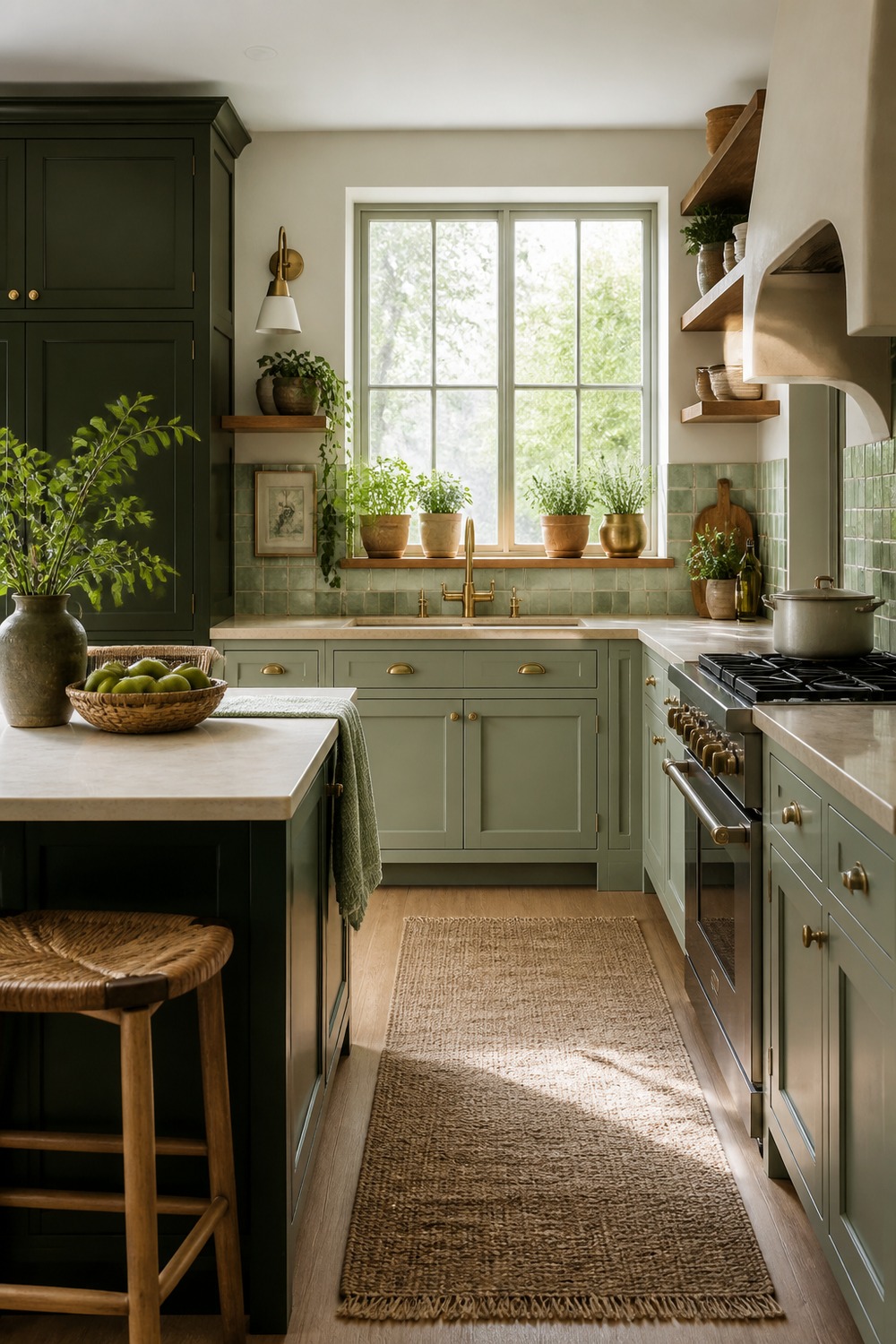
A window sink is already a natural focal point, and the green cabinets make it feel even more finished. The oak sill and cream walls are small details, but they keep the color scheme feeling bright enough for everyday mornings.
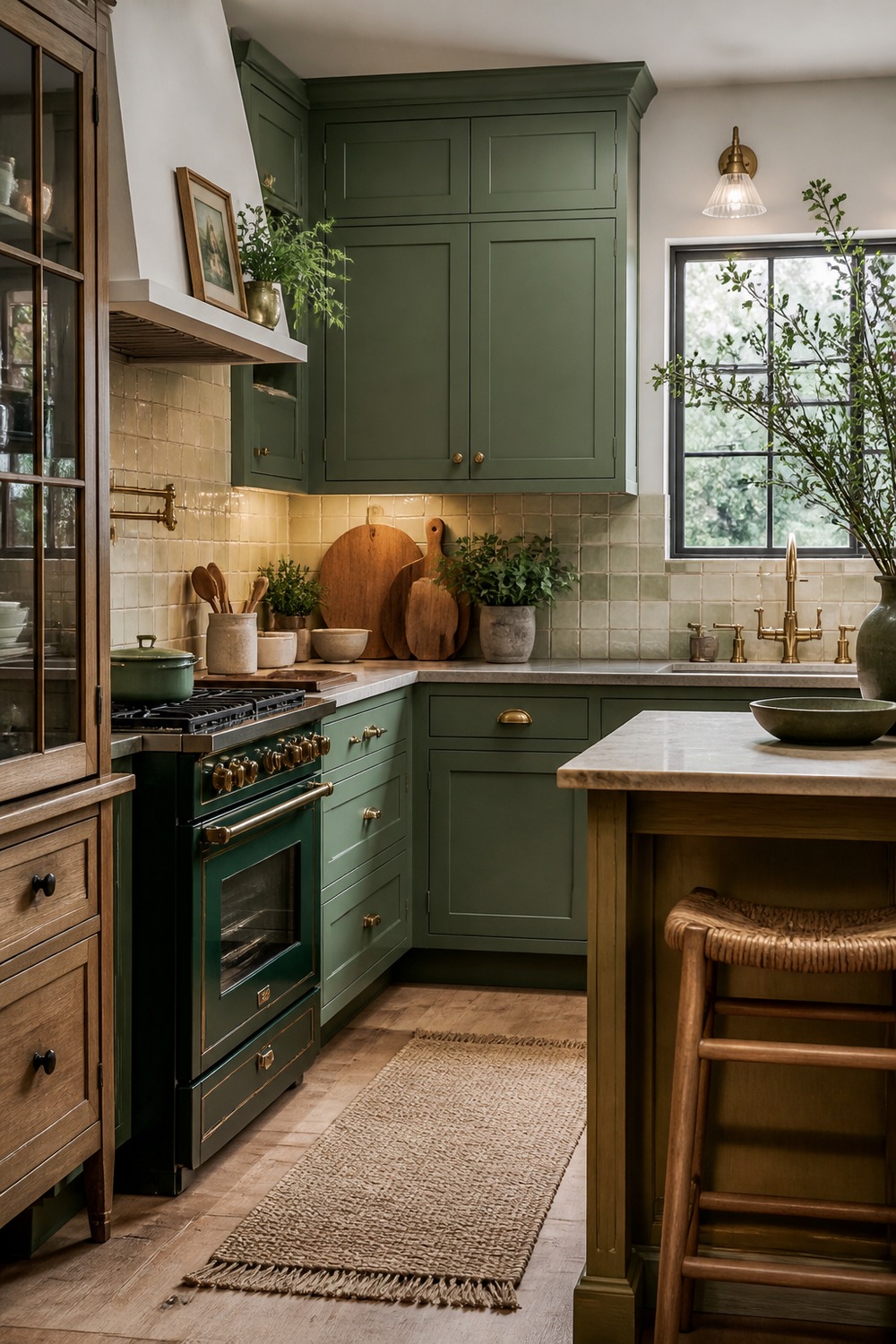
This moody green corner works because the darker cabinets are balanced by cream tile and wood cutting boards. The whole setup feels like a useful cooking corner first, with the color adding depth after that.
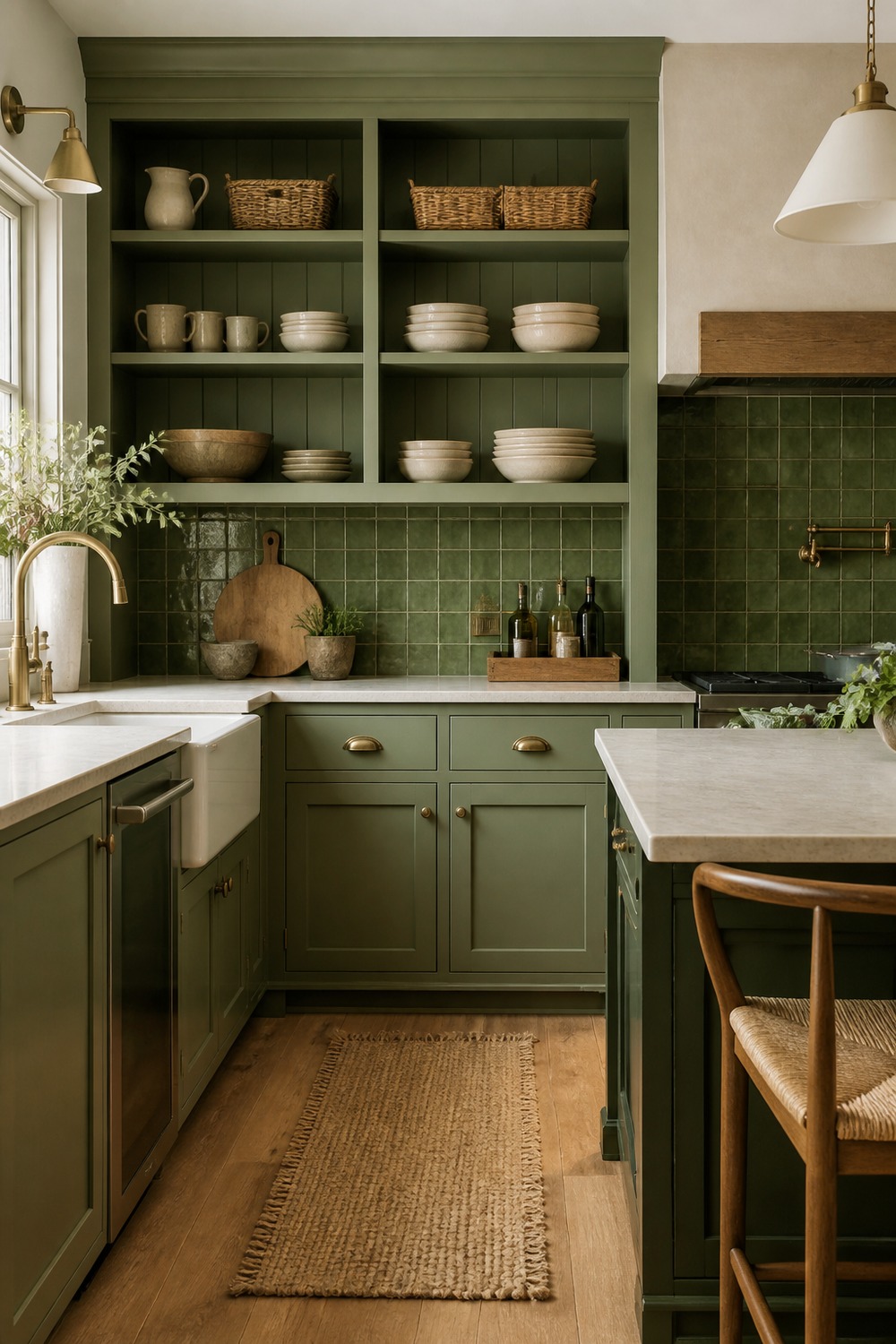
Open dish storage can make a green kitchen feel more relaxed when it is handled simply. Cream dishes, handmade tile, and the green cabinet wall give the space texture without adding a lot of extra visual noise.
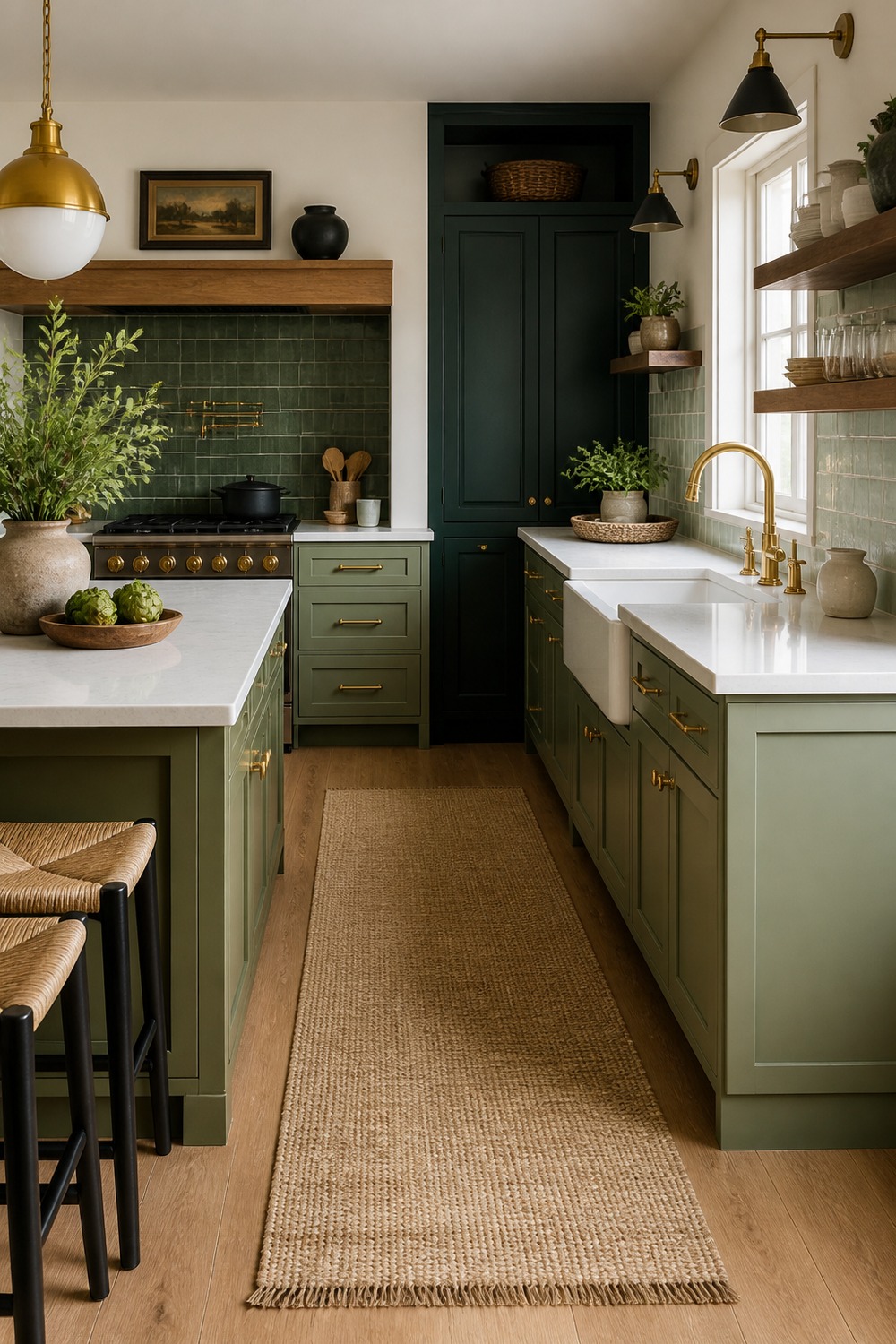
Green, black, and white can feel sharp, so the brass accents matter here. They warm up the contrast and make the kitchen feel more layered, especially with the white counters giving the darker green room to breathe.

I work in tech, but my taste in design is straight out of a slow European village. Give me arches, aged brass, and a room that smells like books and coffee. That’s my kind of home.