White cabinets are easy to like, but they can turn flat fast if the rest of the kitchen is only white-on-white. I usually notice the rooms that give the cabinets something to play against, like warm wood, softer tile, darker hardware, or one confident island color.
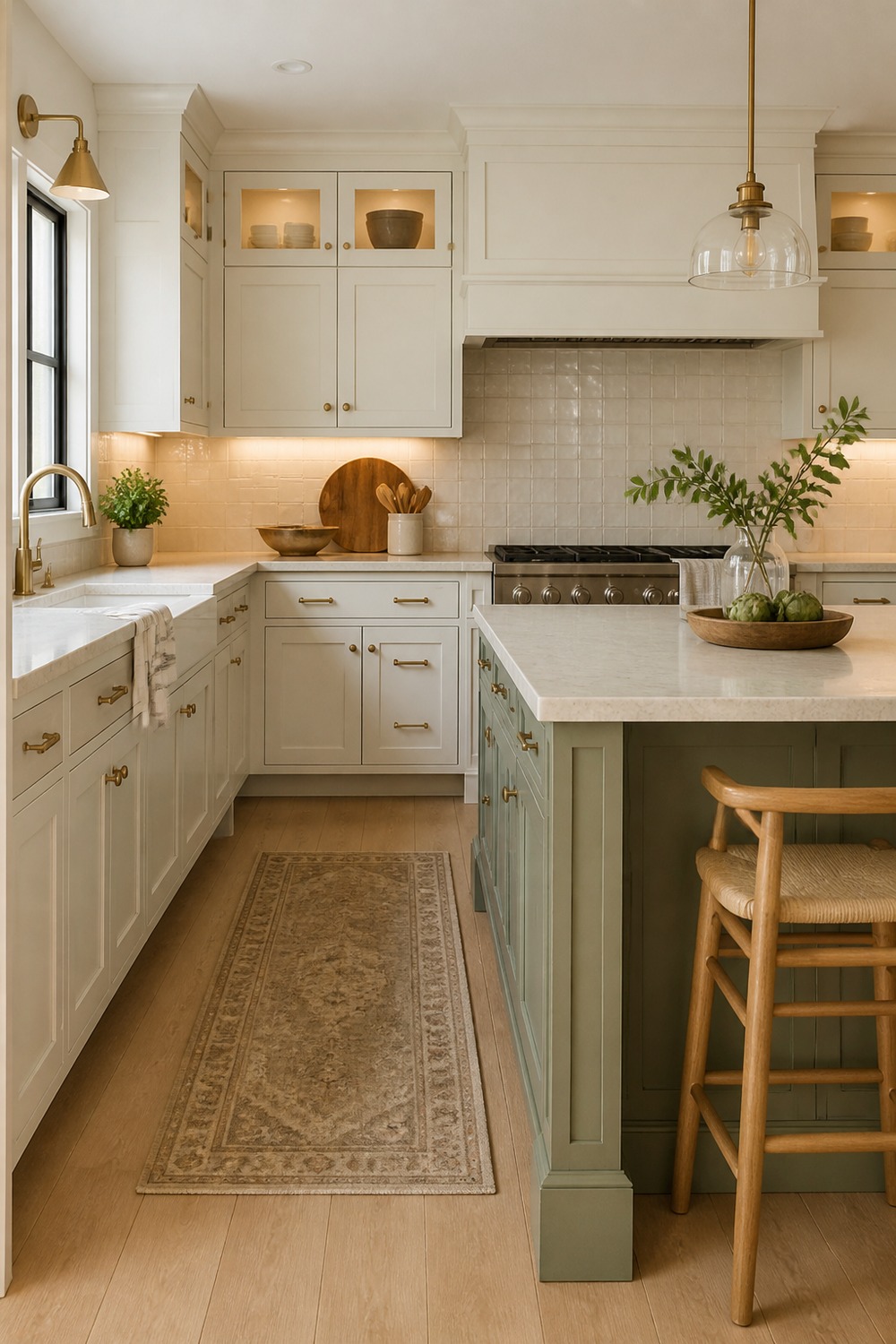
The sage green island gives the white cabinets a softer center instead of making the whole kitchen feel blank. I like the way the cream stone, oak stools, and simple brass lights keep the palette calm, but still give the room a real point of view.
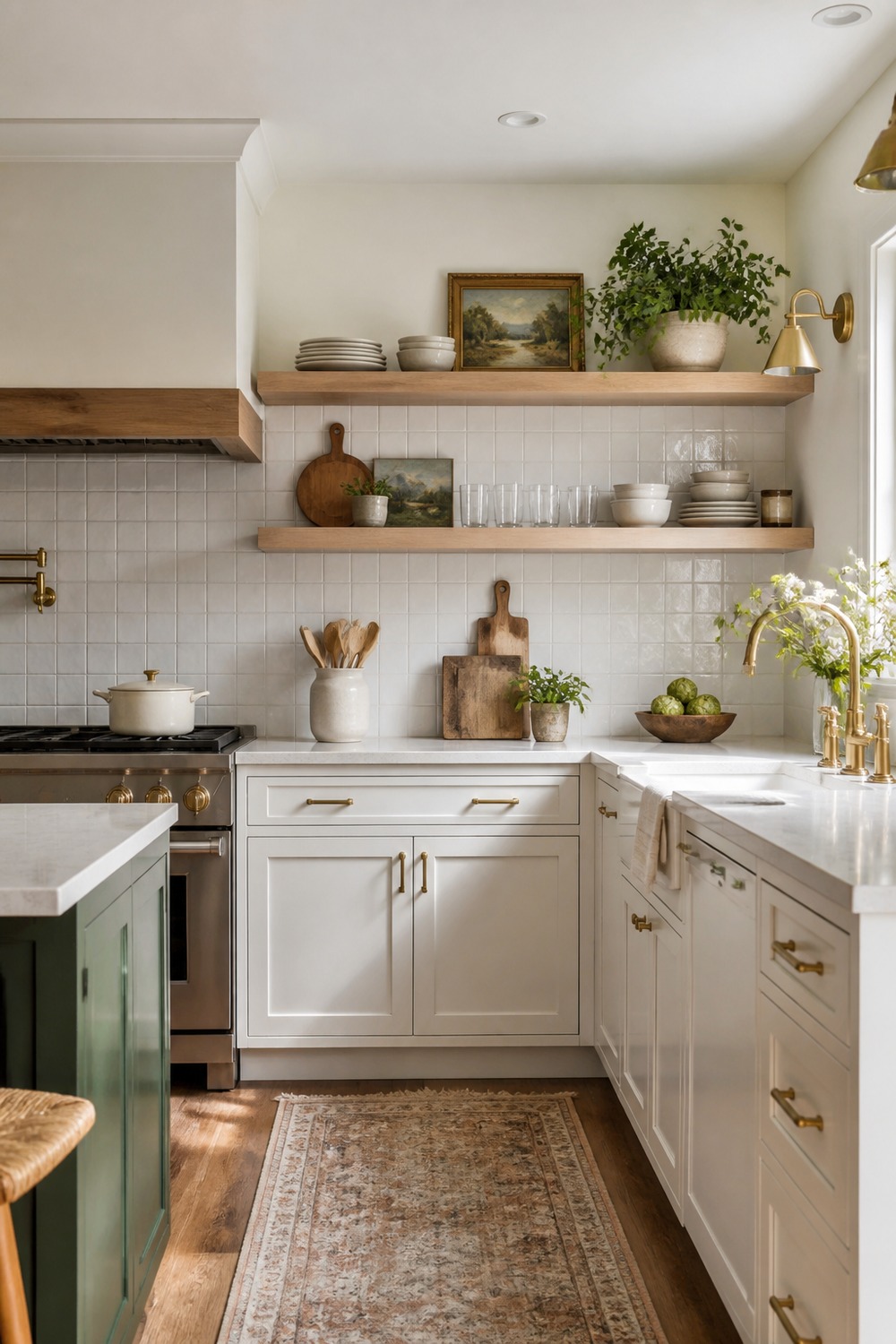
Open oak shelves are such an easy way to warm up white cabinets without repainting the whole kitchen. The wood breaks up the wall of white, and the cream tile behind it makes the dishes and everyday pieces feel collected instead of cluttered.
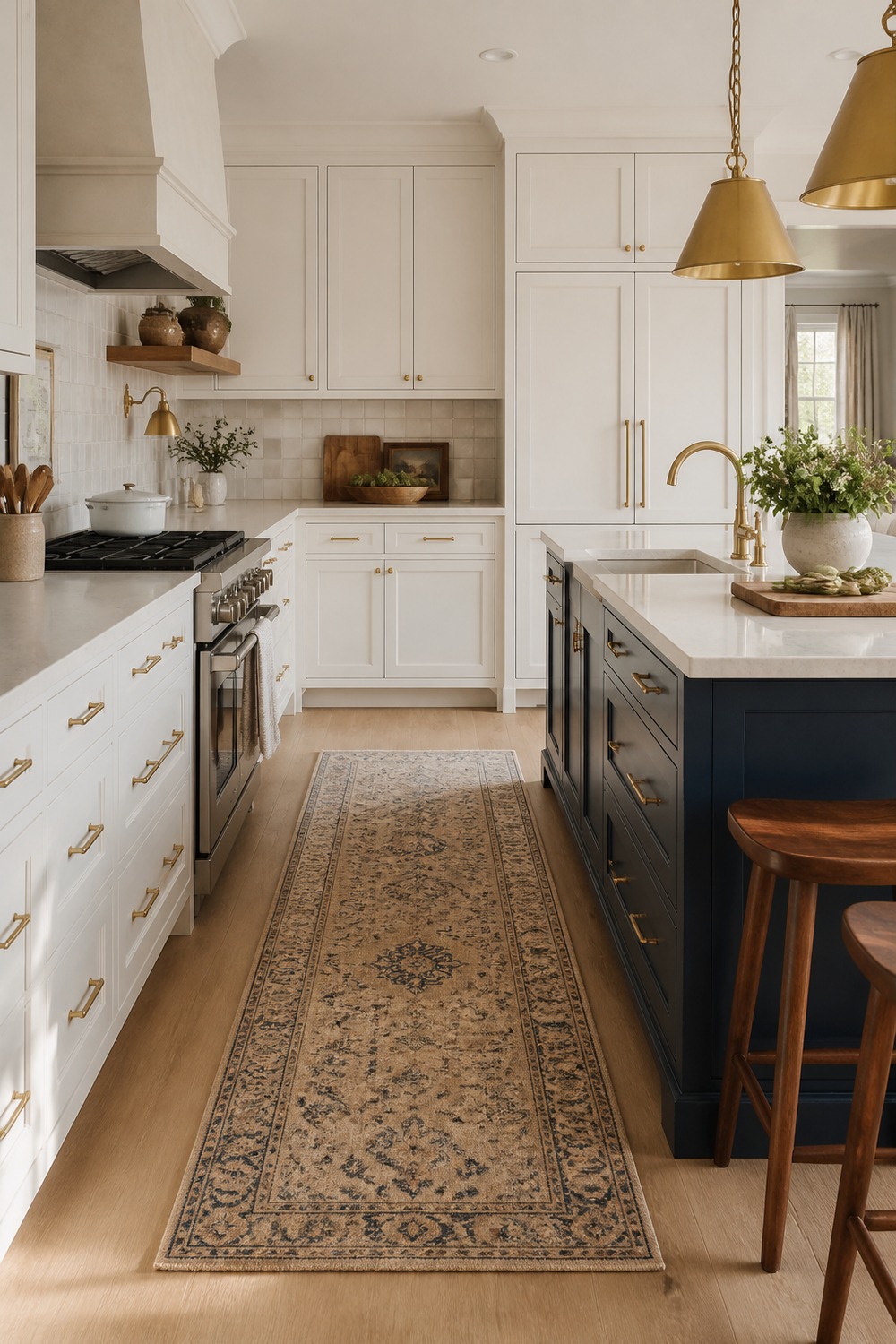
A navy island works really well here because the white perimeter cabinets keep the room bright. The darker color grounds the middle of the kitchen, while the brass pendants and pale counters stop it from feeling too heavy.
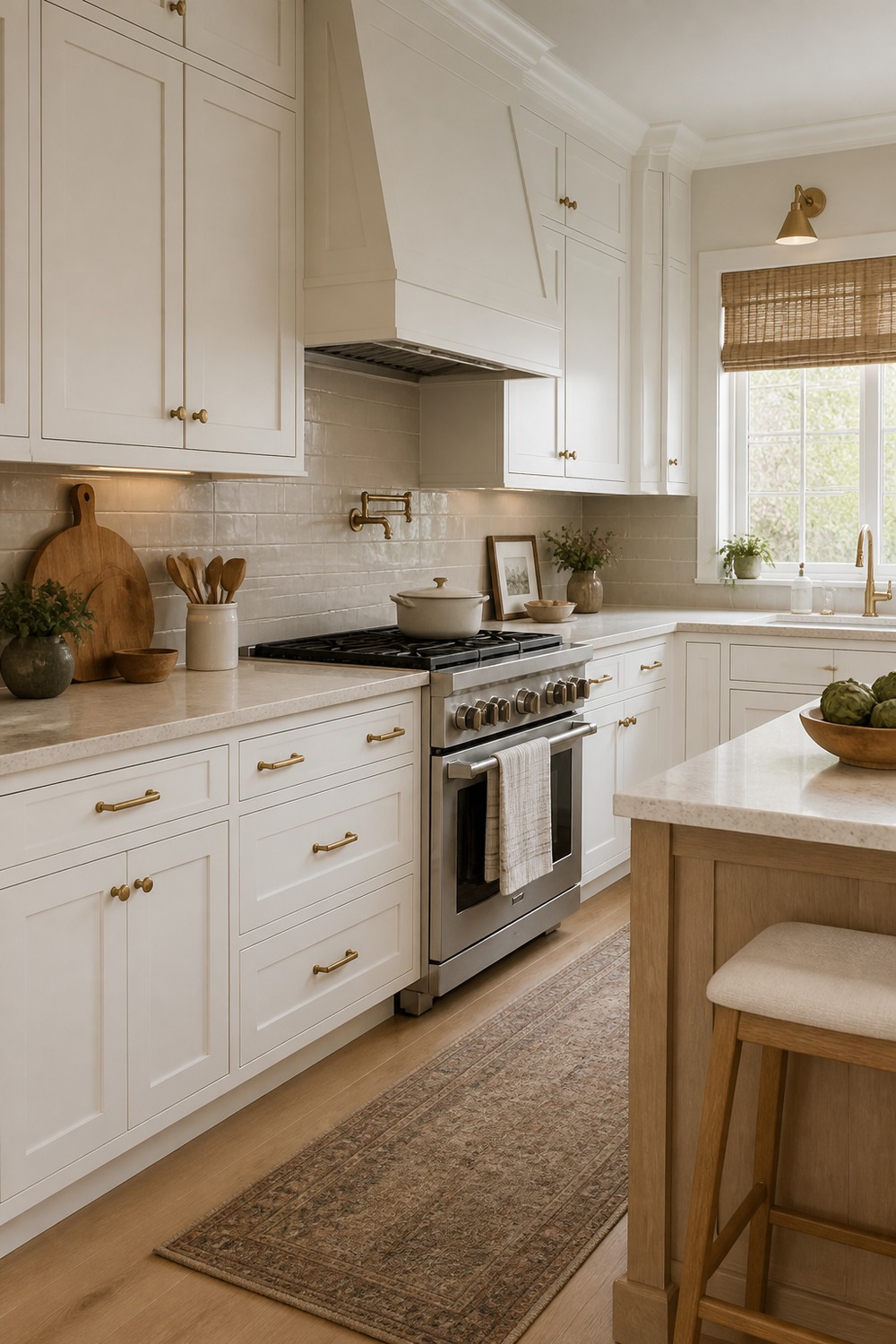
This greige backsplash is quiet, but it does a lot for the white cabinets. The handmade tile texture adds movement, and the warm neutral color keeps the kitchen from looking like a plain builder-white box.
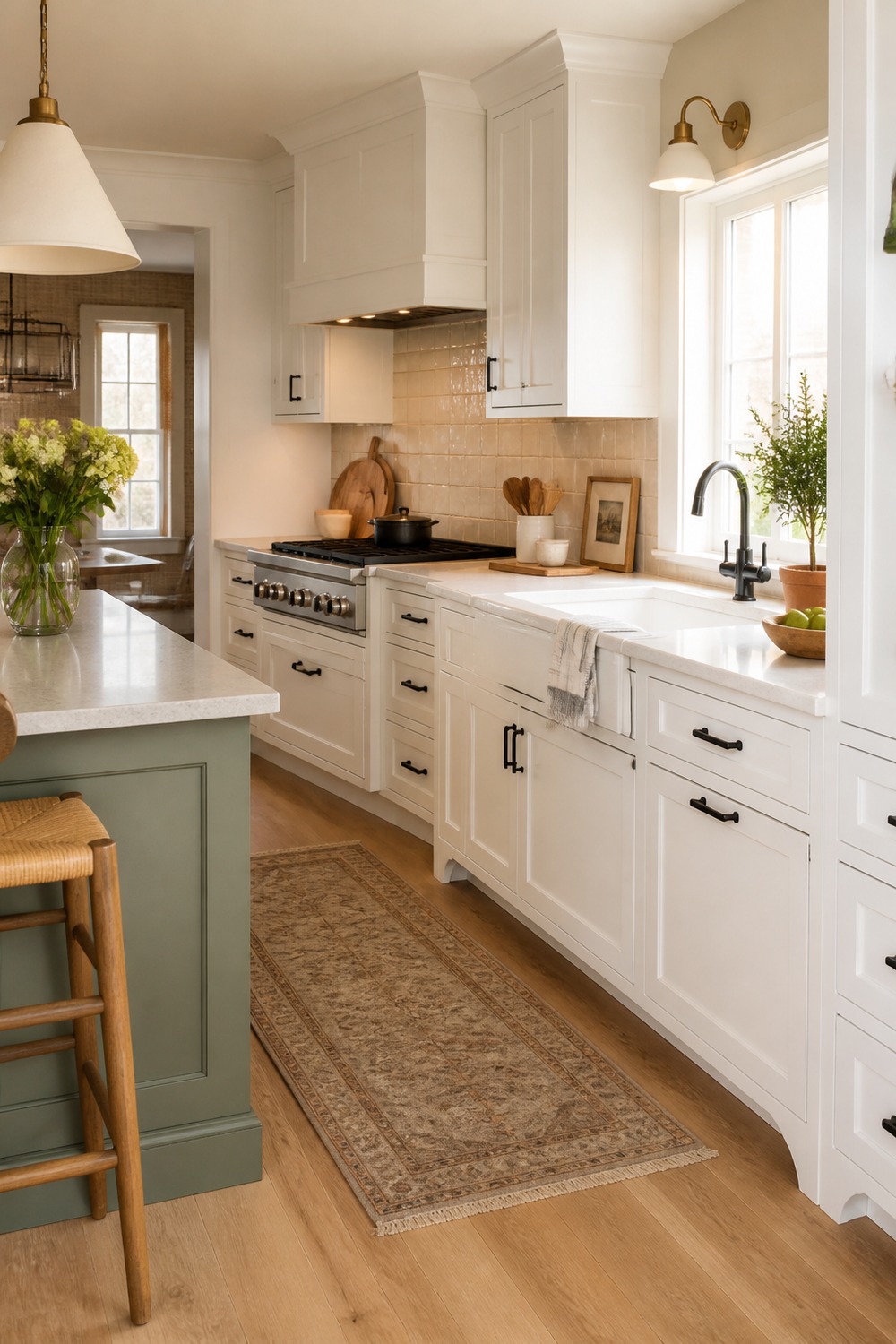
Black hardware gives white cabinets that little bit of contrast they sometimes need. It outlines the drawers and doors in a clean way, and the warm floor keeps the black-and-white palette from feeling too sharp or cold.
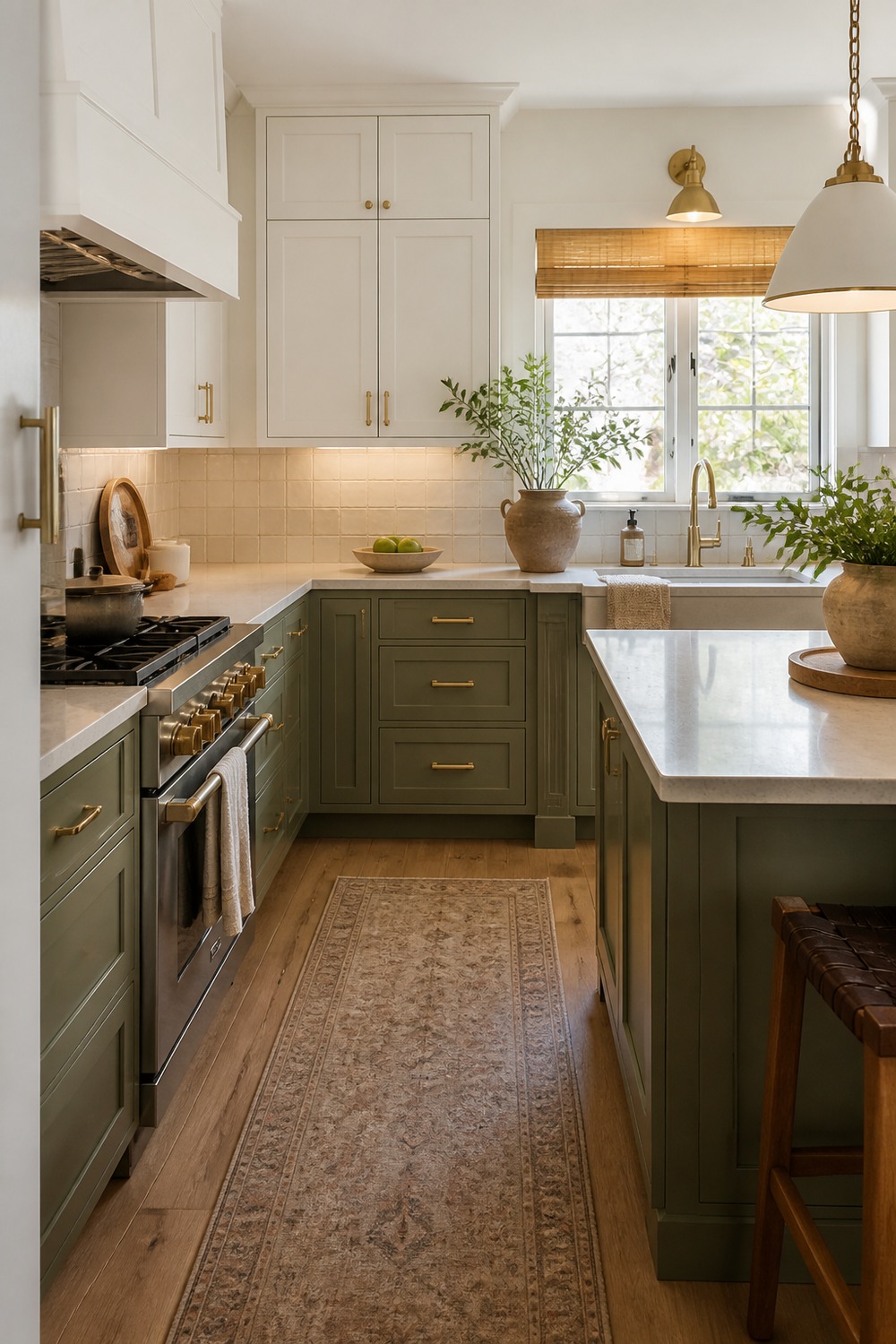
The olive lower cabinets make this palette feel earthy without taking over the room. I like that the white uppers still keep everything open, while the green base color gives the sink wall and island area more weight.
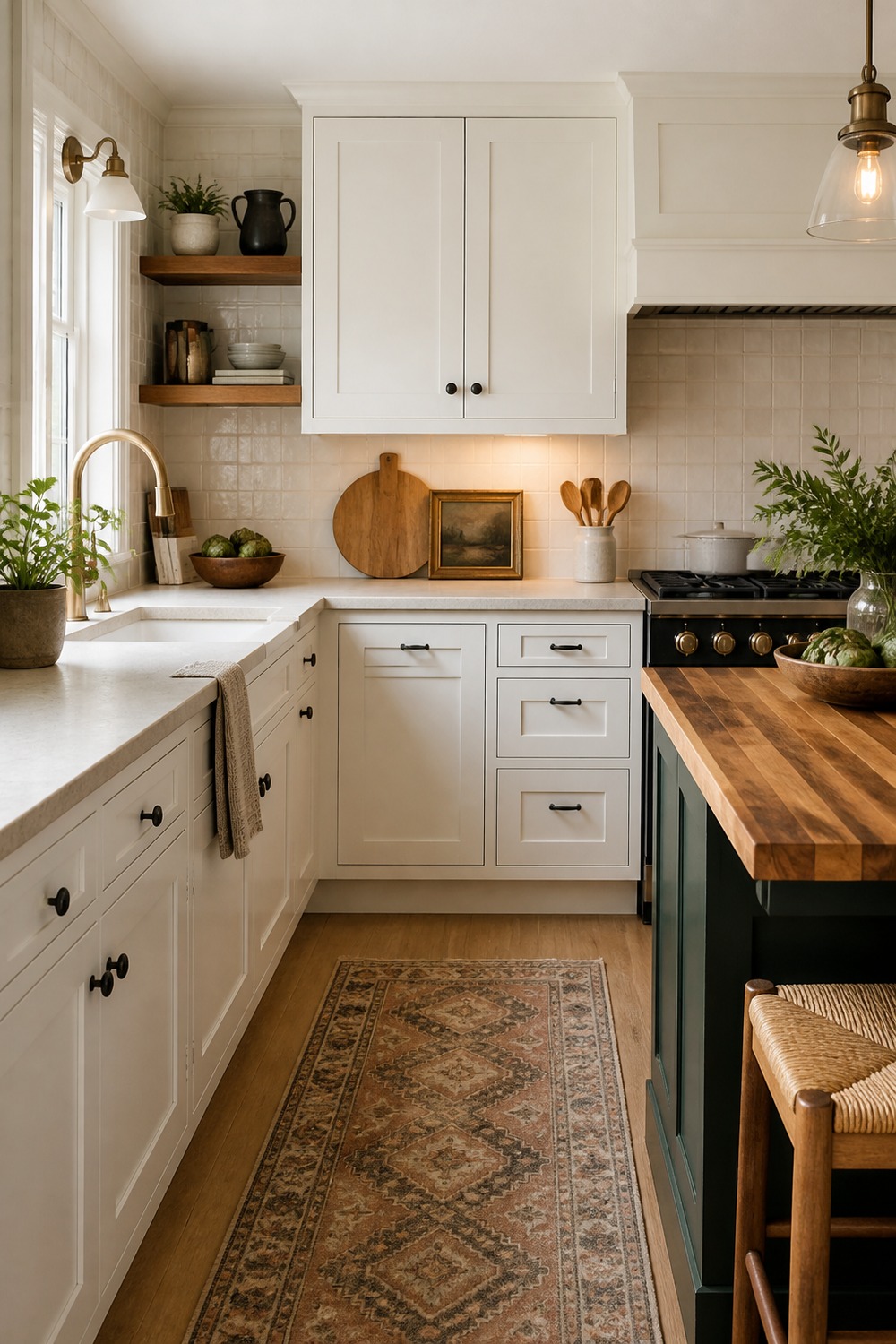
Butcher block is one of those details that instantly makes white cabinets feel less sterile. The wood counter section adds a working-kitchen feeling, and the cream tile keeps the whole palette soft enough for everyday mess.
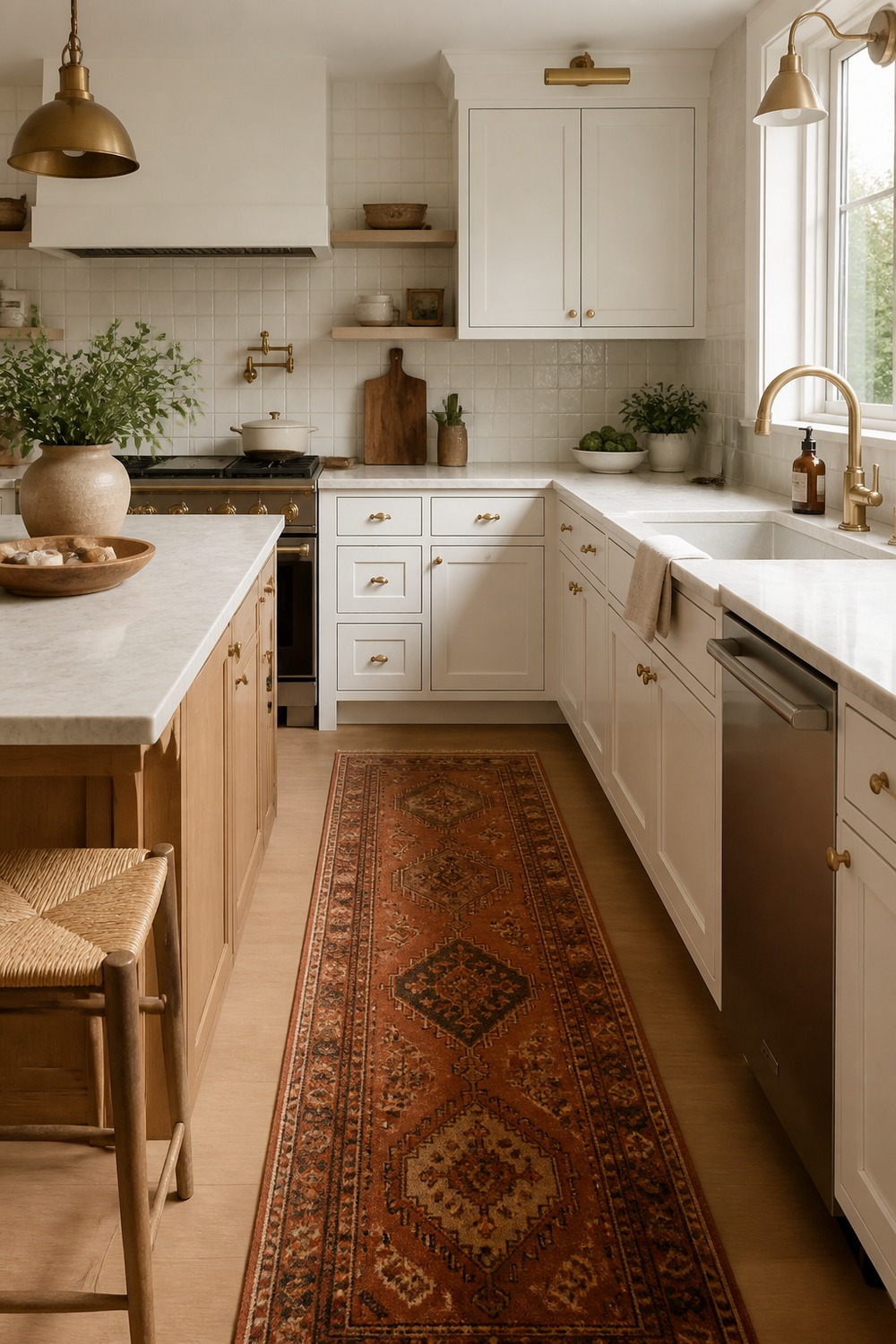
The terracotta runner is doing the color work here in a really livable way. Instead of committing to bold cabinets, the kitchen keeps its white base and brings in warmth through the floor, brass lights, and a few aged wood pieces.
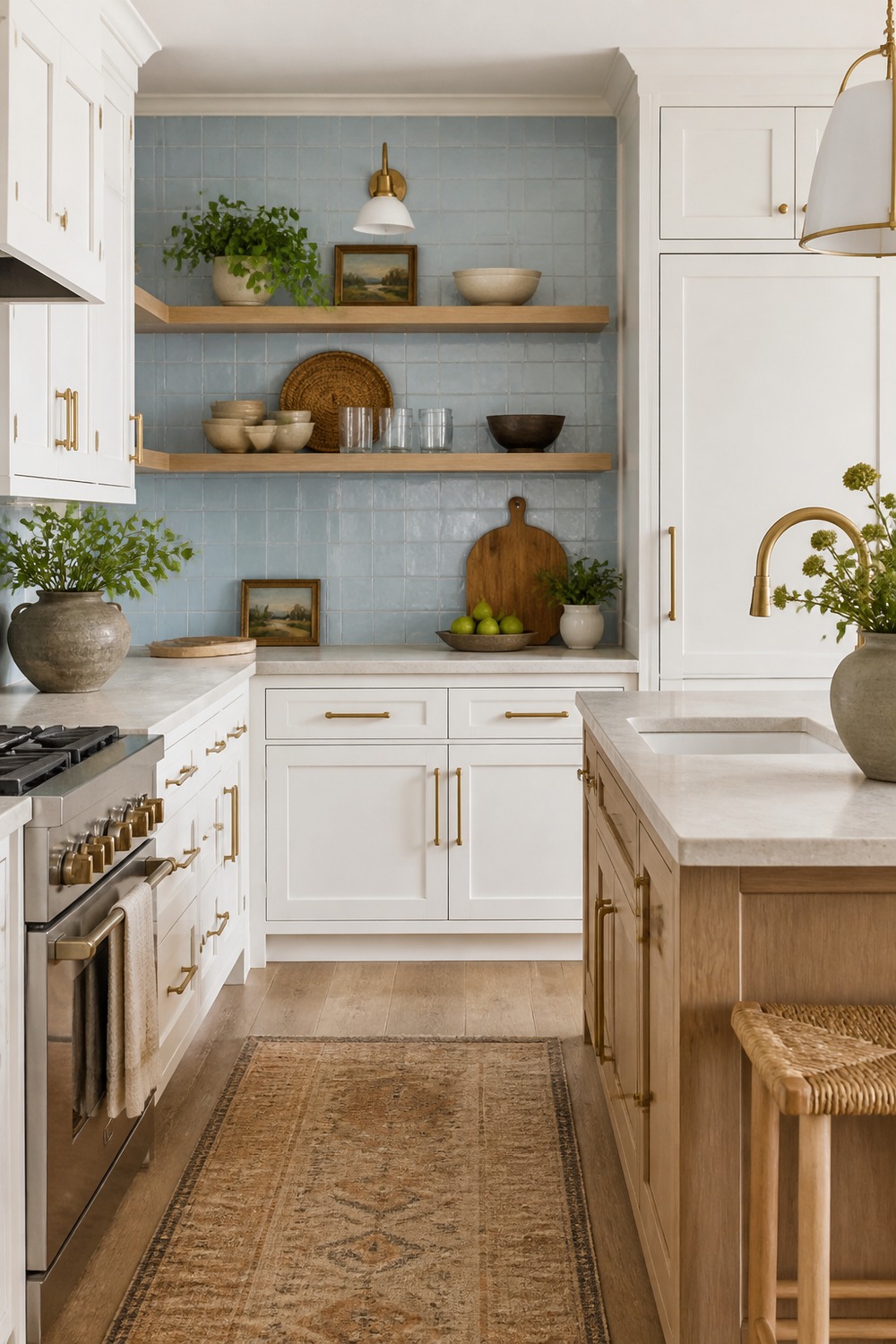
Pale blue tile gives the white cabinets a light, airy contrast without making the kitchen feel themed. It is a softer choice than a dark island, and it works especially well with oak shelves and creamy counters.
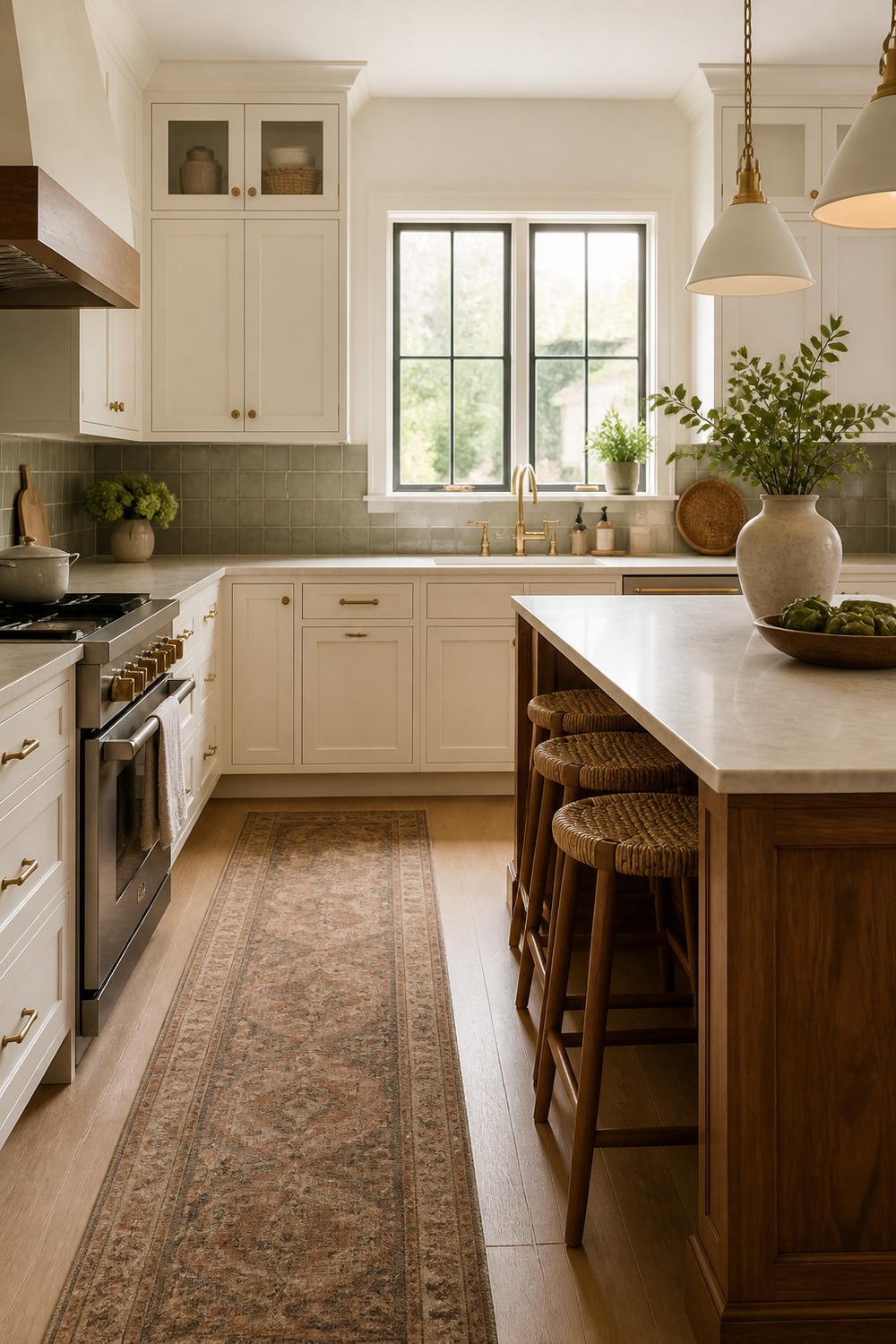
The walnut island makes the white cabinets feel more expensive and layered. I like how the darker wood adds depth in the center of the room, while the woven stools and light counters keep the kitchen from getting too formal.
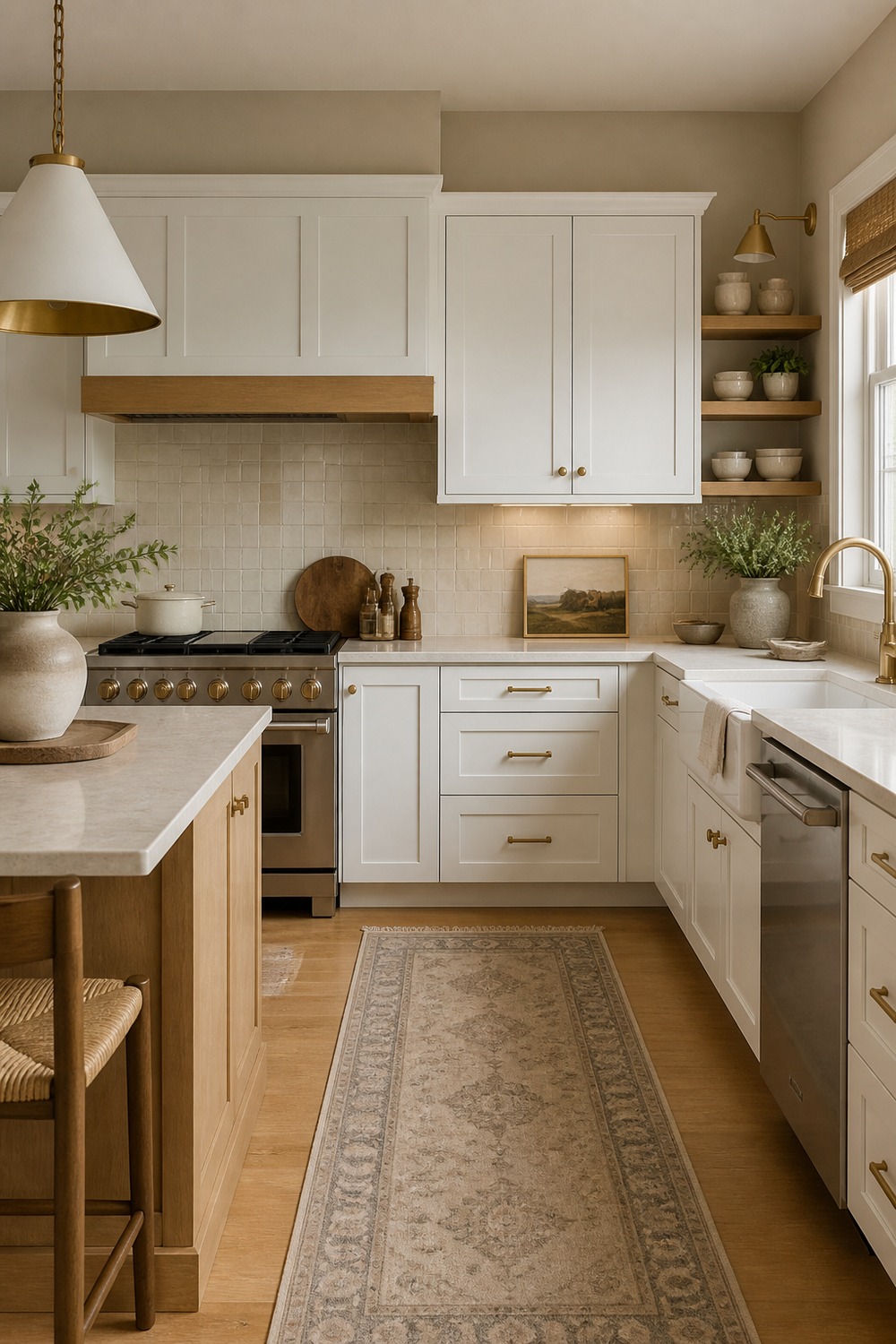
Soft taupe walls are a nice fix when white cabinets feel too stark against plain white paint. The wall color adds just enough shadow and warmth, especially with brass pulls and pale oak underfoot.
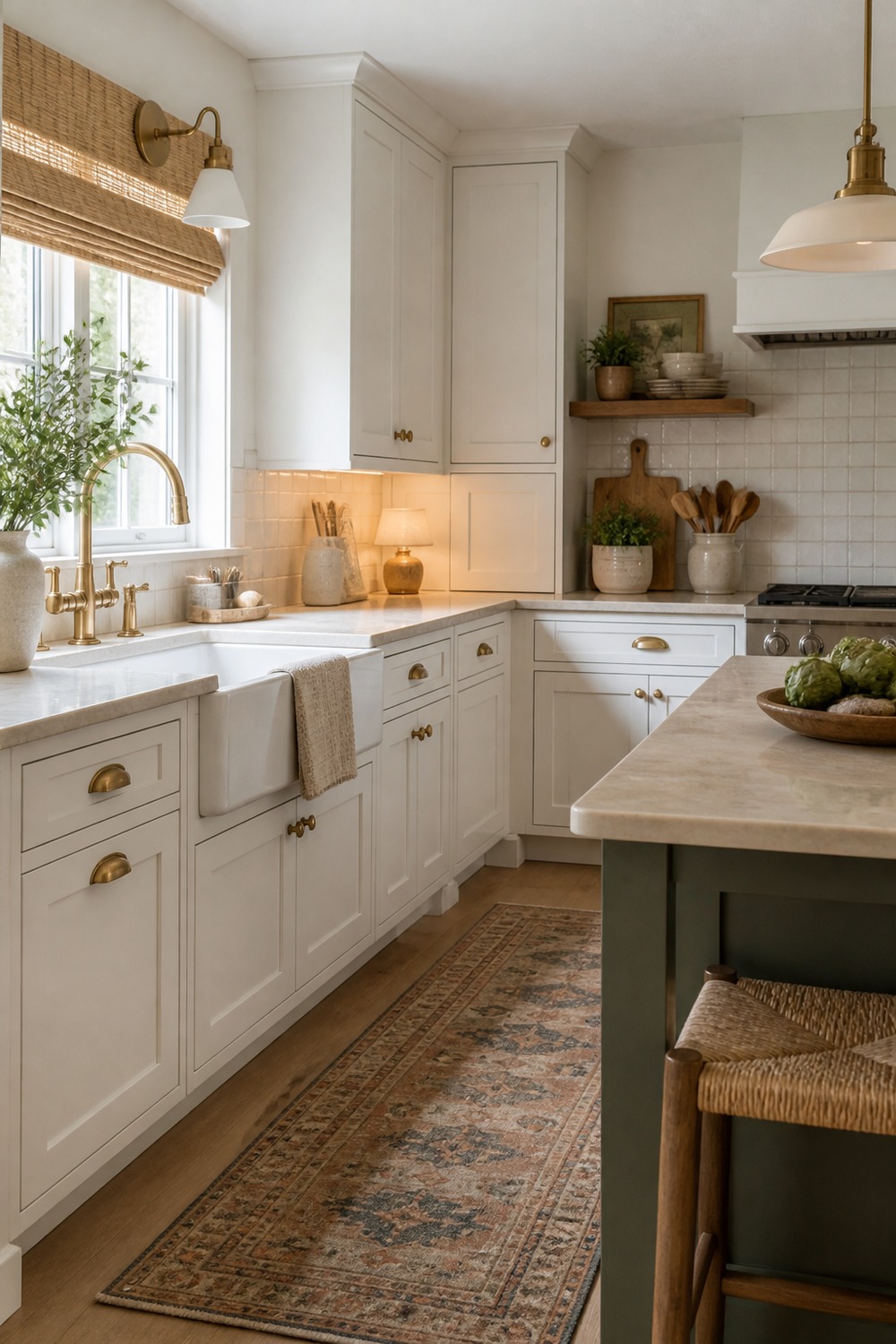
This cottage-style palette stays close to white, but the cream accents make it feel warmer and easier to live with. The apron-front sink, soft tile, and gentle wood tones keep the cabinets from looking flat.
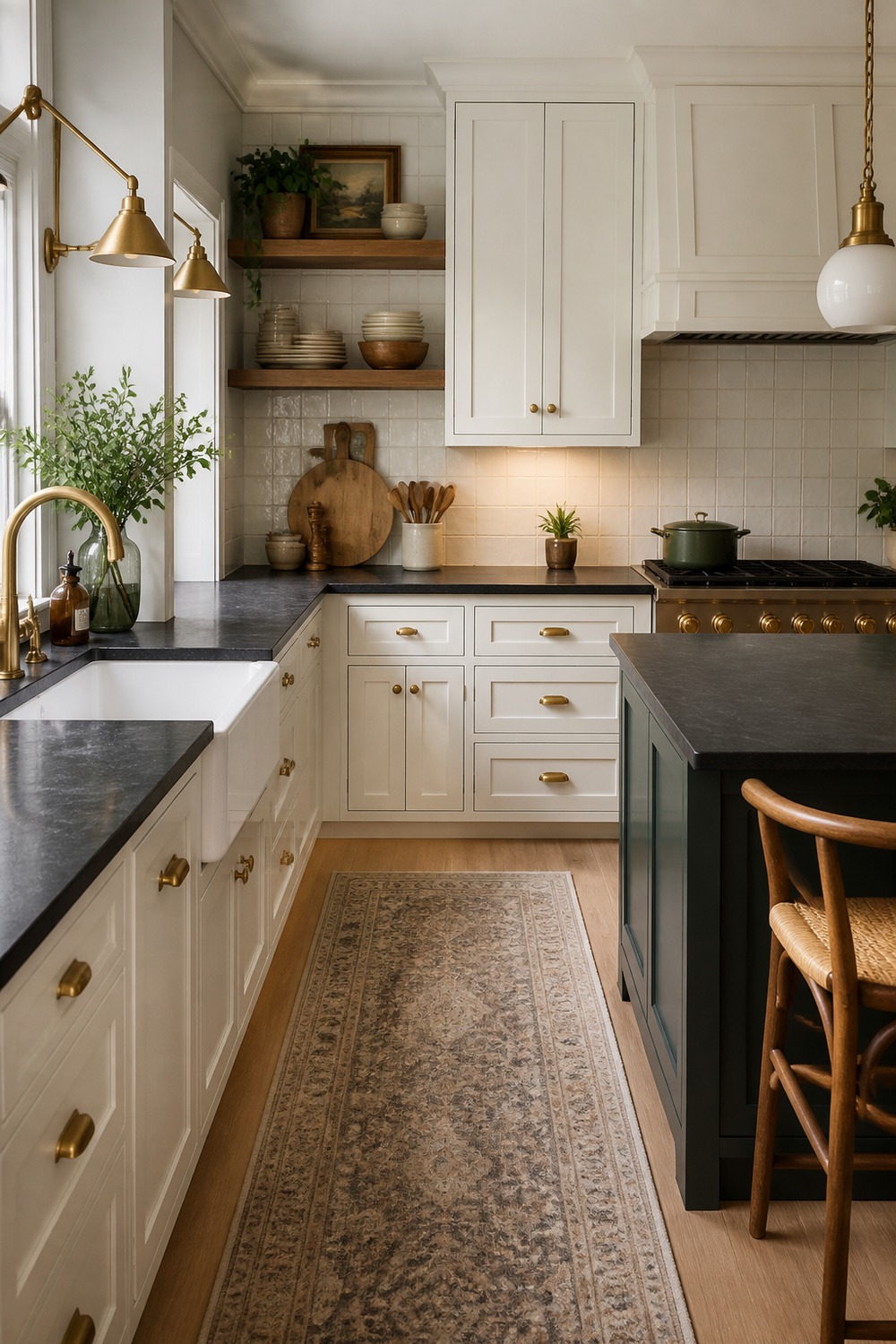
Dark counters make white cabinets feel crisp without needing a loud color scheme. The contrast is practical too, because the work surfaces feel grounded and the brass pulls add just enough warmth around the edges.
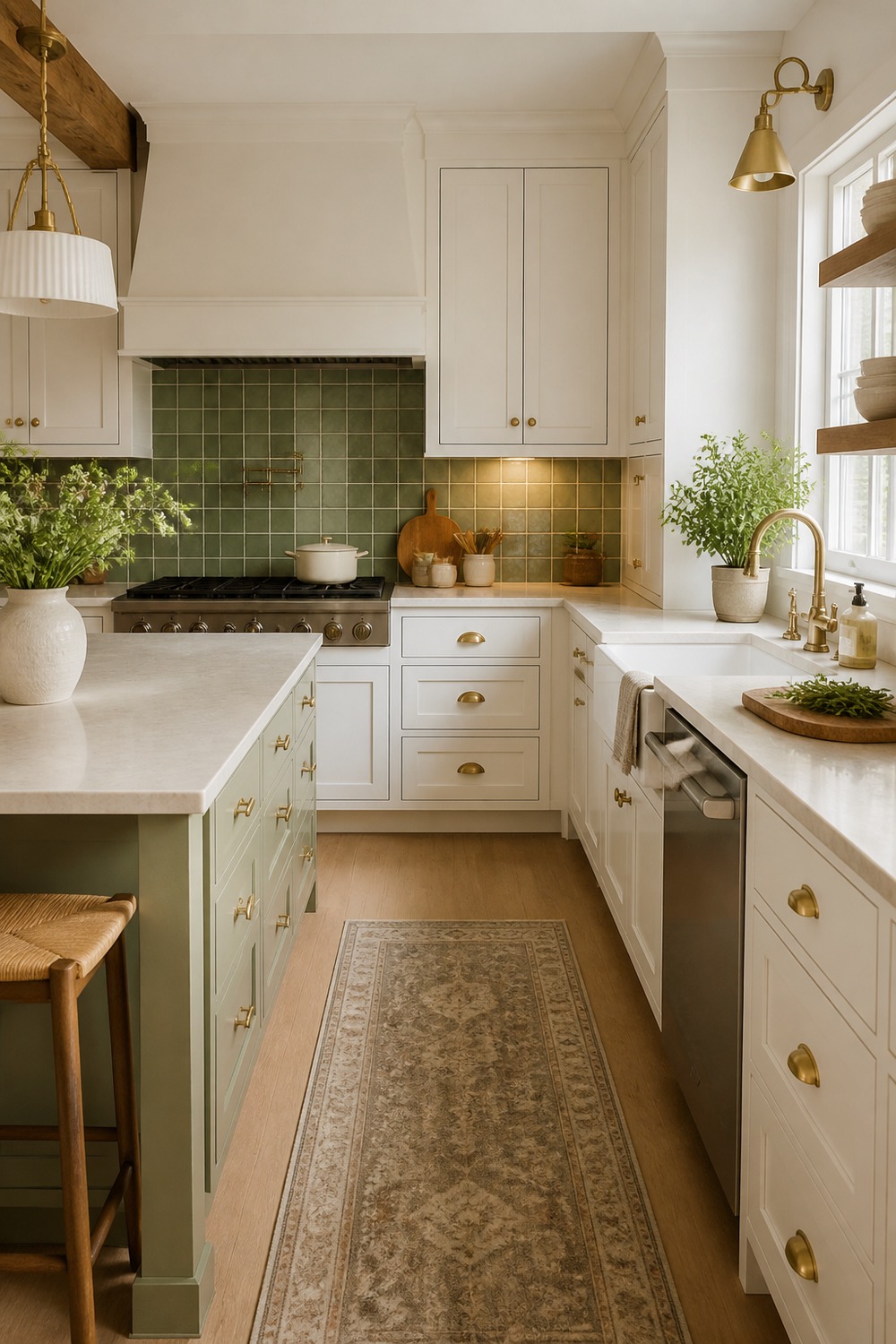
A green tile detail is a small move, but it changes the whole feeling of the white cabinets. The color gives the backsplash some personality, while the wood shelves and light counters keep the kitchen calm.
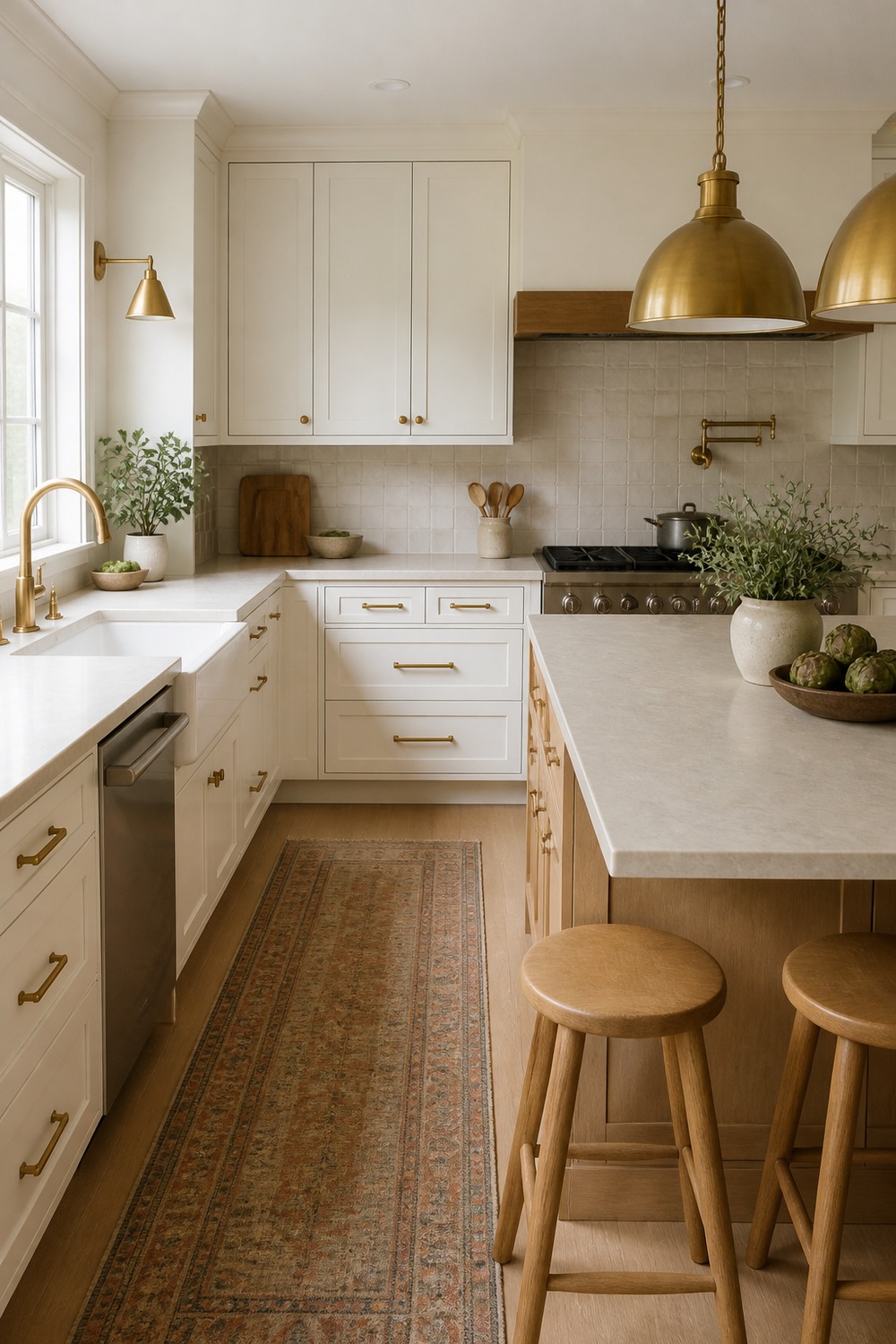
Warm brass pendants can make white cabinets feel less flat almost immediately. They add a golden glow above the island, and that little hit of metal ties in with the hardware without making the kitchen look overly matched.
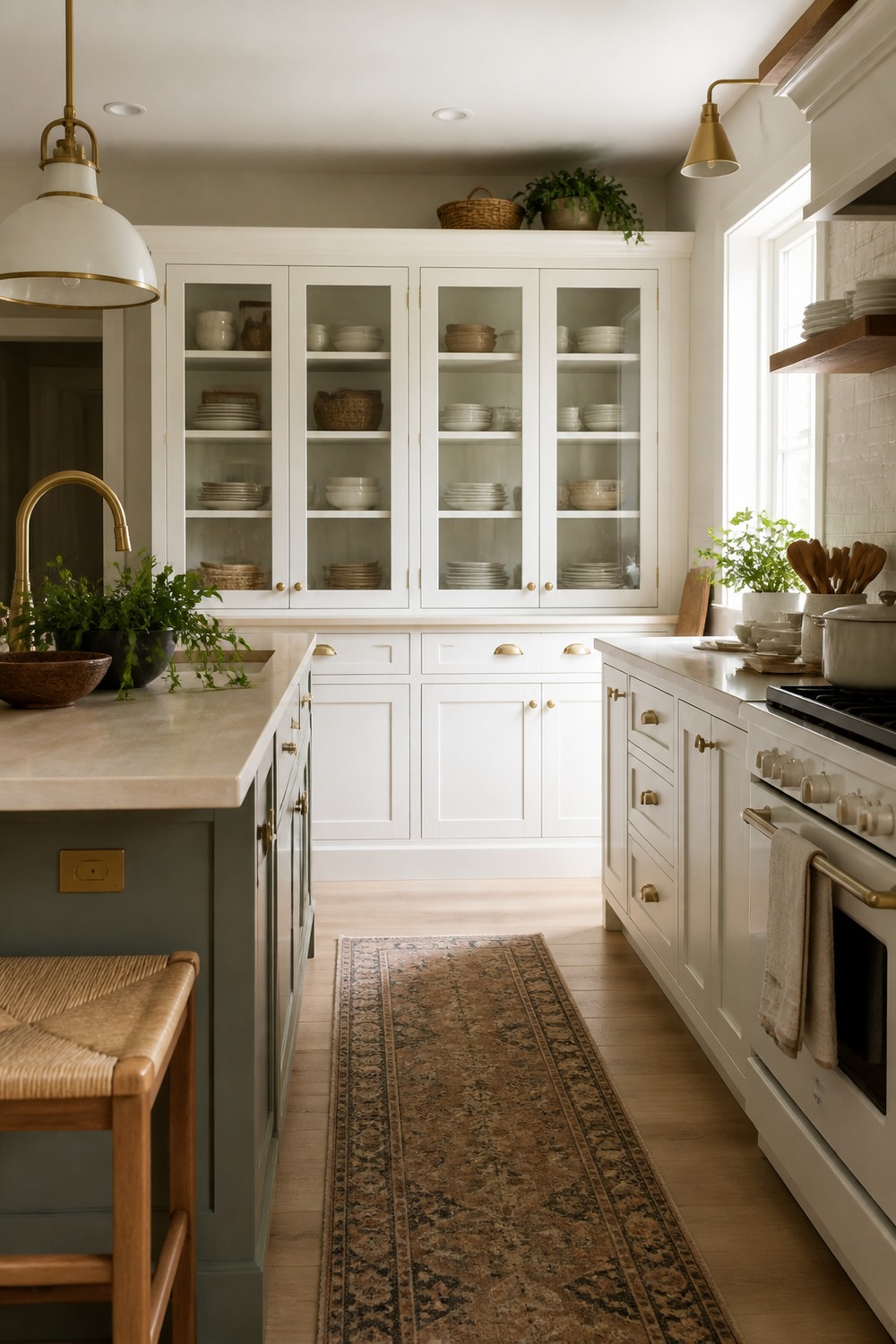
The hutch storage makes this white-cabinet kitchen feel more like a real room than a showroom. I like the mix of closed storage, glass-front display, and pale wood flooring because it gives the palette a softer, collected rhythm.
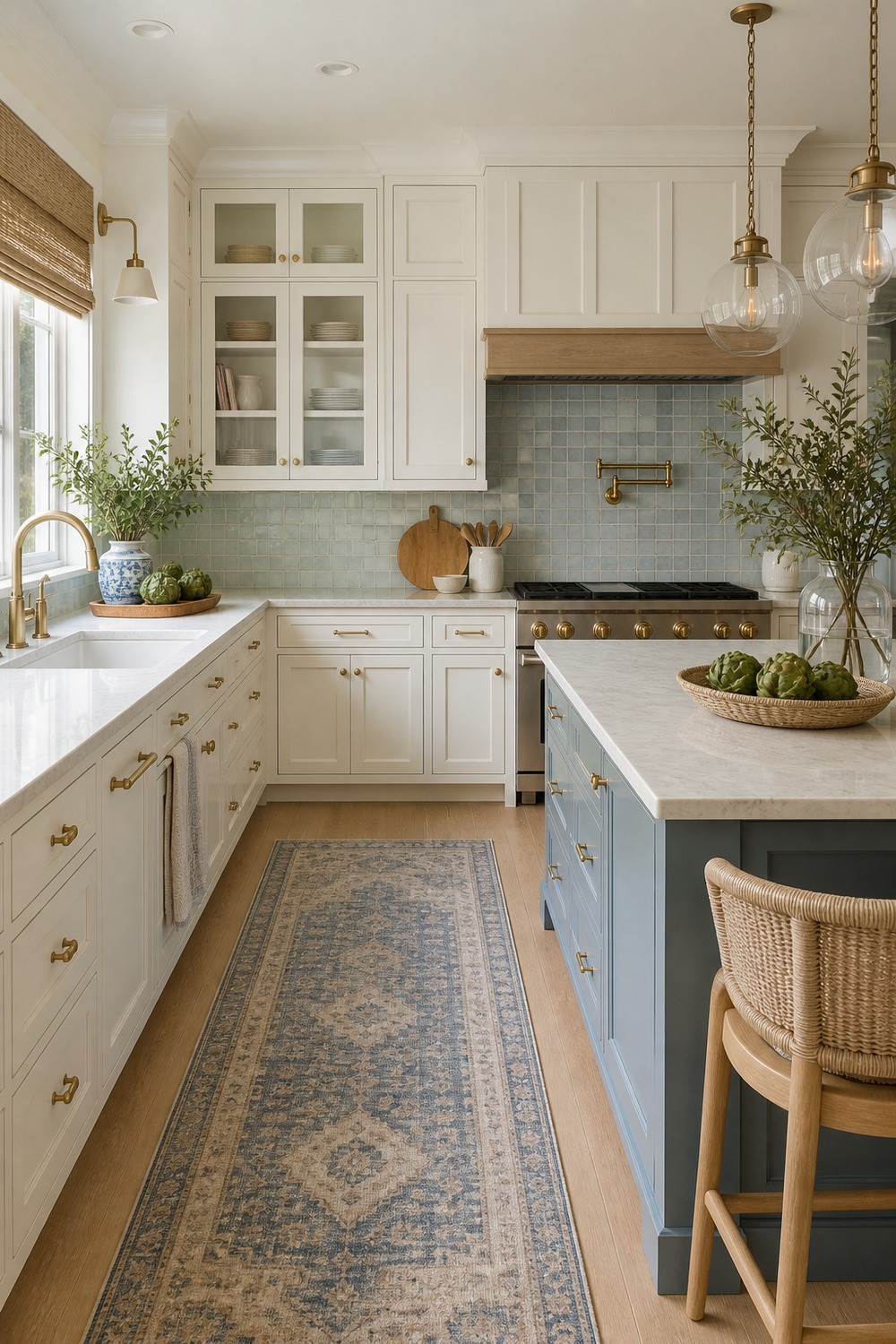
Coastal blue accents work best when they stay subtle like this. The white cabinets still feel clean and classic, while the watery blue textiles and pale wood keep the room relaxed instead of turning it into a beach theme.
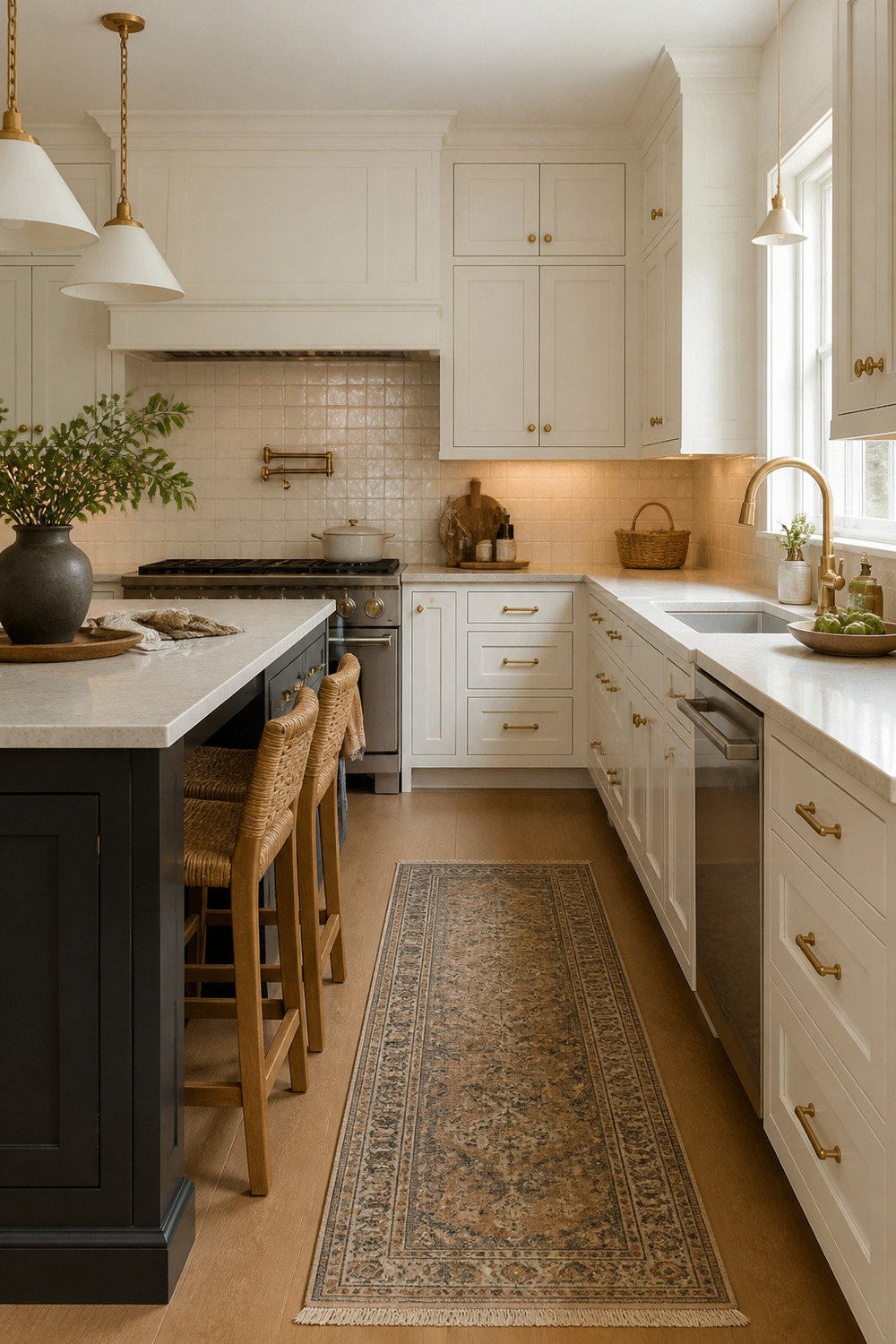
A charcoal island is a stronger contrast choice, but it still works because the surrounding cabinets stay white. The dark center adds structure, and the cream stone and brass hardware keep the palette warm enough for a family kitchen.
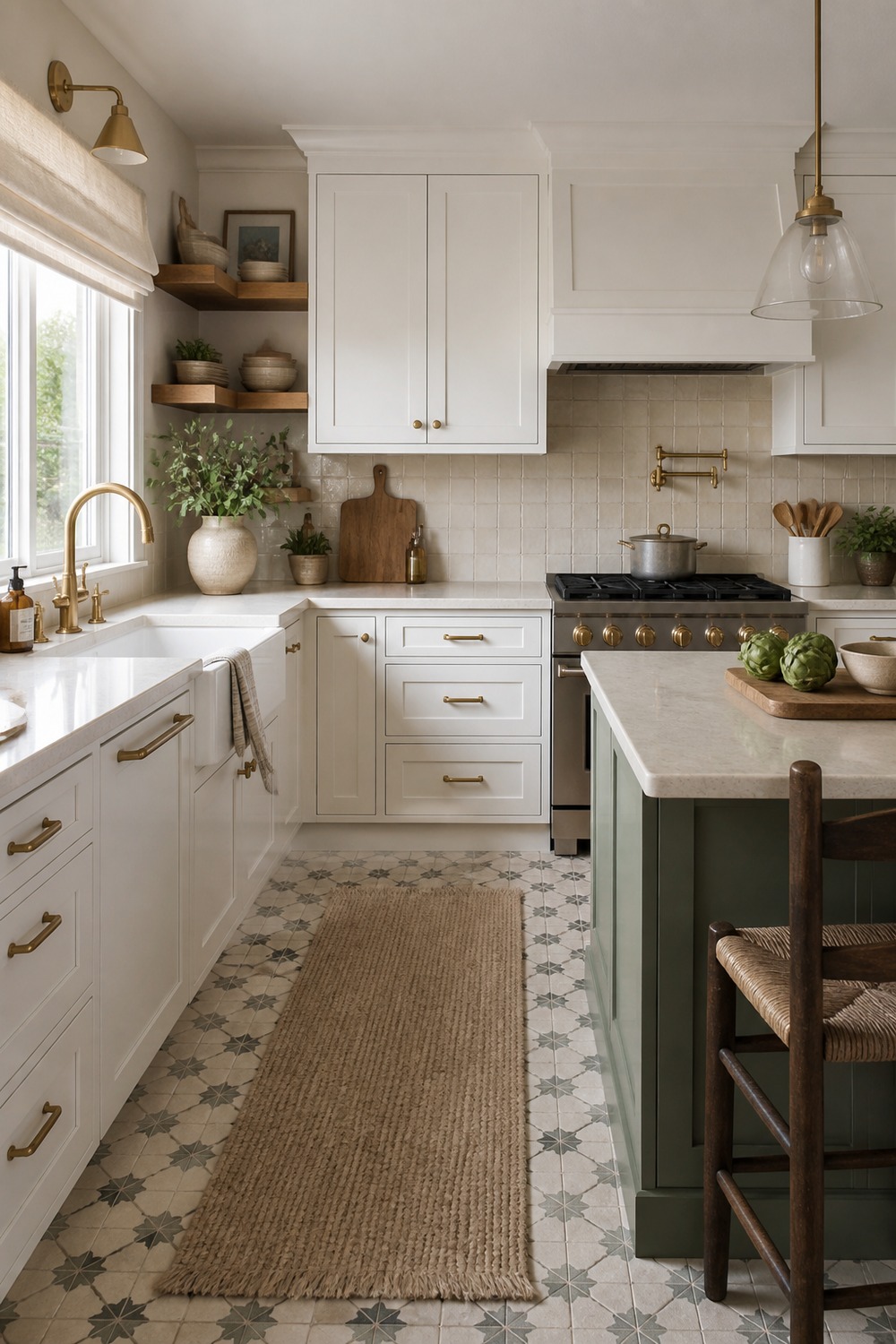
The patterned floor gives the white cabinets something interesting to sit on. It adds movement below eye level, so the kitchen can stay bright and simple without feeling unfinished.
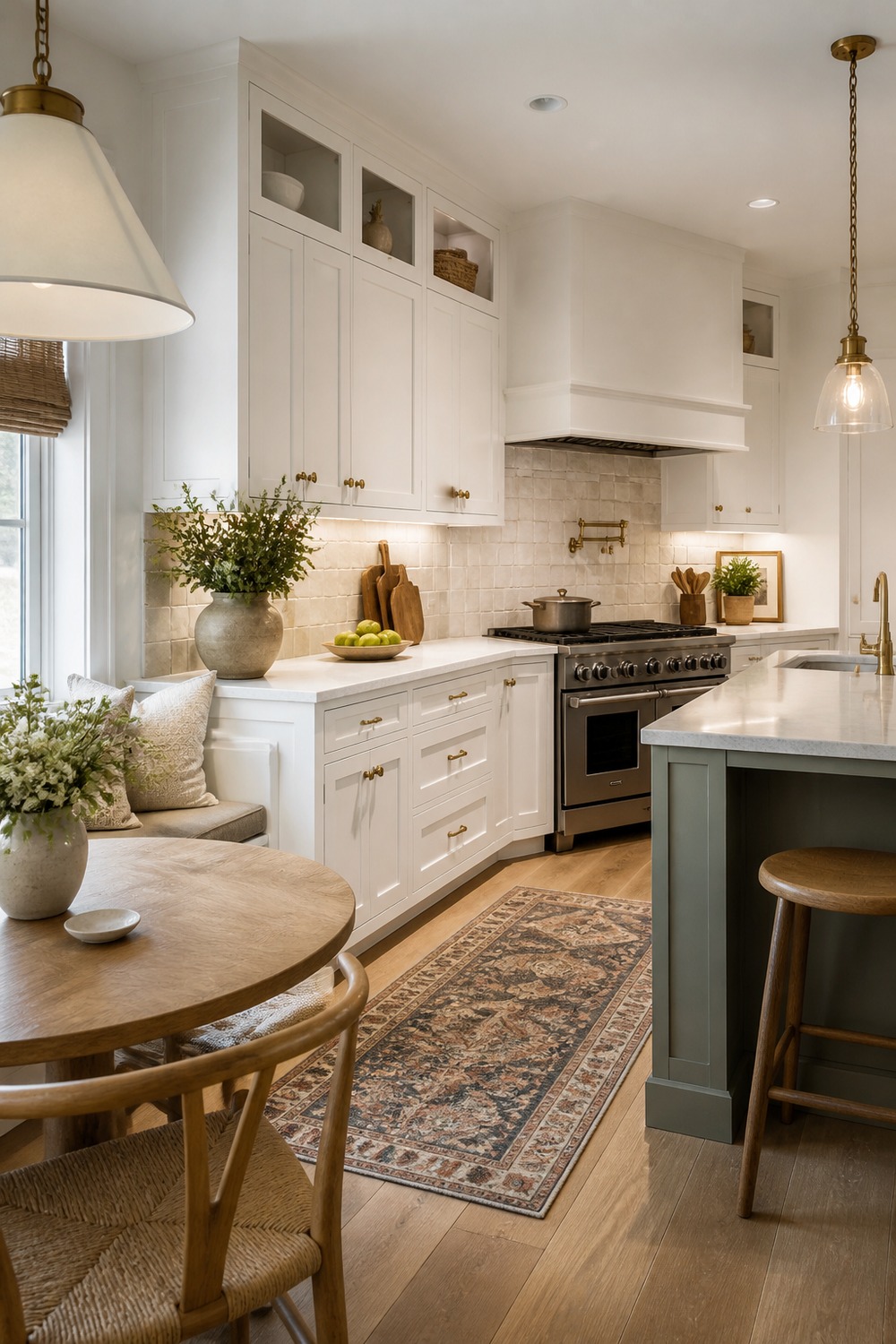
This breakfast nook helps the white-cabinet palette feel more personal. The built-in seating, warm wood table, and soft upholstery bring in color and texture where a long run of white cabinetry could otherwise feel too plain.
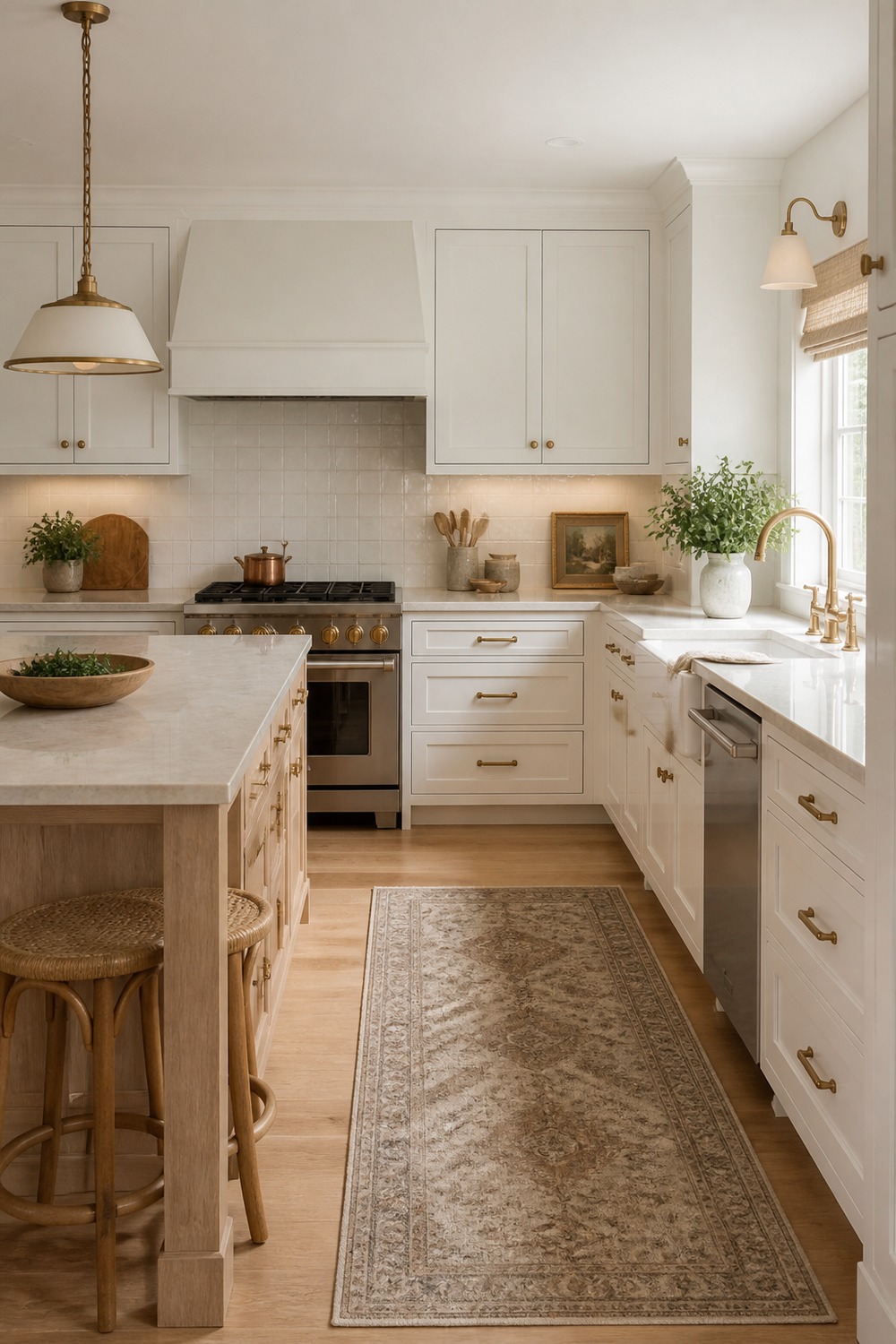
Neutral layers are the reason this white kitchen does not feel cold. The mix of cream counters, pale wood, woven details, and soft shadows gives the cabinets a finished look without needing one dramatic color moment.

I work in tech, but my taste in design is straight out of a slow European village. Give me arches, aged brass, and a room that smells like books and coffee. That’s my kind of home.