An open kitchen and living room has to handle cooking mess, couch blankets, traffic paths, and everything that lands on the island. The strongest color schemes repeat a few finishes across both zones, but still let the kitchen and seating area feel like their own spaces.
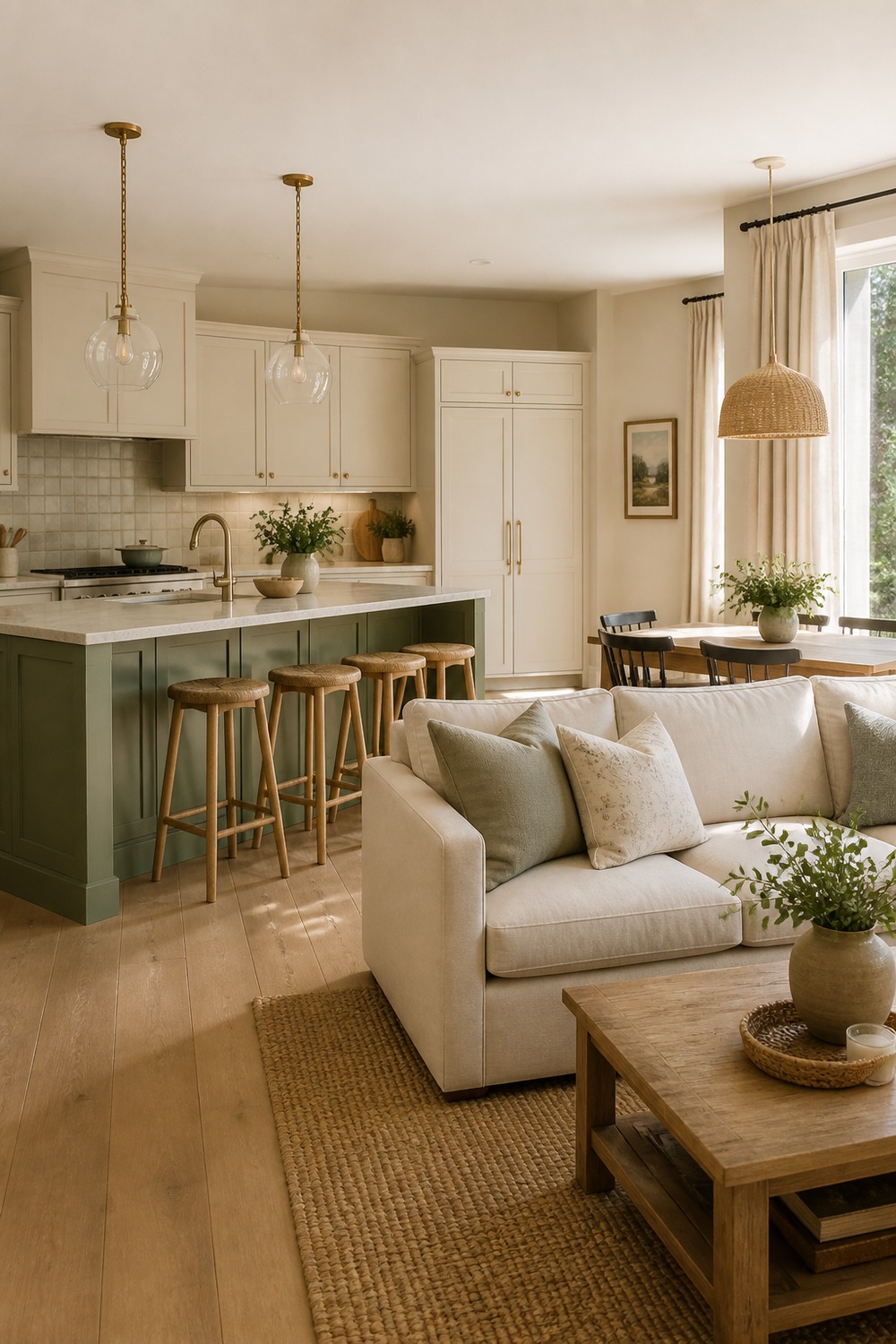
The sage island is doing the connecting work without making the whole room green. Linen upholstery, woven shades, and the oak coffee table pick up the same muted warmth, so the kitchen color feels intentional from the sofa side too.
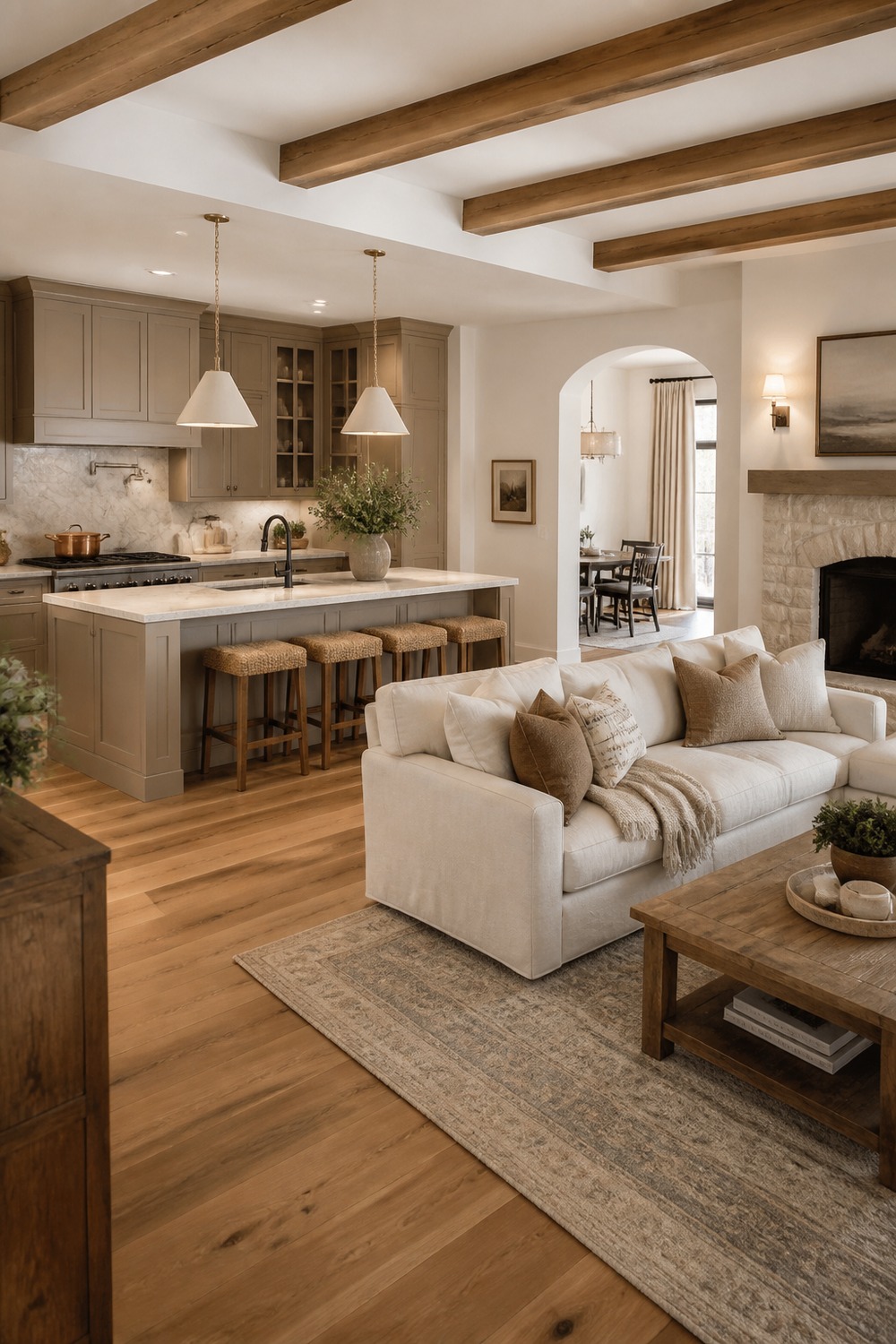
Taupe cabinets are nice for an open layout because they sit between warm and cool. Paired with creamy counters and a stone fireplace wall, the kitchen does not feel separate from the living room even though both areas have different jobs.
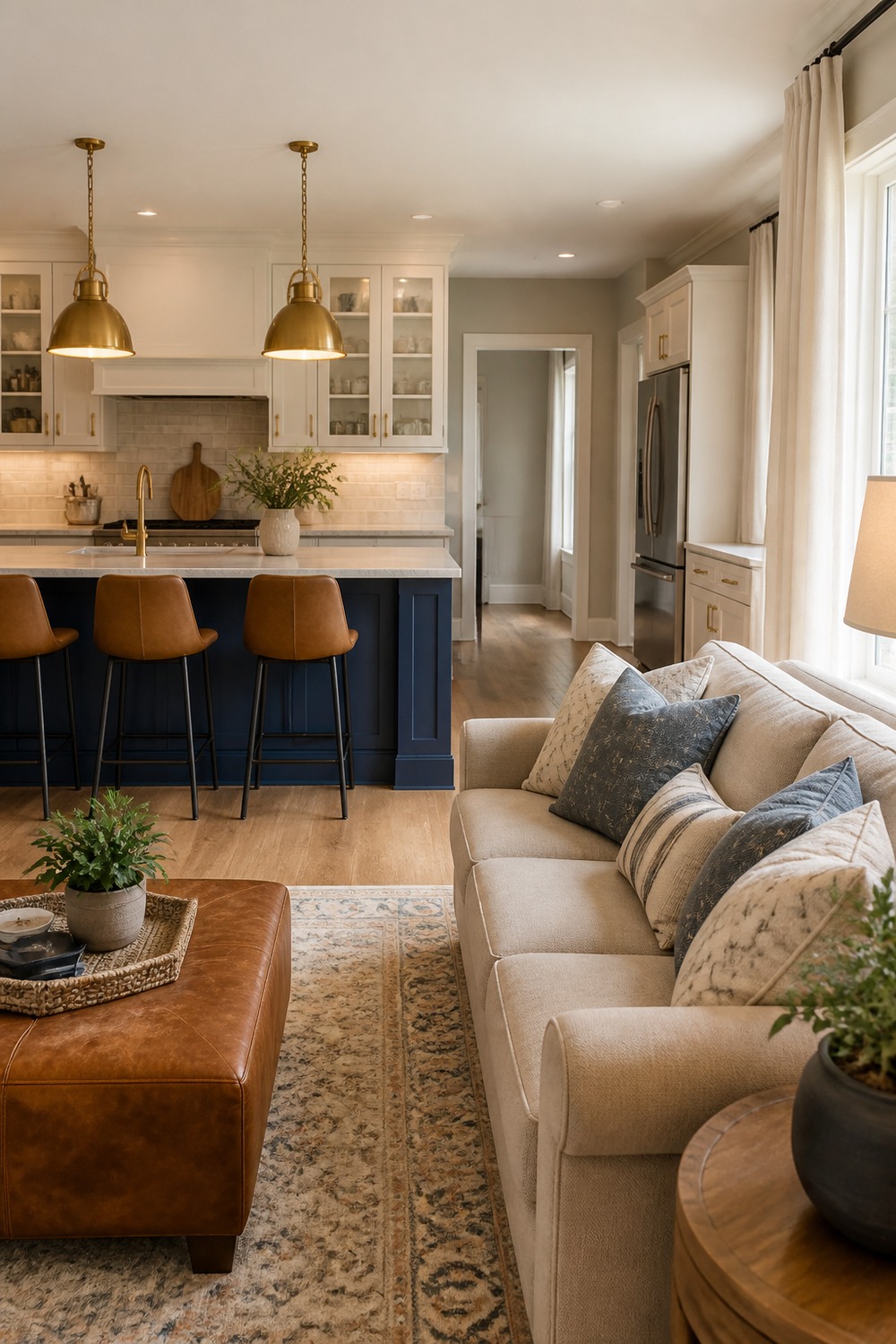
A navy island can get heavy fast, but the tan sofa and cognac ottoman keep this palette from feeling too formal. I like how the brass lights repeat on both sides, because that small detail makes the walkway feel designed instead of leftover.
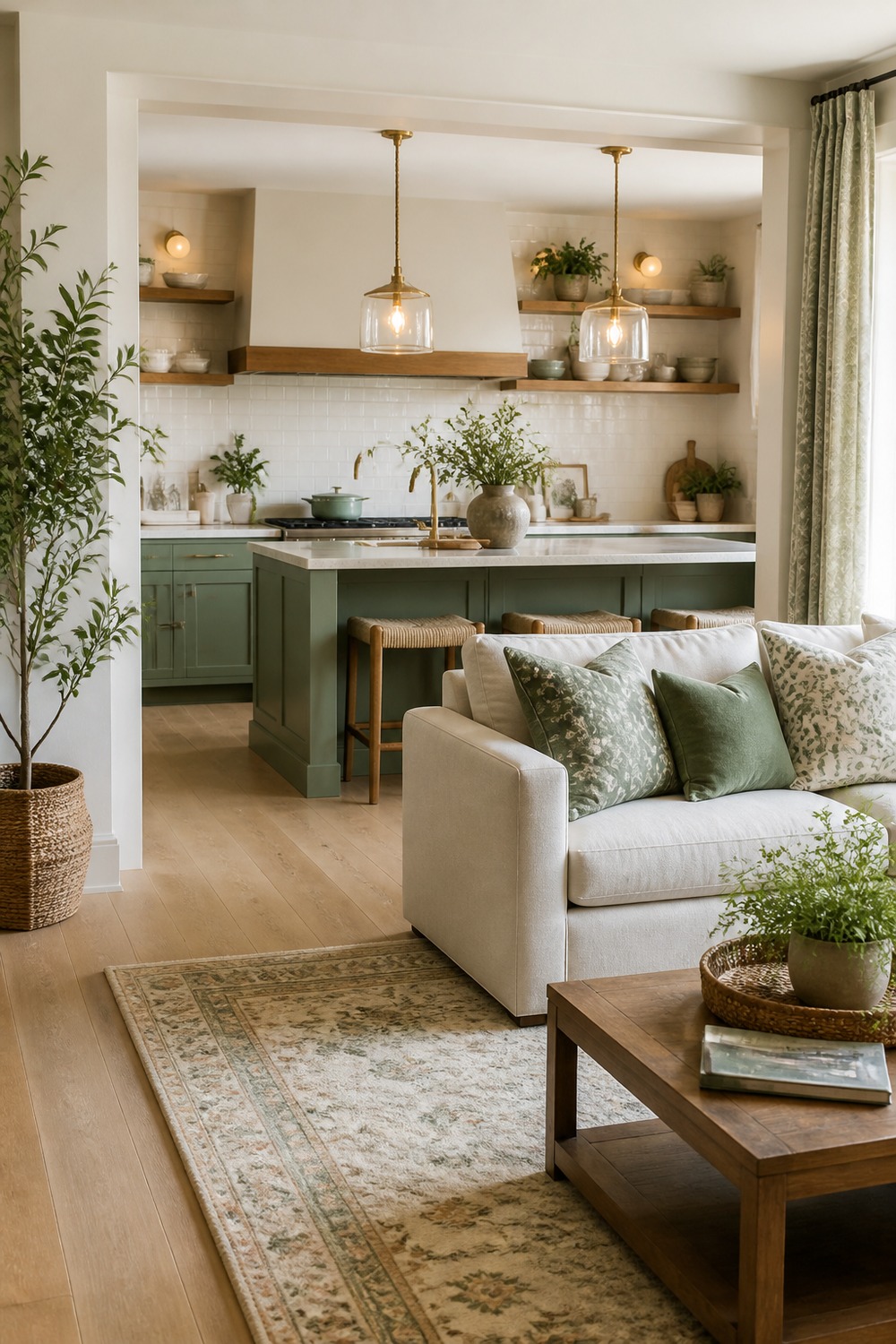
Soft green works especially well when there are plants or botanical pillows in the living room. The color does not have to cover every cabinet; a few green lower cabinets, pale seating, and oak shelves are enough to make the whole open room feel connected.
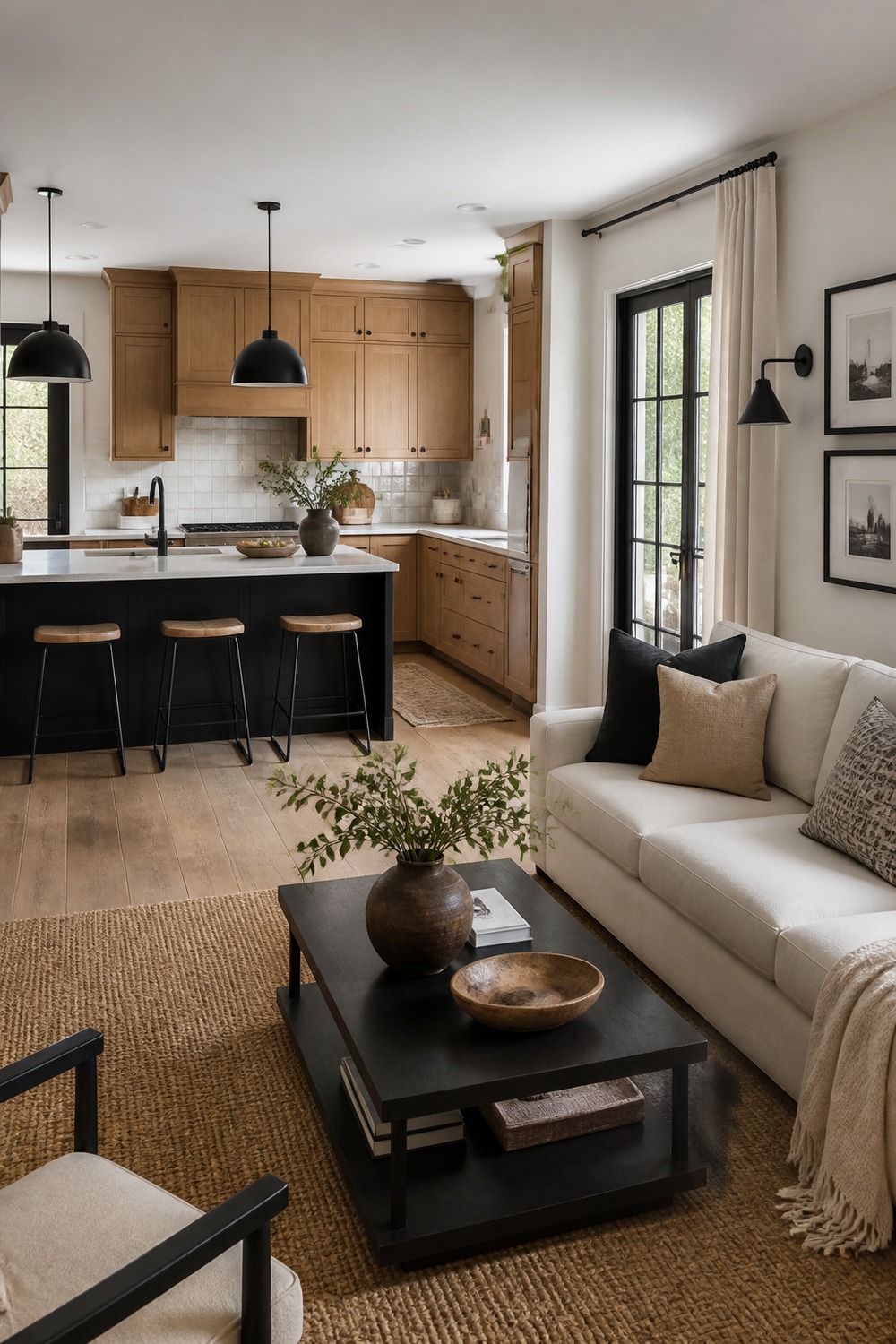
Black accents are easiest to live with when they are broken up by warm oak and cream upholstery. The matte lights, dark frames, and kitchen island add contrast, while the jute rug keeps the living side from feeling sharp or cold.
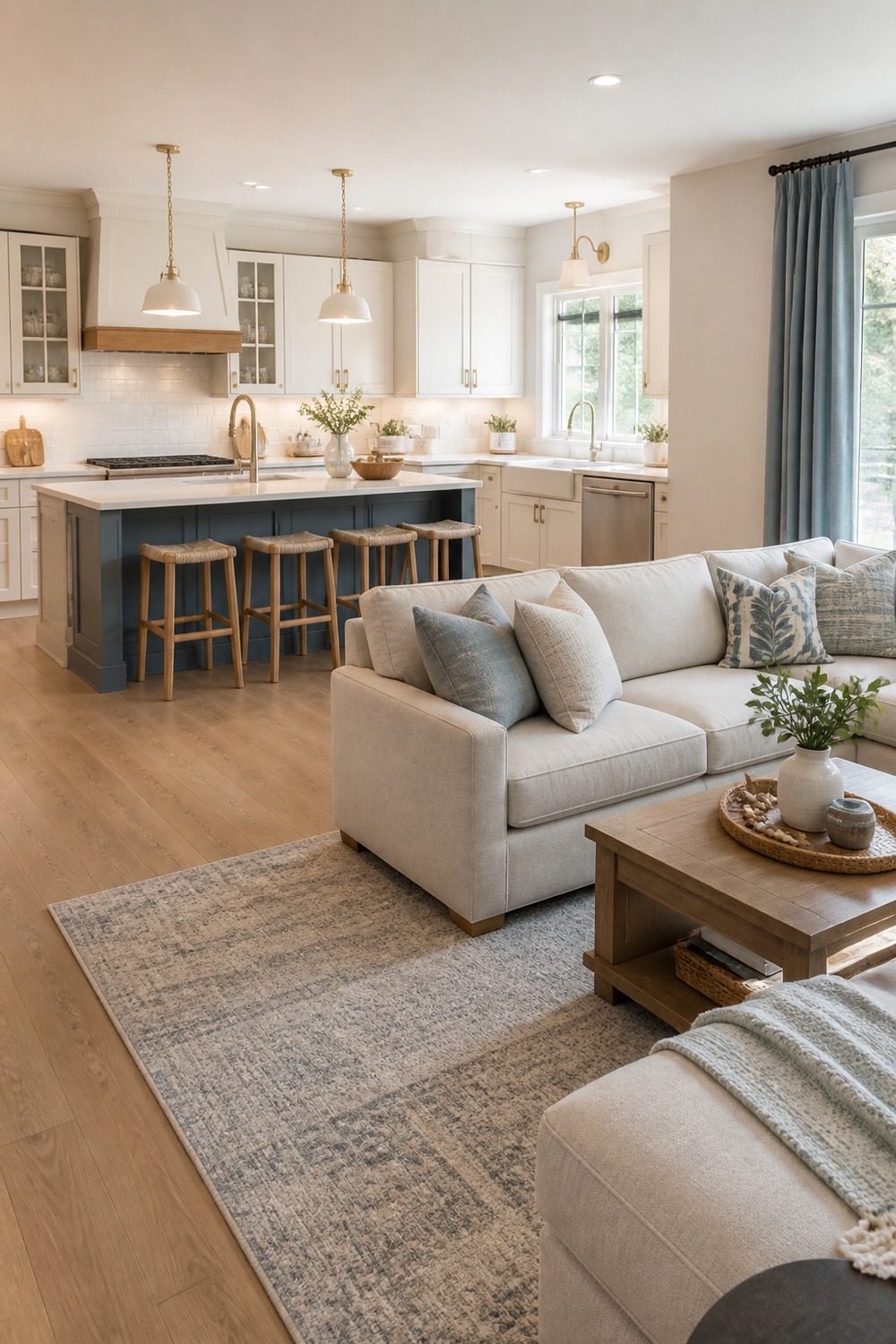
This blue-gray island feels calm because it has an oatmeal sofa beside it instead of stark white furniture. The muted palette gives the kitchen a little color, but the living room still feels relaxed enough for daily use.
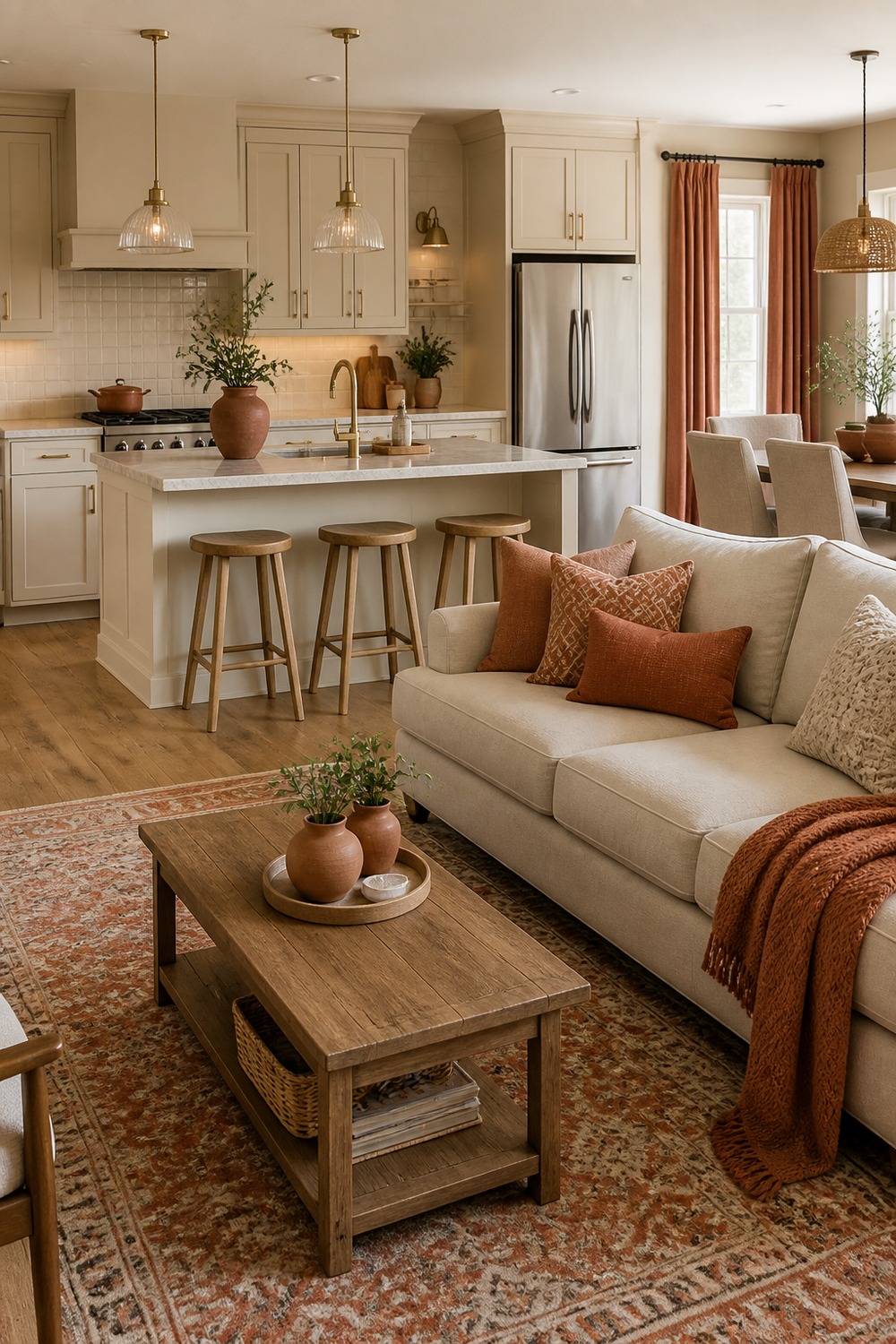
Terracotta is a good way to warm up a cream kitchen without repainting everything. Pillows, pottery, art, or a small rug can carry the color into the seating area, so the open room gets energy without turning loud.
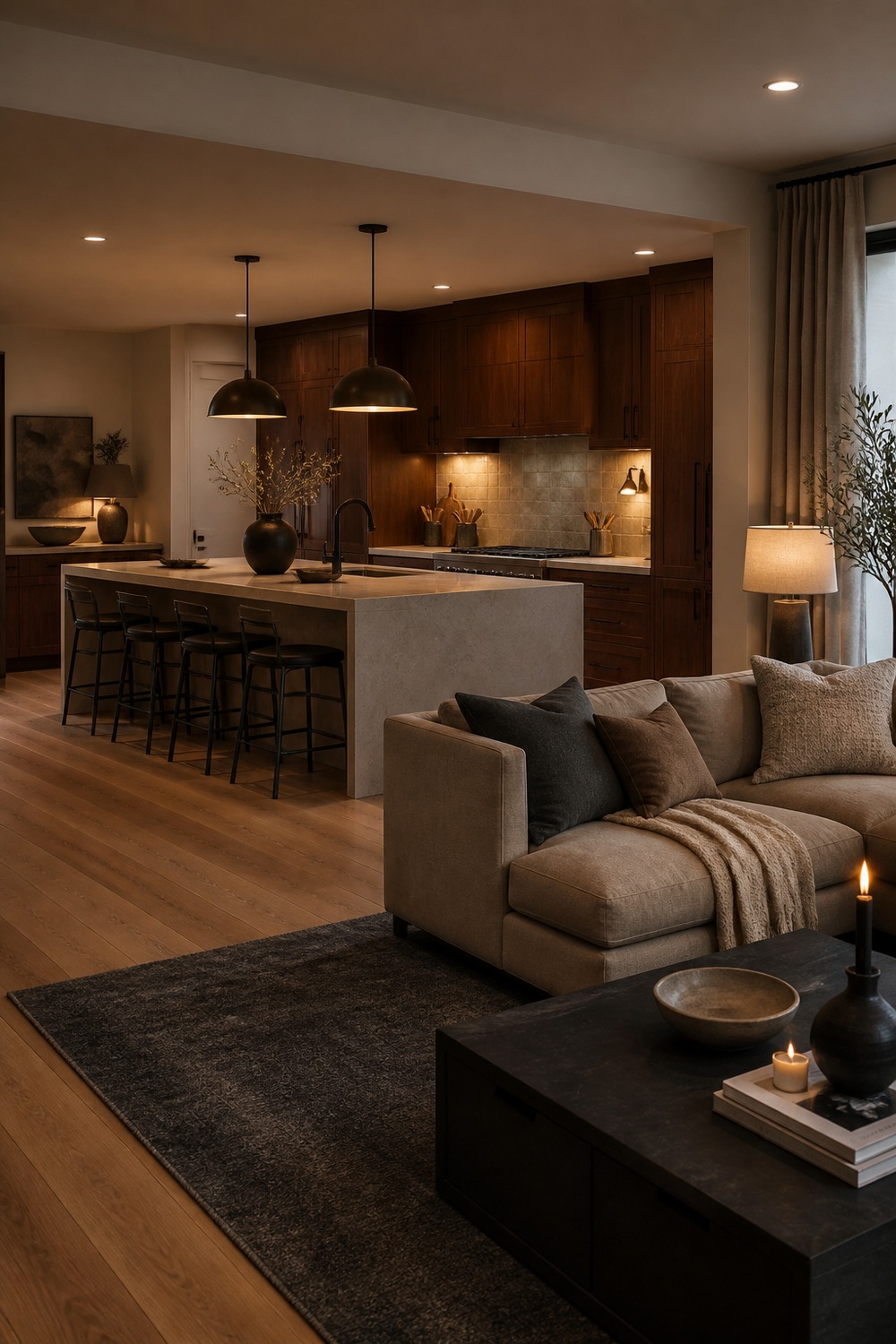
Walnut cabinets and moody neutral seating make this feel more grounded than the usual all-white open concept. I like the balance here: darker wood gives the kitchen weight, while the lounge area stays soft with layered textiles.
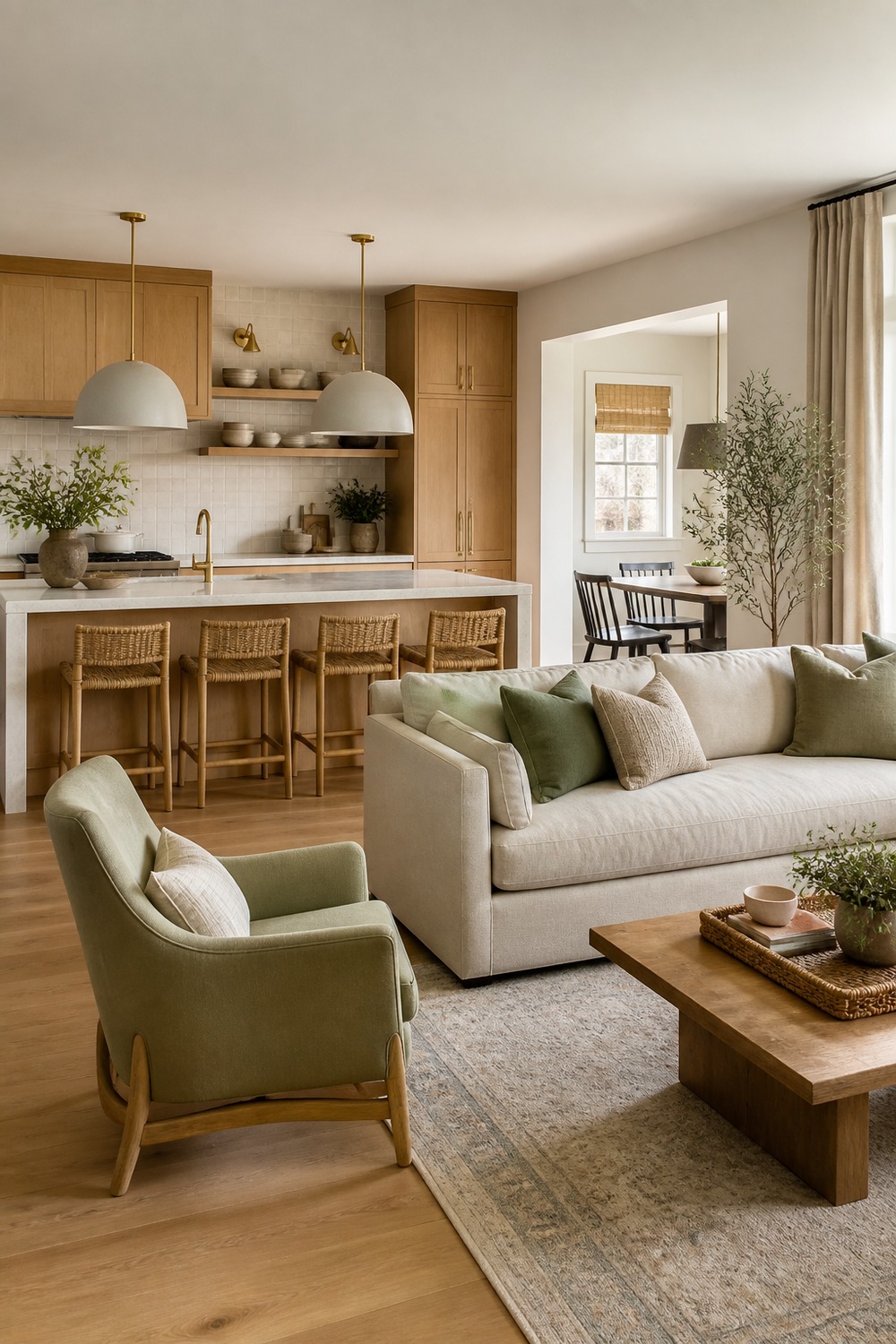
White oak cabinets are easy to connect to a living room because the wood tone can repeat in tables, shelves, frames, and flooring. A little sage in the sofa pillows or decor adds color without breaking the quiet palette.
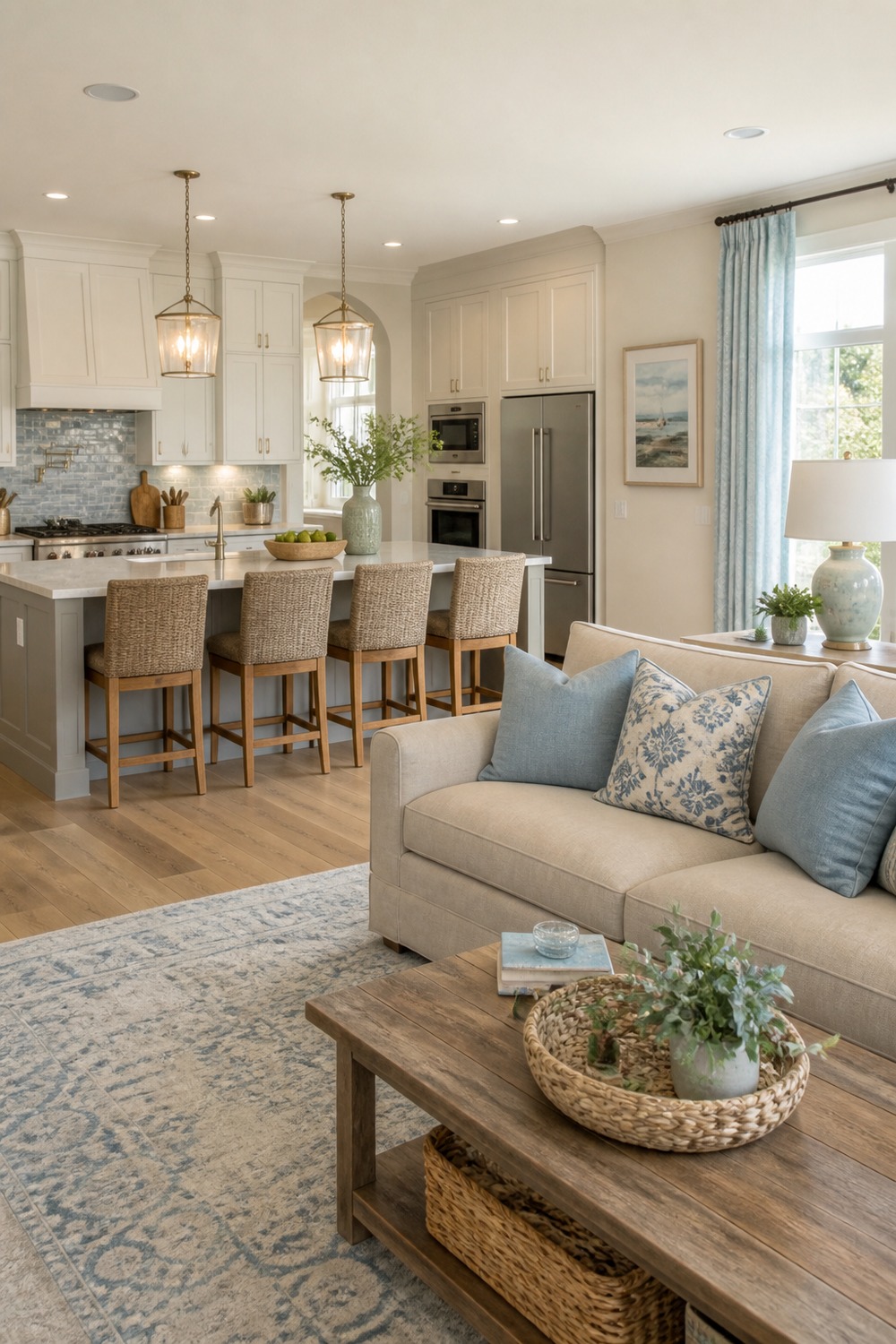
The coastal blue here works because it is not fighting the living room. White walls, natural wood, and woven textures keep the palette breezy, while the blue accents give both the kitchen and seating area a clear point of view.
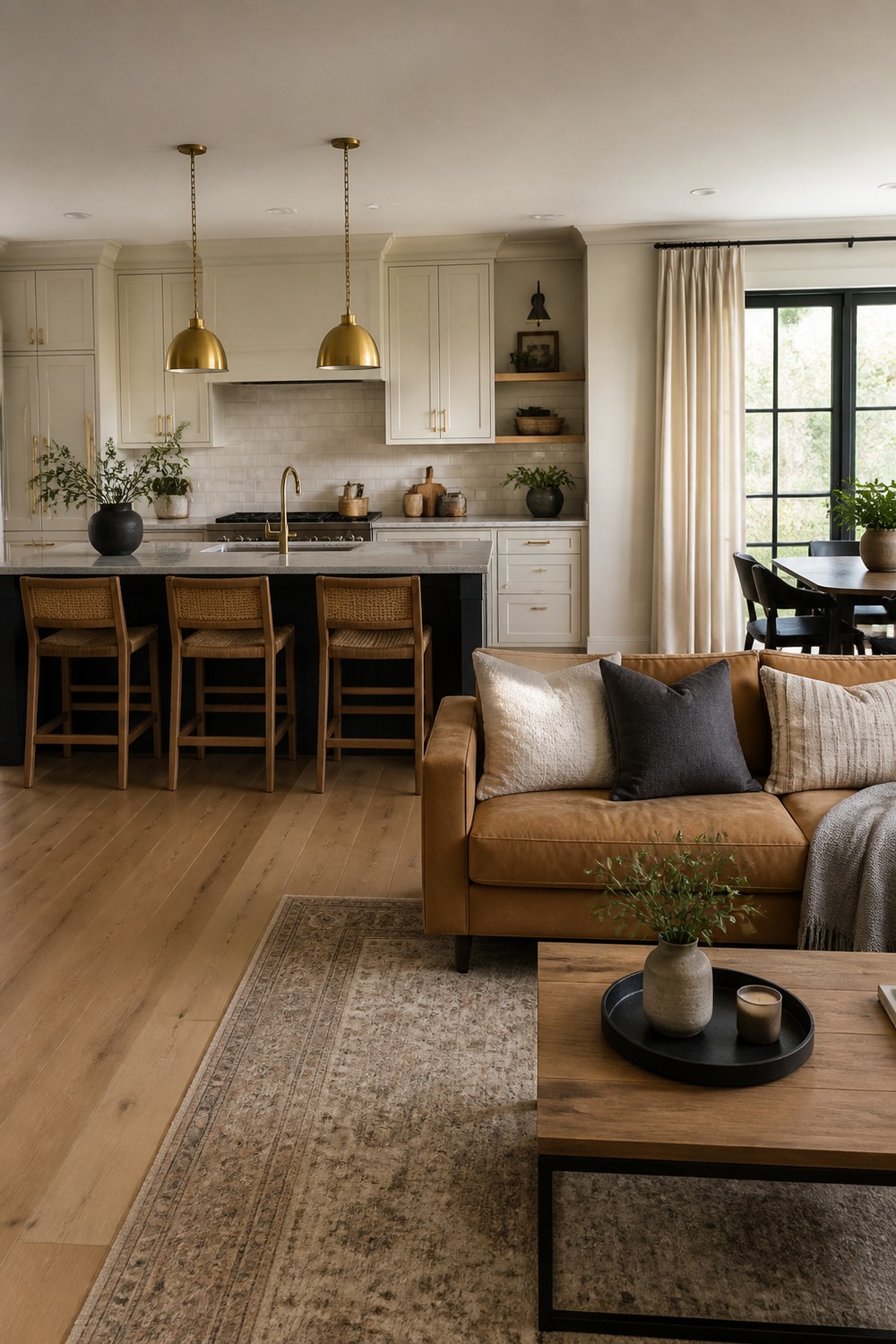
A charcoal island next to a camel sofa has that stronger contrast I like in open rooms. The darker kitchen piece makes the space feel anchored, and the leather tone keeps the living side warm instead of overly gray.
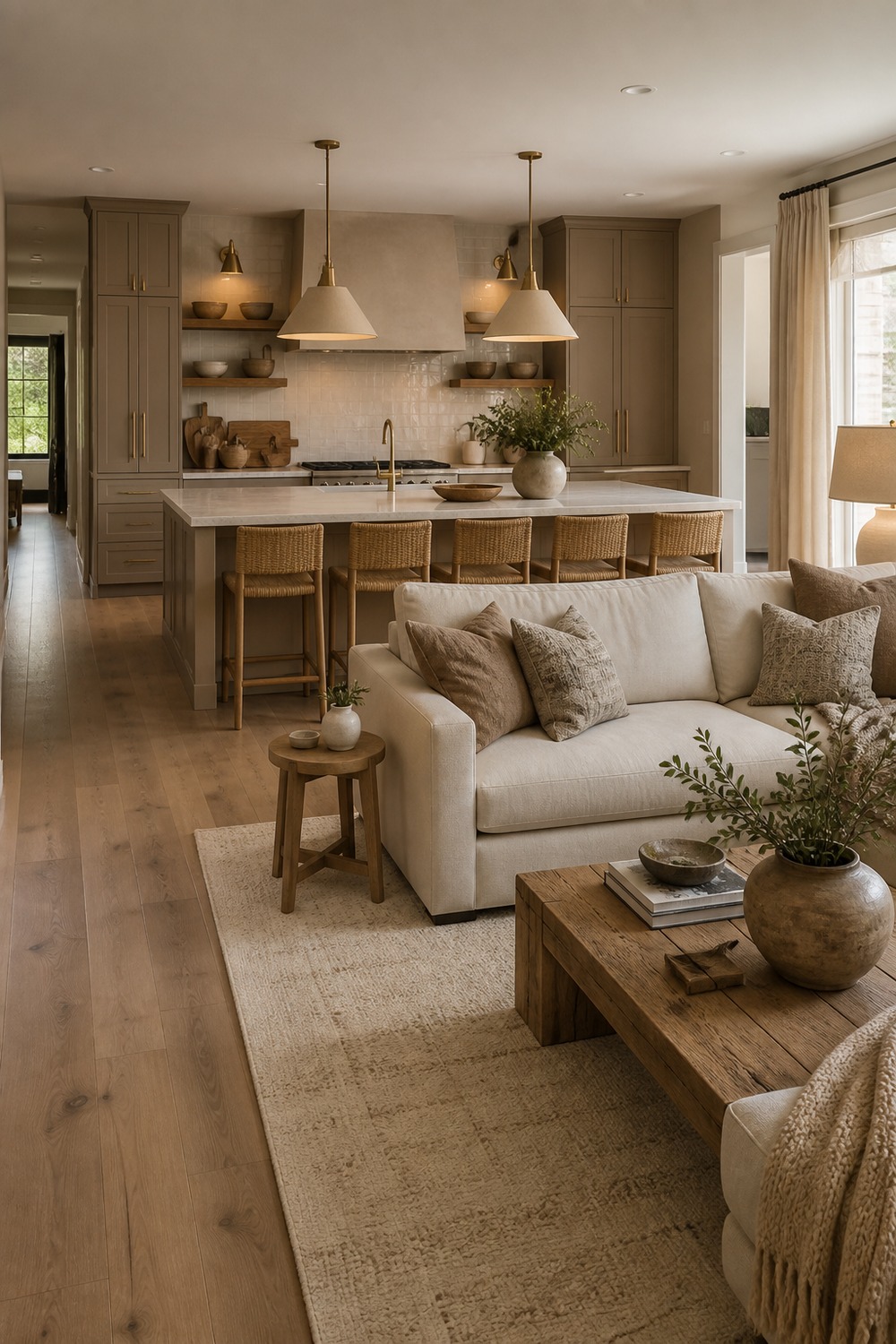
Mushroom taupe is one of those colors that makes an open kitchen feel softer immediately. It plays nicely with cream upholstery, warm floors, and stone counters, which matters when there is no wall separating the rooms.
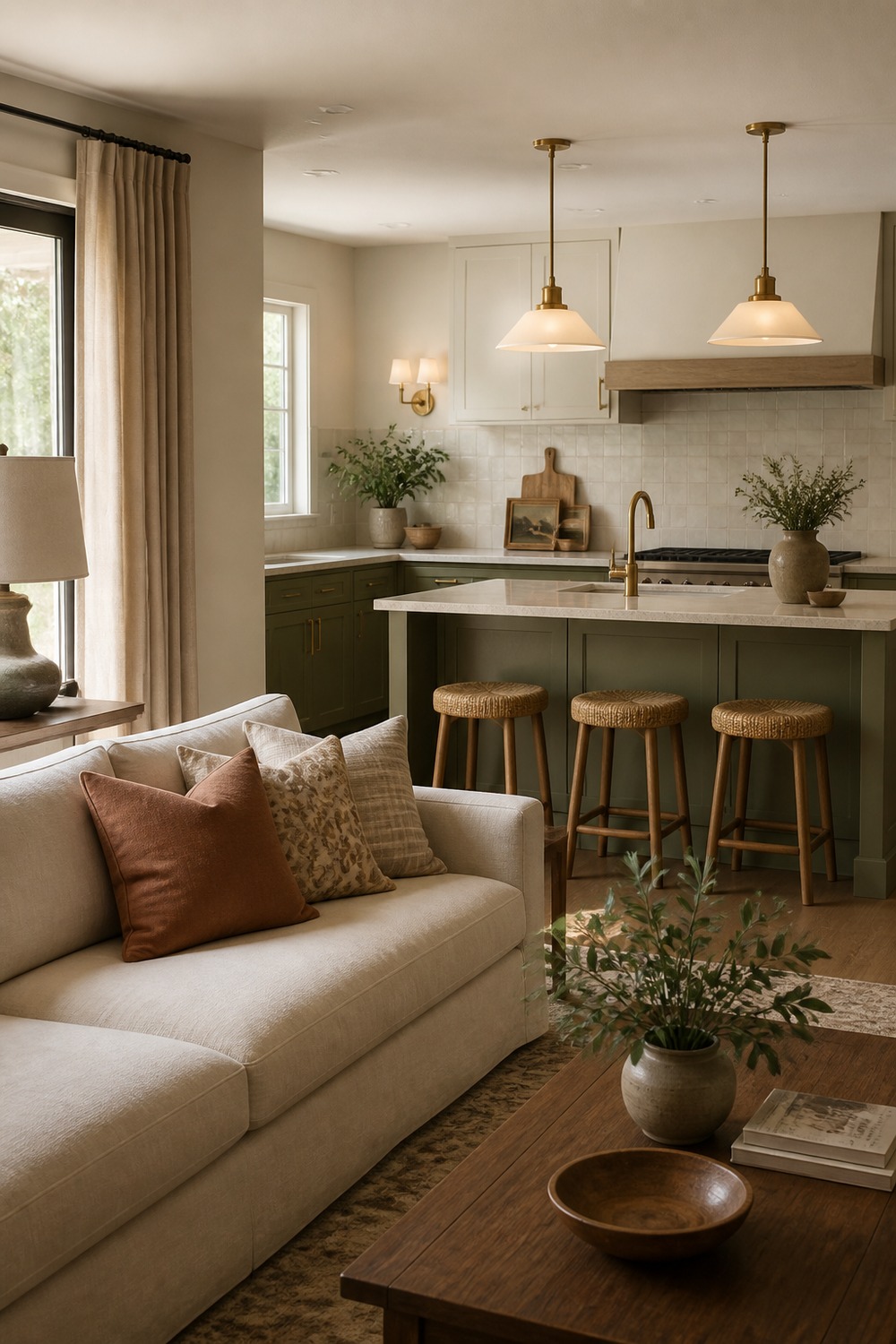
Olive lower cabinets can look surprisingly calm when the living room stays cream and natural. The green reads like a color choice, not a theme, especially with wood accents and simple textiles nearby.
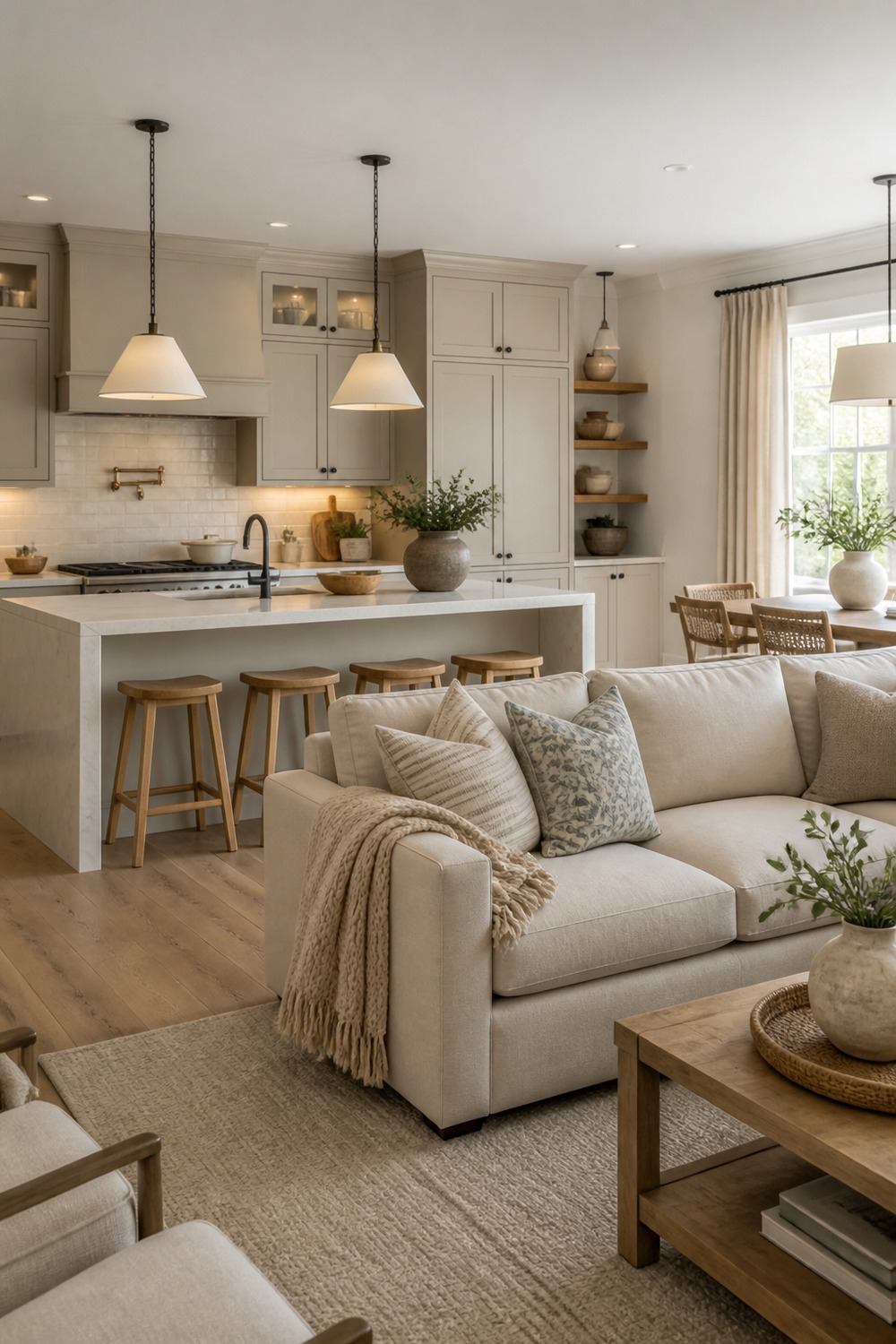
Light greige is a safe open-plan color, but it still needs layers so the room does not blur together. The mix of pale cabinets, textured rug, and warm seating gives the palette depth without making either zone feel busy.
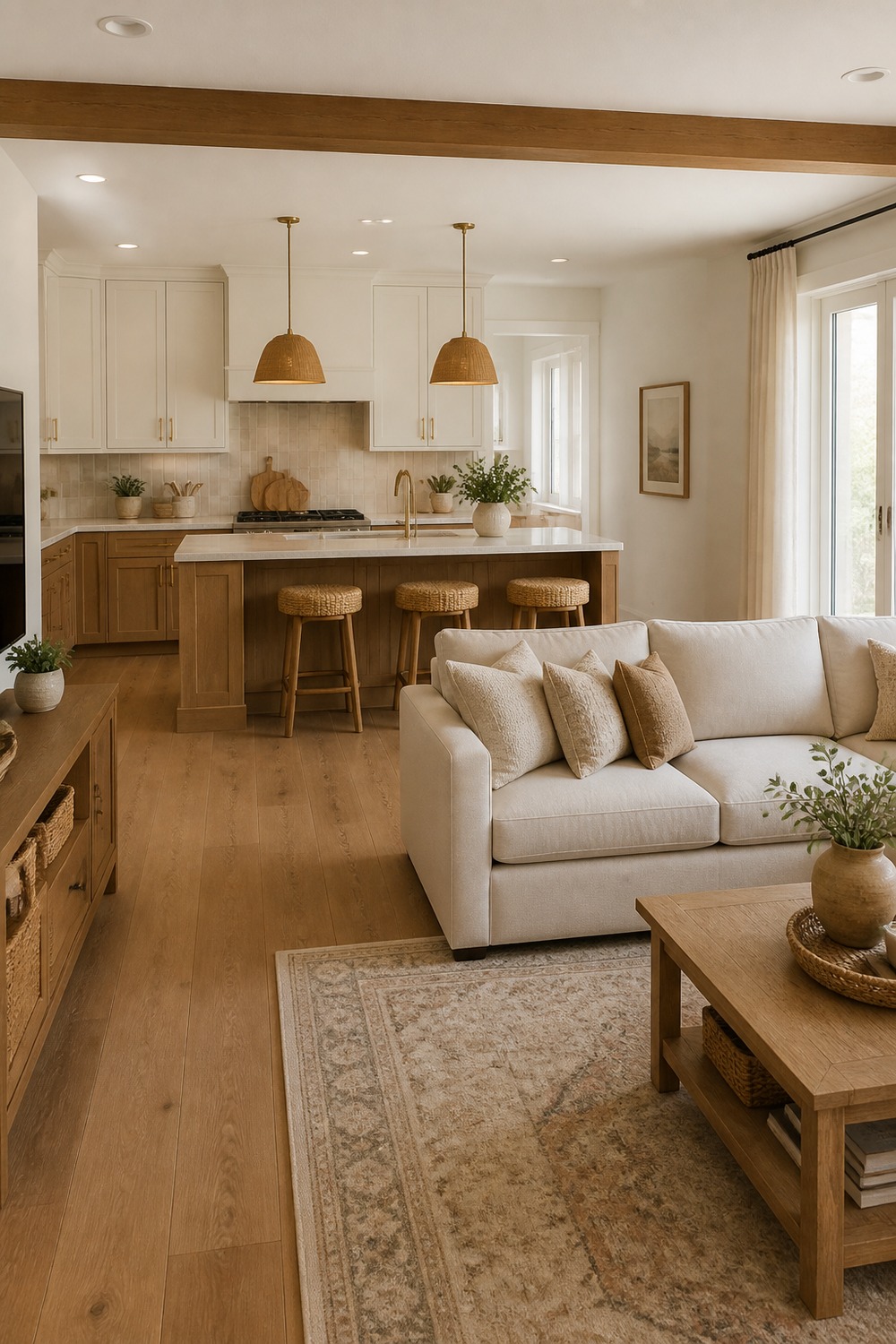
Two-tone wood and white works well when the living room repeats the same wood family. The kitchen stays clean and bright, while the coffee table, shelves, or beams make the seating area feel related instead of randomly attached.
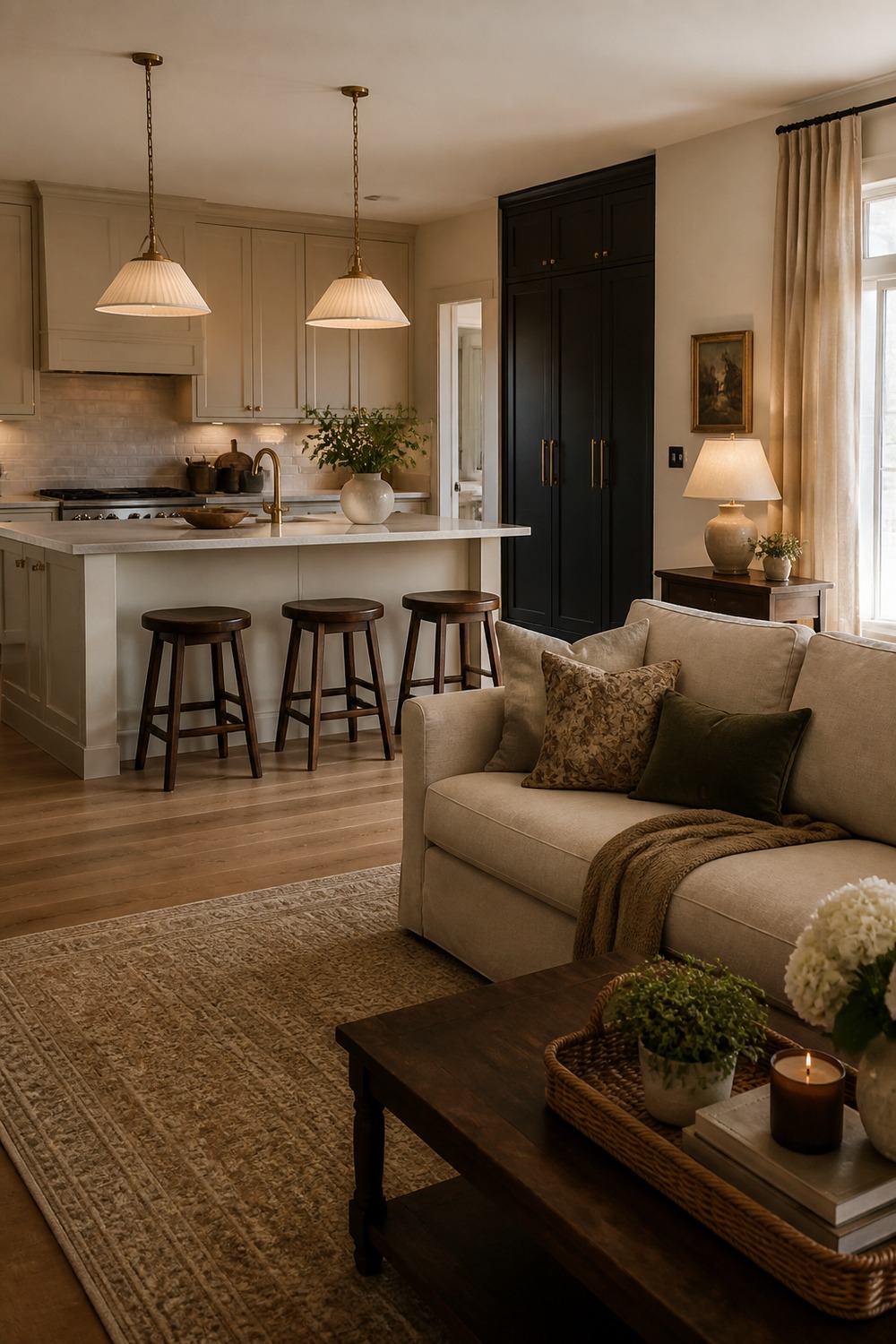
A soft black pantry wall is a good way to add drama without darkening the whole open room. Neutral seating and pale counters soften the contrast, so the kitchen still feels usable next to the sofa.
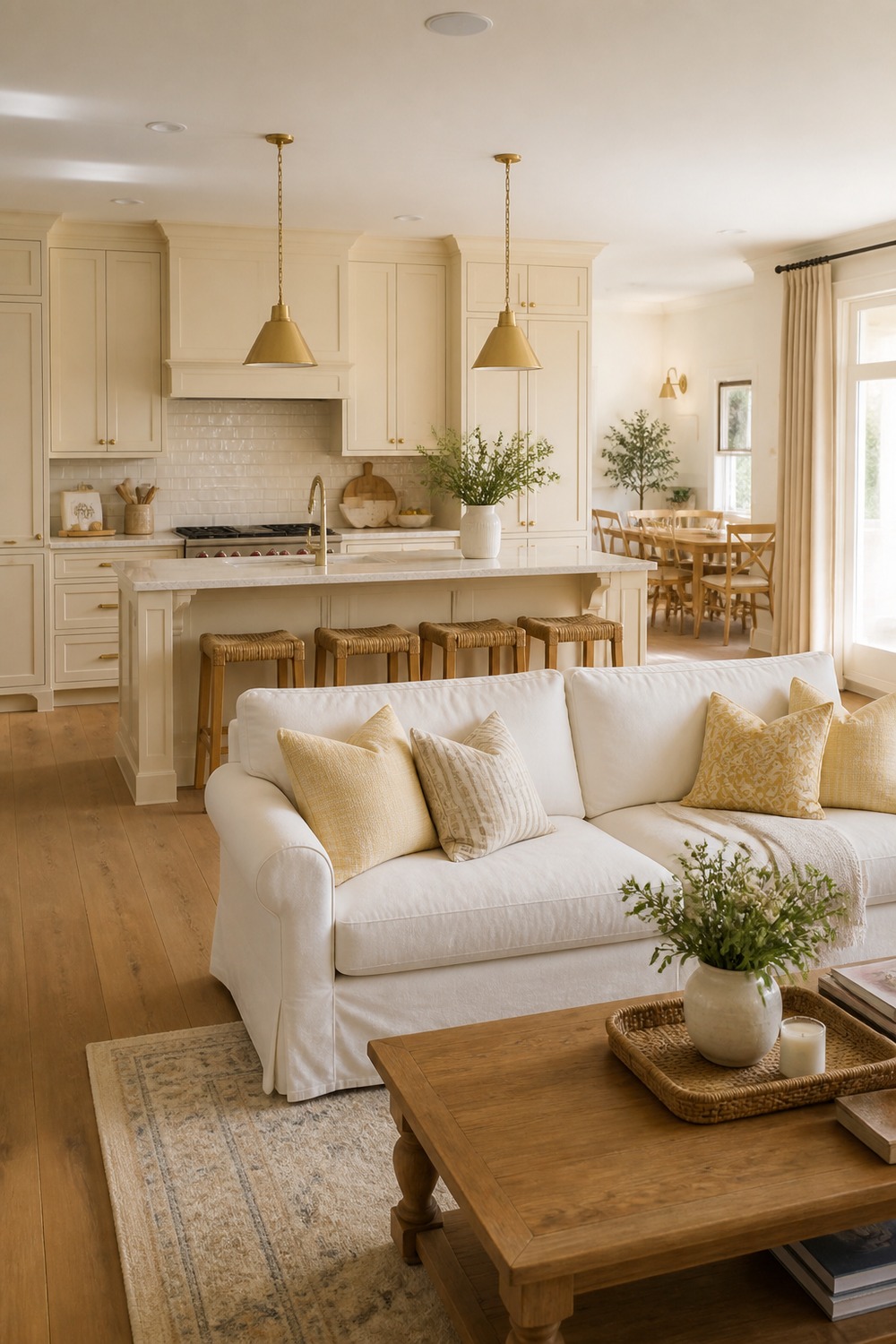
Buttery cream is warmer than plain white, and that makes a big difference in a connected kitchen and lounge. It works especially well with brass lighting, wood floors, and a warm-toned sofa because everything feels gently pulled together.
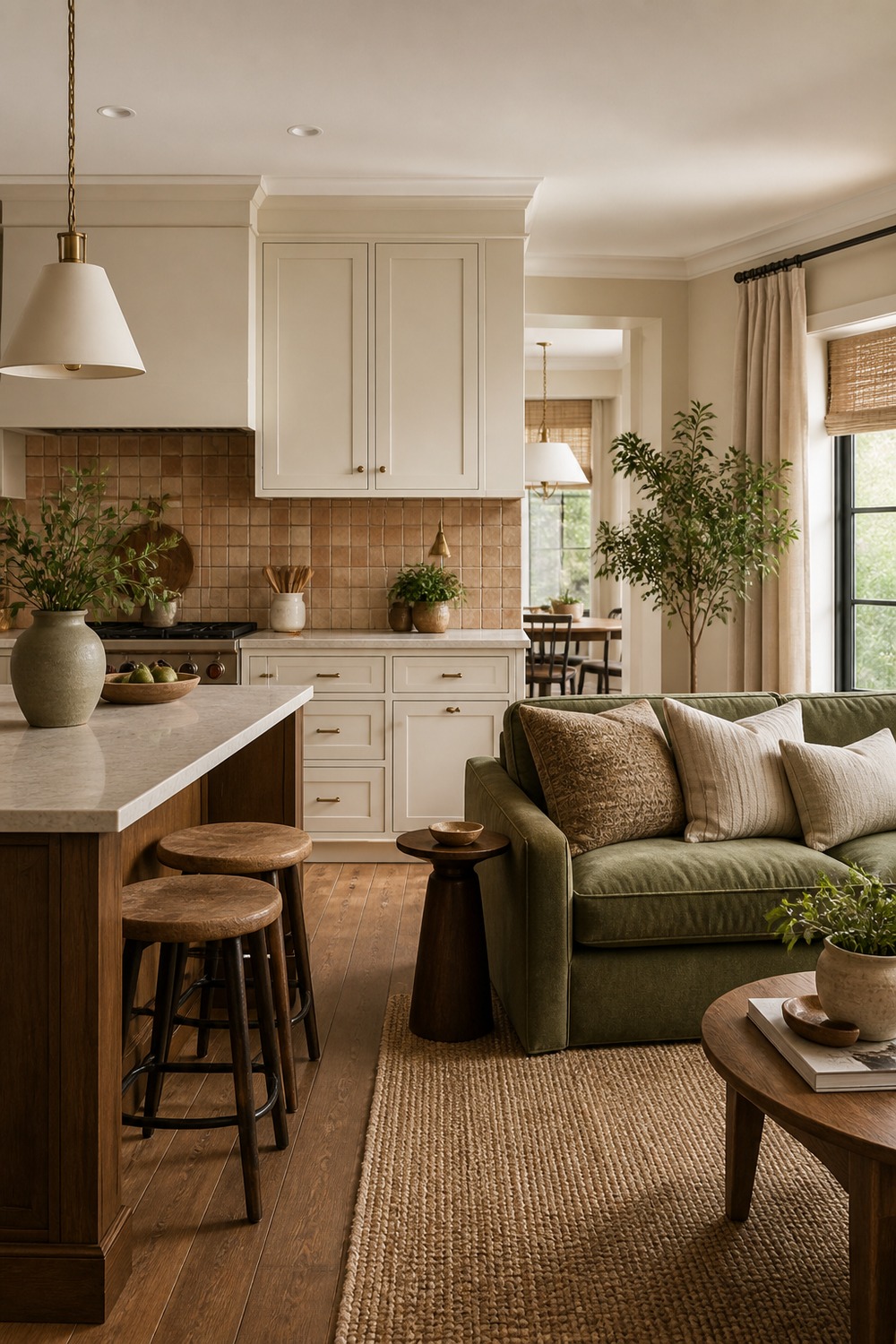
The clay tile backsplash gives this open room a clear earthy note. I like that the color can show up again in pillows, art, or a small rug, so the living area picks up the kitchen warmth without matching it exactly.
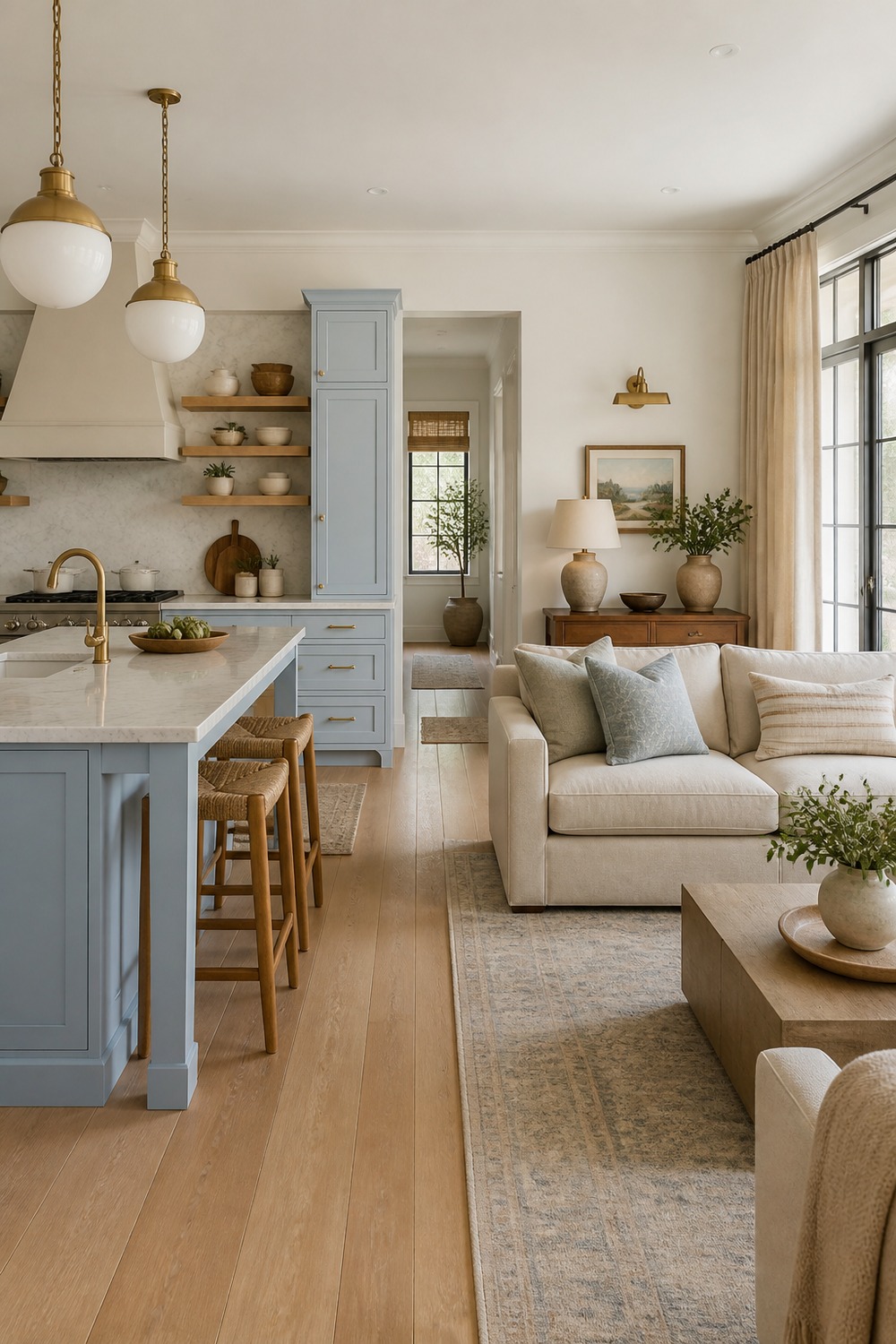
Pale blue can feel fresh without going beachy when it is paired with beige seating and warm wood. This kind of palette is nice for an open layout because the color is visible, but it still stays quiet from across the room.
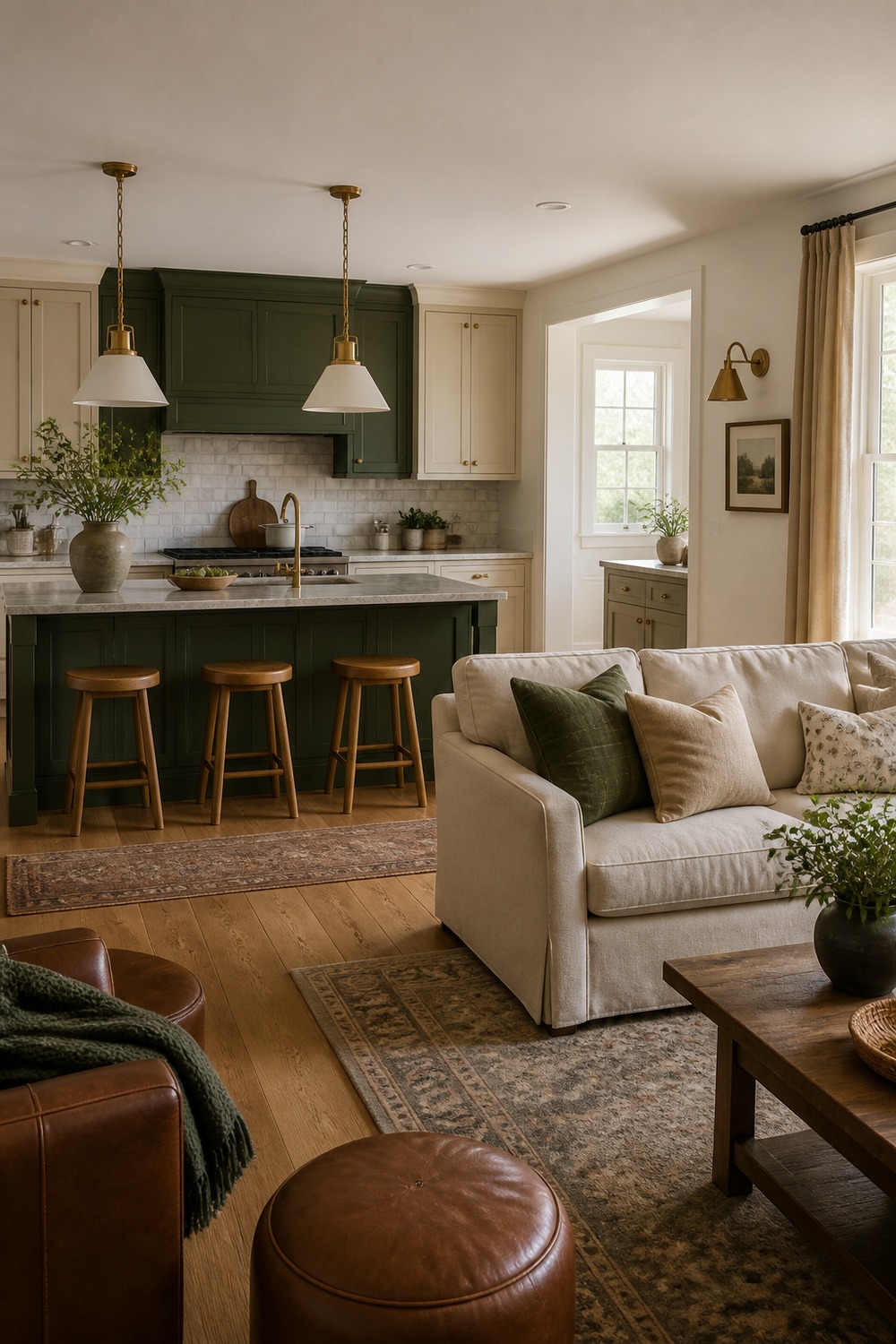
Dark green and leather always feel a little richer together. The island brings depth to the kitchen, while the leather seating and warm floors keep the living room from looking like a separate neutral box.
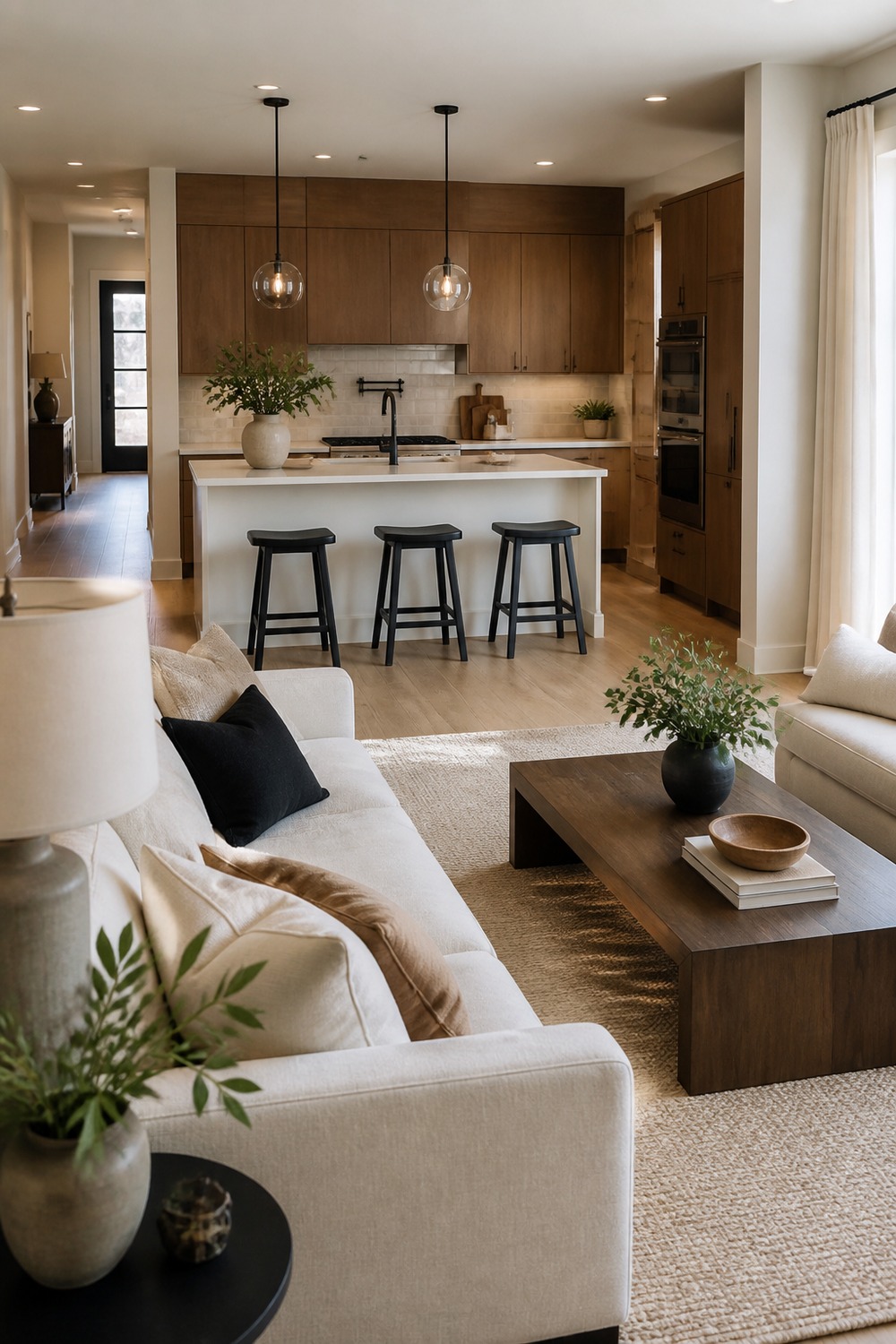
White and walnut is a clean open-plan combination because the contrast is simple and easy to repeat. Walnut stools, shelves, or a coffee table can echo the cabinets, while white walls and counters keep both spaces bright.
The easiest open-plan palettes usually repeat one or two anchor colors, then let texture do the softer work. Cabinet paint, sofa fabric, rugs, wood tones, pendants, curtains, and hardware all matter more when every choice is visible from more than one angle.

I work in tech, but my taste in design is straight out of a slow European village. Give me arches, aged brass, and a room that smells like books and coffee. That’s my kind of home.