A red kitchen should not mean twenty versions of the same burgundy cabinet and vintage runner. I wanted the color to show up with more nerve here—cherry lacquer, coral islands, ruby tile, poppy-red storage, brick walls, blush stone, cobalt, mint, sage, and even green marble.
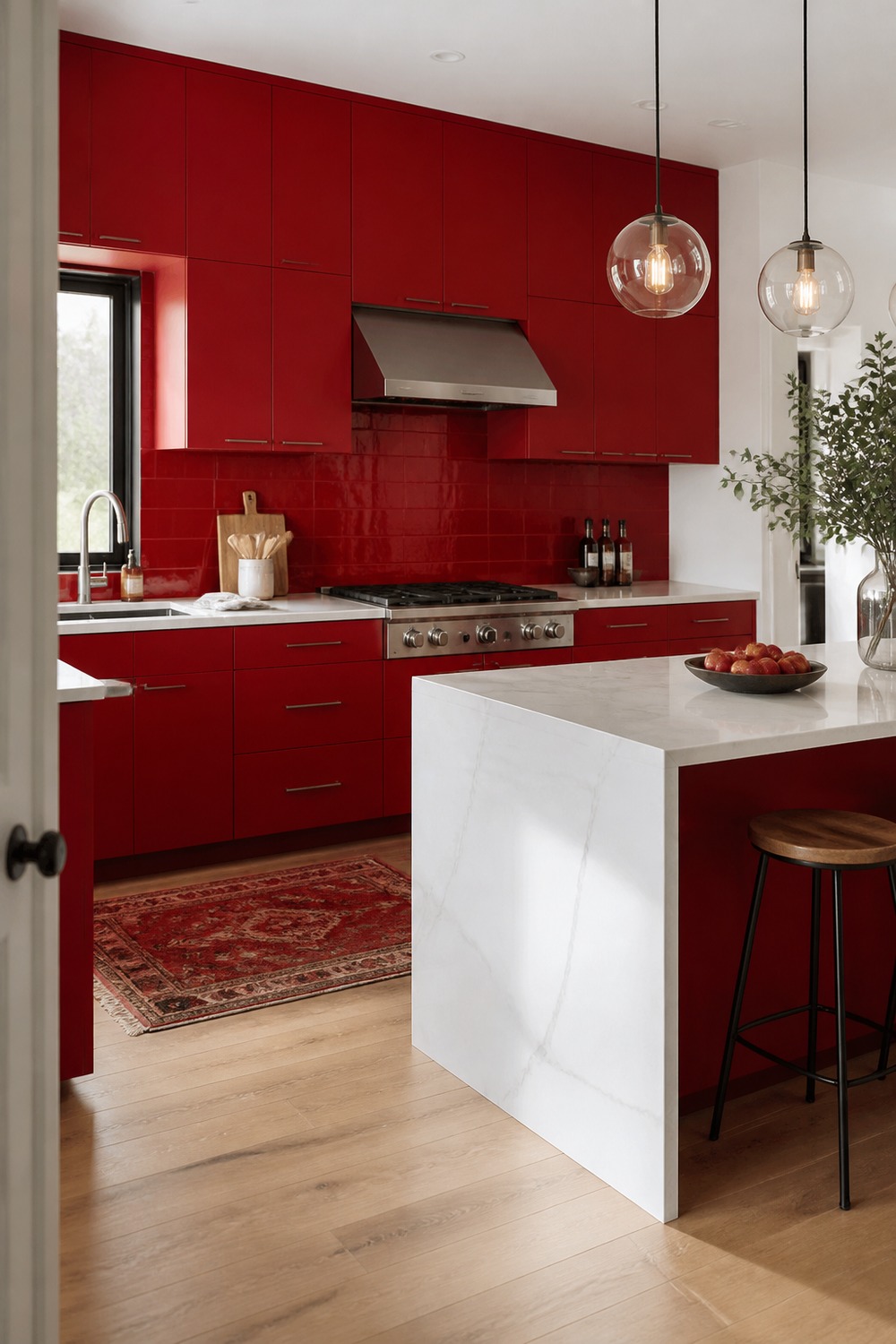
The cherry cabinets read as red immediately, even from across the room. White quartz and pale oak sharpen the color instead of muddying it, and the flat fronts keep the whole scheme graphic rather than country-heavy.
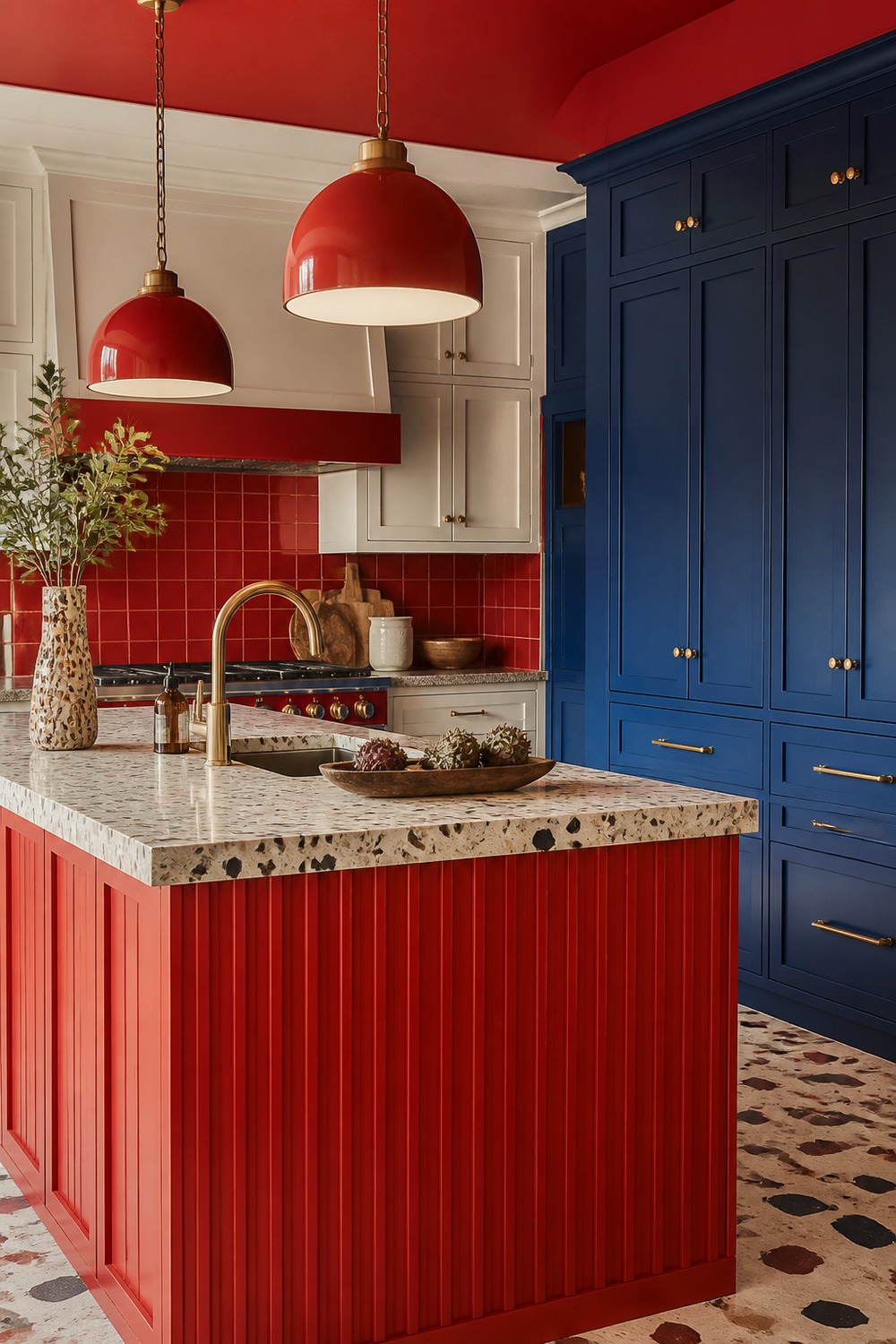
Tomato red and cobalt should feel risky, but separating them by function makes the palette easy to understand. The island becomes the social center while the blue pantry gives the back wall enough depth to hold its own.
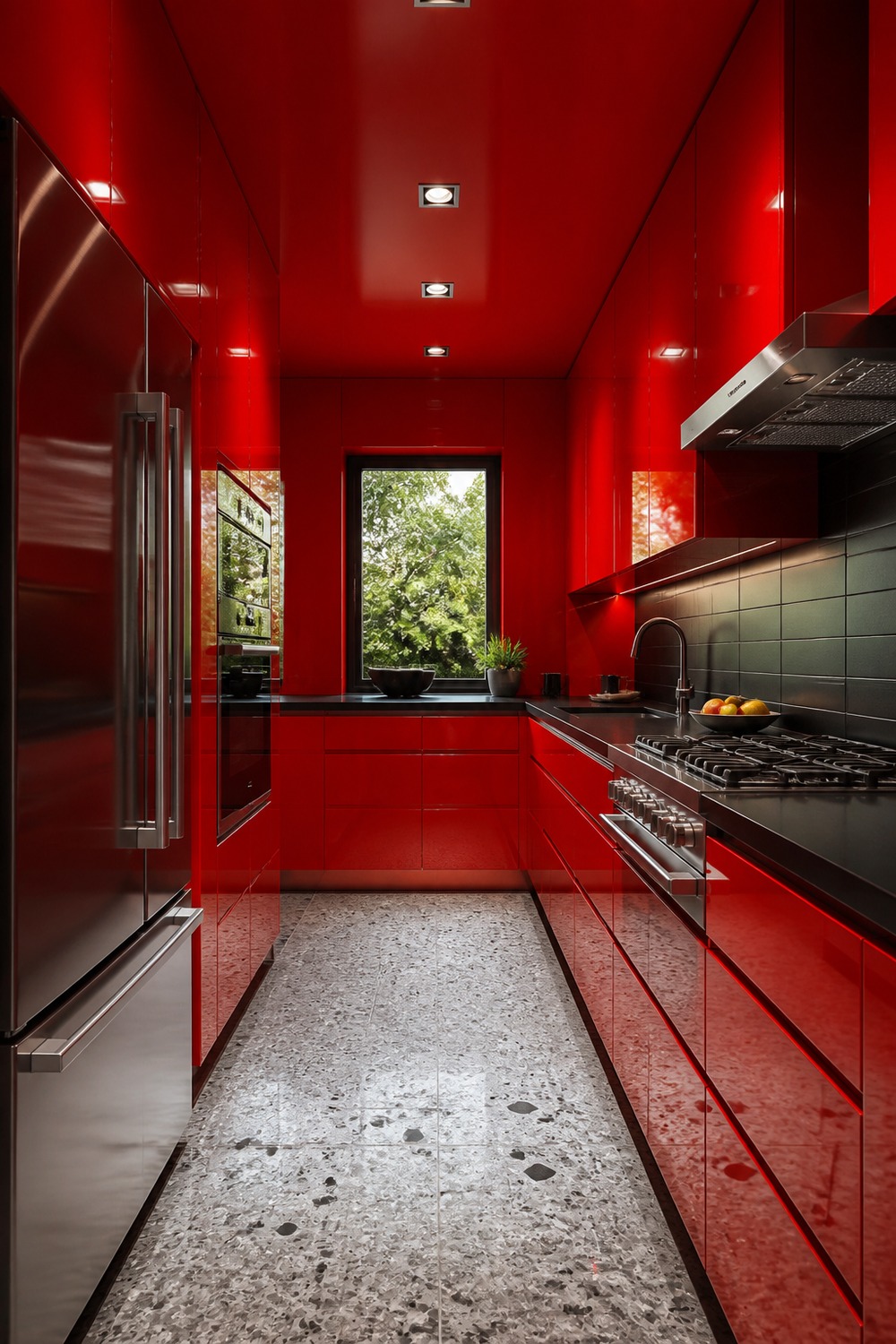
This scarlet galley is unapologetically modern. Matte black counters cut the glossy reflection, stainless steel handles heat and splashes well, and the pale floor keeps the narrow aisle from turning into a dark tunnel.
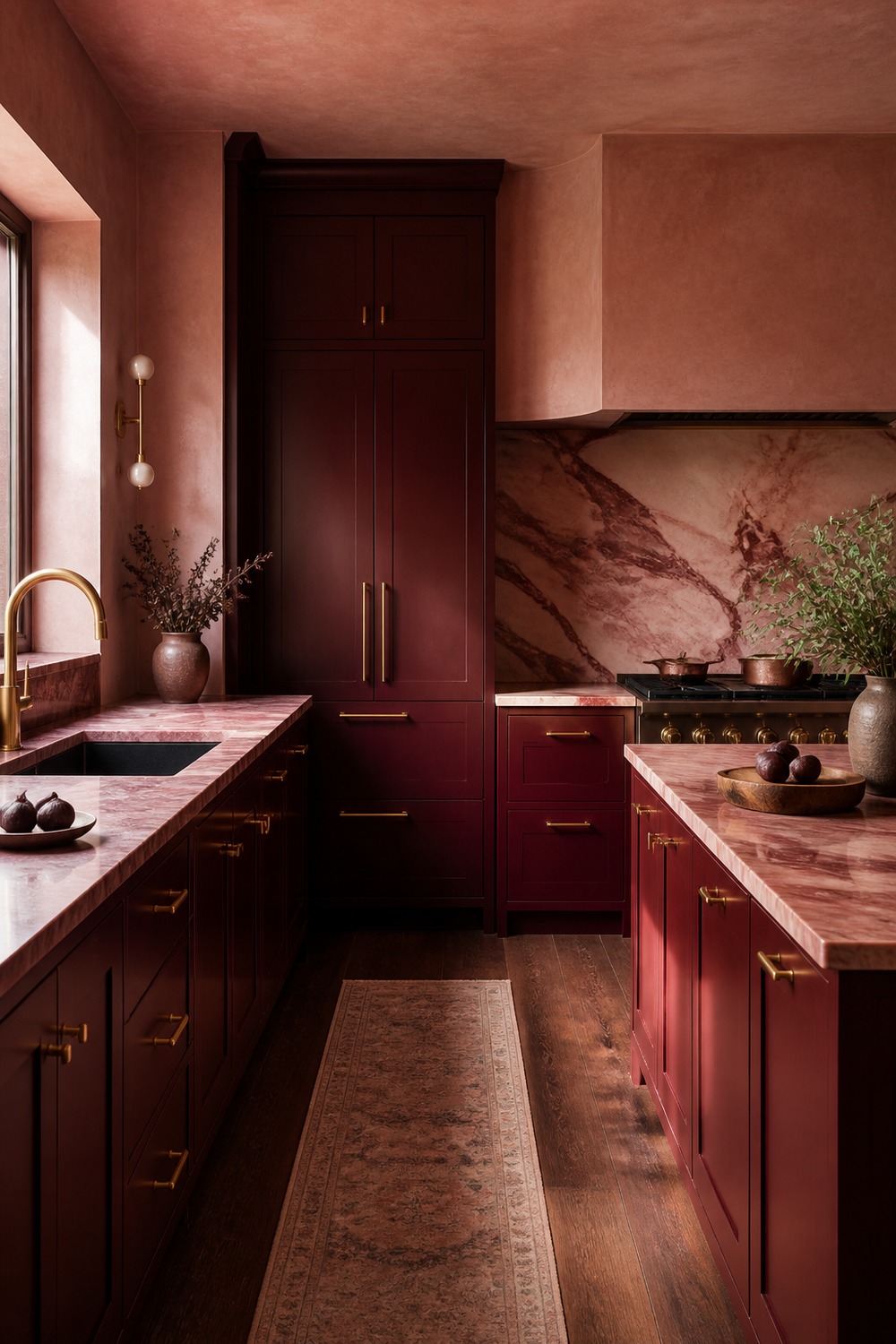
Burgundy beside dusty pink shows how flexible a red palette can be. The pink-veined stone bridges the two shades, while walnut underfoot gives the softer walls a darker edge that feels deliberate.
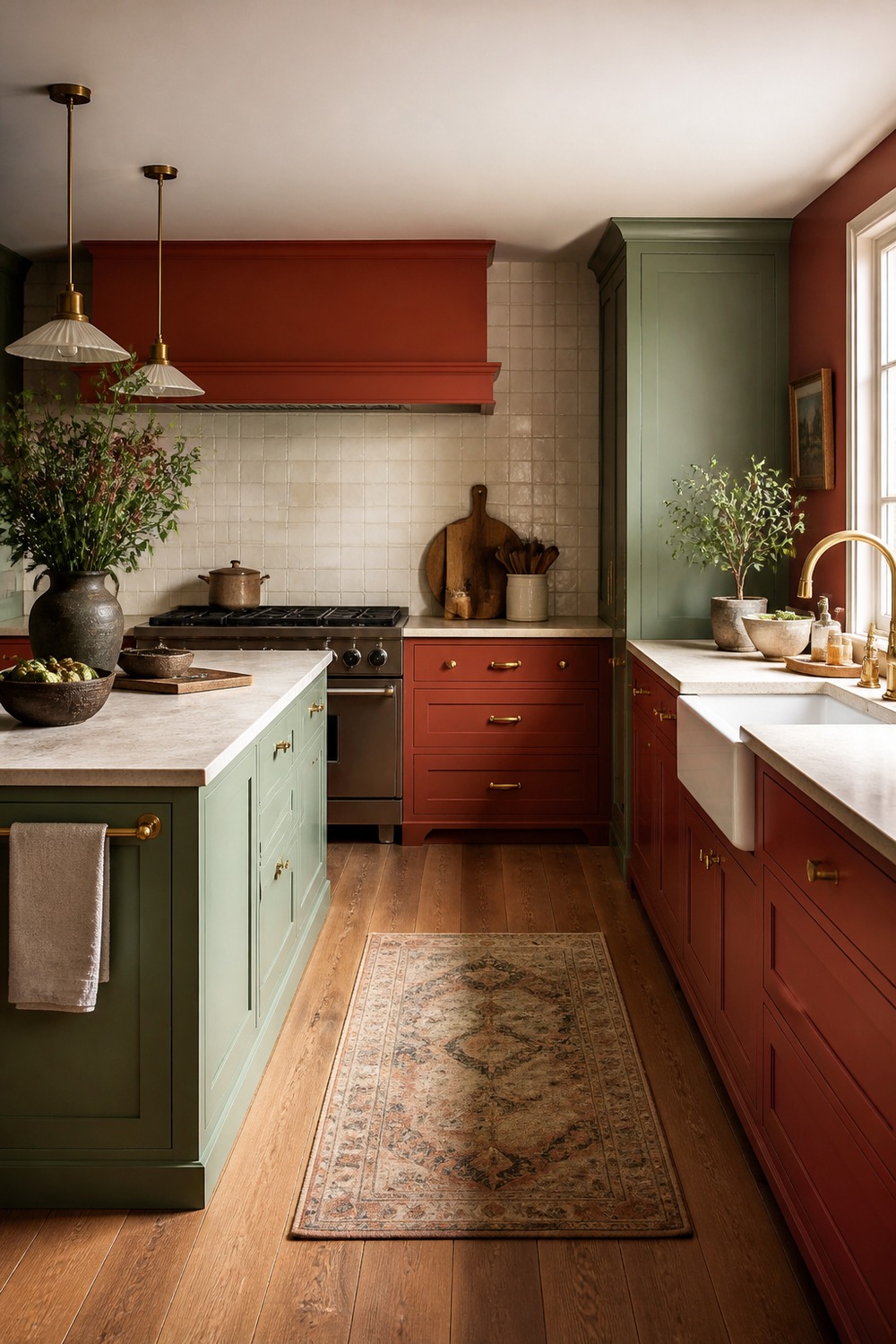
The brick-red cabinets bring warmth, but the sage island stops the room from becoming one long red block. Cream counters leave a calm work surface between the complementary colors, which is especially useful in a busy family kitchen.
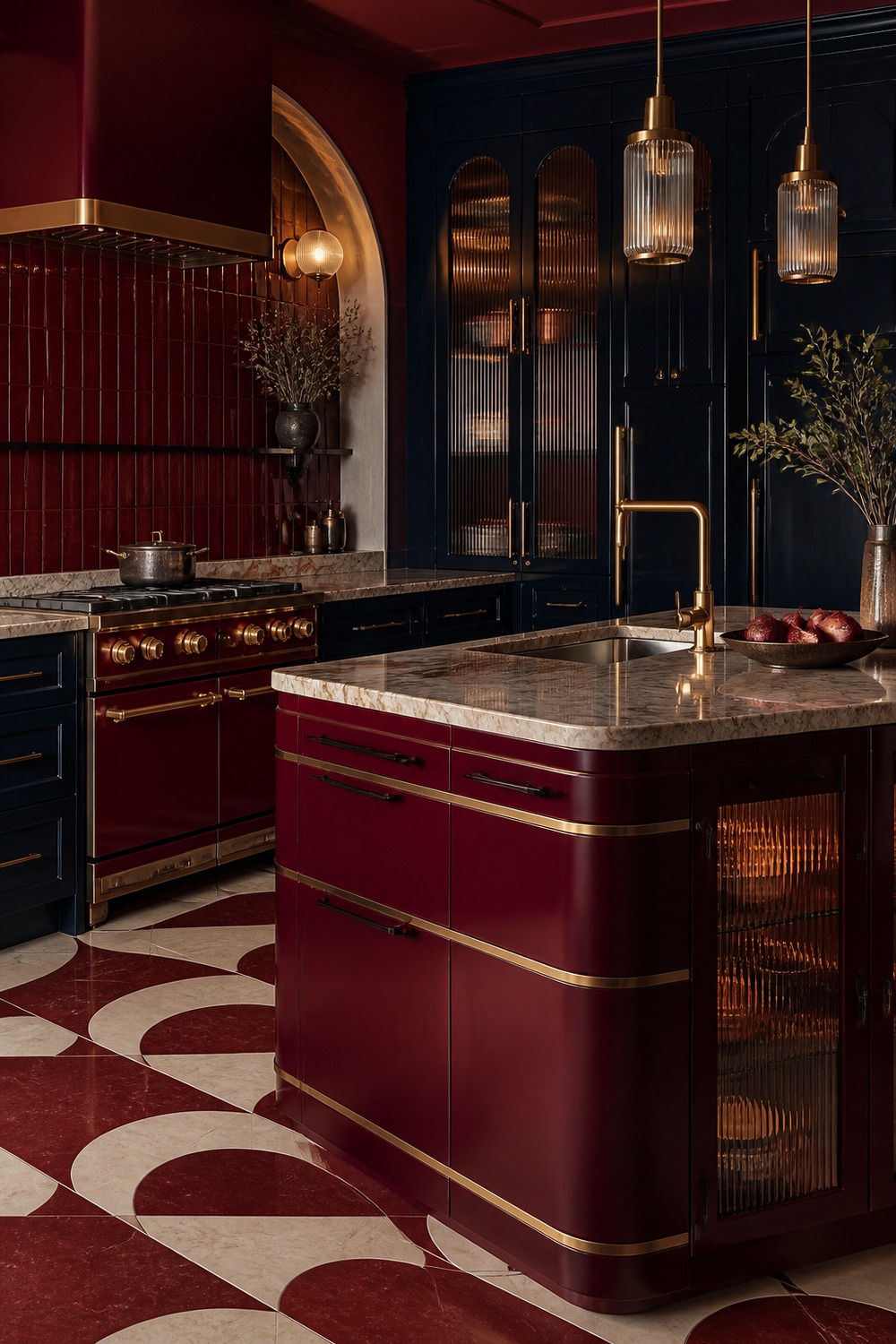
Oxblood and navy give this kitchen a proper evening mood without relying on black everywhere. Ribbed glass lightens the tall cabinets, and those thin brass details outline the red island beautifully.
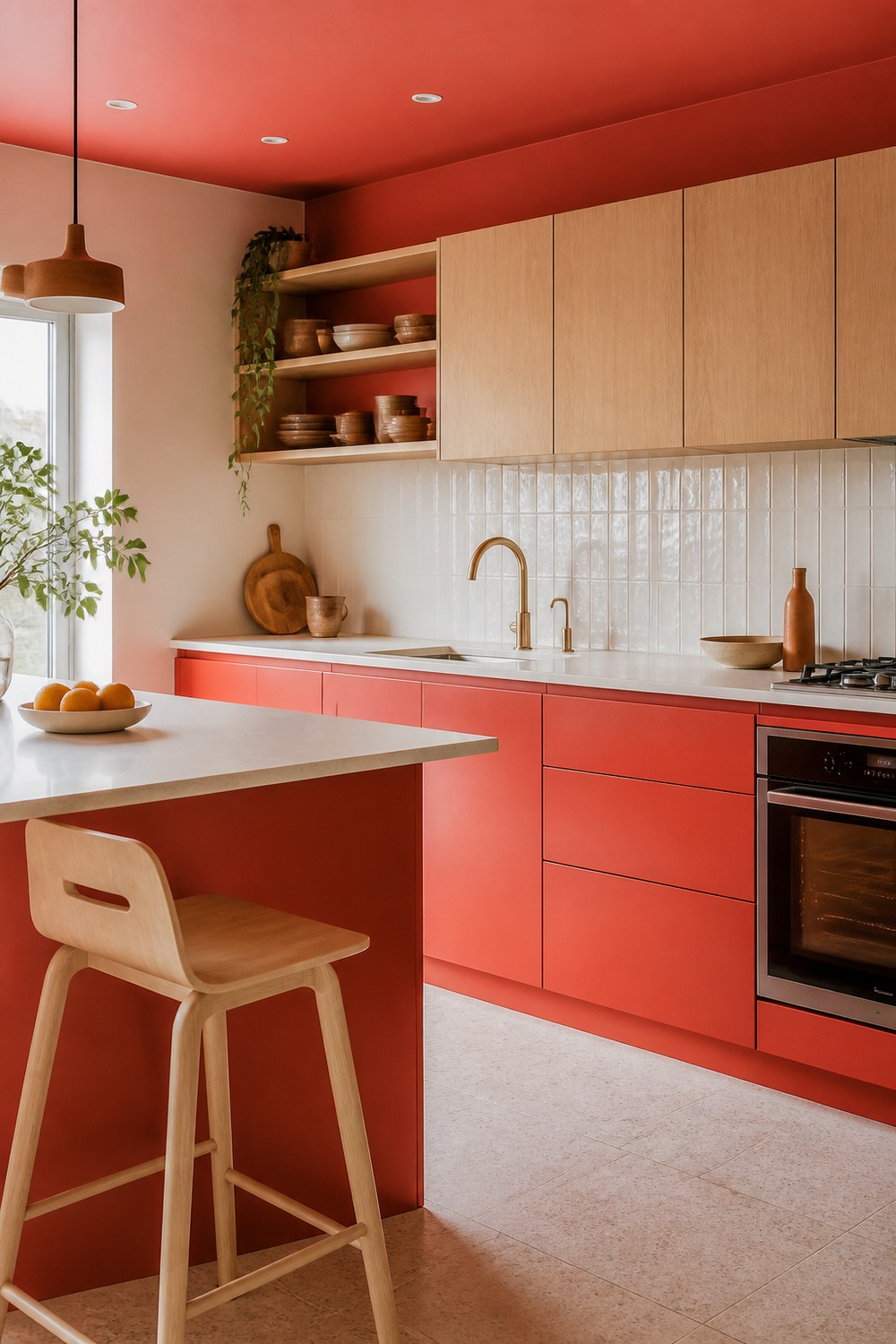
Coral feels much fresher beside pale oak than it would with another dark wood. The simple cabinet shapes and light limestone floor let the red stay playful while the compact layout still looks easy to cook in.
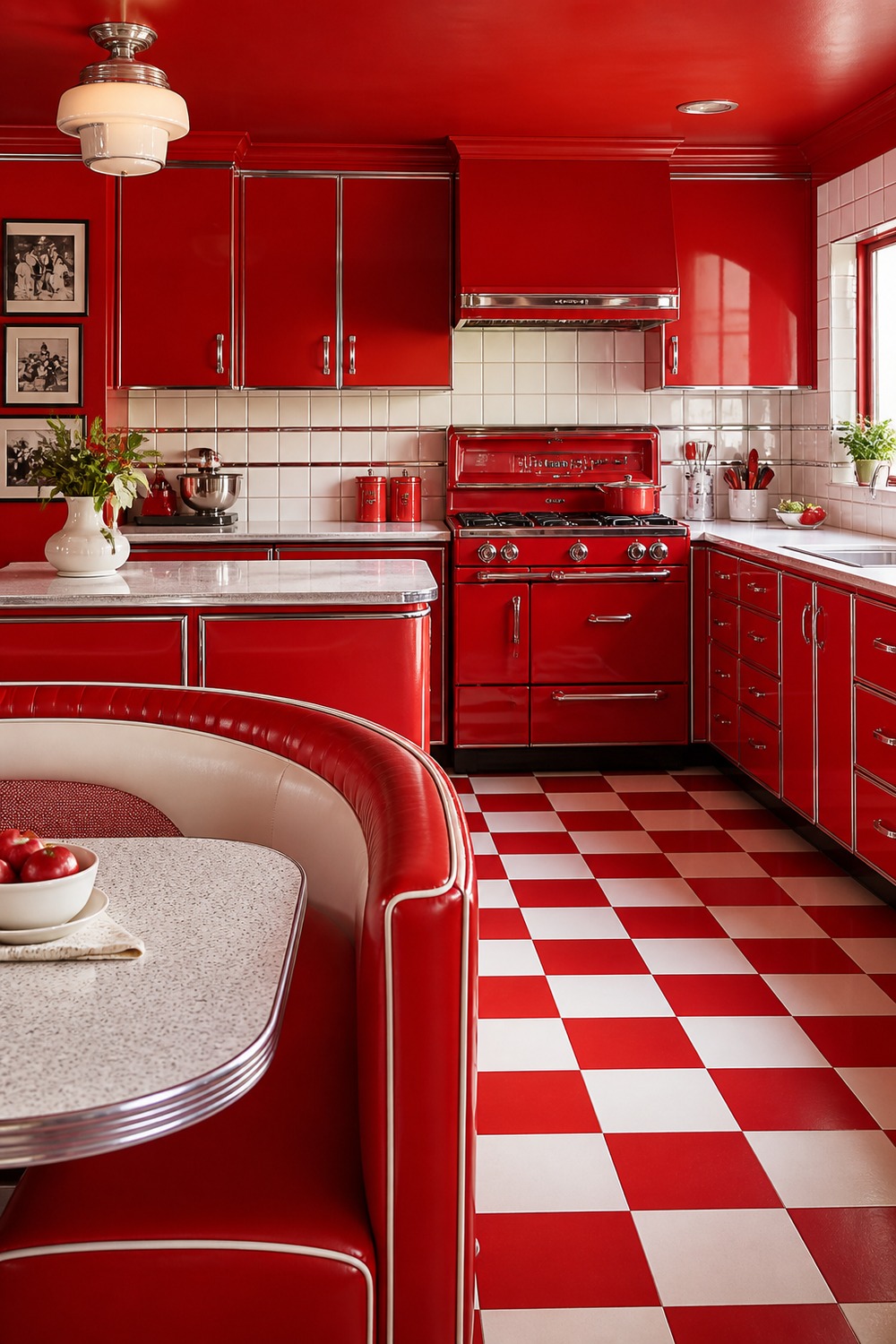
This is the fun version of a red kitchen, and I am not mad at it. Chrome trim and a true checkerboard floor make the retro reference obvious, while the curved booth gives the room a useful everyday breakfast spot.
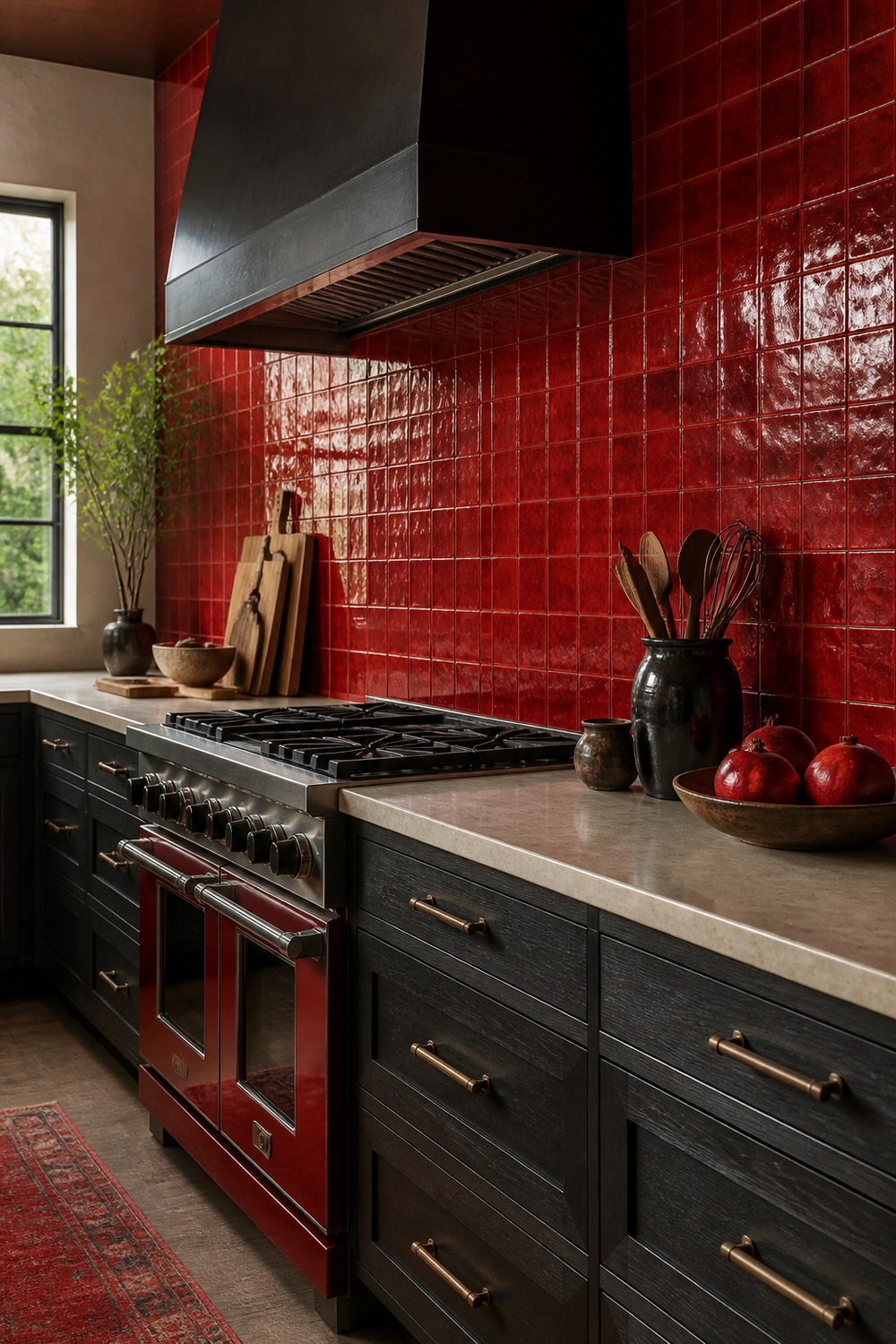
Ruby zellige has enough tonal variation to keep a single-color wall interesting. Charcoal cabinets act like a frame around the tile, and the pale counter gives chopping and prep areas a clean visual break.
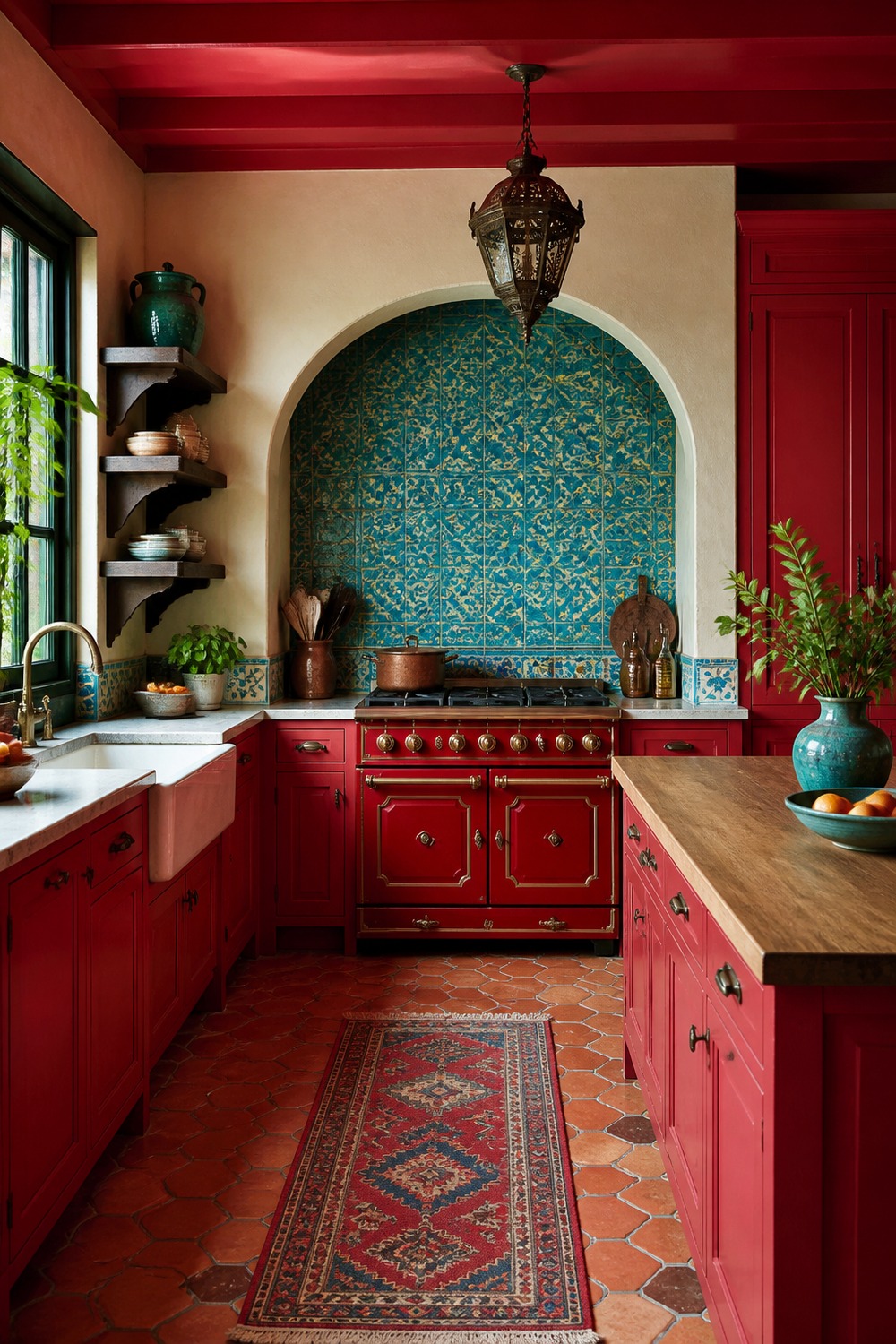
Raspberry and turquoise make this feel collected rather than matchy. The plaster arch controls the patterned tile, terracotta adds another warm note underfoot, and the darker shelving keeps the bright colors from floating.
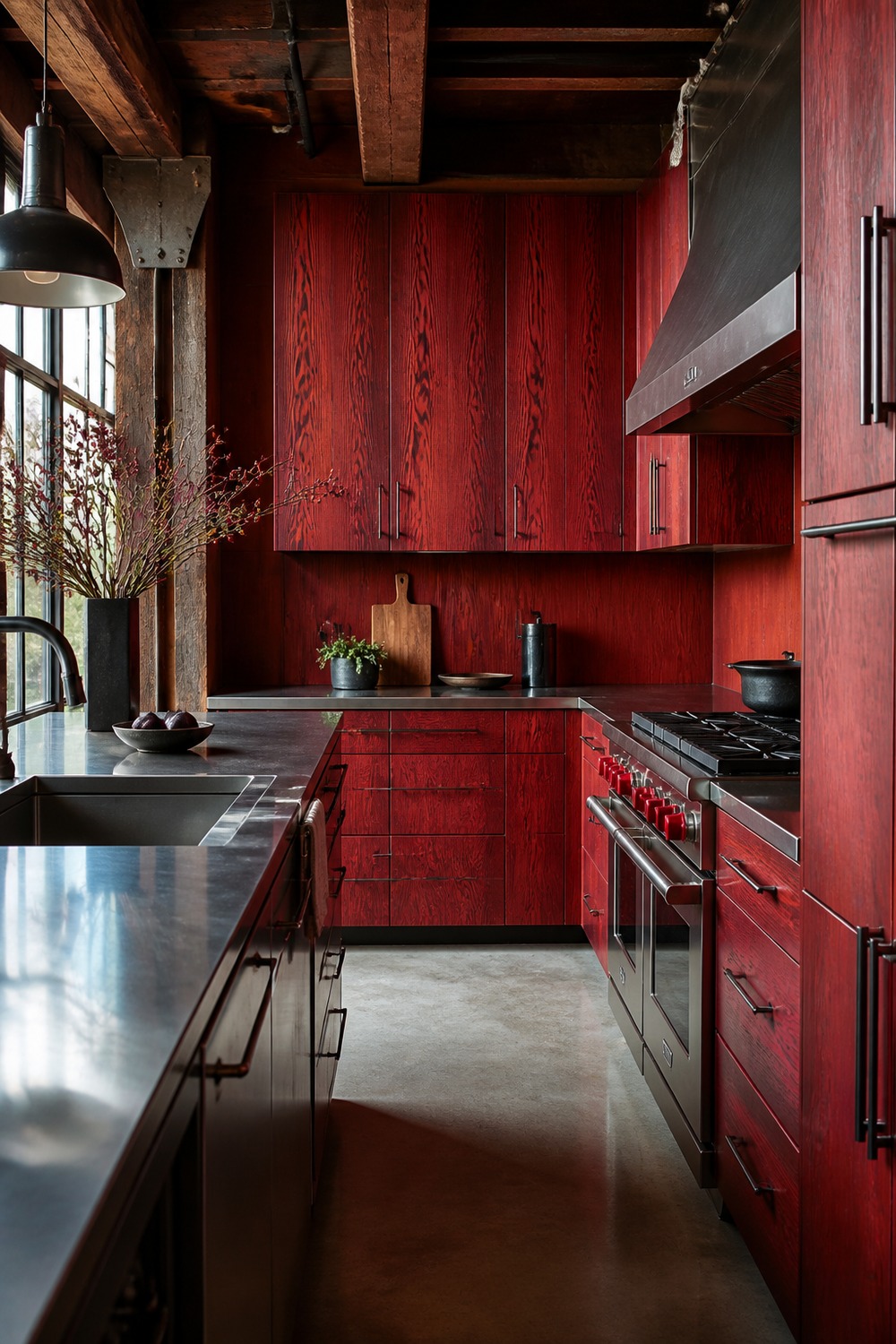
Red-stained wood is a smart choice when painted cabinets feel too flat. The visible grain gives the color movement, and a stainless worktop makes the industrial side of the room genuinely useful rather than decorative.
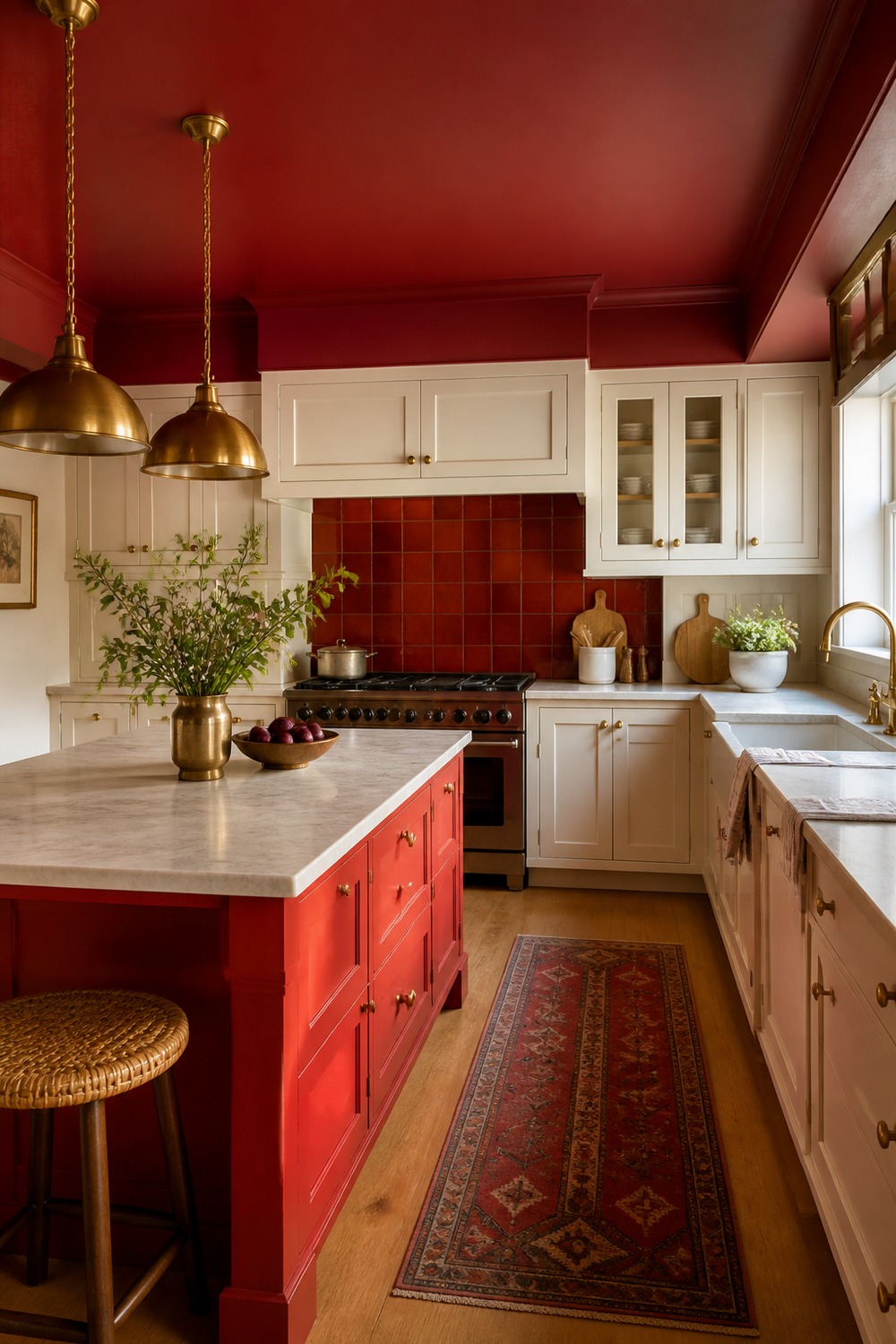
Putting cranberry overhead changes the whole atmosphere without making every cabinet red. The matching island repeats the color at eye level, while warm-white storage keeps dishes and daily clutter from disappearing into a dark wall.
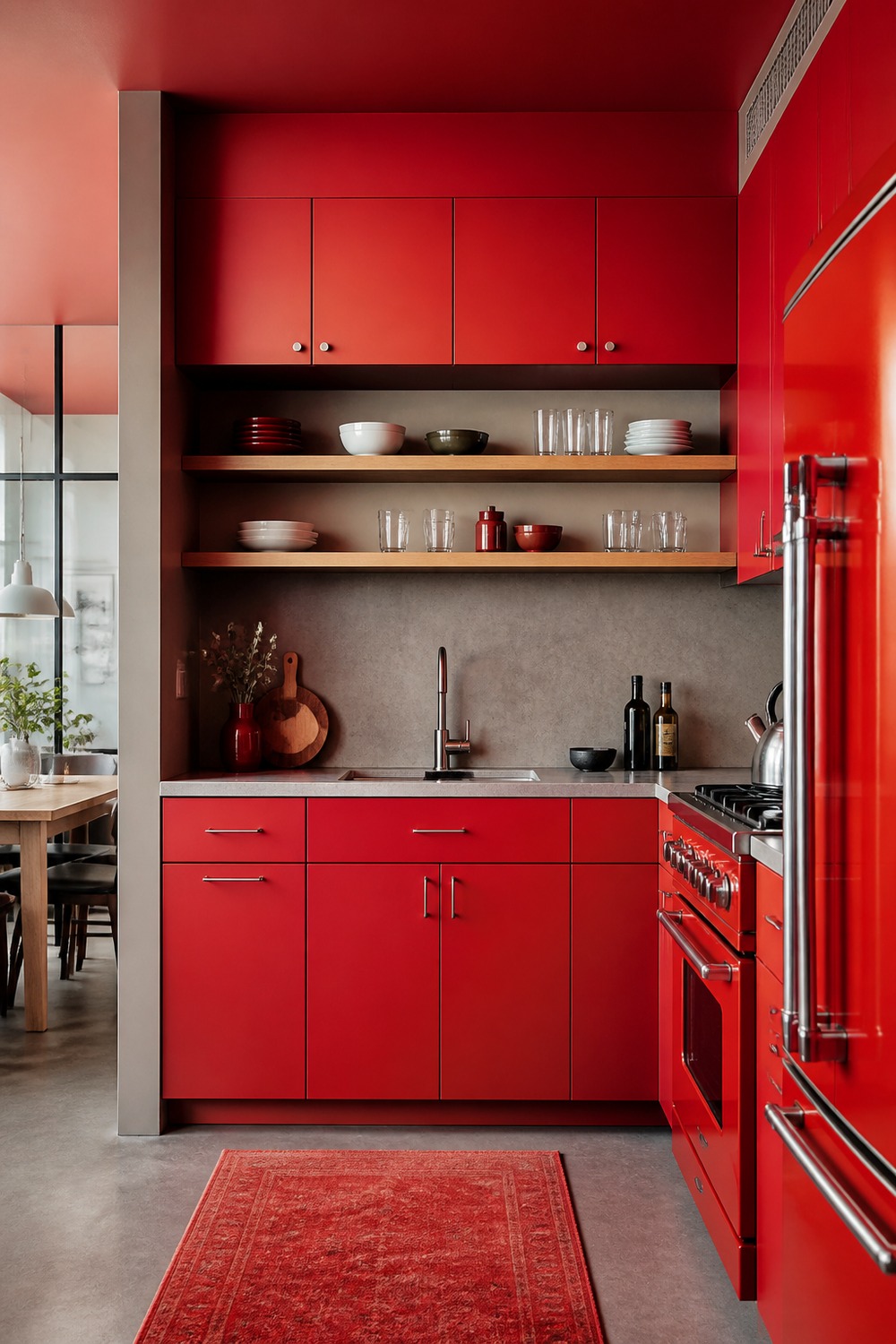
Vermilion looks especially crisp next to dove gray. This pairing suits a smaller apartment because the gray stays quiet, the oak niches add warmth, and the red cabinet wall supplies all the personality the room needs.
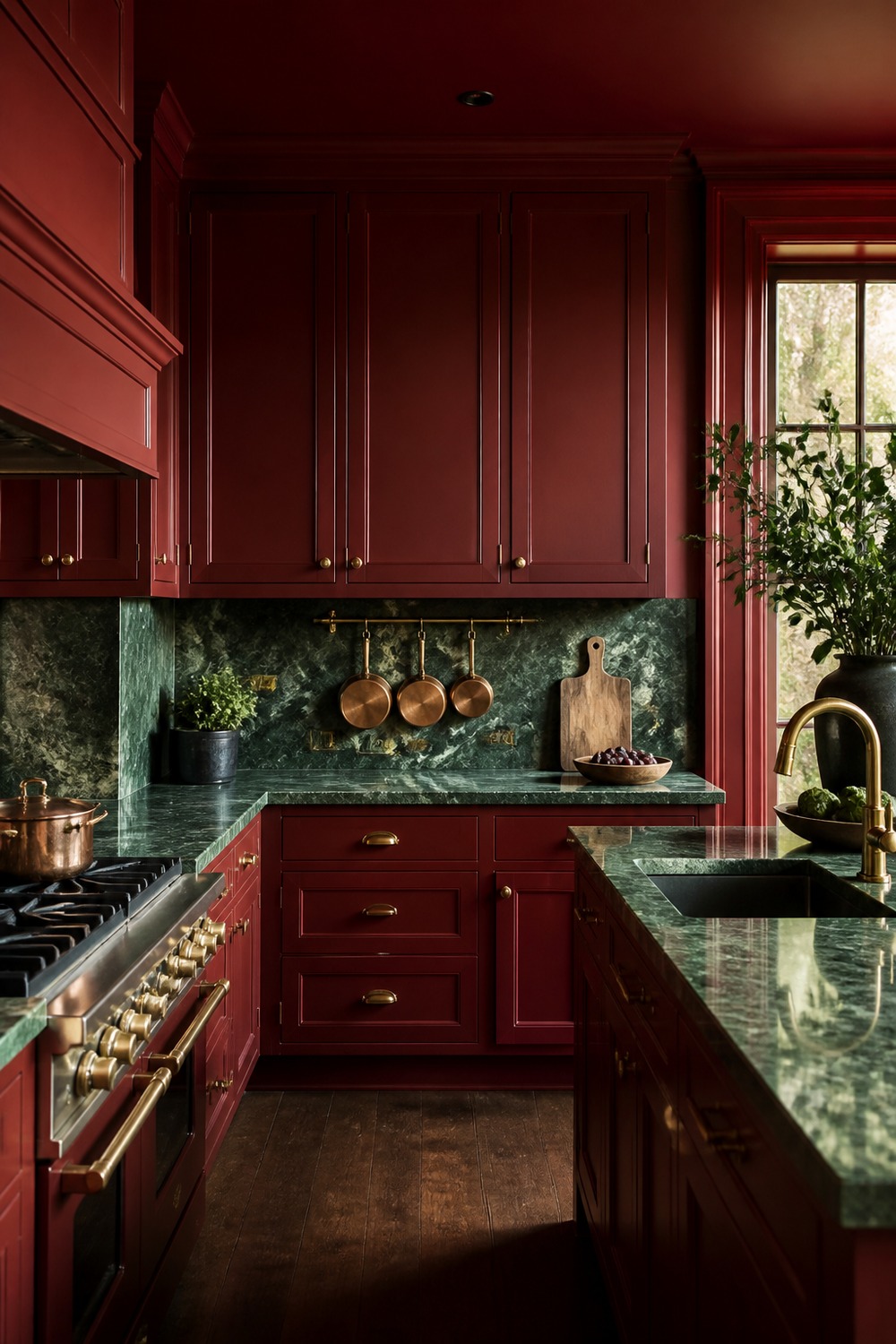
Green marble makes wine-red cabinetry feel richer, not heavier. The veining creates movement around the sink and prep zones, and the brass picks up the warm undertone in both materials without adding another competing color.
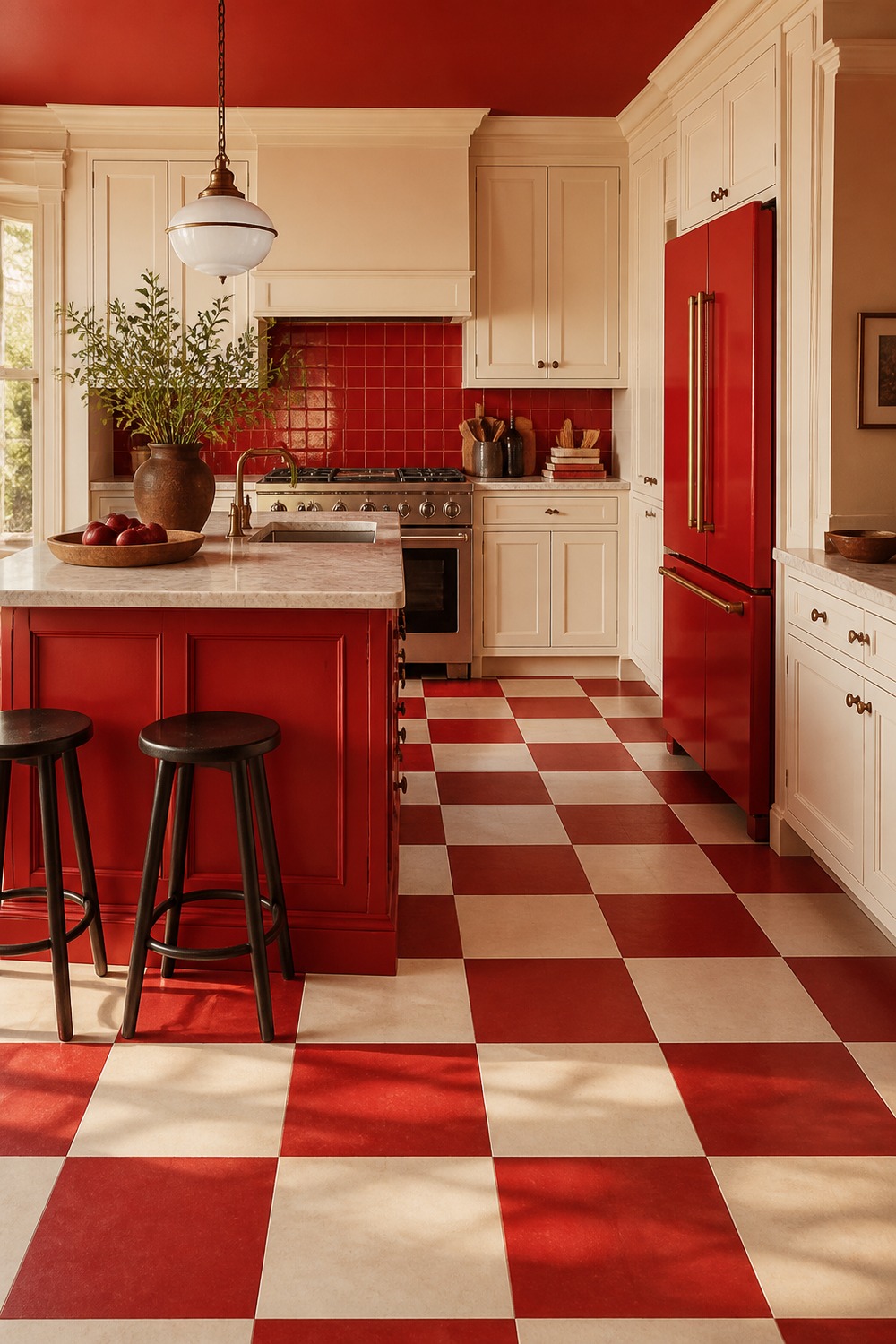
A checkerboard floor can carry a lot of the scheme, but the red island makes sure the color belongs to the kitchen itself. Cream cabinets calm the pattern, and bare floor around the work zone is easier to maintain than another decorative runner.
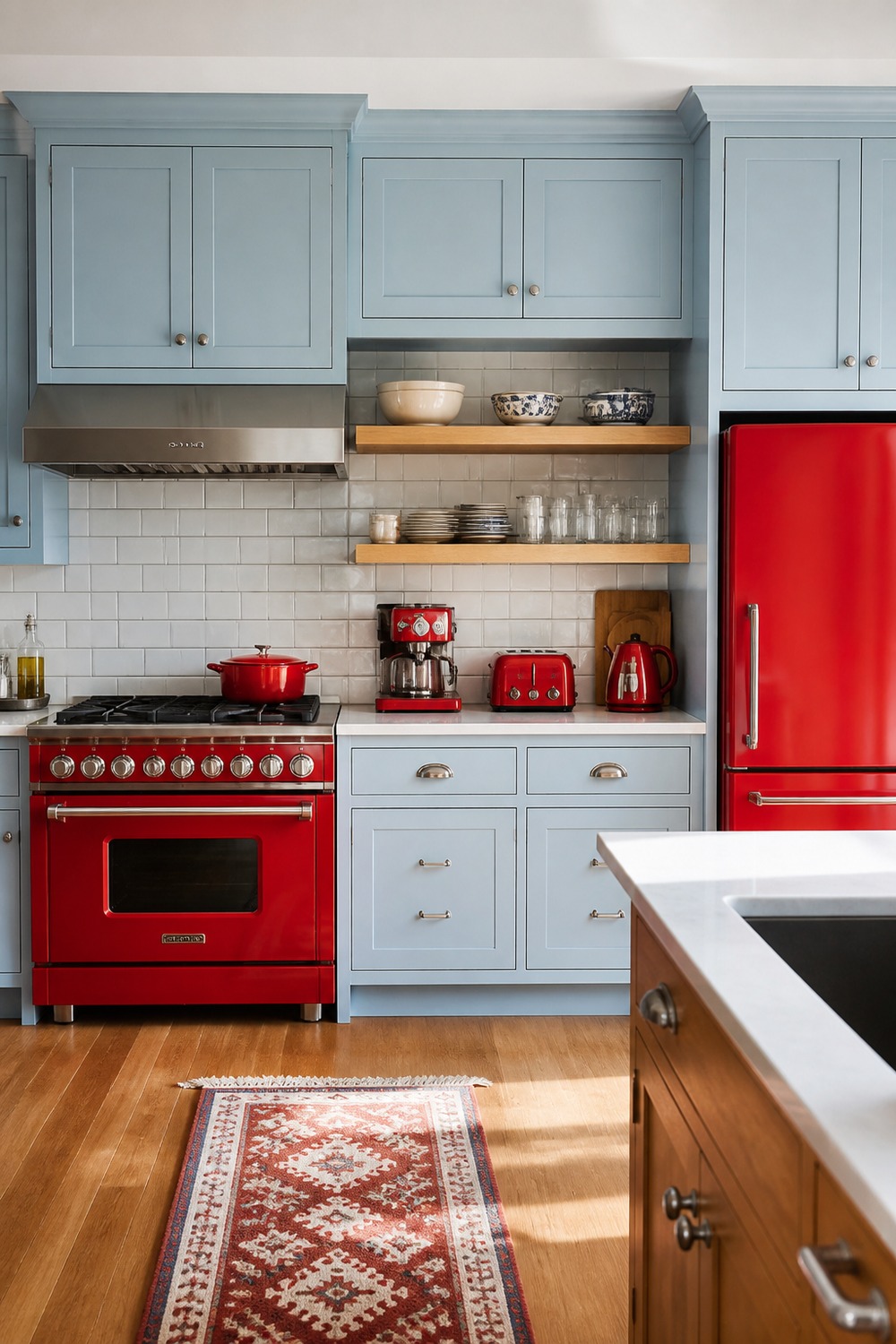
Red appliances turn the hardworking parts of the kitchen into the focal point. Powder blue cabinets cool the palette, and the white tile leaves enough clean space around the range and refrigerator for the combination to feel intentional.
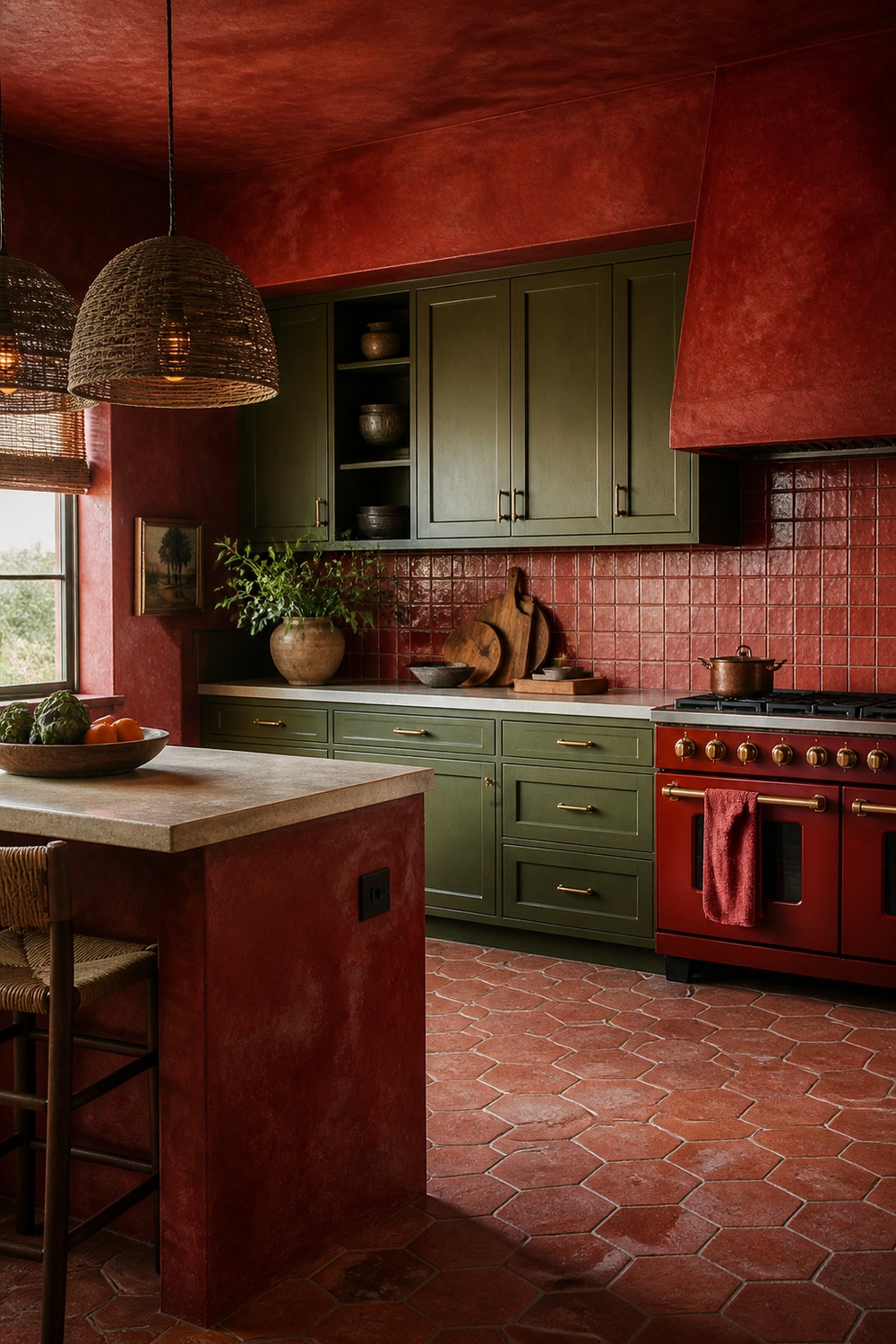
Rust-red plaster has a softness that glossy paint cannot fake. Olive cabinetry gives the walls contrast, while stone counters and bronze hardware keep the prep area grounded in materials that age well.
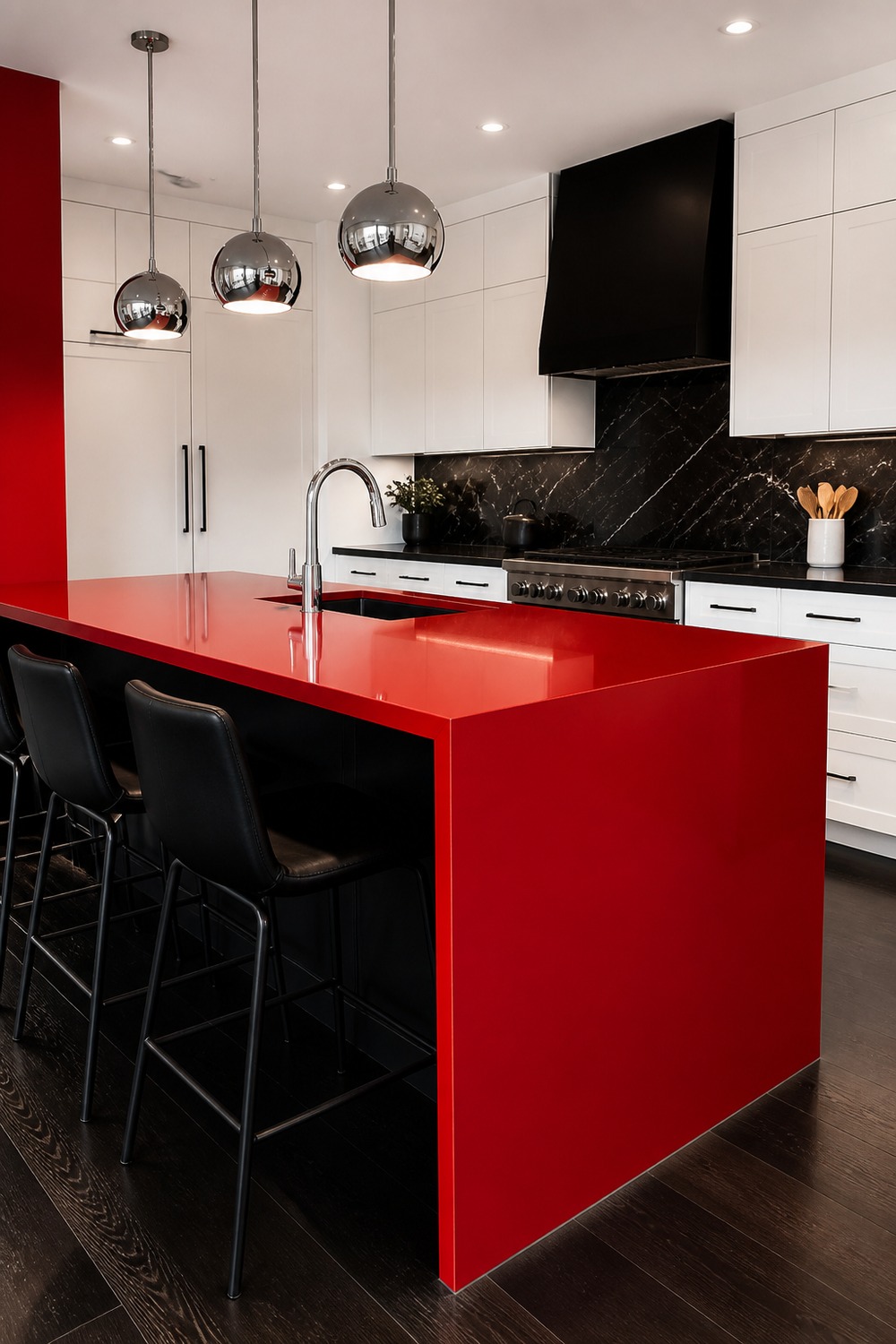
The scarlet island is doing one clear job: breaking up a strict black-and-white room. Its bold shape is memorable at a glance, yet the surrounding cabinets stay neutral enough for the kitchen to remain calm during normal use.
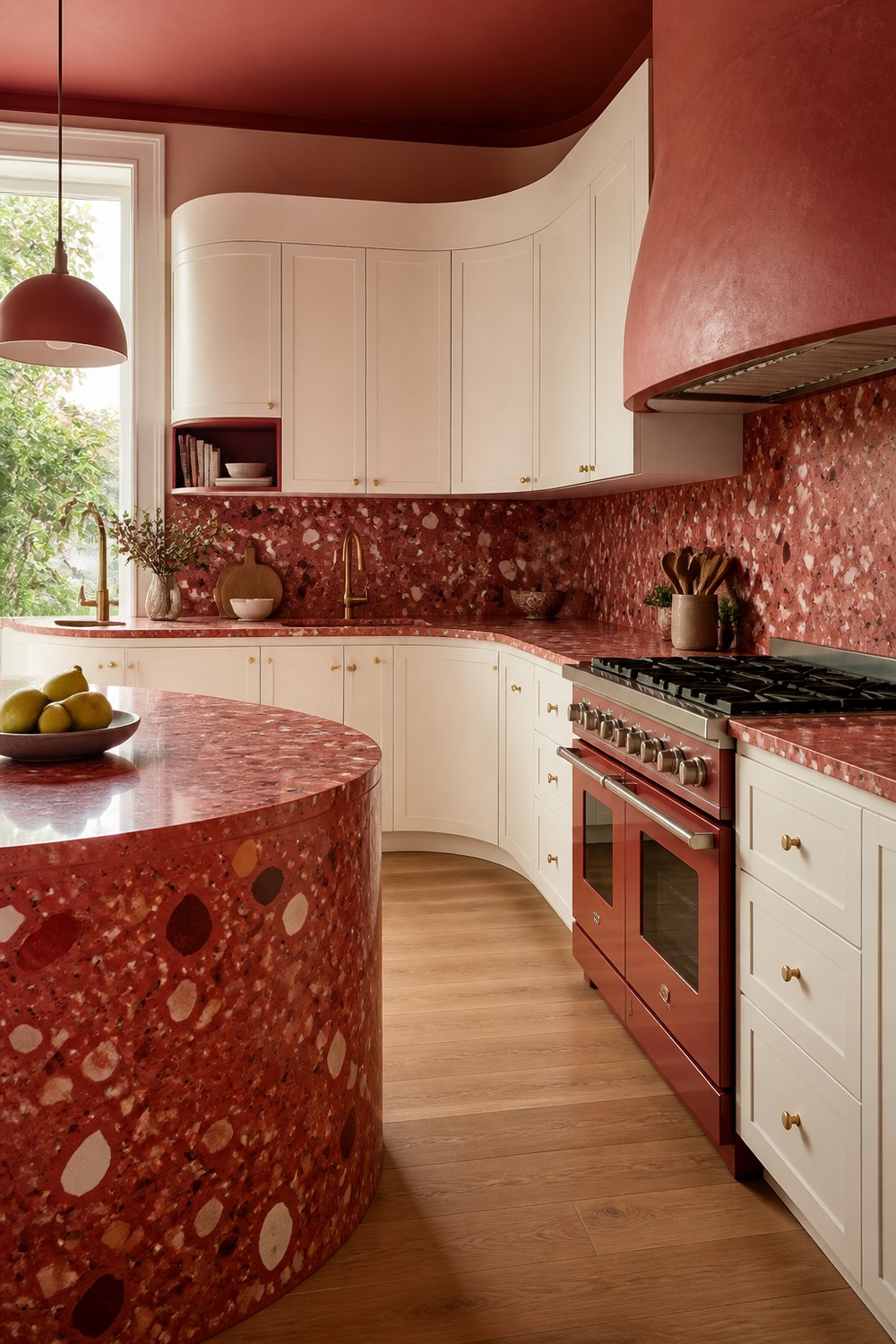
Red terrazzo introduces several shades at once without scattering little accessories everywhere. The curved island makes the material feel almost sculptural, and the cream cabinets let those coral and burgundy chips stay readable.
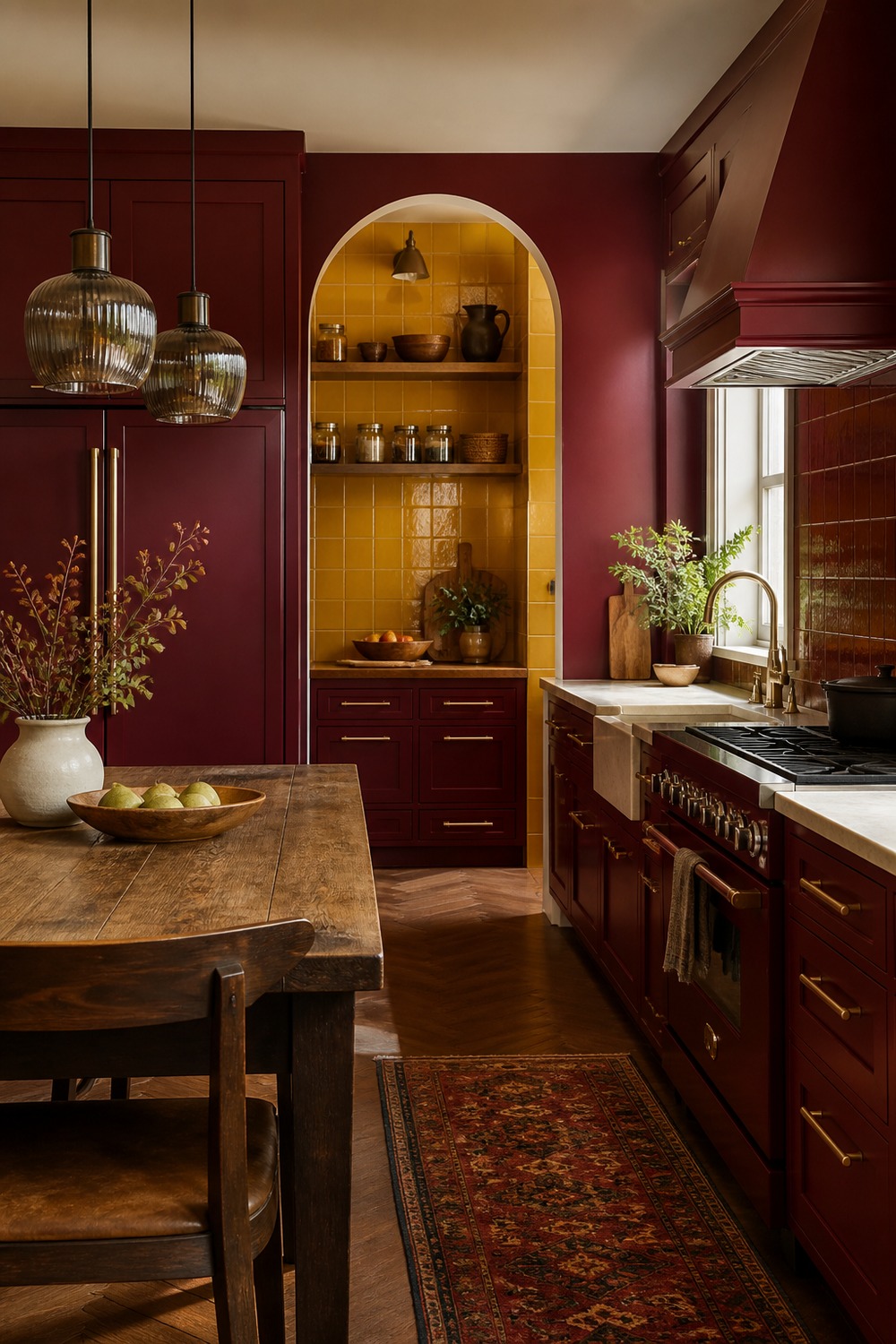
Plum and mustard have a moody vintage quality, but the clean storage lines stop them from feeling dated. Keeping the yellow inside the pantry niche also means the stronger contrast appears exactly where small appliances and jars need a backdrop.
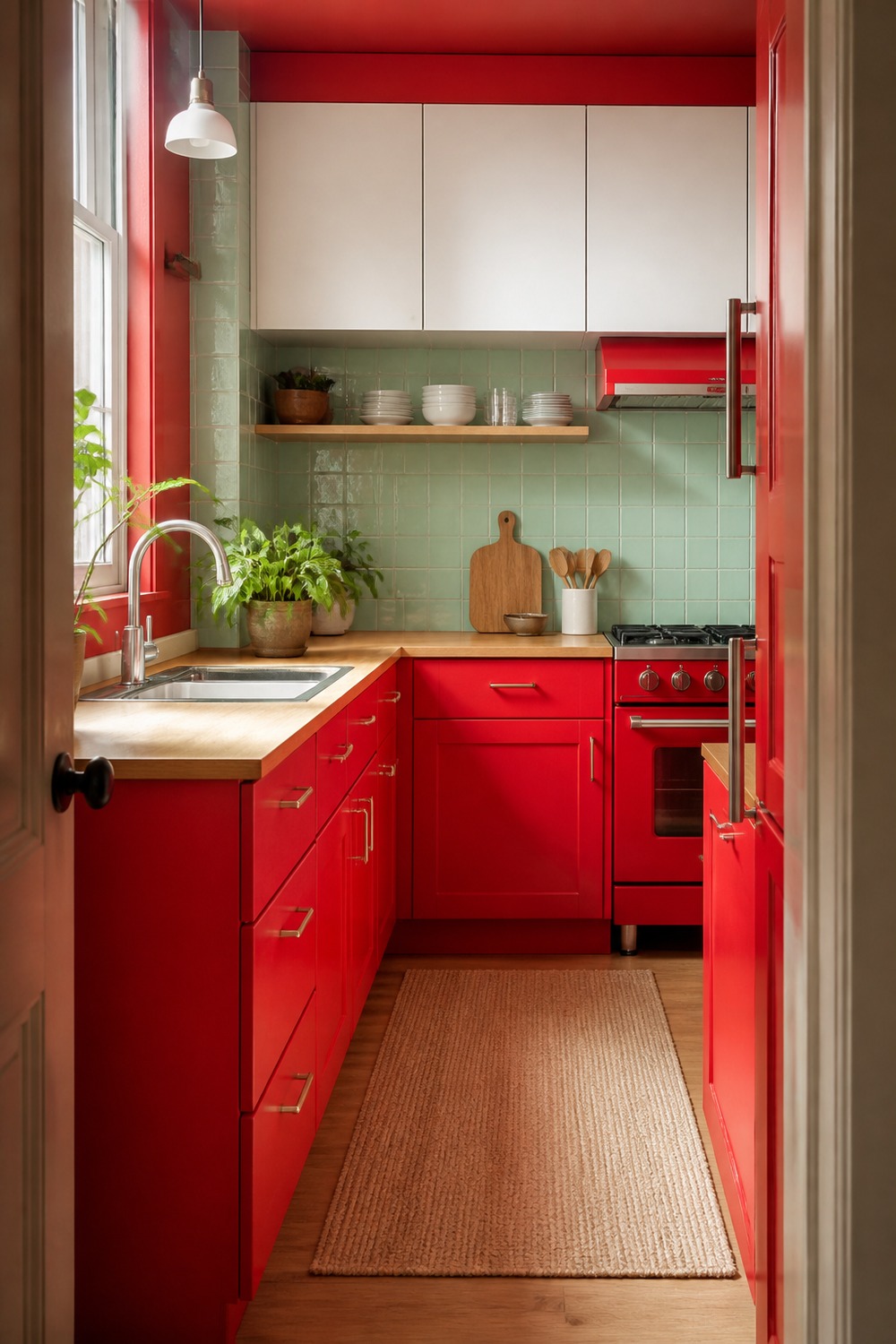
Poppy red wakes up this tiny kitchen far more than another all-white scheme would. Mint tile bounces light around the sink wall, and the oak worktop adds a practical warm surface without stealing precious visual space.
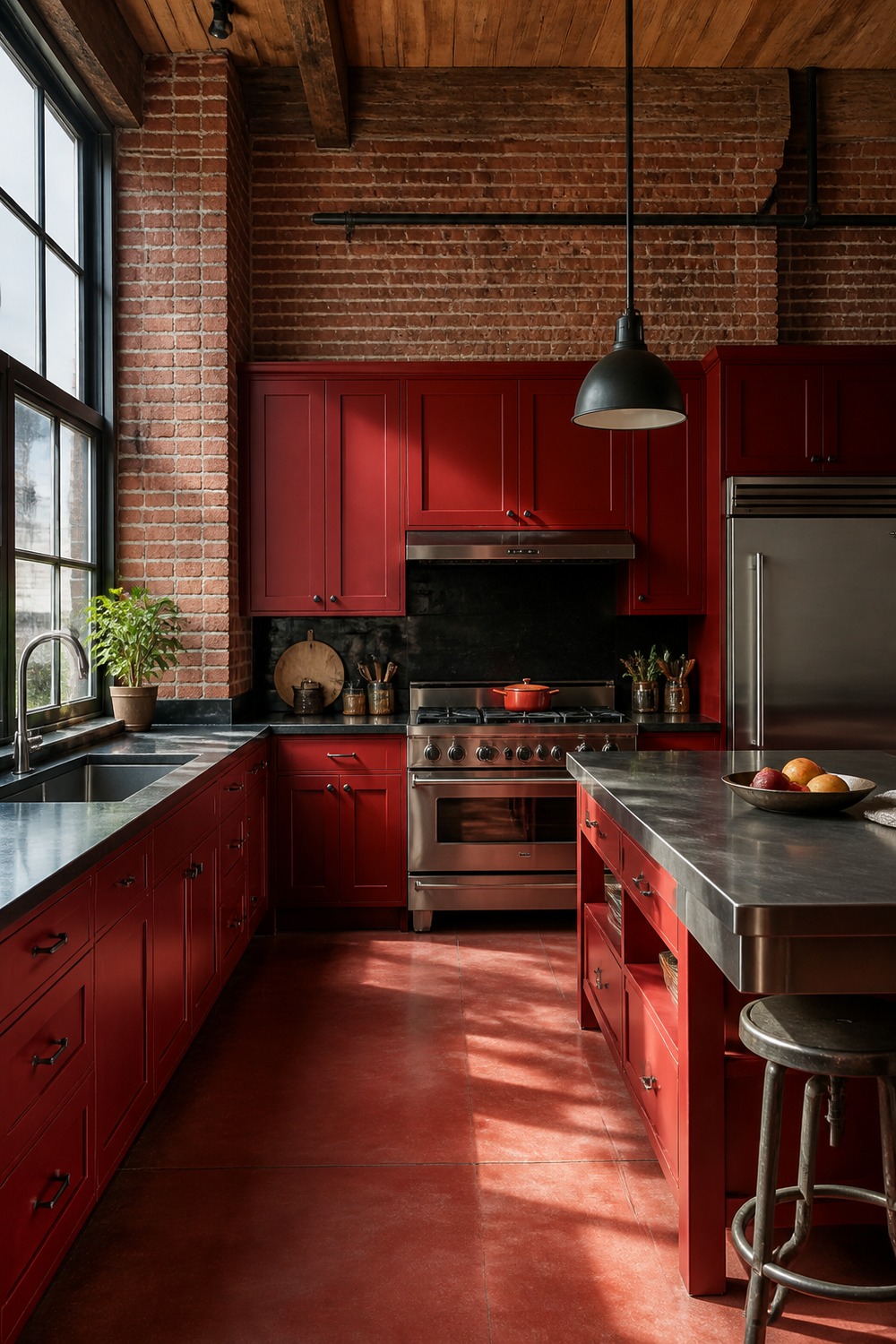
Brick and red cabinetry could blend into one muddy color, so the black soapstone and stainless island matter here. They separate the textures and give this loft kitchen durable surfaces for actual cooking.
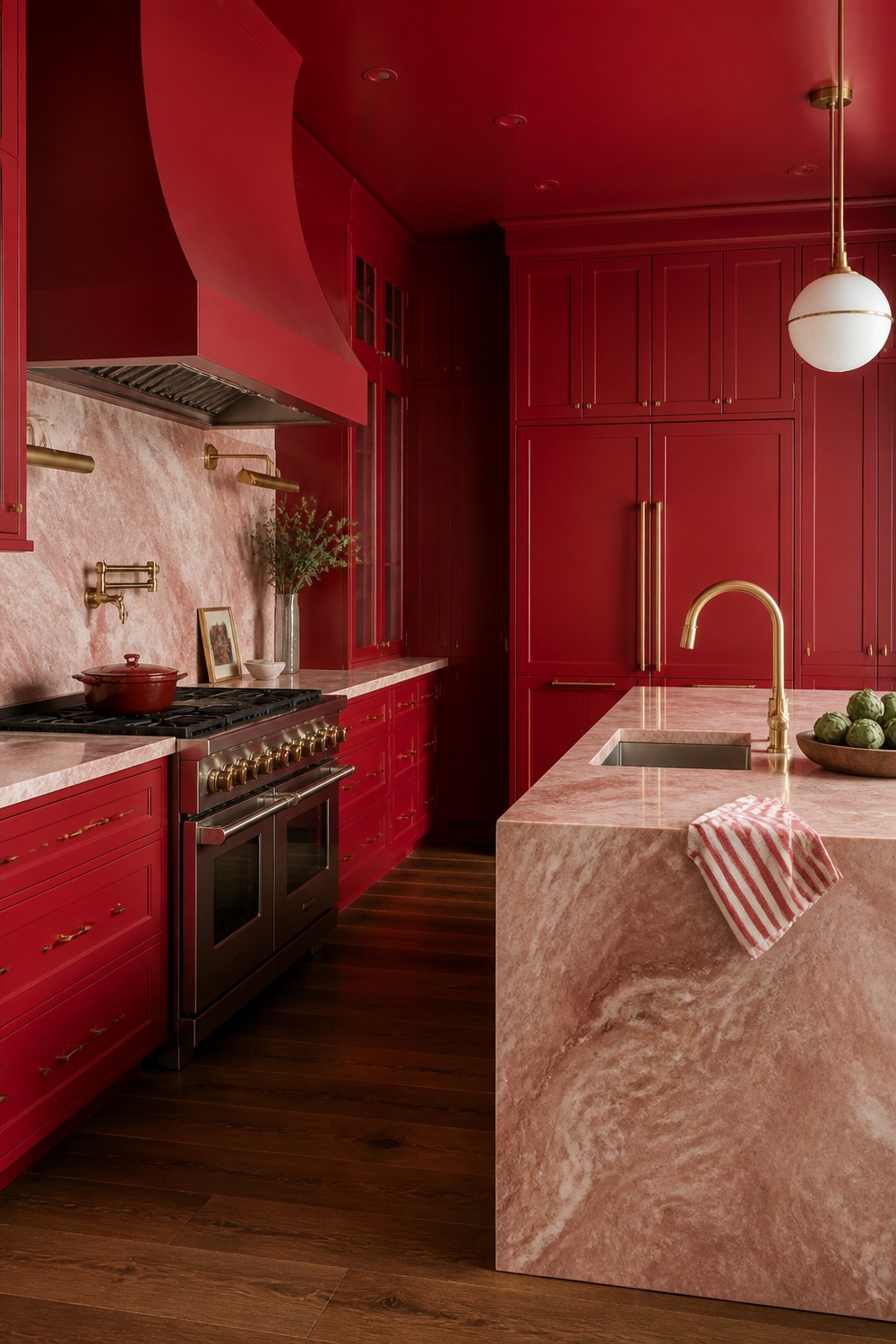
Cardinal-red cabinetry feels much more architectural when it frames the range, hood, and refrigerator as one complete cooking wall. The blush-stone island softens all that saturated color while leaving a generous sink and prep surface in the center.
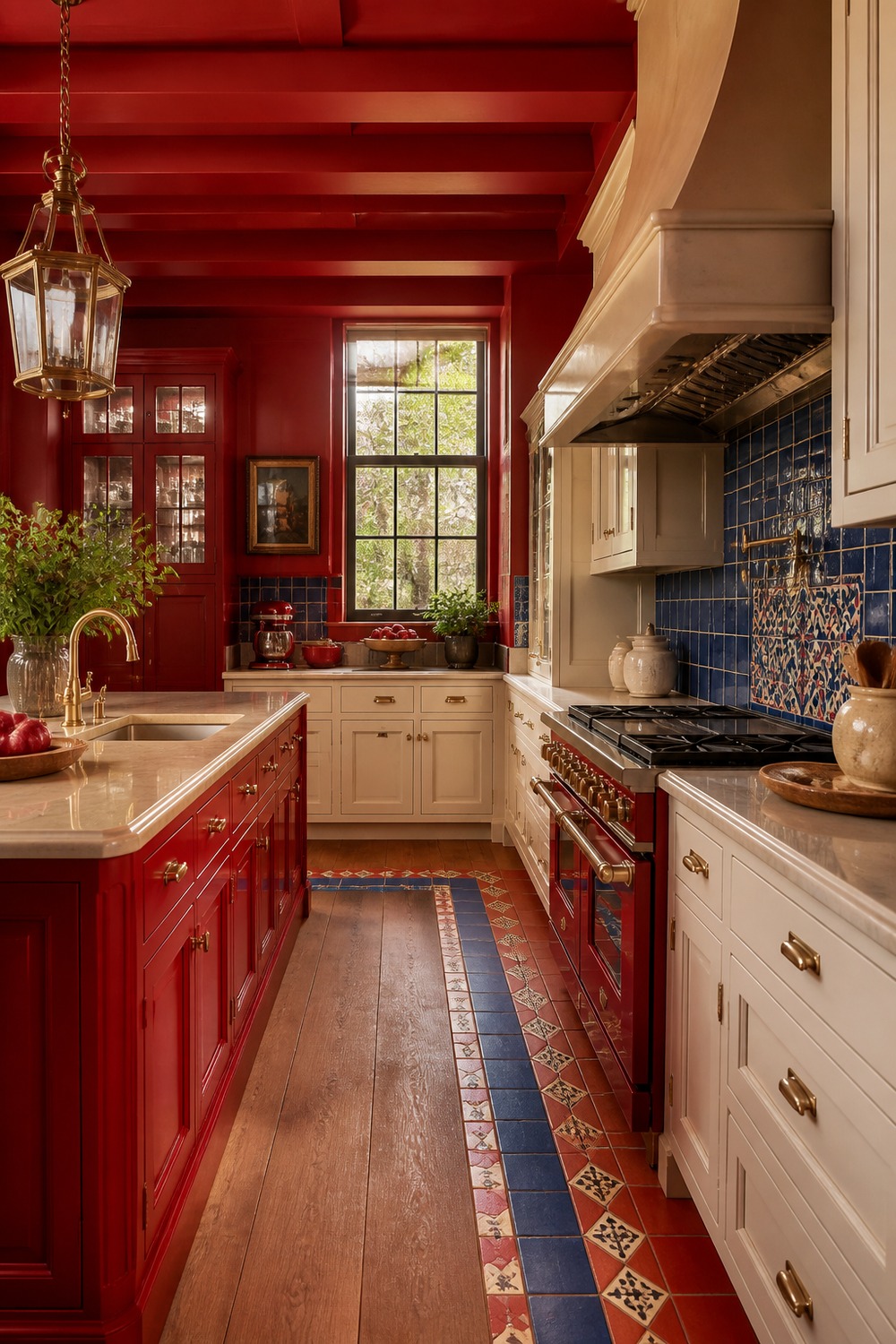
This maximalist palette works because every color owns a different zone. Red anchors the island, cobalt belongs to the range wall, and cream surrounds both with enough quiet cabinetry to keep the counters usable.
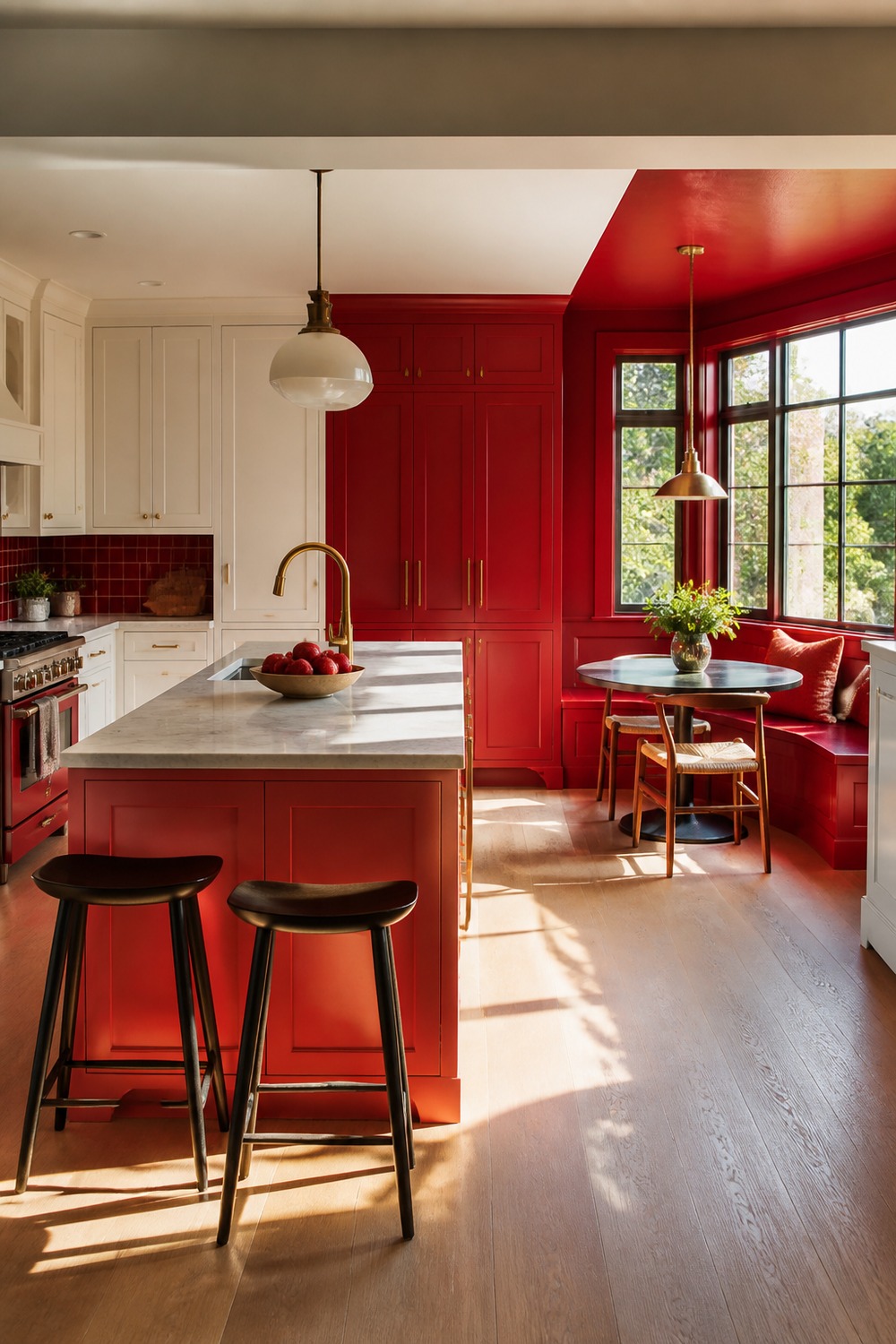
Three reds make the final kitchen feel intentional rather than repetitive. Ruby gives the pantry weight, coral brings the island forward, and the cherry breakfast nook catches daylight in a way that makes the whole room feel energetic.
Red works best when it has a clear job and a real surface to live on. Whether it lands on cabinets, tile, stone, appliances, a ceiling, or one brave island, the surrounding colors should make that red look chosen—not accidental.

I work in tech, but my taste in design is straight out of a slow European village. Give me arches, aged brass, and a room that smells like books and coffee. That’s my kind of home.