A floating-shelf coffee bar only works for me when it still feels like a real morning spot, not a tiny showroom nobody can touch. I want shelves that handle mugs and jars, a counter with room for the machine, and enough closed storage that the extra coffee stuff is not sitting everywhere.
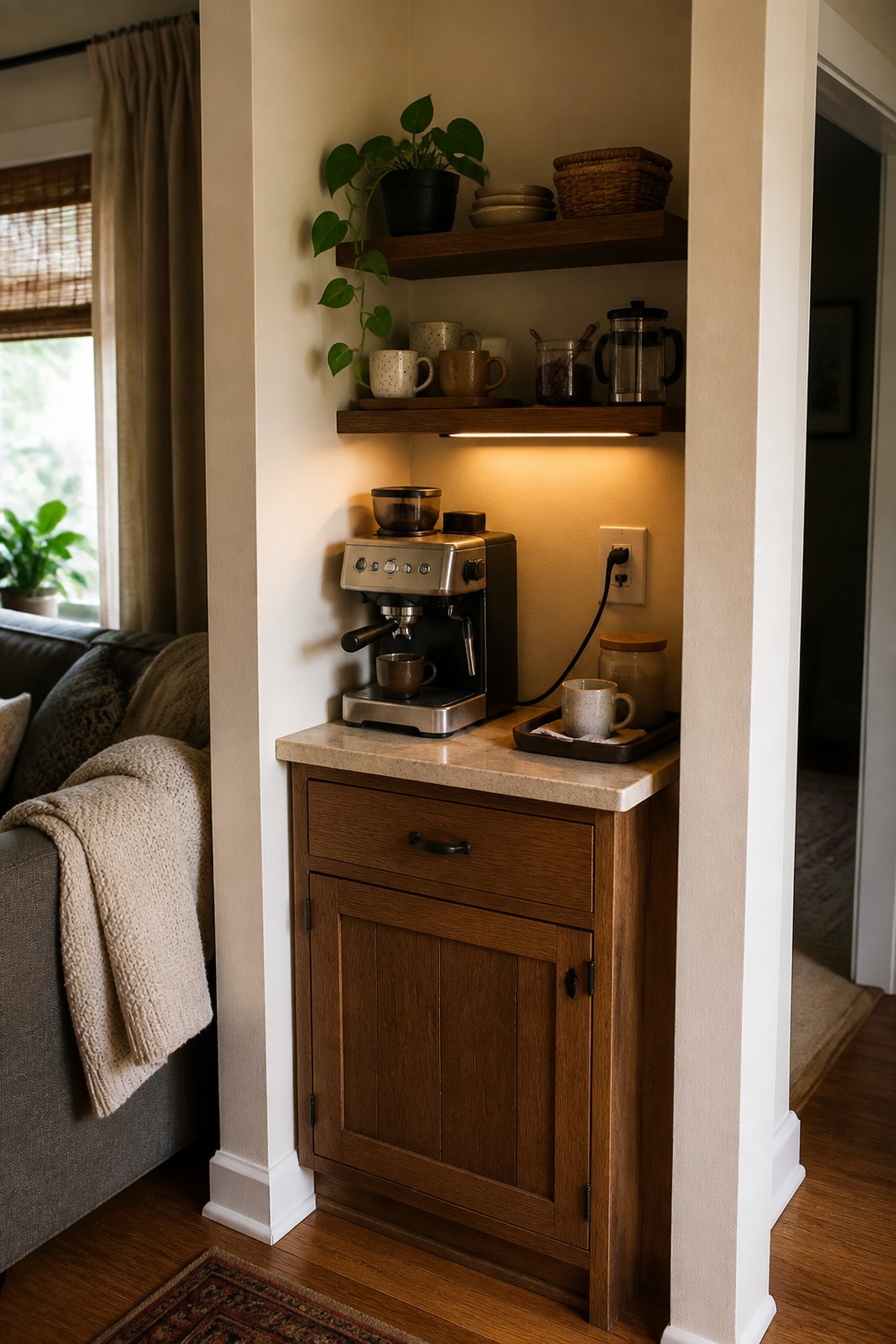
This narrow cabinet setup is the kind of coffee bar that makes an awkward corner feel intentional. The floating shelves keep the mugs and jars off the counter, while the slim base cabinet gives the machine a real home instead of making the kitchen look like it ran out of space.
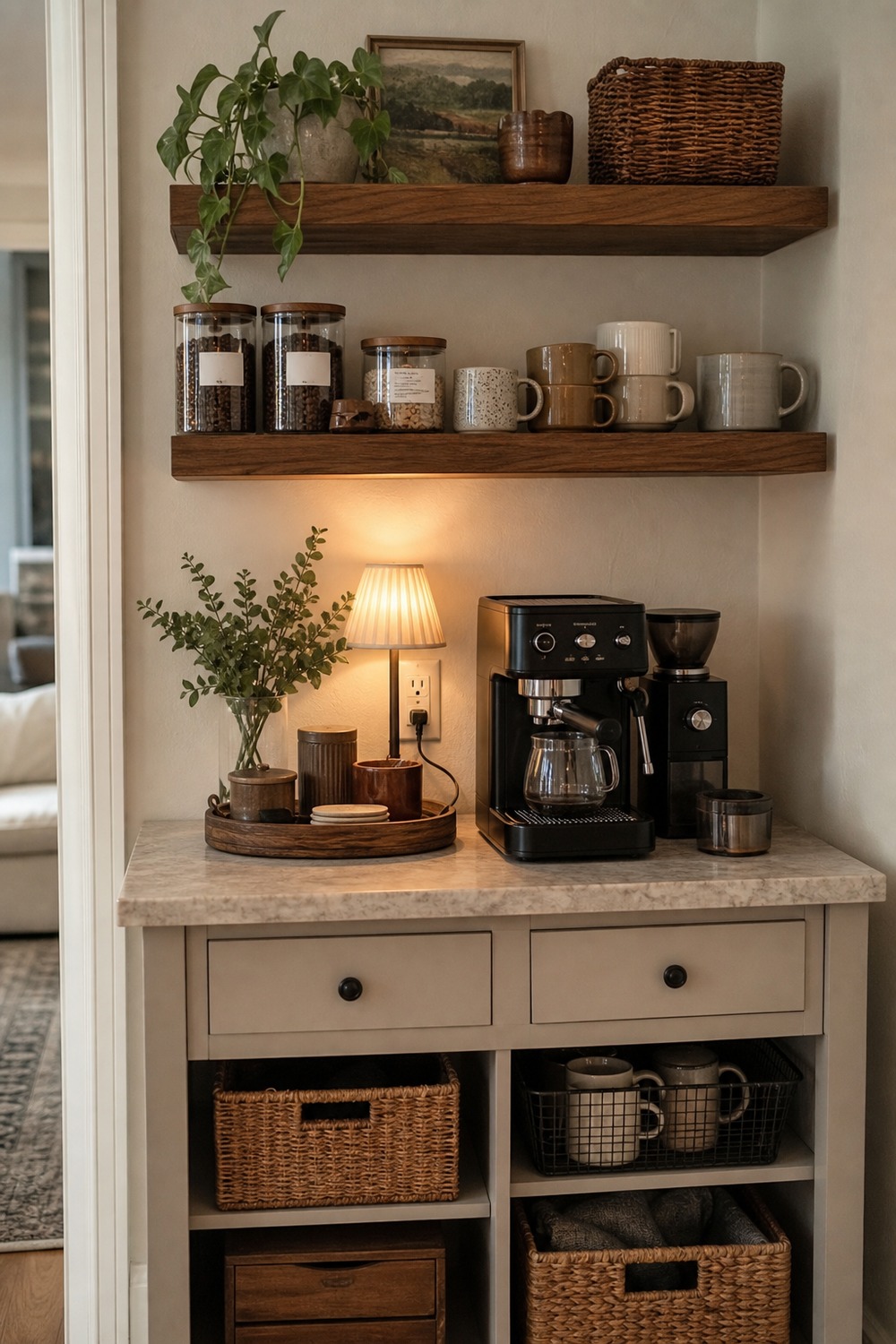
The floating shelves are doing most of the heavy lifting here. They give the mugs, small jars, and plant enough room to breathe, so the counter can stay useful for making coffee instead of turning into one crowded display shelf.
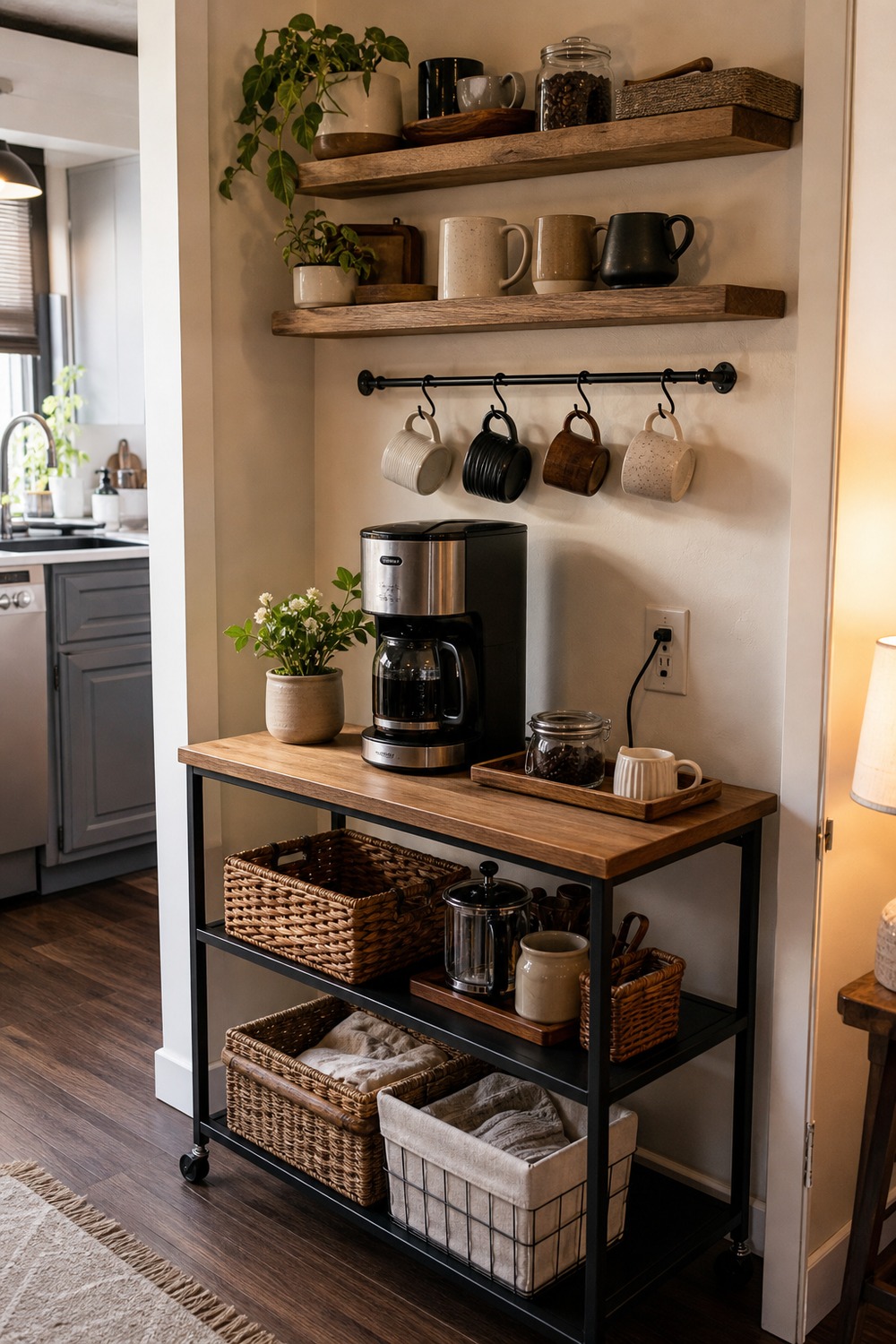
A rolling cart can look temporary, but this version feels more anchored because the wall shelves above it finish the whole zone. I like that the cart still leaves floor space open, which makes the setup feel flexible instead of squeezed into the room.
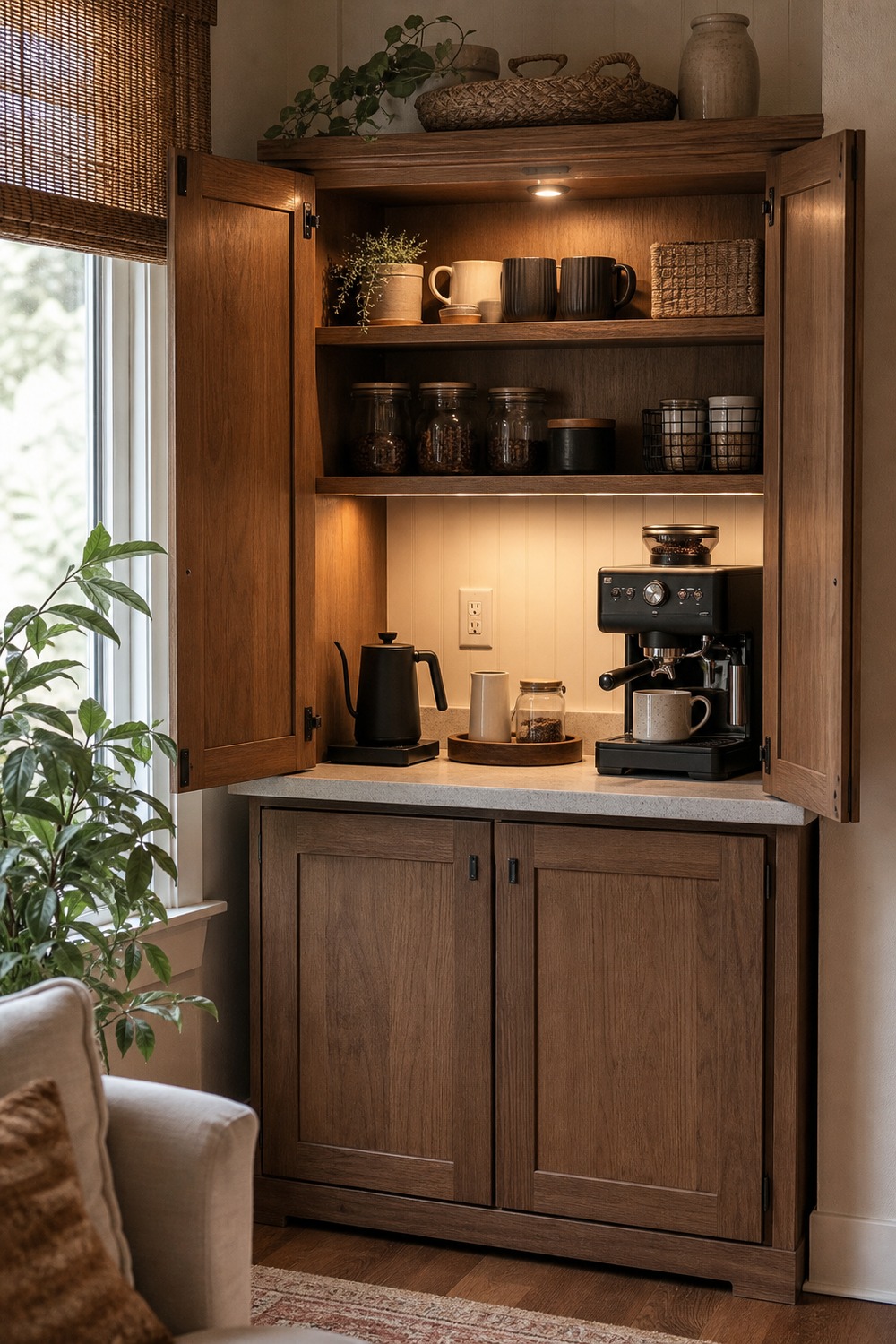
This hidden-cabinet style works so well if you hate seeing every coffee supply out at once. The closed storage handles the extra pods, filters, and mugs, while the shelves keep just enough pretty pieces visible to make the corner feel styled.
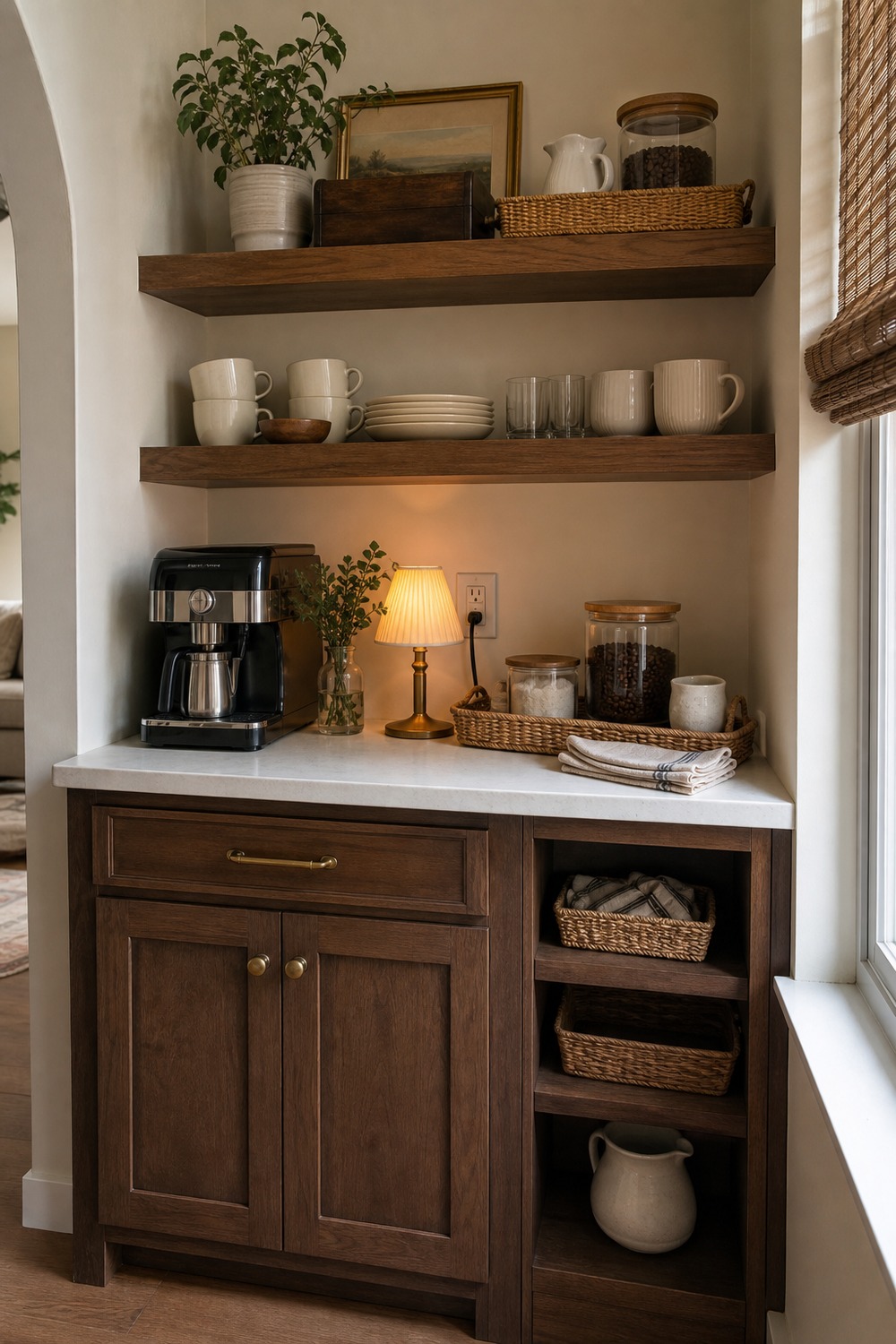
The warm wood shelves and cream mugs make this coffee corner feel soft without getting precious. It has that easy everyday balance where the tray, baskets, and machine look organized, but not so perfect that using it would ruin the whole scene.
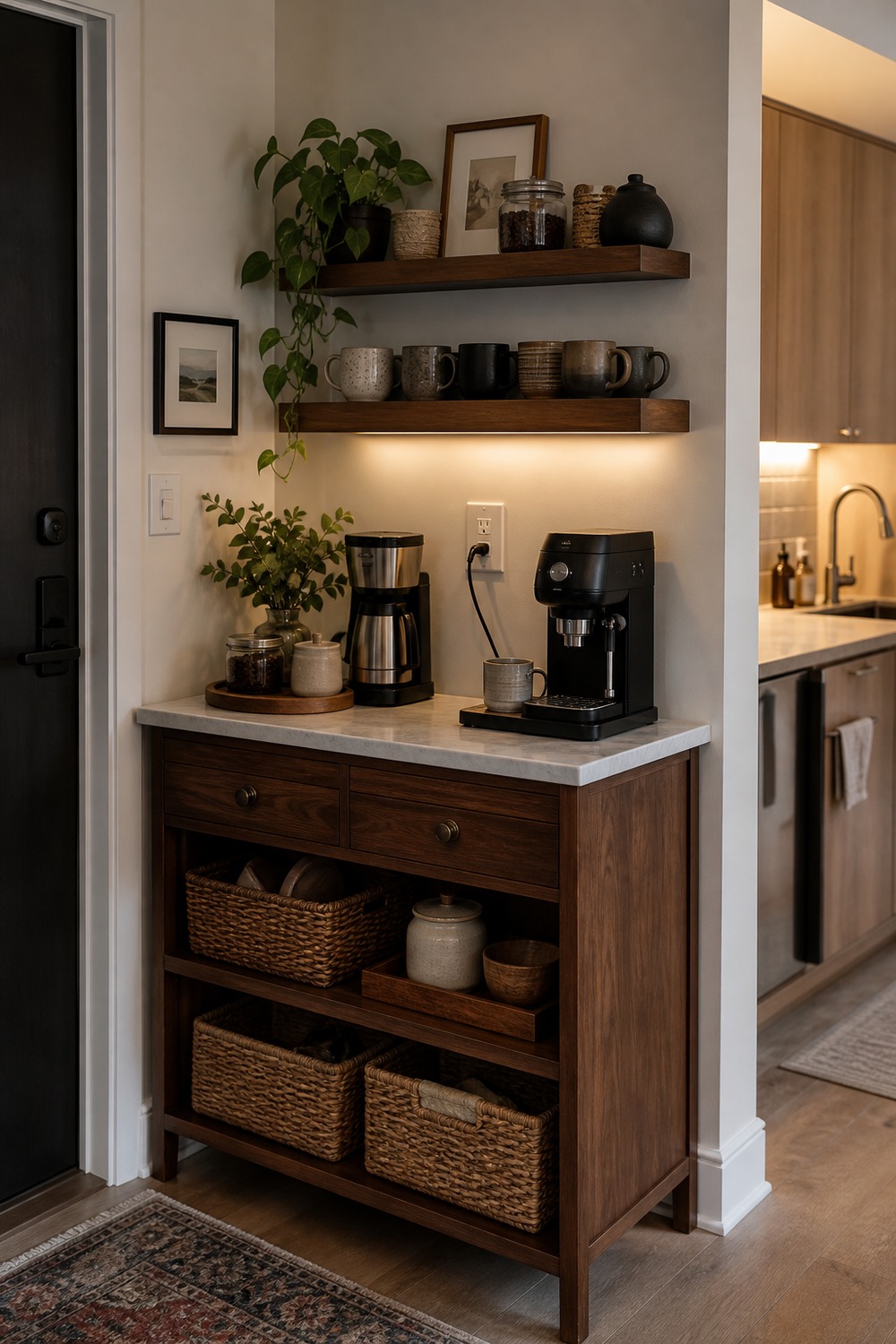
This one feels realistic for an apartment or small home where the coffee bar has to share space with a walkway. The shelves use the wall instead of the floor, and the lower baskets give the extra stuff somewhere to go without blocking the corner.
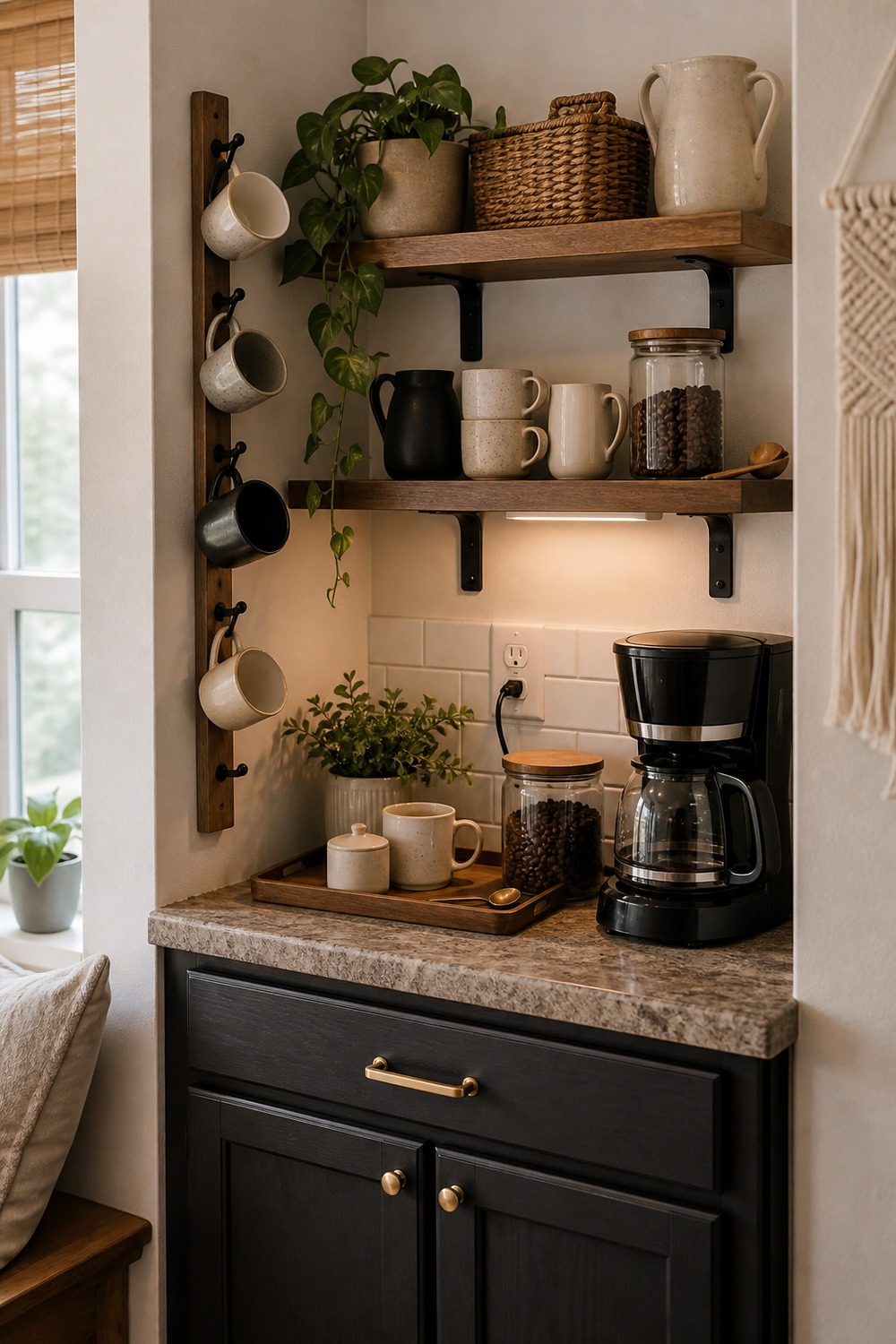
A tiny kitchen counter can still handle a coffee zone when the vertical space is used this cleanly. The shelves pull the mugs and jars upward, so the actual counter stays open enough for the machine, a spoon rest, and the usual morning mess.
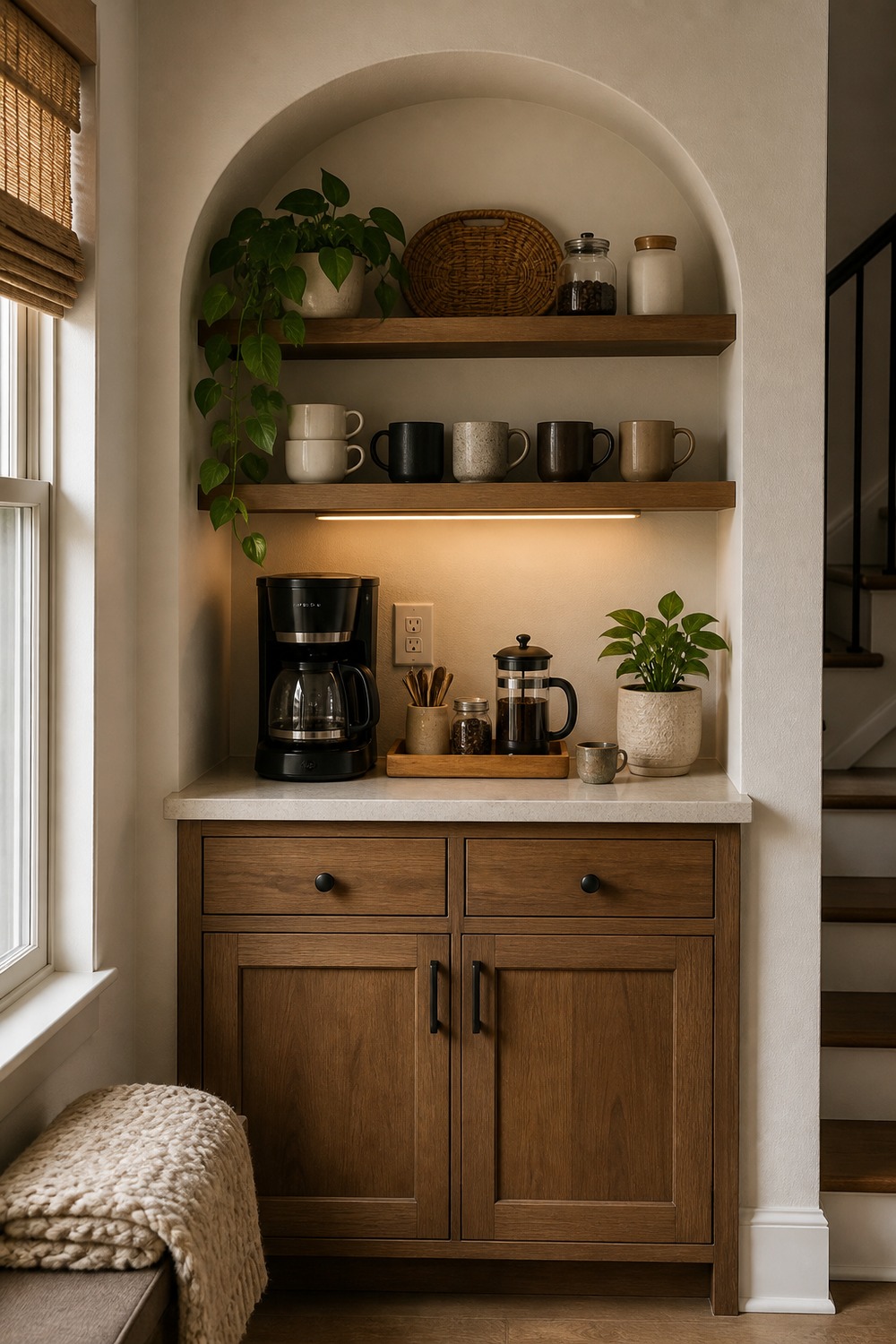
The arched niche makes this feel more built-in than it probably is. I like how the floating shelves follow the shape of the wall and turn a small recessed area into a coffee spot that feels finished from top to bottom.
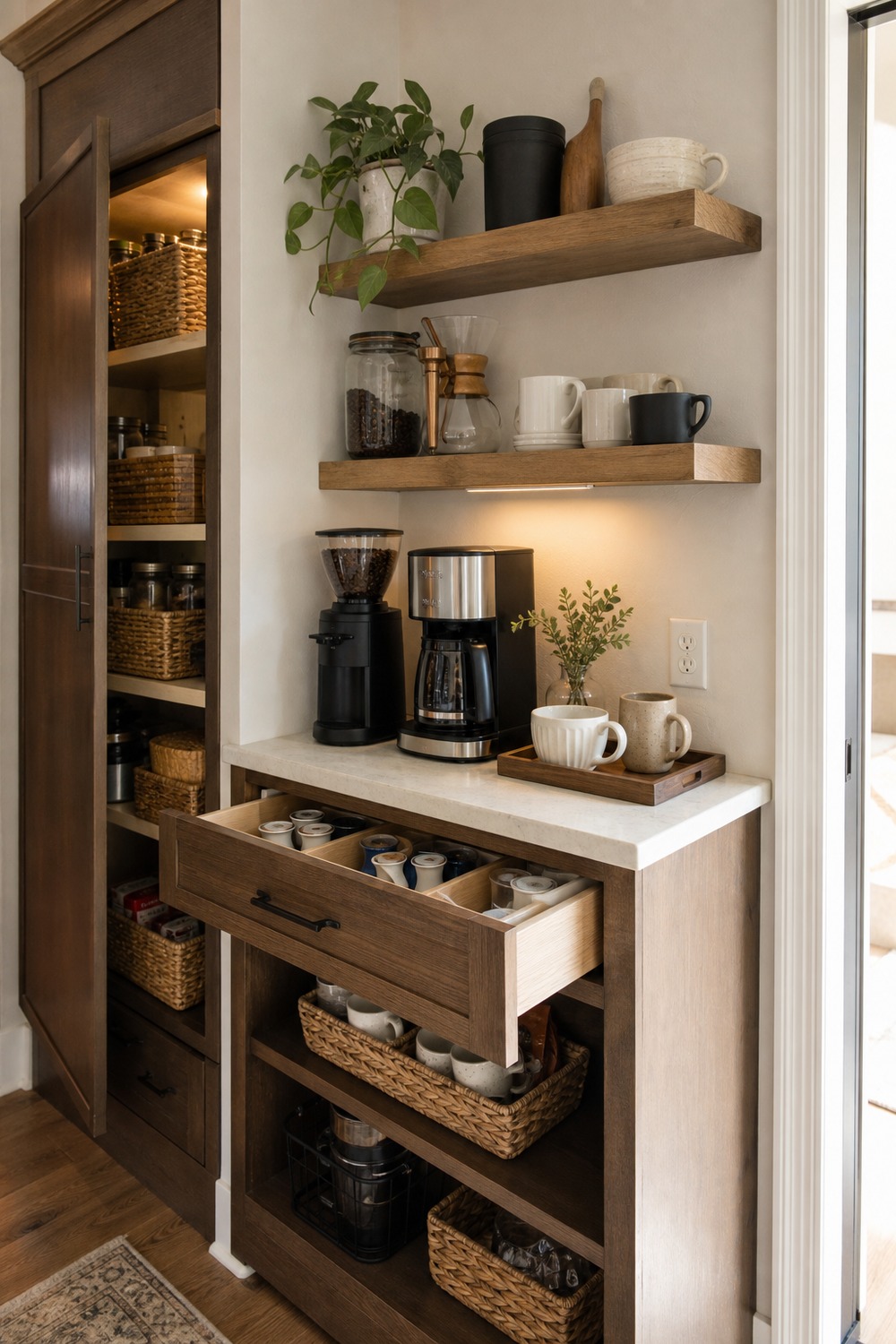
Putting the coffee station near pantry storage makes a lot of sense. The shelves can hold the good-looking mugs and jars, while the nearby drawers or cabinets can hide the backup coffee, filters, napkins, and anything that gets messy fast.
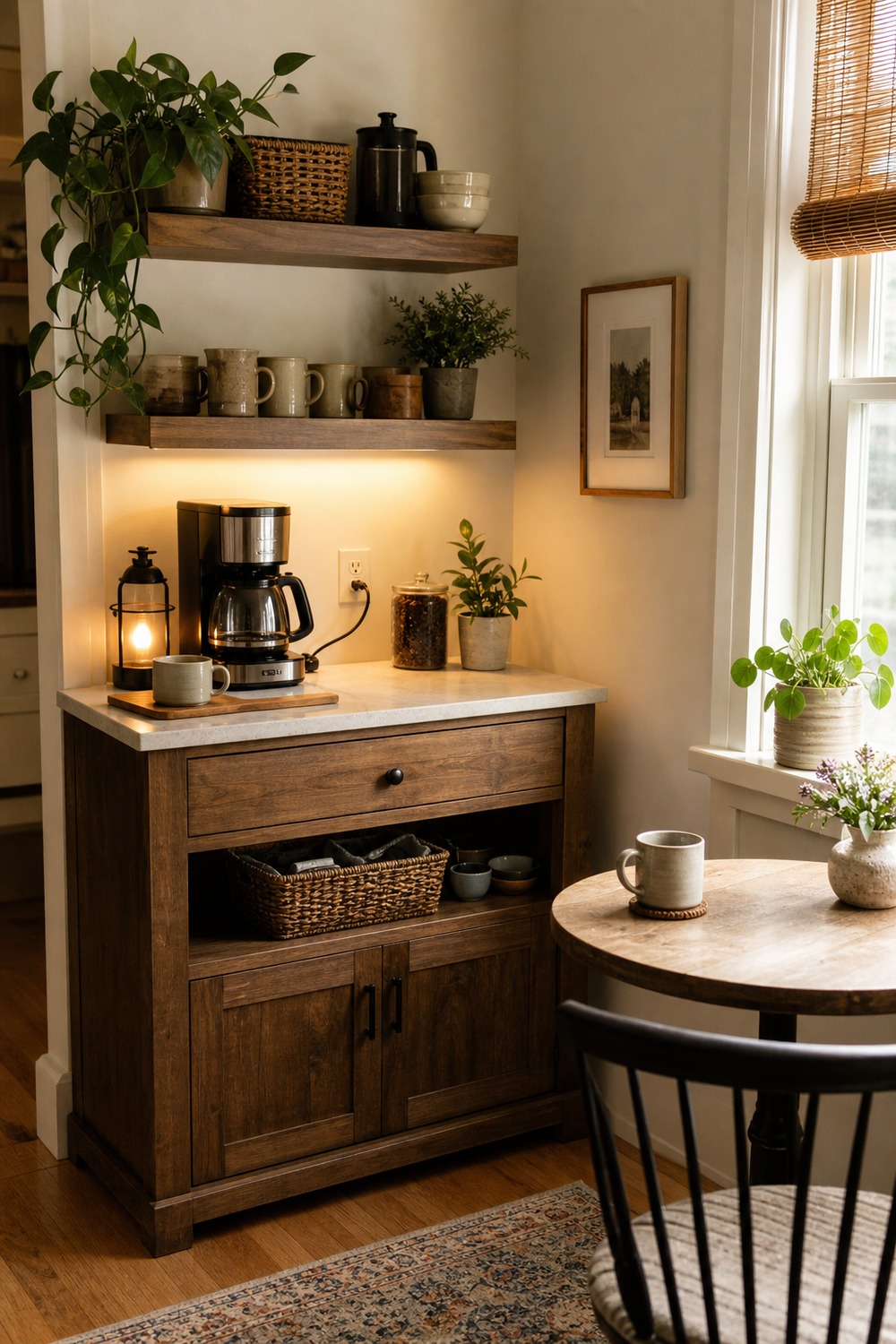
This breakfast-nook version feels sweet because it connects the coffee bar to an actual place to sit. The shelves add height above the cabinet, and the small table nearby makes the whole setup feel like part of the morning routine instead of just storage.
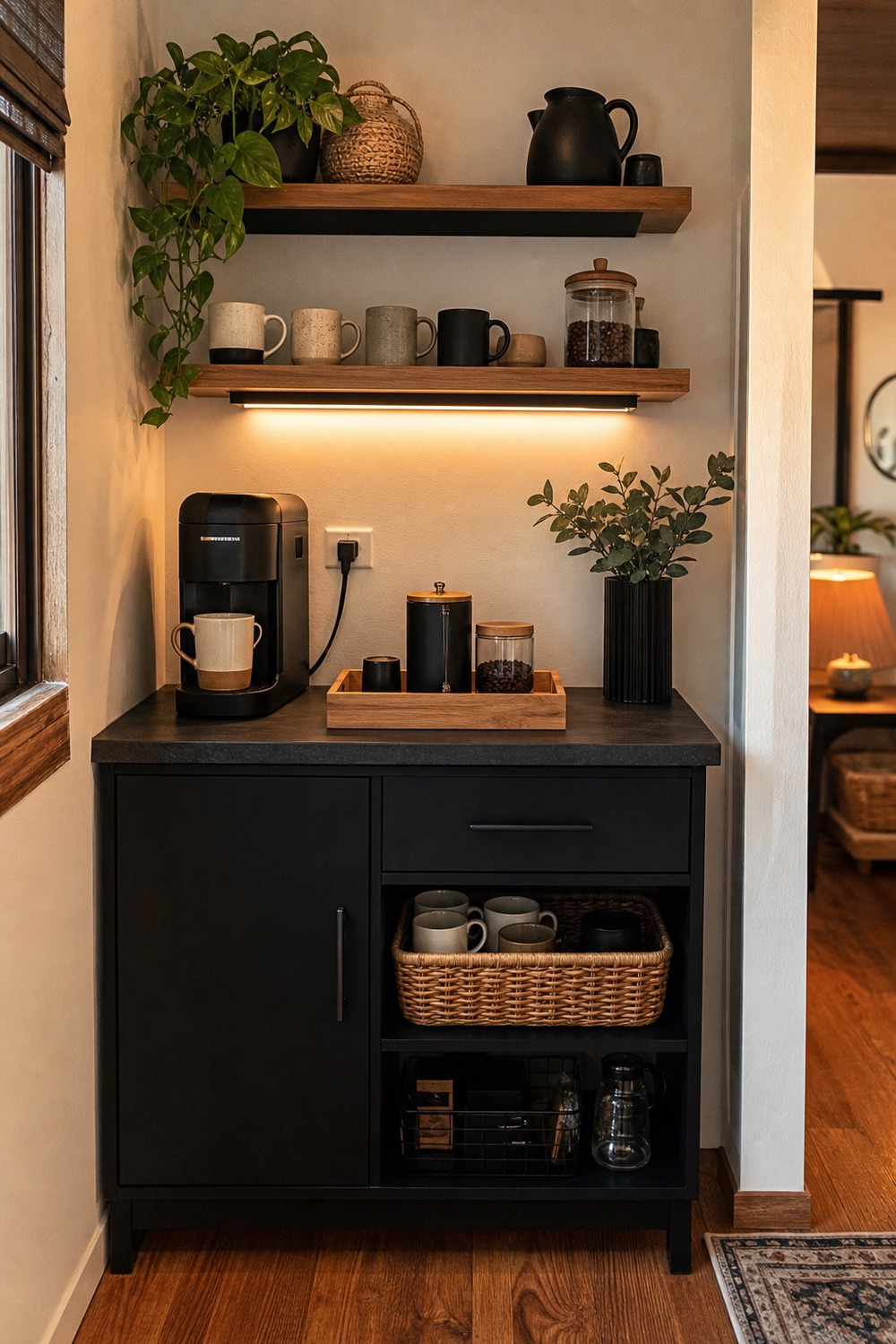
The black cabinet gives this coffee bar a sharper look without making it feel cold. Wood shelves, simple mugs, and a little warm light soften the dark base, which is exactly what keeps a minimal setup from looking flat.
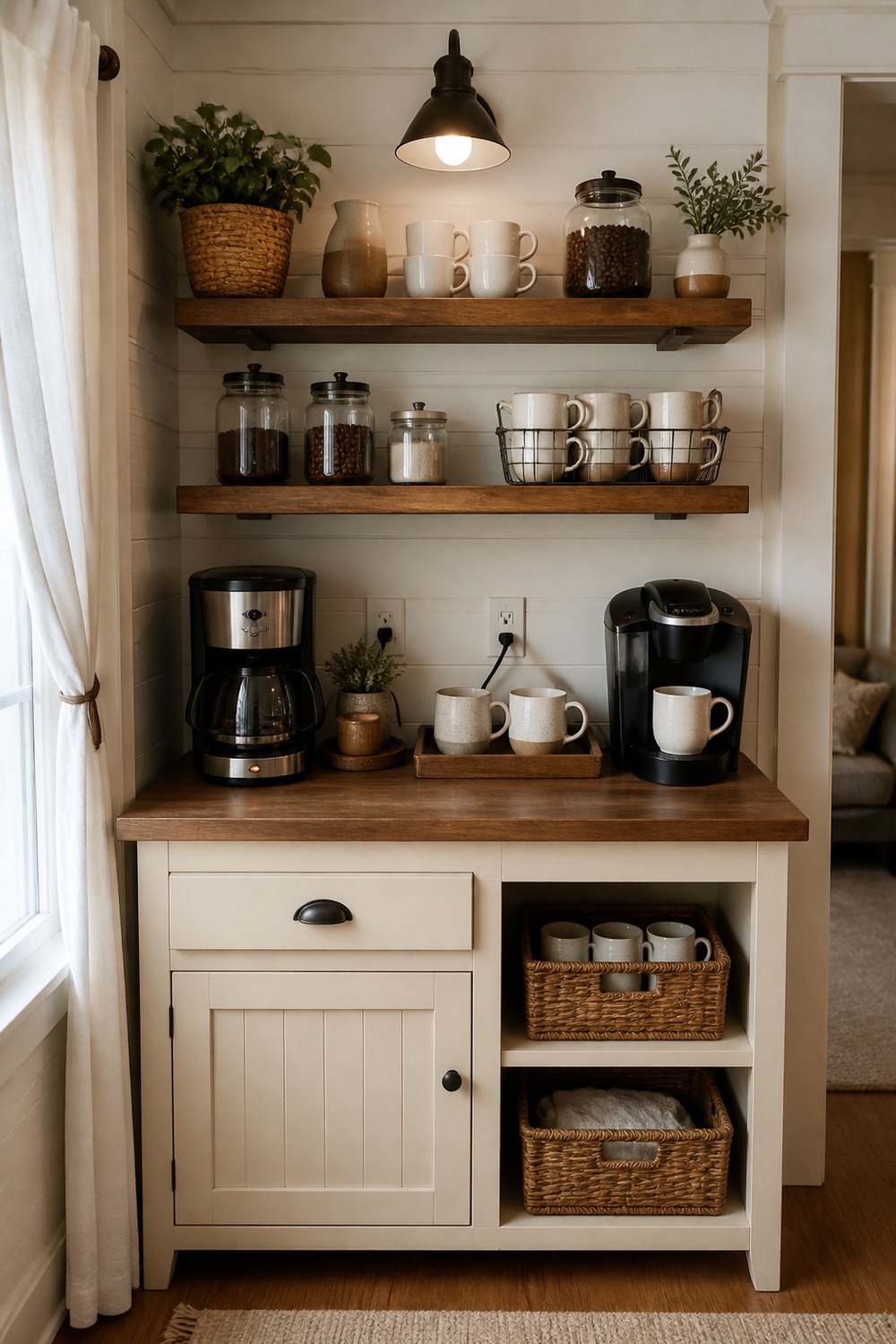
This is the softer farmhouse version that still feels usable. The floating shelves give room for mugs and baskets, while the beadboard-style texture and warm wood keep it from looking like a random appliance corner.
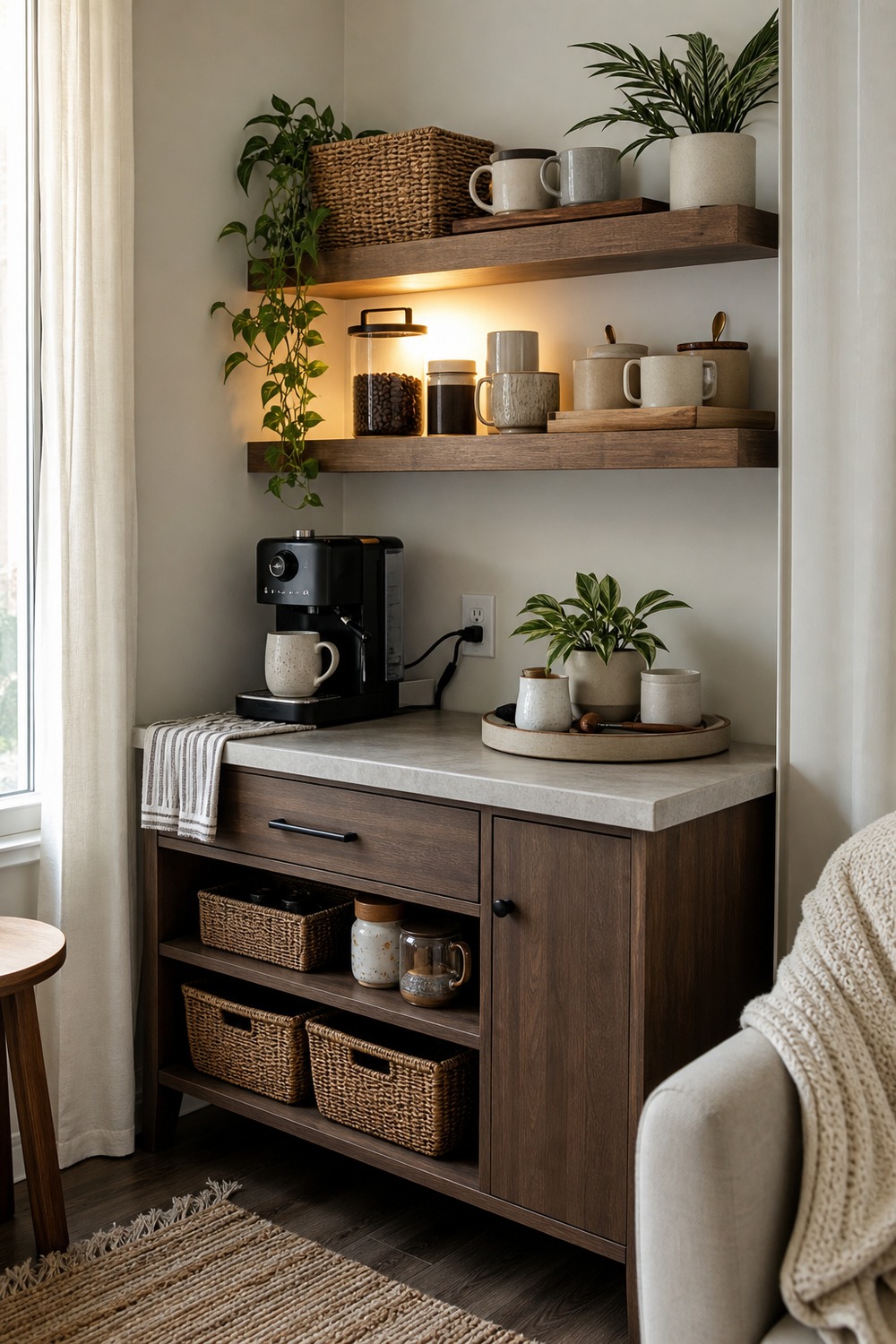
A renter-friendly coffee shelf needs to look intentional without feeling like a permanent remodel. This setup does that by keeping the shelves simple, the cabinet compact, and the styling light enough that it could move or change later.
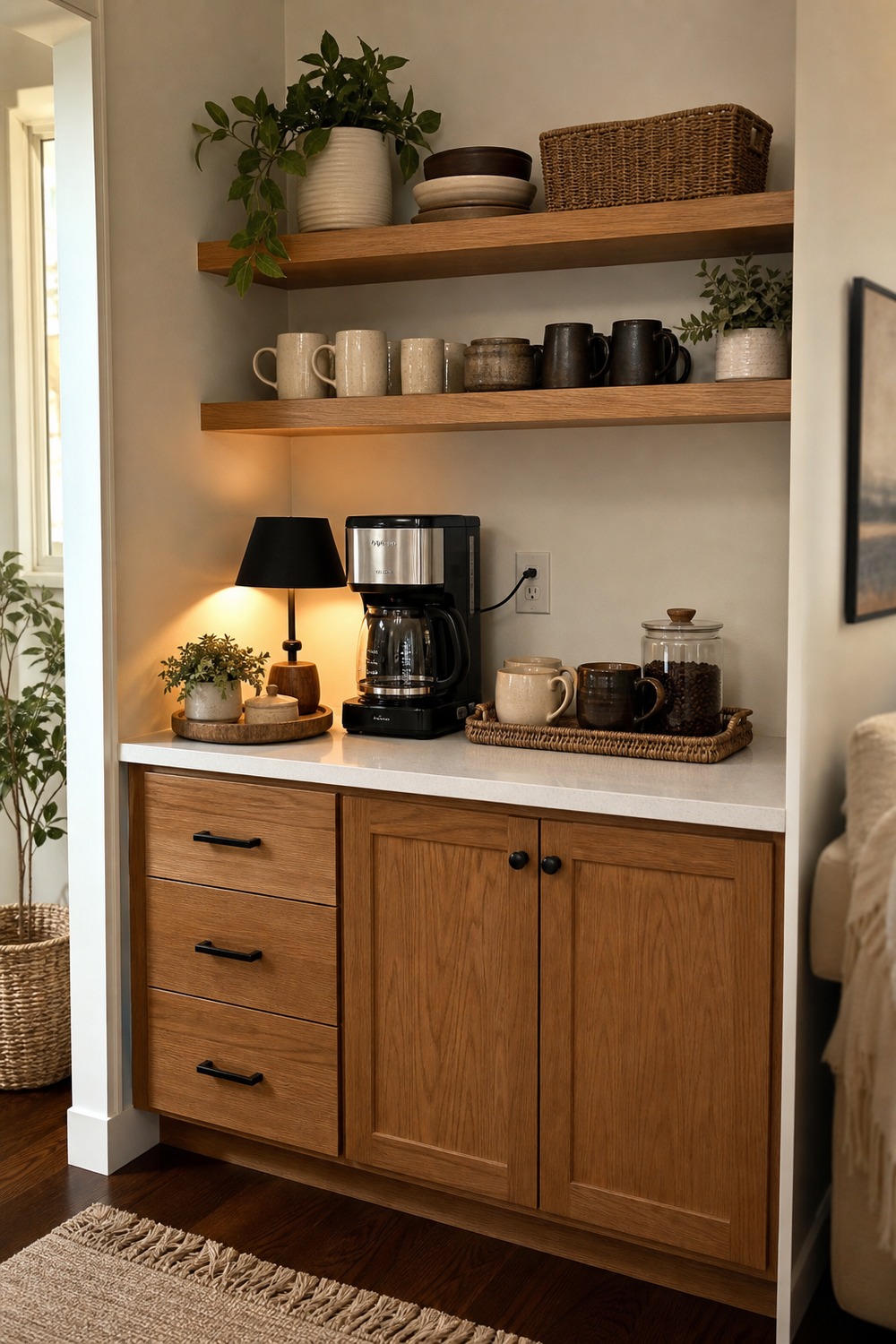
Closed storage is what makes this one feel calmer. The shelves can stay pretty with a few mugs and a tray, while the less attractive everyday supplies disappear behind the cabinet doors and drawers.
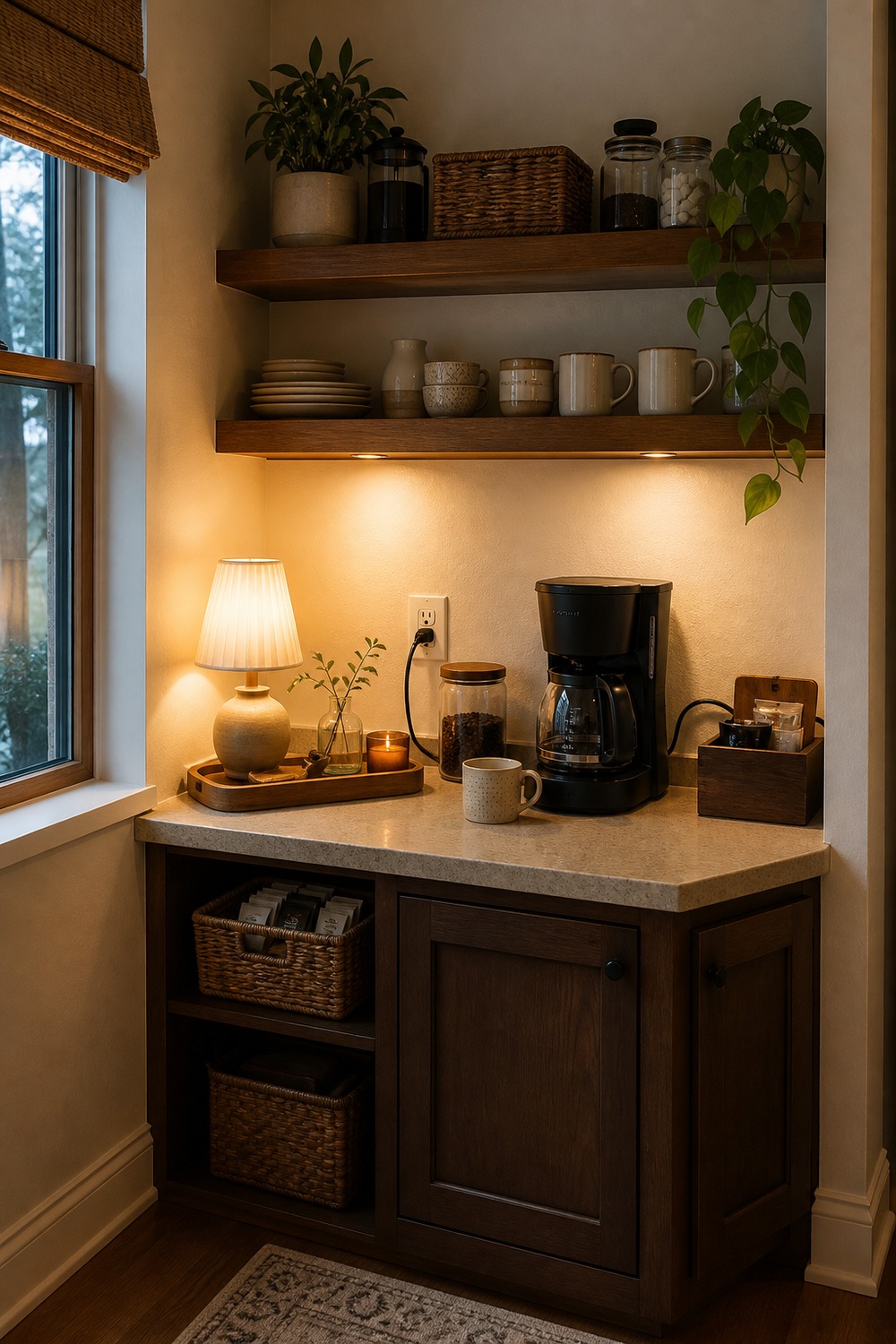
The lamp is the detail that makes this corner feel more like a tiny room moment than a countertop station. That little pool of warm light helps the shelves, mugs, and coffee maker feel cozy even when the setup is small.
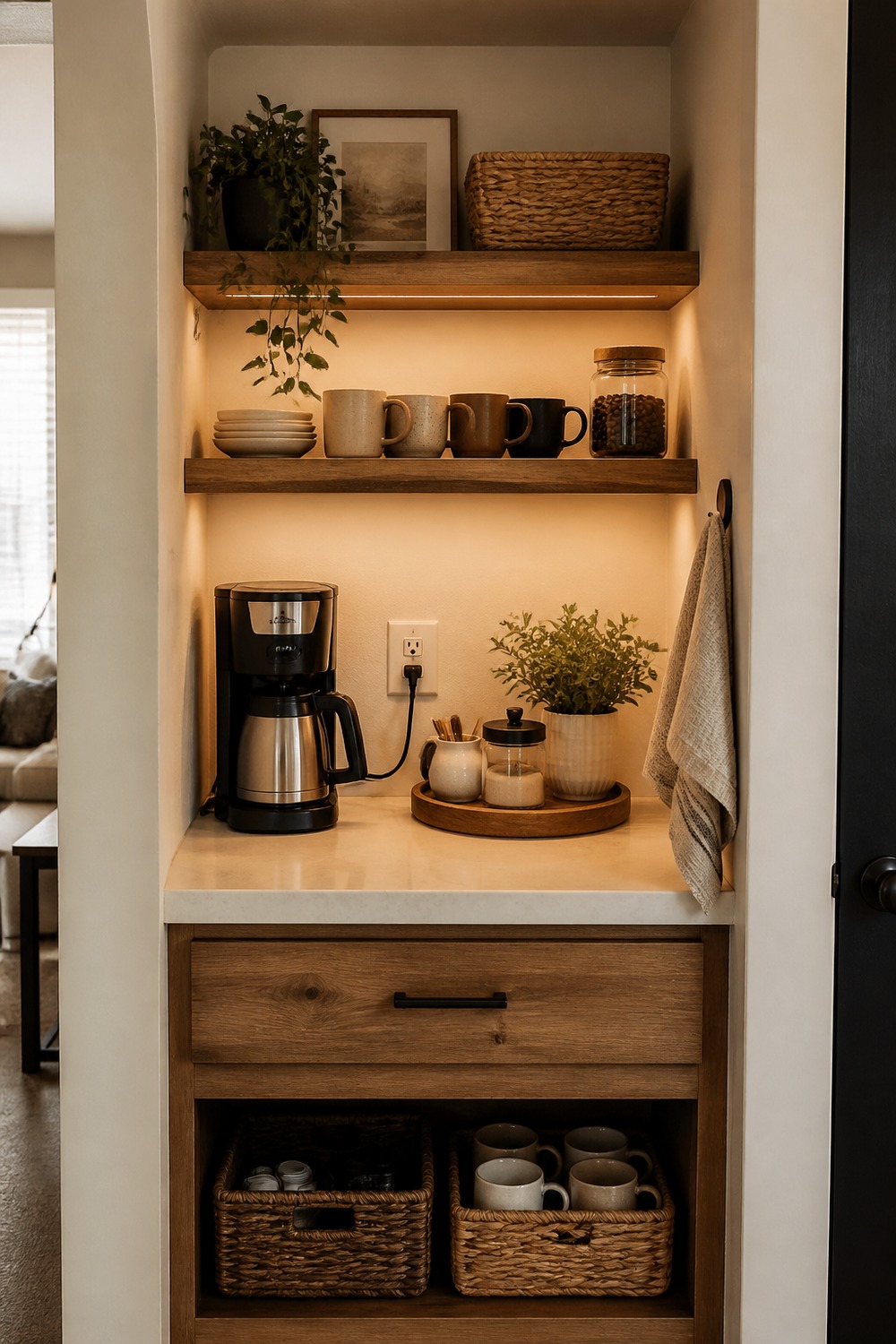
A narrow alcove can easily look forgotten, but this turns it into a useful coffee stop. The vertical shelves make the tight wall work harder, and the baskets below keep the setup from feeling overloaded.
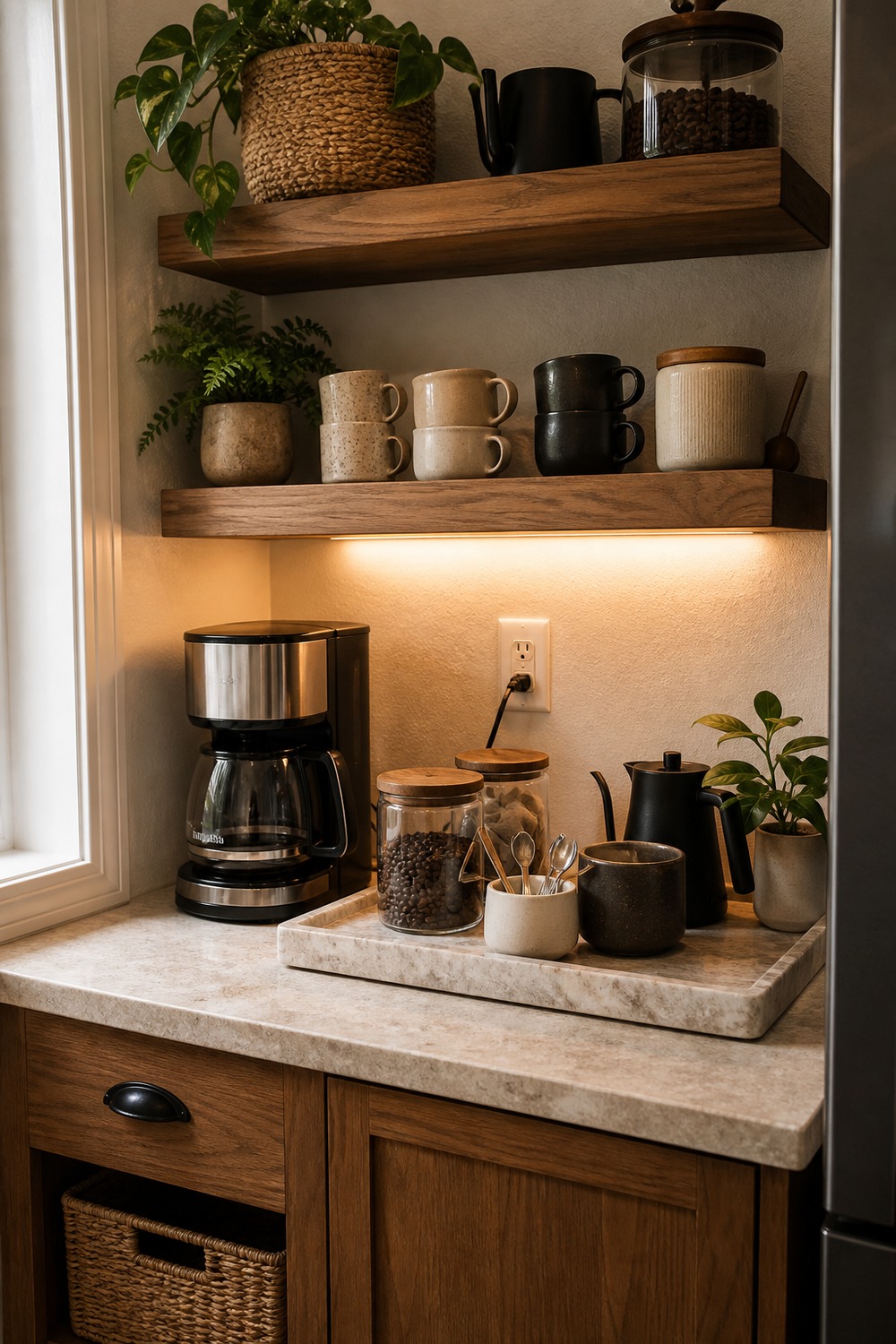
This tray setup is nice if you keep both coffee and tea supplies out. The shelves hold the mugs and small containers, while the stone tray keeps spoons, canisters, and the machine grouped together instead of scattered across the whole counter.
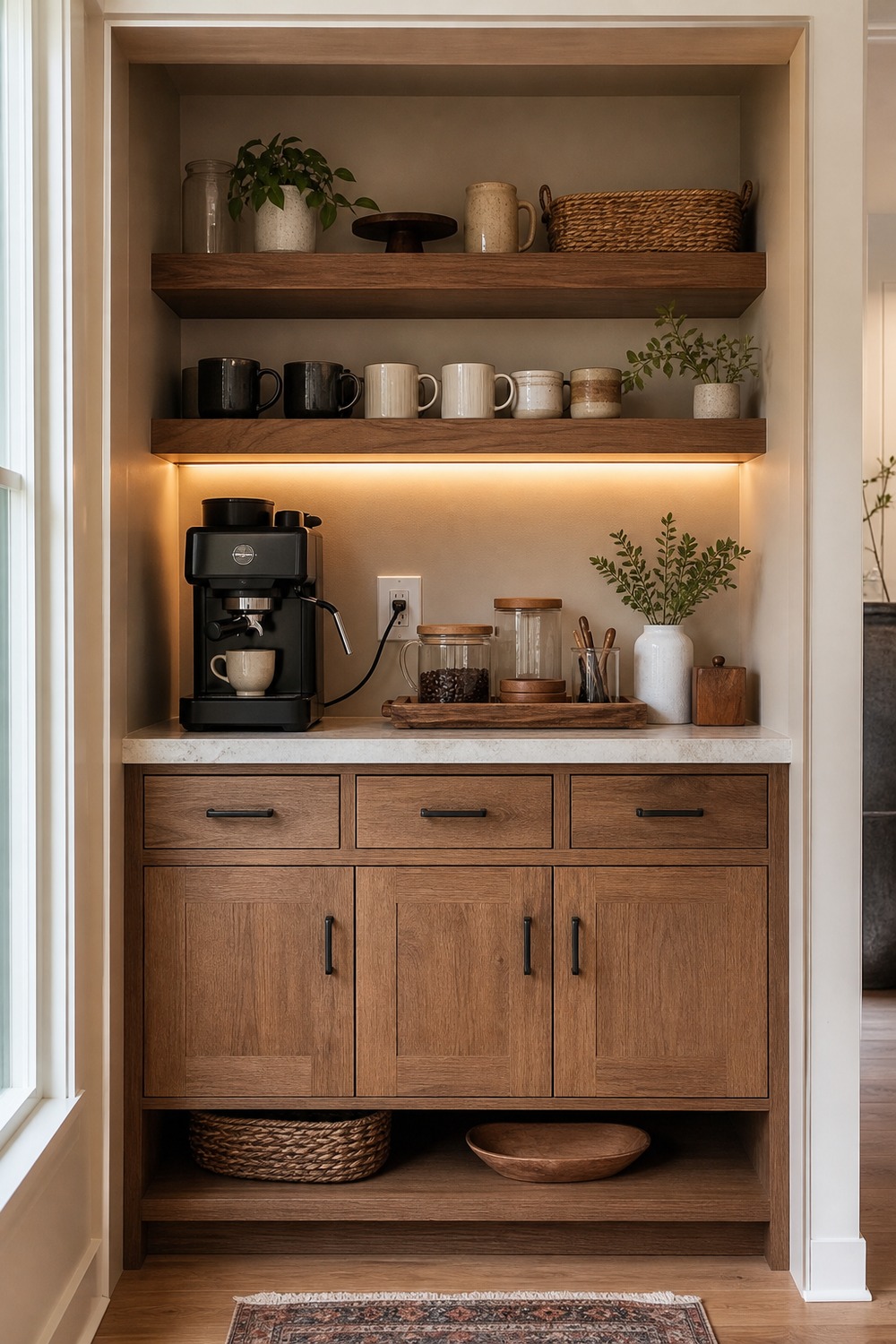
This has that built-in look without needing a huge wall of cabinetry. The floating shelves frame the coffee machine, the lower cabinet grounds it, and the under-shelf light makes the whole thing feel more finished.
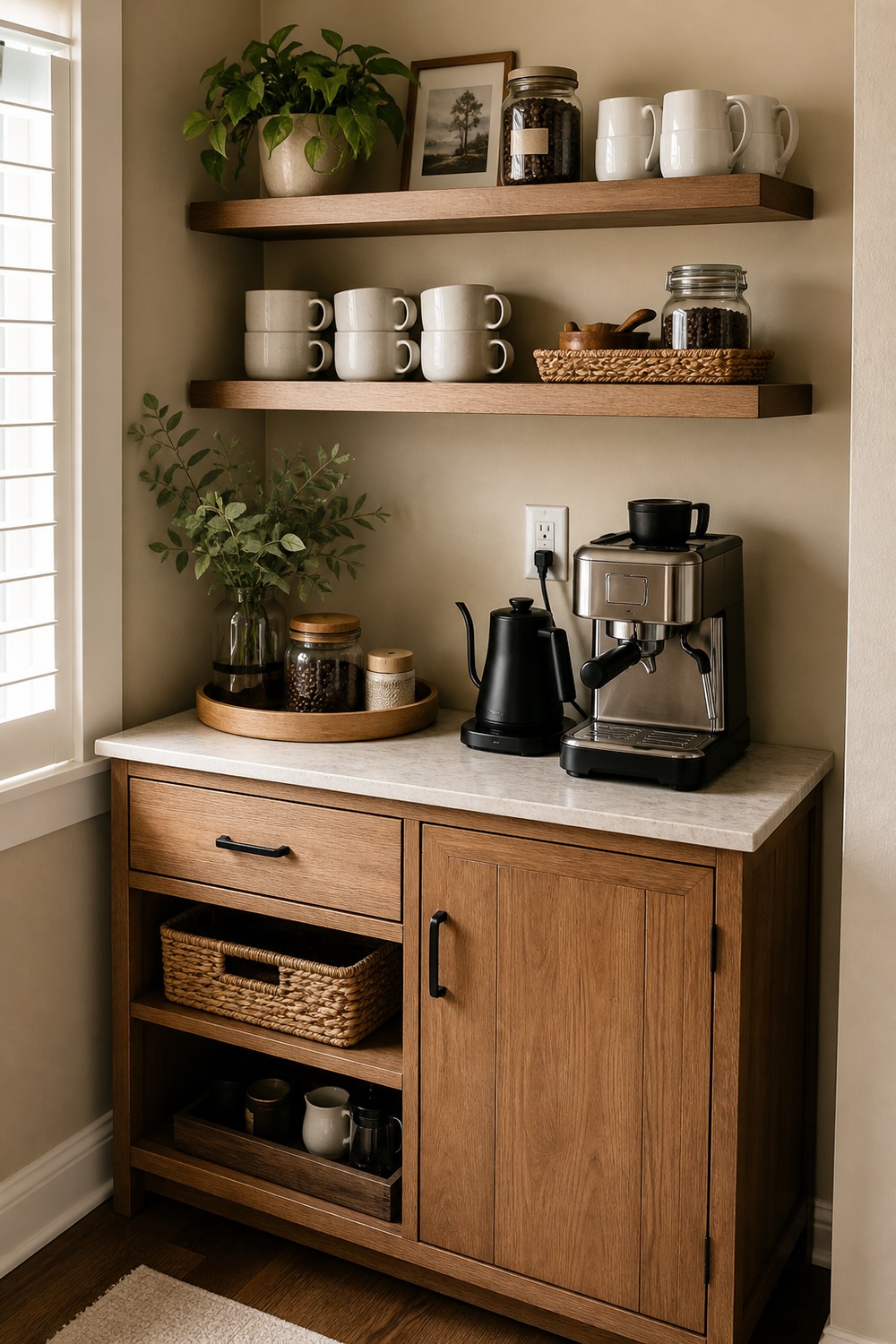
The neutral palette keeps this coffee bar from feeling busy, even with jars, mugs, and baskets on display. I like the oak cabinet and pale wall together because they make the floating shelves feel warm instead of stark.
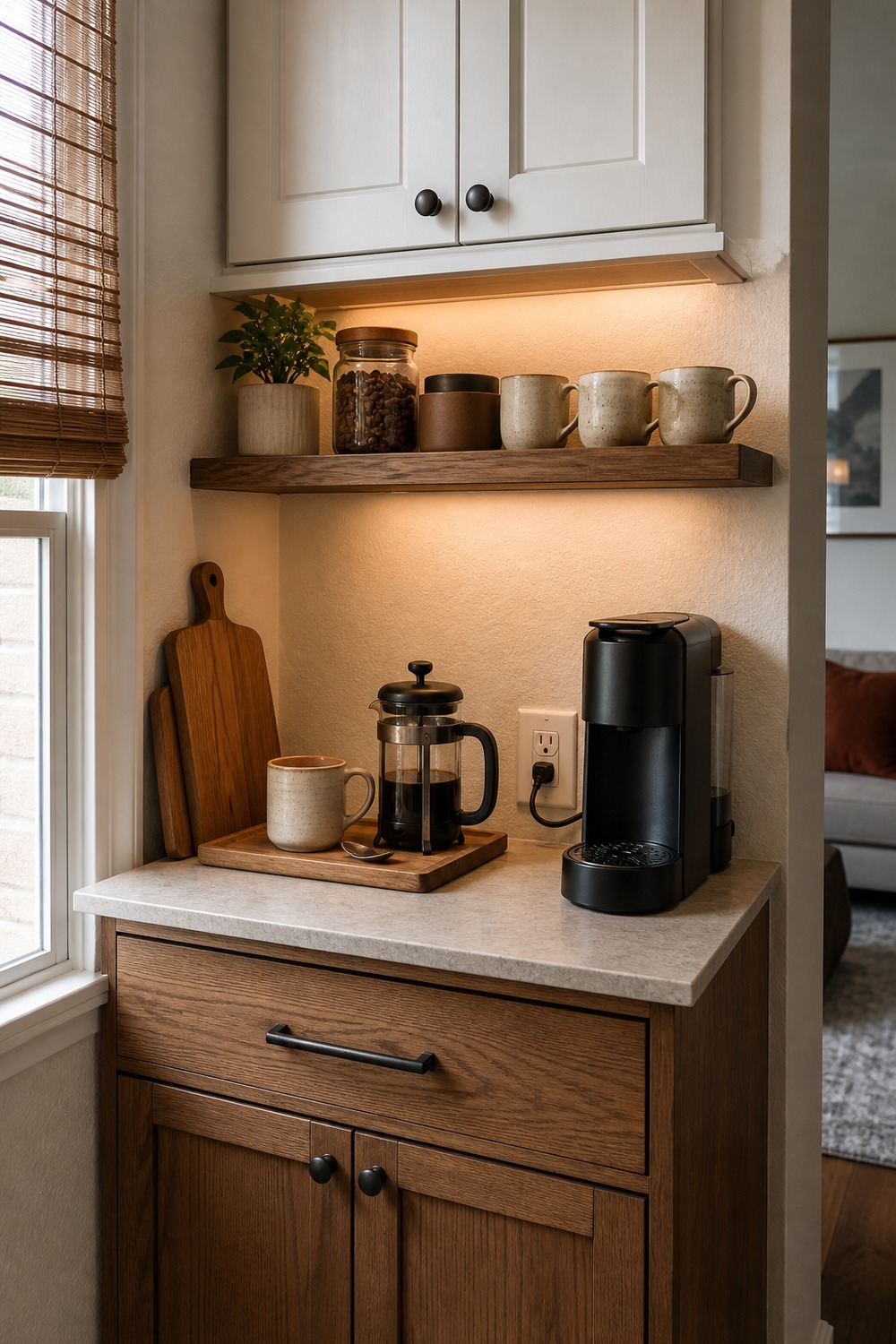
This tucked-under-cabinet idea is good for a kitchen that does not have a spare wall. The open shelf still gives the coffee zone some personality, but the compact counter keeps the machine close to where everything else already happens.
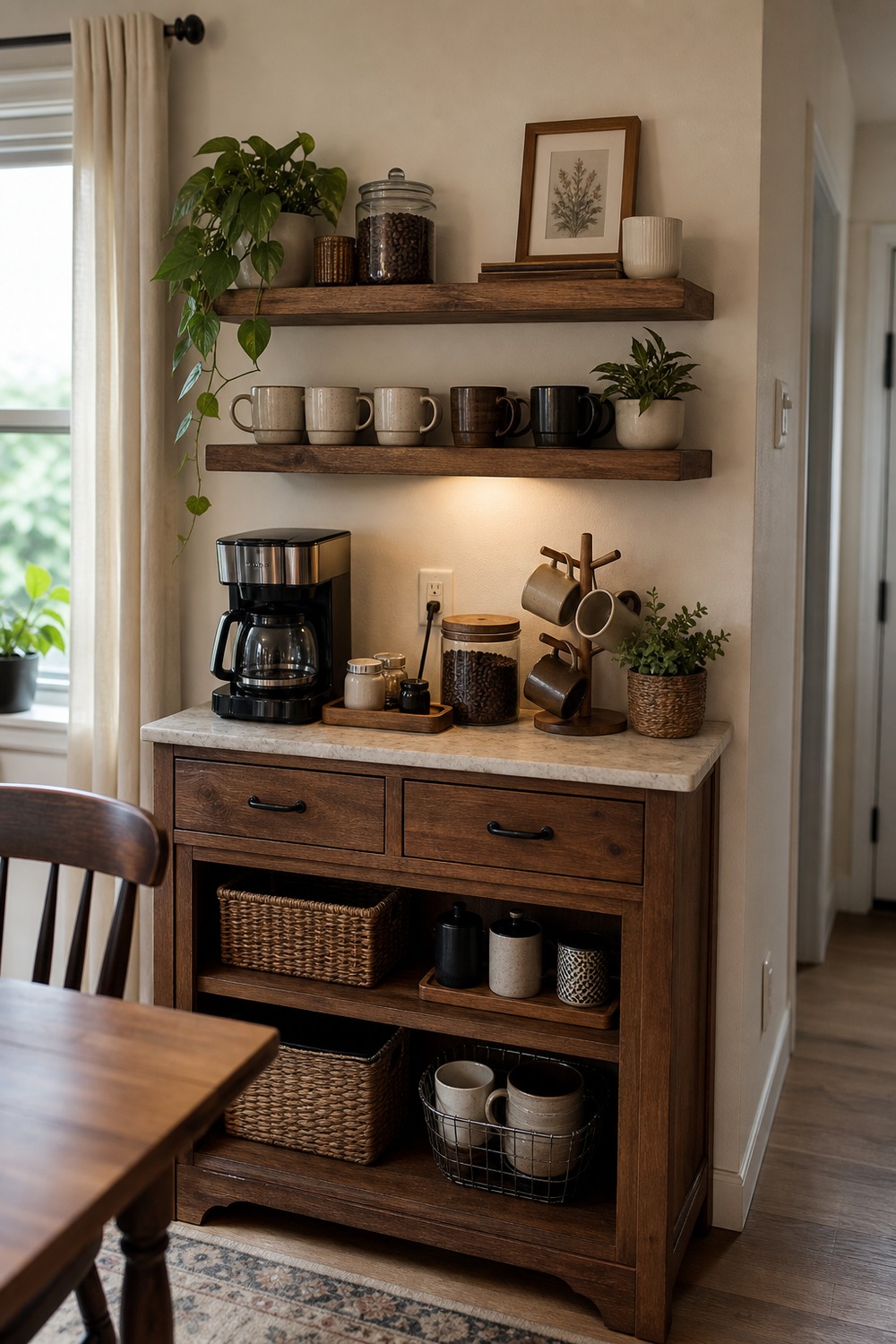
An unused dining corner is a smart place for a coffee bar because it already feels connected to sitting, breakfast, and slow mornings. The shelves add storage without stealing floor space, and the cabinet keeps the corner from looking like an afterthought.
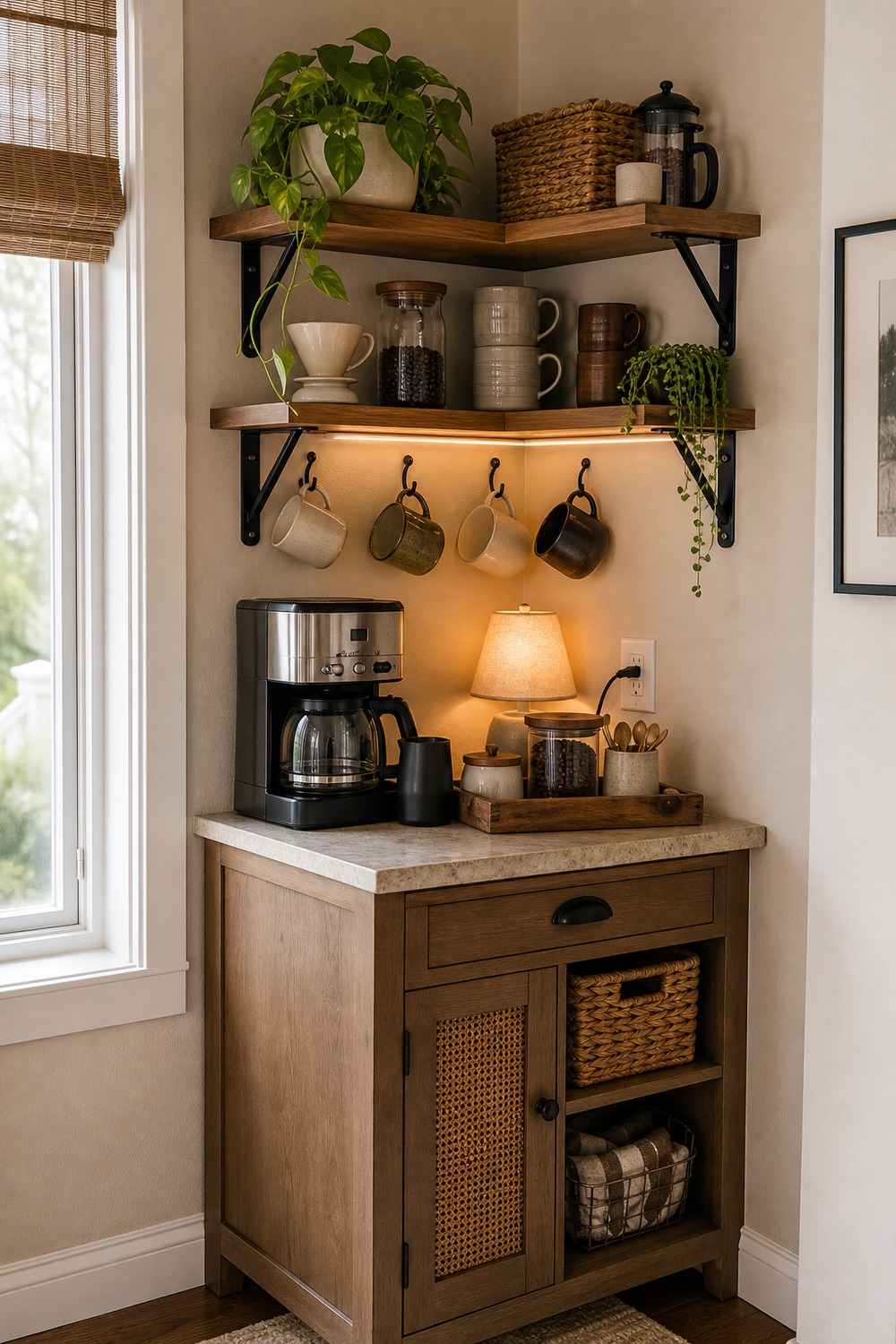
The wall-mounted shelf makes this corner feel lighter than a bulky cabinet would. Mugs, brackets, and a narrow counter give it enough structure, but there is still breathing room around the coffee maker.
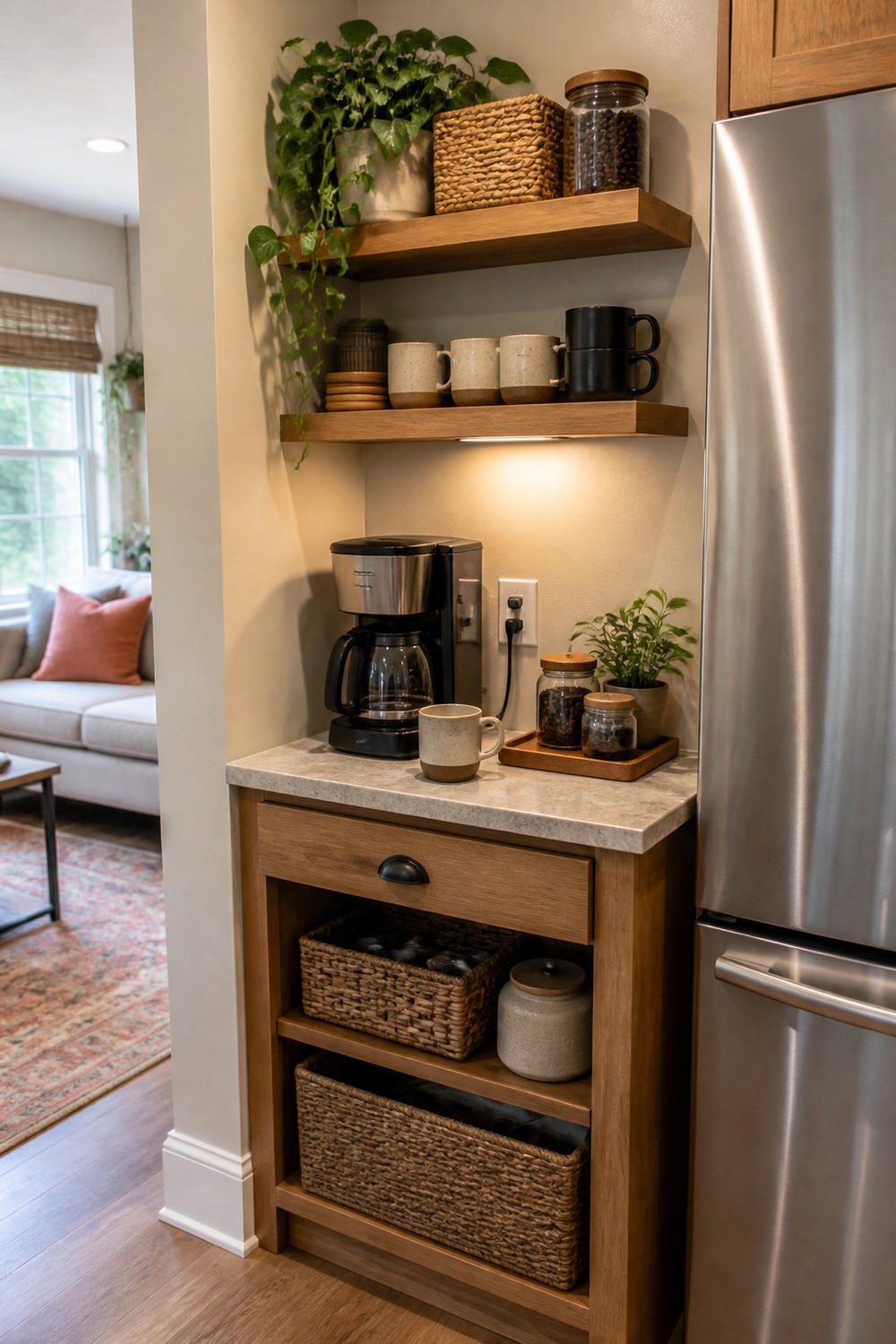
Beside the fridge is a practical spot because the coffee bar can borrow a bit of kitchen function without crowding the main prep area. The floating shelves make the vertical wall feel used, and the slim cabinet keeps the footprint under control.
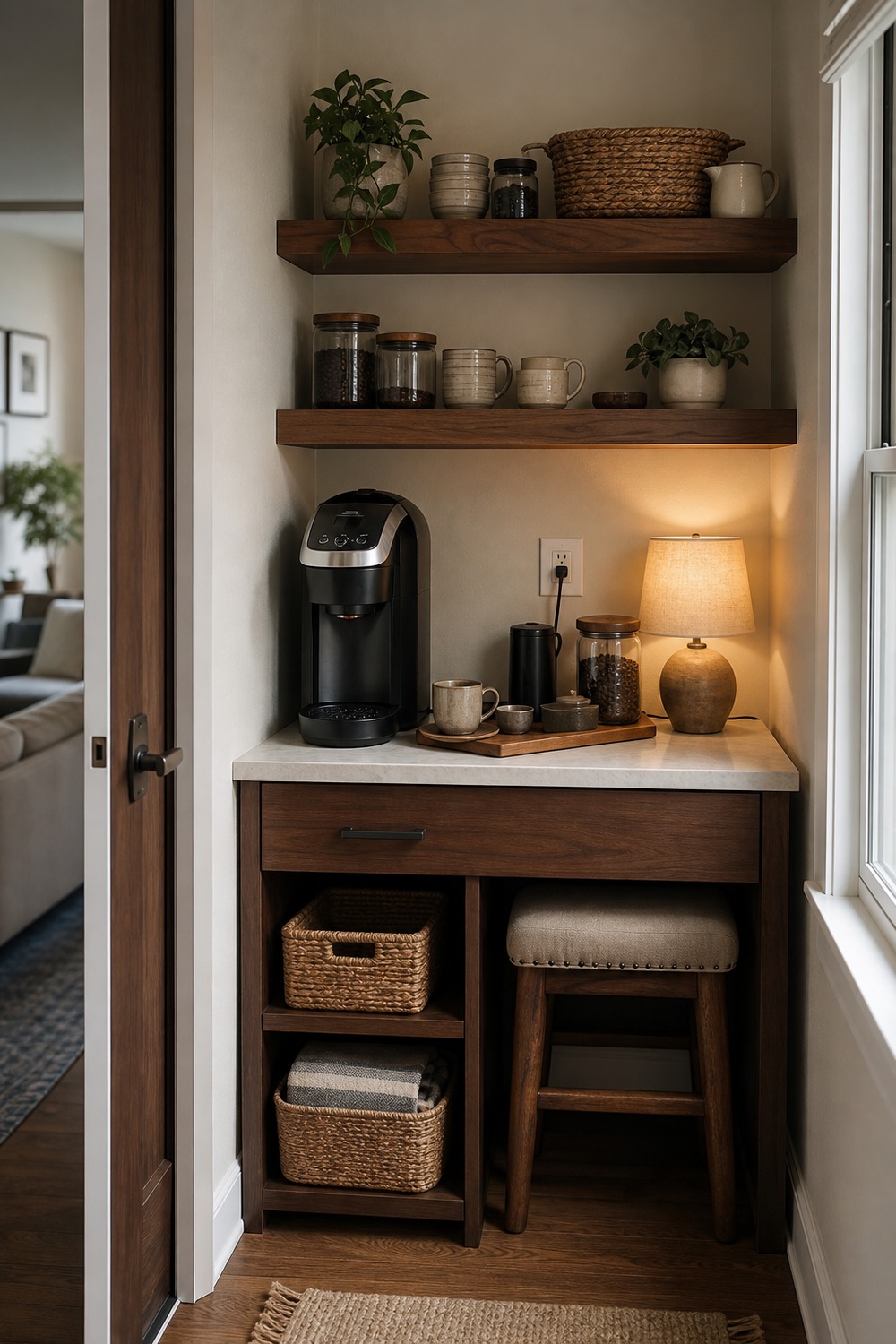
The tucked stool is such a good small-space detail. It gives the corner another use without making the coffee bar feel bulky, and the shelves above keep the mugs and baskets visually connected to the cabinet below.
A floating-shelf coffee bar does not need a huge wall to feel special. When the shelf height, counter depth, and hidden storage all make sense together, even a small corner can feel like it was meant to be there.

I work in tech, but my taste in design is straight out of a slow European village. Give me arches, aged brass, and a room that smells like books and coffee. That’s my kind of home.