Dining rooms are easy places for coffee stuff to look like an afterthought, especially when the table is already catching mail, mugs, and whatever did not make it back to the kitchen. A good little coffee bar gives the machine, cups, spoons, and extra pods a real home without making the room feel like a café set.
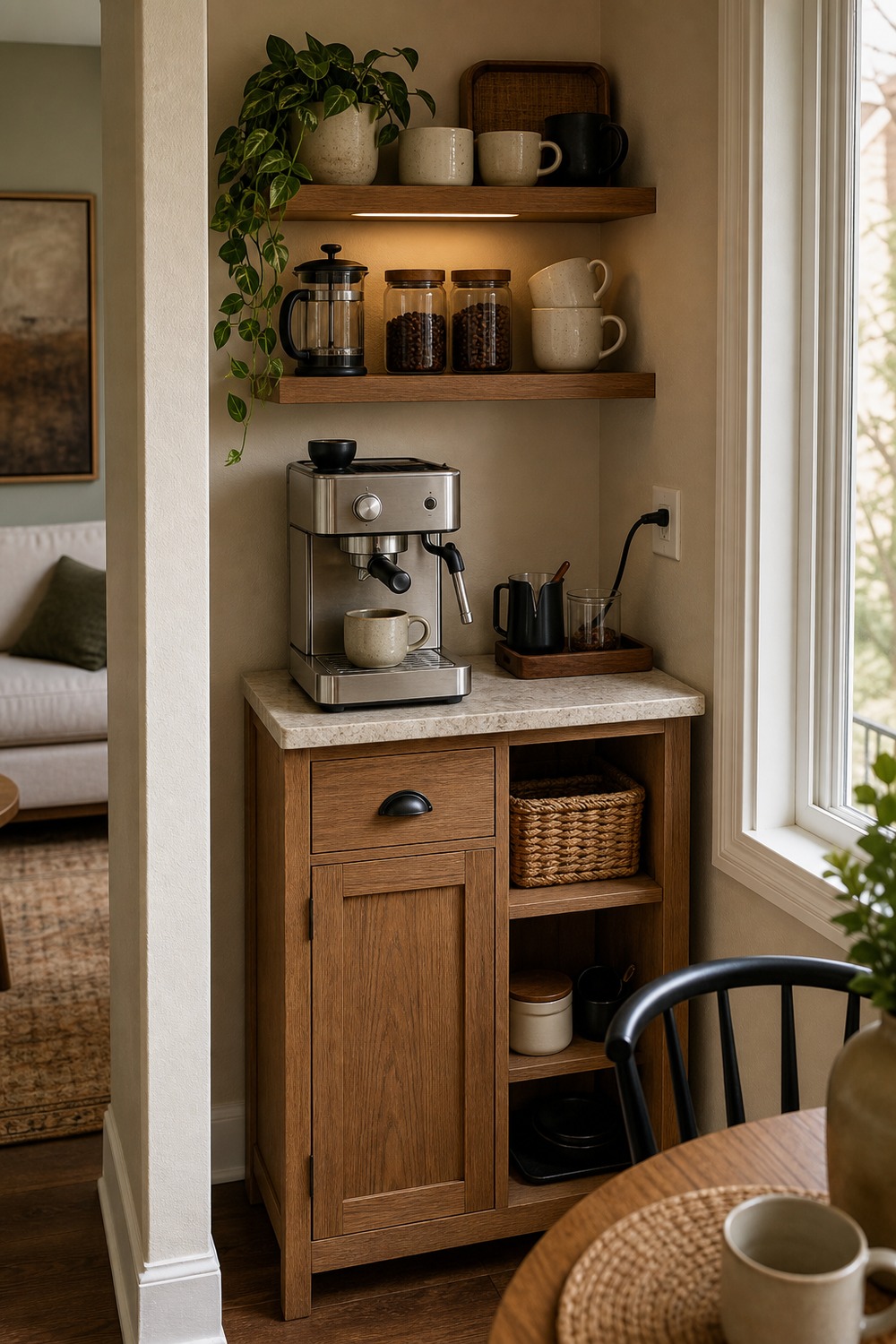
A narrow corner cabinet works so well in a dining room because it uses a spot that usually just collects a plant or a random chair. The shelves keep mugs and jars up high, while the closed base gives the coffee maker a real landing zone instead of letting everything spread across the table.
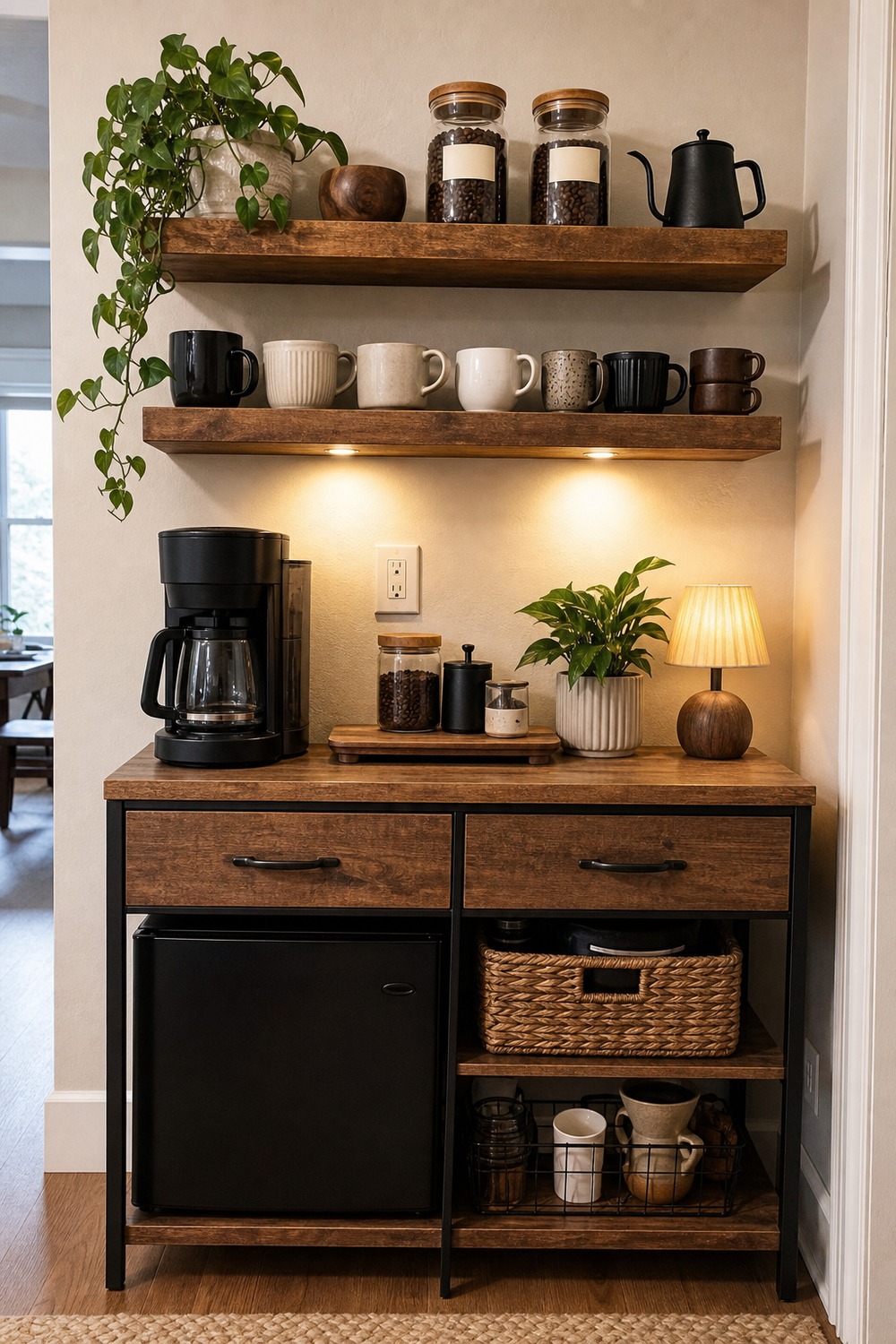
Floating shelves make this nook feel lighter than a full hutch. I like that the cups, canisters, and little plant are easy to reach, but the sideboard below still keeps the practical extras from turning into counter clutter.
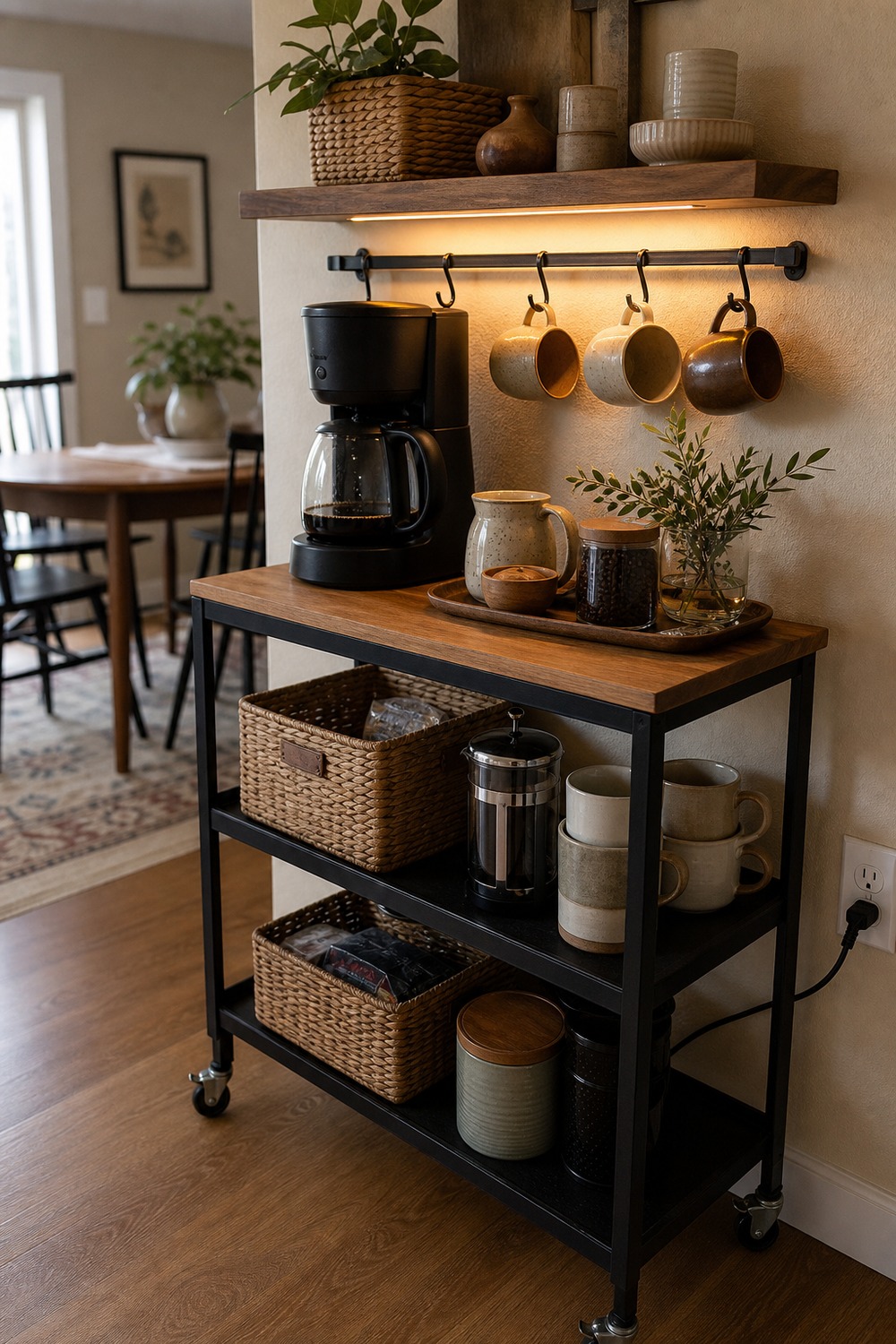
A rolling cart is a smart move if the dining room has to stay flexible. It can sit beside the wall for everyday coffee, then move out of the way when people are actually eating, wrapping gifts, or using the room for something else.
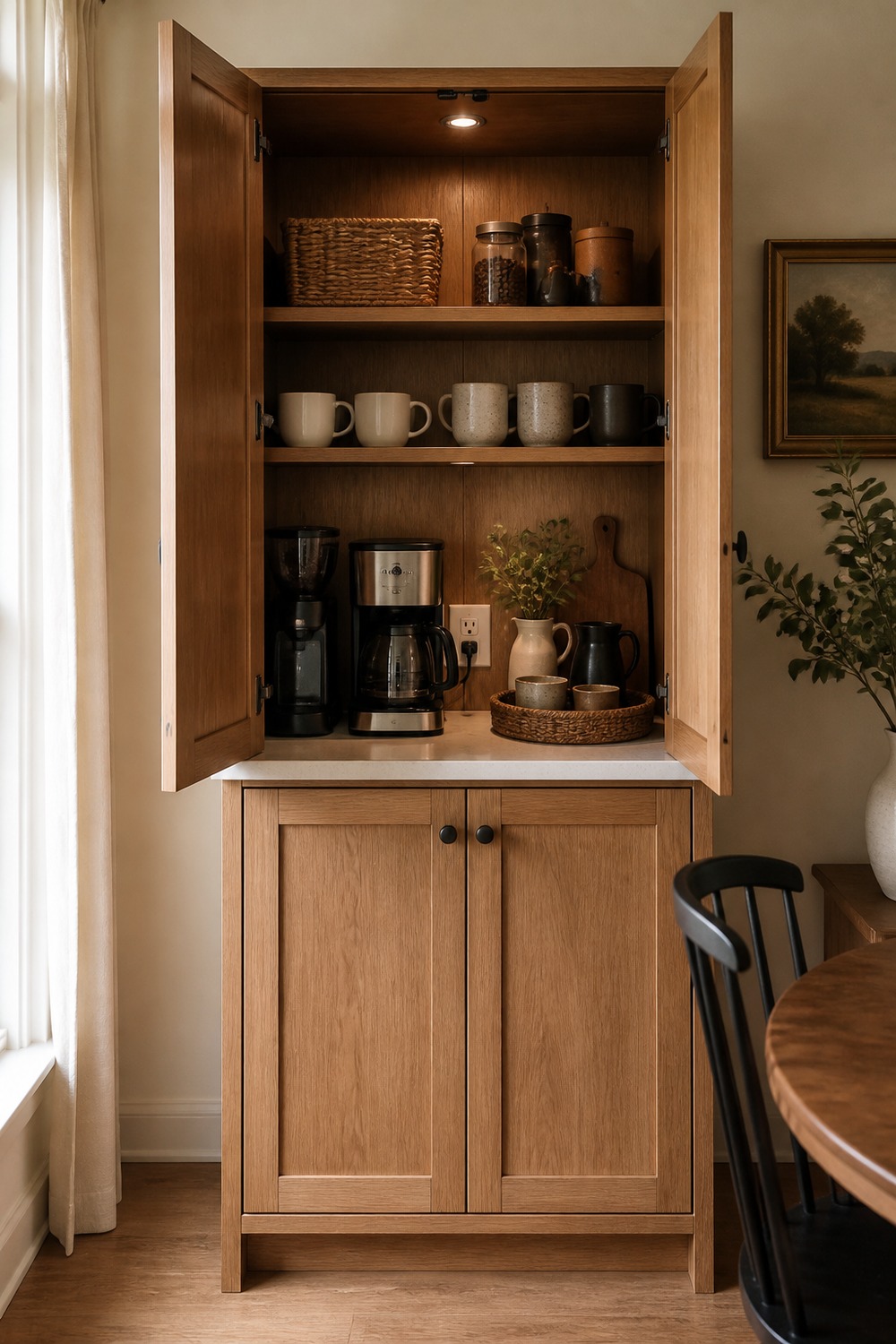
The hidden cabinet idea is probably my favorite for anyone who hates visual clutter. You still get the full coffee setup, but the mugs, filters, pods, and extra bags can disappear behind doors when the dining room needs to look calmer.
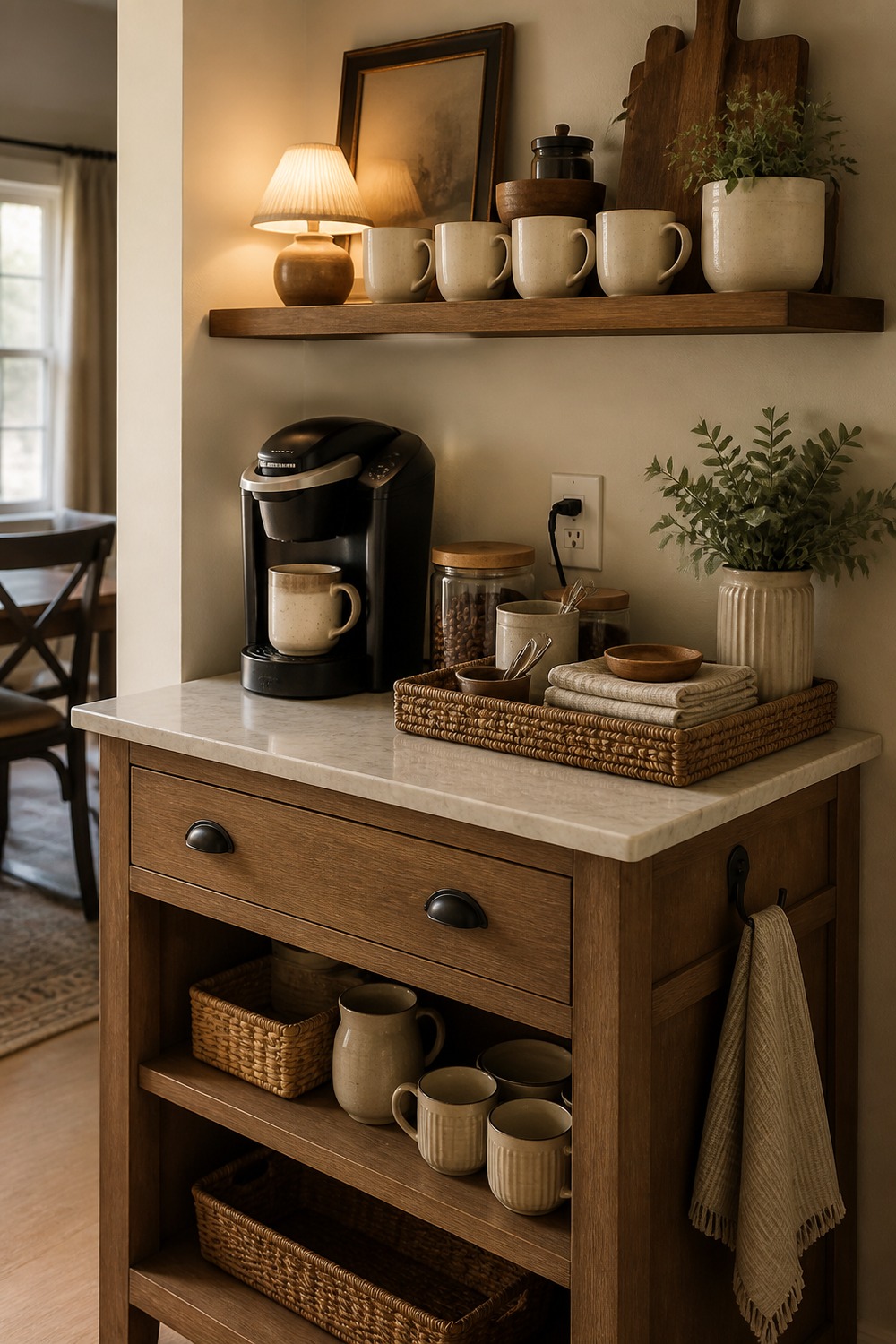
This warm wood and cream corner has that softer furniture feeling, which helps it belong in a dining room instead of looking like a spare kitchen counter. The simple shelf styling, neutral mugs, and small lamp glow make the coffee machine feel less harsh.
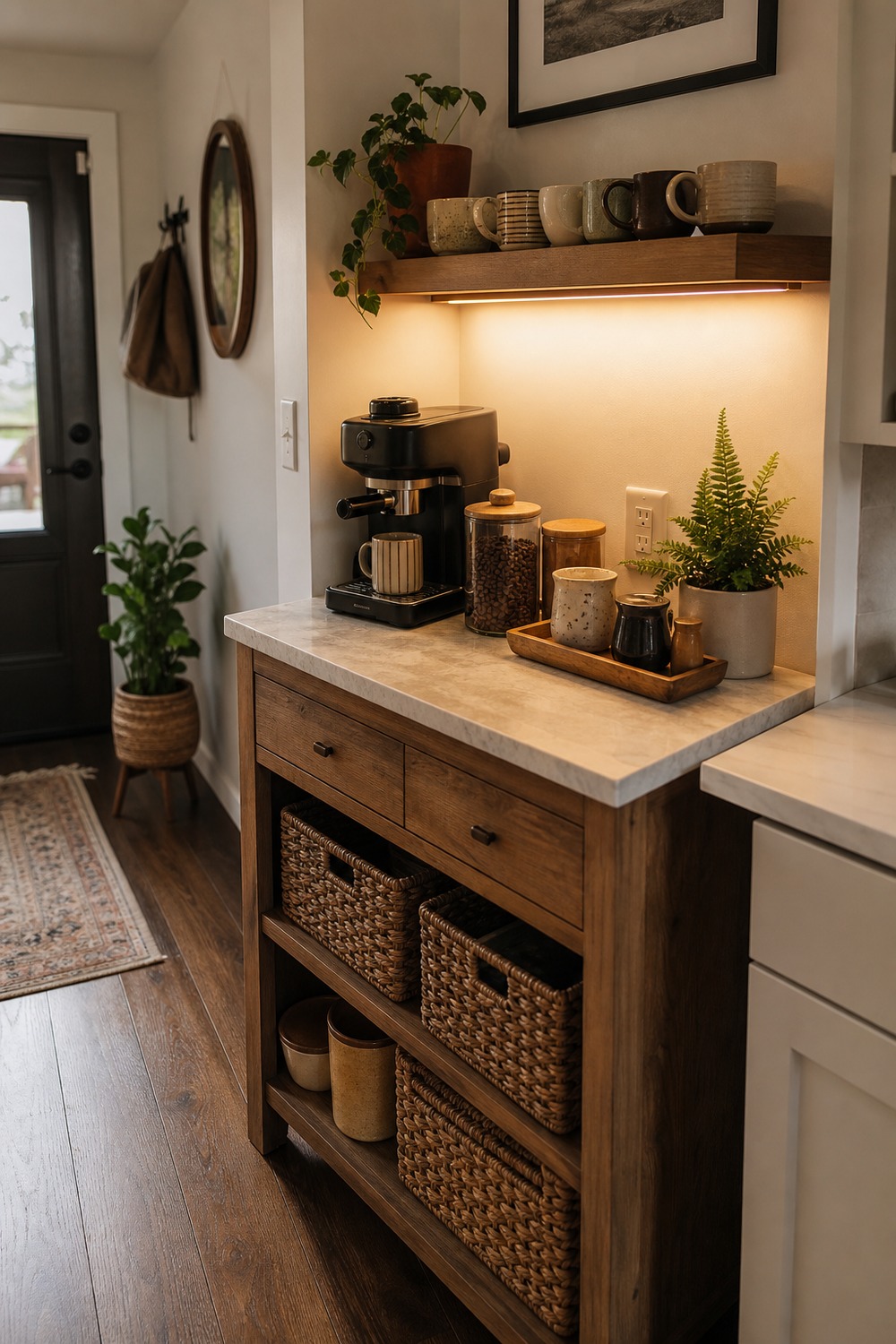
An entry-adjacent coffee spot makes sense when the dining room is close to a pass-through or apartment wall. The baskets do a lot here because they hide the not-so-pretty supplies while the open shelves keep the everyday pieces within reach.
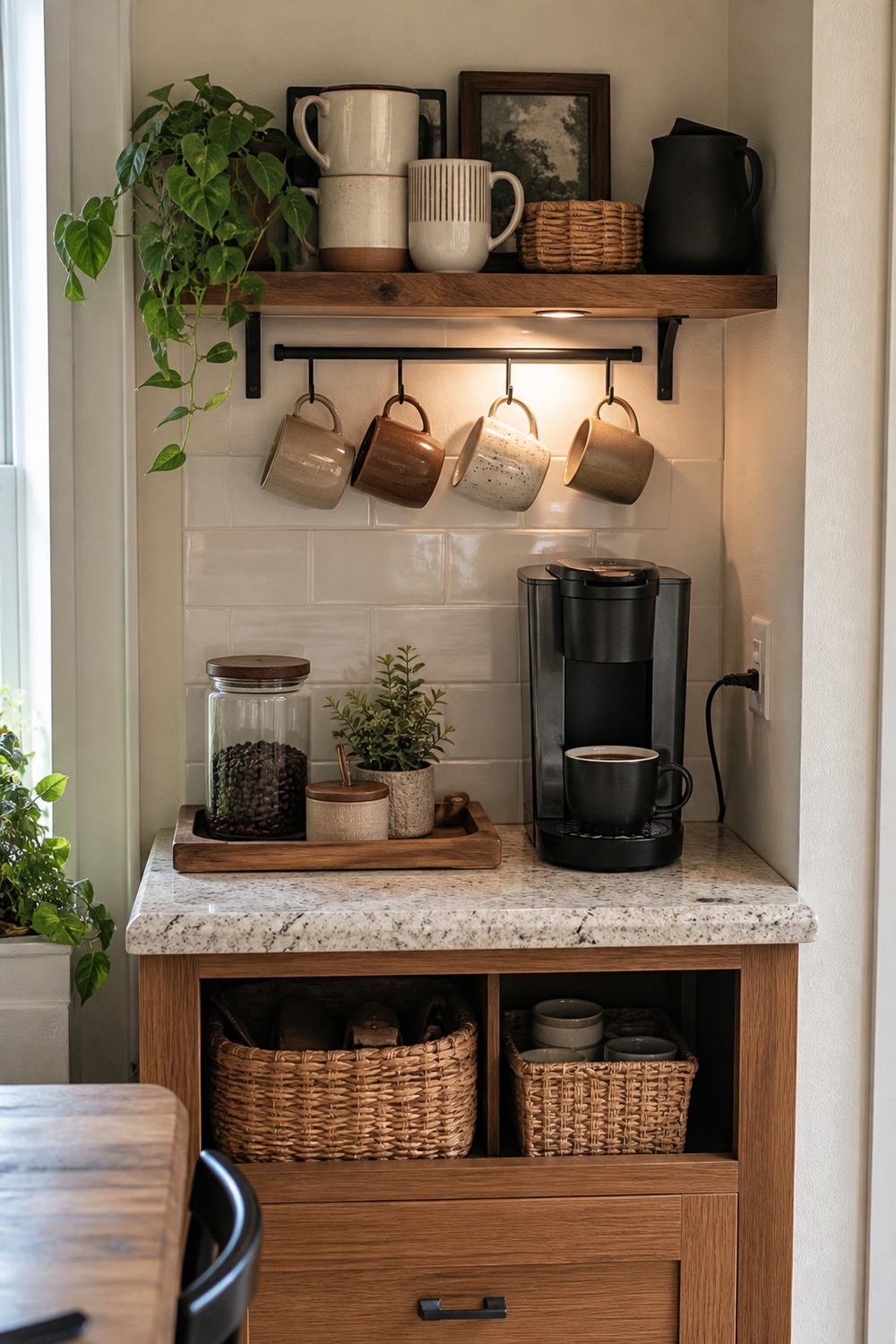
This countertop-style setup is useful if the dining area already opens into the kitchen. The hanging mugs, woven basket, and shelf give the coffee zone a boundary, so the machine does not look like it was just dropped wherever there was an outlet.
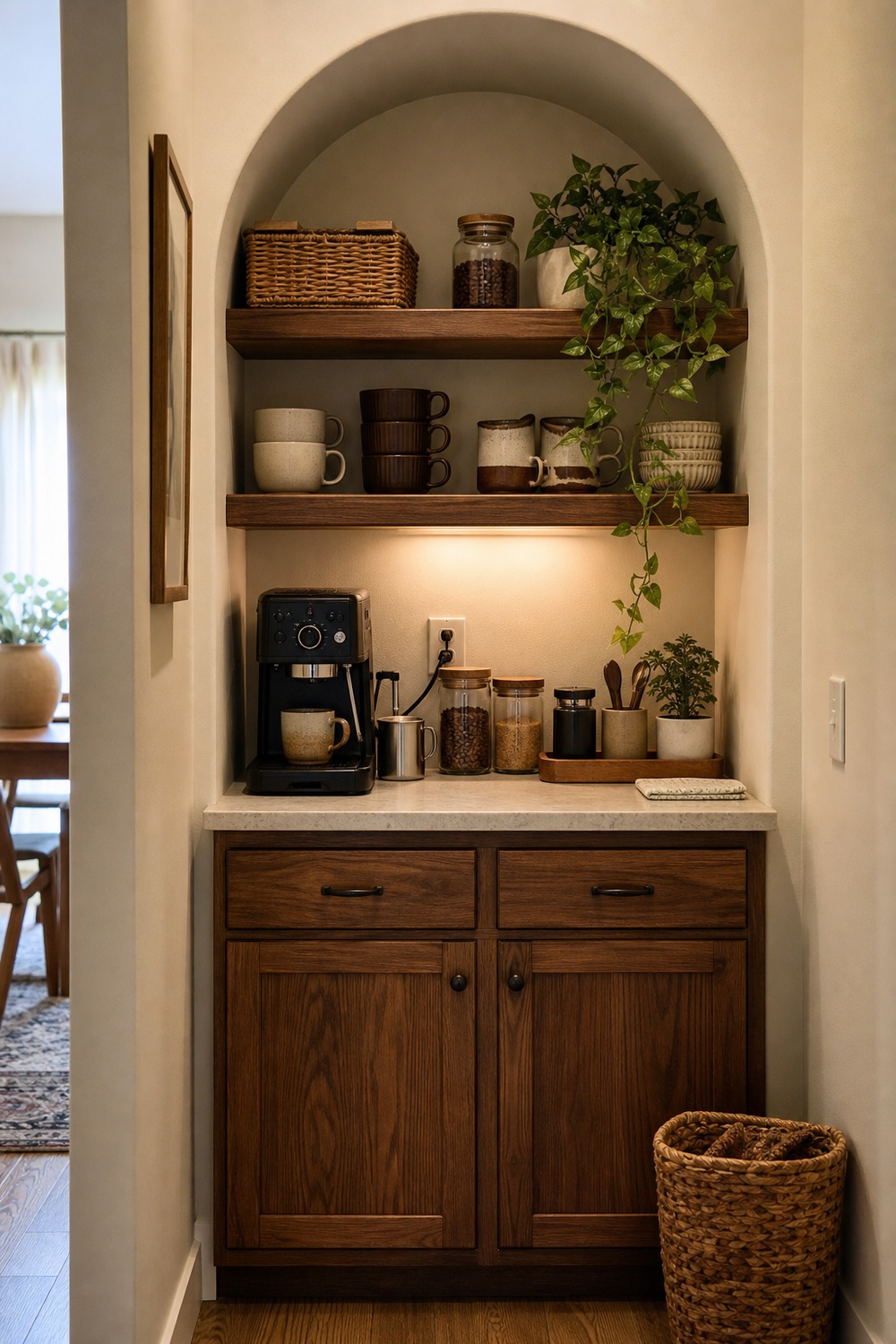
An arched niche instantly makes a coffee bar feel intentional. The curve frames the shelves and cabinet like a built-in feature, and the mix of mugs, greenery, and warm lighting keeps the whole thing from feeling too plain.
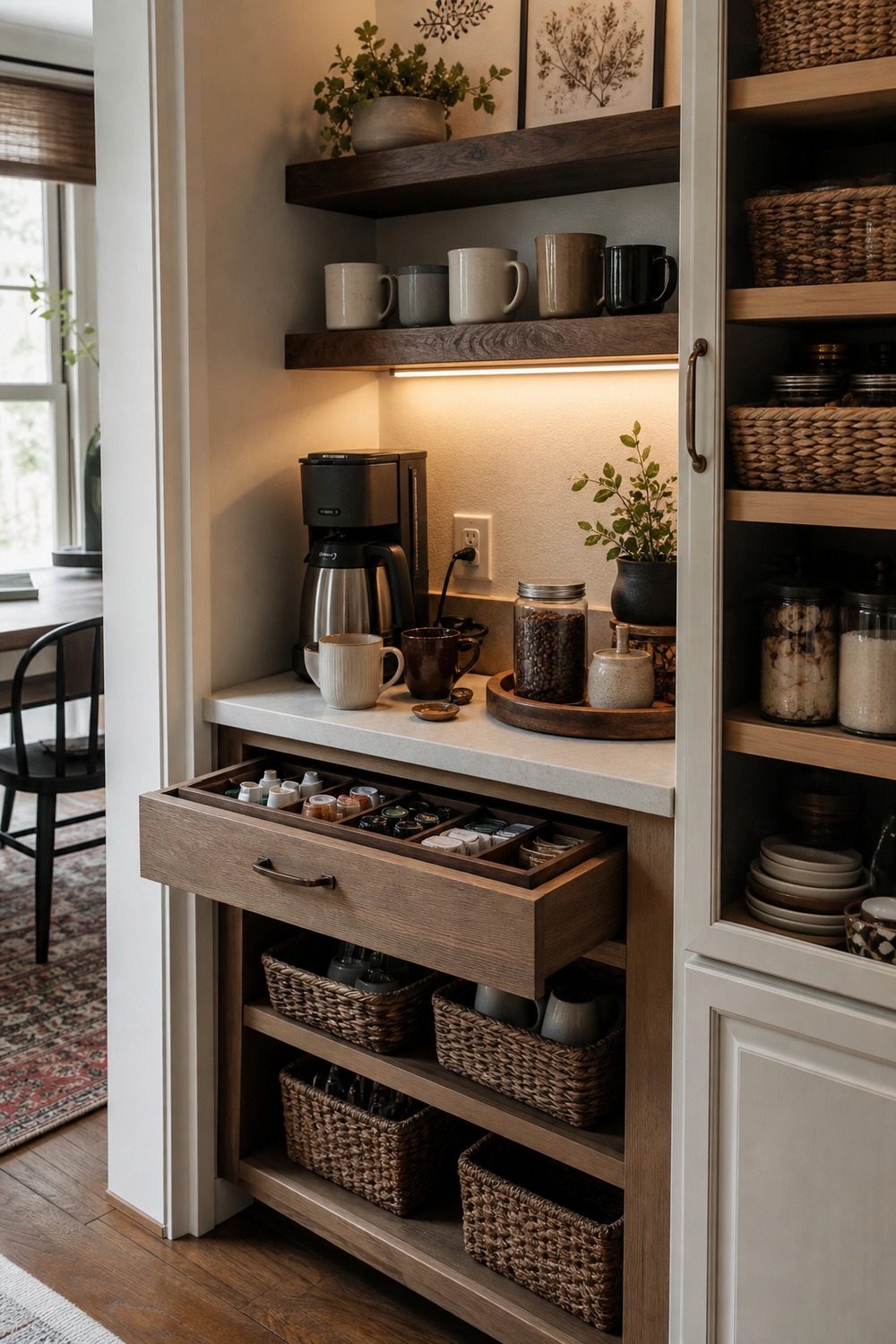
A pantry-adjacent coffee station is practical in the best way. Extra cups, filters, syrups, and tea boxes can live close by, which means the pretty surface can stay fairly clean even if the household uses it every morning.
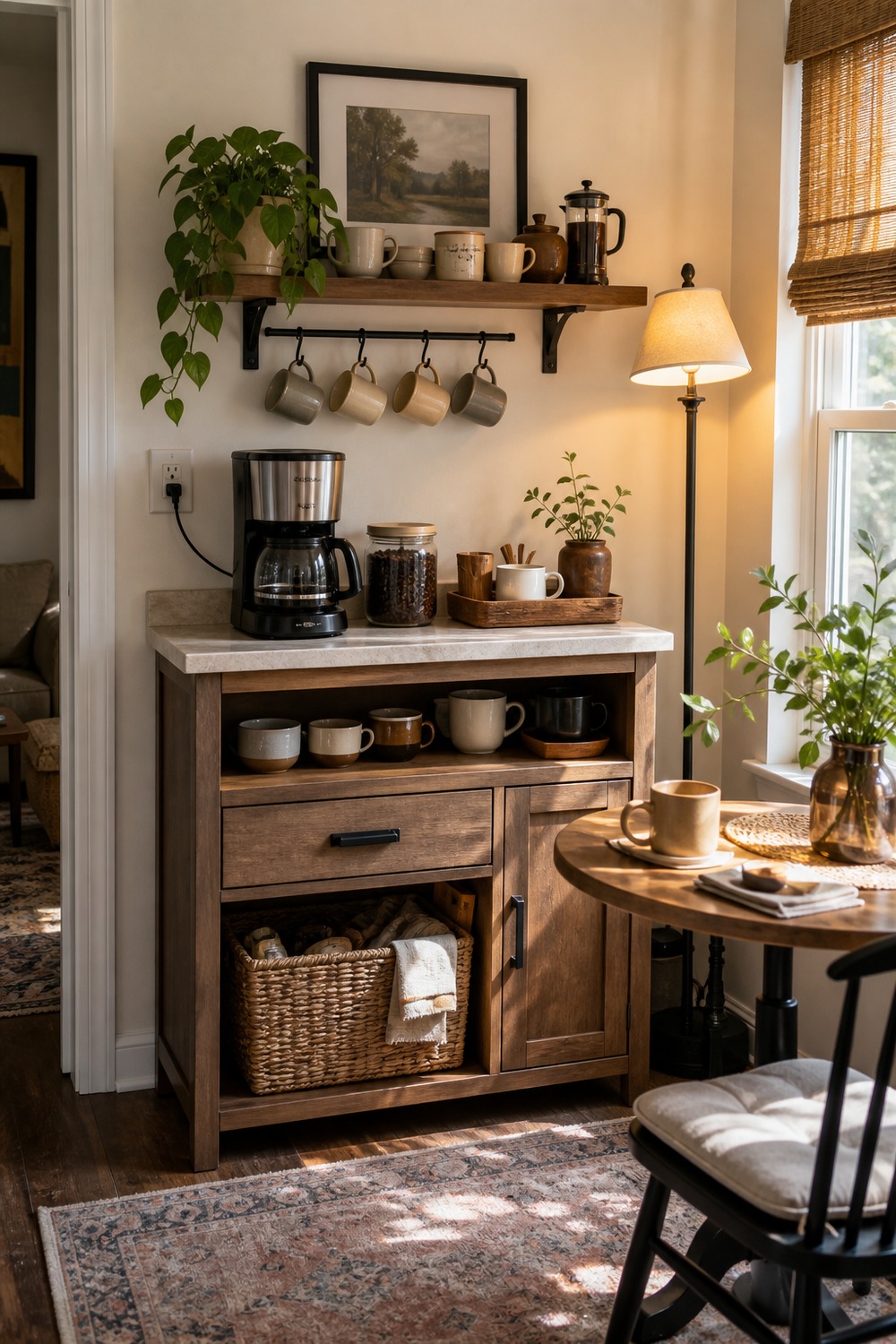
Placing the coffee cabinet near a breakfast table makes the whole area feel more useful. I like the way the small sideboard, rug, and shelves create a little morning corner without needing a separate room or huge piece of furniture.
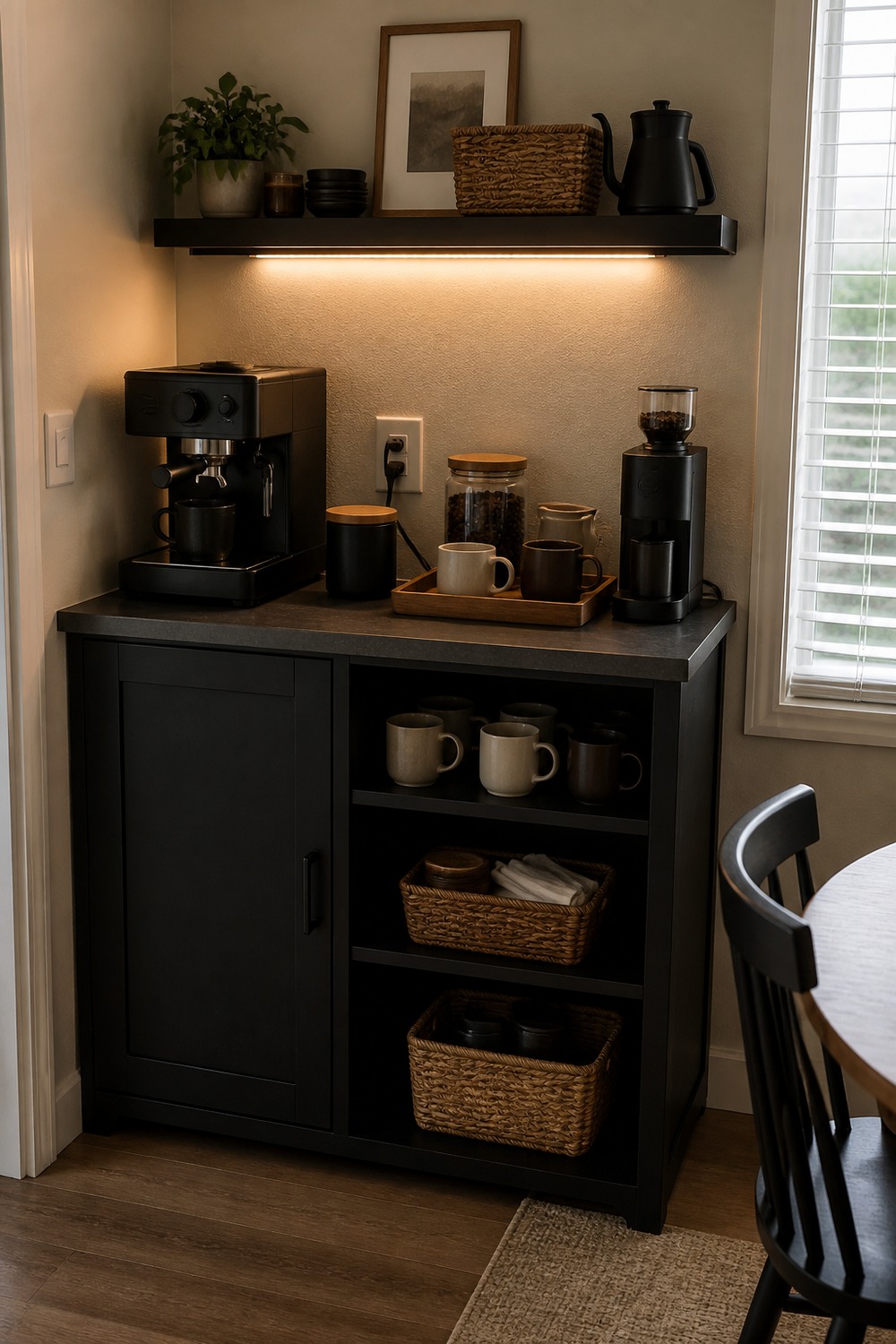
The black cabinet gives this coffee bar a moodier look, which is a nice break from all-white kitchen-style setups. Under-shelf lighting matters here because it keeps the dark finish from feeling heavy and makes the mugs and machine easier to see.
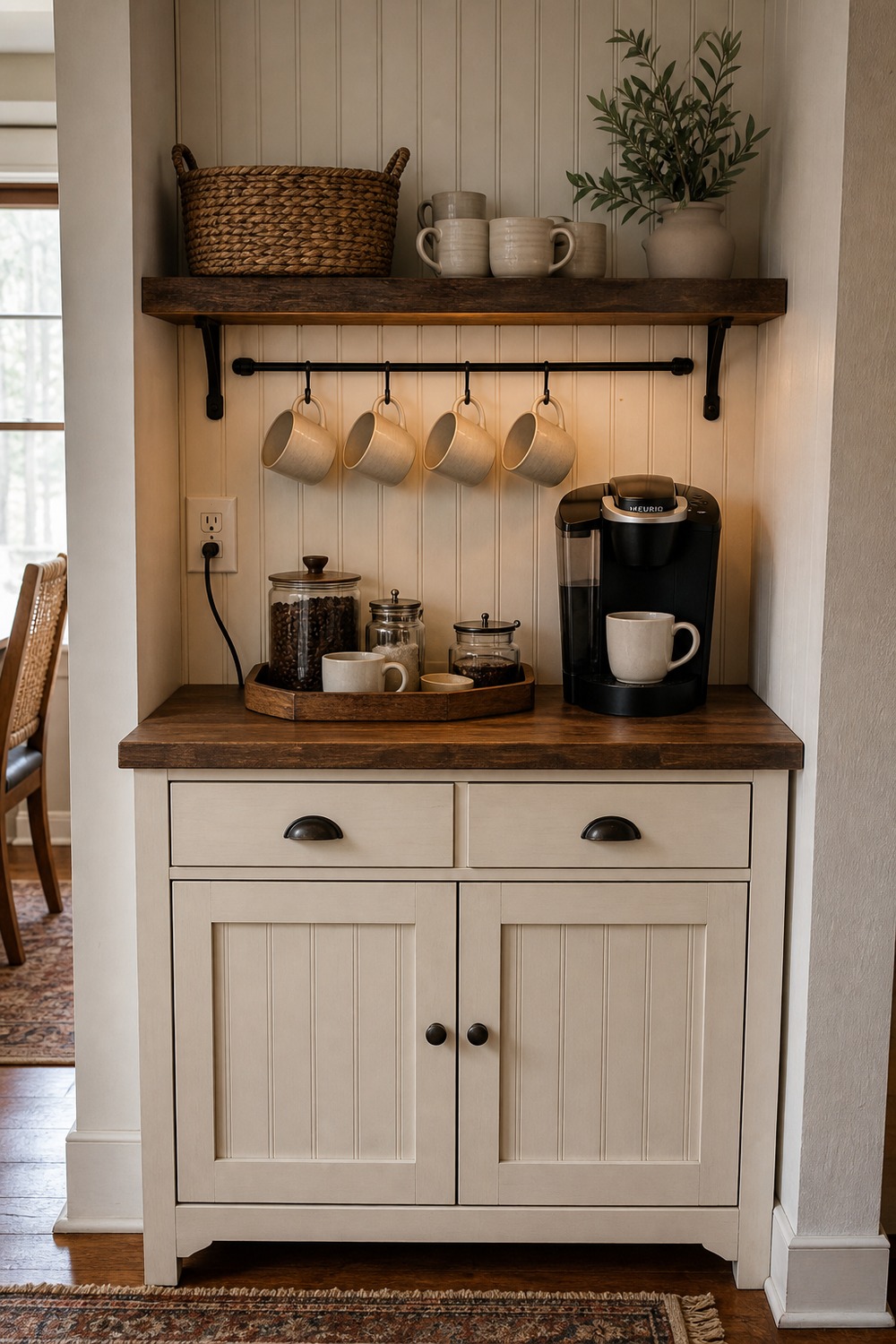
This farmhouse version feels friendly without piling on too many signs or themed pieces. The beadboard cabinet, wood counter, black brackets, and hanging mugs give it character, but it still looks simple enough to wipe down after real use.
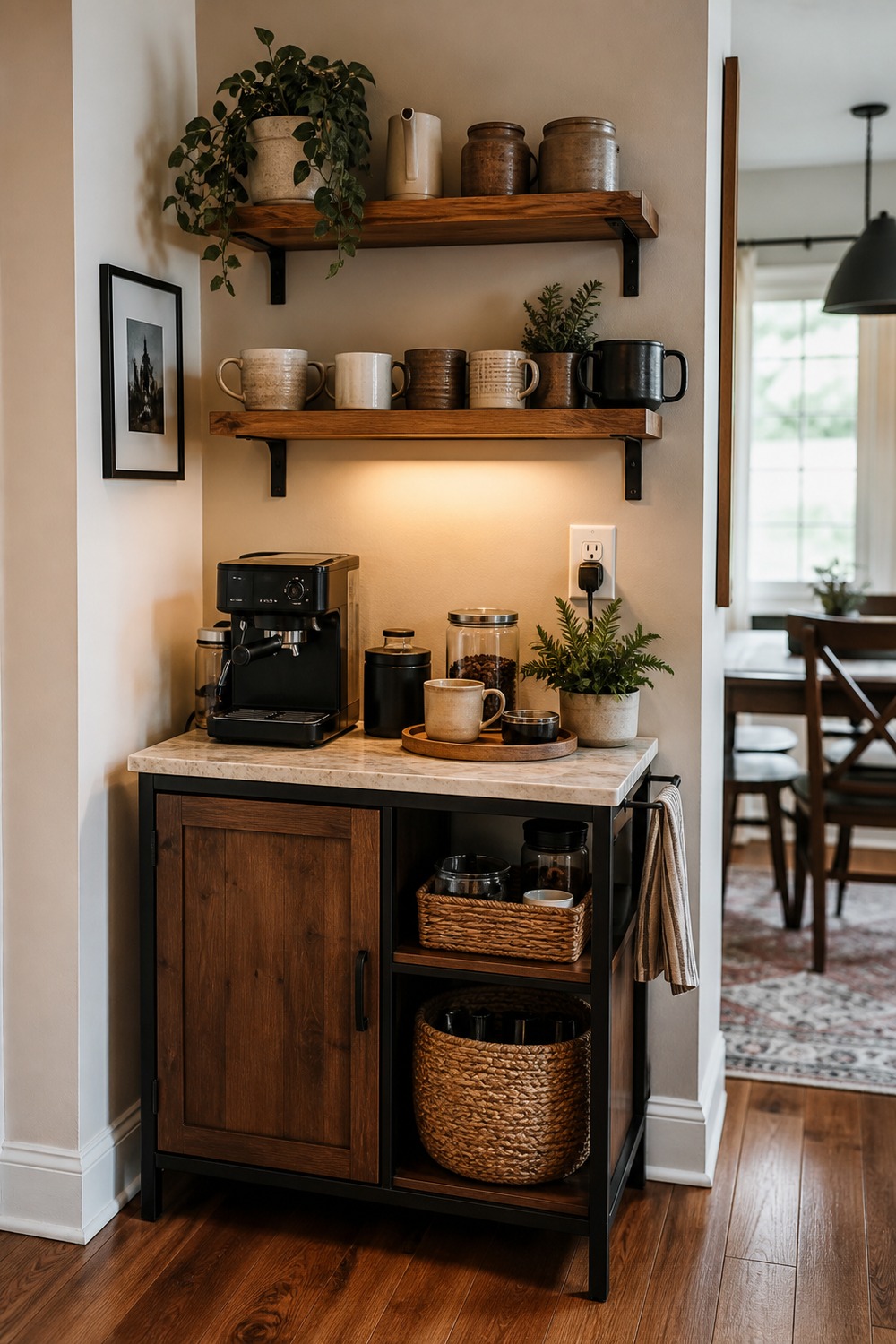
A renter-friendly coffee shelf is all about pieces that feel finished but are not permanent. The freestanding cabinet and wall shelves create the look of a built-in station, while the baskets and jars keep the small stuff from looking scattered.
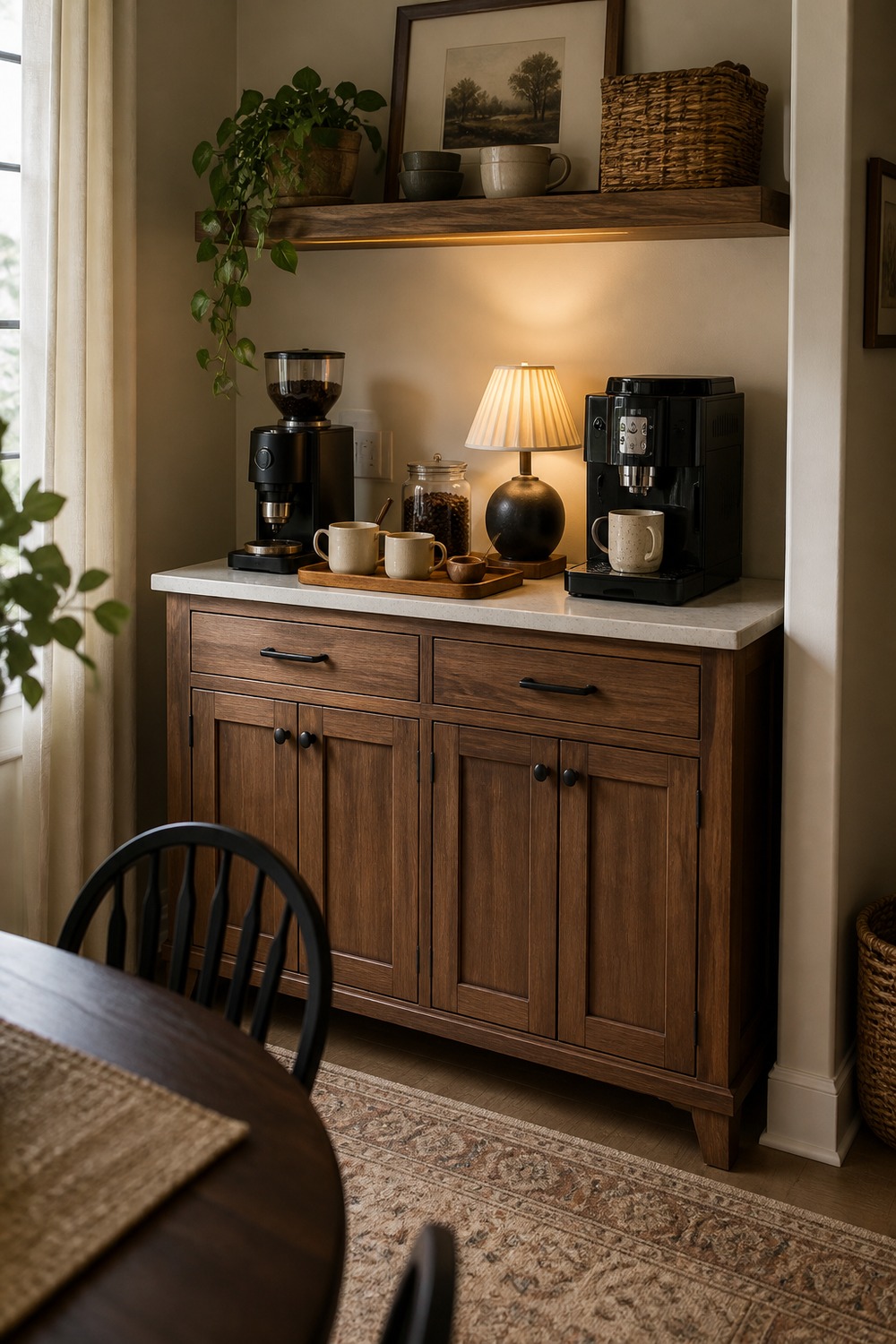
Closed storage is the detail that makes this wider coffee bar work for a dining room. The top can hold the pretty mugs and machine, while drawers and cabinet doors take care of backup pods, napkins, extra cords, and the things nobody wants on display.
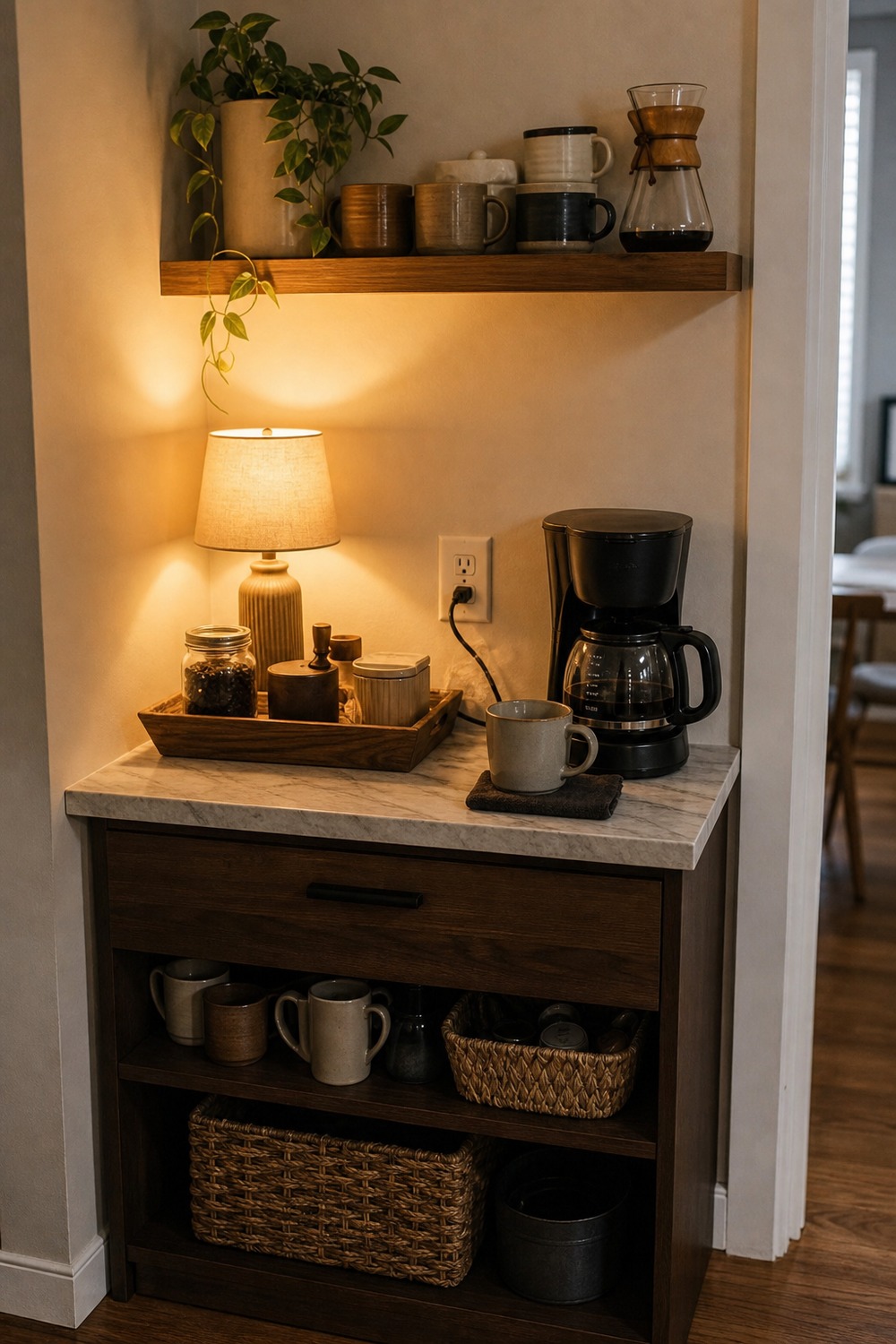
The lamp changes the whole mood of this corner. Instead of reading as an appliance station, it feels more like a small styled cabinet in the dining room, with the coffee maker tucked into the scene rather than shouting for attention.
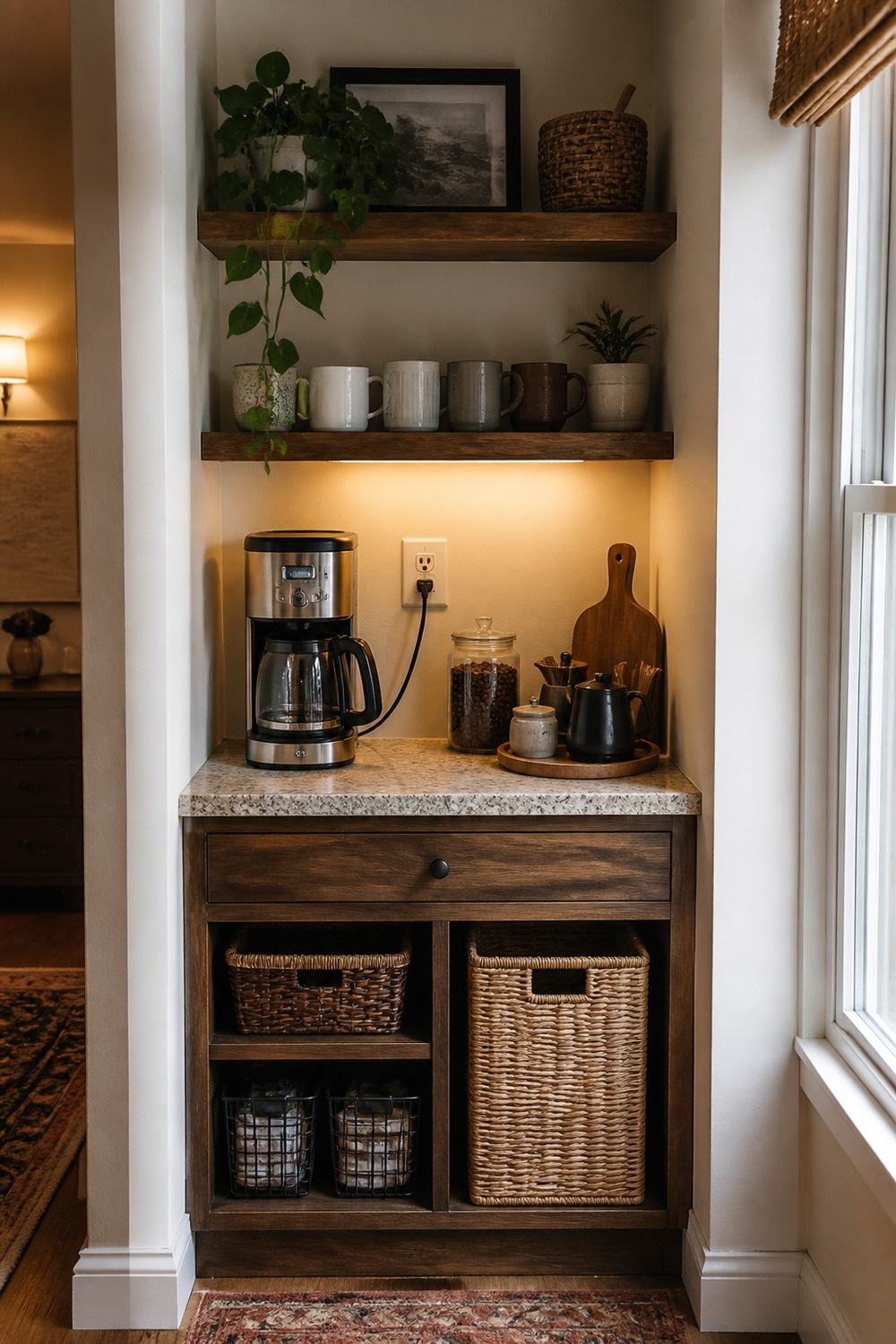
A tiny alcove can be enough when the layout is tight. The shelves use the wall, the cabinet gives the machine a sturdy surface, and the window keeps the little coffee station from feeling crammed into a dark leftover spot.
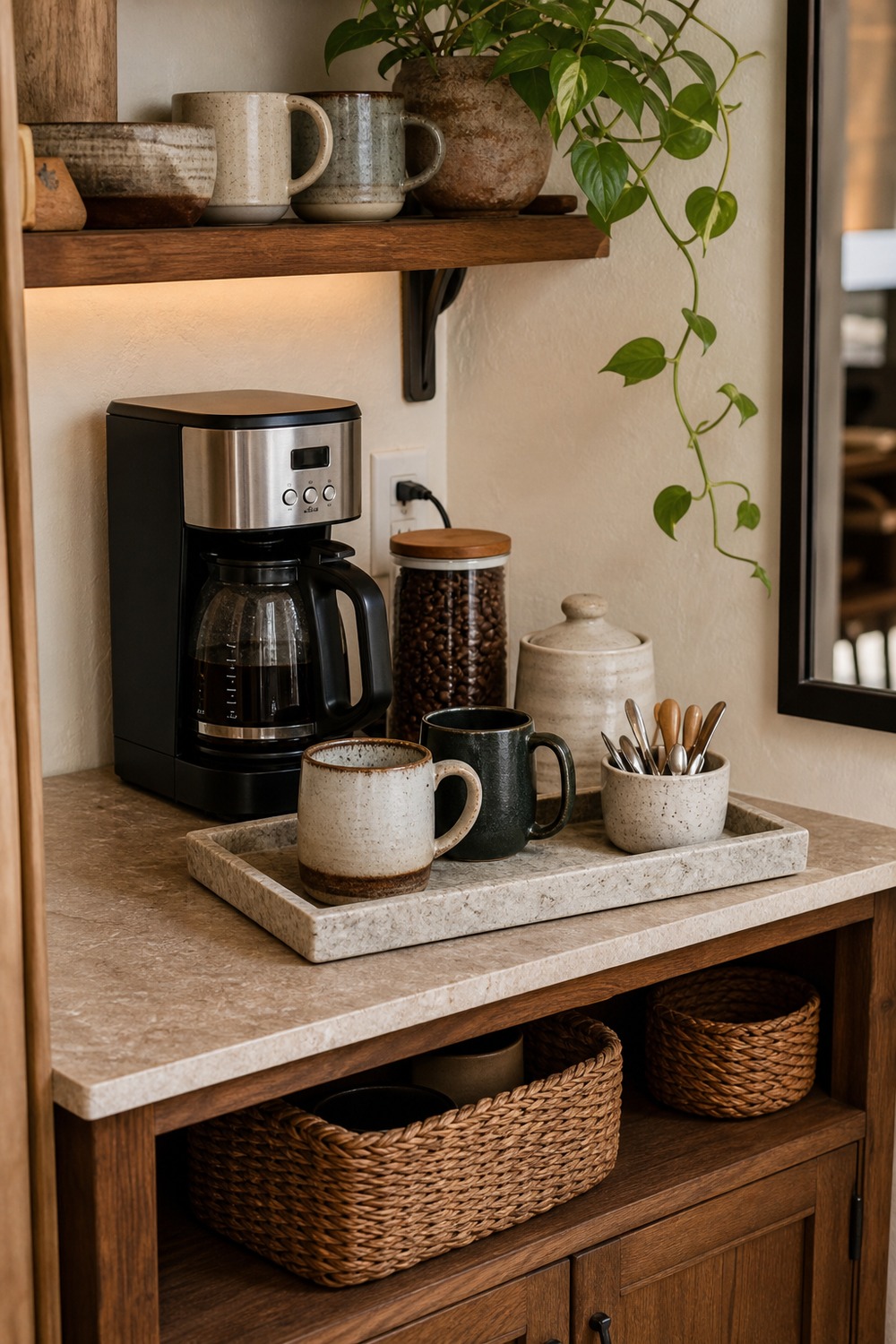
A tray setup is perfect for the person who only has one good surface to work with. It gathers the mugs, spoons, canisters, and coffee maker into one visual group, which makes the whole thing look neater even before anything is hidden away.
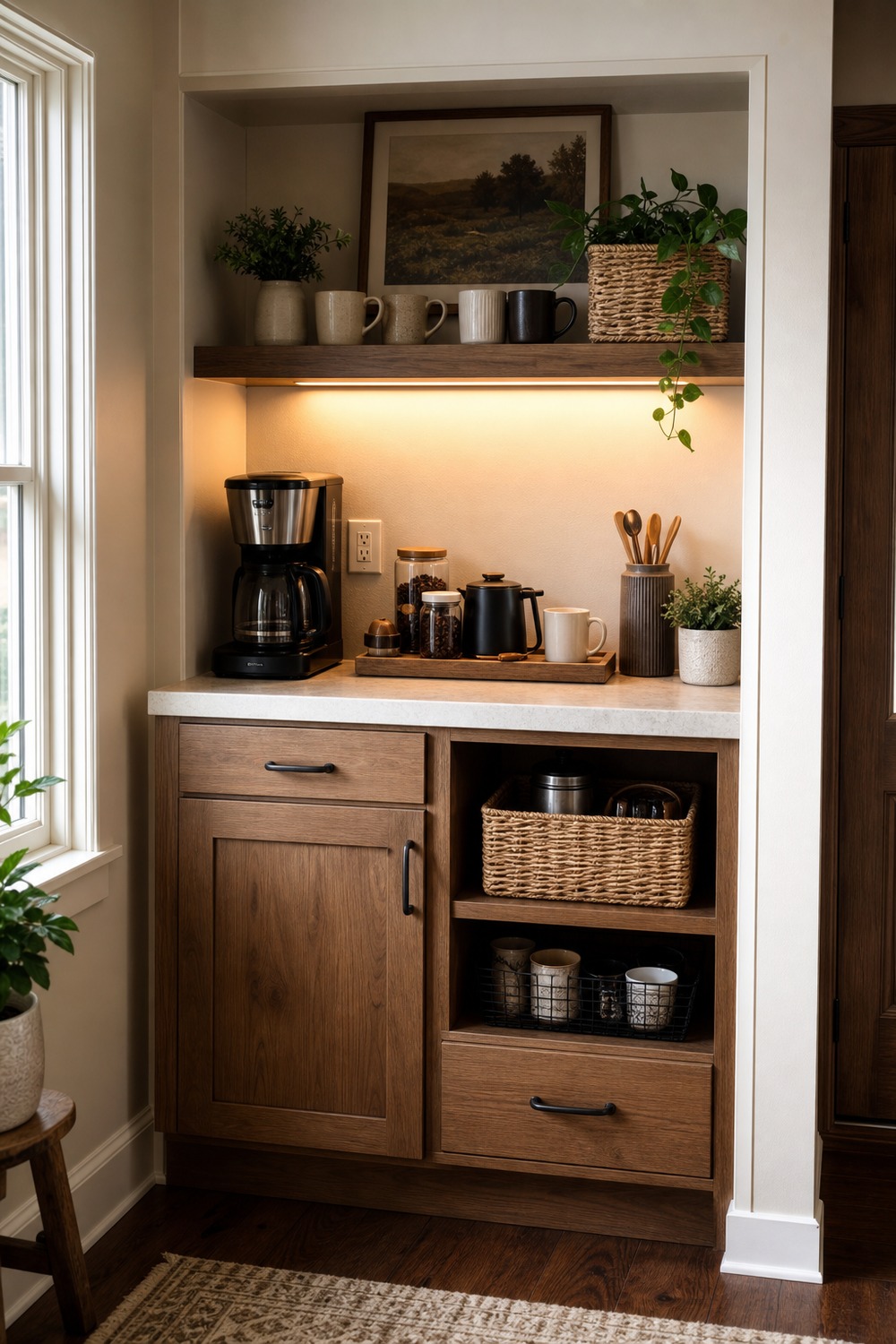
This built-in-look cabinet is a good example of using side walls to your advantage. Even if the storage is not custom, the shelves, under-lighting, and fitted cabinet shape make the coffee bar feel planned instead of temporary.
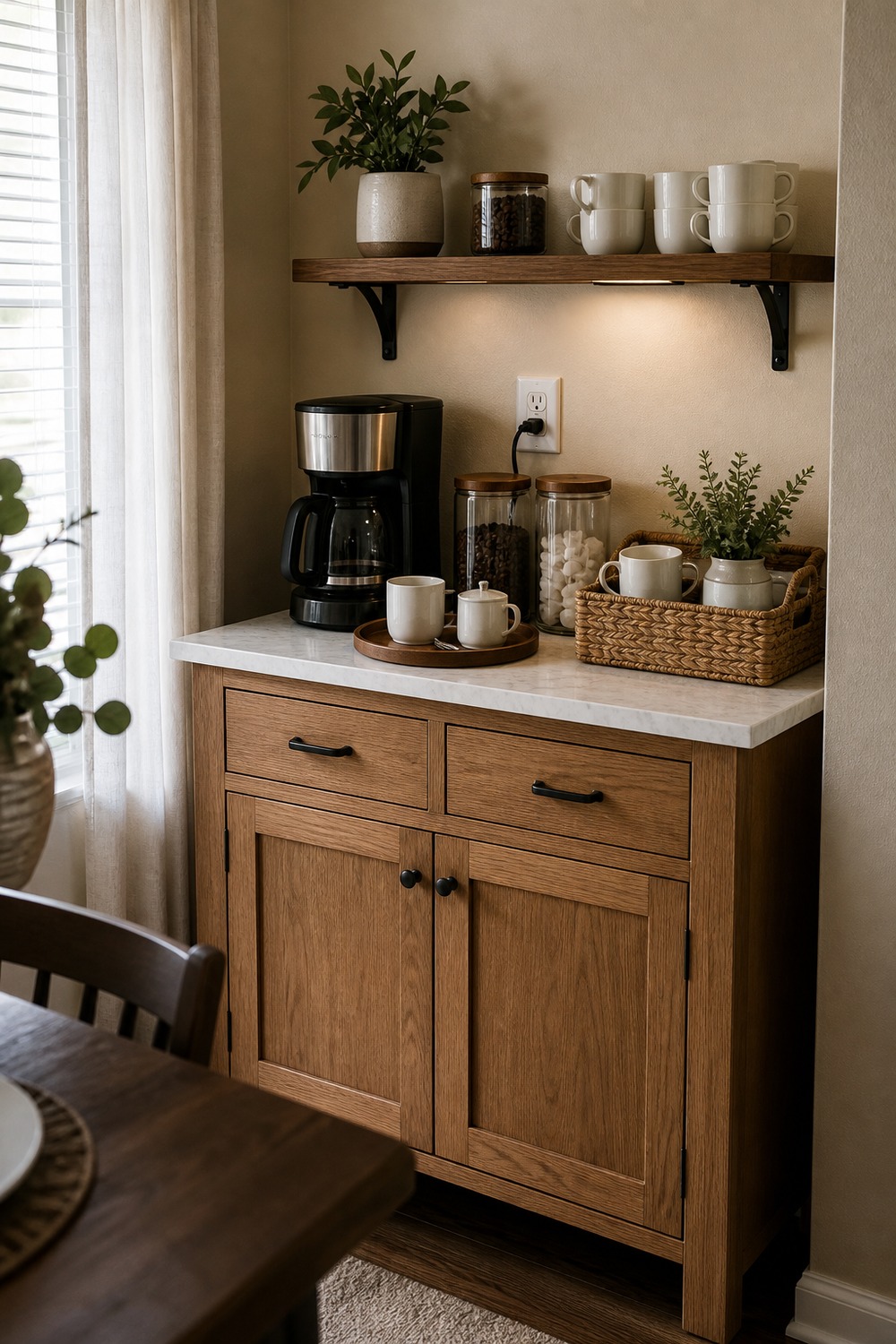
A small neutral coffee bar is easy to blend into a dining room that already has a lot going on. The light wood, black brackets, simple mugs, and plant accents give it enough detail without making the corner feel crowded.
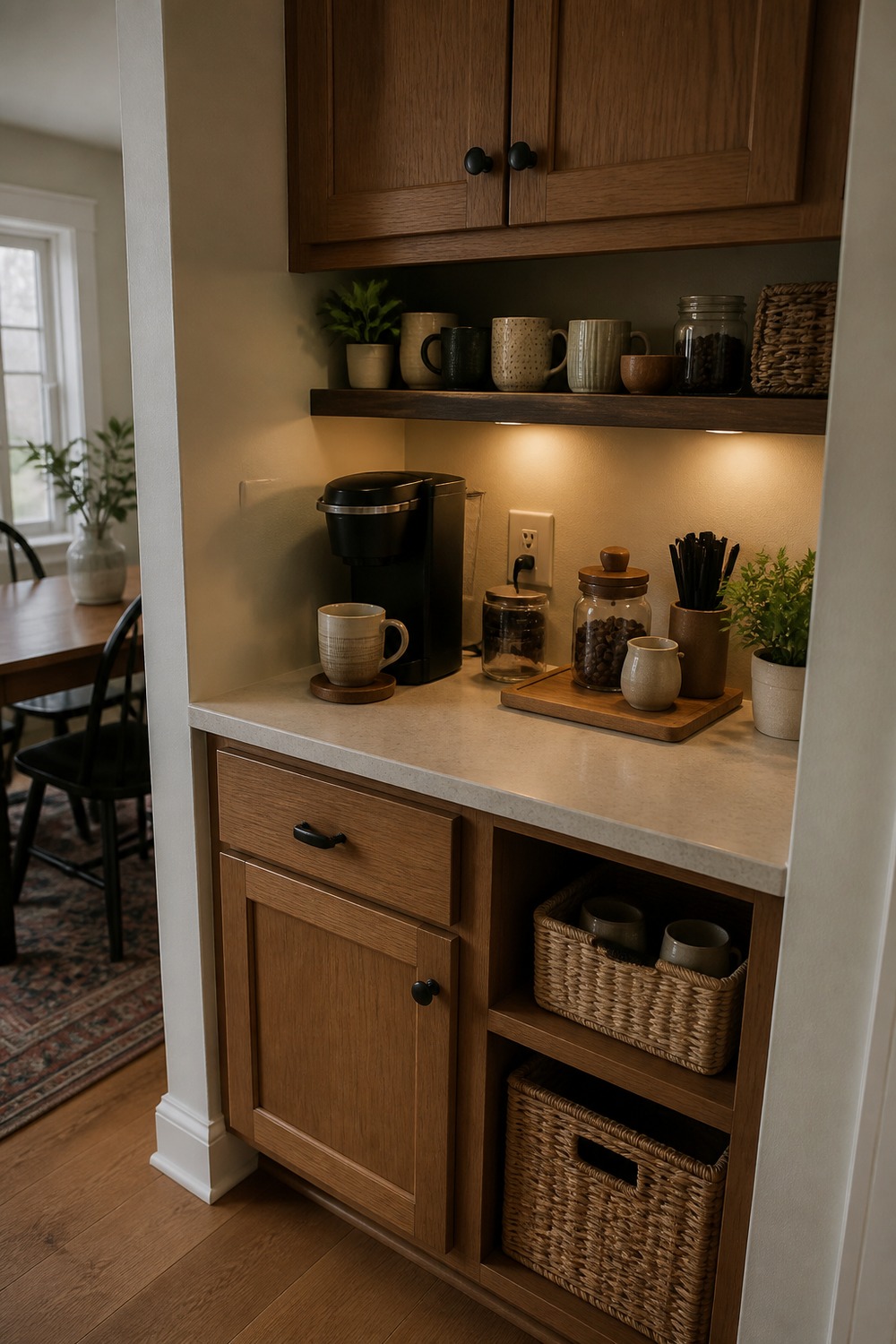
Under-cabinet lighting is the quiet hero in this setup. It makes the coffee nook usable early in the morning, highlights the mugs and jars, and keeps the counter from disappearing into the shadow under the upper cabinets.
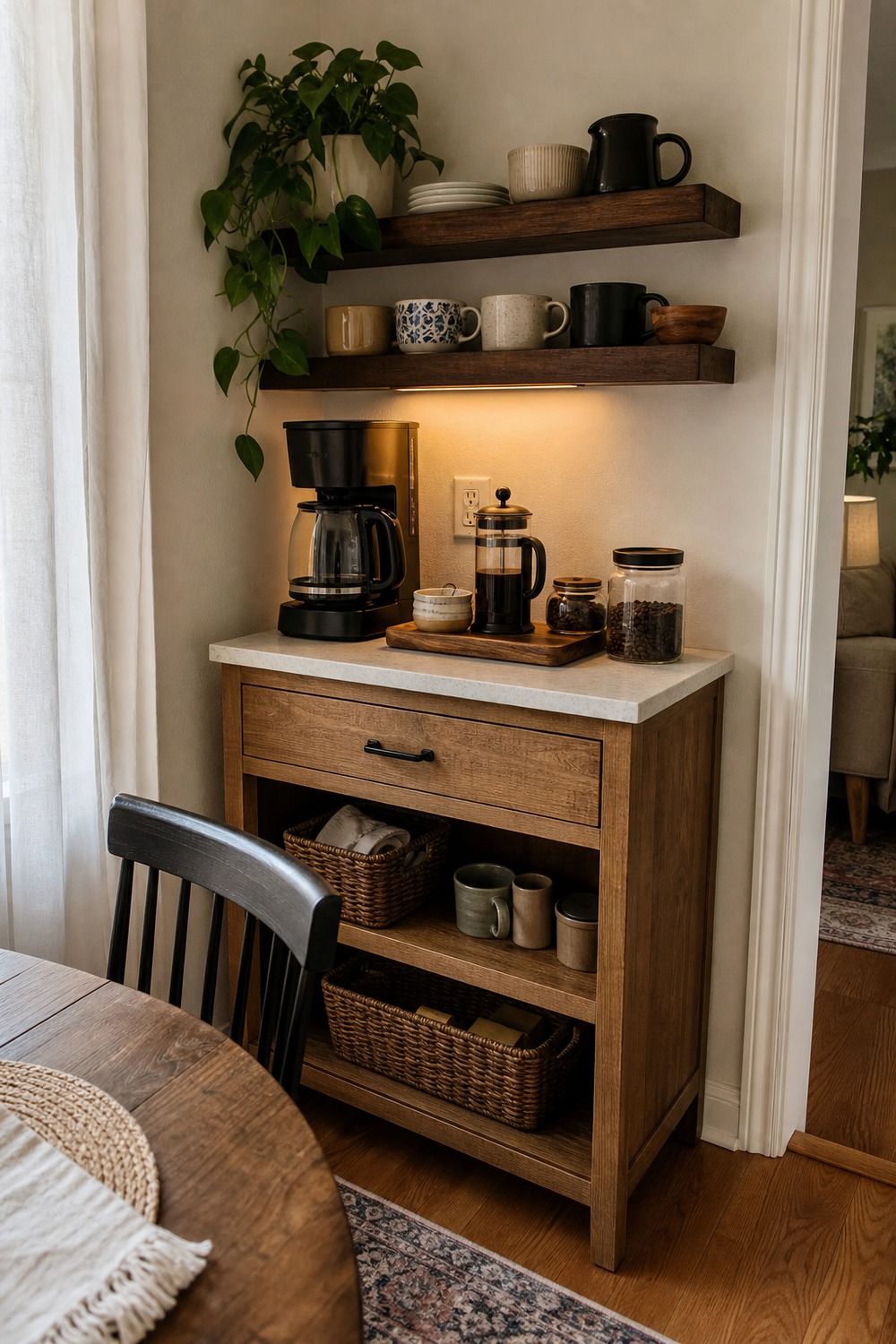
This unused dining corner is exactly the kind of spot that can become useful with the right cabinet. The shelves pull the eye upward, the greenery softens the wall, and the coffee maker has a dedicated place that does not steal room from the dining table.
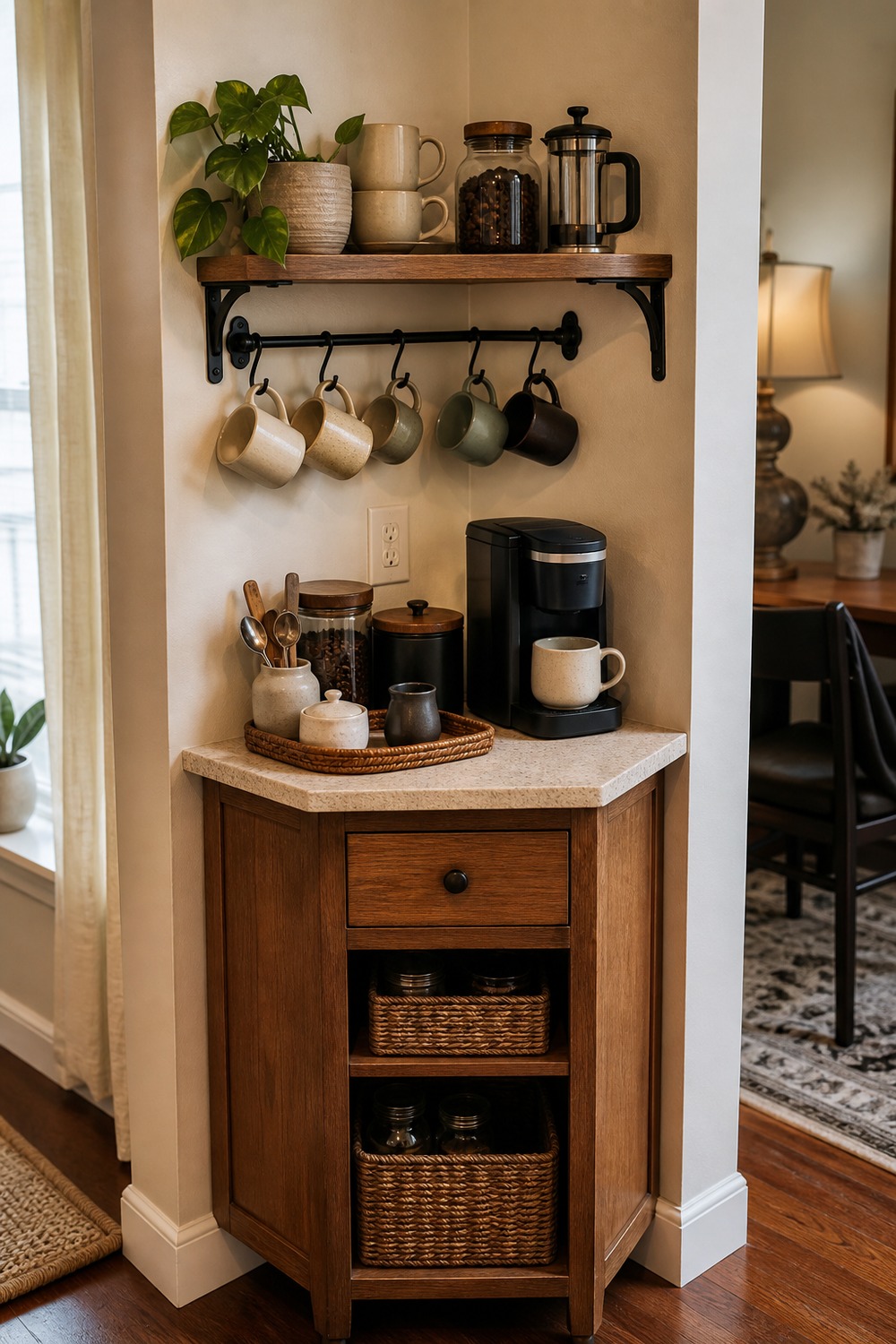
A wall-mounted corner shelf helps the last coffee bar feel taller and more organized. I like how the hanging mugs and baskets use vertical space, while the slim cabinet keeps the floor footprint small enough for a real dining room walkway.
A dining room coffee bar works best when it solves a small daily annoyance. Once the mugs, machine, spoons, and backup supplies have a place to land, the whole room feels a little less like a drop zone.

I work in tech, but my taste in design is straight out of a slow European village. Give me arches, aged brass, and a room that smells like books and coffee. That’s my kind of home.